标签: Europe

欧洲

  • Hungary sets April 12 election date as Orbán faces tough challenge

    Hungary sets April 12 election date as Orbán faces tough challenge

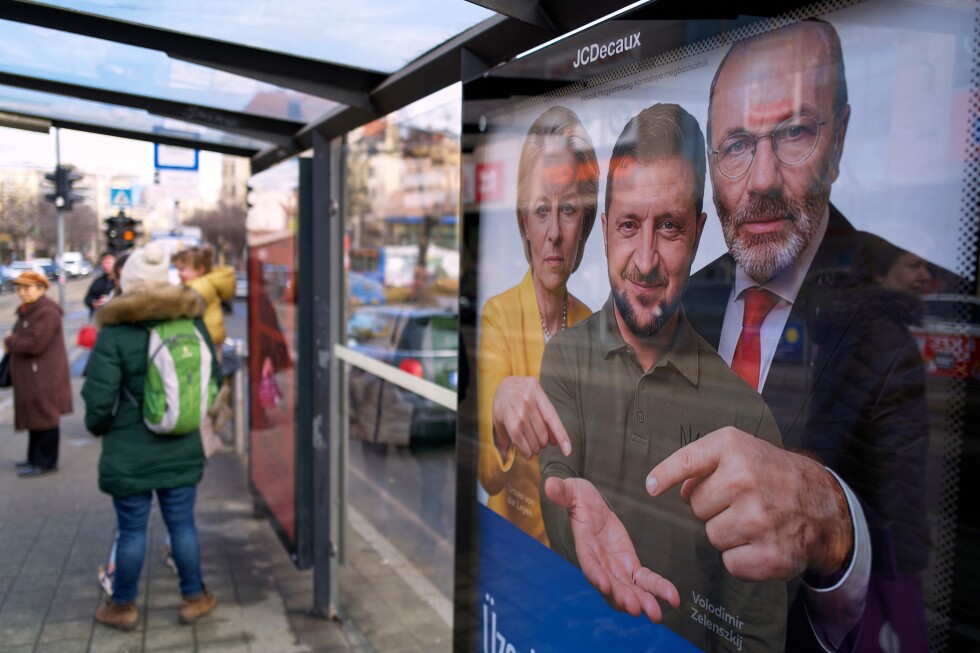
    BUDAPEST, Hungary — Hungary’s political arena is poised for a transformative confrontation as President Tamás Sulyok officially designated April 12 for the nation’s parliamentary election. This electoral contest presents Prime Minister Viktor Orbán with his most formidable political challenge since assuming power in 2010, marking a potential watershed moment in Hungarian politics.

    The political landscape has been dramatically reshaped by the rapid ascent of Péter Magyar, a 44-year-old center-right attorney who has mobilized substantial support through an intensive grassroots campaign across Hungary’s rural regions. Magyar’s Tisza party has capitalized on widespread public discontent regarding economic stagnation, escalating living expenses, and deteriorating public services, positioning itself as a viable alternative to Orbán’s establishment.

    Orbán, the European Union’s longest-serving leader who has championed his vision of an “illiberal democracy,” now confronts an opposition movement that has consistently outperformed his Fidesz party in independent polling. The Prime Minister’s political strategy has centered on consolidating institutional control and media influence throughout his tenure, though critics maintain this has fostered systemic corruption.

    The electoral battle has been framed by Fidesz as a fundamental choice between peace and conflict, with government allies asserting that Tisza represents a Brussels-orchestrated initiative to establish a puppet administration that would redirect Hungarian resources toward supporting Ukraine’s military efforts. These allegations have been vehemently denied by the opposition.

    Magyar has committed to implementing comprehensive anti-corruption reforms and securing the release of billions in frozen EU funds contingent upon judicial independence enhancements, should he attain victory. Notably, Orbán has declined invitations for a televised debate with his challenger—a format he has avoided since his 2006 electoral defeat.

    The formal campaign period commences on February 21, initiating candidate signature collection and permitting political advertising, setting the stage for a historically significant electoral confrontation that could redefine Hungary’s political trajectory and its relationship with European institutions.

  • Freezing rain and ice disrupt travel across central and eastern Europe

    Freezing rain and ice disrupt travel across central and eastern Europe

    A severe winter storm system has unleashed chaos across Central and Eastern Europe, crippling transportation infrastructure with treacherous freezing rain and extreme icing conditions. Major international airports including Vienna International, Prague’s Vaclav Havel, Budapest’s Ferenc Liszt, and multiple Slovakian facilities were forced to implement extensive operational suspensions throughout Tuesday.

    Vienna International Airport, among the region’s busiest aviation hubs, experienced complete temporary shutdowns with incoming flights diverted to alternative airports in Munich, Frankfurt, Cologne and Venice. Peter Kleemann, spokesperson for the Austrian facility, confirmed that departure operations faced significant delays before gradual resumption commenced by late morning.

    The transportation crisis extended beyond aviation networks with widespread disruptions to rail and road systems. Austria’s national railway operator ÖBB reported substantial delays across northern and eastern routes, including Vienna services, advising passengers to postpone non-essential travel. Czech authorities confirmed numerous train and bus cancellations, with passengers at Prague’s main station experiencing multi-hour delays. The critical D8 highway connecting Czech Republic to Germany was closed following weather-related accidents on the German side.

    Urban transit systems similarly struggled with Budapest’s tram services paralyzed by accumulated ice following last week’s heavy snowfall. The Hungarian Meteorological Service warned of continuing adverse conditions with significant snowfall expected in eastern regions while western areas faced additional freezing rain.

    Romanian authorities reported temperatures plunging to -13°C (8.7°F) in some regions, prompting school closures and transition to online education. The compounding weather events represent one of the most significant winter transportation crises to affect the region in recent years, with meteorological services predicting continued challenging conditions throughout the week.

  • Hunt for gunman after Corsican exile is shot dead at mother’s funeral

    Hunt for gunman after Corsican exile is shot dead at mother’s funeral

    In a brazen act of violence that has shocked the French island of Corsica, former separatist leader Alain Orsoni was assassinated by a single gunshot while attending his mother’s funeral on Monday afternoon. The 71-year-old, who had spent years living in exile in Nicaragua, was struck in the chest by a long-range shot as the cemetery service concluded in his native village of Vero.

    Corsican prosecutor Nicolas Septe confirmed the tactical precision of the killing, noting that the fatal bullet was fired from a distance and resulted in rapid death. The shooting occurred moments after the burial ceremony had concluded, creating a scene of profound trauma for mourners already grieving the loss of Orsoni’s mother.

    Father Roger-Dominique Polge, who officiated the service, expressed horror at the violation of the sacred moment: ‘We’d just finished burying Alain’s mother—it was a moment of pain and grief. Suddenly we hear a gunshot and Alain falls down dead. In the middle of a cemetery, after a religious ceremony, I ask where are we, what kind of home are we living in?’

    The investigation has been assigned to France’s specialized anti-organized crime units, including the Marseille-based regional crime office. Early evidence suggests connections to recent gangland killings targeting associates of Orsoni’s son, Guy, who is currently serving a 13-year prison sentence for the attempted murder of a Petit Bar gang member in 2018.

    Orsoni’s life was marked by both political activism and criminal notoriety. A charismatic figure known for his singing voice and nationalist fervor, he rose to prominence in the 1970s Corsican independence movement. He founded the separatist Movement for Self-Determination (MPA), which achieved electoral success in 1992, though Orsoni was barred from taking office due to campaign violations.

    His complex history included participation in a 1980 gun attack near the Iranian embassy, the kidnapping and presumed murder of his brother in 1983, and multiple prison sentences. After fleeing to Central America in 1996 amid violent splits within nationalist circles, he later returned to Corsica to serve as president of football club AC Ajaccio, surviving an assassination attempt weeks after his 2008 appointment.

    Despite being aware of persistent threats to his life—four of his associates were killed within a two-year period—Orsoni maintained a defiant stance toward his safety, telling Le Figaro in 2012: ‘I’m not afraid of dying. I don’t wake up every morning thinking I’m going to be killed. I live a normal life, without a squad of bodyguards.’

    The assassination has highlighted the enduring power of criminal clans in Corsican society and raised urgent questions about organized crime’s influence on the island.

  • The BBC seeks to dismiss Trump’s $10B defamation lawsuit in a Florida court

    The BBC seeks to dismiss Trump’s $10B defamation lawsuit in a Florida court

    The British Broadcasting Corporation has initiated legal proceedings to quash former U.S. President Donald Trump’s $10 billion litigation, citing jurisdictional overreach and unsubstantiated claims. Court documents filed in Florida’s Southern District Court reveal the broadcaster’s motion to dismiss the case based on three fundamental arguments: lack of proper jurisdiction, improper venue selection, and failure to state a legally actionable claim.

    The controversy stems from the BBC’s documentary “Trump: A Second Chance?” which aired shortly before the 2024 presidential election. The program featured edited excerpts from Trump’s January 6, 2021 address, combining three distinct quotes from segments delivered nearly an hour apart into what appeared as a continuous statement. Among the omitted portions was Trump’s specific instruction for supporters to demonstrate peacefully.

    Legal representatives for the publicly-funded broadcaster will contend that the organization neither created, produced, nor distributed the documentary within Florida’s jurisdiction. They further challenge Trump’s assertion that the content was available on streaming platform BritBox in the United States, characterizing this claim as factually inaccurate.

    The BBC maintains that despite issuing an apology for the editorial approach taken in assembling the speech segments, the former president has failed to demonstrate actual malice—a critical requirement for defamation claims involving public figures. The corporation has simultaneously requested a suspension of discovery procedures pending the court’s decision on the dismissal motion, potentially avoiding the disclosure of extensive internal communications and production documents.

    Should the case proceed despite the BBC’s objections, trial proceedings are tentatively scheduled for 2027. The broadcaster affirmed its commitment to vigorous legal defense while declining further commentary on active litigation.

  • Russia launches another major attack on Ukraine’s power grid, killing 4

    Russia launches another major attack on Ukraine’s power grid, killing 4

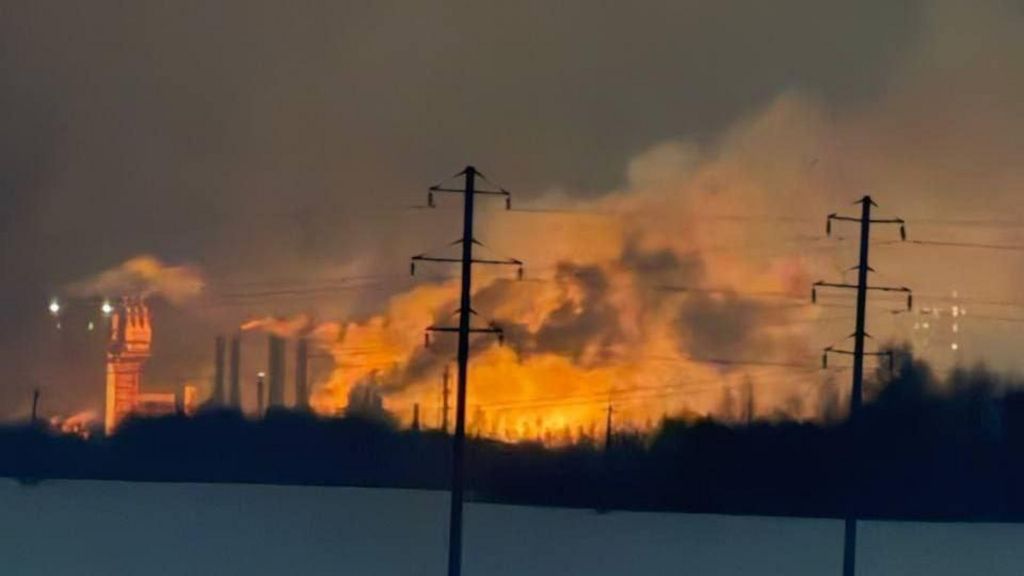
    KYIV, Ukraine — In a significant escalation of hostilities, Russian forces unleashed a second massive aerial offensive against Ukraine within four days, targeting critical energy infrastructure and civilian areas amid freezing winter conditions. The coordinated assault involved nearly 300 drones, 18 ballistic missiles, and seven cruise missiles targeting eight regions across Ukraine, according to President Volodymyr Zelenskyy.

    The northeastern Kharkiv region suffered particularly severe consequences, with a direct strike on a mail distribution center claiming four lives and injuring ten others. Simultaneously, several hundred thousand households in the Kyiv metropolitan area experienced complete power outages as temperatures plunged to -12°C (10°F), transforming streets into icy pathways and forcing residents to rely on generator power.

    This latest bombardment follows a similar large-scale attack four days prior that featured the deployment of advanced hypersonic missiles—only the second instance of such weaponry being used throughout the conflict. Military analysts interpret this technological demonstration as a deliberate signal to NATO allies supporting Ukraine, indicating Moscow’s refusal to de-escalate despite international diplomatic efforts.

    The United States, through Deputy UN Ambassador Tammy Bruce, condemned what it termed a ‘dangerous and inexplicable escalation’ during an emergency Security Council session. Washington denounced Russia’s systematic targeting of energy infrastructure and civilian facilities, describing it as a deliberate strategy to weaponize winter conditions against the Ukrainian population.

    Additional damage was reported in the southern port city of Odesa, where six civilians sustained injuries and critical infrastructure including a hospital, kindergarten, and educational facilities suffered direct hits. Ukrainian authorities emphasized the urgent need for accelerated delivery of promised air defense systems from Western partners to counter the intensified aerial assaults.

    Meanwhile, Russian defense officials claimed to have intercepted eleven Ukrainian drones over the Rostov region, with particular attention directed toward Taganrog—a coastal city housing military-industrial facilities producing components for combat drones and aircraft.

    The timing of these coordinated attacks appears calculated to undermine peace initiatives being advanced by the Trump administration, suggesting Moscow’s determination to pursue military objectives despite growing international pressure.

  • French farmers drive 350 tractors to Parliament to protest low incomes and EU trade deal

    French farmers drive 350 tractors to Parliament to protest low incomes and EU trade deal

    PARIS — Hundreds of French farmers mobilized approximately 350 tractors in a dramatic protest through central Paris on Tuesday, converging toward the National Assembly to voice vehement opposition to the impending EU-Mercosur trade agreement and demand urgent government action on declining agricultural incomes.

    The convoy of agricultural vehicles, escorted by police units, created significant traffic disruptions along iconic Parisian thoroughfares including the Champs-Elysees before crossing the Seine River. The carefully coordinated demonstration targeted lawmakers during critical legislative sessions, emphasizing farmers’ growing frustration with economic pressures they attribute to both domestic policy failures and international trade negotiations.

    Agricultural unions organizing the protest issued explicit demands for “concrete and immediate action” to protect France’s food sovereignty. The movement reflects escalating tensions across European farming communities facing multiple challenges including rising production costs, environmental regulations, and competition from imported goods.

    Government spokesperson Maud Bregeon acknowledged the concerns during a national television appearance, promising imminent policy announcements to address the agricultural crisis. Despite the French government’s official opposition to the EU-Mercosur pact, the agreement appears poised for ratification during Saturday’s signing ceremony in Paraguay, supported by majority consensus within the European Union.

    The controversial trade deal with Mercosur nations (Brazil, Argentina, Bolivia, Paraguay, and Uruguay) has drawn sustained criticism from European agricultural sectors who argue it would undermine local producers through increased market penetration of cheaper imported goods produced under different environmental and quality standards.

  • Le Pen’s political fate rests on appeal trial opening in France

    Le Pen’s political fate rests on appeal trial opening in France

    French far-right leader Marine Le Pen commenced a high-stakes legal battle on Tuesday as her appeal against a five-year ban from public office began in Paris. The 57-year-old politician, who has contested the French presidency on three previous occasions, faces potential exclusion from the 2027 presidential election if the appellate court upholds last year’s conviction for EU funds embezzlement.

    The case centers on allegations that Le Pen and more than 20 other National Rally (RN) party officials employed parliamentary assistants who primarily worked on party matters rather than European Parliament duties, despite being compensated by EU funds. Trial judge Bénédicte de Perthuis previously characterized Le Pen as the central figure in a system that misappropriated €2.9 million in European funds.

    Le Pen maintains her complete innocence, asserting she committed ‘not the slightest irregularity.’ Her political ally, RN president Jordan Bardella, characterized the potential ban as ‘deeply worrying for democracy,’ arguing that preventing a twice-qualified second-round presidential candidate from running would undermine democratic principles. Bardella confirmed he would not seek the presidency himself but would instead pursue the prime ministerial position.

    The appellate proceedings, scheduled to continue through February 12th, will not deliver a verdict before summer 2026, creating a tense timeline ahead of the anticipated April 2027 presidential election. Legal experts outline four potential outcomes: complete acquittal, maintained conviction without immediate effect allowing her candidacy, reduced ban duration permitting 2027 registration, or upheld original judgment effectively blocking her presidential ambitions.

    Le Pen previously received a four-year prison sentence (two years suspended, two with electronic monitoring), a €100,000 fine, and the immediate public office ban. Should her appeal fail, she could face an extended prison term. Eleven RN colleagues join her appeal, while twelve others—including her sister Yann Le Pen—have accepted their sentences.

    The final determination rests with the Paris Court of Appeal, though further recourse to France’s highest judicial authority, the Court of Cassation, remains possible regardless of outcome. The timing and substance of these judicial decisions will significantly impact France’s political landscape as the 2027 election approaches.

  • The Latest: Iran eases some communications restrictions as activists say death toll spikes to 2,000

    The Latest: Iran eases some communications restrictions as activists say death toll spikes to 2,000

    In a limited concession during ongoing civil unrest, Iranian authorities restored international calling capabilities via mobile phones on Tuesday while maintaining severe internet restrictions and text messaging blackouts. This partial communications restoration occurs amidst a violent government crackdown on nationwide protests that activists report has resulted in approximately 2,000 fatalities, according to the U.S.-based Human Rights Activists News Agency.

    The telecommunications adjustment allows Iranians to place outgoing international calls, though incoming calls from abroad remain blocked. Witnesses in Tehran, speaking anonymously due to security concerns, confirmed that SMS services remain disabled and internet access is restricted to government-approved domestic websites, completely isolating Iran from global digital connectivity since Thursday.

    International response has escalated significantly, with multiple Western nations implementing diplomatic and economic measures. France summoned Iran’s ambassador to denounce what Foreign Minister Jean-Noel Barrot termed “intolerable, unbearable, and inhumane” repression. The United Kingdom announced comprehensive sanctions targeting Iran’s finance, energy, and transport sectors, with Foreign Secretary Yvette Cooper condemning the “desperate regime’s” violence against a “genuine grassroots movement.”

    European Commission President Ursula von der Leyen declared forthcoming EU sanctions against Iranian officials responsible for the crackdown, stating “The rising number of casualties in Iran is horrifying” and affirming support for citizens “bravely marching for their liberty.” Simultaneously, the Netherlands and Finland summoned Iranian ambassadors to protest the violence and communications blackout.

    United Nations Human Rights Chief Volker Türk issued a stark warning, demanding an immediate end to violence against peaceful demonstrators and expressing particular concern about judicial officials discussing potential death penalties for protesters through expedited proceedings.

    Iranian officials responded defiantly, with Foreign Minister Abbas Araghchi threatening reciprocal measures against European restrictions and alleging Western hypocrisy regarding Israel’s actions in Gaza. State television reported the arrest of “Israel-linked terrorist groups” in southeastern Zahedan, though Israel’s military declined to comment.

    The international dimension expanded as U.S. President Donald Trump announced canceled meetings with Iranian officials while telling protesters “help is on the way” without providing specifics. German Chancellor Friedrich Merz speculated about the Iranian government’s imminent collapse, stating regimes maintaining power solely through force are “effectively at the end.”

  • French far-right leader Le Pen faces appeal trial that could decide her 2027 presidential run

    French far-right leader Le Pen faces appeal trial that could decide her 2027 presidential run

    PARIS — France’s prominent far-right figure Marine Le Pen appeared before an appeals court on Tuesday in a pivotal legal battle that could ultimately determine her eligibility for the 2027 presidential election. The 57-year-old political leader is challenging her March conviction for misappropriating European Parliament funds, a verdict that currently carries a five-year prohibition from elected office, two years of electronic monitoring house arrest, an additional suspended sentence, and a €100,000 ($116,800) penalty.

    Addressing journalists on Monday, Le Pen expressed optimism about demonstrating her innocence to the judicial panel, noting that ‘It’s a new court with new judges. The case will be reset, to some extent.’ This appeal represents a crucial juncture for Le Pen, who had emerged as the probable frontrunner to succeed President Emmanuel Macron until last year’s conviction sent tremors through France’s political landscape—a decision she vehemently condemned as ‘a democratic scandal.’

    The legal proceedings, expected to span five weeks and involve Le Pen alongside eleven co-defendants, center on allegations that between 2004 and 2016, European parliamentary funds designated for assistants were improperly diverted to support domestic political activities of her party, then known as the National Front. Judicial authorities maintained that Le Pen orchestrated a systematic scheme to channel EU resources, including allocations for her security detail and chief of staff, though the court acknowledged no personal enrichment occurred.

    This case originated from a 2015 alert raised by Martin Schulz, then-president of the European Parliament, to French authorities. The outcome carries profound implications for Le Pen’s political trajectory following her extensive efforts to mainstream far-right politics in France. Since assuming leadership from her father Jean-Marie Le Pen in 2011, she has systematically worked to distance the party from its historical associations with racism and antisemitism—rebranding it as the National Rally, expelling her father, and moderating both policy positions and public rhetoric.

    These strategic shifts have yielded significant political dividends, with the National Rally now constituting the largest singular bloc in France’s National Assembly and establishing an extensive network of local representatives nationwide. Should the appeal fail and Le Pen face electoral disqualification, leadership would likely transfer to 30-year-old Jordan Bardella, whose popularity has surged particularly among younger demographics despite internal party questions regarding his leadership capabilities.

    The appeals court’s three-judge panel is anticipated to deliver its ruling before summer, with potential outcomes ranging from full acquittal to reinforced conviction that might include up to a decade imprisonment and €1 million fine. Bardella characterized the potential conviction as ‘deeply worrying for French democracy’ during his New Year address, reflecting the high-stakes nature of this judicial proceeding for France’s political future.

  • ‘We were tricked’: How one woman lures foreign men to fight on Russia’s front line

    ‘We were tricked’: How one woman lures foreign men to fight on Russia’s front line

    A comprehensive BBC Eye investigation has uncovered a sophisticated recruitment operation masterminded by Polina Alexandrovna Azarnykh, a 40-year-old former teacher from Russia’s Voronezh region, who uses Telegram to lure vulnerable men from developing nations into Russia’s military campaign in Ukraine under false pretenses.

    Operating through a Telegram channel with 21,000 subscribers, Azarnykh has issued approximately 490 invitation documents to men primarily from Syria, Egypt, Yemen, Morocco, Iraq, Ivory Coast, and Nigeria over the past year. Her recruitment strategy targets economically disadvantaged individuals, promising lucrative contracts with monthly salaries equivalent to $2,500, sign-up bonuses of $5,000, and expedited Russian citizenship.

    The investigation reveals a disturbing pattern of deception. Multiple recruits and their families report being misled about combat avoidance, contract duration, and actual deployment conditions. Omar (pseudonym), a 26-year-old Syrian construction worker, detailed how Azarnykh promised non-combat roles in exchange for $3,000 payments from sign-up bonuses, only to receive minimal training before being deployed to frontlines with inadequate preparation.

    Twelve families have reported young men recruited by Azarnykh as either deceased or missing. The BBC has documented cases including Mohammed, an Egyptian student struggling with tuition fees who was killed shortly after deployment, and numerous Syrians who discovered their contracts could be automatically extended under a 2022 Russian decree until the conflict concludes.

    Habib (pseudonym), another Syrian recruit who collaborated with Azarnykh, confirmed she received approximately $300 per recruit from military authorities. He described the devastating psychological impact on foreign fighters unprepared for combat: ‘The Arabs who are coming are dying immediately. Some people lost their minds – it’s hard to see dead bodies.’

    The recruitment scheme reflects Russia’s broader strategy to address substantial military losses. NATO estimates indicate over one million Russian casualties since the 2022 invasion, with 25,000 fatalities in December 2025 alone. Research suggests at least 20,000 foreigners may have enlisted, including from Cuba, Nepal, and North Korea.

    Despite mounting evidence, Azarnykh has denied all allegations, threatening defamation proceedings against the BBC. The Russian Ministry of Foreign Affairs and Ministry of Defense have not responded to requests for comment.