标签: Europe

欧洲

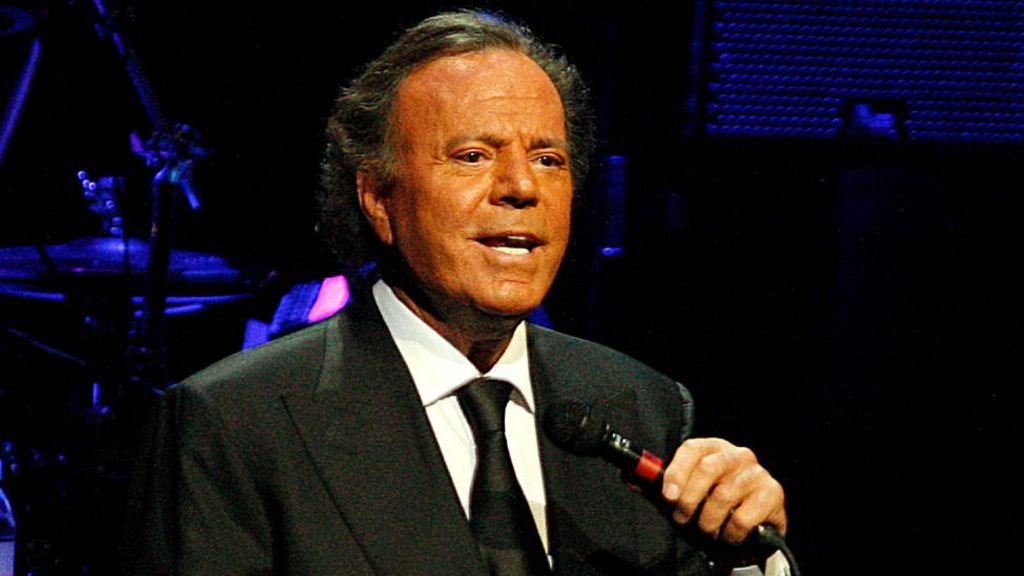
  • Julio Iglesias denies sexual abuse allegations, calling them ‘absolutely untrue’

    Julio Iglesias denies sexual abuse allegations, calling them ‘absolutely untrue’

    Grammy-winning music icon Julio Iglesias has publicly refuted sexual assault allegations brought forward by two former employees, characterizing the accusations as fundamentally untrue. The 82-year-old recording artist issued an emotional denial via Instagram on Friday following media reports detailing alleged misconduct.

    Spanish media outlets elDiario.es and Univision Noticias jointly published an investigative report on January 13th alleging that Iglesias had committed sexual and physical assaults against staff members at his Caribbean residences in the Dominican Republic and Bahamas during 2021. According to the publications, the incidents occurred between January and October of that year.

    The judicial process gained momentum when Spain’s National Court confirmed receipt of formal allegations against Iglesias on January 5th. This specialized tribunal holds jurisdiction over crimes allegedly committed by Spanish citizens abroad, potentially bringing the case before Madrid-based justices.

    In his social media statement, Iglesias expressed profound sorrow over the allegations: “With deep sorrow, I respond to the accusations made by two people who previously worked at my home. I deny having abused, coerced or disrespected any woman. These accusations are absolutely false and cause me great sadness.” The artist further noted his shock at encountering such malice late in his career while vowing to defend his dignity against what he termed a serious affront.

    The Spanish superstar, whose career has spanned six decades and generated over 300 million record sales across multiple languages, received an outpouring of support from fans worldwide. Iglesias acknowledged these messages of encouragement in his public response.

    Spanish prosecutors have confirmed they are currently examining the allegations to determine whether formal proceedings should be initiated. The case development marks a significant moment for the music legend who previously received Grammy recognition for Best Latin Pop Performance and a Lifetime Achievement Award from the recording academy.

  • Taiwan hails its ‘best’ trade deal with US, as China protests

    Taiwan hails its ‘best’ trade deal with US, as China protests

    Taiwanese Premier Cho Jung-tai has characterized the newly established US-Taiwan trade agreement as the most favorable tariff arrangement available to nations maintaining trade surpluses with Washington. This assessment emerged alongside strong condemnation from Chinese officials in Beijing regarding the bilateral pact.

    The groundbreaking agreement, negotiated following former President Donald Trump’s proposed sweeping tariffs on multiple US trading partners, reduces US tariffs on Taiwanese goods to 15% in exchange for substantial investments totaling $250 billion within the American technology sector. This tariff rate aligns with those previously extended to the European Union, Japan, and South Korea, representing a significant reduction from the initially proposed 32% rate that was later adjusted to 20%.

    Premier Cho emphasized the strategic importance of this development, stating: “This demonstrates that the US views Taiwan as an important strategic partner. Our objective has been to lower mutual tariffs, and according to negotiation outcomes, Taiwan has successfully secured 15% tariffs without additional fees.”

    The arrangement includes specific provisions benefiting multiple industries: automotive and wood furniture sectors receive the 15% tariff rate without supplementary charges, while certain aerospace components gain complete tariff exemption. Semiconductor producers investing in the United States will qualify for preferential tariff treatment, including exemptions.

    The agreement establishes an economic partnership framework that will facilitate the creation of world-class industrial parks across the United States, aimed at bolstering domestic manufacturing capabilities. The US Department of Commerce described the pact as “a historic trade deal that will drive a massive reshoring of America’s semiconductor sector.”

    China’s Foreign Ministry spokesperson Guo Jiakun expressed firm opposition to the agreement, reiterating Beijing’s position against any sovereign-implicating agreements between countries maintaining diplomatic relations with China and Taiwan, which China claims as its territory.

    The timing of the agreement coincides with Taiwan Semiconductor Manufacturing Company’s (TSMC) announcement of plans to increase capital spending by nearly 40% this year, following a 35% surge in quarterly net profit driven by artificial intelligence demand. TSMC has committed approximately $165 billion to US investments and is accelerating construction of new fabrication plants in Arizona.

    The agreement requires ratification by Taiwan’s parliament, where opposition lawmakers have raised concerns about potential impacts on the island’s domestic semiconductor industry. Despite these concerns and ongoing geopolitical tensions with China, Taiwan prioritized strengthening economic relations with the United States, according to trade expert Ryan Majerus, a former official in both Trump and Biden administrations.

  • Julio Iglesias denies sexual assault allegations

    Julio Iglesias denies sexual assault allegations

    Spanish music icon Julio Iglesias has publicly refuted serious allegations of sexual assault and human trafficking brought forward by two former employees. The 82-year-old recording artist, whose career spans decades with over 300 million records sold, issued a formal denial via Instagram following reports initially published by Spanish and U.S. media outlets.

    The accusations, currently under investigation by Spain’s national judiciary, originate from a domestic worker and physiotherapist who were employed at Iglesias’s Caribbean residences in the Bahamas and Dominican Republic during 2021. They allege they endured a coercive environment characterized by sexual harassment, restricted mobility, excessive working hours without breaks, and surveillance of personal communications.

    According to advocacy organizations Women’s Link Worldwide and Amnesty International, the complaint details potential crimes of human trafficking for forced labor and violations of sexual freedom. The women’s testimonies describe a pattern of abuse that included working up to 16-hour days without time off and having their movements controlled.

    In his response, Iglesias expressed profound sadness over the allegations, stating: ‘I deny having abused, coerced, or disrespected any woman. These accusations are absolutely false and deeply sadden me.’ He emphasized his commitment to defending his dignity and revealing what he characterizes as the complete truth.

    The case has drawn divided reactions, with some former associates defending Iglesias’s character while media investigations claim to have corroborating evidence including photographic documentation, communication records, and medical reports. The national court’s investigation continues as it examines crimes allegedly committed beyond Spanish borders.

  • Ukraine’s young skiers practice in a bombed-out Olympic training base

    Ukraine’s young skiers practice in a bombed-out Olympic training base

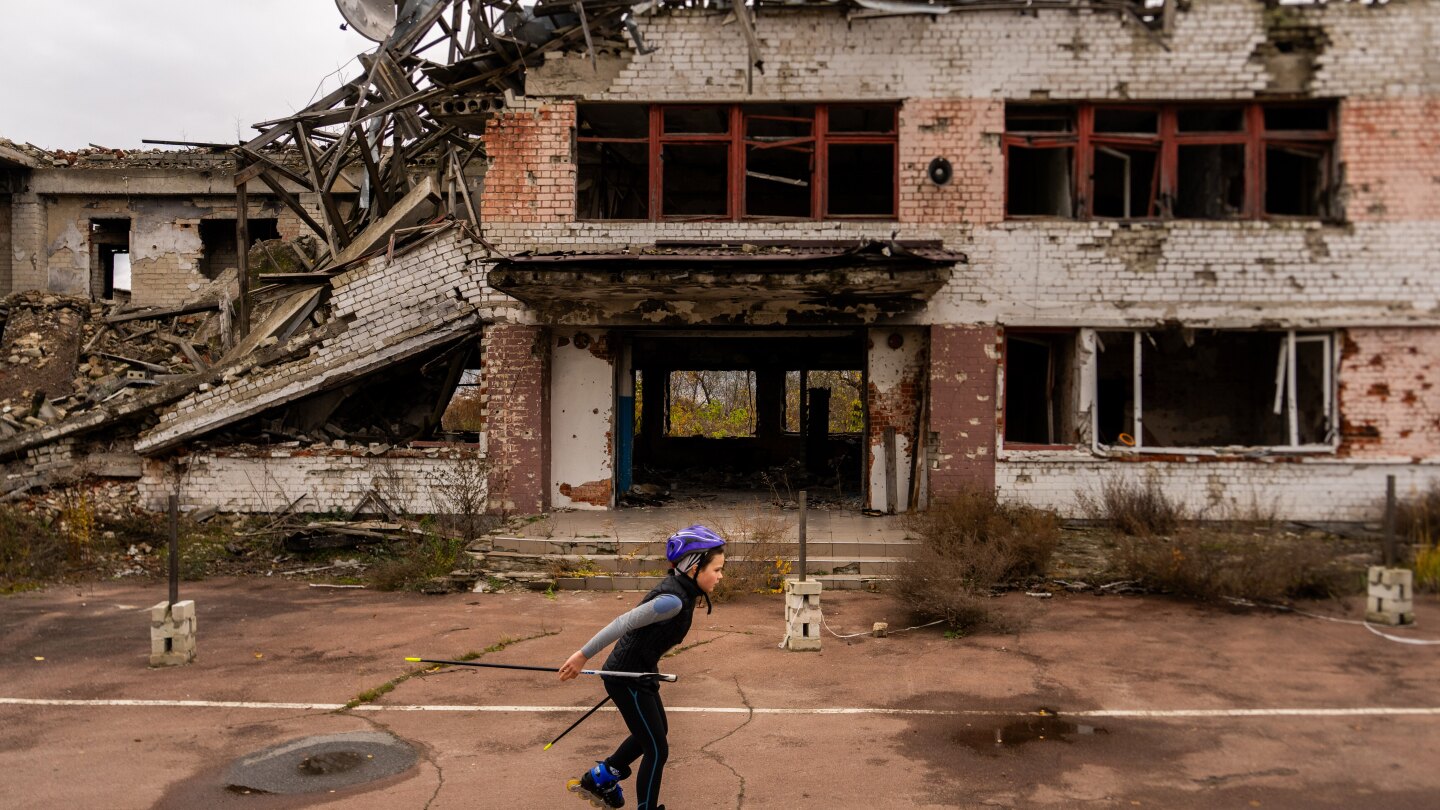
    CHERNIHIV, Ukraine — In the war-scarred landscapes of northern Ukraine, a remarkable story of resilience unfolds daily at the Sports Ski Base of the Olympic Reserve. Approximately 350 young cross-country skiers and biathletes continue their training regimen amidst the persistent threats of aerial attacks, transforming their athletic pursuits into acts of national defiance.

    The sprawling complex, which produced Ukraine’s first Olympic medalist, now operates with bombed-out dormitories and restricted training areas due to unexploded ordnance. Training sessions proceed with surreal normalcy until air raid sirens pierce the silence, triggering swift but practiced evacuations to underground shelters.

    Mykola Vorchak, a 67-year-old coach, observes profound psychological adaptation among his athletes. “We have adapted so well—even the children—that sometimes we don’t even react,” he noted in an October interview. “Although it goes against safety rules, the children have been hardened by the war.”

    The facility lies on the outskirts of Chernihiv, a city two hours north of Kyiv that remains a regular target for attacks on energy infrastructure. Athletes train on blast-marked asphalt tracks using roller skis during non-winter months and practice shooting with laser rifles at electronic targets. The sporadic buzz of drones and subsequent explosions form an ever-present backdrop to their athletic development.

    The complex’s historical significance adds poignancy to its current state. Valentyna Tserbe-Nesina, who won bronze at the 1994 Lillehammer Games—Ukraine’s first Olympic medal as an independent nation—described her shock upon visiting the damaged facility. “I went inside, up to my old room on the second floor. It was gone—no windows, nothing,” she recalled, noting how fire had consumed the trophies they had left behind.

    Among those training at the damaged facility is Khrystyna Dmytrenko, 26, who will represent Ukraine at the upcoming Milan Cortina Winter Olympics. Having completed a tour in Ukraine’s territorial defense forces in 2022, she now sees sports as a demonstration of national strength. “We represent Ukraine on the international stage,” Dmytrenko stated, “letting other countries see our unity, strength and determination.”

    The upcoming Games carry additional significance as Russian athletes may compete in certain events after International Olympic Committee vetting, though without national symbols. This context makes the training efforts in Chernihiv particularly symbolic, with former Olympic biathlete Nina Lemesh noting that some young athletes who began training during wartime have already become international champions in their age groups.

    Standing beside the destroyed dormitories, Lemesh expressed confidence in Ukraine’s athletic future: “Fortunately, Ukrainians remain here. They always will. This is the next generation of Olympians.”

  • In their words: Greenlanders talk about Trump’s desire to own their Arctic island

    In their words: Greenlanders talk about Trump’s desire to own their Arctic island

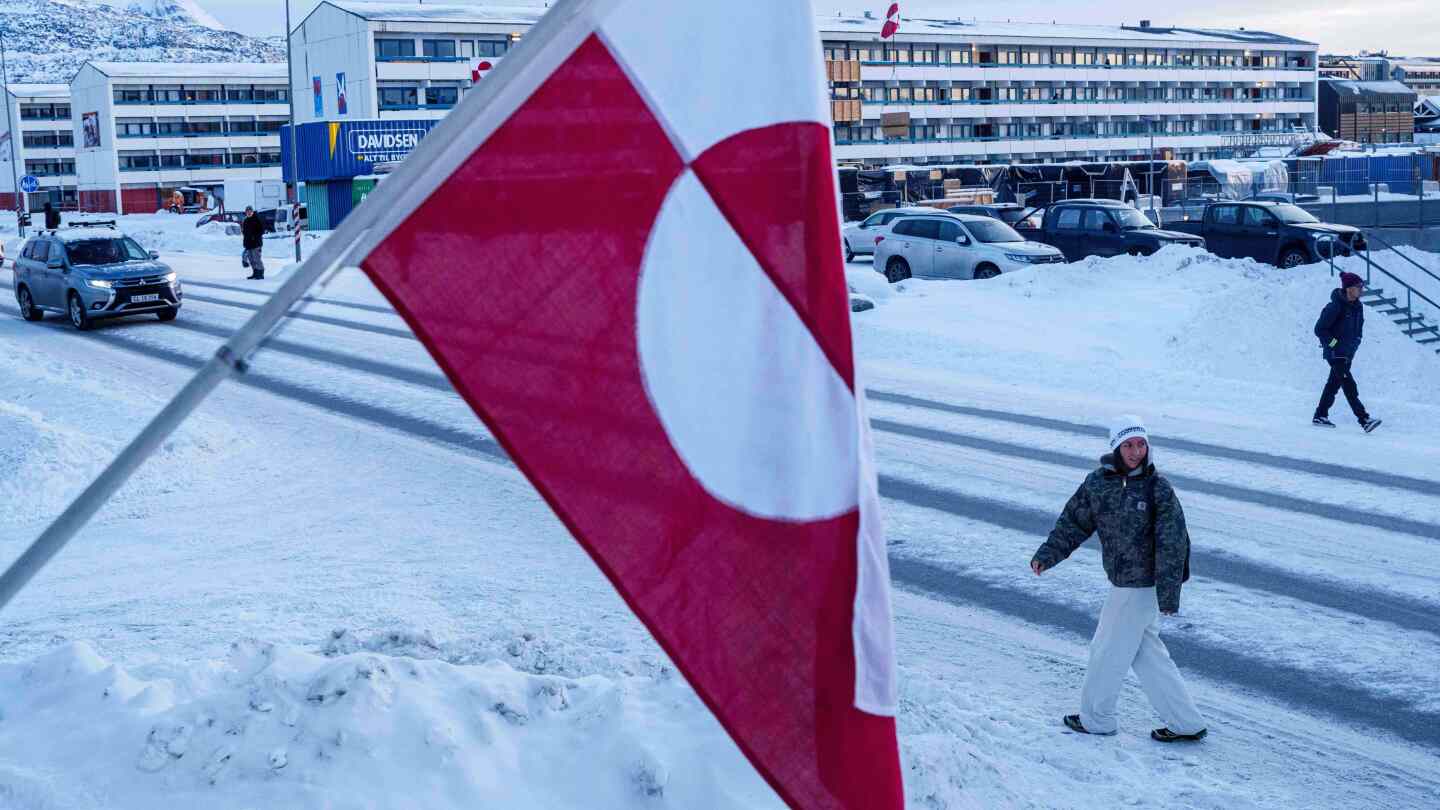
    NUUK, Greenland — The Arctic island of Greenland has become an unexpected focal point in international diplomacy following U.S. President Donald Trump’s expressed interest in acquiring the territory, including suggestions of potential military action. This semiautonomous Danish territory finds itself at the center of a geopolitical storm that has profoundly impacted its citizens.

    Greenlandic Minister Naaja Nathanielsen revealed the psychological toll on the population, stating that anxiety has become pervasive with “people not sleeping, children are afraid, and it just fills everything these days” during a parliamentary meeting in London.

    The situation escalated following a White House meeting between Trump and Danish officials, where a “fundamental disagreement” regarding Greenland’s status was acknowledged. Trump’s dismissive characterization of Denmark’s defensive capabilities in Greenland as “two dog sleds” has been particularly damaging to Greenlandic cultural pride.

    Mari Laursen, a law student and former fishing trawler worker, criticized Trump’s remarks as “undermining us as a people,” highlighting the historical cooperation between Greenlandic hunters and U.S. forces during World War II when dog sled teams helped detect Nazi German presence. “The Arctic climate and environment is so different from maybe what Americans are used to,” Laursen explained. “A dog sled is more efficient. It can go where no warship and helicopter can go.”

    Greenlanders uniformly rejected Trump’s claims of Russian and Chinese naval activity in their waters. Lars Vintner, a heating engineer, stated bluntly: “I think he should mind his own business. We are only 57,000 people. The only Chinese I see is when I go to the fast food market.” Fisherman Gerth Josefsen corroborated this assessment, noting he had only seen “a Russian fishing boat ten years ago.”

    Many Greenlanders perceive economic motivations behind American interest, particularly regarding the island’s untapped mineral resources and oil reserves. Shop worker Maya Martinsen, 21, asserted: “I know it’s not national security. I think it’s for the oils and minerals that we have that are untouched,” suggesting Americans were treating her homeland as a “business trade.”

    The potential loss of Greenland’s social benefits under American administration concerns many residents. Student Tuuta Mikaelsen, 22, emphasized: “There are laws and stuff, and health insurance…we can go to the doctors and nurses…we don’t have to pay anything. I don’t want the U.S. to take that away from us.”

    Greenlandic parliament member Juno Berthelsen, whose opposition party campaigns for independence, reported conducting multiple daily media interviews throughout the crisis. He advocated for diplomatic solutions, noting that “a lot of Republicans as well as Democrats are not in favor of having such an aggressive rhetoric and talk about military intervention.”

    Berthelsen concluded with a definitive statement on Greenland’s sovereignty: “It is our country. Greenland belongs to the Greenlandic people.”

  • Aid workers cleared of human trafficking charges in Greece

    Aid workers cleared of human trafficking charges in Greece

    In a landmark ruling with profound implications for humanitarian work across Europe, a Greek court has fully exonerated 24 volunteer aid workers who faced severe criminal charges for rescuing migrants at sea. The defendants, including prominent figures Sarah Mardini and Sean Binder, were cleared of all remaining accusations after a protracted legal battle spanning nearly seven years.

    The case originated in 2018 when Greek authorities arrested volunteers from Emergency Response Centre International (ERCI), a non-governmental organization operating on Lesbos during the peak of Europe’s migration crisis. Between 2015-2018, ERCI volunteers conducted search and rescue operations for asylum seekers crossing the treacherous waters between Turkey and Greece, saving countless lives during a period when hundreds of thousands attempted the dangerous passage.

    The defendants faced an array of serious charges including human trafficking, facilitating illegal entry, money laundering, and membership in a criminal organization—offenses carrying potential prison sentences of up to 20 years. While espionage charges were dismissed in 2023, the remaining accusations proceeded to trial last month, drawing international condemnation from human rights organizations.

    Presiding Judge Vassilis Papathanassiou delivered the decisive verdict on Thursday, stating that all defendants were acquitted because their actions were clearly intended ‘not to commit criminal acts but to provide humanitarian aid.’ The judgment emphasized that ‘waiting to rescue a human life cannot be considered facilitation of illegal entry,’ and that an online communication group cannot be classified as a criminal organization.

    The prosecution itself had recommended acquittal, with prosecutor Dimitris Smyrnis acknowledging that ‘no independent basis establishing the criminal liability of the defendants has been demonstrated.’ Testimony during the trial revealed that while volunteers used encrypted messaging services to coordinate rescues, they also maintained cooperation with Greek coast guard authorities.

    Defense lawyer Zacharias Kesses expressed frustration that ‘it took 2,889 days for the prosecutor to realise that the accusation made no sense whatsoever.’ Sean Binder, who endured three months of pre-trial detention, described mixed emotions of ‘relief and anger cocktail, equally balanced,’ noting how the seven-year legal limbo had derailed his career and personal life.

    Human rights advocates hailed the decision as a critical victory. Eve Geddie of Amnesty International stated: ‘We hope today’s decision sends a strong signal to Greece and other European countries that solidarity, compassion and defending human rights should be protected and celebrated, not punished.’

    The case has been widely viewed as a test of Europe’s approach to humanitarian assistance amid ongoing migration challenges, with implications for volunteer rescuers across the continent.

  • Troops and vessels from European Nato allies arrive in Greenland

    Troops and vessels from European Nato allies arrive in Greenland

    In a significant multinational military exercise, forces from seven European NATO members have commenced operations in Greenland, marking a strategic deployment in the increasingly important Arctic region. The coordinated effort involves specialized troops and naval assets from Germany, France, Sweden, Norway, Finland, the Netherlands, and the United Kingdom.

    This deployment represents a calculated response to growing geopolitical interest in the Arctic, where melting ice caps are opening new maritime routes and access to untapped natural resources. The multinational force will conduct joint training exercises focused on extreme cold-weather operations, search and rescue missions, and interoperability testing in challenging Arctic conditions.

    The presence of both NATO members and partner nations (Sweden and Finland, though now NATO members, participated as partners when this operation was initially planned) demonstrates a unified European approach to regional security. Military analysts note that this deployment enhances collective capabilities for monitoring maritime activity and responding to potential emergencies in one of the world’s most remote and environmentally sensitive areas.

    Greenland’s strategic significance has increased substantially in recent years, with its geographic position offering unique advantages for both defense monitoring and scientific research. This limited but symbolic deployment reinforces NATO’s commitment to maintaining stability in the High North while demonstrating allied cohesion in addressing emerging security challenges.

  • New Czech government of populist leader Andrej Babiš wins a mandatory confidence vote

    New Czech government of populist leader Andrej Babiš wins a mandatory confidence vote

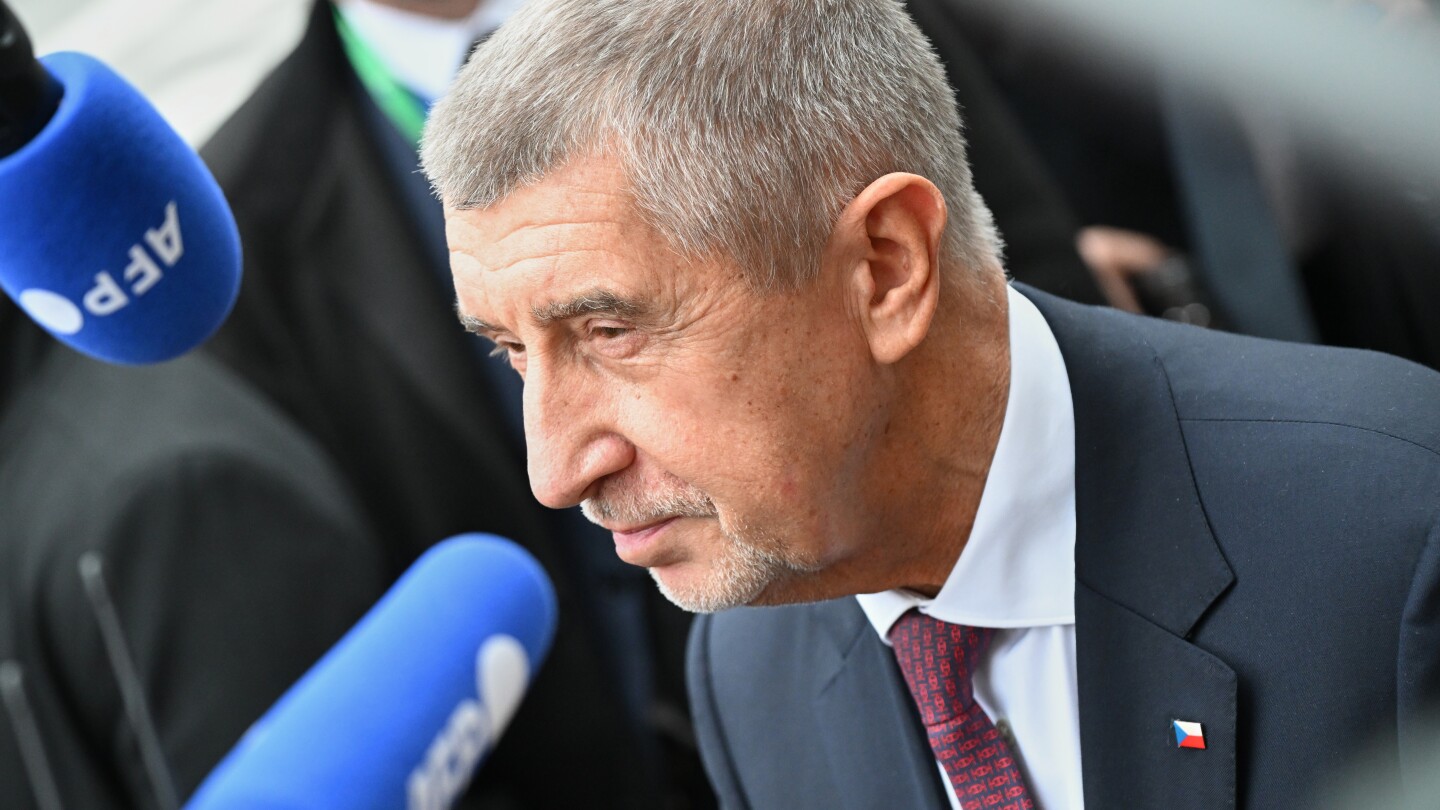
    PRAGUE — The Czech Republic’s newly formed populist government under Prime Minister Andrej Babiš has successfully secured a mandatory parliamentary confidence vote, marking a significant geopolitical reorientation for the Central European nation. The lower house of Parliament endorsed the coalition government with a 108-91 vote on Thursday, granting formal approval to an agenda that diverges from previous Western-aligned policies.

    The administration, emerging from October’s electoral victory by Babiš’s ANO (YES) movement, represents an unconventional alliance with two minority parties: the anti-immigrant Freedom and Direct Democracy party and the right-wing Motorists for Themselves. This 16-member Cabinet coalition shares notable admiration for former U.S. President Donald Trump and signals substantial policy transformations both domestically and internationally.

    Foreign policy shifts include terminating financial assistance to Ukraine and rejecting European Union loan guarantees for the war-torn nation, aligning the Czech Republic with the positions of Hungarian Prime Minister Viktor Orbán and Slovak leader Robert Fico. Notably, the government will maintain administrative oversight of a previous Czech initiative that secured 1.8 million artillery shells for Ukraine from non-EU markets, though without financial contributions.

    Domestically, the coalition partners advocate controversial measures including the potential expulsion of approximately 380,000 Ukrainian refugees and rejection of the EU Green Deal environmental framework. The Motorists party, now controlling environment and foreign ministries, has proposed reviving the nation’s coal industry while the Freedom party questions Czech membership in both the EU and NATO.

  • Song banned from Swedish charts for being AI creation

    Song banned from Swedish charts for being AI creation

    Sweden’s music industry has drawn a definitive line in the digital sand by banning an artificially generated folk-pop ballad from its official charts, despite the track achieving unprecedented streaming success. The controversial song, titled “I Know, You’re Not Mine – Jag vet, du är inte min,” had rapidly ascended to become Sweden’s most-streamed song of 2026 with over five million Spotify plays before facing exclusion.

    The melancholic composition, featuring haunting vocals and acoustic guitar melodies, tells a poignant story of lost love and broken promises through lyrics such as “Your steps in the night, I hear them go” and “Now I know you are not mine, your promises came to nothing.” The artist credited as ‘Jacub’ was revealed to be a digital creation after investigative journalists discovered the absence of social media presence, media appearances, or tour dates.

    Further investigation by journalist Emanuel Karlsten uncovered that the song was registered to executives connected to Stellar Music, a Danish music publishing and marketing firm, with two individuals specifically working in the company’s AI department. The production team, identifying themselves as ‘Team Jacub,’ defended their creative process in a detailed statement, emphasizing that experienced music creators had invested substantial time, emotions, and financial resources into the project.

    Team Jacub characterized AI as merely “a tool” or “assisting instrument” within a “human-controlled creative process,” arguing that the five million streams demonstrated the song’s “long-term artistic value.” When questioned about Jacub’s reality, they responded philosophically: “That depends on how you define the term. Jacub is an artistic project developed and carried by a team of human songwriters, producers, and creators. The feelings, stories, and experiences in the music are real, because they come from real people.

    IFPI Sweden, the country’s music industry organization, remained unimpressed by these explanations. Ludvig Werner, head of IFPI, stated unequivocally: “Our rule is that if it is a song that is mainly AI-generated, it does not have the right to be on the top list.” This stance positions Sweden at the forefront of the AI music regulation debate, even as the country establishes itself as a global laboratory for the AI economy.

    The Swedish approach contrasts sharply with international organizations like Billboard, which considers AI-generated tracks eligible for its specialty charts based on commercial performance metrics alone. Meanwhile, platforms like Bandcamp have implemented even stricter prohibitions against music “generated wholly or in substantial part by AI.”

    This controversy emerges against a backdrop of significant industry developments, including the September launch of a pioneering licensing system by Sweden’s music rights society STIM, described as “the world’s first collective AI licence.” The system allows tech companies to legally train AI models on copyrighted works in exchange for royalty payments, attempting to balance innovation with creator protection.

    As AI-generated music projects toward a billion-pound industry in coming years, the Jacub case illustrates the ongoing tension between technological advancement and traditional creative values, suggesting that for now, human musicians still ultimately control the narrative in music’s evolving digital landscape.

  • International media flock to Greenland as Trump turns the Arctic island into a geopolitical hot spot

    International media flock to Greenland as Trump turns the Arctic island into a geopolitical hot spot

    NUUK, Greenland — The serene Arctic capital of Nuuk has transformed into an unlikely international media hub as journalists from across the globe descend upon Greenland to document the escalating geopolitical crisis sparked by U.S. President Donald Trump’s persistent claims of wanting to acquire the vast island territory.

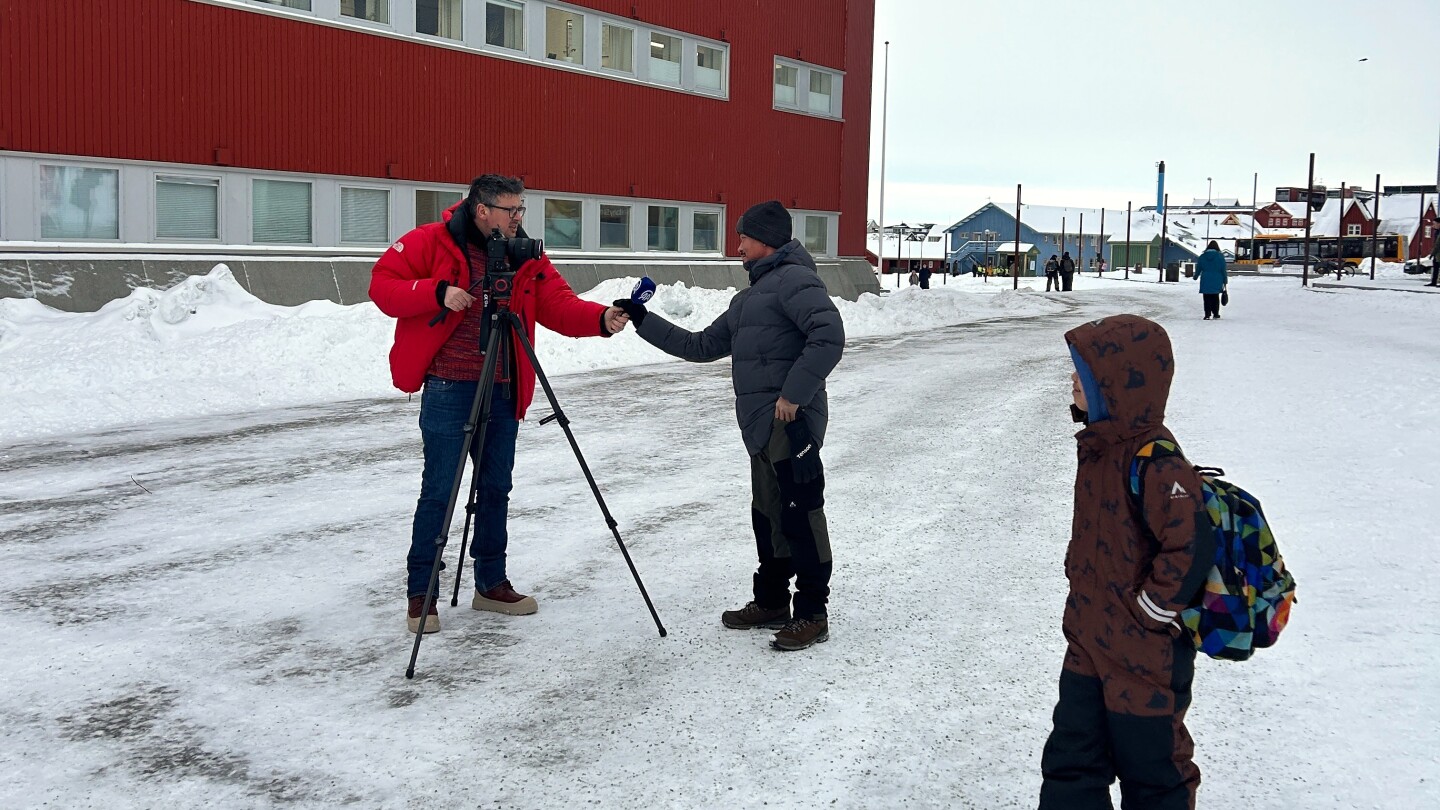
    For weeks, international news crews from prestigious organizations including The Associated Press, Reuters, CNN, BBC, Al Jazeera, and various Scandinavian and Japanese outlets have been navigating Nuuk’s limited daylight hours—approximately five hours between 11 a.m. and 4 p.m.—to capture the multicolored houses, snow-capped hills, and freezing fjords that define Greenland’s landscape.

    The media attention represents what local politicians term ’round two’ of global interest, referencing Trump’s initial 2025 declarations about controlling Greenland. Journalists now station themselves every few meters along Nuuk’s central shopping street, conducting live broadcasts and repeatedly approaching the same local business owners and residents—some enduring up to 14 interviews daily.

    Greenland, a semi-autonomous territory of Denmark with a population of merely 57,000, finds itself at the center of a dangerous geopolitical standoff. Trump justifies his acquisition ambitions by citing national security concerns and alleging that China and Russia harbor similar designs on Greenland’s vast untapped mineral reserves. These claims have prompted Denmark’s Prime Minister to issue a stark warning that any U.S. attempt to seize Greenland by force could potentially dismantle the NATO alliance.

    Local residents express both exhaustion and bewilderment at the sustained attention. Juno Berthelsen, MP for the independence-seeking Naleraq opposition party, acknowledges the fatigue setting in among Greenland’s small population as journalists repeatedly ask the same questions. Young Greenlanders like 21-year-old Maya Martinsen characterize Trump’s obsession as ‘weird,’ accusing him of using national security as a pretext to access the island’s untouched oil and mineral resources.

    The overwhelming consensus among Greenlanders is that their future should remain theirs to determine. They emphasize that to them, Greenland represents home—a place of breathtaking natural beauty and community—rather than merely a business opportunity or geopolitical bargaining chip.