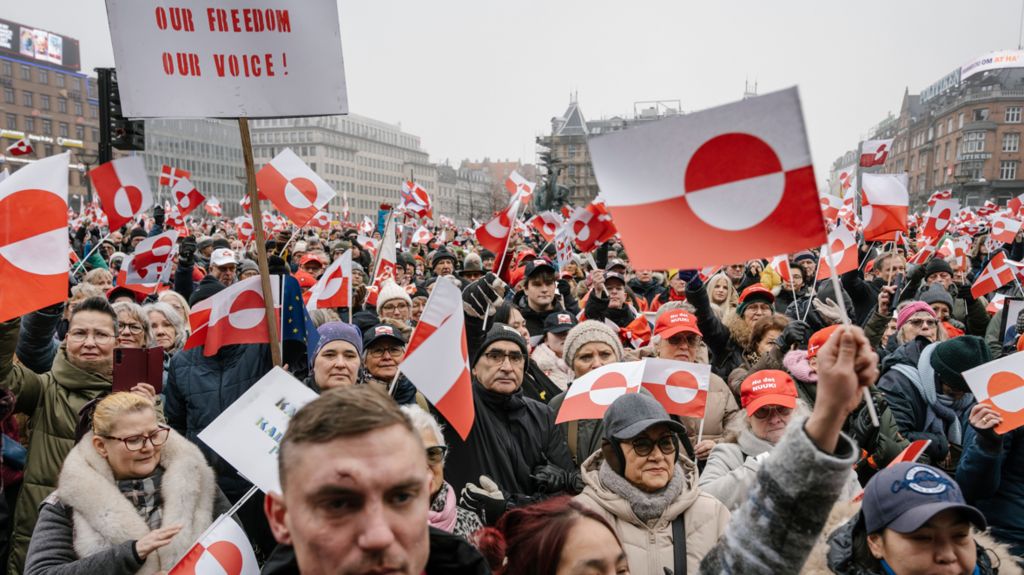
In a significant address to the European Parliament in Strasbourg, Greenland’s Prime Minister Jens-Frederik Nielsen expressed gratitude to the European Union for its enduring partnership and called for increased investment in the Arctic island’s mineral resources, renewable energy, and infrastructure. Nielsen, 34, described 2025 as a pivotal year for Greenland, emphasizing the challenges posed by climate change while avoiding mention of former U.S. President Donald Trump’s controversial remarks about acquiring the territory. He highlighted the EU’s role as a “stable, reliable, and important partner” for over four decades, extending a heartfelt thanks for its support during challenging times. Greenland, once a Danish colony, became a self-governing entity in 2009 but remains part of the Danish realm. Nielsen underscored the island’s abundance of critical raw minerals sought by the EU, noting the capital-intensive nature of mining. He also urged investment in hydroelectricity, telecommunications, and the construction of two regional airports, emphasizing the need for trusted operators to ensure infrastructure stability. The speech concluded with a standing ovation from lawmakers as Nielsen thanked the EU for being a “trusted friend of Greenland.”
标签: Europe
欧洲
-

EU chief says Russia is waging a ‘gray zone campaign’ and Europe must meet the challenge
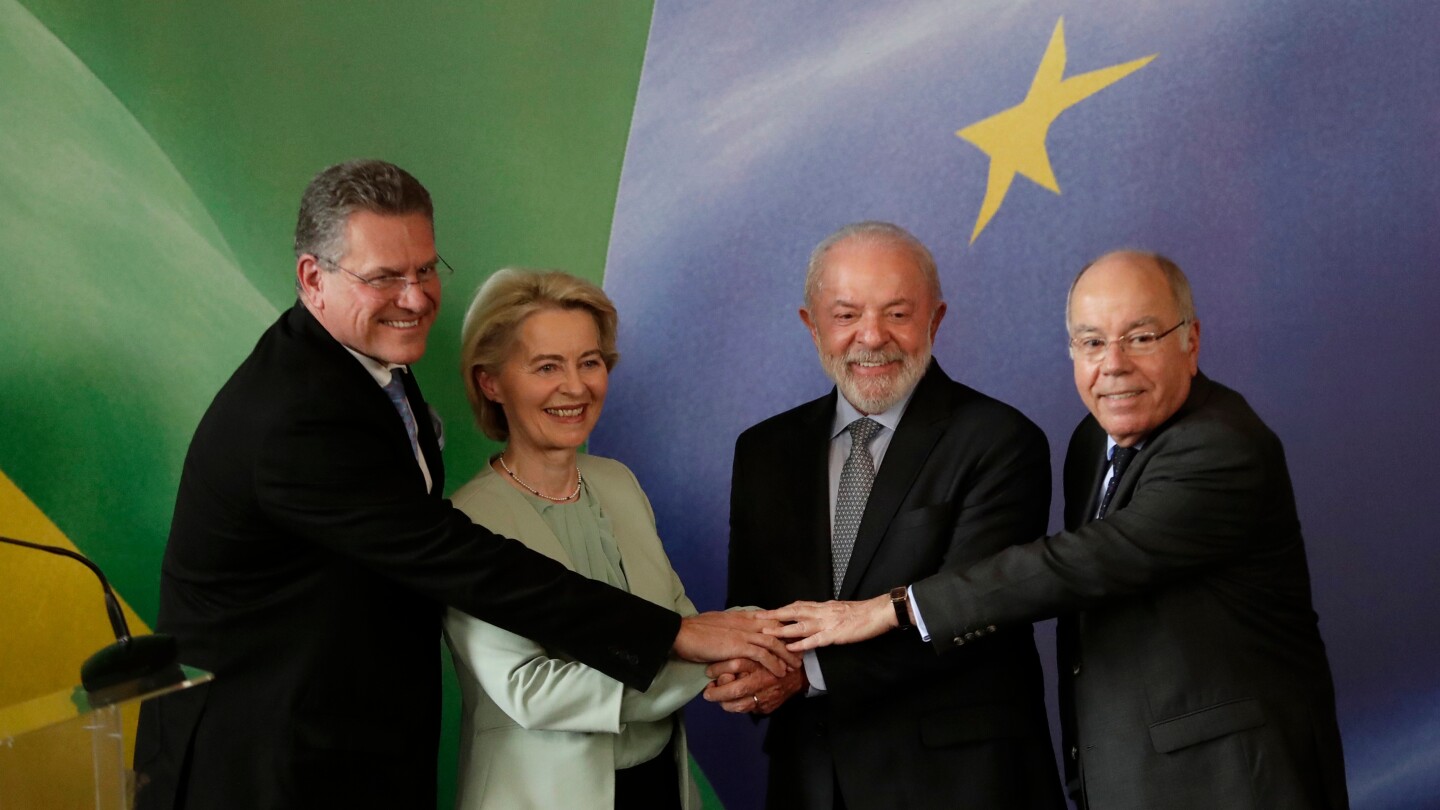
BRUSSELS (AP) — The European Union’s top official, European Commission President Ursula von der Leyen, issued a stark warning on Wednesday, asserting that Russia is orchestrating a “targeted gray zone campaign” against Europe. This campaign includes airspace violations, sabotage, and cyberattacks, which are expected to intensify if the Kremlin is not confronted. Von der Leyen emphasized that Europe must respond decisively to these threats to safeguard its territory and security. In just two weeks, incidents such as fighter jets breaching Estonia’s airspace and drones overflying military bases and critical infrastructure sites in Belgium, Denmark, Germany, Poland, and Romania have been reported. Von der Leyen urged EU lawmakers in Strasbourg, France, to investigate every incident and attribute responsibility without hesitation. She stressed that every square centimeter of European territory must be protected and safe, warning that inaction would only allow the gray zone to expand. Under von der Leyen’s leadership, the EU’s executive branch is developing a comprehensive plan to address these challenges by 2030. This plan includes the creation of a “drone wall,” a high-tech system designed to detect, track, and neutralize drones, as well as disrupt their operating systems or ground-based pilots. EU officials believe Russia could potentially launch an attack on another European country within three to five years. Von der Leyen also highlighted the need for an affordable and effective anti-drone system, pointing to lessons from Ukraine. She argued that European countries must invest more in defense, ensuring that such investments create jobs and benefit the continent’s economy. The commission insists that at least 65% of any EU-funded defense project should be based in Europe, countering the current trend where most defense investments go to U.S. companies. At a recent summit in Copenhagen, EU leaders appeared to adopt a tougher stance on drone incidents, sabotage, cyberattacks, and sanction-busting. French President Emmanuel Macron advocated for a more aggressive approach, including shooting down drones entering European airspace and intercepting shadow fleet ships illicitly transporting oil to deprive Moscow of war revenue.
-

Young boy dies in road traffic incident
A tragic road traffic accident occurred on Tuesday afternoon in Rathmintin, Jobstown, Dublin, resulting in the death of a young boy. The incident took place at approximately 14:00 local time outside a residential property. Emergency services swiftly transported the boy to Children’s Health Ireland at Crumlin, where he was sadly pronounced dead upon arrival. The Gardaí, Ireland’s national police service, have initiated a thorough investigation into the incident. Forensic experts conducted a technical examination of the scene to gather crucial evidence. The community has been left in shock and mourning as authorities work to determine the exact circumstances surrounding this heartbreaking event. Further updates are expected as the investigation progresses.
-

US Ryder Cup a mess that not even another task force could fix
The U.S. Ryder Cup team’s woes persist, with no clear path forward following yet another defeat to Europe. The aftermath of the 2014 loss in Scotland, where Tom Watson’s captaincy was heavily criticized, led to the formation of a task force aimed at revitalizing the team. Despite initial optimism from players like Phil Mickelson, who envisioned a long-term blueprint for success, the Americans have only managed to win two of the last five Ryder Cups. Europe, on the other hand, continues to dominate, practically owning the competition. The task force was disbanded in 2015, replaced by a Ryder Cup committee, but the system remains flawed. The PGA of America, which oversees the biennial event, has struggled to align with the PGA Tour, leading to a disconnect with players. Paul Azinger, who successfully captained the U.S. team in 2008, has been notably absent from Ryder Cup matters since. The roots of these issues trace back to 1968, when a split between touring pros and PGA professionals led to the creation of the modern PGA Tour. The Ryder Cup, once a minor exhibition, has since grown into a high-stakes event, but the U.S. lacks a consistent strategy for success. Mickelson’s move to LIV Golf further disrupted continuity, leaving the PGA of America to consider handing over management to the PGA Tour, which has more expertise and player relationships. While this may not guarantee a turnaround, it could be a step in the right direction.
-

EU steel tariff hike threatens ‘biggest ever crisis’ for UK industry
The European Union has unveiled a controversial plan to impose a 50% tariff on steel imports exceeding a reduced quota, a move that has sparked alarm within the UK steel industry. The proposed measures, set to take effect early next year, aim to halve the volume of steel imports into the EU, with tariffs applying to any imports beyond 18.3 million tonnes annually—a 47% reduction from 2024 levels. This decision comes amid mounting pressure from EU member states and their domestic steel industries, which have struggled to compete with cheaper imports from countries like China and Turkey.
-

Two Austrian women switched at birth meet 35 years later
In a remarkable turn of events, two Austrian women, Doris Grünwald and Jessica Baumgartner, who were accidentally switched at birth in 1990, have finally met each other after 35 years. The incident occurred at the LKH-Uniklinikum hospital in Graz, where both women were born prematurely. Shortly after their births, a mix-up led to them being handed to the wrong families. The truth began to unravel in 2012 when Doris discovered her blood type did not match her parents’ during a blood donation. Austrian public broadcaster ORF reported on the case in 2016, but the other family remained elusive at the time. Jessica, raised by Herbert and Monika Derler, learned of the switch when a doctor informed her about the mismatched blood types during her pregnancy. The two women connected via Facebook and eventually met in person, describing the encounter as akin to meeting a long-lost sister. ‘We got along right away,’ Doris shared. ‘It was an indescribably good feeling.’ The families also met recently, with the emotional reunion captured by an ORF TV crew. Mrs. Derler expressed her initial ’emotional turmoil’ but emphasized that Jessica would always be her child, while Evelin Grünwald reflected on the expansion of her family. Gebhard Falzberger, the hospital’s operations manager, apologized to both families, acknowledging the grave mistake. Legal steps were taken in 2016 to secure Doris’s inheritance rights and compensation, and the Derlers are now pursuing similar measures. Jessica described the clarity as a relief but admitted to the emotional complexity of the situation, highlighting both the beauty and pain of the experience.
-

Time may be running out for Master of clocks Macron: What next for France?
French President Emmanuel Macron, once hailed as the ‘master of the clocks’ for his strategic timing, now finds his political grip slipping as France’s political crisis intensifies. For the third time in a year, Macron’s choice of prime minister has resigned, with Sébastien Lecornu stepping down after just 26 days in office. Lecornu’s departure underscores the deepening instability in Macron’s administration, as nearly three-quarters of French voters believe the president should resign.
-

Rahm returns to home event in Spain after ‘toughest week’ of career at the Ryder Cup in New York
Jon Rahm has returned to competitive golf at the Spanish Open in Madrid, seeking to make history by winning a record fourth title. This achievement would surpass the legendary Seve Ballesteros, who last won the tournament in 1995. Rahm’s participation follows what he described as the most mentally challenging week of his career during the Ryder Cup in New York, where he faced relentless taunting from the American crowd. Despite the pressure, Rahm helped Europe secure a victory, calling it the most exhilarating experience of his career. He now aims to channel that energy into his performance in Madrid. The Spanish Open holds special significance this year, as the winner will earn an automatic spot in next year’s Masters and the British Open. Rahm, a three-time champion, faces stiff competition from fellow LIV players like Sergio Garcia, Patrick Reed, and Joaquin Niemann. The tournament also marks the 50th anniversary of Arnold Palmer’s victory in 1975, adding to its historical prestige.
-

Irish government to divert billions of extra euros to savings funds
In a strategic move to safeguard its economic future, the Irish government has unveiled plans to channel billions of euros into national long-term savings funds. This decision comes in response to growing concerns over the volatility of multinational corporation tax revenues, which have been a cornerstone of Ireland’s economy for decades. Finance Minister Paschal Donohoe presented the budget to the Dáil, Ireland’s lower house of parliament, outlining the government’s commitment to mitigating risks associated with over-reliance on these tax receipts.
-

EU proposes steel industry protections, rattling UK manufacturers
The European Union has unveiled a contentious proposal to significantly reduce its tariff-free quota on steel imports, a move that could impose hefty tariffs on products from countries such as China, India, Turkey, and the United Kingdom. Under the new plan, imports exceeding 18.3 million tons will face a 50% tariff, doubling the current rate of 25%. Neighboring nations like Norway, Iceland, and Ukraine are exempt from these measures. The proposal aims to protect Europe’s steel industry from global overcapacity and the diversion of steel exports caused by high U.S. tariffs. Importers will also be required to disclose the origin of their products, and a complex quota system will regulate access to the EU market. The proposal, set to replace the current World Trade Organization-aligned safeguard policy expiring in 2026, has sparked concerns in the UK, where the steel industry warns of potential collapse. UK Steel Director-General Gareth Stace described the situation as the industry’s ‘biggest crisis ever,’ urging the British government to negotiate country-specific quotas with the EU. The EU’s steel sector, which employs 300,000 people across 20 member states, has faced significant challenges over the past two decades, losing a quarter of its workforce. The proposal reflects the EU’s broader strategy to decarbonize and reindustrialize its steel industry, a sector integral to its economic security and strategic autonomy. The European Parliament and Council must now ratify or amend the proposal, which could lead to further negotiations with the WTO.