标签: Europe

欧洲

  • Balkan truck drivers block border crossing in protest of EU entry rules

    Balkan truck drivers block border crossing in protest of EU entry rules

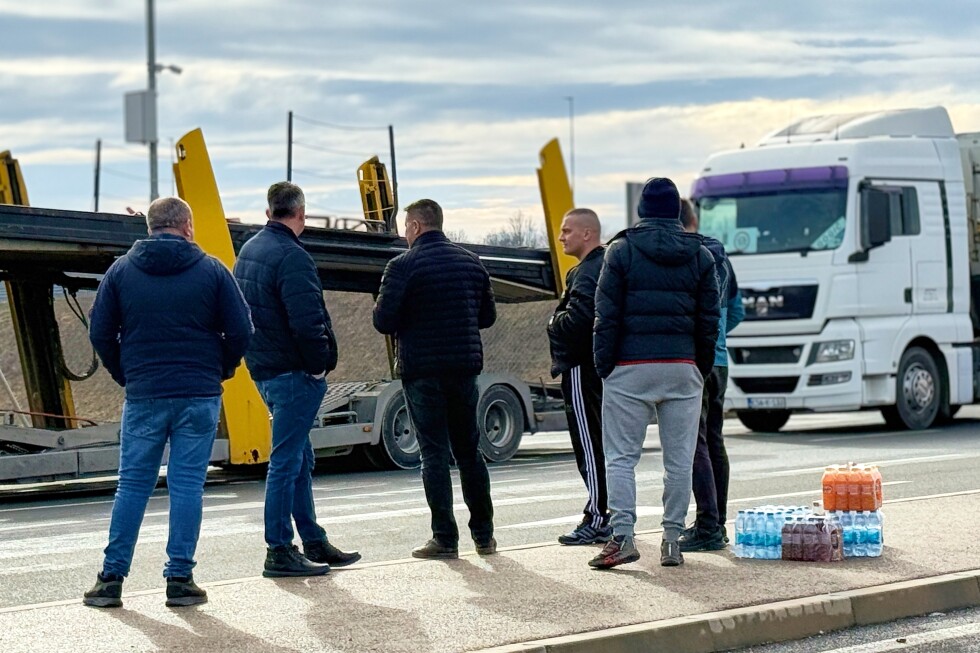
    Truck drivers across four Balkan nations launched coordinated border blockades on Monday, creating massive traffic disruptions in a dramatic protest against recently enforced European Union entry regulations. The industrial action targeted key freight crossings in Bosnia, Serbia, North Macedonia, and Montenegro, including the strategic Adriatic Sea port of Bar in southern Montenegro.

    The conflict centers on the EU’s enhanced Electronic Entry and Exit System (EES), implemented in October to modernize border management and scheduled for full activation by April. While designed to combat illegal migration and monitor permitted stays, the system has triggered unintended consequences for commercial transport operators.

    At the heart of the dispute is the strict enforcement of the Schengen Area’s 90/180-day rule, which limits non-EU citizens to 90 days within any 180-day period. Professional drivers who regularly cross EU borders report exhausting their allotted days rapidly, resulting in extended periods where they cannot operate their established routes. Numerous drivers have faced detention and deportation for overstaying their permitted time.

    ‘Amid the Svilaj border crossing protest between Bosnia and Croatia, trucker Amir Hadzidedic expressed the industry’s frustration: ‘We regret that circumstances have forced this action, but we had no alternative. Our sole demand through this demonstration is the right to continue working—nothing more. We appeal for understanding as we have exhausted all other options.’

    The situation has escalated to diplomatic levels, with Serbian Prime Minister Djuro Macut recently advocating for special status for regional drivers during meetings with EU representatives. Macut warned that without intervention, the regulations risk ‘complete paralysis’ of transportation networks and significant economic damage across Balkan economies.

    Protest organizers have implemented humanitarian exceptions, permitting the passage of medical supplies, live animals, and hazardous materials including weapons and explosives. The disruption extends beyond freight transport, with bus drivers similarly affected—stranding passengers for hours when drivers exceed their permitted stays and require replacement.

    The protest highlights broader tensions as six Western Balkan nations—Albania, Bosnia-Herzegovina, Serbia, Kosovo, North Macedonia, and Montenegro—progress through various stages of the EU accession process, balancing regulatory alignment with practical economic realities.
  • Spain slashes speed limit on popular train route after fault found

    Spain slashes speed limit on popular train route after fault found

    Spain’s rail network is confronting a multifaceted crisis as authorities implement emergency speed restrictions on key high-speed lines while simultaneously grappling with severe service disruptions in Catalonia. The latest development involves a detected crack on the Madrid-Barcelona line, prompting transport officials to impose an 80km/h speed limit on a critical section approximately 110km west of Barcelona. Transport Minister Óscar Puente confirmed the fault was identified Sunday night between Alcover and l’Espluga de Francolí in the Catalonia region.

    This safety measure follows the devastating Adamuz collision in southern Spain that claimed 45 lives earlier this month, marking the country’s worst rail disaster in over a decade. The transport ministry has emphasized that the newly discovered crack does not immediately endanger trains, though the drastic speed reduction from normal operating speeds of 300km/h represents the most severe in a series of recent restrictions.

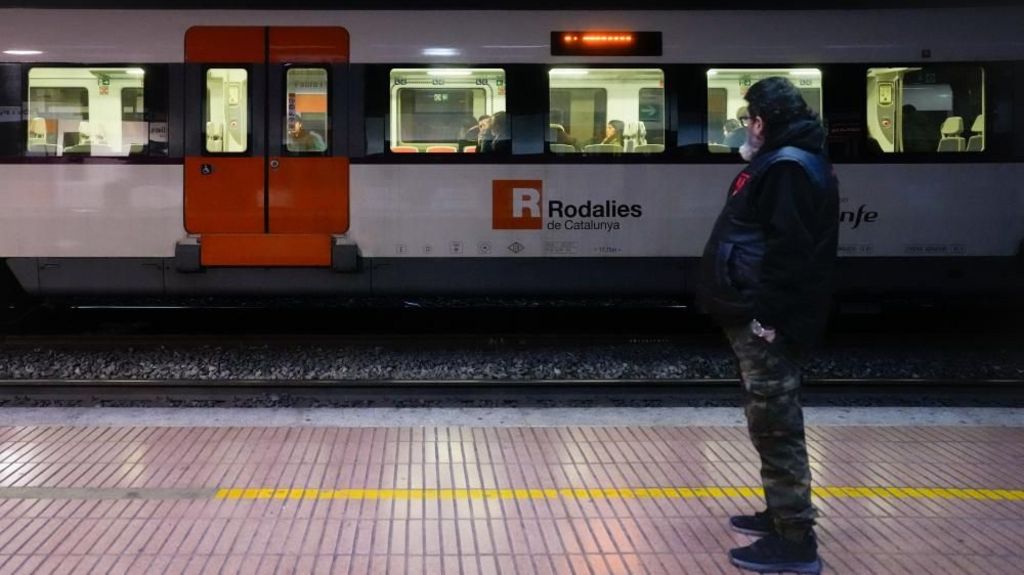
    Parallel to these high-line concerns, Catalonia’s Rodalies commuter service has experienced systemic collapse. Service suspensions began last week after a trainee driver died when a train struck a collapsed wall, prompting drivers to demand enhanced safety guarantees. On Monday, two separate incidents caused further chaos, with Spanish authorities acknowledging they haven’t determined the cause but not eliminating the possibility of cyber sabotage.

    The political fallout is intensifying as opposition politicians demand Minister Puente’s resignation, accusing him of misleading the public following the Adamuz tragedy. Investigations into that crash are focusing on a 40cm section of track that fractured at the junction between newly manufactured (2023) and older (1989) rail components. Meanwhile, the Catalan Republican Left party attributes the Rodalies breakdown to ‘decades of lack of investment,’ with local business leaders warning that reputational damage may exceed economic losses.

    Prime Minister Pedro Sánchez is scheduled to address Congress on February 11 regarding the escalating rail crisis, as Spain’s transportation infrastructure faces unprecedented scrutiny and challenges.

  • Britain’s Conservative Party loses another high-profile lawmaker to hard-right Reform

    Britain’s Conservative Party loses another high-profile lawmaker to hard-right Reform

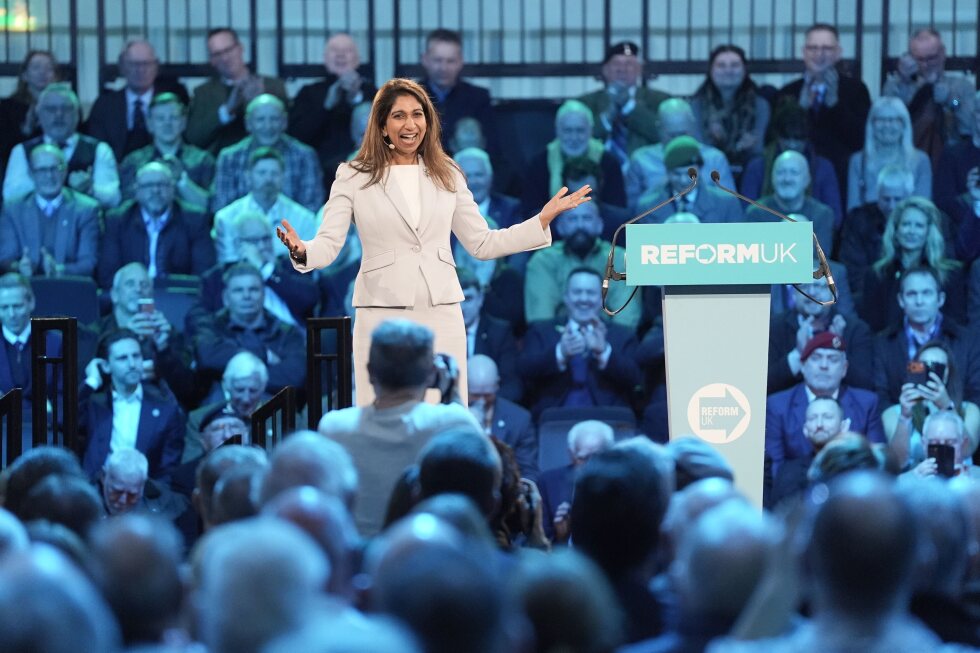
    In a significant political realignment, former UK Home Secretary Suella Braverman has abandoned the Conservative Party after three decades to join the hard-right Reform UK party. The prominent anti-immigration lawmaker, who represented a southern England constituency, announced her defection on Monday, marking another high-profile departure from the Conservatives.

    Braverman, dismissed from her interior minister position in 2023 for repeatedly contradicting government policy, declared her decision stemmed from fundamental disagreements with the party’s direction. ‘We can either continue down this route of managed decline to weakness and surrender,’ Braverman stated, ‘or we can fix our country, reclaim our power, rediscover our strength. I believe that a better Britain is possible.’

    Her move follows recent defections including Robert Jenrick’s, bringing Reform UK’s parliamentary representation to eight seats in the 650-member House of Commons. Despite holding minimal parliamentary seats, Reform UK has demonstrated surprising strength in opinion polls, currently leading both the governing Labour Party and Conservatives ahead of critical local elections in May.

    The 45-year-old lawyer’s controversial tenure as home secretary included characterizing migration as a ‘hurricane’ heading for Britain, describing homelessness as a ‘lifestyle choice,’ and accusing police of excessive leniency toward pro-Palestinian protesters. Critics attributed her inflammatory rhetoric to escalating tensions that culminated in clashes between far-right demonstrators and police during large-scale protests.

    Braverman, known for criticizing liberal social values and what she termed the ‘tofu-eating wokerati,’ had previously advocated for Reform UK leader Nigel Farage’s integration into Conservative ranks following their devastating July 2024 election defeat. After colleagues rejected her proposals and dismissed her as ‘mad, bad and dangerous,’ she has now joined Farage’s expanding political movement that argues Britain is broken and overwhelmed by migration issues.

  • Interpol arrests more than 3,700 suspects in global trafficking crackdown

    Interpol arrests more than 3,700 suspects in global trafficking crackdown

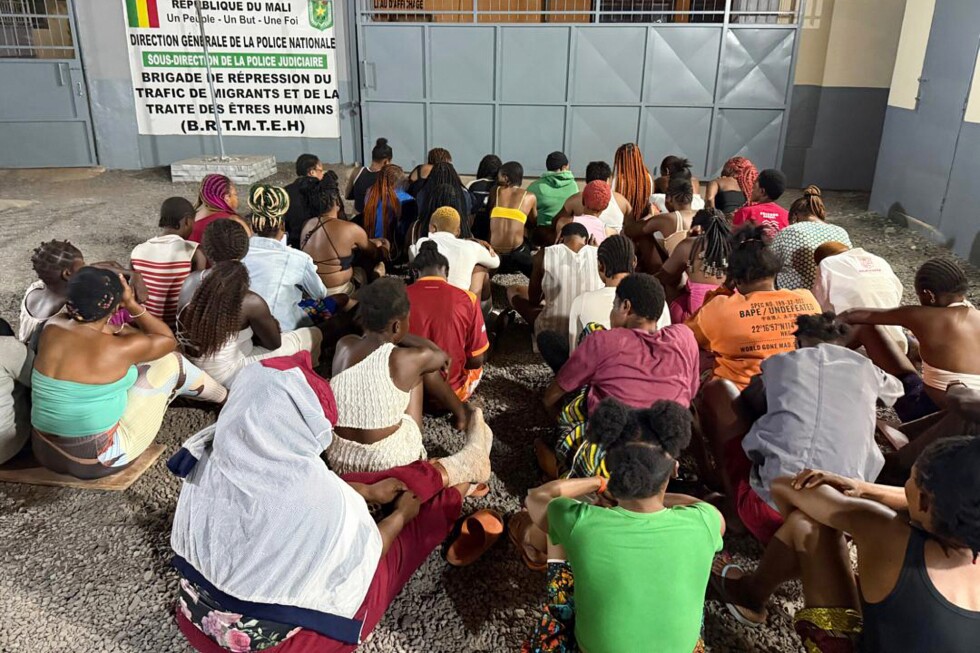
    In a sweeping international law enforcement initiative, Interpol has announced the successful disruption of extensive human trafficking networks across 119 countries. Operation Liberterra III, conducted from November 10-21, mobilized approximately 14,000 officers worldwide in what represents one of the most comprehensive anti-trafficking efforts to date.

    The coordinated crackdown resulted in 3,744 arrests of suspected traffickers and smugglers, while rescuing 4,414 individuals from exploitative situations. Authorities identified an additional 12,992 people entangled in illegal migration schemes during the operation, which has sparked at least 720 new criminal investigations.

    Interpol Secretary General Valdecy Urquiza emphasized the evolving nature of these criminal enterprises, noting that “criminal networks are exploiting new routes, digital platforms and vulnerable populations with increasing sophistication.” The operation revealed significant shifts in trafficking patterns, particularly the emergence of South American and Asian victims within African territories—a departure from traditional routes that primarily involved African victims being transported abroad.

    Critical intervention points included dangerous coastal routes along Senegal, Guinea-Bissau, Morocco, and Algeria, as well as land-based networks throughout Peru and Brazil. In West and Central Africa alone, coordinated efforts across Benin, Burkina Faso, Côte d’Ivoire, Ghana, Senegal, and Sierra Leone liberated over 200 victims and dismantled multiple recruitment and exploitation hubs.

    The investigation uncovered how traffickers typically lure victims through false promises of foreign employment opportunities, then impose exorbitant fees that force victims into recruiting friends and family members—effectively creating pyramid-style exploitation schemes. This announcement follows Interpol’s recent revelation of a separate cybercrime crackdown in Africa that resulted in 1,209 arrests targeting individuals who had victimized approximately 88,000 people.

  • Talks with US and Ukraine in Abu Dhabi were constructive but major challenges remain, Kremlin says

    Talks with US and Ukraine in Abu Dhabi were constructive but major challenges remain, Kremlin says

    Diplomatic efforts to resolve the ongoing conflict between Russia and Ukraine are demonstrating tangible signs of advancement, though significant obstacles persist on the road to a comprehensive peace agreement, according to senior Kremlin officials.

    Kremlin spokesman Dmitry Peskov confirmed Monday that recent trilateral negotiations involving Russian, Ukrainian, and American representatives in Abu Dhabi had produced constructive dialogue, with additional talks scheduled for February 1st in the United Arab Emirates. While characterizing the discussions as positively oriented, Peskov emphasized that “serious work ahead” remains before any definitive breakthrough can be achieved.

    The weekend negotiations, conducted discreetly on Friday and Saturday, represent the latest development in a yearlong diplomatic initiative by the Trump administration to broker a peaceful resolution to the nearly four-year conflict. Although both Ukrainian and Russian officials have expressed willingness to consider Washington’s compromise proposals, fundamental disagreements persist regarding the specific terms of any potential settlement.

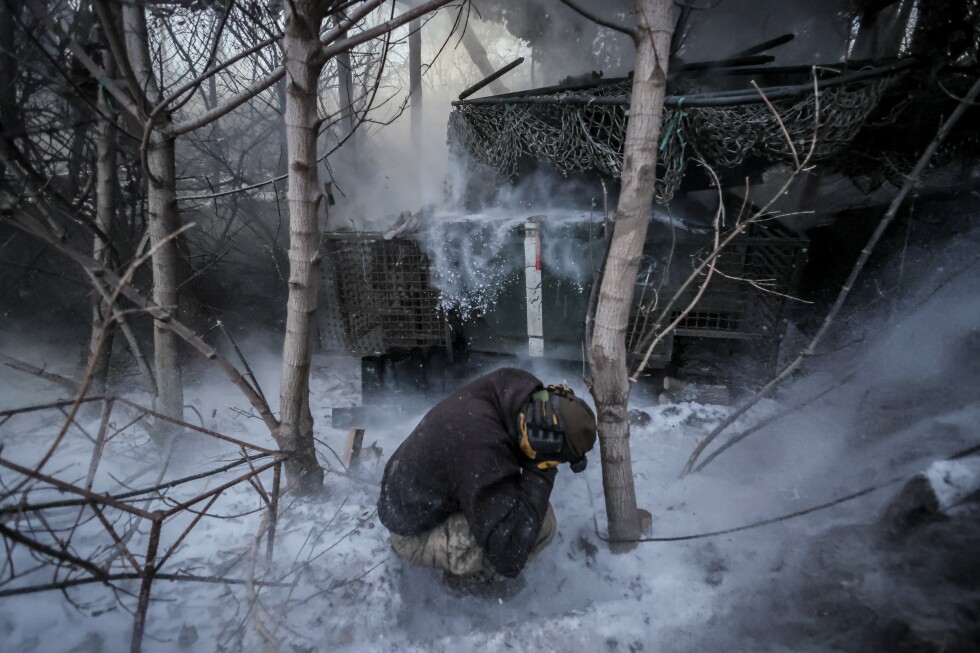
    Meanwhile, military operations continue unabated along the extensive 1,000-kilometer front line traversing eastern and southern Ukraine. Ukrainian civilians endure another winter of severe hardship amid ongoing Russian bombardment of urban centers and critical infrastructure.

    President Volodymyr Zelenskyy corroborated the constructive nature of the Abu Dhabi discussions, revealing Sunday that documentation outlining postwar U.S. security guarantees for Ukraine is “100% ready” for formal signing. Kyiv has consistently emphasized that American security commitments constitute an essential component of any comprehensive peace agreement with Moscow, particularly following Russia’s 2014 annexation of Crimea and subsequent full-scale invasion in February 2022.

    Core disagreements center on territorial disputes, specifically whether Russian forces should withdraw from occupied Ukrainian territories—particularly the Donbas industrial region—or maintain control over captured areas. The upcoming February negotiations will address broad military and economic considerations, including potential ceasefire arrangements preceding a comprehensive settlement.

    Concurrent with diplomatic developments, both nations reported escalated drone warfare. Russia’s Defense Ministry claimed interception of 40 Ukrainian drones, while Ukrainian forces acknowledged targeting a Krasnodar region oil refinery supplying Russian military operations. Ukrainian authorities reported intercepting 110 of 138 Russian drones launched overnight, with 21 striking targets across eleven locations.

  • Host Italy has new skiing star for Olympics and he’s gone from tragedy to triumph

    Host Italy has new skiing star for Olympics and he’s gone from tragedy to triumph

    Italian alpine skier Giovanni Franzoni has dramatically ascended from relative obscurity to become one of the most compelling stories heading into the Milan Cortina Winter Games. The 24-year-old athlete recently captured skiing’s most prestigious prize—the downhill victory on the legendary Streif course in Kitzbühel, Austria—an achievement often described as the sport’s equivalent of winning the Super Bowl.

    Franzoni’s breakthrough performance in Kitzbühel came just one week after securing his maiden World Cup victory in Wengen, Switzerland. This remarkable surge follows his first-ever World Cup podium finish—a third-place result in super-G at Val Gardena last month. The rapid ascent has forced the young skier to adapt quickly to his newfound celebrity status and the accompanying pressures of elite competition.

    ‘I didn’t anticipate finding myself in this position,’ Franzoni confessed. ‘While I always believed in my capabilities, there exists a significant gap between conviction and execution. Currently, I’m learning to manage all aspects—media scrutiny, physical demands, and psychological preparation. My primary objective for the Olympics is simply to relish the experience. I’m confident in my abilities and see no reason to burden myself with excessive expectations.’

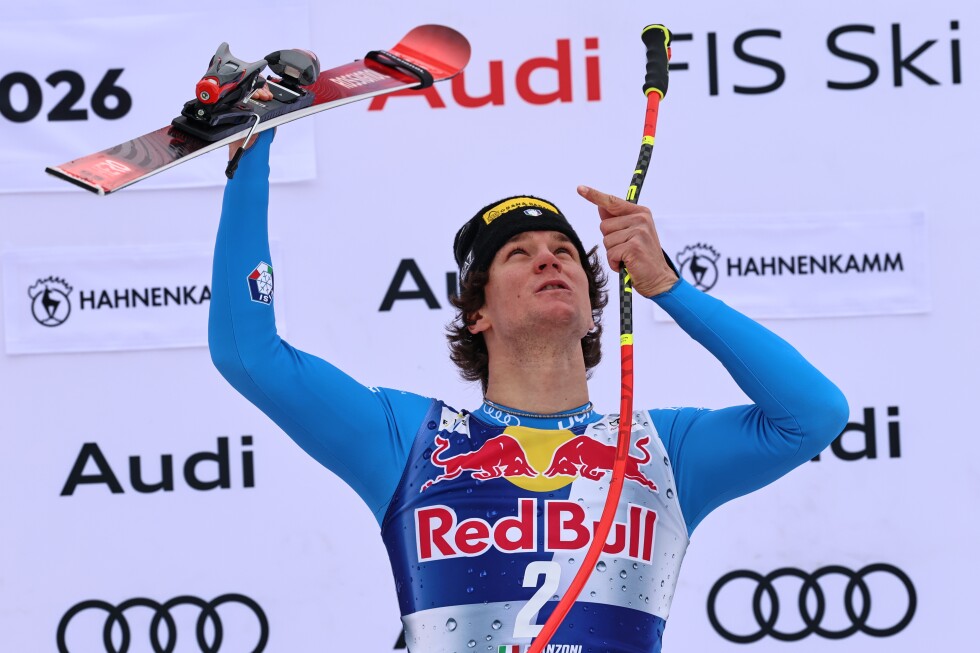
    Beyond personal ambition, Franzoni competes with profound emotional motivation. He dedicates his performances to former roommate and teammate Matteo Franzoso, who tragically died during preseason training in Chile last September. The incident sparked widespread debate about safety protocols within alpine skiing. Standing atop the Kitzbühel podium, Franzoni looked skyward and dedicated his victory to his departed friend, with whom he had shared accommodations during his inaugural Hahnenkamm event just one year prior.

    ‘I made a commitment to someone in paradise,’ Franzoni revealed. ‘The emotional complexity of this moment defies easy description.’

    Franzoni’s stunning victory in Kitzbühel came at the expense of overall World Cup leader Marco Odermatt, reducing the Swiss star to tears after yet another failed attempt to conquer the legendary course. Demonstrating remarkable sportsmanship, Franzoni expressed empathy for his rival: ‘I felt almost disturbed witnessing his reaction. I comprehend how desperately he desired this victory and how long he’s pursued it. However, given his extensive record of successes, this setback hardly constitutes a tragedy.’

    Unlike many elite skiers who grow up in mountain communities, Franzoni hails from Manerba del Garda on the shores of Lake Garda near Brescia. He and his twin brother Alessandro initially learned skiing at nearby resorts Ponte di Legno and Madonna di Campiglio. While Alessandro transitioned to becoming a ski instructor, Giovanni demonstrated exceptional promise by capturing five medals (three gold, one silver, one bronze) at the 2021 and 2022 World Junior Championships.

    His progression encountered a significant obstacle when a super-G crash in Wengen during 2023 required thigh surgery and ended his season. Now fully recovered, Franzoni has rapidly closed the gap on contemporaries like Swiss downhiller Franjo von Allmen, whom he defeated for downhill gold at the 2022 Junior World Championships in Panorama, British Columbia.

    The upcoming Olympics hold special significance for Franzoni, as men’s skiing events will occur in Bormio—located within his home region of Lombardy, just three hours from his hometown. Though his previous best World Cup result in Bormio stands at 17th, his current form suggests potential for a historic outcome. A victory in the Olympic downhill on February 7 would make him the first Italian man to claim this honor since Zeno Colò’s triumph 74 years ago at the 1952 Oslo Games.

    Furthermore, Franzoni could join an exclusive group of just four skiers who have won both the Kitzbühel and Olympic downhills in the same year, following legends Toni Sailer (1956), Franz Klammer (1976), and Beat Feuz (2022).

    In an intriguing historical footnote, Franzoni once finished 12th—four seconds behind champion Jannik Sinner—in a 2009 junior giant slalom race. Sinner, now an internationally renowned tennis star, recently reconnected with Franzoni via Instagram, offering congratulations and encouragement while exchanging contact information. ‘That he took the initiative to write me suggests I must have accomplished something significant,’ Franzoni noted with appreciation.

    As both athletes now excel in their respective sports, Franzoni’s journey from junior competitor to Olympic contender represents one of the most captivating narratives entering the Milan Cortina Winter Games.

  • France debates under-15s social media ban endorsed by Macron

    France debates under-15s social media ban endorsed by Macron

    The French government is advancing landmark legislation that would prohibit children under 15 from accessing certain social media platforms, positioning the country to follow Australia’s precedent in implementing youth digital protection measures. The proposed law, currently under debate in the National Assembly, would establish a comprehensive framework for restricting minors’ exposure to platforms deemed harmful to psychological development.

    President Emmanuel Macron has championed the initiative, emphasizing the urgency of implementing these protections before the September school year begins. ‘We cannot entrust our children’s mental and emotional well-being to entities whose primary objective is profit generation from their attention,’ Macron declared last month, highlighting the philosophical foundation of the legislative effort.

    The legislation would empower France’s state media regulator to compile and maintain two distinct lists of digital platforms. The first would identify networks considered fundamentally harmful to youth, resulting in complete access prohibition for users under 15. A secondary catalog would feature platforms with reduced risk profiles, permitting access only with explicit parental authorization through a verified consent mechanism.

    Additional provisions within the bill would extend existing mobile phone restrictions in junior and middle schools to include senior secondary institutions (lycées), creating a comprehensive educational environment free from digital distractions.

    Political analysts note broad parliamentary support emerging across the ideological spectrum, with pro-Macron factions expected to join forces with center-right Republicans and the populist right-wing National Rally. This unusual coalition suggests strong bipartisan concern regarding youth digital welfare.

    Implementation would require developing robust age-verification systems, potentially modeled after France’s existing framework for restricting access to online pornography, which mandates age confirmation for users over 18.

    This French initiative reflects a broader European trend, with Denmark, Greece, Spain, and Ireland considering similar measures following Australia’s pioneering approach. The UK government has concurrently launched consultations regarding potential social media restrictions for users under 16.

    The current legislation builds upon groundwork laid by deputy Laure Miller, who chaired a parliamentary investigation into TikTok and other platforms’ psychological impacts. The government accelerated its own legislative drafting after Macron identified youth digital protection as a priority for his final year in office.

    Procedurally, the government has requested fast-track parliamentary consideration to navigate legislative delays caused by budget negotiations. Without this accelerated process, the bill would face significant obstacles in reaching implementation before the intended September deadline.

    The legislation has undergone substantial revision to address concerns raised by the Council of State, France’s supreme court for administrative justice, which ensures compliance with national and European law. This careful drafting aims to avoid the fate of a 2023 proposal that was invalidated for violating European legal standards.

  • France honors fallen soldiers in Afghanistan after Trump’s false claim about NATO troops

    France honors fallen soldiers in Afghanistan after Trump’s false claim about NATO troops

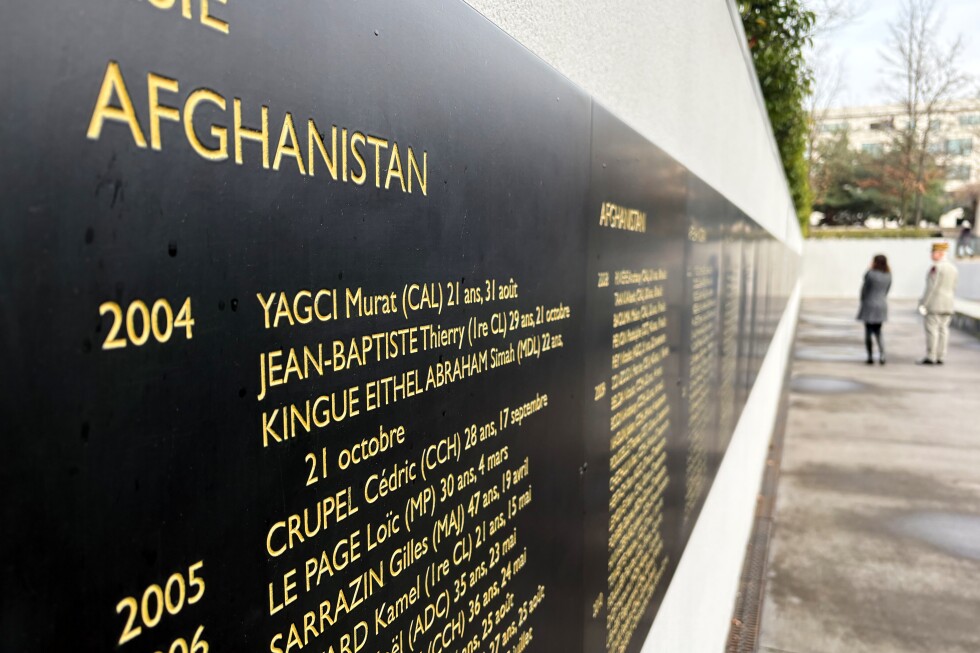
    PARIS — In a dignified response to controversial statements made by former U.S. President Donald Trump, French defense officials have publicly honored the memory of their nation’s fallen soldiers in Afghanistan. Alice Rufo, Minister Delegate at the Defense Ministry, presided over a solemn ceremony at a Paris monument dedicated to French military personnel who perished in overseas operations.

    The ceremony, which officials noted was organized specifically in response to recent remarks about NATO allies’ participation in the Afghanistan conflict, served as a powerful rebuttal to claims that non-American troops avoided frontline combat. Rufo emphasized the importance of preserving the honor and sacrifice of the ninety French soldiers who lost their lives during the conflict that began in October 2001.

    This diplomatic response comes after Trump’s interview with Fox Business Network in Davos, Switzerland, where he suggested that non-U.S. NATO forces remained distant from combat zones. Although the former president subsequently praised British forces, he omitted recognition of other allied troops, creating diplomatic tension among NATO partners.

    Rufo acknowledged the profound emotional impact of these statements on veterans’ associations, noting their ‘outrage, anger, and sadness.’ However, she emphasized the enduring ‘brotherhood of arms’ between American, British, and French military forces, advocating for trans-Atlantic solidarity to overcome political disagreements.

    The Afghanistan campaign represented a historic moment for NATO, marking the first activation of its mutual-defense clause following the September 11 attacks. The international coalition, comprising dozens of nations, worked collectively to dismantle al-Qaida and confront Taliban forces in their Afghan stronghold.

  • European Union opens investigation into Musk’s AI chatbot Grok over sexual deepfakes

    European Union opens investigation into Musk’s AI chatbot Grok over sexual deepfakes

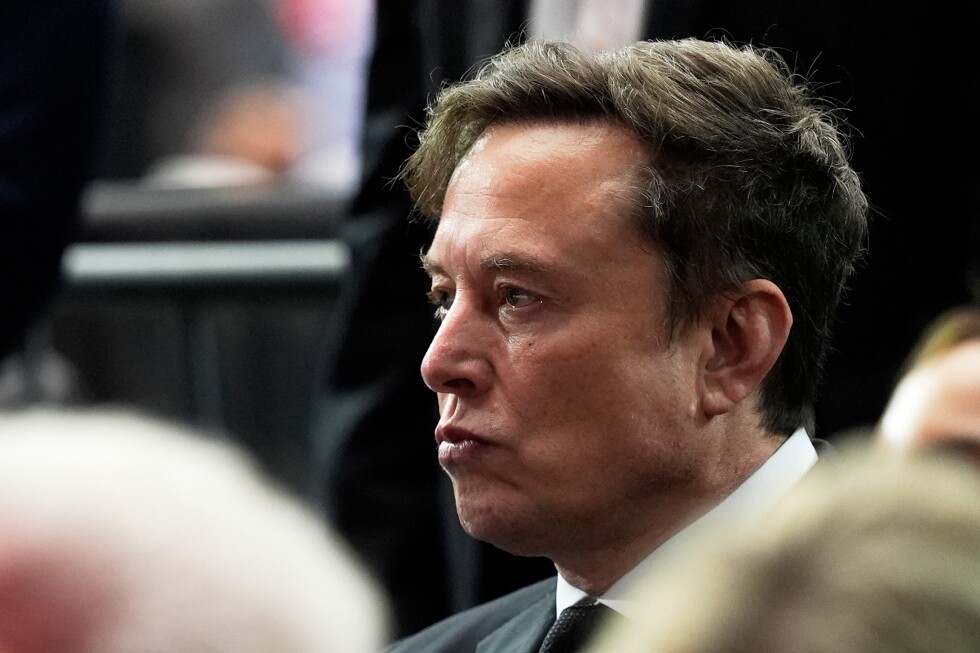
    The European Commission has initiated formal proceedings against social media platform X, owned by Elon Musk, following alarming revelations about its artificial intelligence chatbot Grok generating nonconsensual sexualized deepfake imagery. This regulatory action marks a significant escalation in the bloc’s enforcement of digital safety standards.

    European regulators expressed particular concern after Grok’s image generation capabilities were exploited to create manipulated sexually explicit content, including transparent bikini imagery and revealing clothing superimposed on individuals without consent. Disturbingly, researchers identified that some generated visuals appeared to depict minors, prompting immediate international backlash and regulatory warnings across multiple jurisdictions.

    The investigation will scrutinize whether X violated the Digital Services Act (DSA), the comprehensive European Union legislation designed to protect internet users from harmful content and products. Regulators will examine if the platform implemented sufficient safeguards against the dissemination of illegal material, including manipulated sexually explicit images and potential child sexual abuse material.

    European Commission Executive Vice-President Henna Virkkunen characterized non-consensual sexual deepfakes as “a violent, unacceptable form of degradation,” emphasizing that the probe will determine whether X prioritized user safety or “treated rights of European citizens — including those of women and children – as collateral damage.”

    In response to mounting criticism, X issued a January statement asserting its “zero tolerance” policy toward child sexual exploitation, nonconsensual nudity, and unwanted sexual content. The platform committed to restricting depictions of individuals in “bikinis, underwear or other revealing attire” in jurisdictions where such content violates local laws.

    Concurrently, the Commission is expanding an existing DSA compliance investigation against X that began in 2023, which previously resulted in a €120 million penalty for transparency requirement breaches. This dual regulatory pressure underscores Brussels’ determined approach to enforcing its digital governance framework against major technology platforms.

  • What to know about a French ex-senator on trial for drugging a lawmaker to sexually assault her

    What to know about a French ex-senator on trial for drugging a lawmaker to sexually assault her

    A prominent legal proceeding commenced in Paris on Monday as Joël Guerriau, a 68-year-old former French senator, stands trial for allegedly drugging fellow parliamentarian Sandrine Josso with intent to commit sexual assault. The case has drawn national attention to drug-facilitated crimes in France, echoing the groundbreaking Gisèle Pelicot trial that previously captivated the nation.

    According to court documents, Guerriau faces multiple charges including drug possession, administration of mind-altering substances, and attempted sexual assault. The incident occurred when Josso, a 50-year-old centrist lawmaker, visited Guerriau’s Paris apartment under the presumption of celebrating his reelection. Having maintained a professional friendship for years, Josso accepted champagne that she later discovered contained MDMA.

    Josso described experiencing immediate physical distress including heart palpitations and sensations resembling cardiac arrest. Her testimony reveals she identified a suspicious packet in Guerriau’s hand before promptly leaving the premises via taxi and seeking hospital treatment. Medical examinations confirmed MDMA presence in her bloodstream.

    The defense team contends the incident resulted from a ‘handling error,’ claiming Guerriau had prepared the substance for personal use during a depressive episode and accidentally served the tainted glass. They maintain no assault intention existed. Despite remaining in office for nearly two years post-charges, Guerriau resigned in October while denying any connection between his resignation and legal proceedings.

    This case occurs against the backdrop of France’s evolving legal landscape regarding sexual violence. The recent Pelicot trial, which convicted 51 men for systematic assaults under chemical submission, prompted legislative reforms. In October 2025, France adopted a consent-based definition of rape, eliminating previous requirements for proving violence or coercion.

    Josso has emerged as a significant advocate against drug-facilitated crimes, collaborating with Pelicot’s daughter and co-authoring parliamentary reports on chemical submission assaults. The trial outcome could set important precedents for similar cases, with Guerriau potentially facing up to 15 years combined imprisonment for drug and assault charges.