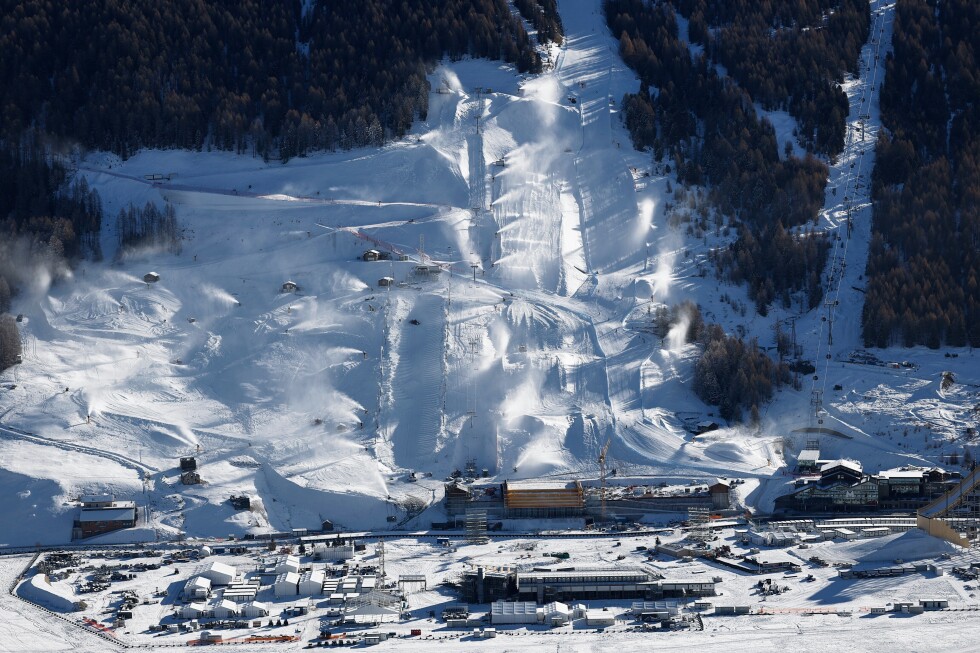
In an unprecedented security arrangement for the Olympic stage, the United States will deploy agents from its Immigration and Customs Enforcement (ICE) agency to the upcoming Milan Cortina Winter Games. According to authoritative sources within the U.S. embassy in Rome, this deployment was formally confirmed this Tuesday. The initiative, however, comes with a clearly defined and limited operational scope. The primary mandate for these federal agents will be to provide robust support and reinforcement to existing U.S. diplomatic security contingents. Embassy officials were explicit in clarifying that the personnel will have no role in, nor will they conduct, any form of immigration enforcement operations on Italian soil. Their presence is framed purely as a collaborative measure to ensure the safety and security of American diplomatic personnel and assets during the high-profile international event, which draws global attention and necessitates heightened security protocols.
标签: Europe
欧洲
-
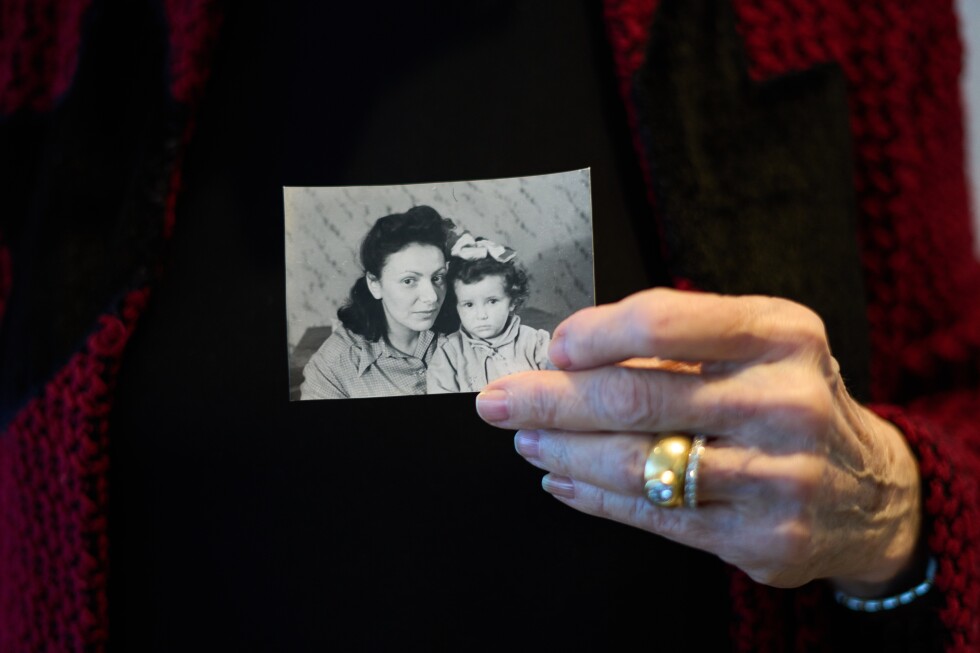
She was born in a concentration camp. A Holocaust survivor tells her story for the first time
TEL AVIV, Israel — Ilana Kantorowicz Shalem, among the youngest living Holocaust survivors at 81 years old, has chosen to break her lifelong silence by revealing an extraordinary story of survival that begins with her birth in the Bergen-Belsen concentration camp during the final days of World War II.
Her mother, Lola Kantorowicz, concealed her pregnancy amidst the horrific conditions of the camp, where widespread starvation made distended bellies commonplace. On March 19, 1945—just thirty days before British forces liberated the camp—Ilana was born as Russian troops advanced through Germany. Archivist Sima Velkovich of Yad Vashem described the circumstances as “unimaginable,” noting the camp was filled with “mountains of corpses” and thousands of desperately ill prisoners at the time.
Shalem’s survival represents a statistical miracle. Most infants born in concentration camps were immediately killed by Nazi authorities. Her existence only became possible because the Nazi leadership was in disarray during the war’s final weeks.
The backdrop to this revelation comes as the world prepares to observe International Holocaust Remembrance Day on January 27, the anniversary of the liberation of Auschwitz-Birkenau. This year’s commemorations occur amidst rising global antisemitism following the Israel-Hamas conflict.
Shalem’s parents, Lola Rosenblum and Hersz (Zvi) Abraham Kantorowicz, first met as teenagers in the Tomaszow Ghetto in Poland. They maintained a clandestine relationship through multiple labor camps after being separated from their families. Though they married informally in the ghetto, they were ultimately separated in 1944. Hersz perished in a death march just days before the war’s end.
Lola survived Auschwitz, the Hindenburg labor camp, and a death march to Bergen-Belsen while pregnant. “If they discovered she was pregnant, they would have killed her,” Shalem explained. “She hid her pregnancy from everyone, including her friends, because she didn’t want the extra attention or anyone to give her their food.”
Following liberation, baby Ilana became a symbol of hope in the displaced persons camp. “Actually, I was everyone’s child,” Shalem recalled. “For them, it was some kind of sign of life.” Photographs from the period show a healthy infant surrounded by adoring adults who saw her as “a new seed” of hope.
Shalem noted that discussing Holocaust experiences was largely taboo in Israeli society during the 1960s when she first began asking her mother questions. “Now we know, in order to absorb trauma, we need to talk about it,” she said, contrasting this with the immediate public sharing by survivors of the October 7 Hamas attacks.
The decision to share her story comes as Holocaust survivors dwindle in number. According to the Claims Conference, approximately 196,600 survivors remain alive today, with nearly half residing in Israel. Nearly 25,000 survivors passed away last year alone, with the median age now 87.
Shalem, who has two daughters, reflects on her mother’s extraordinary strength: “It’s a situation that was very unusual, it probably required special strength to be able to believe. She said that one of the things was that if she had known my father was killed, she wouldn’t have tried so hard. She wanted him to know me.”
-
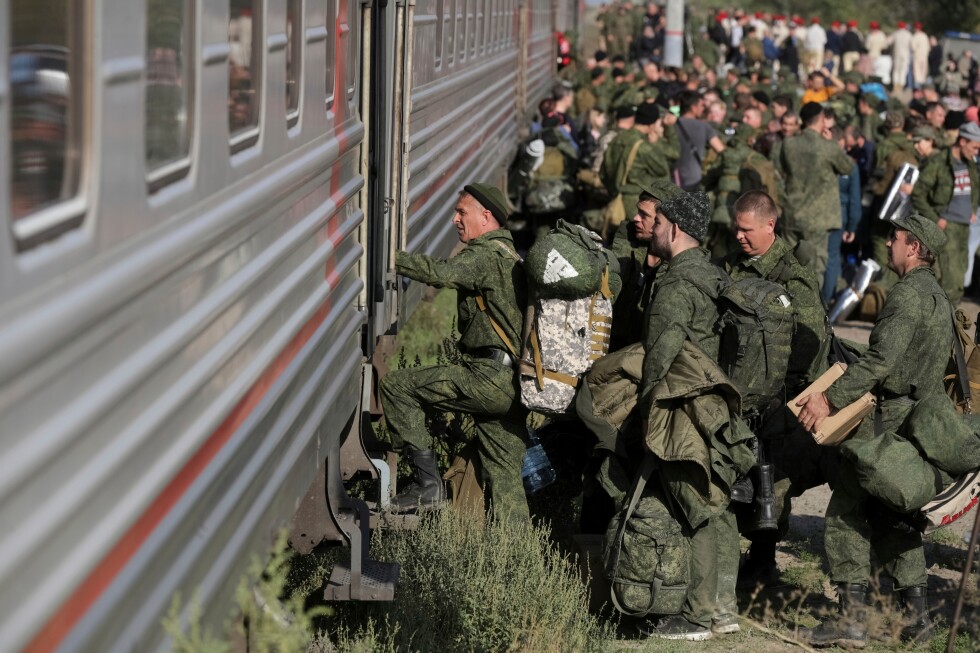
Russia offers cash bonuses, frees prisoners and lures foreigners to replenish its troops in Ukraine
Russia has developed a multi-pronged recruitment strategy to sustain its military operations in Ukraine while avoiding another politically risky nationwide mobilization. The Kremlin’s approach leverages substantial financial incentives, immigration benefits, and questionable recruitment practices to maintain troop levels in the nearly four-year conflict.
For Russian citizens, military service offers unprecedented economic rewards. Regional authorities provide enlistment bonuses reaching approximately $50,000 in some areas—more than double the average annual income. Additional benefits include tax breaks, debt relief, and extensive perks. Despite claims of voluntary enlistment, reports indicate conscripts and prisoners face coercion to sign contracts that automatically extend indefinitely, contrary to initial fixed-term representations.
The recruitment net extends globally, targeting foreign nationals through accelerated citizenship programs and deceptive employment schemes. Citizens from India, Nepal, Bangladesh, South Africa, Iraq, Cuba, and Kenya have reported being misled into military service by traffickers promising legitimate jobs. North Korea contributed thousands of soldiers following a 2024 mutual defense treaty with Moscow, primarily deployed to defend Russia’s Kursk region.
President Vladimir Putin maintains that 700,000 troops are currently deployed in Ukraine, though independent verification remains impossible. British defense officials estimate over 1 million Russian casualties, while Mediazona and BBC researchers have documented more than 160,000 fatalities, including at least 550 foreigners from two dozen countries.
The strategy carries significant economic consequences. Analysts note that recruitment has become “extremely expensive” for Russia’s slowing economy, with foreign nationals particularly vulnerable due to language barriers, lack of military experience, and being considered “dispensable” by commanders. Despite these challenges, recruitment numbers reportedly remained strong throughout 2023-2024, with Putin claiming over 400,000 voluntary enlistments last year.
-

Spanish soccer federation president says Spain will host the final of the 2030 World Cup
In a significant development for international football, Spain has been officially confirmed as the host nation for the 2030 World Cup final. The announcement was made by Rafael Louzán, President of the Spanish Football Federation, during a media briefing on Monday, though FIFA has yet to make an official statement regarding venue allocations for the tri-continental tournament.
Louzán definitively stated that Spain would lead the World Cup organization and host the championship match, without specifying the exact location within the country. This confirmation follows considerable speculation about potential venues, with Spanish media long favoring Real Madrid’s renovated Santiago Bernabeu Stadium as the frontrunner. Barcelona’s upgraded Camp Nou stadium also remains a potential contender for hosting the final match.
The decision represents a setback for Morocco, which had aggressively campaigned to host the final at the future Hassan II Stadium in Casablanca. Slated for completion in 2028 with a planned capacity of 115,000 spectators, the venue would have been the world’s largest football arena. However, recent organizational challenges during the Africa Cup of Nations tournament, which faced criticism for logistical issues, potentially diminished Morocco’s bid to host the World Cup final.
The 2030 World Cup will feature an unprecedented hosting arrangement across three continents, with Spain, Portugal, and Morocco serving as primary co-hosts. In a symbolic nod to football history, South American nations Uruguay, Argentina, and Paraguay will each host one match to commemorate the tournament’s centennial celebration, marking a return to Uruguay where the inaugural World Cup was held in 1930.
-
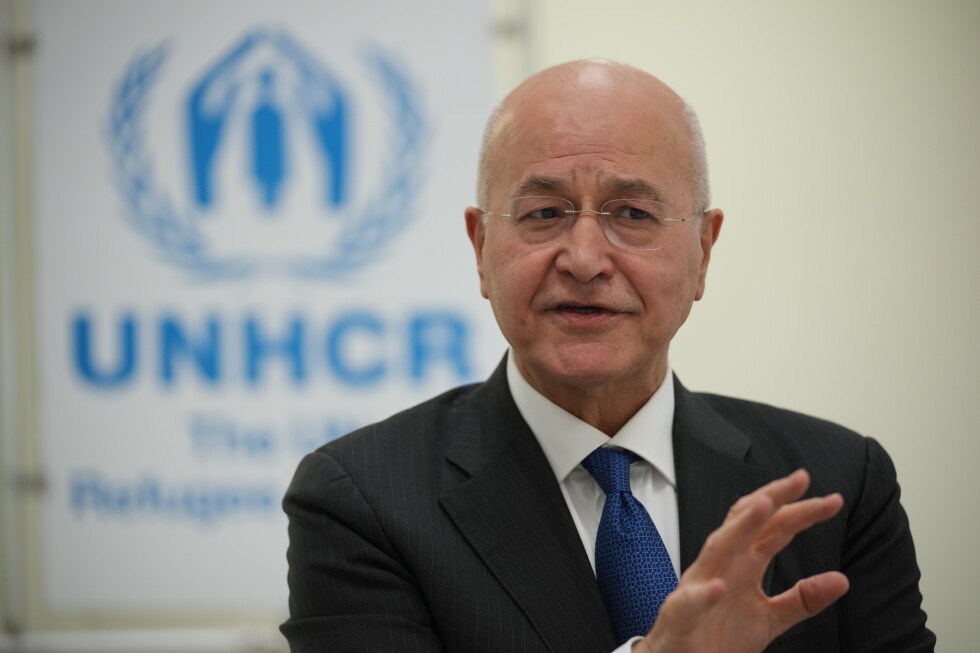
The first refugee to lead the U.N. refugee agency calls this a ‘very difficult moment in history’
ROME — The newly appointed United Nations High Commissioner for Refugees, Barham Salih, issued a stark warning Monday about the unprecedented challenges facing global refugee protection systems. Speaking in his first major interview since assuming office on January 1st, the former Iraqi president described the current situation as “a very difficult moment in history” that demands innovative solutions and international solidarity.
The UNHCR faces a catastrophic funding shortfall following a dramatic reduction in U.S. contributions, which have plummeted from $2.1 billion to approximately $800 million for 2024-2025. Despite this drastic cut, the United States remains the agency’s largest single donor. Salih emphasized that while resources are being “constrained and limited in very, very significant ways,” he maintains hope that global humanity will prevail in supporting the world’s displaced populations.
With 117.3 million forcibly displaced people from 194 countries worldwide—including approximately 30 million refugees requiring direct support—the funding crisis couldn’t come at a worse time. Salih stressed the urgent need to safeguard the 1951 Refugee Convention amid growing repression of immigrants and attempts to redefine international asylum protocols.
The High Commissioner, who himself fled Iraq twice during Saddam Hussein’s regime, brings personal experience to his role. His background informs his perspective that “refugees are not just numbers and victims” but individuals who can thrive given proper protection and opportunities.
Salih has already undertaken field visits to refugee camps in Chad and Kenya, witnessing firsthand the conditions of those displaced by conflicts in Sudan, Somalia, Congo, and Ethiopia. He has also secured support from Pope Leo XIV during a Vatican meeting, noting the crucial role of faith-based organizations in refugee advocacy.
Despite the overwhelming challenges, Salih described his new position as “a great honor” and remains committed to making UNHCR more cost-effective while maintaining essential services for those most in need.
-
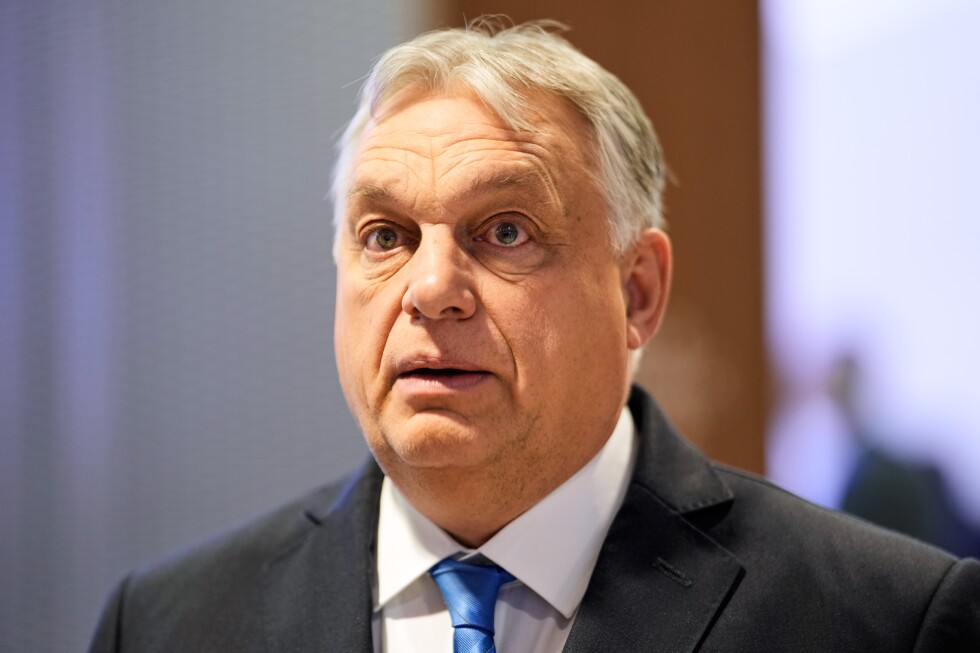
Hungary’s Orbán accuses Ukraine of election interference and summons ambassador
BUDAPEST, Hungary — Hungarian Prime Minister Viktor Orbán has dramatically escalated diplomatic tensions with Ukraine by accusing Kyiv of attempting to interfere in Hungary’s upcoming parliamentary elections. In a striking move on Monday, Orbán ordered the summoning of Ukraine’s ambassador to the Hungarian foreign ministry following what he characterized as “grossly offensive and threatening statements” from Ukrainian leadership.
The nationalist leader, who faces his most significant electoral challenge in sixteen years this April, has intensified his longstanding anti-Ukraine campaign strategy. Orbán claims Ukrainian officials, including President Volodymyr Zelenskyy, have launched coordinated efforts to undermine Hungary’s sovereignty and influence the election outcome. Without presenting specific evidence, the prime minister asserted that national security assessments confirmed Ukrainian interference attempts.
This diplomatic confrontation emerges as Orbán’s right-wing Fidesz party trails opposition parties by double digits in most pre-election polls. The prime minister has centered his campaign on unverified claims that Hungarian citizens could face forced conscription to fight in Ukraine if his government loses power. Orbán has additionally accused his primary political rival, Péter Magyar, of conspiring with Kyiv to install a pro-Western administration in Budapest.
Hungary has consistently opposed European Union military and financial assistance to Ukraine throughout Russia’s ongoing invasion, maintaining Orbán’s unique position as the EU leader with closest ties to Moscow. The government has vowed to veto Ukraine’s EU membership aspirations and recently launched a national petition campaign against continued European support for Kyiv.
The diplomatic rift widened last week when President Zelenskyy criticized Orbán at the World Economic Forum in Davos, suggesting the Hungarian leader “lives off European money while trying to sell out European interests” and comfortable relations with Moscow shouldn’t dictate European policy.
-
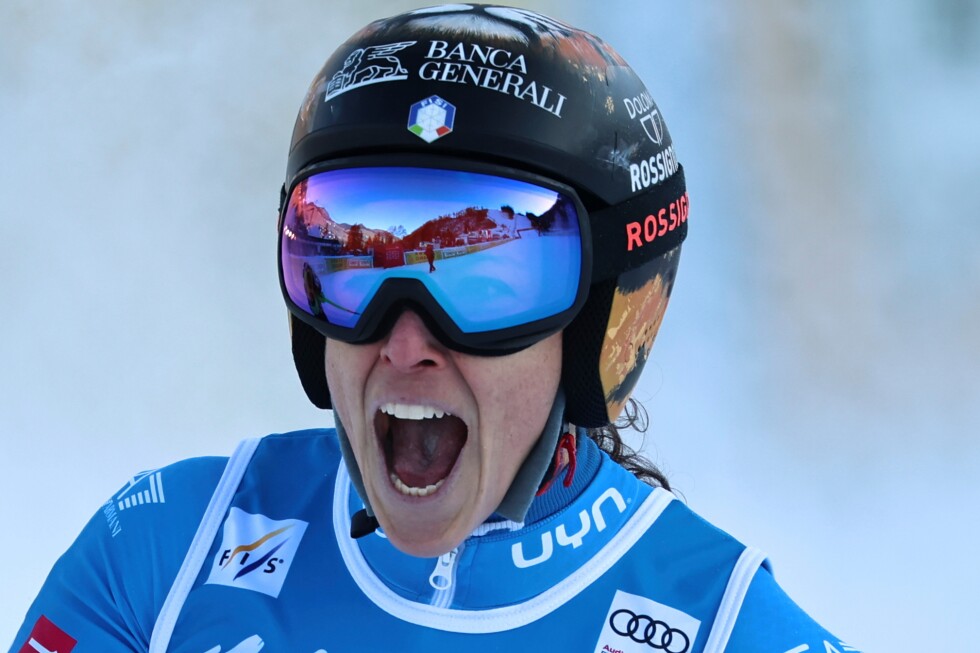
Host Italy announces 196-member team for Milan Cortina Olympics, including Fontana and Brignone
ROME — Italy has unveiled its largest Winter Olympics delegation in history, selecting 196 athletes to represent the host nation at the upcoming Milan Cortina Games commencing next week. The monumental squad, announced on Monday, surpasses the country’s previous record of 184 competitors set during the 2006 Turin Olympics—Italy’s last hosting of the Winter Games.
The team composition features 103 male and 93 female athletes, showcasing Italy’s commitment to gender balance in winter sports. The roster is headlined by multiple Olympic veterans including short track speedskating legend Arianna Fontana, Alpine skiing stars Federica Brignone, Sofia Goggia, and Giovanni Franzoni, biathlon competitor Dorothea Wierer, and defending curling mixed doubles champions Stefania Constantini and Amos Mosaner.
Notable age diversity characterizes the selection, with 16-year-old Alpine skier Giada D’Antonio—of Italian-Colombian-Ecuadorean heritage—representing the youngest team member. At the opposite spectrum, 45-year-old snowboarder Roland Fischnaller prepares for his seventh consecutive Olympic appearance, setting a new Italian Winter Games record while coming off his second parallel racing world title earned last year.
Fontana, aged 35, enters her sixth Olympic competition since her debut as a 15-year-old in Turin. With an impressive collection of 11 medals (2 gold, 4 silver, 5 bronze) across five previous Games, she stands as Italy’s most decorated Winter Olympian.
The Alpine skiing team features exceptional longevity with 41-year-old Christof Innerhofer, 36-year-old Dominik Paris, and 35-year-old Brignone all preparing for their fifth Olympic appearances. Brignone, the reigning overall World Cup champion, has recently returned to competition following a serious crash and subsequent injuries sustained in April.
The Milan Cortina Winter Olympics opening ceremony is scheduled for February 6, marking the commencement of Italy’s historic hosting endeavor with its unprecedented athlete representation.
-
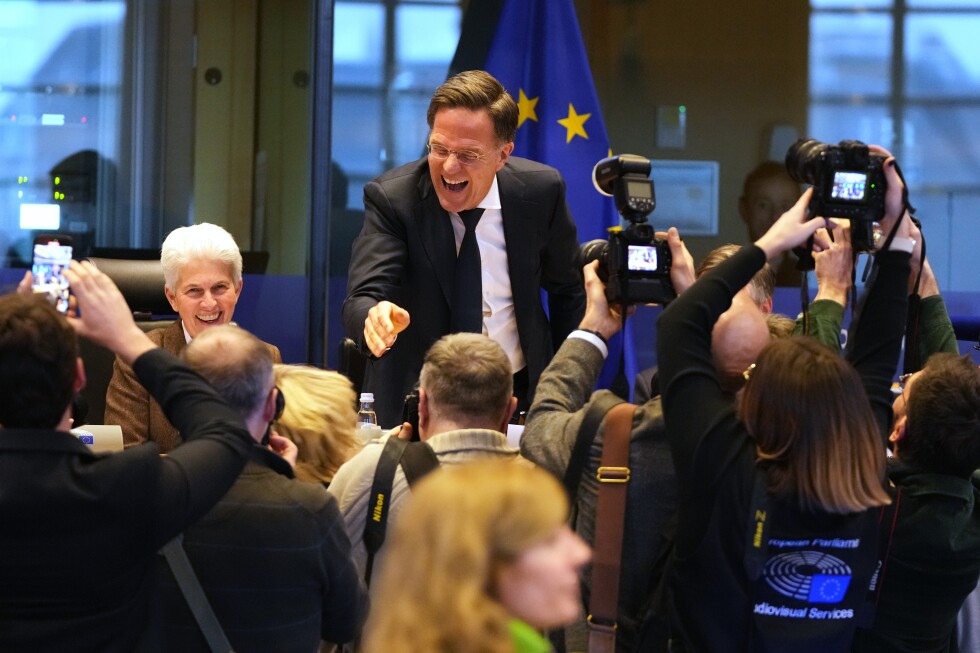
NATO chief wishes ‘good luck’ to those who think Europe can defend itself without US help
BRUSSELS — NATO Secretary-General Mark Rutte delivered a stark warning to European Union legislators on Monday, asserting that European nations remain fundamentally incapable of autonomous self-defense without American military backing. Rutte emphasized that achieving true strategic independence would require more than doubling current defense spending targets and developing independent nuclear capabilities—a financially prohibitive endeavor.
During his address at the EU parliamentary session, Rutte explicitly dismissed notions of European strategic autonomy as unrealistic. “Should anyone believe that the European Union or Europe collectively could defend itself absent American support, they are merely indulging in fantasy,” he stated. “The transatlantic partnership remains indispensable—we mutually depend on one another.”
The Secretary-General’s remarks arrive amid escalating tensions within NATO following recent controversies involving former U.S. President Donald Trump. These included renewed threats to annex Greenland—a semi-autonomous Danish territory—and the imposition of tariffs against its European supporters. Although these threats were subsequently withdrawn following diplomatic intervention and a tentative agreement regarding the mineral-rich region, the incidents highlighted the alliance’s fragility.
Rutte referenced the July NATO summit in The Hague, where European members (excluding Spain) and Canada committed to matching U.S. defense spending relative to economic output within ten years. The agreement stipulated elevating core defense expenditure to 3.5% of GDP, with an additional 1.5% allocated to security infrastructure—totaling 5% of GDP by 2035.
However, Rutte cautioned that truly independent defense would necessitate expenditures approaching 10% of GDP, alongside the development of an independent nuclear deterrent costing “billions upon billions of euros.” He underscored Europe’s continued reliance on the U.S. nuclear umbrella as “the ultimate guarantor of our freedom.”
These developments occur against growing French-led advocacy for European “strategic autonomy,” a movement that gained momentum after the Trump administration indicated shifted security priorities and suggested European nations should assume greater defense responsibility.
-
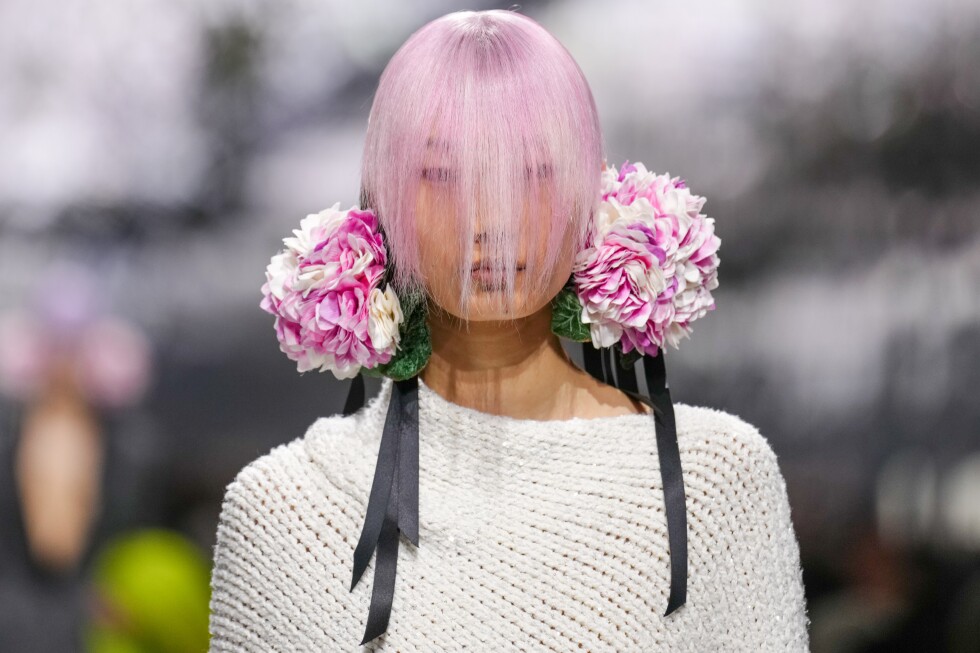
Dior couture debut for Anderson mixes wonder, wit, celebrity-wattage — and an occasional wobble
PARIS — The Musée Rodin transformed into an anticipatory stage for Dior’s haute couture spectacle, where celebrity guests including French First Lady Brigitte Macron, Lauren Sánchez Bezos, and Parker Posey awaited the arrival of pop icon Rihanna. As the lights dimmed, a suspended ceiling garden of delicate flowers set the tone—petals descending gracefully to the floor, embodying Jonathan Anderson’s thematic vision of beauty under tension.
This marked the inaugural haute couture presentation by Anderson, the Northern Irish designer who simultaneously helms Dior’s menswear, womenswear, and couture divisions—a unprecedented triple role in the modern era of the fashion house. As a cornerstone of the LVMH luxury conglomerate, Dior utilizes couture to demonstrate artistic prowess and technical mastery.
Titled ‘Nature in Motion,’ the collection reimagined historical fragments through a contemporary lens, employing a disciplined palette of black, white, and ecru punctuated by vibrant bursts of color and texture. Clean lines alternated with soft draping and structured silhouettes, showcasing Anderson’s signature crispness previously evident in his work at Loewe and Dior menswear.
The show’s most provocative statements included pannier gowns reinterpreted as modern fanny pack silhouettes—a characteristically witty Anderson gesture that transformed historical volume into contemporary relevance. Micro-detailing ascended to macro-impact through intricate floral motifs crafted from silk, chiffon, and organza, layered to evoke feather-like textures.
Notable touches included oversized hydrangea-inspired earrings, a decorative nod to Dior’s legacy that reflected creative dialogue with former director John Galliano. While the collection demonstrated formidable ambition and technical achievement, it occasionally revealed a designer still synthesizing his distinct vision for Dior’s couture identity—strong individual elements seeking cohesive harmony within the garden-inspired universe Anderson envisioned.
-

Two Brits detained in France over far-right protest
French authorities have apprehended two British citizens in northern France on suspicion of intending to participate in a prohibited far-right demonstration. The individuals, aged 35 and 50, were taken into custody near Calais on Sunday following their live-streamed activities on social media platforms.
According to Prosecutor Cécile Gressier, who confirmed the details to the BBC, the detention resulted from evidence gathered through their broadcasted content. The charges against them include ‘incitement to hatred’ and ‘participation in a group with the intent to prepare acts of violence.’
The arrests occur against the backdrop of heightened security measures implemented by French officials, who had previously announced immediate deportation for any UK arrivals attempting to join anti-migrant demonstrations over the weekend. This preventive action targeted planned gatherings in northern coastal areas where small boats frequently launch carrying asylum seekers across the English Channel.
French social media monitoring had identified calls for participation in what was termed ‘Operation Overlord’—a protest movement specifically banned by French authorities. The Pas-de-Calais prefecture issued an official statement clarifying that ‘these individuals were arrested during an identity check while they were posting a video on social media that allegedly contained discriminatory comments and attested to their potential participation in this organisation.’
The incident highlights ongoing tensions surrounding migration patterns across the Channel and demonstrates France’s firm stance against organized demonstrations perceived as threatening public order or promoting discriminatory agendas.