标签: Europe

欧洲

  • Divided Bank of England holds key interest rate at 4% despite hopes inflation has peaked

    Divided Bank of England holds key interest rate at 4% despite hopes inflation has peaked

    The Bank of England (BoE) has decided to maintain its benchmark interest rate at 4% during its latest policy meeting on Thursday. The decision, made by the nine-member Monetary Policy Committee (MPC), was widely expected, though some analysts had speculated on a potential quarter-point reduction to 3.75%. The vote was notably close, with five members favoring no change and four supporting a rate cut. Governor Andrew Bailey emphasized the need for greater certainty that inflation is on a sustainable path toward the bank’s 2% target before considering further reductions. Currently, the annual consumer price inflation rate stands at 3.8%, nearly double the BoE’s target. The MPC noted in its meeting minutes that inflation has likely peaked at a lower level than previously forecasted in August, when the last rate cut was implemented. Economists anticipate that inflation will continue to decline in the coming months, potentially reaching the target by next year, which could pave the way for a rate cut at the December meeting. The upcoming UK budget announcement on November 26 is expected to play a pivotal role in shaping economic policy, with Treasury chief Rachel Reeves signaling potential tax increases aimed at reducing inflation and stabilizing the economy. Since initiating rate cuts in August 2024, the BoE has adopted a cautious approach, adjusting rates every three months. Thursday’s decision marks the first time the bank has opted against a rate cut within this quarterly framework. Meanwhile, the US Federal Reserve recently reduced its key interest rate for the second time this year, though Chair Jerome Powell cautioned that further cuts are not guaranteed, citing economic uncertainties and internal divisions among policymakers.

  • France urges EU to investigate Shein for selling illegal items including child-like sex dolls

    France urges EU to investigate Shein for selling illegal items including child-like sex dolls

    France has formally requested the European Union’s executive arm to investigate fast-fashion giant Shein for allegedly selling illegal items, including child-like sex dolls and weapons, on its expansive online marketplace. Two French ministers, Roland Lescure and Anne Le Henanff, have sent a letter to Henna Virkkunen, the European Commission’s executive vice-president for tech sovereignty, urging immediate action. The ministers emphasized that Shein must comply with the Digital Services Act (DSA), the EU’s regulatory framework aimed at ensuring online platform safety and user protection. The French government has initiated procedures to suspend access to Shein’s marketplace in France unless the platform demonstrates compliance with national laws. Authorities discovered not only child-like sex dolls but also significant quantities of illegal ‘Class A’ weapons, including firearms, knives, and war materials, on the platform. Shein, which was classified as a ‘very large online platform’ by the EU last year due to its 45 million European users, faces stringent regulatory requirements. Non-compliance could result in suspension and fines of up to 6% of its annual profits. The company, founded in China in 2012 and now headquartered in Singapore, has pledged to collaborate with French authorities to address concerns promptly.

  • Cars in German city found smeared with swastikas in blood, police say

    Cars in German city found smeared with swastikas in blood, police say

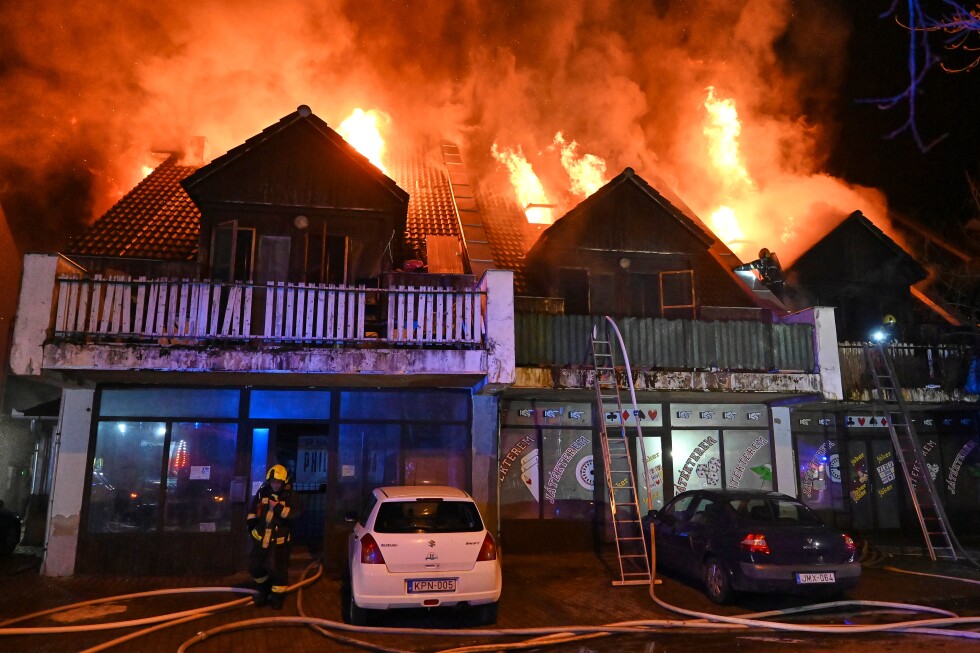
    A disturbing incident has shaken the German city of Hanau, located near Frankfurt, as approximately 50 vehicles, walls, and postboxes were defaced with a reddish liquid suspected to be human blood. The vandalism, which included the application of swastikas, was first reported late Wednesday night by a resident in the Lamboy district. The liquid was smeared in the shape of the banned Nazi symbol, prompting a widespread police investigation. Preliminary tests indicate the substance is likely human blood, though its origin remains unknown, and no injuries have been linked to the incident. Local authorities have launched an urgent appeal for public assistance to solve the case. The incident has drawn sharp condemnation, with Bundestag Vice President Omid Nouripour describing it as a painful reminder of the far-right terrorist attack in Hanau five years ago, which claimed nine lives. The community is now grappling with the emotional and symbolic weight of this act, which has reignited fears of far-right extremism.

  • At White House meeting, Hungary’s Orbán to seek Trump’s blessing to keep buying Russian oil

    At White House meeting, Hungary’s Orbán to seek Trump’s blessing to keep buying Russian oil

    Hungarian Prime Minister Viktor Orbán is set to meet with former U.S. President Donald Trump at the White House on Friday, with a key agenda: securing U.S. leniency for Hungary’s continued reliance on Russian oil. This meeting underscores Orbán’s strategic pivot toward Moscow over the past decade, a shift that has perplexed many of his former allies and critics. Orbán, once a vocal critic of Russian influence during the Cold War, has emerged as one of Russian President Vladimir Putin’s staunchest supporters within the European Union, maintaining warm ties with the Kremlin despite its ongoing war in Ukraine. His alignment with Trump’s MAGA movement has further solidified his image as a conservative nationalist, even as Hungary’s democratic institutions face erosion. However, as Russia’s invasion of Ukraine nears its fourth year, Orbán faces mounting pressure from both Brussels and Washington to sever Hungary’s dependence on Russian oil, a critical revenue stream for Moscow’s war efforts. Last month, the Trump administration imposed sanctions on Russian energy giants Lukoil and Rosneft, potentially exposing Hungary to secondary sanctions. Orbán, however, is banking on his personal rapport with Trump to secure an exemption, arguing that Hungary has no viable alternatives to Russian crude and that cutting off supplies would trigger economic collapse. Critics dispute this claim, pointing to alternative pipelines like the Adria, which delivers non-Russian oil to Hungary. Despite Hungary’s increased reliance on Russian oil—rising from 61% pre-war to 86%—Orbán’s critics accuse him of prioritizing political alliances over energy diversification. The meeting also raises questions about Orbán’s broader geopolitical strategy, as he seeks to position Hungary as a mediator in potential U.S.-Russia peace talks. While a proposed Trump-Putin summit in Budapest was scrapped, Hungarian officials remain hopeful for future negotiations. Orbán’s adversarial stance toward Ukraine and his reluctance to support EU sanctions against Moscow have further isolated him within Europe, leaving him increasingly reliant on Trump’s support.

  • Dozens of swastikas painted in human blood daubed on property across German city

    Dozens of swastikas painted in human blood daubed on property across German city

    In a disturbing incident that has shaken the central German town of Hanau, police are investigating the appearance of swastikas painted with human blood on nearly 50 cars, mailboxes, and building facades. The offensive symbols were discovered late Wednesday night, prompting a swift response from law enforcement. A special test confirmed that the substance used was human blood, though the source of the blood and the perpetrators remain unknown. Police spokesman Thomas Leipold stated that the motive behind the act is unclear, and it is uncertain whether specific targets were chosen or if the swastikas were applied randomly. The display of Nazi emblems, including the swastika, is illegal in Germany, and authorities are treating the case as property damage and the use of symbols of unconstitutional organizations. The swastika, a symbol of hate associated with the Holocaust and Nazi Germany, continues to be used by white supremacists and neo-Nazi groups to incite fear and division. The incident has evoked painful memories for Hanau, which was the site of a racially motivated mass shooting in 2020 that claimed nine lives. Mayor Claus Kaminsky expressed deep shock and condemnation, vowing that such symbols have no place in the city and will not be tolerated.

  • Ukraine says it has hit a major Russian oil refinery with long-range drones

    Ukraine says it has hit a major Russian oil refinery with long-range drones

    In a significant escalation of hostilities, Ukrainian drones targeted a major oil refinery in Russia’s Volgograd region for the second time in nearly three months, according to a statement from Ukraine’s general staff on Thursday. The refinery, a critical facility in Russia’s Southern Federal District, processes over 15 million tons of crude annually, accounting for approximately 5.6% of the nation’s total refining capacity. While Russian officials did not confirm the attack, the local governor reported a fire at an unspecified industrial site in the region.

    The strike, which occurred on Wednesday, underscores the intensifying energy warfare between the two nations. Ukraine’s strategy of targeting Russian oil infrastructure aims to disrupt Moscow’s oil export revenue, a vital source of funding for its ongoing invasion. Conversely, Russia has focused on crippling Ukraine’s power grid, leaving civilians without heat, light, and running water—a tactic Kyiv officials describe as ‘weaponizing winter.’

    In addition to the Volgograd refinery, Ukrainian forces struck three fuel lubricant facilities in the Russian-occupied Crimean peninsula and a storage base for Russia’s Shahed drones in the Donetsk region. Meanwhile, in the Kostroma region northeast of Moscow, a Ukrainian aerial attack reportedly targeted energy infrastructure, though no casualties or power disruptions were reported. Unconfirmed media sources suggest the attack may have hit one of Russia’s largest hydroelectric power plants.

    The Russian Defense Ministry claimed to have intercepted 75 drones overnight across multiple regions, including annexed Crimea. On the other side, Russia launched drone attacks on Ukraine’s eastern Dnipropetrovsk region, injuring eight people and causing structural damage to a four-story building. The Russian military also continued its assault on Ukraine’s rail infrastructure, disrupting transportation in the Kharkiv, Dnipropetrovsk, and Zaporizhzhia regions.

    Ukrainian President Volodymyr Zelenskyy acknowledged the relentless attacks on Ukraine’s power grid, emphasizing the efforts of repair crews and international support to restore essential services. As the conflict nears its fourth year, diplomatic efforts led by the U.S. have failed to curb the violence, with both sides locked in a cycle of reciprocal strikes on critical infrastructure.

  • The Louvre urged to speed up security upgrades in audit conducted before the heist

    The Louvre urged to speed up security upgrades in audit conducted before the heist

    In a recent report, France’s Court of Auditors has called on the Louvre Museum to accelerate its security modernization plans, emphasizing the need for immediate action following the high-profile jewel heist on October 19. The report, which scrutinized the museum’s operations from 2018 to 2024, highlighted significant delays in upgrading safety and security systems, despite the ongoing risks. The theft, involving $102 million worth of Crown Jewels, exposed critical vulnerabilities in the museum’s defenses. Thieves used a truck-mounted basket lift to access the Apollo Gallery and escaped with the treasures within minutes. The report criticized the Louvre for prioritizing “visible and attractive operations,” such as acquiring new artworks and enhancing visitor experiences, over essential maintenance and security upgrades. A security modernization plan, initially proposed in 2018, has faced repeated delays, with technical work now scheduled to begin in 2025 and fully implemented by 2032. The estimated cost for the project is €83 million ($95 million), yet only €3 million ($3.5 million) has been invested since 2018. The museum has installed 134 digital cameras in recent years, but this falls short of addressing systemic issues. The Court of Auditors recommended reallocating resources from art acquisitions and room renovations to prioritize safety and security improvements. The broader “Louvre New Renaissance” plan, launched earlier this year, aims to modernize infrastructure, reduce crowding, and create a dedicated gallery for the Mona Lisa by 2031, with a projected cost of €800 million ($933 million). Following the heist, French Culture Minister Rachida Dati acknowledged “security gaps” and announced plans to install streetside anti-ramming and anti-intrusion devices within two months. Four suspects in the heist were arrested last week, though the stolen jewels remain unrecovered.

  • Two men arrested after fire at asylum accommodation

    Two men arrested after fire at asylum accommodation

    Two individuals in their 20s have been apprehended in connection with a suspected arson attack on a building in Drogheda, County Louth, which housed applicants for international protection. The incident occurred last Friday night, prompting an immediate response from emergency services. According to reports from Irish broadcaster RTÉ, five individuals, including four children, were rescued from the top floor of the building. Several of those rescued were transported to Our Lady of Lourdes Hospital for medical evaluation. The Gardaí, Ireland’s national police service, launched an investigation into the fire, which they believe was intentionally set by unknown individuals. A spokesperson for the Gardaí emphasized the gravity of the situation, stating, ‘This was an extremely dangerous act endangering the lives of the residents, including children, who were in their home at the time.’ The first suspect was arrested on Wednesday night, followed by a second arrest on Thursday morning. Both individuals are being held on suspicion of offenses under the Criminal Damage Act 1991. The investigation remains ongoing as authorities work to uncover the full details of the incident.

  • 6 Turkish journalists summoned over reports on imprisoned opposition mayor

    6 Turkish journalists summoned over reports on imprisoned opposition mayor

    In a significant development in Istanbul, six prominent Turkish journalists were called in for questioning by police on Thursday. The investigation revolves around allegations that they spread false information regarding reports about the imprisoned opposition mayor, Ekrem Imamoglu. The Istanbul Chief Prosecutor’s Office stated that the journalists were being investigated for “publicly disseminating false information and aiding a criminal organization,” specifically referencing the so-called “Imamoglu criminal organization for profit.” However, it remains unclear whether formal charges have been or will be filed against them. Imamoglu, a key figure in the Republican People’s Party (CHP) and a formidable challenger to President Recep Tayyip Erdogan’s 22-year rule, was arrested in March over corruption allegations and has been detained since. His arrest sparked the largest street protests in Turkey in over a decade. The journalists in question—Soner Yalcin, Saban Sevinc, Asli Aydintasbas, Rusen Cakir, Yavuz Oghan, and Batuhan Colak—have all publicly questioned the legitimacy of the cases against Imamoglu, which many view as politically motivated. Burhanettin Bulut, deputy chairman of the CHP, condemned the police’s early morning raids on the journalists’ homes and the confiscation of their phones, calling it a “de facto detention” aimed at intimidating the opposition and suppressing press freedom. Turkey’s press freedom remains under scrutiny, with Reporters Without Borders ranking the country 159th out of 180 in its 2025 press freedom index.

  • As Russian drone incursions rattle Europe, Poland and Romania deploy a new defensive system

    As Russian drone incursions rattle Europe, Poland and Romania deploy a new defensive system

    In response to escalating Russian drone incursions into NATO airspace, Poland and Romania are deploying the American-made Merops system, an advanced AI-powered defense technology designed to identify and neutralize hostile drones. This move comes after a series of alarming incidents, including the penetration of Polish airspace by approximately 20 Russian drones in early September, which exposed vulnerabilities in NATO’s eastern flank. The Merops system, compact enough to fit in a midsize pickup truck, operates independently of satellite and electronic communications, making it highly effective in jamming environments. Denmark has also joined the initiative, signaling a broader effort to fortify NATO’s defenses against Russian aggression. The system’s deployment aims to create a robust deterrent along the alliance’s eastern border, stretching from Norway to Turkey. NATO officials emphasize that Merops offers cost-effective solutions compared to traditional methods, such as deploying multimillion-dollar fighter jets to counter low-cost drones. The technology has already proven effective in Ukraine, where it has been used to protect critical infrastructure and military operations. As drone warfare evolves rapidly, NATO is investing in a range of counter-drone technologies, including anti-drone missiles and collaborative EU efforts to establish a ‘drone wall’ along its eastern border. The alliance is also advocating for an Eastern Flank Deterrence Line, a layered defense network integrating advanced sensors and command systems. Despite Russia’s numerical advantage in deployable forces, NATO is leveraging its technological edge to offset this disparity. The Merops system represents the first phase of a multi-year defense strategy, with further developments expected in the coming years.