标签: Europe

欧洲

  • Tests show Navalny was poisoned in jail, his widow says

    Tests show Navalny was poisoned in jail, his widow says

    Yulia Navalnaya, the widow of the late Russian opposition leader Alexei Navalny, has publicly accused the Kremlin of orchestrating her husband’s death through poisoning. In a compelling video statement shared on social media, Navalnaya revealed that independent laboratories in two countries had analyzed smuggled biological samples, concluding that Navalny was murdered. While she did not disclose specific details about the poison or the laboratories involved, she urged them to release their findings publicly, despite what she described as ‘political considerations’ preventing transparency.

    Navalny, a prominent anti-corruption activist and fierce critic of President Vladimir Putin, died suddenly on February 16, 2024, while serving a prison sentence in an Arctic penal colony. His death came three years after he was poisoned with a Novichok nerve agent in 2020, an incident that led to his treatment in Germany and subsequent arrest upon his return to Russia. Navalny’s supporters and his Anti-Corruption Foundation (FBK) have consistently alleged that the Russian government was complicit in his demise.

    Navalnaya recounted her husband’s final days, citing testimonies from penal colony employees. She described how Navalny fell ill during a walk, suffered convulsions, and vomited before collapsing in his cell. Despite his visible distress, an ambulance was not called until 40 minutes later, and he died shortly thereafter. Prison authorities initially attributed his death to ‘sudden death syndrome,’ while state investigators later cited a medical condition and arrhythmia.

    Navalny’s associates have shared previously unseen images of his cell and the exercise yard where he spent his last moments. Navalnaya, who faces potential arrest herself, vowed to continue seeking justice, declaring, ‘I affirm that Vladimir Putin is guilty of killing my husband.’ She also emphasized Navalny’s role as a symbol of hope for a better future in Russia, a sentiment echoed by the thousands who attended his funeral in Moscow despite government warnings.

    The Kremlin has remained largely silent on the matter, with spokesman Dmitry Peskov claiming unawareness of Navalnaya’s statements. President Putin briefly acknowledged Navalny’s death a month later, describing it as a ‘sad event’ and revealing that a prisoner swap involving Navalny had been considered but was ultimately abandoned. Navalny’s death has left a void in Russia’s opposition movement, with many of his associates either imprisoned or in exile, and civil society increasingly suppressed under punitive laws enacted after Russia’s invasion of Ukraine in 2022.

  • Madeleine McCann suspect freed from German prison

    Madeleine McCann suspect freed from German prison

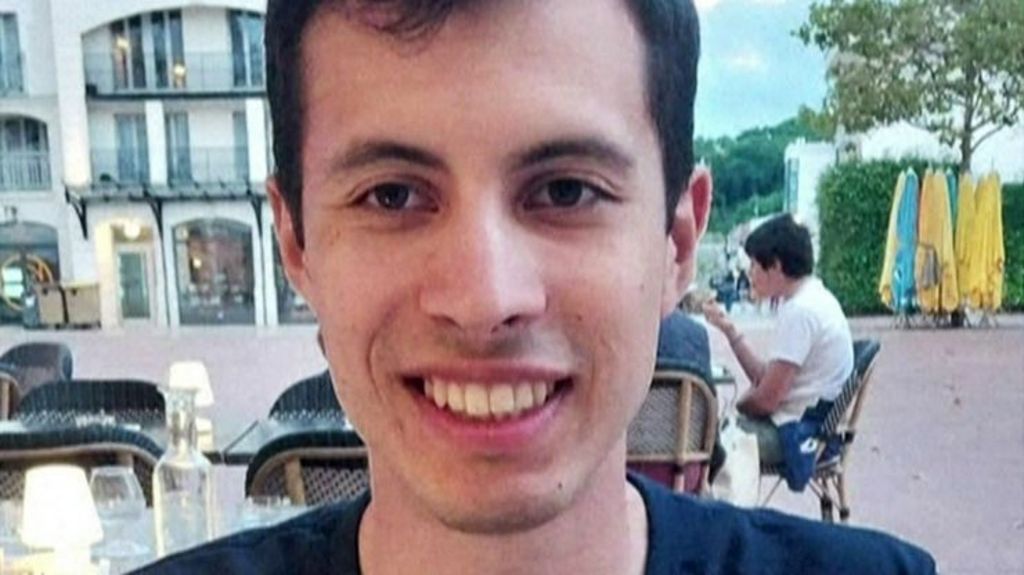
    Christian Brückner, the prime suspect in the high-profile disappearance of Madeleine McCann, has been released from a German prison where he was serving a sentence for an unrelated offense. Brückner, 48, was driven out of Sehnde prison near Hanover in a black Audi by his lawyer, accompanied by a police escort, early Wednesday morning. While he was not visible in the vehicle, authorities confirmed his departure. Brückner, who has never been charged in connection with the McCann case, denies any involvement. He was previously convicted of raping a 72-year-old American woman in Portugal in 2005 and will now be subject to strict probationary conditions, including wearing an ankle monitor for five years. German prosecutors have pointed to evidence, such as mobile phone data, suggesting Brückner was in the area when Madeleine vanished in 2007, but they lack sufficient evidence to charge him. Despite his release, Brückner remains a suspect in the ongoing investigation. Madeleine McCann, then three years old, disappeared from a holiday apartment in Praia da Luz, Portugal, while her parents dined nearby. Her case remains one of the most prominent unsolved missing person cases globally. Brückner, a convicted sex offender with a history of petty crimes, has faced multiple searches in recent years, including near the Barragem do Arade reservoir, but no breakthroughs have been made. The Metropolitan Police in the UK continue to treat the case as a missing person inquiry, with over £13.2 million spent on the investigation since 2011.

  • Coup plot charges for former Romanian presidential candidate

    Coup plot charges for former Romanian presidential candidate

    Calin Georgescu, a far-right former presidential candidate in Romania, has been formally charged with attempting to orchestrate a coup following the annulment of the first round of the 2024 presidential election. The charges also extend to Horatiu Potra, a former French legionnaire and militia leader in the Democratic Republic of Congo, along with 20 other individuals. The case centers on a foiled raid planned for December 8 in Bucharest, which authorities claim was part of a broader scheme to destabilize Romania’s constitutional order. Prosecutors allege that Georgescu and Potra collaborated with foreign intelligence operatives, particularly from Russia, to execute the plot. Evidence includes a meeting between Georgescu and Potra at a horse farm shortly after the election annulment, which Georgescu initially denied but later admitted to after photographic proof emerged. In February, police raids uncovered weapons, gold, and cash, allegedly intended for a violent power grab. Potra, currently abroad, is believed to be seeking asylum in Russia. The 2024 election was marred by accusations of Russian interference, with Romanian intelligence citing a large-scale influence operation involving cyberattacks, disinformation campaigns, and social media manipulation. Over 2,000 Facebook pages and 20,000 TikTok accounts were reportedly used to amplify pro-Georgescu messaging. After being barred from the rerun election, Georgescu’s ally, George Simion of the far-right AUR party, stepped in but ultimately lost to pro-EU candidate Nicusor Dan. Georgescu has accused Romanian authorities of ruling through ‘deceit, intrigue, and division,’ while President Dan has labeled the prosecutors’ report as proof of Russia’s systematic disinformation efforts. A trial date for Georgescu is expected in early 2026.

  • Artefacts recovered from Titanic’s sunk sister ship

    Artefacts recovered from Titanic’s sunk sister ship

    In a remarkable underwater recovery operation, Greece has successfully retrieved artefacts from the wreck of the HMHS Britannic, over a century after the ship was sunk by a German mine during World War I. The operation, conducted in May but announced on Monday by the Greek Ministry of Culture, involved an 11-member team of professional deep-sea divers equipped with closed-circuit technology. The expedition was organized by British historian Simon Mills, founder of the Britannic Foundation. Among the recovered items were the ship’s lookout bell, a portside navigation lamp, binoculars, ceramic tiles from Turkish baths, and equipment from first- and second-class cabins. A porcelain washbasin, though covered in marine organisms, was found intact in one of the second-class cabins. The artefacts were carefully cleaned of marine growth and transported to the Ephorate of Underwater Antiquities in Athens for further conservation. Some planned items could not be recovered due to their condition and location. The artefacts will eventually be displayed at the new National Museum of Underwater Antiquities in Piraeus, in a section dedicated to World War I. The Britannic, the third of the White Star Line’s Olympic-class steamships, was requisitioned by the British Admiralty during the war to serve as a hospital ship. On November 16, 1916, it struck a German mine off the island of Kea and sank in less than an hour, resulting in the deaths of 30 of the 1,065 people on board.

  • Beaten and held in Russia for three years – but never charged with a crime

    Beaten and held in Russia for three years – but never charged with a crime

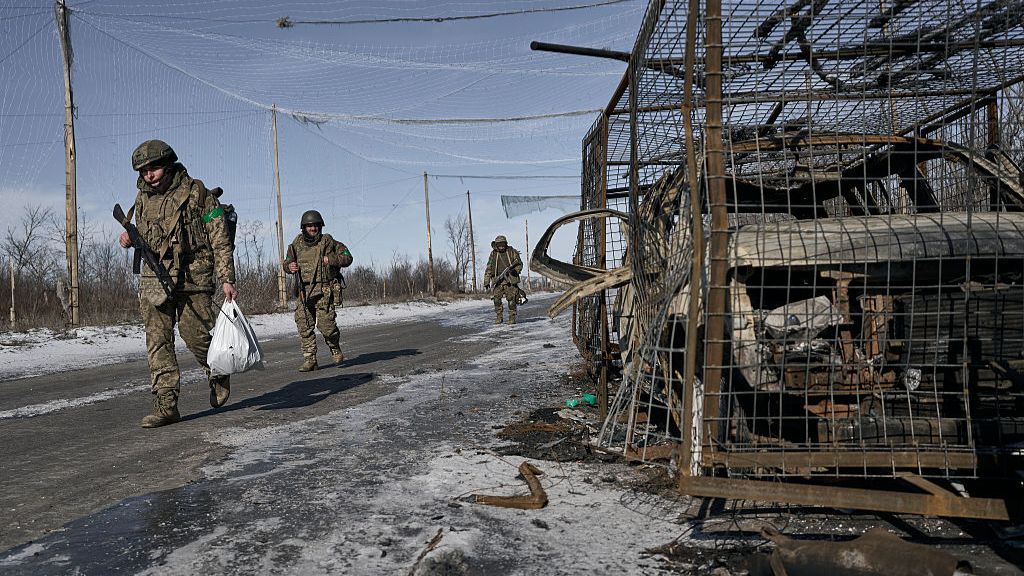
    In a rare prisoner exchange, Ukrainian journalist Dmytro Khyliuk has been released after enduring three and a half years in Russian captivity. Detained during the early days of Russia’s full-scale invasion of Ukraine, Khyliuk was among eight civilians freed in a surprising move that also saw the release of 146 Ukrainians, mostly soldiers. This exchange marks a significant development, as Russia seldom releases Ukrainian civilians. Since his return, Khyliuk has been reconnecting with the families of fellow detainees, offering them the first confirmation of their loved ones’ survival. The emotional reunion was marked by celebrations in Ukraine, with crowds waving national flags and cheering as the freed individuals arrived. Khyliuk’s release was part of a complex negotiation involving the return of individuals of interest to Russia, including residents from the Kursk region. Khyliuk’s harrowing experience in captivity included severe physical abuse, starvation, and psychological torment. Despite the brutality, he managed to send a single note to his family, assuring them of his survival. His return brings hope to thousands of Ukrainian families still awaiting news of their missing relatives, as officials estimate over 16,000 civilians remain unaccounted for. The ongoing conflict continues to pose significant challenges for prisoner exchanges, with Ukraine’s human rights ombudsman highlighting the lack of legal mechanisms to secure the release of civilians detained by Russia. Khyliuk’s story underscores the resilience of those affected by the war and the urgent need for international efforts to address the humanitarian crisis in Ukraine.

  • Belarus and Russia’s show of firepower appears to be a message to Europe

    Belarus and Russia’s show of firepower appears to be a message to Europe

    In a dramatic display of military might, Belarus and Russia have launched their joint military exercises, codenamed ‘Zapad-2025’ (West 2025), at the Borisovsky training ground, located 45 miles from Minsk. The drills, which occur every four years, feature a series of simulated combat scenarios, including guided bomb drops by Sukhoi-34 bombers, artillery shelling, and helicopter gunship attacks. Surveillance drones hover overhead, capturing the intensity of the maneuvers. Despite the spectacle, Belarusian and Russian officials insist the exercises are purely defensive, aimed at bolstering the security of both nations against potential external threats. However, the timing of the drills has raised eyebrows, coinciding with heightened tensions in Eastern Europe. Poland, in particular, has expressed concern, with Prime Minister Donald Tusk labeling the exercises as ‘very aggressive.’ The drills also come amid ongoing conflict in Ukraine, where Russia continues its military operations. In a bid for transparency, Belarus invited international media and military attachés from 23 countries, including the US, Turkey, and Hungary, to observe the exercises. Major General Valery Revenko, assistant to the Belarusian defense minister, emphasized the unprecedented openness of the event, stating, ‘We are not threatening anyone. We are for constructive and pragmatic dialogue.’ Yet, recent incidents, such as Russian drone incursions into Polish and Romanian airspace, have fueled fears that these exercises may be part of a broader strategy to test NATO’s resolve. While both Russia and Belarus have sought to improve relations with Washington, their ties with Europe remain strained. The ‘Zapad-2025’ drills serve as a stark reminder of the military capabilities on Europe’s doorstep, sending a clear message to the West: confrontation with Moscow may not be in their best interest.

  • Spanish PM calls for Israel to be barred from international sport

    Spanish PM calls for Israel to be barred from international sport

    Spanish Prime Minister Pedro Sánchez has urged the international community to exclude Israel from global sports competitions and cultural events, citing its actions in Gaza. Speaking to members of his Socialist Workers’ Party, Sánchez argued that Israel should not be allowed to use international platforms to ‘whitewash its image,’ drawing parallels to Russia’s exclusion following its invasion of Ukraine in 2022. Sánchez’s remarks have sparked a heated diplomatic row, with Israel’s Foreign Minister Gideon Saar labeling the Spanish leader ‘a disgrace’ and accusing him of inciting pro-Palestinian protests in Madrid. These protests led to the cancellation of the final stage of the Vuelta a España cycling race, which included an Israeli team. Sánchez defended the protests, stating that Spain ‘shines as an example, with pride’ on the Gaza issue. Several Spanish ministers echoed his sentiments, with Digital Transformation Minister Óscar López describing Israel’s actions as ‘genocide,’ a claim Israel vehemently denies, asserting its actions are acts of self-defense. Culture Minister Ernest Urtasun also called for Israel’s exclusion from the next Eurovision Song Contest, a stance supported by public broadcasters in Ireland and the Netherlands, who cited the ‘appalling’ loss of life in Gaza. The strained relationship between Spain and Israel has worsened since late 2023, when Sánchez expressed concerns over civilian deaths in Gaza. In 2024, Spain joined Norway and Ireland in recognizing a Palestinian state, and Sánchez recently accused Israel of genocide, announcing measures including an arms embargo. Israel has countered by accusing Sánchez’s administration of antisemitism and using ‘wild and hateful rhetoric.’ A recent poll by the Elcano Royal Institute found that 82% of Spaniards believe genocide is occurring in Gaza. European Commission President Ursula von der Leyen has also called for a suspension of free trade and bilateral support with Israel, citing a ‘man-made famine’ in Gaza. Israel, however, denies causing famine, blaming aid agencies and Hamas for delays in aid distribution. The UN-backed IPC confirmed famine in parts of Gaza in August, attributing it to Israel’s restrictions on food and medical aid. Israel launched its military campaign in Gaza in response to Hamas’s October 7, 2023, attack, which killed 1,200 Israelis and took 251 hostages. Since then, over 64,871 Palestinians have been killed, according to Gaza’s Hamas-run health ministry.

  • Conor McGregor ends bid to be Irish president

    Conor McGregor ends bid to be Irish president

    Mixed martial arts star Conor McGregor has announced his withdrawal from the upcoming Irish presidential election, just hours before he was scheduled to address key council meetings in Dublin and Kildare. McGregor, who had been vying for the nominations required to appear on the ballot, cited “careful reflection and family consultations” as the reasons behind his decision. The 37-year-old former UFC champion expressed gratitude for the “support and encouragement” he received but criticized the election’s eligibility rules, calling them a “straitjacket” that hinders a truly democratic process. McGregor’s withdrawal comes after months of social media campaigning, during which he urged his followers to lobby local councillors for his nomination. However, his absence from early candidate presentations raised doubts about his commitment to the race. McGregor’s potential candidacy had already faced scrutiny due to his legal troubles, including a recent civil case in which he was ordered to pay £206,000 in damages for sexual assault allegations, which he denies. With McGregor out of the running, the focus now shifts to the three confirmed candidates: Catherine Connolly, Jim Gavin, and Heather Humphreys, each backed by major political parties. The Irish presidential election is set for October 24, with nominations closing on September 24.

  • Romania becomes second Nato country to report Russian drone in its airspace

    Romania becomes second Nato country to report Russian drone in its airspace

    In a significant escalation of tensions in Eastern Europe, a Russian drone breached Romanian airspace on Saturday, marking the second NATO country to report such an incursion this week. Romanian F-16 fighter jets, monitoring the country’s border with Ukraine, detected the drone following Russian air attacks on Ukrainian infrastructure near the Danube River. The drone, identified as a Geran (the Russian designation for the Iranian-designed Shahed 136), was tracked 20 kilometers southwest of the village of Chilia Veche before disappearing from radar. Although it did not fly over populated areas or pose immediate danger, the incident has raised concerns about Russia’s expanding military activities in the region. Ukrainian President Volodymyr Zelensky condemned the breach as a deliberate act of war expansion by Russia, while Moscow has remained silent on the allegations. Romania has summoned the Russian ambassador and is considering its response under a new law that authorizes the military to shoot down unauthorized drones. Meanwhile, Poland reported shooting down three Russian drones earlier in the week, prompting heightened defensive measures across NATO’s eastern flank. The Czech Republic has also deployed a special operations helicopter unit to Poland in response to the escalating threat. As the conflict in Ukraine continues, Western leaders, including U.S. President Donald Trump, have called for stricter sanctions on Russia, though NATO members remain divided on the best course of action.

  • Neo-Nazi Golden Dawn leader released from prison early

    Neo-Nazi Golden Dawn leader released from prison early

    Nikos Michaloliakos, the notorious leader of the Greek neo-Nazi party Golden Dawn, has been granted early release from prison, igniting widespread condemnation. The 67-year-old far-right politician, known for his admiration of Nazism and Holocaust denial, was permitted to serve the remainder of his 13-year sentence under house arrest due to health concerns, as reported by state media on Friday. Michaloliakos had been convicted in 2020 for orchestrating a series of violent attacks on immigrants and political opponents carried out by Golden Dawn supporters. This marks the second time he has been released early; a previous attempt in May 2024 was revoked after he failed to demonstrate satisfactory behavior. Golden Dawn, which Michaloliakos founded and led, was declared a criminal organization linked to the murder of an anti-fascist musician and attempted murders of Egyptian fishermen and communist activists. The party gained significant traction during Greece’s financial crisis, securing third place in the 2012 elections with its anti-immigrant and nationalist rhetoric. Despite officially denying its neo-Nazi identity, Golden Dawn adopted Nazi-inspired symbols and ideologies. Michaloliakos and former party MPs were convicted of leading or participating in the criminal group. The decision to release him has drawn sharp criticism from left-wing parties, with Greece’s New Left party calling it a ‘serious blow to the collective memory and the struggle for democracy and justice.’ The communist party KKE has demanded the decision be overturned, emphasizing that Golden Dawn’s crimes remain unforgotten by the public and younger generations.