标签: Europe

欧洲

  • Thousands protest ahead of trial over deadliest fire in North Macedonia’s history

    Thousands protest ahead of trial over deadliest fire in North Macedonia’s history

    Thousands of protesters flooded the streets of Skopje, North Macedonia, on Saturday, demanding accountability for the victims of the nation’s deadliest nightclub fire. The tragic incident, which occurred on March 16, claimed 63 lives and left over 200 injured after a pyrotechnic display ignited the roof of the crowded Pulse club in Kocani. The fire triggered a stampede, with most victims being young revelers. As the trial of the club owner and 33 others approaches, families of the victims, dressed in black, marched to the Criminal Court, holding banners adorned with photos of their loved ones. Parents accused corruption and greed of playing a role in the tragedy, citing the venue’s numerous safety violations and improper licensing. In a heartfelt video message, they vowed to fight against the systemic corruption they believe led to their children’s deaths. The defendants, including security guards, former mayors, and government officials, face charges of serious crimes against public security, with potential prison sentences of up to 10 years. North Macedonia, ranked 88th on Transparency International’s Corruption Perception Index, has long struggled with corruption, with bribes to bypass safety regulations being commonplace. The European Union has repeatedly flagged corruption as a significant barrier to the country’s EU accession, a process it has been pursuing since 2005.

  • Pope Leo XIV celebrates cinema with Hollywood stars and urges inclusion of marginal voices

    Pope Leo XIV celebrates cinema with Hollywood stars and urges inclusion of marginal voices

    In a historic gathering at the Vatican, Pope Leo XIV welcomed a constellation of Hollywood stars, including Spike Lee, Cate Blanchett, and Greta Gerwig, to a special audience celebrating the transformative power of cinema. The event, organized by the Vatican’s culture ministry, underscored the Church’s commitment to engaging with the secular world through art and culture. Pope Leo, the first American pope, emphasized the profound impact of film as a universal medium that can challenge, inspire, and unite. He urged filmmakers to amplify marginalized voices and described cinema as “a popular art in the noblest sense, intended for and accessible to all.” The pontiff also expressed concern over the decline of movie theaters, calling on institutions to preserve their cultural and social significance. The audience, which included Italian stars like Monica Bellucci and Alba Rohrwacher, as well as American actors such as Chris O’Donnell and Judd Apatow, highlighted the Vatican’s efforts to foster dialogue with the global cultural community. Spike Lee, who presented Pope Leo with a Knicks jersey, and Cate Blanchett, who praised the pope’s understanding of cinema’s unifying role, were among the many attendees inspired by the event. Archbishop Paul Tighe, a key organizer, noted the challenges of assembling the guest list but expressed pride in the turnout, which he described as a celebration of cinema’s democratic and inclusive nature.

  • Aficionados fret as Trump moves to make pasta great again

    Aficionados fret as Trump moves to make pasta great again

    The United States has proposed a staggering 107% tariff on Italian pasta imports, a move that has sent shockwaves through Italy’s food industry and sparked international trade tensions. The decision stems from a U.S. Commerce Department investigation alleging that Italian pasta producers, including major exporters La Molisana and Garofalo, engaged in anti-competitive practices by selling products in the U.S. at below-market prices. This 92% anti-dumping duty would be added to the existing 15% tariff imposed by the Trump administration on European exports, potentially doubling the price of Italian pasta for American consumers.

  • Once a shadowy dealmaker, one-time Zelenskyy associate is accused in Ukrainian corruption scandal

    Once a shadowy dealmaker, one-time Zelenskyy associate is accused in Ukrainian corruption scandal

    A sweeping corruption scandal involving Ukraine’s state nuclear energy company has thrust Tymur Mindich, a once-shadowy figure with deep ties to President Volodymyr Zelenskyy, into the spotlight. Mindich, a former business partner of Zelenskyy, is accused of orchestrating a $100 million embezzlement scheme, according to a 15-month investigation by Ukraine’s anti-corruption agencies. The probe alleges that Mindich wielded significant influence over top officials, including former Energy Minister Herman Haluschenko, who resigned following the revelations. Mindich has since fled the country, leaving criminal proceedings to likely unfold in absentia. His rise to power, activists argue, was facilitated by his privileged relationship with Zelenskyy and his inner circle, enabling him to dominate lucrative sectors like energy and agriculture. The scandal has also implicated Mindich in alleged dealings with Ukraine’s top drone manufacturer, Fire Point, though no findings have been disclosed. This case underscores the pervasive corruption challenges Ukraine faces, particularly during wartime, as it seeks to stabilize its energy infrastructure and combat external threats.

  • Should Hitler’s DNA have been studied – or just left alone?

    Should Hitler’s DNA have been studied – or just left alone?

    A groundbreaking DNA analysis of Adolf Hitler’s blood has unveiled remarkable insights into the dictator’s ancestry and potential genetic predispositions. Conducted by a team of international experts, the study utilized an 80-year-old blood-stained fabric swatch from Hitler’s bunker sofa, where he ended his life in 1945. The findings, now under peer review, debunked long-standing rumors of Jewish ancestry and revealed that Hitler had Kallmann syndrome, a genetic disorder affecting sexual organ development. Additionally, his DNA showed a high predisposition for autism, schizophrenia, and bipolar disorder, though experts emphasize these are not diagnoses but indicators of genetic risk. The research has sparked ethical debates about stigmatization and the appropriateness of studying Hitler’s DNA. Prof Turi King, a leading geneticist involved in the project, stressed the importance of academic rigor and the inclusion of caveats to avoid sensationalism. The documentary ‘Hitler’s DNA: Blueprint of a Dictator,’ airing on Channel 4, explores these findings while addressing concerns about oversimplification and the potential for reinforcing harmful stereotypes. Historians and geneticists alike caution against reducing complex historical figures to their genetic makeup, emphasizing the interplay of environment, upbringing, and societal factors in shaping behavior.

  • Arizona fugitive convicted in US sex crimes case arrested in France after years on the run

    Arizona fugitive convicted in US sex crimes case arrested in France after years on the run

    A 51-year-old Arizona man, Michael Robert Wiseman, who had fled the United States twice while on probation for sex crime convictions, was arrested in France earlier this month on charges of sexually assaulting a child. Authorities revealed that Wiseman was living in Kilstett, northeastern France, when he was apprehended on November 1. Investigations uncovered that he had previously traveled to Vietnam and Poland before settling in France. Scottsdale police Sgt. Dustin Patrick disclosed that Wiseman was captured after attempting to apply for a pilot’s license in Spain using his real name. Patrick noted that Wiseman had adopted two children in Vietnam and obtained a legitimate Polish passport under an alias. His arrest was triggered when a potential employer Googled his name, discovered he was on Scottsdale’s most wanted list, and alerted Spanish authorities. This marks the second time Wiseman has fled the U.S. while facing charges. In 2008, he cut off his ankle monitoring device and left the country, only to be arrested in Spain in 2009 and extradited back to Arizona, where he pleaded guilty to three counts of attempted sexual exploitation of a child and one escape charge. After serving over two years in jail, Wiseman was sentenced in 2012 to lifetime probation and a one-year deferred jail sentence. However, he fled the U.S. again after his 2012 sentencing. Scottsdale police confirmed that Wiseman will be extradited to the United States following the completion of his French case, though no timeline for the extradition has been provided.

  • From florist to drone maker: How the weapon became so mainstream

    From florist to drone maker: How the weapon became so mainstream

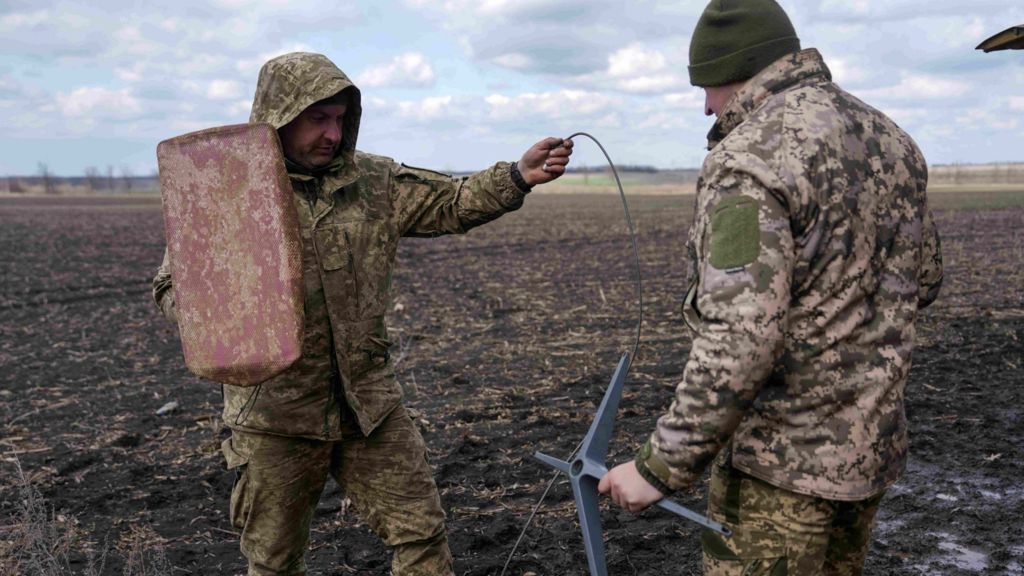
    The ongoing conflict in Ukraine has been dubbed the world’s ‘first drone war,’ catalyzing a surge in military drone production both within and beyond the country’s borders. Among the many individuals contributing to this transformation is Kseniia Kalmus, a former floral artist who now dedicates her skills to manufacturing drones for the Ukrainian army. Before Russia’s invasion in February 2022, Kalmus co-owned a flower shop in Kyiv and showcased her floral arrangements across Europe. However, the war prompted a dramatic shift in her life. ‘It was just an obvious decision for me,’ Kalmus told the BBC from Kyiv. ‘I just wanted to help my country, help my people, and the military.’ Initially, she raised funds to purchase essential supplies for soldiers, but as the conflict evolved, the demand shifted to first-person view (FPV) drones. Recognizing this need, Kalmus began producing drones herself, and today, she and her team manufacture hundreds of these devices monthly. These small, plastic-framed quadcopters, originally designed for aerial photography, have been repurposed into lethal weapons by attaching small bombs. The widespread use of drones in Ukraine has not only revolutionized warfare but also spurred a global counter-drone industry. Companies like DroneShield and Munin Dynamics are developing technologies to detect and neutralize drones, while nations worldwide are investing heavily in drone defense systems. Experts predict that artificial intelligence will drive the next major advancements in drone technology, potentially leading to fully autonomous systems. Despite the challenges, Kalmus remains committed to her new role. ‘I miss flowers very much and that previous life, of course,’ she said. ‘But this is a question of existence. We just fight for our country, for our existence, for our culture.’

  • Financial markets grow fretful after reports of UK government abandoning income tax hike

    Financial markets grow fretful after reports of UK government abandoning income tax hike

    British financial markets experienced turbulence on Friday amid growing speculation that the Labour government has abandoned plans to raise income taxes in its upcoming budget. Treasury Chief Rachel Reeves had been considering increasing the basic rate of income tax, a move that would have marked the first such hike in 50 years. However, reports suggest she has decided against it, sparking investor unease over the government’s fiscal strategy. By late afternoon, the pound had fallen by 0.4% to $1.3137, while the yield on the UK’s benchmark 10-year bond rose by 0.13 percentage points to 4.57%. The bond yield increase reflects investor concerns about the UK’s public finances and the government’s ability to make bold fiscal decisions. Andrew Goodwin, Deutsche Bank’s chief UK economist, noted that the budget serves as a critical test of market confidence in the government’s fiscal approach. He added that political considerations, such as voter backlash against tax hikes, could reinforce perceptions that the government is unwilling to make tough decisions. The Labour government, elected in July 2024, faces significant challenges, including sluggish economic growth and stubbornly high inflation. Prime Minister Keir Starmer’s administration has struggled to deliver on its promise of economic revitalization, with public services strained and the cost of living crisis persisting. Reeves had previously indicated that breaking the manifesto pledge on taxes would necessitate deep cuts to public investment. However, updated forecasts from the Office for Budget Responsibility suggest stronger wage growth may reduce the need for such measures. Health Secretary Wes Streeting welcomed reports of the tax hike’s abandonment, emphasizing the importance of maintaining public trust by honoring election promises.

  • As NATO pushes for faster innovation, drones flood a test battlefield in Greece

    As NATO pushes for faster innovation, drones flood a test battlefield in Greece

    Under the pale November sun in Alexandroupolis, Greece, a hillside transformed into a futuristic battlefield. Helicopters soared above tree lines, infantry units maneuvered through smoke and explosions, and a diverse array of drones—quadcopters, fixed-wing models, loitering munitions, and experimental prototypes—orchestrated the mock combat. This marked Greece’s first full tactical exercise testing domestically developed drones and counter-drone systems, a significant step in NATO’s broader push for rapid battlefield innovation. Military observers from the U.S., France, Bulgaria, Armenia, and Turkey witnessed the event, as Greece, historically reliant on imports, joined the global race to develop and deploy its own advanced military technology.

    The exercise showcased the versatility of drones in modern warfare. Small quadcopters deployed tire spikes and mines to hinder enemy vehicles, while others laid smoke screens or delivered medical supplies and ammunition to frontline positions. Some drones even carried loudspeakers broadcasting demoralizing messages in English. An experimental two-wheeled ‘tunnel crawler’ demonstrated its ability to leap into the air from confined spaces, carrying explosives, oxygen, or radiation detectors.

    Greece’s efforts reflect a broader trend among mid-sized NATO economies, spurred by Russia’s invasion of Ukraine. Countries like Estonia and Denmark have also invested in indigenous drone technology, viewing autonomy and rapid production as critical to deterrence. For Greece, embroiled in a decades-long maritime dispute with Turkey, this initiative is part of a €25 billion overhaul of its armed forces following years of austerity. NATO’s urgency is further fueled by uncertainty over the U.S.’s long-term security commitments to Europe, prompting calls for Europe’s defense sector to adopt a startup mentality.

    NATO Secretary-General Mark Rutte emphasized the need for advanced technology and rapid innovation during a recent visit to Romania. Greek companies, particularly small firms, are seizing the opportunity. Dimitris Stefanakis of Ucandrone, a Greek drone manufacturer, noted that Ukraine’s battlefield adaptations have reshaped the industry, favoring agile, innovative companies over larger, slower-moving ones. Greek developers also foresee military advancements accelerating civilian applications, such as disaster response.

    Western officials stress the need for Europe to move away from lengthy procurement cycles toward rapid-development ecosystems. Analysts, including Swasti Rao of India’s Jindal School for International Affairs, highlight the decisive role of rapid innovation in modern warfare. Greek Defense Minister Nikos Dendias underscored the profound mindset shift required to adapt to this new era of warfare, emphasizing the transition from large mechanized units to small, technology-driven teams.

  • Switzerland to boost US investment as deal struck to lower US tariffs on Swiss goods to 15%

    Switzerland to boost US investment as deal struck to lower US tariffs on Swiss goods to 15%

    In a landmark development for international trade, Switzerland has unveiled a strategic plan to invest $200 billion in the United States by 2028. This announcement coincided with the finalization of a significant trade agreement that will substantially reduce U.S. tariffs on Swiss goods. Swiss Economy Minister Guy Parmelin revealed that the Trump administration has agreed to lower tariffs on most Swiss products from 39% to 15%, aligning them with the rates applied to the European Union. This agreement marks a pivotal moment in U.S.-Swiss trade relations, which had been strained since August when U.S. tariffs on Swiss goods were unexpectedly raised from 31% to 39%. The Swiss Federal Council, the country’s executive body, expressed gratitude to President Trump for his constructive engagement in resolving the dispute. The tariff reduction follows months of intense negotiations and lobbying efforts by Swiss government officials and business leaders, who had been advocating for more favorable trade terms. This deal is expected to bolster economic ties between the two nations and create new opportunities for Swiss exporters in the U.S. market.