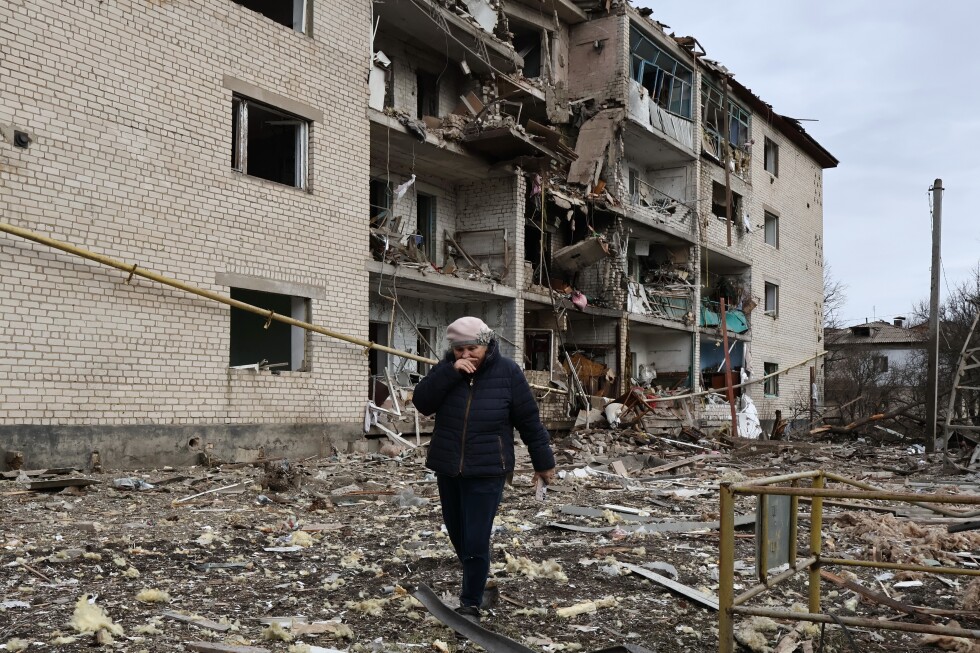
VUKOVAR, Croatia — On Tuesday, Croatia solemnly observed the anniversary of the fall of Vukovar, a pivotal event during the 1991-95 war when the Serb-led Yugoslav army devastated the town, turning it into a symbol of resilience and national solidarity. Senior officials joined thousands of citizens, many waving national flags and banners, in a silent march through the eastern town. Participants lit candles and laid flowers, continuing an annual tradition since the war’s end that underscores the event’s profound significance for the nation. The conflict erupted after Croatia declared independence from the Serb-dominated Yugoslav federation, sparking a rebellion by minority Serbs who seized large portions of Croatian territory. Vukovar endured an 87-day siege, during which relentless shelling reduced it to ruins. Hundreds perished after the town’s fall in November 1991, with their bodies buried in a mass grave at a nearby pig farm. The war concluded in 1995 after Croatia reclaimed most of the territories held by Serb rebels, prompting tens of thousands of Serbs to flee. Croatia, now a NATO member and EU state since 2013, continues to view Vukovar as a martyr in its struggle against what it terms ‘Serb aggression.’ Ethnic tensions persist both within Croatia and with neighboring Serbia, exacerbated by recent disruptions of Serb cultural events in Zagreb and Split. An ethnic Serb organization canceled an exhibition in Vukovar ahead of the commemoration, citing safety concerns.
标签: Europe
欧洲
-

Venice’s newest marvel is a wild, acrobatic dolphin. His refusal to leave puts him in danger
Venice has become the temporary home of an acrobatic wild dolphin named Mimmo, who has captivated both locals and tourists with his playful antics. However, his prolonged stay in the bustling St. Mark’s Basin has raised concerns among marine experts. Mimmo’s refusal to leave the area, despite efforts to guide him to open waters, has exposed him to significant dangers, including injuries from boat propellers. On Saturday, multiple agencies attempted to relocate Mimmo using low-intensity acoustic devices, but the dolphin returned within an hour, highlighting the challenges of his situation. Veterinarian Guido Pietroluongo from the University of Padua’s emergency response team for stranded marine mammals emphasized the risks posed by the heavy boat traffic in the area. Mimmo’s arrival in the Venetian lagoon on July 23 is believed to have been driven by his pursuit of fish. While his superficial wounds are expected to heal, experts worry about his continued safety. Authorities are urging the public to avoid feeding or interacting with Mimmo, as such actions are illegal and could further stress the animal. Despite the risks, Mimmo’s presence has brought a rare and enchanting spectacle to Venice, though his long-term well-being remains a pressing concern.
-

Huge fire in the Croatian capital destroys landmark tower
A devastating fire engulfed the iconic Vjesnik Tower in the heart of Zagreb, Croatia, reducing the historic skyscraper to ruins. The blaze, which erupted near the top of the 16-story building late Monday night, rapidly descended, thwarting the efforts of approximately 100 firefighters to contain it. Fortunately, no injuries or fatalities were reported, as the building was largely unoccupied at the time of the incident. By midday Tuesday, the flames appeared to be extinguished, though the structure continued to smolder, with debris reportedly falling due to the intensity of the fire. Croatian media suggested that the fire may have spread through ventilation shafts. Zagreb Mayor Tomislav Tomasevic expressed his dismay at the extensive damage, stating, ‘From what I saw on site and inside the building, the damage is unfortunately total.’ He remained optimistic, however, about the potential for restoration, emphasizing the building’s significance in the city’s landscape. The Vjesnik Tower, once home to a prominent newspaper of the same name, had been vacant for over a decade, leaving its future uncertain until this tragic event.
-

EU to assess whether Amazon and Microsoft cloud businesses need extra scrutiny
European Union regulators are intensifying their examination of Amazon Web Services (AWS) and Microsoft Azure, contemplating whether these cloud computing giants should be classified as ‘gatekeepers’ under the EU’s Digital Markets Act (DMA). The DMA, a comprehensive regulatory framework, aims to curb the market dominance of major tech companies by imposing strict operational guidelines and penalties for non-compliance. Gatekeepers are subject to additional obligations, and the EU has already designated other segments of Amazon and Microsoft, such as Amazon Marketplace and LinkedIn, under this classification. However, applying the gatekeeper label to cloud services presents unique challenges, as it is partly based on user numbers, which are less straightforward to measure in the cloud computing sector. The European Commission is investigating whether AWS and Azure serve as critical intermediaries between businesses and consumers, despite not meeting the traditional thresholds. Market research indicates that these providers hold significant market power, influencing both business and consumer landscapes. The recent AWS outage, which disrupted internet services for hours, underscored the critical reliance of digital services, including artificial intelligence, on cloud computing platforms. AWS has expressed confidence that the European Commission will recognize the dynamic and competitive nature of the cloud sector, emphasizing the risks of stifling innovation and increasing costs for European companies. Microsoft has also highlighted the innovative and competitive environment of Europe’s cloud industry, pledging to cooperate with the Commission’s inquiry.
-

‘Another feather in his cap’ as parrot named after ‘hat-trick hero’
In a heartwarming tribute to Republic of Ireland footballer Troy Parrott, Dublin Zoo has officially named a male citron-crested cockatoo after the national hero. The 23-year-old striker secured Ireland’s place in the World Cup play-offs with a stunning hat-trick and a 96th-minute winning goal against Hungary on Sunday, sparking nationwide celebrations. The previously unnamed parrot, a critically endangered species, has now been christened Troy in honor of Parrott’s historic achievement. Zookeeper Diana Farrell described the moment as ‘beautiful and joyous,’ emphasizing the zoo’s desire to celebrate ‘Ireland’s hat-trick hero.’ While fans had called for a statue, Farrell humorously noted that naming the parrot was ‘another feather in his cap.’ The newly named Troy, described as ‘chirpy, cheerful, and inquisitive,’ is one of only two citron-crested cockatoos at the zoo. He shares his enclosure with a female named Katie, after Irish footballer Katie McCabe. The zoo hopes the pair will breed as part of the European Zoo Breeding Programme to help conserve the critically endangered species. Farrell expressed optimism that the naming would attract more visitors to the zoo, raising awareness about the plight of these rare parrots. She also hopes the real Troy Parrott will visit his namesake, adding that many zookeepers are avid football fans. The tribute has already garnered significant attention, with Dublin Airport even temporarily renaming itself ‘Troy Parrott Airport’ on social media.
-

Further arrests after fire at asylum accommodation
In a significant development in the investigation of a fire at a building housing international protection applicants in Drogheda, County Louth, two additional men have been apprehended. The incident, which occurred on 31 October, necessitated the rescue of five individuals, including four children. Earlier, Gardaí (Irish police) had arrested and charged two men in their 20s with arson-related offenses. The latest arrests include a man in his 20s detained in Dublin on Monday and a man in his 40s taken into custody in Drogheda on Tuesday morning. Both individuals are currently held at a Garda station in County Louth. Authorities are urging anyone with pertinent information to come forward as the investigation continues.
-

Poland says 2 Ukrainians working for Russia are suspected in railway track blast
WARSAW, Poland — Polish Prime Minister Donald Tusk revealed on Tuesday that two Ukrainian citizens, allegedly working for Russia, are suspected of orchestrating a railway explosion in Poland over the weekend. Addressing the Sejm, Poland’s lower house of parliament, Tusk described the incident as an “unprecedented act of sabotage” targeting a rail line connecting Warsaw to the Ukrainian border. The suspects, whose identities remain undisclosed due to ongoing investigations, reportedly fled Poland via the Terespol border crossing into Belarus. Tusk emphasized their long-standing collaboration with Russian intelligence services. In a separate but related incident, power lines along the same railway further south were also damaged, which Polish officials have confirmed as sabotage. Russian presidential spokesperson Dmitry Peskov dismissed the accusations, labeling them as part of a broader trend of “Russophobia” in Europe. Western officials have accused Russia of staging numerous attacks across Europe since its invasion of Ukraine, aiming to destabilize support for Kyiv and sow division. In response, Poland’s National Security Committee convened with military and intelligence leaders to address the threat. Army patrols have been deployed to secure critical infrastructure in eastern Poland. Prosecutors have launched an investigation into the sabotage, which they described as “acts of terrorism” endangering public safety. The damaged railway sections have since been repaired, and no injuries were reported.
-

Irish finance minister to step down to take major banking role
Paschal Donohoe, Ireland’s Finance Minister, has announced his resignation from government to assume a prestigious position at the World Bank in Washington, D.C. According to reports from Irish broadcaster RTÉ, Donohoe will take on the roles of Managing Director and Chief Knowledge Officer at the World Bank, the globe’s foremost development institution. His departure from the Irish government is expected to occur later on Tuesday, followed by his resignation as a TD (member of parliament) for Dublin Central later this week. Donohoe, a seasoned politician with a distinguished career, previously served as Ireland’s Finance Minister from 2017 to 2022 and was reappointed to the role in January 2025. The 51-year-old will also relinquish his position as Chairman of the Eurogroup of finance ministers, triggering a by-election in his constituency. A graduate of Trinity College Dublin, Donohoe began his political journey on Dublin City Council before ascending to Seanad Éireann (the Irish Senate) and later Dáil Éireann (the lower house of parliament) in 2011. Over the years, he has held numerous ministerial portfolios, including Minister of State for European Affairs and Minister for Transport, Tourism, and Sport. His tenure as Finance Minister was marked by significant budgetary measures, including increased funding for social welfare and healthcare. Donohoe’s move to the World Bank underscores his expertise in economic and financial governance on the global stage.
-

Total faces war crimes allegations over Mozambique massacre
French energy giant TotalEnergies is embroiled in a legal and ethical controversy following allegations of complicity in war crimes during a 2021 massacre near its multi-billion-dollar gas project in northern Mozambique. The European Center for Constitutional and Human Rights (ECCHR) has filed a complaint with French prosecutors, accusing the company of enabling the torture and execution of dozens of civilians by local security forces at its facility. The incident occurred in the resource-rich Cabo Delgado province, where government troops were combating Islamist militants linked to the Islamic State group. TotalEnergies has consistently denied responsibility for the actions of the security forces involved in guarding its Afungi peninsula gas refinery development, which was Africa’s largest foreign investment project at the time. The massacre followed a brutal Islamist attack on the town of Palma, where 1,563 civilians were killed or kidnapped near TotalEnergies’ gas plant. Investigative journalist Alex Perry, who first documented the tragedy, described it as the ‘bloodiest disaster in oil and gas history.’ The complaint highlights the ethical dilemmas faced by corporations operating in conflict zones and calls for accountability. Environmental campaigners are urging the UK and Dutch governments to withdraw financial support for TotalEnergies’ liquefied natural gas project in Mozambique, citing the severity of the allegations. Critics draw parallels between TotalEnergies’ actions and those of Lafarge, another French company currently on trial for allegedly funding jihadist groups in Syria. Despite the controversy, supporters argue that the project could bring significant economic benefits to a neglected region of Africa.
-

Zelenskyy will visit Turkey in a new bid to end the Russia-Ukraine war
Ukrainian President Volodymyr Zelenskyy announced on Tuesday his upcoming visit to Turkey, aiming to reignite negotiations to end Russia’s nearly four-year-long invasion of Ukraine. This diplomatic effort follows earlier low-level talks between Ukraine and Russia in Istanbul, which primarily focused on prisoner exchanges but failed to achieve broader progress. International peace initiatives, led by the U.S., have also yet to yield significant breakthroughs. Zelenskyy’s visit to Turkey on Wednesday comes after his stop in Spain, where he sought additional support for Ukraine’s defense efforts. In a social media post, Zelenskyy emphasized Ukraine’s commitment to accelerating the end of the war, stating, ‘We are preparing to reinvigorate negotiations and have developed solutions to propose to our partners.’ However, Kremlin spokesman Dmitry Peskov clarified that no Russian representatives would attend the talks in Turkey, though Moscow remains open to dialogue. The U.S. has intensified pressure on Russia, with heavy sanctions targeting its oil industry set to take effect on Friday. These measures aim to cripple Russia’s war economy by targeting major oil companies like Rosneft and Lukoil, while also threatening secondary penalties for violators, including major importers like China and India. Amid these developments, Zelenskyy continues to bolster Ukraine’s military capabilities, signing agreements to acquire advanced weaponry from France, including Rafale warplanes and drones. On the ground, Ukrainian forces launched a surprise attack on energy infrastructure in the occupied Donetsk region, causing significant damage and power outages. Meanwhile, Russian strikes in Ukraine’s Kharkiv and Dnipro regions resulted in civilian casualties and infrastructure destruction. Both sides continue to exchange drone and missile attacks, underscoring the ongoing intensity of the conflict.