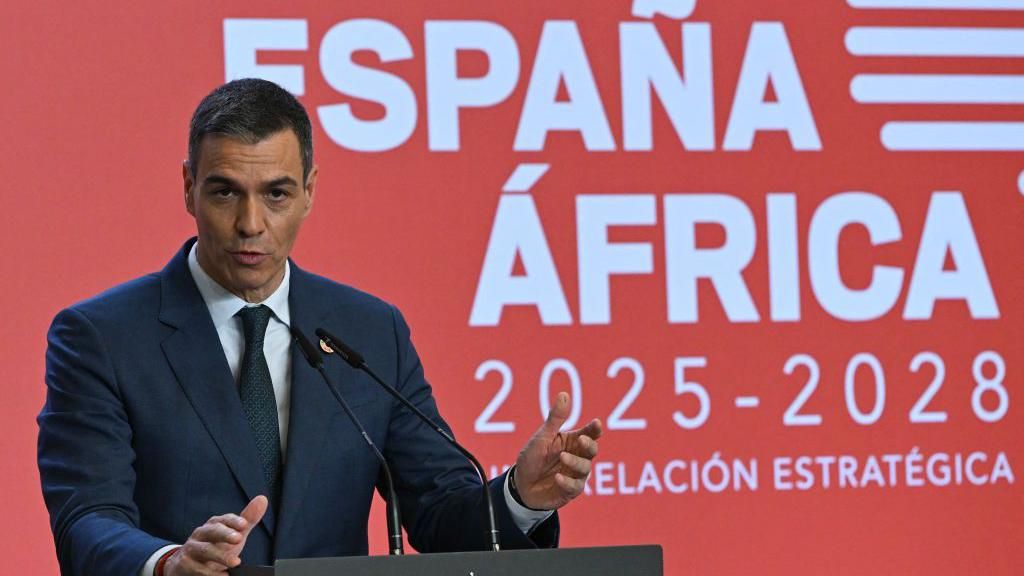
In a striking departure from the prevailing political climate in Western nations, Spain is charting a unique course in its approach to migration and its engagement with the African continent. While countries like the US, the UK, France, and Germany are scaling back development aid, Spain is doubling down on its commitment to fostering deeper ties with Africa. This week, Madrid hosted the African Union-backed ‘World Conference on People of African Descent,’ focusing on restorative justice and the establishment of a new development fund. This event underscores Spain’s socialist-led government’s efforts to diversify and strengthen its relationship with its southern neighbor, just a few kilometers across the Straits of Gibraltar. In July, Foreign Minister José Manuel Albares launched a new advisory council, predominantly composed of African intellectuals, diplomats, and cultural figures, to oversee the implementation of the Spain-Africa strategy unveiled last year. Plans include opening new embassies south of the Sahara and forging partnerships in business and education. Spain’s approach contrasts sharply with the tone and mindset of other Western nations, particularly in its handling of migration. While Prime Minister Pedro Sanchez faces electoral challenges from the radical right, driven by anti-immigration sentiment, his government is pursuing innovative solutions to manage migration. These include training schemes for unemployed youth in countries like Senegal and a ‘circular migration’ program offering short-term visas for seasonal agricultural work. Spain’s strategy is rooted in the belief that Europe and Africa share a common geopolitical space, and it emphasizes economic sectors like infrastructure, digitalization, and energy transition, as well as education and youth employment. The cultural dimension includes promoting the Spanish language and supporting academic mobility. Spain’s commitment to democratic ideals, the African Union, and regional organizations like Ecowas further distinguishes its approach. In a world increasingly marked by xenophobia and hostility toward migrants, Spain’s progressive stance offers a refreshing alternative.
标签: Europe
欧洲
-

England reaches 2026 World Cup by routing Latvia. Ronaldo and Portugal miss chance to clinch a spot
In a decisive display of dominance, England became the first European nation to secure a spot in the 2026 FIFA World Cup, clinching their qualification with a commanding 5-0 victory over Latvia on Tuesday. Captain Harry Kane led the charge with a first-half brace, solidifying England’s position at the top of their qualifying group with two matches remaining. Under the guidance of German coach Thomas Tuchel, the English squad has maintained an impeccable defensive record, conceding zero goals in six qualifying matches. Kane, who has netted a combined 21 goals for England and Bayern Munich this season, emphasized the team’s commitment to maintaining high standards regardless of the opponent. Meanwhile, Portugal’s path to qualification hit a snag as they conceded a stoppage-time equalizer against Hungary, resulting in a 2-2 draw in Lisbon. Cristiano Ronaldo, who scored twice to give Portugal a temporary lead, now holds the record for most goals in World Cup qualifiers with 41, surpassing Guatemala’s Carlos Ruiz. Despite the setback, Portugal remains in contention for a spot in the tournament. In other qualifying action, Italy secured at least a playoff berth with a 3-0 win over Israel, while Spain maintained their group lead with a 4-0 victory over Bulgaria.
-
Employment of woman jailed was ‘risk’ to Dáil security – Humphreys
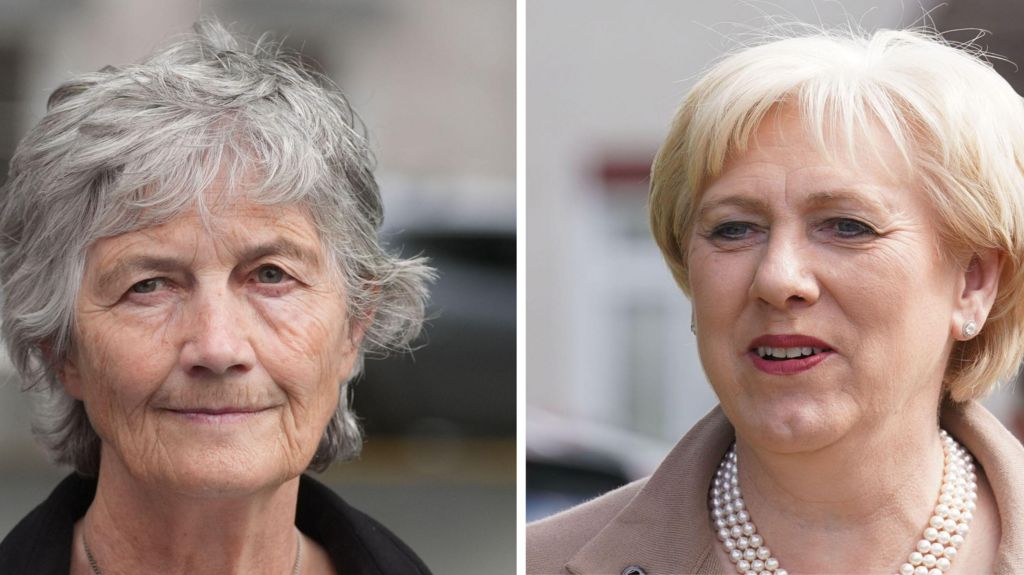
In a heated radio debate, Irish presidential candidates Catherine Connolly and Heather Humphreys clashed over the employment of a woman with a criminal past in the Dáil Éireann, Ireland’s national parliament. Heather Humphreys, representing Fine Gael, criticized Connolly’s decision to hire Ursula Ní Shionnain, who had served nearly four and a half years of a six-year sentence for firearms offences. Humphreys argued that Ní Shionnain’s employment posed a significant risk to the security of the Dáil, citing a lack of proper vetting by gardaí during her six-month tenure in an administrative role. Connolly, an independent TD supported by left-leaning parties, defended her decision, stating that Ní Shionnain had ‘fully rehabilitated her life’ and that no rules were broken in the hiring process. Ní Shionnain, a former member of the socialist republican party Érígí, was convicted in 2014 for her involvement in a dissident republican operation, which included possession of handguns, ammunition, and disguises. Connolly emphasized that Ní Shionnain was a ‘success story of the prison system’ and had been recommended by other parliamentarians involved in prison visiting groups. Despite Connolly’s assurances, Humphreys raised concerns about the potential security implications of employing someone with such a background in the heart of Ireland’s legislative body. The debate has sparked a broader conversation about rehabilitation, security protocols, and the responsibilities of public officials in ensuring the safety of national institutions.
-
French pair sentenced in Iran on spying charges
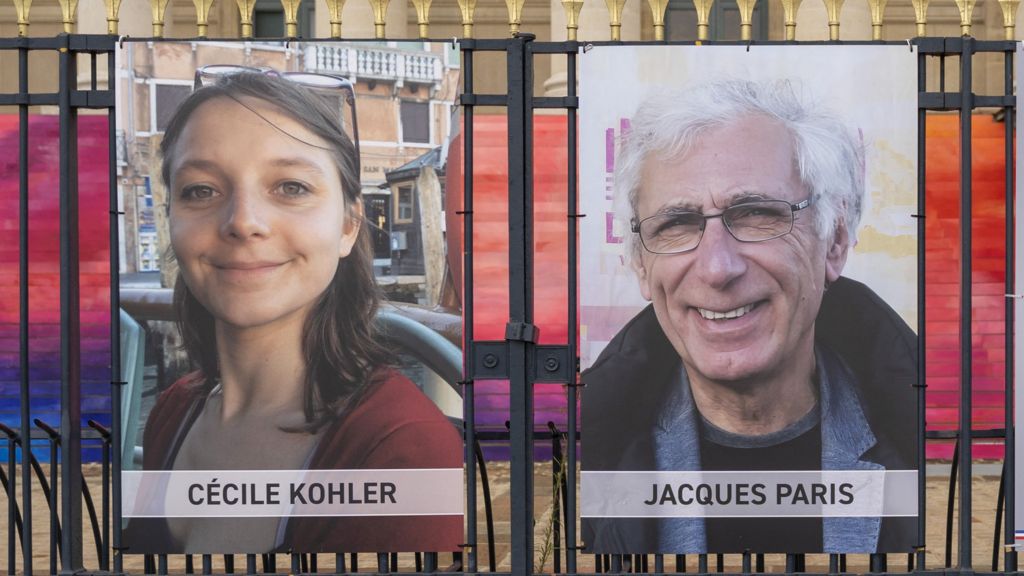
Two French citizens, Cecile Kohler, 40, and Jacques Paris, 72, have been sentenced to lengthy prison terms by an Iranian court after being convicted of espionage. The pair, arrested during a tourist trip in May 2022, were accused of spying for both France and Israel. Iranian state media reported the verdicts but did not name the defendants, though they are widely believed to be the only French nationals detained in Iran. Kohler and Paris were sentenced to multiple years in prison and exile, with their pre-trial detention time to be deducted from their sentences. The verdicts can be appealed within 20 days. This case follows a pattern of Iran detaining foreign nationals, often for diplomatic leverage. Earlier this year, another French tourist, Olivier Grondeau, was released after serving part of a five-year sentence. Iran has previously suggested that Kohler and Paris could be exchanged for Mahdieh Esfandiari, an Iranian woman held in France on terrorism-related charges. France has condemned the detentions as arbitrary and accused Iran of subjecting the pair to torturous conditions. Human rights groups have criticized Iran for using detainees as bargaining chips in international negotiations. The situation highlights ongoing tensions between Iran and Western nations, with multiple Europeans currently held in Iranian custody.
-
NATO seeks more arms for Ukraine as Western support fades and allied airspace concerns mount
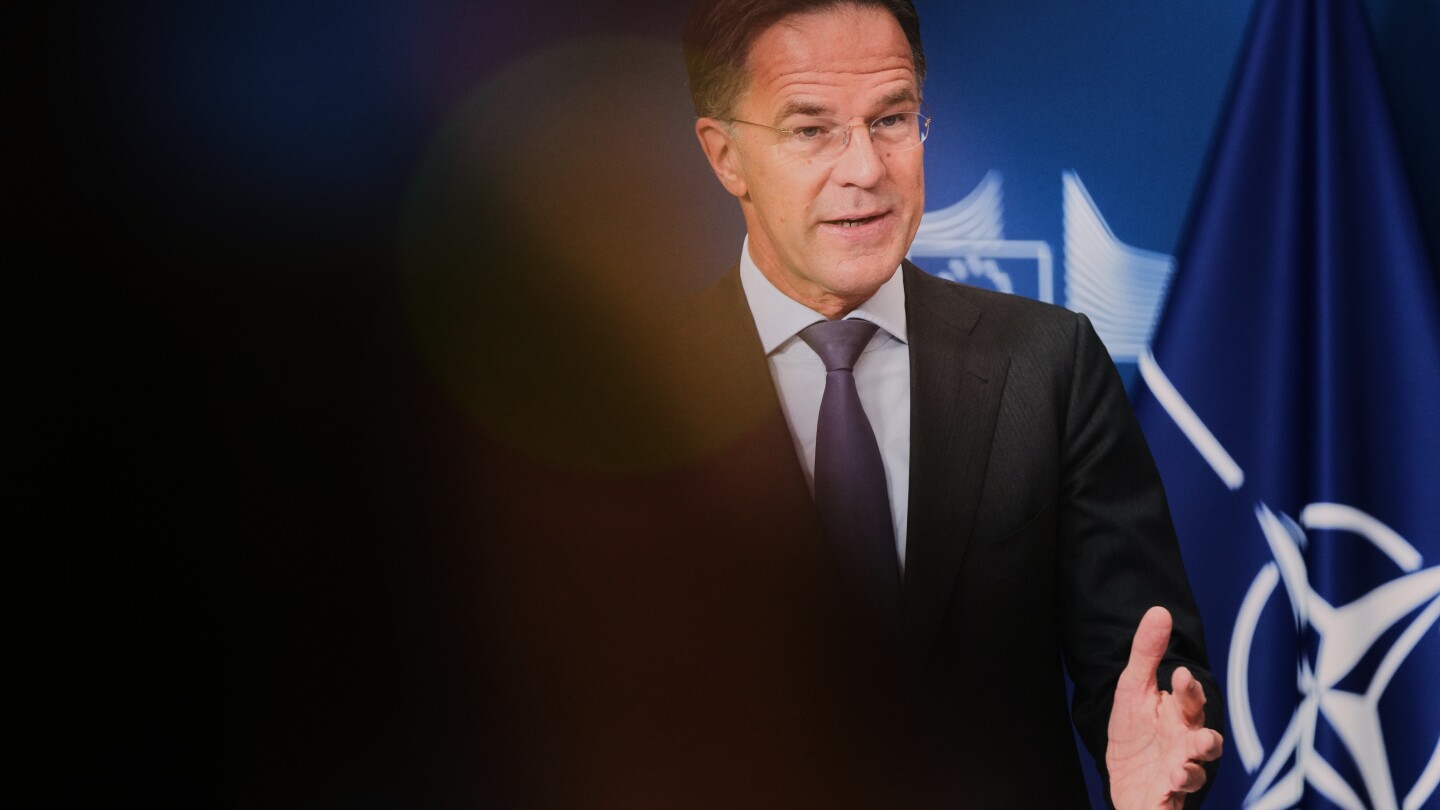
BRUSSELS (AP) — NATO defense ministers are set to gather on Wednesday to address the urgent need for increased military support for Ukraine, as weapon and ammunition deliveries to the war-torn nation have significantly declined in recent months. The meeting will also focus on a proposal from NATO’s commander to remove restrictions on the use of alliance aircraft and equipment, aiming to enhance the defense of NATO’s eastern border with Russia, Belarus, and Ukraine. This comes amid escalating concerns over a series of mysterious drone incidents and airspace violations by Russian warplanes, which some leaders interpret as President Vladimir Putin testing NATO’s defensive capabilities. Moscow has denied these allegations, dismissing claims of probing NATO’s defenses. Meanwhile, Russia’s ongoing conventional war against Ukraine has shifted focus to targeting the country’s power grid, leaving civilians vulnerable to harsh winter conditions. According to the Kiel Institute, Western military aid to Ukraine plummeted by 43% in July and August compared to the first half of the year, despite European allies purchasing American weapons under the Prioritized Ukraine Requirements List (PURL). Notably, countries like Denmark, the Netherlands, Norway, and Sweden have been actively contributing, while others, including Italy and Spain, have lagged behind. A senior NATO diplomat warned that if Ukraine falls, defense expenditures could far exceed NATO’s current target of 5% of GDP. The diplomat, speaking anonymously, highlighted economic challenges faced by some member states, with France opting to invest in Europe’s defense industry rather than participating in PURL. NATO’s efforts to bolster its eastern flank include the establishment of air defense operations like Eastern Sentry, following Russian drone incursions into Polish airspace. However, restrictions on the use of fighter jets and other equipment continue to hinder NATO’s effectiveness. U.S. Lt. Gen. Alex Grynkewich, NATO’s Supreme Allied Commander, is conducting a review of the alliance’s needs to address these challenges, with plans to present his findings to member countries early next year.
-
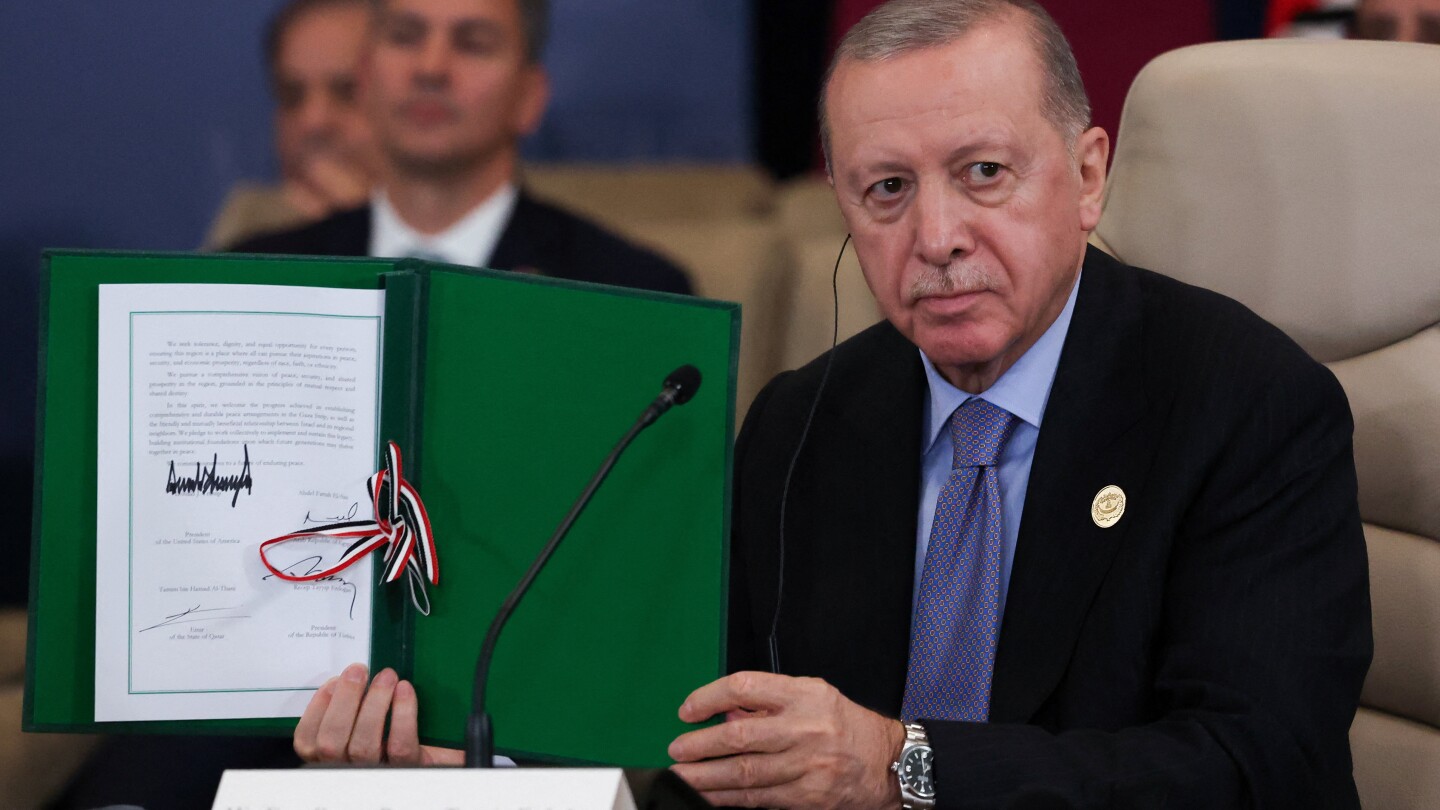
Erdogan opposed Netanyahu’s attendance at summit, Turkish official confirms
Turkish President Recep Tayyip Erdogan orchestrated a diplomatic effort to prevent Israeli Prime Minister Benjamin Netanyahu from attending a high-level summit in Egypt, according to a senior official. The summit, held at the Red Sea resort of Sharm el-Sheikh, aimed to support the ceasefire in Gaza. Omer Celik, spokesman for Erdogan’s ruling party, confirmed that Turkey had actively worked to block Netanyahu’s participation, marking the first public acknowledgment of Ankara’s role in the matter. Erdogan, a vocal critic of Netanyahu’s military actions in Gaza, reportedly gained support from several nations to ensure the Israeli leader’s absence. Netanyahu’s office initially accepted a last-minute invitation but later cited a Jewish holiday as the reason for his withdrawal. Erdogan, who maintains ties with Hamas, signed a four-party declaration alongside U.S. President Donald Trump and the leaders of Egypt and Qatar. In a speech, Erdogan hailed the declaration as a significant step toward halting what he described as ‘genocide’ in Gaza, a claim Israel strongly denies. The Turkish president also emphasized the long-term challenges of rebuilding Gaza, stating that the devastation may never be fully repaired. Meanwhile, Erdogan’s plane aborted its landing at Sharm el-Sheikh due to a runway issue, dismissing rumors of a boycott threat.
-
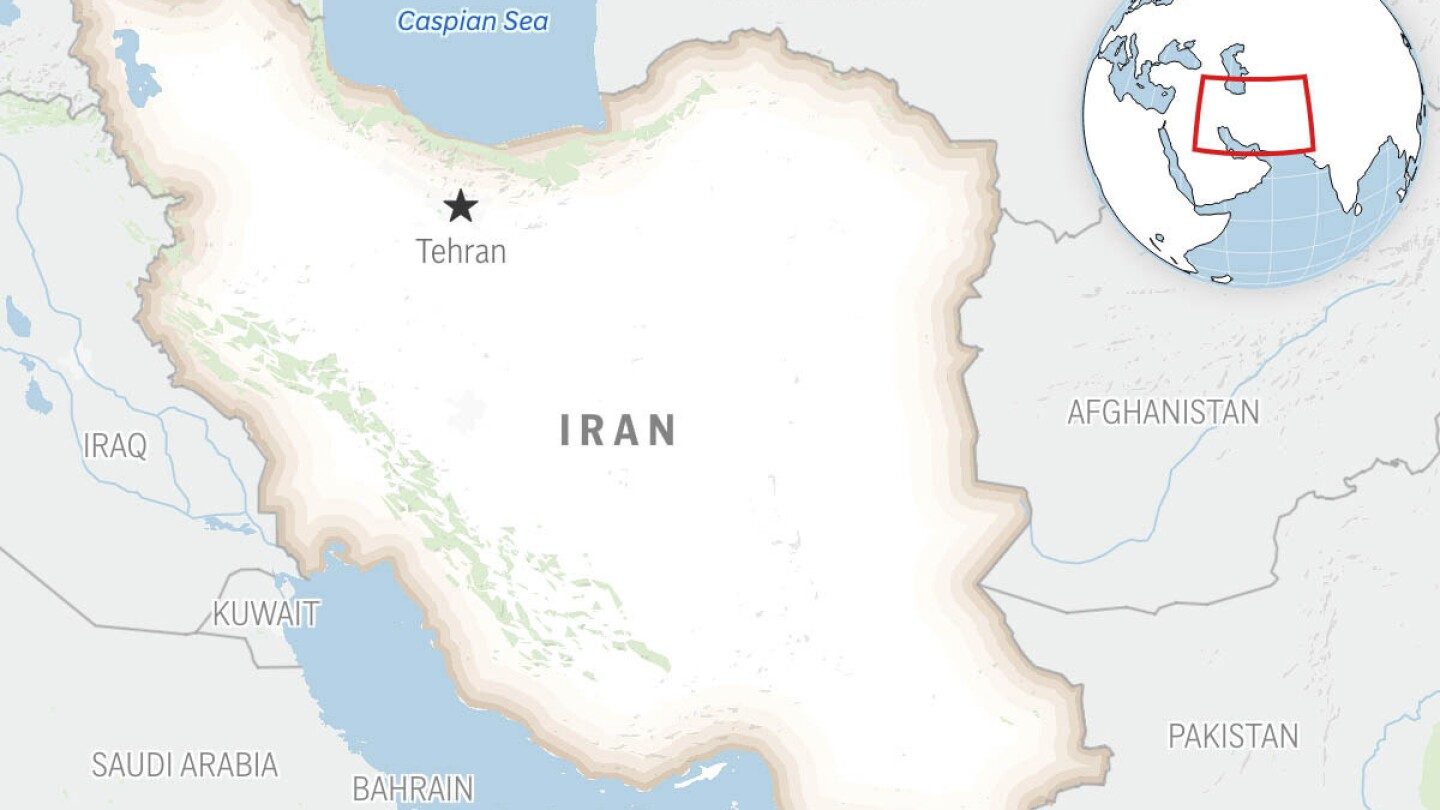
Iran sentences 2 French citizens to a combined 63 years over espionage charges
In a move that is expected to escalate tensions between Iran and France, an Iranian court has sentenced two French nationals to a combined 63 years in prison on charges of espionage and national security violations. The verdict was announced on Tuesday by the Iranian judiciary, with the semiofficial Fars news agency identifying the individuals as Cecile Kohler and Chuck Paris. The two have been detained since 2022, with French authorities dismissing the charges as “unjustified and unfounded.” The Mizan news agency, affiliated with the judiciary, confirmed the sentencing but did not disclose the names of the defendants. The preliminary verdict was issued by Iran’s Revolutionary Court in Tehran, known for its opaque proceedings where defendants often lack access to evidence. The court accused Kohler and Paris of collaborating with French intelligence and Israel. Each was sentenced to over 30 years in prison, though Iranian legal norms typically allow convicts to serve only the longest single term among multiple charges. The sentences can be appealed to Iran’s Supreme Court within 20 days. This development coincides with Iran’s efforts to secure the release of an Iranian national held in France. The case has drawn international attention, particularly after the pair’s arrest during anti-government protests in 2022. France has described them as a teachers’ union official and her partner on vacation. The situation has been further complicated by recent diplomatic tensions, including a potential prisoner swap deal discussed in September. Iran has a history of detaining dual nationals and Westerners, often using them as leverage in international negotiations.
-
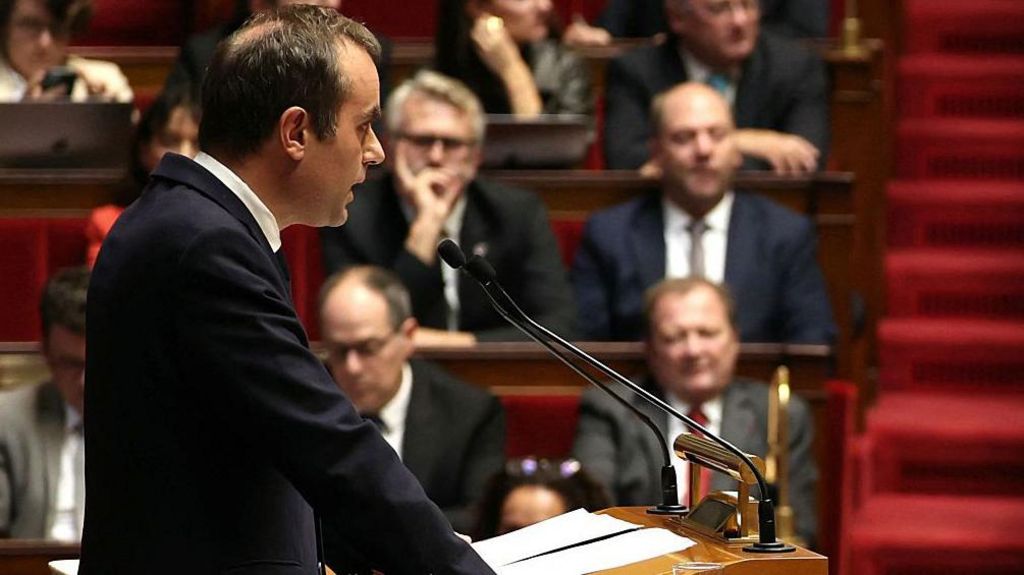
French PM backs suspending Macron’s pension reform in bid to save government
In a dramatic move ahead of crucial confidence votes, French Prime Minister Sébastien Lecornu announced his support for suspending the contentious 2023 pension reforms. The reforms, which raised the retirement age from 62 to 64, were a cornerstone of President Emmanuel Macron’s second term but sparked widespread protests and political unrest. Lecornu, who was reappointed prime minister just days after resigning, faces a precarious political landscape and relies on the support of Socialist MPs to maintain his government’s stability. Addressing parliament, he proposed suspending the reforms until the 2027 presidential election, a statement met with applause from left-wing parties. Opposition factions, including far-right and far-left groups, have called for confidence votes, known as ‘censure’ motions, scheduled for Thursday. They are demanding early parliamentary elections. The Socialists have conditioned their support on an explicit commitment to suspend Macron’s pension reforms entirely. Laurent Baumel, a Socialist MP, emphasized that Lecornu’s political survival hinges on this promise. The reforms, enacted in March 2023 using a constitutional mechanism to bypass a parliamentary vote, remain a divisive issue, with Lecornu acknowledging their legacy as a ‘wound on democracy.’ He also highlighted the financial implications of suspending the reforms, estimating costs of €400 million in 2026 and €1.8 billion in 2027, which would require compensatory savings. Amid France’s economic challenges, including a budget deficit projected at 5.4% of GDP and public debt nearing 114% of GDP, Lecornu’s ability to navigate these crises will determine his tenure.
-
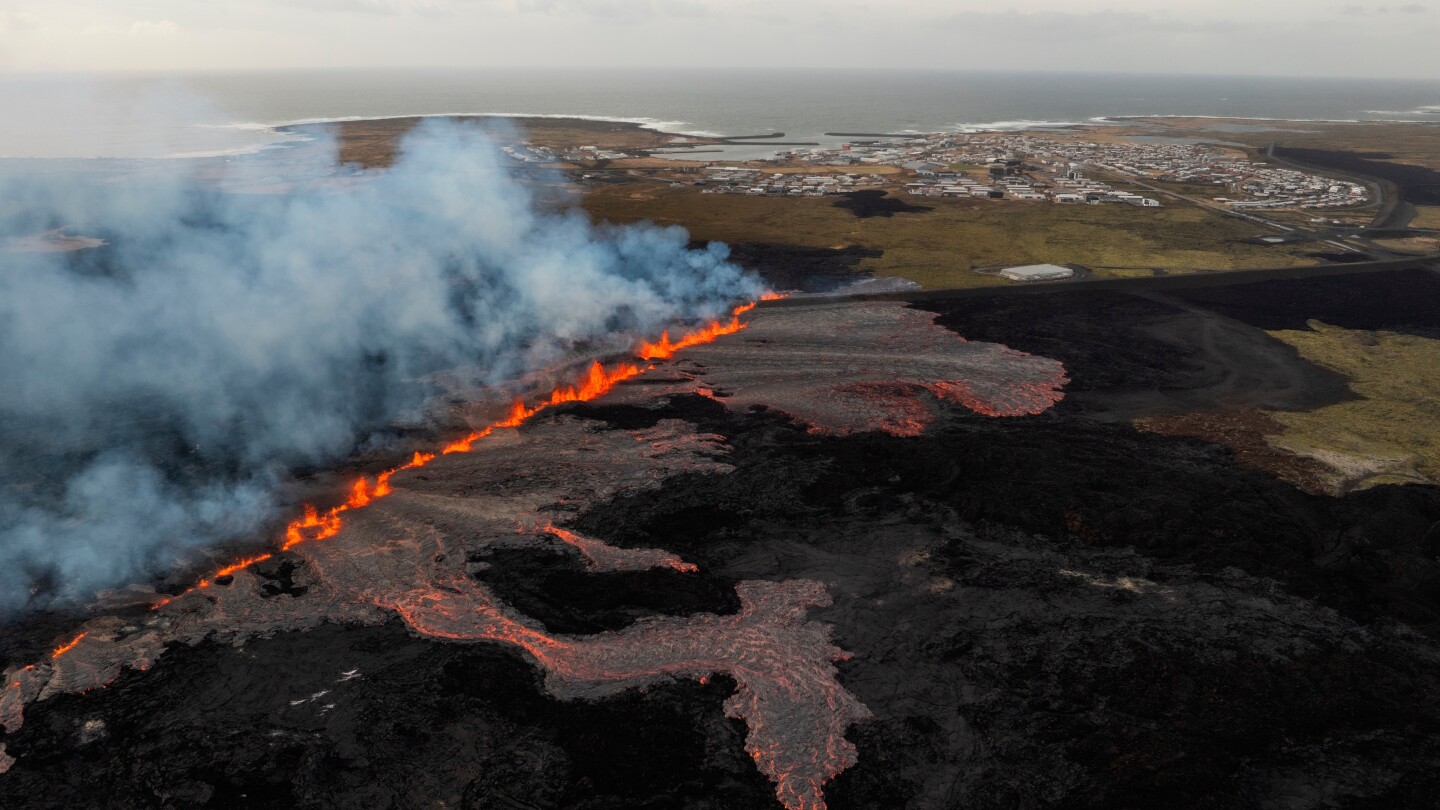
In Iceland, a town still shaken by volcanic eruptions tries to recover
In the coastal town of Grindavik, Iceland, Vignir Kristinsson’s gift shop, once bustling with customers, now sees only occasional visitors. The 64-year-old craftsman, who turned his passion for woodworking into a business five years ago, faces an uncertain future as volcanic eruptions have repeatedly forced evacuations since December 2023. The town, home to 3,800 residents, has been closed intermittently, leaving businesses like Kristinsson’s struggling to survive. ‘I’m supposed to run a business when people are told they should not come,’ he lamented. ‘How is that possible?’
Grindavik’s plight is emblematic of Iceland’s volatile relationship with its volcanic landscape. The eruptions, originating from the Sundhnuksgígar crater row, part of the Svartsengi volcanic system, have disrupted life in the Reykjanes Peninsula. Before the first eruption nearly two years ago, the system had been dormant for 783 years. Scientists predict that the volcanic activity is far from over, with the Icelandic Meteorological Office warning of a potential 10th eruption in the coming months.
Residents like Kristólína Ósk Guðjónsdóttir, an 18-year-old high school student, have grown accustomed to the constant stress. ‘When we had to leave, we had five minutes to get our stuff,’ she recalled, describing the first evacuation in November 2023. Since then, she has been attending school in Keflavik, 23 kilometers north of Grindavik, where maintaining a sense of community has been challenging.
Despite the devastation, there are glimmers of hope. The local professional basketball team has resumed games, and authorities are considering reopening schools next year. Some residents are returning, though the town remains largely empty. Tourists, drawn by the dramatic landscape, have become a rare source of activity, flying drones over vast lava fields and exploring the damaged town.
For many former residents, the decision to return is fraught with uncertainty. The government has offered to buy their homes, giving them three years to decide whether to repurchase them. Kristinsson, who now lives in Hafnarfjordur, 42 kilometers northeast of Grindavik, continues to operate his shop sporadically, relying on income from renting an apartment above the store. ‘People who live here now want to see things come back faster,’ he said.
Meanwhile, businesses like Herastubbur Bakari, a 30-year-old bakery, are fighting to stay afloat. Owner Sigurður Enoksson, 60, has no plans to return to his damaged home but remains committed to the town through his bakery. ‘There are not always customers each day,’ he admitted. ‘We are trying our best.’
As Grindavik grapples with the aftermath of the eruptions, its residents’ resilience shines through. While the road to recovery is long, their determination to rebuild offers a testament to the enduring spirit of this Icelandic town.
-
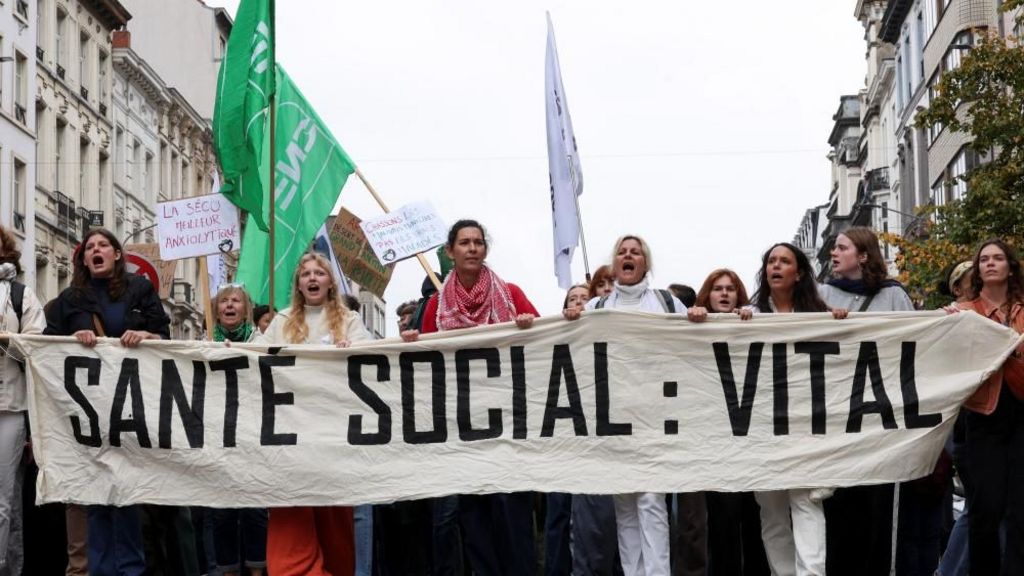
National strike by Belgium’s big unions hits public transport, airports and ships
Tens of thousands of Belgians flooded the streets of Brussels in a nationwide strike, protesting against sweeping government reforms and austerity measures. The demonstrations, organized by Belgium’s three major unions, brought significant disruptions to public transport, halted flights, and suspended operations at Europe’s second-largest port in Antwerp. The protests targeted Prime Minister Bart de Wever’s center-right government, which has introduced controversial measures to reduce the budget deficit, including pension reforms and cuts to unemployment benefits. At Brussels Airport, all departures and many arrivals were canceled, while Charleroi Airport saw a complete shutdown of services. Public transport in the capital was severely affected, with most buses, trams, and underground trains coming to a standstill. The unions are particularly opposed to the government’s plan to increase the number of working days required to qualify for pensions and the elimination of special schemes for sectors like the military and railway workers. Demonstrators, many clad in the red and green colors of the unions, voiced their frustrations over what they perceive as unfair burdens on the working class. ‘It’s always the same part of the population that has to tighten their belts,’ said 29-year-old Anaïs, who criticized the reforms for disproportionately affecting lower-income Belgians. The protests also highlighted broader concerns about the future, with many participants expressing fears for their children’s prospects. Despite the largely peaceful nature of the demonstrations, isolated incidents of vandalism and clashes with police were reported. The strike underscores the growing discontent with the government’s austerity agenda, which includes proposed cuts to child benefits and potential VAT increases. As Belgium grapples with its fiscal challenges, the protests signal a deepening divide between the government and its citizens.