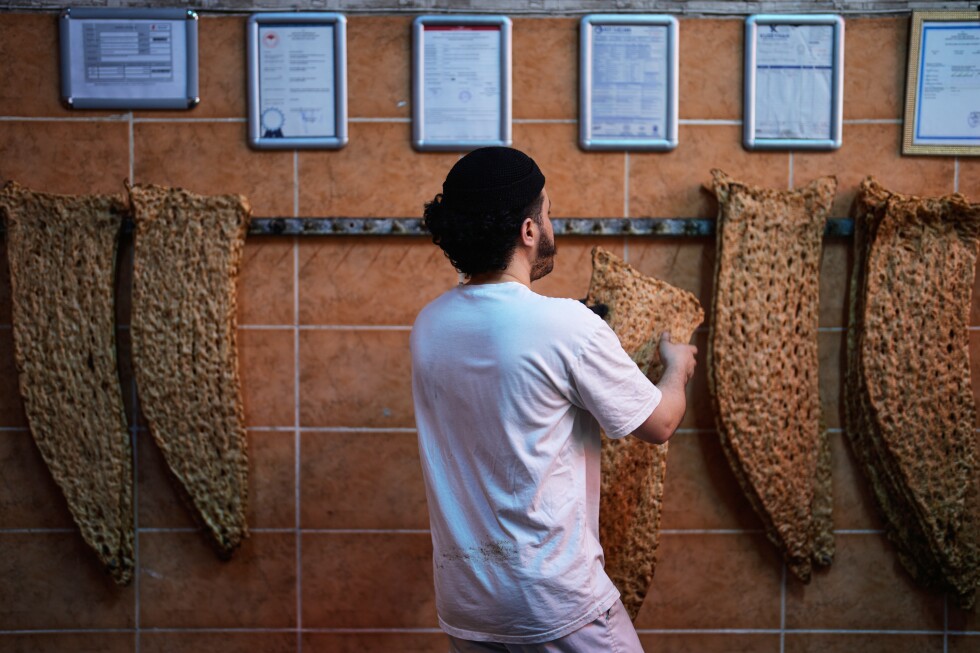
For thousands of Iranians who built fragile new lives in neighboring Turkey, regional conflict has turned a precarious temporary existence into a daily fight for stability, separating families and forcing impossible choices between staying and returning to a homeland mired in violence.
标签: Europe
欧洲
-
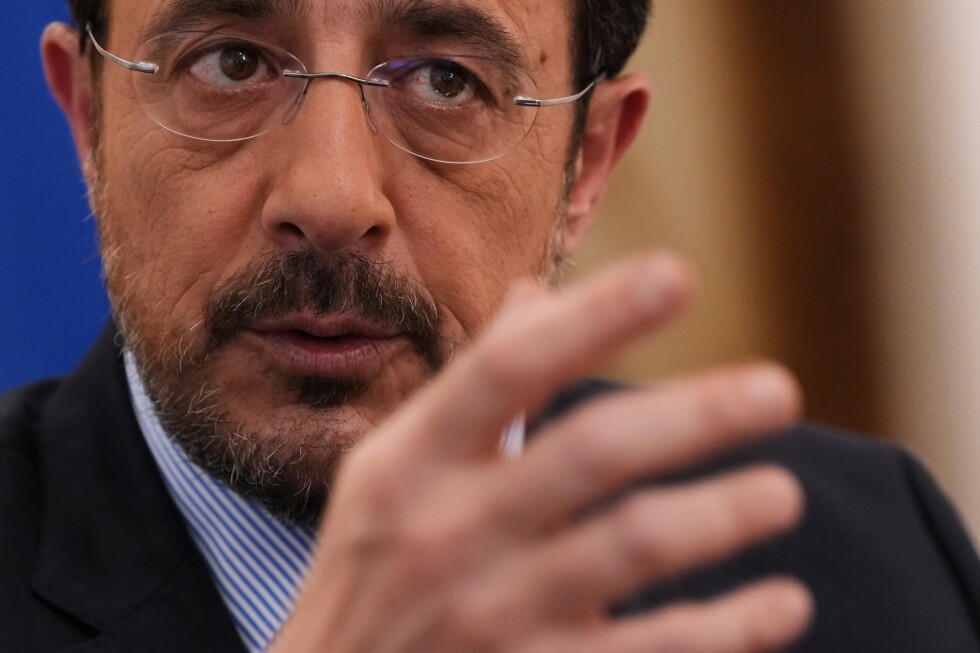
The AP Interview: Cyprus president says EU needs a clear playbook on helping members under attack
As European Union leaders gather in Cyprus for a high-stakes summit this week, the island nation’s president is pushing for urgent progress on a long-unaddressed collective defense rule that has suddenly moved to the top of the bloc’s security agenda. In an exclusive interview with The Associated Press on Tuesday, President Nikos Christodoulides outlined his priority for the gathering: building a concrete operational framework for the EU’s mutual defense clause, Article 42.7, which has never been activated despite its placement in the bloc’s founding treaties.
The treaty clause legally obliges all 27 EU member states to provide all possible aid and assistance to any member that faces armed aggression on its territory. However, decades after the clause was written, no standardized protocols exist to guide how member states should respond if a nation formally invokes the provision. “We have Article 42.7 and we don’t know what is going to happen if a member state triggers this article,” Christodoulides explained ahead of the summit, which will also host leaders from four Middle Eastern nations and focus heavily on the ongoing Iran war and its regional spillover risks.
For Christodoulides, this push for clarity comes from direct, recent experience. Just one month ago, a Shahed drone struck a British air base on Cyprus’ southern coast, located only 129 miles from the Lebanese capital Beirut, from where Cypriot officials assessed the drone was launched. The incident marked the first drone attack on EU territory linked to the Iran war, prompting Christodoulides to activate a call for support from bloc partners. In response, Greece, France, Spain, the Netherlands and Portugal quickly deployed anti-drone capable naval assets to help bolster the island’s defenses, highlighting both the willingness of members to assist and the lack of pre-planned coordination for such events.
Two key unresolved points top the agenda for drafting the new playbook. First, Christodoulides noted that the majority of EU member states also hold membership in NATO, which has its own collective defense Article 5 that defines an attack on one ally as an attack on all. The EU’s new framework must clarify how dual-member states can coordinate their responses to an EU Article 42.7 call without conflicting with their existing NATO obligations. Second, leaders will need to resolve core unanswered questions: whether any response to an invoked Article 42.7 would be a collective bloc-wide effort modeled on NATO, or limited to neighboring states of the affected country, as well as what types of resources and tools would be deployed for different categories of security crises.
Beyond the mutual defense planning, the summit will also advance a key Cypriot priority for the bloc’s current presidency: deepening strategic cooperation between the EU and Middle Eastern nations. Christodoulides said he has been encouraged by growing recognition among fellow EU leaders of the urgency of closer ties, which he is advancing through initiatives like the Mediterranean Pact, which delivers targeted programming in health, education and energy across regional partner states. Leaders from Egypt, Lebanon, Syria and Jordan will attend the informal summit this week, creating a rare opportunity to turn dialogue into tangible, elevated strategic cooperation. Cyprus, he noted, holds unique trust as an intermediary between the Greater Middle East and EU institutions in Brussels. “We can represent the interest of the countries of the Greater Middle East to Brussels, but at the same time, the countries in the region trust Cyprus to represent them in the European Union,” he said.
Christodoulides also used the interview to champion the India-Middle East-Europe Economic Corridor (IMEC), an ambitious connectivity project designed to link European markets with India via the Middle East, which backers say will boost regional peace, stability and economic integration. Under the Cypriot EU presidency, a new “Friends of IMEC” working group has been launched to advance the initiative, which currently lacks a roster of specific actionable projects. One priority project, the Great Seas Interconnector — an undersea electricity cable that would link the power grids of Greece, Cyprus and eventually Israel — has faced repeated costly delays. Christodoulides added that he sees strong potential for collaboration with the United States to move IMEC forward, framing the project as a mutual benefit for both the EU and Washington.
The ongoing Iran war has also refocused attention on the EU’s urgent need to diversify its energy supplies, a topic that will feature in summit discussions. Christodoulides confirmed he is in active talks with EU executive leaders about developing Cyprus’ offshore natural gas deposits as a stable alternative supply source for the bloc. He added that European Commission President Ursula von der Leyen will unveil detailed new proposals on Friday addressing energy costs and advancing the bloc’s goal of greater energy independence.
Finally, Christodoulides called for faster progress on EU enlargement, noting that the bloc’s repeated delays in accepting new prospective members over the past two years has eroded trust among candidate nations. “So we have a strong geopolitical tool that we are losing mainly because of our mistakes,” he said. While he acknowledged that decision-making has accelerated in recent months, he stressed that enlargement remains one of the EU’s most critical geopolitical tools, requiring concrete, timely action in the near term.
-

A specialized tour at the Berlin Zoo brings joy to people living with dementia
BERLIN — Standing before a foggy aquarium tank at Berlin Zoo, 86-year-old Christel Krueger stared through thick glass at a mother hippopotamus and her calf resting peacefully on a sandbar, caught in a moment of quiet wonder. Krueger was one of several dementia patients participating in a specialized guided tour organized last month by Malteser Deutschland, the German branch of the global Catholic humanitarian organization Malteser Order of Malta.
On the same excursion, Ingrid Barkow observed roaming elephants from her wheelchair, while 85-year-old Monika Jansen stood on her tiptoes to catch a clearer glimpse of a rhinoceros. “When I get home, I’ll still be thinking about it,” Jansen said. “Maybe even at night, while I’m sleeping and dreaming about it.”
These three women are part of Germany’s 1.6 million population living with dementia, per data from the country’s National Dementia Strategy office. Experts project that this number will climb to 2.8 million by 2050, mirroring a global growth trend that has pushed cultural and community institutions to develop more accessible programming for affected individuals.
Over the past decade, cultural venues across the world have expanded their offerings to include barrier-free, specialized guided experiences for marginalized groups. These programs range from sign-language tours for Deaf and hard-of-hearing visitors, touch-focused exhibits for guests with blindness or low vision, to sensory-friendly outings for people on the autism spectrum. It is within this growing movement that Malteser Deutschland’s Berlin chapter launched its dementia-focused cultural program last year.
“People with dementia aren’t very visible in our society. It’s still a major taboo subject, yet it actually affects a great many people and it’s important that they continue to be at the heart of society,” explained Christine Gruschka, the project’s coordinator. “They have a right to participate, just like everyone else.”
Dementia is an umbrella term for a range of progressive cognitive conditions that cause gradual decline in memory, reasoning, language skills and other core brain functions. It can also alter personality, emotional regulation and even visual perception. Alzheimer’s disease is the most common form, but dozens of other variants exist, each with distinct symptoms and underlying biological causes, affecting hundreds of millions of people globally.
Malteser Berlin currently runs its dementia-friendly tours at four popular Berlin locations: Berlin Zoo, the Museum of Natural History, Britzer Garden and Charlottenburg Palace, with plans to expand the program to more sites in the coming months. Gruschka noted that standard public tours are rarely suited to the needs of dementia patients: “‘Normal’ tours — so-called normal tours — are often too fast, too loud, with too many people and too many distractions. That’s why we’ve made it our goal to create programs specifically for people with dementia: Where they still feel seen, where they feel comfortable, and where they can still show that they’re still here and can still be part of it.”
During the Berlin Zoo excursion, tour coordinator Carola Tembrink deliberately skipped most of the zoo’s extensive collection to focus only on the hippo, rhino and elephant habitats, a choice designed to avoid overwhelming participants or leaving them fatigued. Tembrink explained that the zoo holds unique value for this program: “almost everyone who grew up in Berlin has been here as a child. And especially for people with dementia, childhood memories are often still present — they just need to be jogged a bit — and that happens naturally when they see the animals, smell the air as they enter the zoo, or when they go into the rhino house and catch a different scent.”
Beyond the benefits for participants, the specialized tours have become a critical resource for family caregivers. For those navigating the daily challenges of caring for a loved one with dementia, these outings create space to connect with other people sharing similar experiences.
Krueger received a formal dementia diagnosis just last year, though her daughter and caregiver Kerstin Hoehne said symptoms first emerged more than two years ago. “What’s nice is that it’s also with, let’s say, like-minded people, that you’re not alone, but that you have a sense of belonging because everyone else might have the same problem,” Hoehne said.
Manuela Grudda, whose mother Ingrid Barkow participated in the tour, said the outing deepened the bond between them. As Grudda pushed her mother’s wheelchair through the zoo, she pointed out animals and gently rested her hands on her mother’s shoulders. “I can’t really communicate with her in a normal way, of course, but I see that when I show her something, she looks at it, she’s paying attention, and that’s important,” Grudda said. “And it just makes me happy that she’s not just in her own world, but also in this one.”
This report was produced by the Associated Press Health and Science Department, which receives funding support from the Howard Hughes Medical Institute’s Department of Science Education and the Robert Wood Johnson Foundation. The AP retains full editorial control over all content.
-
Most serious cyberattacks against the UK now from Russia, Iran and China, cyber chief will say
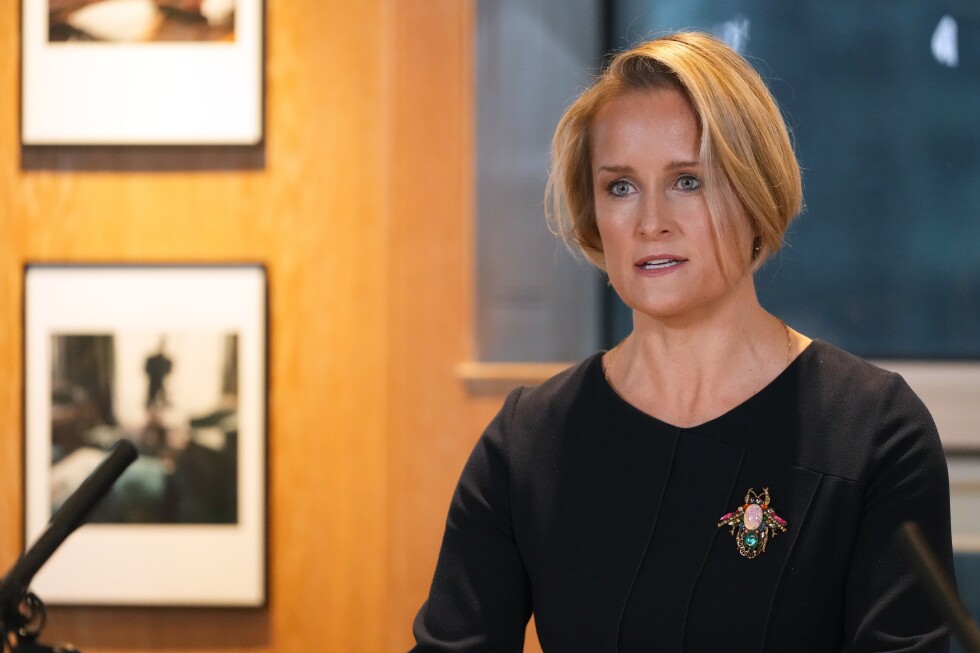
At the annual CyberUK conference hosted in Glasgow, Scotland, the leader of the United Kingdom’s top cyber defense body will deliver a stark wake-up call this Wednesday: the gravest cyber threats facing the nation today are not the work of criminal gangs, but of hostile state actors based in Russia, Iran, and China. Richard Horne, chief executive of the National Cyber Security Centre (NCSC) — a division of the UK’s signals intelligence agency GCHQ — will frame this growing threat against a backdrop of unprecedented geopolitical upheaval, arguing the world is now experiencing the most dramatic geopolitical shift seen in modern history. Previews of Horne’s speech, shared with journalists ahead of the event, emphasize that British private and public sector organizations cannot afford to delay upgrading their cyber defenses, as large-scale state-sponsored attacks could target the UK rapidly if the nation becomes entangled in a major international conflict.
Horne’s warning aligns with a growing chorus of alarm across Europe, where Nordic and Central European nations have repeatedly flagged state-linked hacking campaigns targeting critical national infrastructure in recent months. Per Horne’s prepared remarks, the NCSC currently responds to roughly four nationally significant cyber incidents every week. While criminal activity, most notably ransomware attacks, remains the most common cyber challenge for UK entities, the most destructive and high-stakes threats stem from operations backed directly or indirectly by foreign governments.
This characterization of an increasingly dangerous global security landscape echoes recent remarks from other top UK intelligence leaders. Back in December, Blaise Metreweli, head of the UK Secret Intelligence Service (MI6), noted that the international order is far more contested and dangerous than it has been in decades, with the UK now operating in a gray zone that falls somewhere between formal peace and open war. “Let’s be clear, cyberspace is part of that contest,” Horne will reiterate in his Glasgow address.
Horne will outline distinct threat profiles for each of the three major hostile state actors: China’s intelligence and military apparatuses have demonstrated a staggering, eye-watering level of technical sophistication in their global cyber operations; Iran, he will add, is highly likely using cyber tools to repress British dissidents and activists within the UK itself, targeting individuals the Iranian regime views as threats to its rule. For Russia, Horne will note that the Kremlin has refined and tested its cyber tactics through its full-scale invasion of Ukraine, and is now deploying those battle-hardened techniques far beyond the Ukrainian battlefield, carrying out sustained hybrid cyber operations targeting the UK and the wider European continent.
A core message of Horne’s speech is a call to action for British organizations: corporate and institutional leaders must study how cyber operations have been deployed in active conflict to build their own defensive resilience. Unlike ransomware attacks, which often can be resolved (at great cost) through payment of a ransom, large-scale state-sponsored cyberattacks in a conflict scenario leave no such exit. No amount of money will buy back access to hijacked systems or stolen data, Horne will stress, meaning every organization must map the full scope of its vulnerability and harden defenses before a crisis hits.
Recent cyber incidents across Northern Europe back up the urgency of this warning. Last Friday, Swedish authorities confirmed that a pro-Russian hacking group with ties to Russian intelligence services was responsible for a cyberattack on a Swedish heating plant carried out last year. Carl-Oskar Bohlin, Sweden’s civil defense minister, drew a direct line between that incident and a coordinated series of attacks in Poland last December, which hit combined heat and power plants supplying nearly 500,000 customers alongside multiple wind and solar farms. Polish investigators later concluded the hackers behind that assault were directly linked to Russian intelligence services.
Those attacks are not isolated. Norwegian authorities have tied an April 2025 hack that disrupted water flow from a Norwegian dam to Russian actors, while Danish officials confirmed a 2024 cyberattack on a Danish water utility that left hundreds of homes without water was also linked to the Kremlin. The Associated Press has tracked more than 155 disruptive incidents — including arson, sabotage, espionage, and cyberattacks — linked to Russia or its proxies by Western officials since Moscow launched its full-scale invasion of Ukraine in February 2022. Beyond critical infrastructure attacks, European officials have also linked Russian actors to a hack of German air traffic control systems, repeated attempts to compromise Signal and WhatsApp accounts belonging to European officials and journalists, and campaigns to exploit router security vulnerabilities to steal sensitive user data on behalf of Russian military intelligence.
-
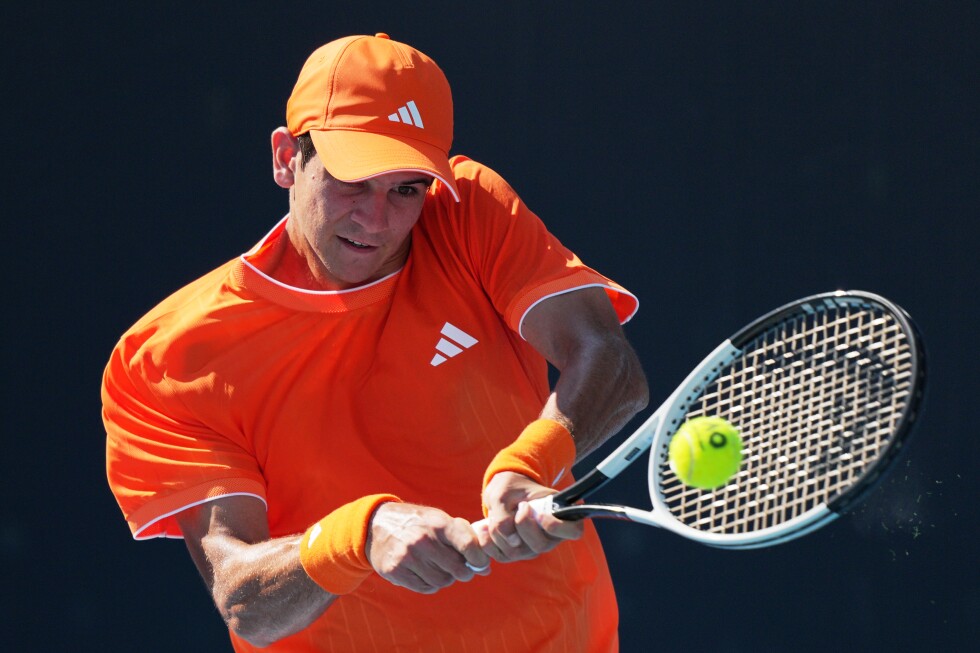
A new ‘Rafa’ rises in Spain as Rafael Jódar storms into top 50 before Madrid Open debut
Even at just 22 years old and already established as one of the world’s top tennis talents, Carlos Alcaraz is paving the way for a new wave of elite Spanish men’s tennis prospects — and two rising stars are ready to seize their moment at the 2024 Madrid Open after Alcaraz was forced to withdraw due to a wrist injury.
Nineteen-year-old Rafael “Rafa” Jódar, a prospect sharing a first name and nickname with Spanish tennis legend Rafael Nadal, has captured global tennis attention over the past 12 months with one of the fastest ranking climbs the ATP Tour has seen in recent years. Just one year ago, Jódar sat outside the ATP’s top 600. By March 2024, he had cracked the top 100, and the latest ATP rankings released ahead of the Madrid Open pushed him all the way to world No. 42, booking him a spot in his first ever main draw at the Madrid-based ATP Masters 1000 event.
Jódar’s rapid ascent hit new milestones earlier this spring: he notched three straight-set wins to advance to the Barcelona Open semifinals, took home his first career ATP tour-level trophy at the Morocco Open earlier this May, and booked a spot in Spain’s 2024 Davis Cup training squad. A former US Open junior boys’ singles champion, Jódar spent 2023 competing collegiately at the University of Virginia before making the decision to turn professional. For the Madrid native, this week’s tournament carries extra personal meaning: he attended the event as a young spectator growing up, and will make his Madrid main draw debut against Netherlands’ Jesper de Jong, ranked world No. 109.
Speaking ahead of his debut, Jódar emphasized his calm approach to the sudden attention and pressure that has come with his breakout run. “I try to handle the pressure as I have done since I was little. I’ve always been a very calm person both on and off the court. I know there’ll be moments when things don’t go as well as they have in recent tournaments. In those moments, you prove whether you’re mentally strong. Those moments will also make me stronger,” he said. Rather than setting rigid long-term ranking targets, Jódar said he plans to focus on gaining experience in his first full season on tour: “I’ve never set myself a goal. I have to take it tournament by tournament, it’s my first year on tour. I think I’m still a young player and I’m discovering a lot at these tournaments. I need to gain experience, compete against these kinds of players. I don’t set targets for the future, just take it tournament by tournament and do my best.”
Joining Jódar as a hometown fan favorite in Madrid is 20-year-old Martin Landaluce, another top Spanish prospect who recently earned his own place in the ATP top 100, entering the tournament ranked world No. 99. Like Jódar, Landaluce is a former US Open junior boys’ singles champion, and he trains at the Rafa Nadal Academy. Landaluce notched his best ever ATP Masters 1000 result earlier this spring, reaching the Miami Open quarterfinals before falling to Czech player Jiri Lehecka. Both Jódar and Landaluce competed at the 2023 Next Gen ATP Finals, the annual showcase for the tour’s top players under 20 years old; Jódar defeated Landaluce in their head-to-head matchup, though neither advanced past the round-robin stage.
Reflecting on his breakthrough into the top 100, Landaluce said the milestone has only motivated him to reach higher. “It’s very special to see myself there (in the top 100). It’s something we’ve all wanted to achieve since we were young. I’ve never set a specific ranking goal, but now that I’m in this position, I believe I can go further, and that’s what I intend to do,” he said.
Alcaraz, the seven-time Grand Slam champion and world No. 2 who was forced to pull out of Madrid to recover from his wrist injury, has already thrown his full support behind the two rising stars, saying the pair will push each other to new heights in the coming years. “The two of them will mutually help each other to keep improving and reach the top. They have a great future,” Alcaraz told the ATP Tour. He praised Jódar specifically for his rapid adjustment to the top level of tour tennis, calling him “an outstanding player” who “has broken into the tour really quickly.” Alcaraz also spoke highly of Landaluce after recently practicing with him, describing the 20-year-old as “an incredible player.”
Jódar and Landaluce are far from the only Spanish men ranked inside the ATP top 100 ahead of the Madrid Open. They join Alejandro Davidovich Fokina (No. 24), Jaume Munar (No. 38), Roberto Bautista Agut (No. 93) and Pablo Carreño Busta (No. 94) in the top tier of men’s tennis, signaling a continued era of depth for Spanish men’s tennis.
-
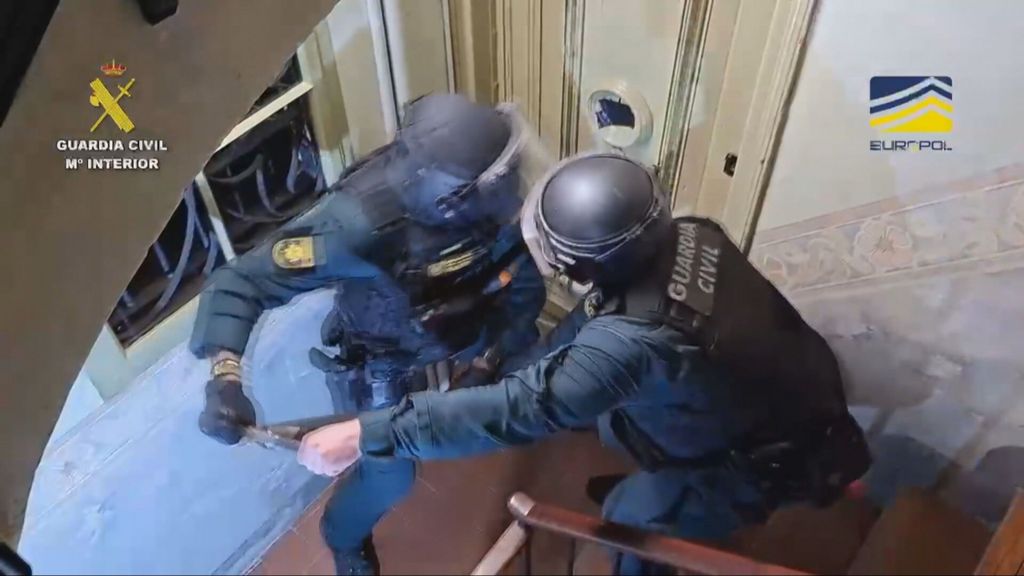
Torture and beating photos seized during Lyons gang raids in Spain
A years-long joint transnational law enforcement operation targeting a notorious Scottish organized crime syndicate has uncovered shocking evidence of violent abuse, in a major breakthrough that has taken down the group’s operating network across Spain. Over 100 photographs depicting brutal torture and beatings were seized from a Fuengirola apartment on the Costa del Sol, a property linked to the Lyons criminal gang, during a wave of raids carried out last month by Spain’s Guardia Civil.
The disturbing images, which were found hidden inside a piece of furniture, show victims with severe injuries including broken limbs, traumatic head wounds, and a graphic depiction of a mutilated arm. Investigative teams from both Scotland and Spain are now working urgently to identify the people pictured in the photos, a process that has yet to confirm where the alleged violent crimes were committed. Currently, detectives say it is more probable that the abuses occurred outside of Spain, and the evidence has been shared via Interpol with Police Scotland to advance cross-border inquiries. While it remains a remote possibility that the photos were sourced from the internet to intimidate the gang’s rivals, law enforcement officials are treating the images as evidence of actual violent crimes.
The raids in Spain that uncovered the photos capped a three-year joint investigation between the Guardia Civil and Police Scotland, part of a broader international law enforcement initiative dubbed Operation Armorum. Seven suspected gang members were arrested or turned themselves in to Spanish authorities following 19 separate search warrants executed across private properties in Barcelona, Malaga, Fuengirola, and Mijas. As of the latest update, 24 foreign nationals are now under investigation for varying levels of involvement in the syndicate’s activities. Two of the seven detained in Spain have been remanded in pre-trial custody, while the remaining five have been released on bail with strict conditions: they have surrendered their passports and are barred from leaving the country.
Beyond the torture photos, law enforcement seized a large cache of criminal assets during the raids, including electronic devices, a substantial amount of untraceable cash, corporate documents, luxury high-end watches, and cryptocurrency wallets linked to the syndicate. Turkish law enforcement has also joined the operation, locating and freezing high-value assets tied to the gang in their jurisdiction. To date, Operation Armorum has resulted in 15 arrests across multiple countries around the globe.
The operation has also led to the capture of the syndicate’s alleged top leader, 45-year-old Steven Lyons. After Lyons was deported from Bali to the Netherlands, a European Arrest Warrant issued by the lead investigating judge in Malaga led to his detention in Amsterdam on March 28. Lyons had entered Indonesia from Singapore just days before his arrest, and he now faces extradition proceedings to face charges in Spain. His wife, Amanda Lyons, was arrested separately in Dubai and is also awaiting extradition to Spain.
Spain’s Guardia Civil, one of the country’s two national law enforcement agencies, a paramilitary force tasked with combating serious organized crime and high-level security threats, confirmed that the gang’s entire operating network in Spain has been fully dismantled. An additional 20 suspects remain under active investigation in connection with the syndicate’s activities, and multiple international arrest warrants have been issued as the investigation continues to unfold.
-
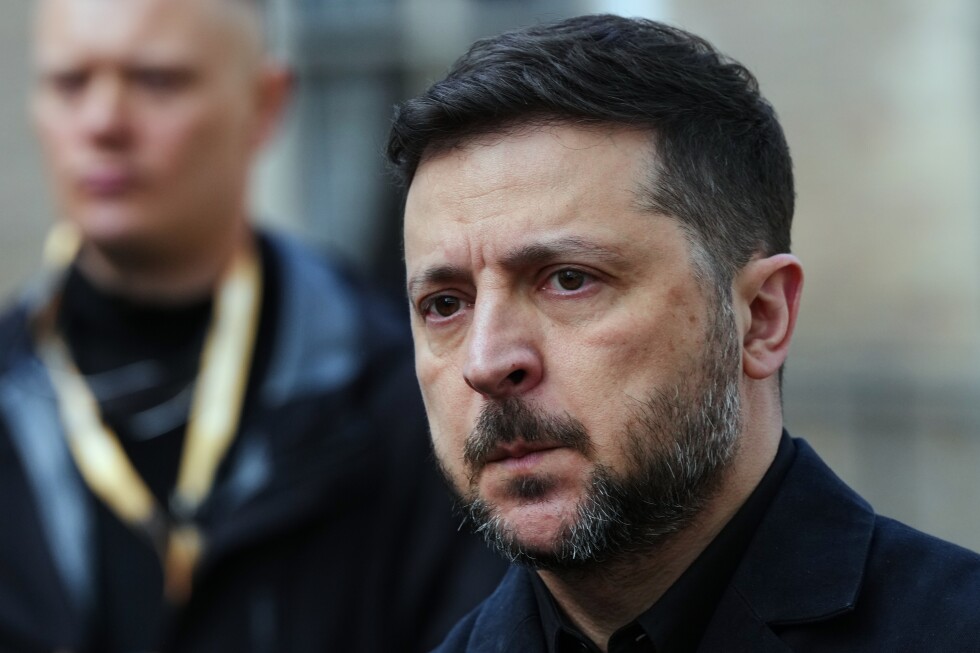
Ukraine completes Druzhba pipeline repairs, hoping to unlock blocked EU loan
KYIV, Ukraine – After two months of halted oil transit following a Russian drone strike, Ukraine has wrapped up full repairs on the damaged section of the key Druzhba oil pipeline, with operations set to resume imminently, President Volodymyr Zelenskyy announced Tuesday. The completion of repair work has cleared the last major hurdle to unlocking a massive €90 billion ($106 billion) EU financial support package for Kyiv, which has been stuck in political deadlock for months over disputes linked to the pipeline outage.
In a social media post on X, Zelenskyy confirmed that Ukrainian technical teams have established all core conditions needed to restart the pipeline system and associated equipment, though he cautioned that there is no absolute security guarantee against repeated Russian targeting of critical energy infrastructure. “Russia has repeatedly targeted our energy networks to inflict harm on both Ukraine and our European neighbors, and we cannot rule out further attacks,” Zelenskyy noted.
The Druzhba pipeline, which carries Russian crude oil to landlocked Central European clients including Hungary and Slovakia, has been out of operation since Russian drone strikes damaged a segment crossing Ukrainian territory in late 2024. The outage quickly sparked a political row: Budapest and Bratislava accused Kyiv of intentionally blocking oil deliveries to pressure their governments, while the two countries held up approval of the EU’s multi-year aid package for Ukraine in retaliation.
The €90 billion loan package is designed to cover Ukraine’s urgent military, humanitarian and economic needs through 2026, backing the country’s ongoing defense against Russia’s full-scale invasion that launched in February 2022. Months of negotiations failed to break the deadlock until recent political shifts in Hungary, where long-serving Prime Minister Viktor Orbán – who had positioned himself as Moscow’s closest ally within the bloc and repeatedly blocked EU aid initiatives – was unseated by centrist challenger Péter Magyar in a landslide election earlier this month. Orbán had previously agreed to a compromise that allowed the aid package to move forward without requiring Hungary to participate in any financial obligations, but he reversed that position amid campaigning, tying his opposition to the pipeline dispute.
Top EU officials say they are now cautiously optimistic that the full package will receive final approval when EU envoys convene for a scheduled meeting on Wednesday. Speaking to reporters in Luxembourg following a meeting of EU foreign ministers, EU High Representative for Foreign Affairs Kaja Kallas acknowledged the approval process has been fraught with unforeseen delays, but signaled that a breakthrough is imminent. “We expect an agreement within the next 24 hours, so I don’t want to jinx it,” Kallas said.
European Council President Antonio Costa, who is set to chair a summit of EU 27 leaders starting Thursday, publicly thanked Zelenskyy for fulfilling the agreed upon terms to get the pipeline back online. “This is an important step forward for both European energy security and Ukraine’s ability to defend its sovereignty,” Costa’s social media statement read.
The EU’s aid package was originally structured to use billions in frozen Russian sovereign assets held across European jurisdictions as collateral for the loan, but that plan hit a wall when Belgium – where the vast majority of those immobilized assets are stored – rejected the proposal. After months of negotiations, EU leaders reached a revised compromise in December 2024: the bloc would borrow the full €90 billion on international capital markets, with Hungary, Slovakia and the Czech Republic opting out of any potential financial liability for the loan. Orbán’s last-minute reversal on that compromise over the pipeline dispute extended the deadlock for another six weeks, until the completion of Hungary’s national election and Ukraine’s pipeline repairs removed the final barriers.
The Russian invasion of Ukraine has entered its third year, leaving tens of thousands dead, displacing millions of people, and reducing dozens of Ukrainian cities and towns to rubble. The €90 billion package represents one of the largest single commitments of Western support for Kyiv to date, with the funds earmarked for both frontline military capabilities and core government functions including infrastructure repair and public services.
-

US women to face China, Italy and the Czech Republic in September FIBA World Cup group play
As the countdown to September’s 2026 FIBA Women’s Basketball World Cup ticks down, the four-time defending champion United States has learned its path to history: the powerhouse U.S. squad will square off against China, Italy and the Czech Republic in Group D as it chases an unprecedented fifth consecutive World Cup crown.
Hosted in Berlin from September 4 to 13, this year’s tournament will force the WNBA to pause its regular season for nearly three weeks to allow top American players to compete for their national team, a scheduling adjustment that underscores the global event’s growing prestige. The U.S. women’s program has dominated this competition for nearly 15 years, claiming gold at every World Cup since 2010; their last missed top spot came in 2006, when they walked away with bronze. Most recently, the U.S. defeated China to claim gold at the 2022 tournament hosted in Australia, a rematch that fans could see in this year’s group stage play.
This year’s tournament marks a historic milestone for women’s basketball: following the runaway success of the 2022 Australia World Cup, organizers have expanded the competing field to 16 teams for the first time since 2018, up from the 12-team format that was used for many years. FIBA Secretary General Andreas Zagklis explained that the expansion is a direct reflection of the rapid growth of the women’s game across the globe. “We just finished qualifiers with 24 teams that had never happened before. We had played before with 16 teams,” Zagklis said. “Women’s basketball has grown a lot and 12 teams didn’t fit the quality we had. Sixteen represents what we believe is today’s standards for our women’s game.”
The U.S. roster this year is shaping up to be an exciting blend of veteran stardom and emerging young talent. Superstars A’ja Wilson and Breanna Stewart are expected to anchor the squad, while three of the most hyped young players in the women’s game — Caitlin Clark, Paige Bueckers and Angel Reese — are already proven competitors at the international level. The trio helped lead the U.S. to victory at the World Cup qualifying tournament held in Puerto Rico last month, confirming their ability to perform on the global stage.
Tournament play will follow a clear path to the final: the top team from each of the four groups will earn an automatic spot in the quarterfinals, while the second and third-place finishers from each pool will compete in knockout matches to claim the remaining four quarterfinal berths.
The full group draw features a range of compelling storylines across all pools. Host nation Germany, which is competing in its first Women’s World Cup since 1998, highlights Group A alongside Spain, Japan and Mali. Group B is headlined by France, which fell to the U.S. in the gold medal match at the 2024 Paris Olympics, and also includes Nigeria, South Korea and Hungary. 2022 host Australia leads Group C, where it will face Belgium, Puerto Rico and Turkey.
-
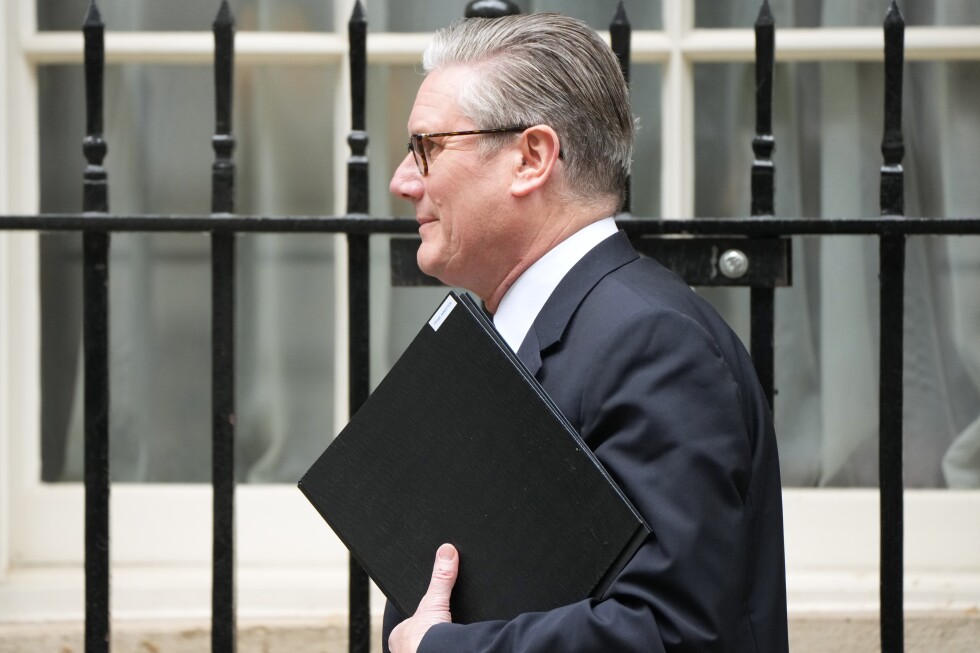
Takeaways from former top UK official’s testimony on the Mandelson appointment scandal
LONDON – A weeks-long political crisis engulfing British Prime Minister Keir Starmer reached a new boiling point this week, after a recently fired top civil servant laid bare explosive behind-the-scenes details of how scandal-plagued politician Peter Mandelson — a known associate of disgraced financier Jeffrey Epstein — secured the post of UK Ambassador to the United States despite failing official national security vetting.
Last week, Starmer terminated the employment of Olly Robbins, the former permanent secretary of the UK Foreign, Commonwealth & Development Office, over Robbins’ central role in approving Mandelson’s nomination even after being notified of formal security concerns. Appearing before Parliament’s Foreign Affairs Committee on Tuesday, Robbins mounted his public defense, claiming his department had followed all official procedural protocols. But his testimony did little to resolve months of lingering questions about Starmer’s judgment, and instead triggered a fresh wave of cross-party opposition demands for the prime minister to step down.
This latest controversy comes after Starmer already forced Mandelson to resign from the ambassador post last year, when newly unsealed documents confirmed Mandelson’s ties to Epstein were far closer and more sustained than he had previously disclosed to Downing Street. Even so, the political fallout has continued to build, and Robbins’ opening remarks before the committee delivered new, damaging revelations that cut to the core of Downing Street’s role in rushing the appointment through.
Robbins told the committee that Starmer’s Downing Street office applied intense, sustained political pressure to cut short the vetting process and install Mandelson in the Washington post as quickly as possible. “There was a very, very strong expectation from Downing Street that Mandelson needed to be in post and in America as quickly as humanly possible,” he told lawmakers. According to Robbins’ account, Mandelson’s appointment was publicly announced in December 2024, and he had already assumed his role, received U.S. government approval for the nomination, and gained access to classified diplomatic briefings more than two full weeks before Robbins took over his role at the Foreign Office — and while the full security vetting process was still incomplete. Most critically, Robbins said Downing Street adopted a deliberately dismissive stance on the vetting process, only caring about how quickly the appointment could be finalized, not whether it was safe to proceed. “There was never any interest, as far as I can recall, in whether, but only an interest in when,” he said.
The testimony directly contradicts Starmer’s public account of the scandal. The prime minister has claimed he was “furious” to learn last week that the UK’s official national vetting unit had advised against granting Mandelson security clearance, and has argued he fired Robbins for deliberately withholding this critical information from his office.
But Robbins pushed back against that narrative on Tuesday, telling lawmakers that strict Foreign Office confidentiality rules barred him from sharing the vetting panel’s negative recommendation with the prime minister. He added that the extreme secrecy surrounding the vetting process meant he was never even allowed to view the full panel’s report on Mandelson. UK government protocol requires vetting officials to mark their recommendations on a color-coded form — green for approval, yellow for conditional approval, red for denial — but it remains unclear exactly what risks the panel flagged, or what exact rating the panel assigned to Mandelson. Robbins confirmed he was only briefed verbally that Mandelson was considered a “borderline case” and that the panel was “leaning towards recommending that clearance be denied.” Despite that warning, senior Foreign Office officials ultimately ruled that any identified risks could be sufficiently mitigated to allow the appointment to move forward.
In one notable clarification that defies widespread public assumptions, Robbins confirmed explicitly that the security concerns flagged during the official vetting process were unrelated to Mandelson’s long-documented ties to Epstein, the convicted sex offender who died in prison in 2019 while awaiting trial on federal sex trafficking charges. The public furor over the appointment first erupted earlier this year, when newly released files from Washington showed Mandelson shared market-sensitive information with Epstein in 2008, when he was serving as UK Business Secretary under the last Labour government.
While the official vetting concerns did not center on the Epstein ties, a separate civil service due diligence report, released to Parliament last month, did flag broad reputational risks of appointing Mandelson to the sensitive Washington post. That report outlined multiple red flags beyond the Epstein relationship, including questionable business ties to both Russia and China, and the fact that Mandelson was forced to resign from two previous Labour governments over separate ethics and financial scandals. After those details emerged, Starmer apologized publicly, and blamed Mandelson for lying about the true extent of his connections to Epstein.
Robbins’ testimony has thrown fresh fuel on the fire of the scandal, piling unprecedented new pressure on a already beleaguered Starmer, as opposition leaders reiterate their demands for his resignation. Kemi Badenoch, leader of the opposition Conservative Party, called Robbins’ evidence “devastating to Keir Starmer.” She argued it is “inconceivable” that no senior member of Starmer’s Downing Street staff knew Mandelson had failed the vetting process, and accused the prime minister of deliberately misleading Parliament. “It is clear that No. 10 not only made the appointment before vetting was completed, but that Mandelson was already acting as the ambassador before the vetting, even seeing highly-classified documents. … It is now absolutely clear that ‘full due process’ was not followed,” Badenoch said.
Public opinion polling has recorded a steady drop in support for Starmer and the Labour Party in recent months, and polling analysts say the latest revelations are likely to cement negative public views of the prime minister’s leadership. Keiran Pedley, politics director at leading polling firm Ipsos, noted that recent attention on Starmer’s response to the Iran-Israel conflict had temporarily quieted discussions about his leadership future, but that the new disclosures from Robbins have revived those questions. The upcoming local elections across England, Scotland and Wales are widely expected to serve as a public referendum on Starmer’s leadership, with pollsters forecasting poor results for Labour that could amplify internal and external pressure for the prime minister to step down.
-

Robot chases wild boars off the streets of Warsaw
The capital city of Poland, Warsaw, is facing an unprecedented urban wildlife challenge, as the number of wild boars wandering its public streets has skyrocketed over the past four years. Official estimates put the current urban wild boar population at more than 3,000 individuals, marking a dramatic twenty-fold increase compared to figures recorded in 2020. This rapid population growth has pushed local authorities to explore innovative, non-lethal methods to manage the conflict between humans and wildlife, and one of the most unique approaches currently being tested is the use of specialized robots to herd wild boars away from populated residential and commercial areas. Urban wild boars have become a growing nuisance for Warsaw residents in recent years: the animals often dig through garbage bins, damage public and private green spaces, and pose potential traffic safety risks when they wander onto busy roads. Traditional population control methods, such as culling, have faced widespread pushback from animal welfare advocates and city residents, prompting officials to test technological alternatives that can safely move the animals out of urban centers and into surrounding natural habitats. The robotic deterrent system is designed to gently harass and guide wild boars away from developed areas without causing harm to the animals, offering a middle ground between public safety concerns and animal protection principles. As urban wildlife populations continue to grow across many European capitals, Warsaw’s experiment with robotic wildlife management is being closely watched as a potential model for other cities grappling with similar human-wildlife coexistence challenges.