
In a landmark move, the French parliament has ratified a significant amendment to its sexual assault and rape laws, placing consent at the core of the legal definition. Previously, rape in France was defined as sexual penetration involving violence, coercion, threat, or surprise. The revised law now explicitly states that any sexual act performed without consent constitutes rape. This change follows years of cross-party debate, which gained momentum after the high-profile trial of Gisèle Pelicot, a woman who was drugged and raped by multiple men at the behest of her husband. The case highlighted critical loopholes in the existing law, particularly the defense argument that perpetrators could not be guilty of rape if they were unaware the victim could not consent. The new legislation clarifies that consent must be ‘free, informed, specific, prior, and revocable,’ and cannot be inferred from silence or lack of reaction. The amendment, drafted by MPs Marie-Charlotte Garin of the Greens and Véronique Riotton of the centrist party, has been hailed as a ‘historic victory’ and a major advancement in combating sexual violence. Critics had raised concerns that the law could complicate sexual relations or place undue burden on victims to prove lack of consent. However, France’s highest administrative court, the Council of State, endorsed the amendment in March, emphasizing its alignment with the fundamental principle of personal and sexual freedom. The bill, initially adopted by the National Assembly in April, faced delays due to political turmoil but was definitively approved by the Senate with overwhelming support. Amnesty International France praised the move as a historic step forward, aligning France with other European nations like Sweden, Germany, and Spain, which already have consent-based rape laws.
标签: Europe
欧洲
-

Two suspects partially admit involvement in Louvre heist, prosecutor says
In a startling development in the Louvre Museum theft case, two suspects have partially admitted their involvement in the audacious heist that saw €88 million worth of French crown jewels stolen. The men, both in their thirties and with prior criminal records, were apprehended following an extensive investigation that utilized DNA evidence. One suspect was arrested while attempting to board a flight to Algeria, while the other was found to have no immediate plans to leave France, contrary to earlier media reports. Paris prosecutor Laure Beccuau confirmed that the stolen jewels, including the Parure Marie-Amélie diadème, remain unrecovered, and the possibility of a larger gang involvement beyond the four individuals captured on CCTV is still under investigation. The thieves, who used power tools to break into the museum’s Apollon gallery, managed to escape on scooters before switching to cars. Notably, a crown belonging to Empress Eugenie, wife of Napoleon III, was dropped during the escape, and its damage is currently being assessed. Beccuau expressed hope that the stolen artifacts would eventually be returned to the Louvre and the nation. In response to the incident, the Louvre has heightened its security measures and relocated some of its most valuable items to the Bank of France’s highly secure vault, located 26 meters below ground in central Paris.
-

British man accused of spying for Russia arrested in Ukraine
A British national has been arrested by Ukrainian security forces on allegations of espionage for Russia, according to the Kyiv Prosecutor’s Office. The unnamed individual, who entered Ukraine in January 2024, initially served as a military instructor in Mykolaiv, a city close to the southern front lines. Later, he was employed by Ukrainian border units. Prosecutors claim that the man ceased his instructional duties in September 2024 and relocated to Odesa, where he allegedly established contact with a Russian intelligence operative, agreeing to exchange military intelligence for financial compensation. Evidence presented by Ukrainian authorities indicates that in May 2025, the Briton transmitted sensitive information, including the locations of Ukrainian military units, photographs of training facilities, and personal data of military personnel. Additionally, he is accused of attempting to access military units, gathering intelligence on Odesa’s infrastructure, and discussing the potential use of explosive devices. For one of these tasks, he reportedly received $6,000. The Security Service of Ukraine (SBU) further alleges that the man was preparing to carry out terrorist attacks and had advertised his espionage services in pro-Kremlin online groups. He was detained at his temporary residence in Kyiv and is currently held without bail as the pre-trial investigation continues. If convicted, he could face up to 12 years in prison. The British Foreign Office has been approached for comment.
-
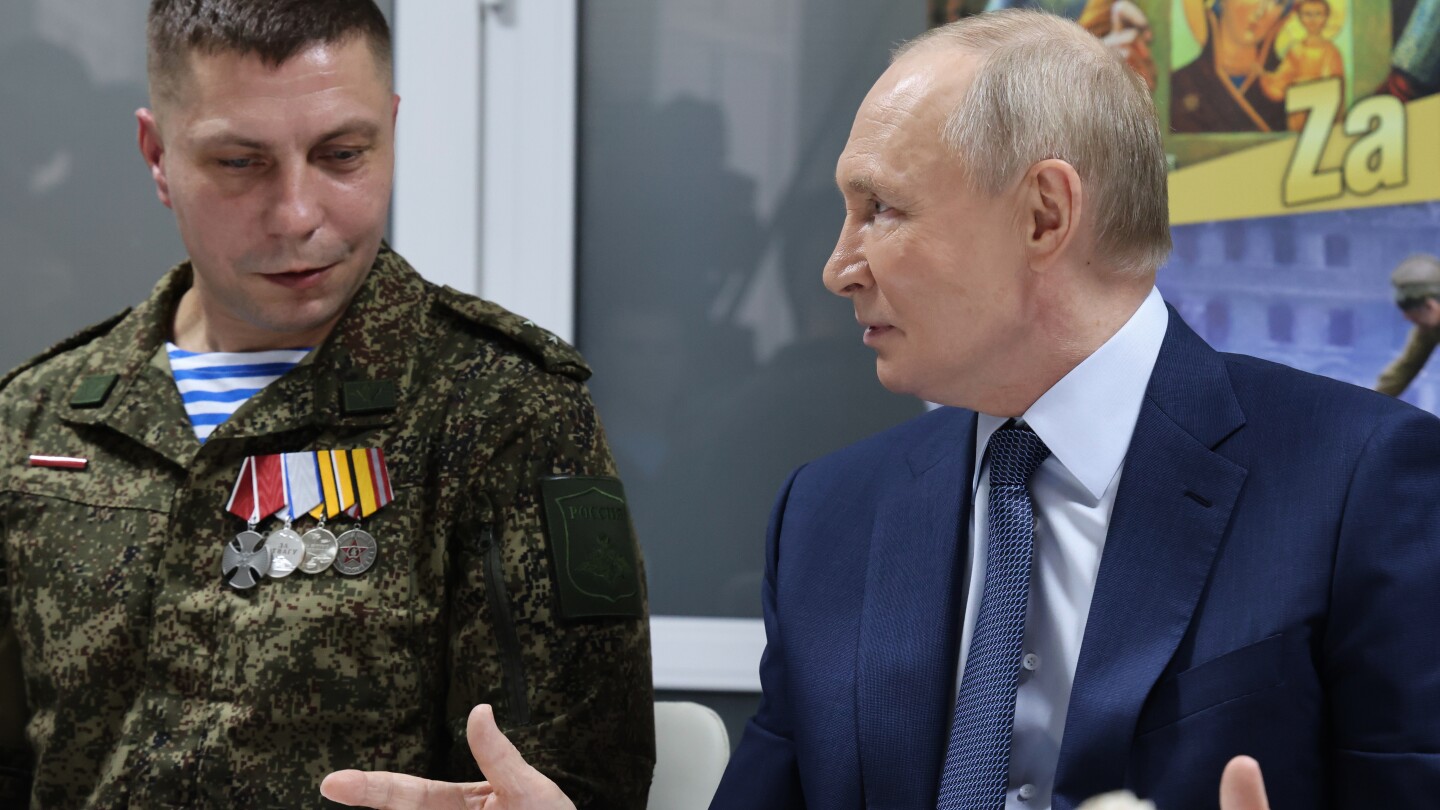
Putin says Russia’s nuclear-armed underwater drone was tested successfully
MOSCOW — Russian President Vladimir Putin announced on Wednesday that Russia has successfully tested a new nuclear-powered underwater drone, named Poseidon, which is capable of carrying nuclear warheads. Putin emphasized that the drone is unmatched in speed and depth, making it virtually impossible to intercept. This development comes just days after Russia tested a nuclear-powered cruise missile, signaling Moscow’s continued focus on advancing its strategic weapons capabilities. Putin described the Poseidon test as a “huge success,” revealing that the drone’s nuclear reactor is significantly smaller than those used in submarines but boasts a more powerful warhead than the Sarmat intercontinental ballistic missile. The Poseidon drone, first introduced in Putin’s 2018 state-of-the-nation address, is designed to explode near coastlines, potentially unleashing a radioactive tsunami. Putin’s announcement appears to be a strategic message to the United States, particularly amid escalating tensions over Ukraine. The Russian president has repeatedly highlighted Moscow’s nuclear readiness since the invasion of Ukraine in February 2022, asserting that Russia will use “all means” to protect its security interests. The test of the Burevestnik cruise missile, which covered 14,000 kilometers in a 15-hour flight, further underscores Russia’s advancements in nuclear technology. These developments come as U.S. President Donald Trump has postponed a planned summit with Putin and imposed new sanctions on Russia, intensifying the geopolitical standoff.
-

Real Madrid to seek compensation from UEFA after court ruling against European body on Super League
In a significant legal development, Real Madrid has announced its intention to seek compensation from UEFA after a Spanish court dismissed appeals filed by the European soccer governing body. The court upheld a previous ruling that found UEFA in breach of EU competition law for blocking plans for the breakaway Super League. The Madrid-based court also dismissed appeals from the Spanish league and the national soccer federation, reinforcing the 2023 decision by the Court of Justice of the European Union, which declared that UEFA and FIFA had abused their market dominance and violated EU law. Real Madrid expressed its satisfaction with the ruling, stating that it confirmed UEFA’s infringement of EU competition rules and its abuse of a dominant position. The club emphasized its commitment to global football and fans while pursuing substantial damages from UEFA. The Spanish league, however, downplayed the ruling’s significance, noting that it did not endorse any specific competition format or the original 2021 Super League project, which had been modified since its initial announcement. The league clarified that the court’s decision focused on procedural aspects, emphasizing the need for transparent and objective authorization systems. Real Madrid did not specify the amount of damages it would seek but highlighted its ongoing discussions with UEFA to address governance, financial sustainability, player health, and fan experience issues. The Super League project, launched in 2021, faced widespread fan protests and quickly collapsed, but the legal battle continues to shape the future of European football governance.
-

Romania says the US is drawing down troops along NATO’s eastern flank
The United States has announced plans to scale back its military presence along Europe’s eastern border with Ukraine, signaling a strategic pivot toward other global security priorities. Romania’s defense ministry confirmed the decision on Wednesday, noting that the rotation of a U.S. brigade with elements stationed across several NATO countries, including Romania, will cease. While approximately 1,000 U.S. troops will remain in Romania, this marks a reduction from the 1,700 personnel deployed there as of April. A brigade typically comprises 1,500 to 3,000 troops. The move reflects Washington’s increasing focus on the Indo-Pacific region, according to Romanian Defense Minister Ionut Mosteanu, who emphasized that allied troop numbers in Europe will still exceed pre-2022 levels, when Russia launched its full-scale invasion of Ukraine. NATO has been strengthening its defensive posture on its eastern flank, deploying additional multinational battle groups to Romania, Hungary, Bulgaria, and Slovakia. A NATO official, speaking anonymously, downplayed concerns, stating that U.S. force adjustments are routine and that the American military presence in Europe remains significantly larger than in previous years. The official added that NATO and U.S. authorities are closely coordinating to maintain robust deterrence and defense capabilities.
-
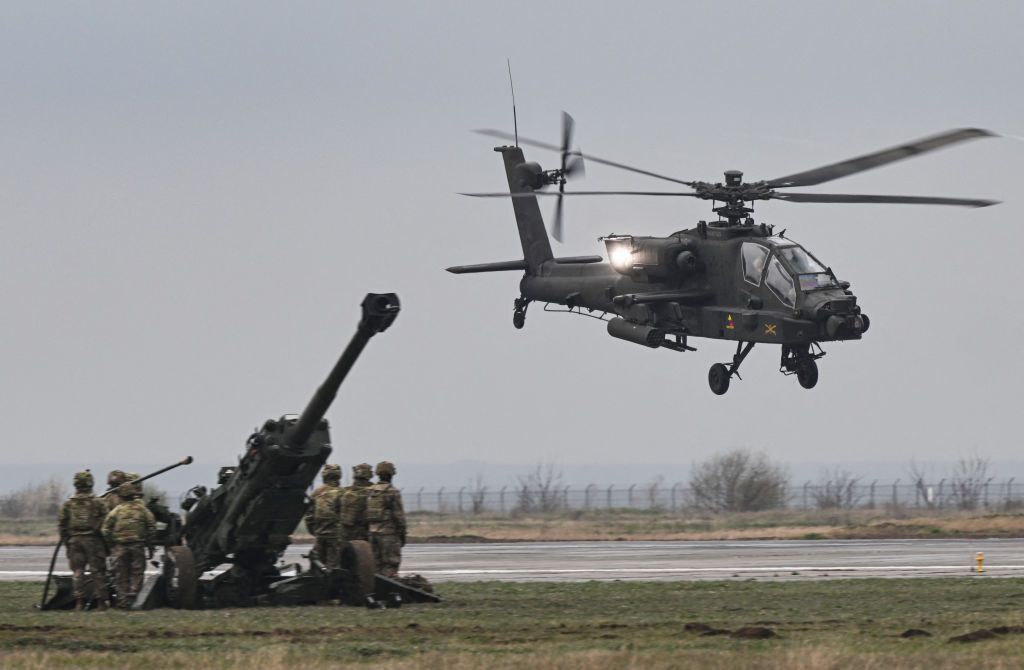
US will reduce its troops on Nato’s eastern flank, Romania says
The Romanian Ministry of Defence has announced that the United States plans to reduce its military presence on NATO’s eastern flank, with approximately 900 to 1,000 American troops remaining in Romania, down from the previous 1,700. This decision, described as ‘expected,’ aligns with the Trump administration’s strategic pivot towards the Indo-Pacific region. Defence Minister Ionut Mosteanu revealed that US Defence Secretary Pete Hegseth recently emphasized the need for European nations to bolster their own defence capabilities. A US brigade stationed at the Mihai Kogalniceanu airbase, which is set to become NATO’s largest in Europe, will be rotated out and not replaced. This brigade has elements across Bulgaria, Romania, Slovakia, and Hungary, though it remains unclear whether US troops will also be withdrawn from these countries. Polish Defence Minister Wladyslaw Kosiniak-Kamysz stated that Warsaw has ‘no information’ about potential troop reductions on its soil. The Pentagon has yet to comment on the matter. Meanwhile, the US military presence at Romania’s Deveselu and Campia Turzii bases will remain unchanged. President Donald Trump has consistently advocated for European NATO members to assume greater responsibility for their defence, reflecting his administration’s broader strategic realignment. However, the troop reduction has raised concerns among Eastern European nations, many of which perceive a persistent threat from Russia. A NATO official reassured that Washington’s commitment to the alliance remains ‘clear,’ noting that such adjustments are ‘not unusual.’ The official highlighted that the US military presence in Europe is still significantly larger than in previous years, with over 100,000 personnel deployed as of late last year. This announcement follows NATO’s recent establishment of the Eastern Sentry mission, aimed at enhancing vigilance along the eastern flank. The decision was prompted by several incidents, including Russian drones entering Polish and Romanian airspace, and Russian warplanes violating Estonian airspace.
-
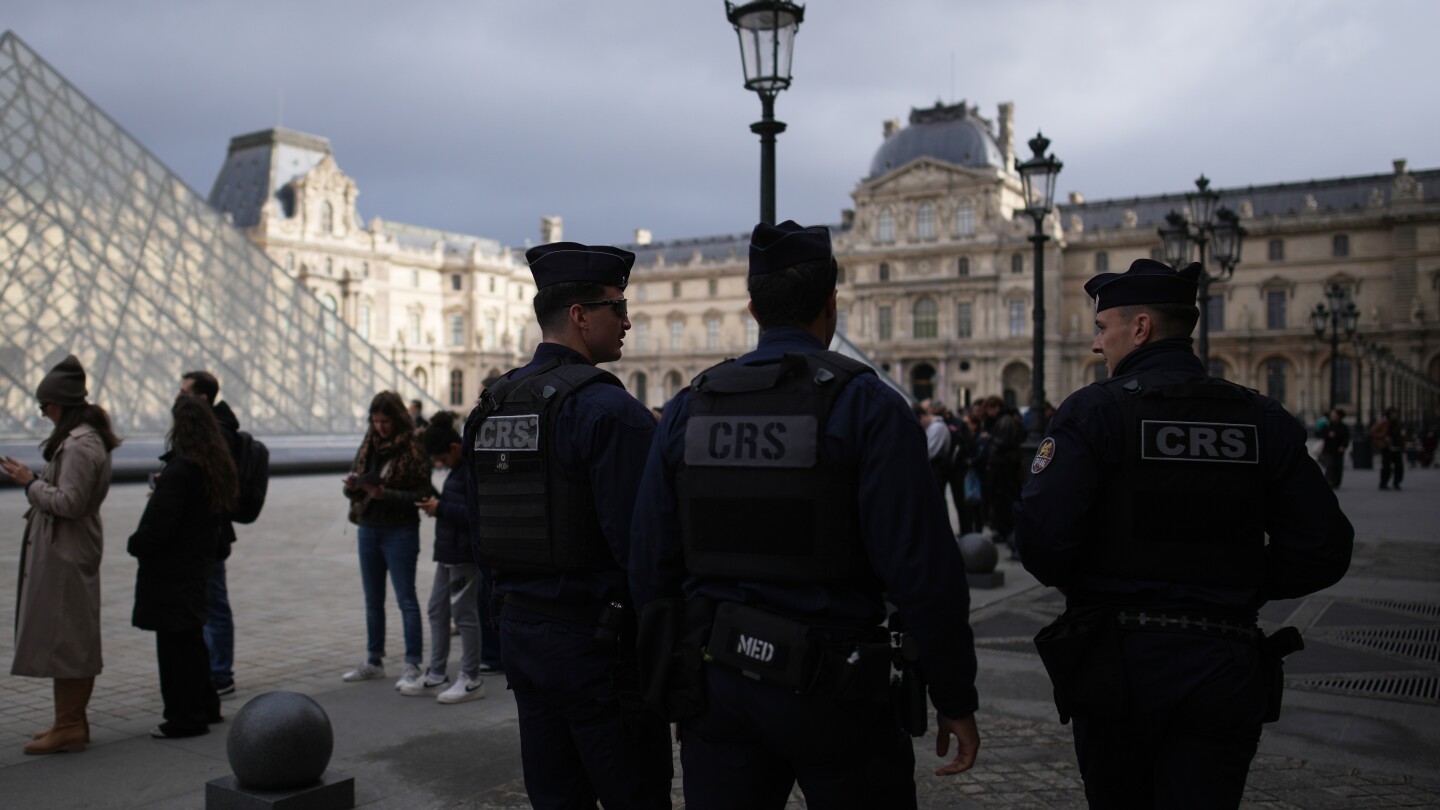
Paris police acknowledge major gaps in Louvre’s defenses after jewel theft
The recent daylight theft at the Louvre Museum has sparked a national reckoning over France’s ability to safeguard its cultural treasures. Paris Police Chief Patrice Faure revealed significant vulnerabilities in the museum’s security systems during a Senate hearing on Wednesday. He highlighted outdated technology, including analog video networks that produce low-quality images and slow real-time sharing. A long-awaited $93 million security upgrade, involving 60 kilometers of new cabling, is not expected to be completed until 2029–2030. Alarmingly, the Louvre’s authorization to operate its security cameras expired in July and was not renewed, a lapse that underscores broader negligence. On October 19, thieves exploited these weaknesses, breaking into the Apollo Gallery and stealing eight pieces of the French crown jewels valued at $102 million. The theft was first reported by a cyclist, not the museum’s alarms, further exposing flaws in the alert system. Two suspects were arrested, but their custody is set to expire, raising concerns about the investigation’s progress. The incident has also revealed an insurance blind spot, as the jewels were not privately insured, leaving the Louvre to bear the total financial loss. Faure emphasized the need for advanced tools like AI-based anomaly detection to enhance security, while rejecting calls for a permanent police post inside the museum. The heist has intensified scrutiny on the Louvre’s management, already strained by chronic understaffing and mass tourism. Experts fear the stolen jewels may be irreversibly altered, adding urgency to France’s debate on protecting its cultural heritage.
-

France expected to adopt consent-based rape law in the wake of landmark Gisèle Pelicot case
France is poised to take a monumental step in its fight against sexual violence as the Senate prepares to give its final approval to a landmark bill on Wednesday. The legislation redefines rape and sexual assault as any non-consensual sexual act, marking a significant shift in the country’s legal framework. This move follows the harrowing trial of Gisèle Pelicot, whose case exposed systemic issues in France’s approach to sexual violence and consent. The bill, introduced in January, gained momentum after 51 men were convicted of raping and abusing Pelicot over nearly a decade, sparking a national reckoning on rape culture. Lawmakers Marie-Charlotte Garin and Véronique Riotton, who spearheaded the initiative, emphasized the urgency of addressing sexual violence, stating, ‘It’s time to take action and take a new step forward.’ The legislation explicitly defines consent as ‘freely given, informed, specific, prior, and revocable,’ and clarifies that silence or lack of resistance does not imply consent. It also stipulates that any sexual act involving violence, coercion, threat, or surprise is non-consensual. The bill received overwhelming support in the National Assembly last week, with only the far-right opposing it. Once enacted, France will join other European nations like Germany, Belgium, and Spain in adopting consent-based rape laws. The Pelicot case, which revealed the role of pornography, online chatrooms, and misconceptions about consent in perpetuating rape culture, has made her a global symbol in the fight against sexual violence.
-
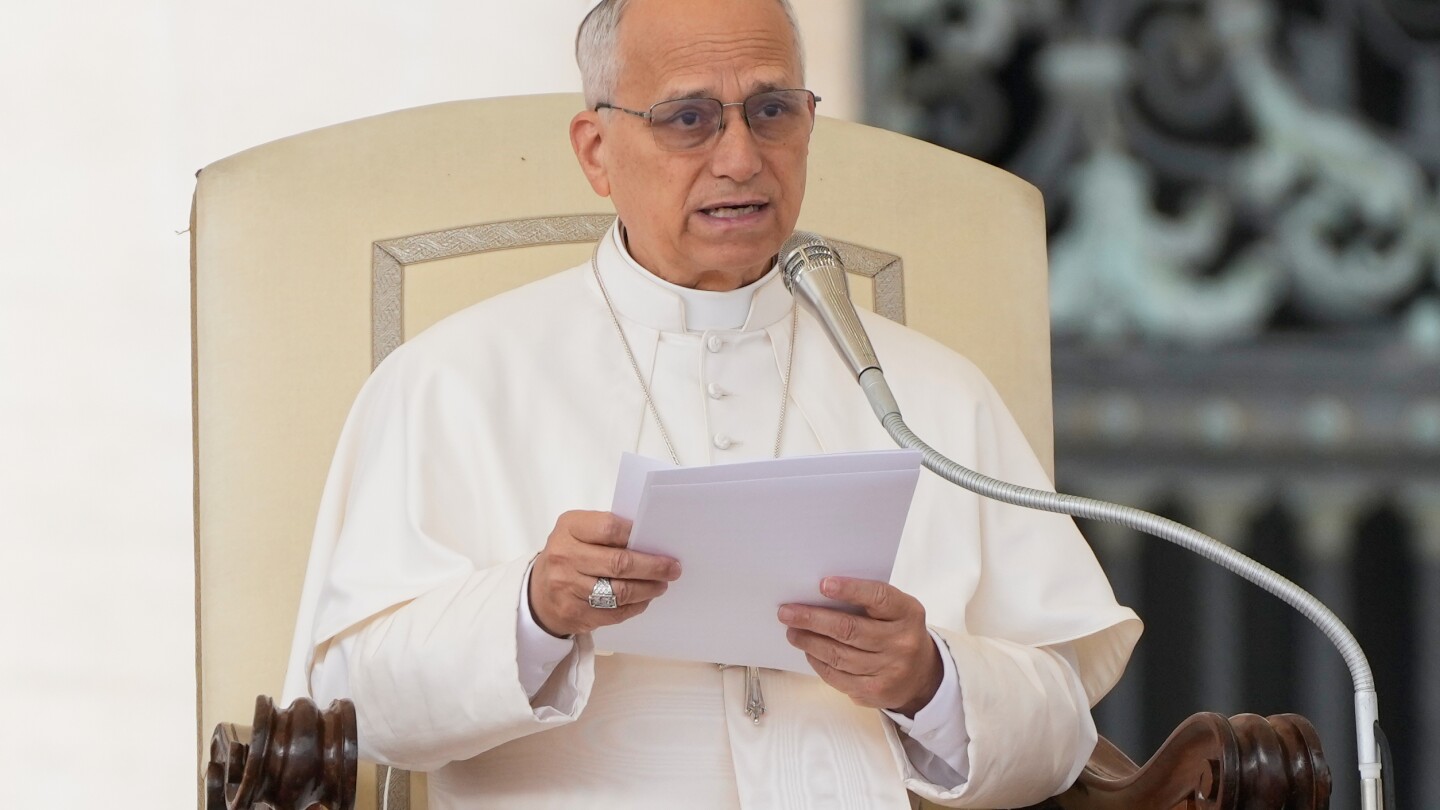
Pope condemns antisemitism and vows to fight it as tensions rise over Israel’s war in Gaza
In a significant address during his Wednesday general audience, Pope Leo XIV acknowledged the misunderstandings and conflicts that have arisen between Catholics and Jews amid Israel’s war in Gaza. However, he firmly reiterated the Catholic Church’s unwavering condemnation of antisemitism and its commitment to combating it, rooted in the Gospel-mandated friendship with the Jewish people. The Pope’s remarks coincided with the 60th anniversary of the landmark Vatican document “Nostra Aetate,” which revolutionized the Church’s relationship with Judaism. The declaration, Latin for “In Our Time,” denounced antisemitism in all forms and repudiated the centuries-old “deicide” charge that blamed Jews collectively for Christ’s death. This historic document marked a turning point in the Church’s reckoning with its role in perpetuating antisemitism, particularly in the context of the Holocaust. Speaking to a diverse audience that included Jewish leaders and representatives of other faiths, Pope Leo emphasized the importance of continuing dialogue despite current challenges. He noted that while political circumstances and injustices have strained relations, the Church remains steadfast in its friendship with the Jewish people. The anniversary comes amid a surge in antisemitism globally, particularly in the wake of Israel’s military actions in Gaza following the October 7, 2023, Hamas attacks. In the United States alone, the Anti-Defamation League reported a record high of 9,354 antisemitic incidents last year, with 58% linked to Israel. The war has also tested the Vatican’s relationship with the Jewish community, with Pope Francis facing criticism for comments perceived as equating Hamas’s actions with Israel’s military response. While Francis called for the release of hostages and condemned violence, his remarks on Israel’s conduct sparked controversy. Pope Leo, however, has sought to bridge divides, meeting with Jewish leaders during his installation in May and reaffirming the Church’s commitment to dialogue. Rabbi Noam Marans of the American Jewish Committee praised the Pope’s acknowledgment of the challenges, calling it a significant step forward. He urged the Vatican to leverage its moral authority to combat antisemitism more vigorously, emphasizing the critical need for solidarity in these turbulent times.