标签: Europe

欧洲

  • Two killed and many injured after car driven into crowd in German city of Leipzig

    Two killed and many injured after car driven into crowd in German city of Leipzig

    On Monday afternoon, a devastating vehicle attack on a crowd of pedestrians in central Leipzig, eastern Germany, has left two people dead and multiple others wounded, local law enforcement and emergency management officials confirmed.

    According to Leipzig Fire Chief Axel Schuh, a total of 22 people were injured in the incident, with two of those injuries categorized as critical. In response to the emergency, first responder agencies dispatched roughly 40 firefighters, 40 paramedics, and two medical helicopters to the scene on Grimmaische Straße, a busy central thoroughfare in the city.

    Leipzig Mayor Burkhard Jung told reporters that the suspected driver, who is alleged to have struck multiple pedestrians before fleeing the initial impact site, has been taken into police custody. As of the latest official updates, investigators have not yet determined a clear motive for the attack.

    Local police have since verified the sequence of events, confirming that the vehicle hit multiple people in the crowded downtown area before the driver fled. The suspect was ultimately apprehended, and law enforcement has stated that the perpetrator no longer poses any public safety threat.

    At approximately 17:35 local time (15:35 GMT), police notified local media outlet Radio Leipzig that the active danger period had passed, and the entire area surrounding the attack site was cordoned off for forensic investigation. Unverified user-posted footage and images circulating on social media platforms show a yellow emergency response helicopter operating near the scene alongside dozens of ambulances staged to transport wounded victims to area hospitals.

    Local news outlets have issued a call for witnesses who captured footage or observed the attack to come forward with information, provided that doing so does not put the witness at personal risk.

  • A driver plows into people in the German city of Leipzig, injuring several

    A driver plows into people in the German city of Leipzig, injuring several

    LEIPZIG, Germany – Authorities have confirmed that a driver drove a vehicle into a crowd of pedestrians in the heart of the eastern German city of Leipzig on Monday, leaving an unspecified number of people wounded in an incident that quickly drew a law enforcement response.

    In the immediate aftermath of the event, official details remained sparse. According to Germany’s national news agency DPA, law enforcement officials have not yet released an exact count of people harmed in the incident, but have confirmed that no lives have been lost to this point.

    A public notice published to the city of Leipzig’s official online portal confirmed that both the vehicle involved and its operator have been intercepted by authorities, and that the situation no longer presents any ongoing threat to public safety in the area.

    The ramming incident took place along Grimmaische Strasse, a busy thoroughfare that serves as a main access point to one of central Leipzig’s primary commercial and shopping districts, a location that typically sees heavy foot traffic from both locals and visitors throughout the week.

    For geographic context, Leipzig sits roughly 100 miles southwest of Germany’s capital city of Berlin. With a resident population exceeding 630,000 people, it ranks among the largest urban centers in the eastern portion of the country, drawing thousands of daily visitors to its downtown commercial, retail, and cultural spaces.

  • Rubio plans to visit the Vatican this week as tensions between Trump and the pope rise

    Rubio plans to visit the Vatican this week as tensions between Trump and the pope rise

    A high-stakes diplomatic mission is set to unfold this week, as U.S. Secretary of State Marco Rubio travels to Rome and Vatican City to defuse rapidly escalating friction between President Donald Trump and the first American-born pontiff, Pope Leo XIV, rooted in deep disagreements over the Trump administration’s Iran war policy. The State Department officially confirmed Rubio’s itinerary on Monday, noting that the trip, scheduled for Thursday and Friday, marks the Catholic secretary’s third official visit to Italy or the Holy See since he took office as the Republican administration’s top diplomat. Vatican officials have publicly confirmed that Rubio will hold a one-on-one meeting with Pope Leo on Thursday.

    According to a formal statement from the State Department, the core agenda for Rubio’s discussions with Holy See leadership will center on the volatile security situation across the Middle East, alongside overlapping policy priorities for the U.S. and the Vatican in the Western Hemisphere. Separate meetings with Italian government counterparts, the statement added, will focus on collaborative security objectives and continued strategic alignment between the two NATO allies.

    The diplomatic outreach comes at a moment of open public friction between the sitting U.S. president and the pope. Tensions first flared last month, when Trump issued a scathing social media rebuke of Pope Leo, accusing the pontiff of being soft on transnational crime and terrorism over Leo’s public criticism of the administration’s hardline immigration and deportation policies, as well as its ongoing military campaign in Iran. In response, the Pope delivered a widely interpreted rebuke, stating that God does not hear the prayers of leaders who choose to wage aggressive war. The exchange escalated dramatically when Trump shared a now-deleted social media graphic that depicted him in the likeness of Jesus Christ.

    To date, Trump has rejected repeated calls to apologize for the controversial post, offering a shifting explanation that he initially believed the image portrayed him as a medical professional rather than a Christ figure. The friction between the White House and the Vatican has already spilled beyond religious and diplomatic circles, seeping into Italian domestic politics: Prime Minister Giorgia Meloni, a longstanding ally of Trump, has publicly condemned the president’s comments about the pope. In turn, Trump has lashed out at Meloni, part of a broader growing frustration with NATO allies that he accuses of failing to provide sufficient support for the Iran war. That frustration has already translated into policy, with the Pentagon announcing plans to withdraw thousands of U.S. troops from Germany in the coming months.

    This is far from the first time Rubio has been tapped to clean up after Trump’s provocative rhetoric: the secretary has repeatedly been tasked with walking back or softening the president’s harsh public statements on European relations, NATO and Middle East policy. Beyond the international diplomatic ramifications, the high-profile dispute with the pope carries notable domestic political stakes for the Republican Party, as the U.S. approaches upcoming midterm congressional elections.

    Pope Leo has sought to frame his own comments as non-partisan, saying his public calls for peace and criticism of the Iran war and other global conflicts were not intended as a direct attack on Trump or any other political leader. Prior to this week’s trip, Rubio has made two official visits to Italy as Secretary of State. His first trip, in May 2025, included attendance at Pope Leo’s inaugural mass and a private audience with the pontiff alongside Vice President JD Vance. His second visit, in February, again paired with Vance, for the opening ceremony of the Milan Winter Olympics, where the pair met with U.S. Olympic athletes. This story has been corrected to confirm that this week’s trip will bring Rubio’s total number of official visits to Italy or the Vatican to at least three.

  • Families evacuated from Gaza enjoy a day to decompress at Rome’s ancient baths

    Families evacuated from Gaza enjoy a day to decompress at Rome’s ancient baths

    ROME, May 4 — For nearly 1,800 years, the grand, intricately decorated Baths of Caracalla, a sprawling ancient public bath complex steps from Rome’s iconic Colosseum, served as a space of leisure, healing, and quiet relaxation for Roman citizens. On a sunlit spring Sunday this year, this historic site took on a new, deeply meaningful purpose: a moment of escape from trauma and medical uncertainty for nearly 50 Palestinian children and their families, evacuated from war-ravaged Gaza to Italy through the country’s humanitarian corridor program for urgent medical care.

    Organized by Guides for Gaza, a volunteer network of Italian tour guides formed to support displaced Gazans, the day-long outing offered more than just a walk through ancient ruins. Beyond a guided tour of the site’s towering marble remnants and ancient engineering features, volunteers arranged light refreshments, games for children, and unstructured time for families to connect and process their experiences away from hospital appointments and the weight of war memories. “We brought these families here so they could experience the joy of visiting an ancient archaeological site,” Luisa delle Fratte, a tour guide with the group, told the Associated Press. Amid ordinary Italian locals spreading picnic blankets on the grass to enjoy the warm spring weather, the Palestinian families, all now temporary residents of Rome, moved seamlessly through the 27-hectare site. They snapped selfies against the backdrop of centuries-old stone columns, watched the new reflecting pool’s fountain jets arc into the air, and followed their guide and translator through the site’s historic halls.

    For 13-year-old Ahmed Skena, one of the evacuees, the outing marked a small break in a long road of medical recovery. Skena was injured in the conflict that has ravaged Gaza, leaving him with impaired speech and limited mobility in one hand and leg. He also lost his father and brother in the war, he shared haltingly with reporters. For Mariam Dawwas, a 25-year-old who traveled to the outing with her husband and four young children, one of whom requires ongoing medical treatment, the safety of Rome is already a profound change from life in Gaza. Dawwas and her family were displaced more than 10 times across the enclave before they were evacuated through the humanitarian program. “Thank God, I am still in a better situation than in Gaza, away from the bombing. At least I am safe, I have shelter, and there is light for my children,” she said.

    Delle Fratte noted that the outing also created a rare chance for reconnection: several of the families had known each other back in Gaza but had not seen one another since their separate evacuations. “It was very beautiful to see them there embracing again and meeting one another once more,” she said. The event also doubled as a fundraiser for ongoing support for Gazan civilians: while the Palestinian families toured the ruins for free, Guides for Gaza offered paid tours to regular visitors to the site, with all donations going to Gazelle, a nonprofit organization that runs child protection programs across the Gaza Strip.

    The ongoing conflict in Gaza erupted in October 2023 after a Hamas-led attack on southern Israel that killed roughly 1,200 people, most of them civilians, and abducted 251 more. Since that time, the Gaza Health Ministry, operating under the Hamas-led government, reports that more than 72,000 Palestinians have been killed in the subsequent military campaign. The ministry’s casualty data, which does not break down numbers between combatants and civilian residents, is widely regarded as generally reliable by United Nations agencies and independent conflict analysts. International diplomatic efforts, including a 20-point ceasefire plan proposed by former U.S. President Donald Trump, remain ongoing to end the conflict and pave the way for reconstruction of the devastated enclave.

  • A European lawmaker is sentenced in a fraud case involving Czech populist leader Andrej Babiš

    A European lawmaker is sentenced in a fraud case involving Czech populist leader Andrej Babiš

    PRAGUE — In a high-profile legal ruling that has roiled the Czech political landscape just months after Prime Minister Andrej Babiš formed his new government, a municipal court in Prague found former close aide Jana Nagyová guilty of fraud connected to a $2 million European Union subsidy scheme on Monday. The court handed Nagyová a three-year suspended prison sentence and ordered her to pay a fine of 500,000 Czech koruna, equal to approximately $24,000. The verdict is not binding, as Nagyová retains the right to file an appeal to challenge the conviction.

    The case, one of the most controversial political legal matters in modern Czech history, names both Nagyová and Babiš, a populist billionaire who began his third term as prime minister in December 2024, as co-defendants. The fraud allegation centers on the Stork’s Nest farm, a property that was deliberately restructured to qualify for EU agricultural subsidies earmarked exclusively for small and medium-sized enterprises.

    Originally owned by Agrofert, the large industrial conglomerate controlled by Babiš, the farm was transferred into the names of Babiš’s family members to meet the small-business eligibility criteria for the funding. After securing the $2 million in subsidies, full ownership of the property was transferred back to Agrofert — a company that would never have qualified for the targeted funding on its own. Agrofert has since returned the disputed subsidy to authorities.

    Unlike Nagyová, who currently serves as a member of the European Parliament and has already had her legal immunity lifted by EU legislative bodies, Babiš retains parliamentary immunity from criminal prosecution. In March, lawmakers in the lower chamber of the Czech Parliament voted down a motion to revoke Babiš’s immunity, a decision that means any trial against the sitting prime minister cannot proceed until his current term ends in 2029. Babiš has repeatedly denied any wrongdoing, framing the entire case as a politically motivated attack against his administration.

    Babiš’s return to the prime minister’s office came after his populist political movement ANO — which translates to YES in Czech — secured a decisive victory in October national elections. He went on to form a narrow governing coalition with two small right-wing and populist parties: the anti-immigrant Freedom and Direct Democracy party, and the right-wing Motorists party. The coalition’s stated policy agenda marks a notable shift from the previous Czech government, including plans to reduce Czech military and political support for Ukraine amid the ongoing Russian invasion, and to push back against a number of flagship European Union policy initiatives. The conviction of Babiš’s former closest associate is expected to amplify domestic tensions, with opposition leaders already calling for greater transparency and accountability for the new administration.

  • Austria expels 3 Russian Embassy staff over suspected antenna spying in Vienna

    Austria expels 3 Russian Embassy staff over suspected antenna spying in Vienna

    VIENNA – In a sharp escalation of diplomatic tensions between Moscow and a European Union member state, Austria’s Foreign Ministry announced Monday it has expelled three Russian Embassy personnel over credible allegations of systematic espionage targeting international organizations headquartered in the country. The move confirms an earlier report from Austrian public broadcaster ORF, which first broke the story Sunday, detailing accusations that the three diplomats used hidden antenna arrays installed on the roofs of two Russian diplomatic properties – the main Russian Embassy in central Vienna and a separate diplomatic compound in the capital’s Donaustadt district – to conduct covert intelligence gathering.

    According to ORF’s reporting, the custom-built antenna installations gave Russian intelligence operatives the capability to intercept satellite internet data transmitted by major international organizations based in Vienna. The Austrian capital hosts a dense network of key global bodies, including multiple United Nations agencies, the United Nations’ nuclear watchdog the International Atomic Energy Agency (IAEA), the Organization of the Petroleum Exporting Countries (OPEC), and the Organization for Security and Co-operation in Europe (OSCE).

    In an official statement announcing the expulsions, Austrian Foreign Minister Beate Meinl-Reisinger emphasized that the new government has shifted its approach to addressing foreign espionage on Austrian soil. “Espionage is a security problem for Austria. In this government, we have changed course and are taking decisive action against it,” Meinl-Reisinger said. “We have made this unequivocally clear to the Russian side, also with regard to the array of antennas at the Russian embassy. One thing is clear: it is unacceptable for diplomatic immunity to be used to engage in espionage.”

    The incident traces back to April, when Austrian authorities summoned Russian Ambassador Dmitry Lyubinsky to the Foreign Ministry over the suspected activities. Prosecutors requested that Moscow waive diplomatic immunity for the three employees to allow a formal criminal investigation, but Russia rejected the request – a decision that directly triggered the expulsion order, ORF confirmed. As of Monday, all three expelled diplomats have already departed Austrian territory.

    Beyond the immediate expulsions, the Austrian government is moving to update the country’s national espionage legislation to close critical gaps that currently leave international organizations based in Austria underprotected. Under existing law, espionage carried out by foreign actors is only criminalized if it targets direct Austrian national interests. The proposed regulatory reforms, put forward by the current administration, will extend the same legal protections to activities involving international organizations hosted on Austrian soil, the Austrian Press Agency confirmed.

    The expulsions mark the latest in a series of reciprocal diplomatic expulsions between Western European states and Russia that have taken place since Moscow launched its full-scale invasion of Ukraine in February 2022. Austria, which holds formal military neutrality as an EU member, initially avoided taking high-profile diplomatic action against Moscow but has ramped up such expulsions in recent months.

    The Russian Embassy in Vienna had not responded to direct requests for comment on the decision by Monday afternoon. However, in a public statement posted to its official Telegram channel Monday, the embassy called Austria’s decision “outrageous” and warned that Moscow would issue a forceful reciprocal response. The statement added that “Vienna bears full responsibility for the further deterioration of bilateral relations, which are already at a historical low.”

  • Princess Eugenie and her husband announce they are expecting their 3rd child

    Princess Eugenie and her husband announce they are expecting their 3rd child

    LONDON — A new addition is on the way for Britain’s royal extended family, with Princess Eugenie and her spouse Jack Brooksbank sharing the happy news of their upcoming third child this Monday. Official confirmation from Buckingham Palace laid out details of the upcoming arrival: Eugenie, the youngest daughter of Prince Andrew (now formally known as Andrew Mountbatten-Windsor) and his former wife Sarah Ferguson, is expected to welcome the new baby in the coming summer months.

    The couple already share two young sons: five-year-old August and two-year-old Ernest. According to the palace’s statement, both boys are already overflowing with excitement at the prospect of greeting a new sibling into their close-knit family. The news has also sparked joy among the wider royal family, with Eugenie’s uncle King Charles III — who is Andrew’s older brother — described as absolutely delighted by the announcement.

    The pregnancy marks the latest update for the younger generation of Britain’s royal family, coming as the household continues to adjust to ongoing shifts in public life and generational change within the monarchy. Eugenie, who maintains a lower public profile than working members of the royal family, has largely kept her family life out of the intense spotlight that accompanies senior royal roles in recent years.

  • Ukrainian drone hits upmarket Moscow high-rise ahead of Victory Day celebrations

    Ukrainian drone hits upmarket Moscow high-rise ahead of Victory Day celebrations

    In the early hours of Monday, a Ukrainian drone struck a luxury residential high-rise in southwestern Moscow, leaving visible structural damage to an upper floor’s facade but causing no reported casualties, according to local officials. The incident marked the third straight night of drone attacks targeting the Russian capital, coming just days before Moscow hosts a significantly reduced 9 May parade honoring the Soviet Union’s defeat of Nazi Germany in World War II.

    Unverified footage circulating across social media platforms captured first responders entering a heavily damaged apartment, where broken windows, scattered dust and piles of rubble filled the space. A second clip showed pieces of downed drone debris spread across the street at the base of the building. Moscow Mayor Sergei Sobyanin confirmed that two other drones targeting the city were successfully intercepted by Russian air defenses, and the capital’s two major international hubs, Vnukovo and Domodedovo, temporarily paused all flight operations overnight as a security precaution.

    Across multiple Russian regions between Sunday and Monday, Russian defense officials reported that a total of 117 Ukrainian drones were shot down. Sixty of those drones were directed at the St. Petersburg region, in what regional governor Aleksandr Drodzhenko described as a large-scale coordinated attack.

    The damaged residential building sits in one of Moscow’s most exclusive neighborhoods, located less than 10 kilometers from the Kremlin and Red Square, where the scaled-back 9 May victory parade will be held this Saturday. Since Russia launched its full-scale invasion of Ukraine in February 2022, Ukrainian drone strikes on Moscow have become a recurring occurrence. While drone warnings frequently force temporary airport shutdowns on the capital’s outskirts and disrupt commercial air traffic, most of central Moscow is shielded by Russia’s Pantsir-S surface-to-air missile systems, making successful strikes this close to the city center a relatively rare event.

    Growing security anxiety ahead of the annual celebrations prompted the Kremlin to announce last week that it would scale back the traditional large-scale military parade on Red Square, citing an ongoing “terrorist threat” from Ukraine. This year will mark the first time since 2008 that no armored vehicles or long-range missile systems will be featured in the event. Separately, Russian state media reported Monday that multiple local mobile network providers have announced restrictions on mobile internet access across most of Moscow for the coming week, a measure framed as necessary for national security.

    Ukrainian President Volodymyr Zelensky openly acknowledged the increasing drone pressure, commenting that the Kremlin’s decision to downsize the parade reveals Moscow’s fear that drones could reach Red Square itself. “This is telling… We need to keep up the pressure,” Zelensky said.

    Over the course of the full-scale war, Ukraine has rapidly expanded its domestic production of long-range drones, which are now capable of striking targets hundreds of kilometers inside Russian territory. These unmanned systems regularly target Russian energy infrastructure and oil refineries across the country, with the strategic goal of cutting into Russia’s total oil output and reducing critical export revenue that funds Moscow’s war effort.

    A day before the Moscow strike, Zelensky announced that Ukrainian forces had hit three Russian oil tankers, a cruise missile-carrying warship and a patrol boat in separate attacks on two Russian Black Sea ports. Zelensky noted that the targeted tankers were part of Russia’s so-called “shadow fleet” of vessels that Moscow uses to evade Western oil sanctions imposed after the 2022 full-scale invasion.

    Despite the increasing Ukrainian drone strikes deep inside Russia, Moscow continues its daily campaign of deadly aerial attacks against Ukrainian population centers. On Monday, Ukrainian emergency officials confirmed that a Russian missile strike near the northeastern city of Kharkiv, located just kilometers from the Russian border, killed four civilians and left 18 others injured.

  • European leaders see Trump’s troop drawdown from Germany as new proof they must go it alone

    European leaders see Trump’s troop drawdown from Germany as new proof they must go it alone

    YEREVAN, ARMENIA – During a gathering of European leadership in the Armenian capital this week, top European officials have reacted with surprise to U.S. President Donald Trump’s unexpected announcement that he plans to withdraw far more American troops from Germany than initially disclosed, with many framing the move as a long-delayed wake-up call for Europe to take full ownership of its own regional security.

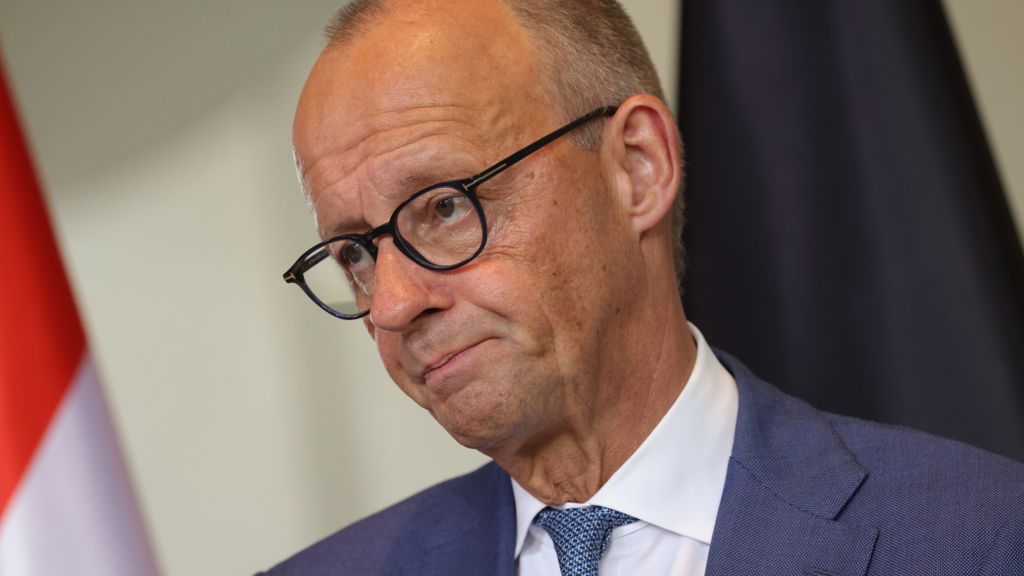
    The Pentagon first made public last week that it would withdraw approximately 5,000 U.S. service members from German military bases. But during a press briefing Saturday, Trump upended that plan by confirming the final drawdown would be far deeper than the 5,000-troop figure, offering no public explanation for the sudden scaling back of the U.S. military presence on European soil. The unanticipated decision caught NATO alliance leadership completely off guard, and comes amid a rapidly escalating public dispute between Trump and German Chancellor Friedrich Merz over the ongoing U.S.-led Israeli war on Iran. A core source of Trump’s frustration has been the widespread reluctance among European NATO allies to commit military support or operational access to the Middle East conflict.

    Speaking to reporters on the sidelines of the European summit Monday, Norwegian Prime Minister Jonas Gahr Støre downplayed the immediate stakes of the drawdown, while acknowledging the shifting security dynamic across the transatlantic alliance. “I wouldn’t exaggerate that because I think we are expecting that Europe is taking more charge of its own security,” Støre said. “I do not see those figures as dramatic, but I think they should be handled in a harmonious way inside the framework of NATO.”

    European Union foreign policy chief Kaja Kallas noted that discussions about a potential U.S. troop drawdown from Europe have circulated for years, but admitted the sudden timing of Trump’s announcement took the bloc by surprise. “There has been a talk about withdrawal of U.S. troops for a long time from Europe. But of course, the timing of this announcement comes as a surprise,” Kallas said. When asked if the move is intended as a direct rebuke of Merz, who recently stated the U.S. had been humiliated by Iran during ceasefire negotiations, Kallas declined to speculate. “I don’t see into the head of President Trump, so he has to explain it himself,” she added.

    NATO leadership has moved quickly to clarify the alliance’s position, with a spokesperson noting over the weekend that officials from the 32-nation bloc are currently working with U.S. counterparts to work out the full details of the revised force posture in Germany. NATO Secretary-General Mark Rutte, who has long positioned himself as a key liaison between Trump and European allies, also sought to soften the impact of the announcement, acknowledging that the White House has been clear about its disappointment over limited European backing for the Iran war.

    Multiple major European powers have already rejected U.S. requests for unrestricted access to their national military bases and airspace for operations targeting Iran. Spain has gone the furthest, formally barring U.S. forces from using its Spanish-based infrastructure and airspace for any activities related to the Iran conflict. Even the United Kingdom and France, traditional U.S. security partners, have declined to grant the unrestricted access the White House has requested. Europe has also refused to commit forces to patrol the critical Strait of Hormuz, a chokepoint for nearly 20% of the world’s daily oil trade, until a ceasefire is reached in the war.

    Notably, European allies and Canada have been aware since Trump’s return to the White House last year that he intended to draw down U.S. troop levels in Europe; a small contingent of U.S. forces already withdrew from Romania last October. U.S. officials had previously pledged to coordinate all troop movement adjustments with NATO allies to avoid creating a destabilizing security gap across the continent. Rutte, who has openly praised Trump’s leadership within NATO despite the U.S. president’s repeated criticism of most alliance members, said the message from Washington has been received. “I would say the Europeans have heard a message. They are now making sure that all the bilateral basing agreements are being implemented,” Rutte said.

    Rutte added that European nations have already moved to pre-position key military assets closer to potential conflict zones in preparation for the next phase of transatlantic security alignment, though he offered no specific details on what assets would be moved or where they would be stationed. Additional reporting for this story was filed from Brussels by AP correspondent Dustin Cook.

  • UAE says Iran has resumed attacks as the US moves to reopen the Strait of Hormuz

    UAE says Iran has resumed attacks as the US moves to reopen the Strait of Hormuz

    On a tense Monday in the Persian Gulf region, the United Arab Emirates confirmed it had faced direct Iranian attacks — the first such escalation since a fragile ceasefire took effect in early April. The confrontation unfolded hours after the U.S. launched a new push, dubbed “Project Freedom,” to reopen the Strait of Hormuz, the world’s most critical chokepoint for global energy supplies that Iran has controlled effectively since the U.S. and Israel launched their military campaign in late February.

    According to the UAE Defense Ministry, Iran fired four cruise missiles toward the emirate; three were successfully intercepted by air defenses, while the fourth fell harmlessly into the Gulf waters off the country’s coast. Separately, authorities in the eastern emirate of Fujairah — a key oil infrastructure hub that serves as the UAE’s main maritime access point outside the Strait of Hormuz and the terminus of an oil pipeline built to bypass the strait — confirmed an Iranian drone sparked a fire at a major oil facility. The UK Maritime Trade Operations center, which monitors regional shipping security, later reported two cargo vessels were ablaze in waters off the UAE coast. A South Korean government statement confirmed an explosion and fire broke out on a South Korean-operated vessel anchored in the strait near the UAE, though no injuries were reported; it remained unclear Monday if this was one of the vessels noted by British officials.

    The new U.S. initiative kicked off Monday, when U.S. Central Command confirmed two American-flagged merchant ships completed a successful transit of the strait, with guided-missile destroyers from the U.S. Navy providing escort. “Both transiting vessels are safely headed on their journey,” the command said in a post on X, adding that U.S. Navy destroyers also transited the waterway as part of the effort to restore commercial traffic. The U.S.-led Joint Maritime Information Center has advised commercial ships to route through Omani territorial waters, establishing what it calls an “enhanced security area” for transits, and warned that traveling near traditional shipping lanes remains “extremely hazardous” due to uncleared mines scattered across the waterway.

    The confrontation threatens to upend the three-week-old ceasefire and reignite large-scale fighting across the region. Iran has repeatedly condemned the U.S. initiative as a direct violation of the ceasefire agreement, and has vowed to continue targeting vessels that ignore its requirement that all transiting ships coordinate with Iranian authorities. “We warn that any foreign military force — especially the aggressive U.S. military — that intends to approach or enter the Strait of Hormuz will be targeted,” Major General Ali Abdollahi, a senior Iranian military commander, told state broadcaster IRIB Monday. Iran’s state-run IRNA news agency dismissed Project Freedom as an outgrowth of U.S. President Donald Trump’s “delirium”, after Trump warned Iran Sunday that any attempt to interfere with the U.S.-led transit effort would be met with a “forceful” response.

    Trump framed the initiative as a humanitarian measure, designed to assist hundreds of stranded seafarers trapped on vessels stuck in the Persian Gulf since the war began. Crew members of stranded ships have previously told the Associated Press they have faced dwindling supplies of drinking water, food, and other essentials, while watching drones and missiles explode overhead amid earlier hostilities.

    Iranian state media stirred further tension Monday when multiple outlets reported Iranian forces had struck a U.S. military vessel near an Iranian port southeast of the strait, claiming the ship was forced to turn back after violating maritime security rules. U.S. Central Command quickly debunked the claim, saying in a statement on X that “no U.S. Navy ships have been struck” in the region.

    The closure of the strait has already sent global fuel prices soaring and sent shockwaves through the already fragile global economy, squeezing energy-dependent nations in Europe, Asia, and beyond. The U.S. has also levied sanctions that penalize shipping companies that pay Iran transit fees for passage through the waterway, and enforced a naval blockade of Iranian ports since April 13 that has turned away at least 49 commercial vessels, depriving Tehran of critical oil revenue needed to prop up its ailing domestic economy. U.S. officials have said they hope the pressure will force Iran to make concessions in ongoing ceasefire and peace negotiations, which have so far shown little sign of progress.

    As of Monday, questions remain about whether the U.S. initiative can actually restore consistent commercial traffic, as shipping companies and their insurers weigh the growing risk of attacks. “No formal guidance or details about the U.S. effort had been issued to the industry,” said Jakob Larsen, head of security for the Baltic and International Maritime Council, a leading global shipping trade group. Larsen added that the initiative carries clear long-term risks, saying “it carries a risk of hostilities breaking out again” and questioned whether the effort could be sustained over time.

    Talks to end the broader conflict remain stalled as both sides dig in on competing demands. Iran’s latest peace proposal calls for the U.S. to lift all sanctions, end its naval blockade, withdraw all military forces from the region, and force Israel to end its military operations in Lebanon, according to Iranian news outlets with close ties to the country’s security apparatus. Iranian officials said they are still reviewing the U.S. response to the proposal, but Foreign Ministry spokesperson Esmail Baghaei noted Monday that shifting U.S. negotiating demands have made meaningful diplomacy difficult. Iran has also claimed its proposal excludes discussion of its nuclear program and enriched uranium stockpiles — a core point of tension between Iran, the U.S., and Israel for over a decade — and wants all outstanding issues resolved within 30 days to end the war permanently, rather than extend the current temporary ceasefire. Trump cast doubt on the prospects of a breakthrough over the weekend, saying he did not expect Iran’s proposal to lead to a lasting negotiated deal.