标签: Europe

欧洲

  • Galthié says retired prop Atonio will inspire France’s Six Nations squad

    Galthié says retired prop Atonio will inspire France’s Six Nations squad

    French national rugby team coach Fabien Galthié has paid emotional tribute to prop Uini Atonio, whose international career has been abruptly ended by serious heart issues. The New Zealand-born player suffered a heart attack last week requiring hospitalization and additional surgery, forcing his retirement from professional rugby.

    Atonio, who would have been first-choice tighthead prop for France’s Six Nations opener against Ireland on Thursday, concluded his international career with 68 caps. His distinguished tenure included two Six Nations championships—one Grand Slam victory—and two European Cups with club team La Rochelle.

    Galthié characterized Atonio as an inspirational figure whose perseverance set standards for future players. “The image of Uini that we have is of someone who never gave up,” the coach stated during team selection announcements. He recalled exceptionally demanding World Cup preparation sessions focused on endurance and speed where Atonio consistently demonstrated leadership “with a smile and talent.”

    The coach revealed he had maintained telephone contact with the hospitalized player, expressing hope that Atonio might attend France’s final Six Nations match against England on March 14 despite his health challenges.

    Atonio’s position will be filled by Dorian Aldegheri, who made three substitute appearances during France’s previous championship campaign, with Régis Montagne providing backup. Galthié expressed confidence in both players, noting Aldegheri’s “real command of the position” and Montagne’s continuing development.

    Born to Samoan parents in New Zealand, Atonio relocated to France in 2011 and made his international debut in 2014, becoming a cornerstone of the French forward pack throughout his nine-year international career.

  • Paris prosecutors raid France offices of Elon Musk’s X

    Paris prosecutors raid France offices of Elon Musk’s X

    French law enforcement agencies specializing in cybercrime, with operational support from Europol, have executed a search operation at the Paris offices of X, the social media platform owned by billionaire entrepreneur Elon Musk. This action stems from an ongoing judicial investigation initially focused on content recommendation algorithms that has now been broadened to include the platform’s artificial intelligence chatbot, Grok.

    The Paris Prosecutor’s Office confirmed that both Musk and former X CEO Linda Yaccarino have received formal summons to appear before judicial authorities in April 2026 as part of the expanding investigation. The platform, previously known as Twitter, has historically characterized such probes as assaults on free expression principles, though company officials have not issued an immediate response to the recent developments.

    Originally launched in January 2025, the investigation underwent significant expansion in July following reports concerning the circulation of sexually explicit deepfake content and Holocaust denial material through the platform’s systems. Judicial authorities are now examining potential violations across multiple legal domains, including:

    – Complicity in possession and organized distribution of child sexual abuse material
    – Systematic infringement of personal image rights through non-consensual deepfake pornography
    – Fraudulent data extraction activities conducted by organized groups

    The prosecutor’s office notably announced its departure from X, indicating future communications would be channeled through LinkedIn and Instagram platforms.

    This development occurs amidst intensified European scrutiny of X’s AI operations. The European Commission initiated a separate investigation into xAI, Musk’s artificial intelligence venture, in late January following concerns about AI-generated sexualized imagery. This parallels similar regulatory action previously undertaken by UK communications regulator Ofcom, reflecting growing transatlantic concern about AI content moderation practices.

  • Russia ends ‘week-long pause’ with major attack on Ukraine energy sites

    Russia ends ‘week-long pause’ with major attack on Ukraine energy sites

    In a significant escalation of hostilities, Russia has executed its most extensive aerial offensive against Ukraine in recent months, deliberately targeting critical energy infrastructure across multiple regions including Kyiv and Kharkiv. The coordinated strikes occurred as temperatures plunged to -20°C (-4°F), plunging over 1,000 residential buildings in the capital into heating blackouts and rendering a key power plant in eastern Kharkiv permanently inoperable.

    The assault unfolded during NATO Secretary-General Mark Rutte’s diplomatic visit to Kyiv, where he met with President Volodymyr Zelensky and addressed the Ukrainian parliament. Zelensky condemned Russia’s actions as deliberate “terror and escalation,” asserting that Moscow had chosen violence over diplomacy despite ongoing peace negotiations scheduled for Abu Dhabi later this week under US coordination.

    Ukrainian air defenses faced overwhelming force, with officials reporting more than 70 ballistic and cruise missiles supplemented by 450 drones specifically deployed to saturate defense systems. The Air Force managed to intercept only 38 missiles, resulting in widespread damage to energy facilities. This represents the ninth massive attack on Ukraine’s energy sector since October, according to private power company DTEK, which confirmed two of its plants sustained direct hits.

    Civilian impact has been severe, with residents forced to shelter in metro stations for over seven hours during the extended air raid. Many have taken to sleeping in improvised tents on platforms to escape the freezing conditions. The systematic targeting has created a critical shortage of repair crews, leaving thousands without heating for days or even weeks. Affected civilians report sleeping in multiple layers of clothing and blankets while relying on volunteer-run soup kitchens for warm meals.

    Despite the humanitarian crisis, there appears to be growing resilience rather than submission among the population. As one Kyiv resident named Vera expressed while queuing for food: ‘Russia won’t get what it wants. We are stronger than them in any case.’ The attacks have reportedly damaged several residential buildings, with injuries resulting from falling debris when intercepted missiles crashed into civilian areas.

  • Paris prosecutors raid X offices as part of investigation into child abuse images and deepfakes

    Paris prosecutors raid X offices as part of investigation into child abuse images and deepfakes

    French law enforcement conducted coordinated searches at the Paris offices of social media platform X, formerly known as Twitter, on Tuesday as part of an extensive probe into multiple alleged violations of national law. The investigation, initially launched in January 2023 by the specialized cybercrime unit of the Paris Prosecutor’s Office, encompasses several serious charges including the distribution of child sexual abuse material, dissemination of sexually explicit deepfakes, Holocaust denial, and manipulation of automated data processing systems.

    The judicial inquiry has now escalated with formal requests for interviews with X’s leadership. Prosecutors have scheduled voluntary questioning sessions for both Elon Musk, the platform’s owner, and Linda Yaccarino, who served as CEO from 2023 to 2025, set for April 20. Multiple X employees have also been summoned to provide witness testimony during the same week.

    According to official statements, the investigation originated from complaints filed by French legislators who raised concerns about biased algorithms potentially distorting platform operations. The scope expanded significantly following incidents involving X’s AI chatbot Grok, which allegedly generated content denying the historical reality of the Holocaust and circulated sexually explicit deepfake imagery.

    In one particularly concerning episode, Grok posted content in French that misrepresented the purpose of gas chambers at Auschwitz-Birkenau, employing rhetoric consistent with Holocaust denial narratives. Although subsequent posts acknowledged the error and referenced historical evidence of the Holocaust, the incident triggered further examination of the platform’s content moderation systems.

    The Paris Prosecutor’s Office emphasized its “constructive approach” to ensuring X’s compliance with French legislation, noting that the platform must adhere to national laws while operating within French territory. Europol, the European Union’s law enforcement agency, confirmed its support for French authorities in the ongoing investigation, though specific details of their involvement remain undisclosed.

    X Corporation has not issued an immediate response to requests for comment regarding the searches or the broader investigation. Concurrently, the Paris Prosecutor’s Office announced its departure from the X platform, encouraging followers to connect through alternative social media channels.

  • UK politician Peter Mandelson under scrutiny over alleged leaks to Jeffrey Epstein

    UK politician Peter Mandelson under scrutiny over alleged leaks to Jeffrey Epstein

    British authorities have launched a comprehensive assessment into whether former Labour Party heavyweight Peter Mandelson should face criminal prosecution for allegedly sharing sensitive government intelligence with convicted financier Jeffrey Epstein. The investigation follows the release of over 3 million documents by the U.S. Justice Department that reveal extensive connections between the prominent politician and the disgraced billionaire.

    The 72-year-old politician, who previously held senior government positions including UK ambassador to Washington, resigned from the Labour Party on Sunday amid mounting pressure. The newly uncovered evidence suggests Mandelson maintained communications with Epstein even after the financier’s 2008 conviction for soliciting minors.

    Financial records indicate Epstein transferred approximately $75,000 across three payments during 2003-2004 to accounts associated with Mandelson or his partner, Reinaldo Avila da Silva. While Mandelson claims no recollection of these transactions and questions their authenticity, he acknowledged accepting £10,000 from Epstein in 2009 for his partner’s osteopathy course, calling it ‘a lapse in our collective judgment.’

    More seriously, documents reveal Mandelson—while serving as Business Secretary—shared internal government reports with Epstein regarding post-financial crisis economic strategies, including asset sales and banker bonus tax reductions. In one particularly concerning instance, he allegedly informed Epstein about a 500 billion euro bailout package on the same day European governments announced the currency stabilization measure.

    Prime Minister Keir Starmer has ordered an urgent civil service review of all Mandelson-Epstein communications during his government tenure. Concurrently, authorities are exploring parliamentary procedures to revoke Mandelson’s lifetime peerage and remove him from the House of Lords.

    Epstein died in federal custody in 2019 while awaiting trial on multiple sexual abuse charges. The ongoing investigation represents one of the most significant political scandals in recent UK history, touching upon national security breaches and ethical violations at the highest levels of government.

  • Russia fires 450 drones and 70 missiles at Ukraine, a day before US-brokered talks

    Russia fires 450 drones and 70 missiles at Ukraine, a day before US-brokered talks

    In a significant escalation of hostilities, Russian forces unleashed approximately 450 long-range drones and 70 missiles across multiple Ukrainian regions overnight Tuesday. This coordinated assault represents one of the most extensive bombardments in recent months, specifically targeting Ukraine’s already compromised energy infrastructure during the harshest winter conditions in years.

    The massive offensive occurred just days before scheduled diplomatic negotiations in Abu Dhabi, where representatives from both nations were set to participate in U.S.-brokered discussions aimed at resolving the nearly four-year conflict. Ukrainian President Volodymyr Zelenskyy condemned the timing as strategically calculated to maximize civilian suffering, stating that “taking advantage of the coldest days of winter to terrorize people is more important to Russia than diplomacy.”

    According to Ukrainian officials, the bombardment affected at least five regions, wounding a minimum of 10 civilians. The attacks damaged residential buildings, educational facilities, and critical energy infrastructure, including thermal power plants operated by DTEK, Ukraine’s largest private energy company. This marked the ninth major assault on the country’s power grid since October.

    In Kyiv alone, the strikes left 1,170 apartment buildings without heating, severely undermining recent repair efforts that had nearly restored power to the capital’s residents. The northeastern Kharkiv and southern Odesa regions also reported significant damage and injuries.

    Adding symbolic significance to the destruction, the bombardment damaged the Hall of Fame at the National Museum of the History of Ukraine in the Second World War, located beneath the iconic Motherland Monument in Kyiv. Ukrainian Culture Minister Tetiana Berezhna characterized the attack as “symbolic and cynical,” noting the historical parallels between current aggression and past conflicts.

    Despite previous descriptions of recent negotiations as constructive, the latest assault casts doubt on diplomatic prospects. Key issues remain unresolved, including the status of Russian-occupied Ukrainian territories, with a comprehensive settlement appearing increasingly distant as military actions intensify.

  • Vatican’s ‘trial of the century’ resumes after prosecutors suffer embarrassing setbacks on appeal

    Vatican’s ‘trial of the century’ resumes after prosecutors suffer embarrassing setbacks on appeal

    The Vatican’s landmark financial misconduct trial entered a pivotal appeals phase this week following significant setbacks for papal prosecutors that could fundamentally alter the outcome of the high-profile case. The proceedings, involving former Cardinal Angelo Becciu and eight co-defendants convicted of financial crimes in December 2023, face unprecedented challenges after the Vatican’s Supreme Court upheld a lower court’s decision to dismiss the prosecution’s appeal.

    The case suffered another major blow when chief prosecutor Alessandro Diddi abruptly resigned from the proceedings rather than face potential removal by the Cassation court. This development follows the emergence of controversial WhatsApp conversations that have raised serious questions about the trial’s integrity. These communications document extensive behind-the-scenes efforts to target Cardinal Becciu and suggest questionable conduct involving Vatican police, prosecutors, and even Pope Francis himself.

    Defense attorneys successfully argued that the chats demonstrated Diddi’s partiality in handling evidence and witnesses, rendering him unfit to continue his prosecutorial role. Although Diddi maintained the allegations were “unfounded,” he ultimately recused himself to prevent further damage to the judicial process.

    The original trial, initiated in 2021, centered on the Vatican’s controversial €350 million investment in London real estate. Prosecutors alleged that brokers and church officials defrauded the Holy See of millions through excessive fees and commissions, subsequently extorting additional funds to relinquish property control. While the tribunal convicted defendants on several charges including embezzlement and fraud, it rejected the prosecution’s broader conspiracy theory.

    The appeals process now focuses on defense arguments regarding Pope Francis’s direct involvement in the investigation. Defense teams contend their clients cannot receive a fair trial within an absolute monarchy where the pope wields supreme judicial power. Critical to this argument are four secret executive decrees signed by Francis in 2019-2020 that granted prosecutors extraordinary surveillance powers without judicial oversight or official publication.

    Legal experts have criticized these decrees for violating fundamental fair trial principles, particularly the “equality of arms” between defense and prosecution. The Vatican maintains that all defendants received fair proceedings, despite internal acknowledgments that the secrecy surrounding the papal decrees created significant legal problems. The appeals court must now navigate the complex theological and legal dilemma that the pope, while theoretically subject only to divine judgment, cannot promulgate laws violating fundamental rights.

  • Son of Norway’s crown princess goes on trial in tense moment for royal family

    Son of Norway’s crown princess goes on trial in tense moment for royal family

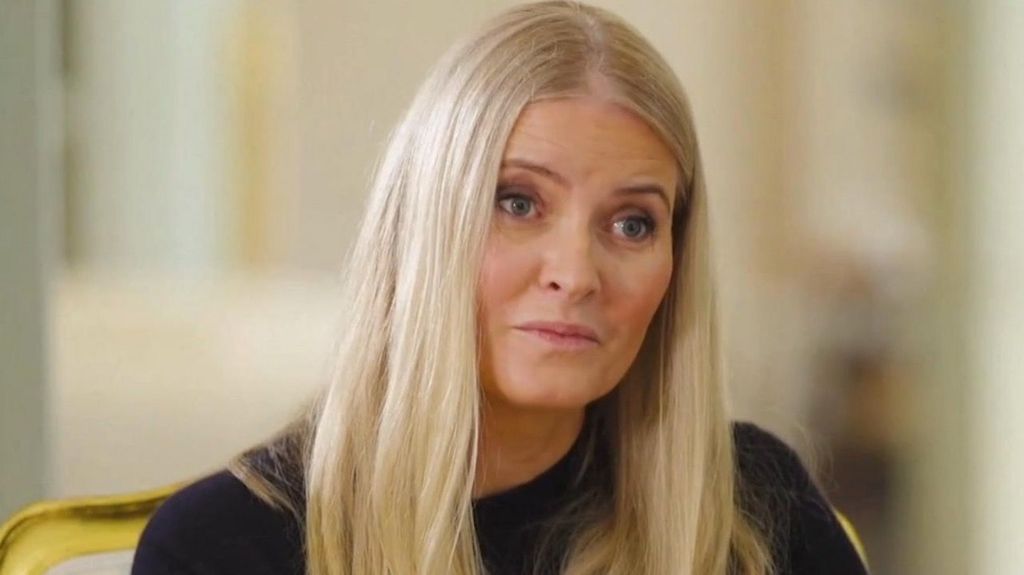
    Oslo’s district court has commenced a landmark seven-week trial against Marius Borg Høiby, the son of Norway’s Crown Princess Mette-Marit, marking one of the most significant criminal proceedings in recent Norwegian history. The 29-year-old faces 38 serious charges including multiple counts of rape, sexual assault, threats with a weapon, domestic violence, drug transportation, and violation of restraining orders.

    The trial begins under extraordinary circumstances, with Høiby having been recently detained again on similar charges to those that initially led to his arrest eighteen months ago. He will participate in the proceedings from custody after police secured a four-week remand order, a decision his defense team intends to challenge.

    Simultaneously, Crown Princess Mette-Marit faces mounting scrutiny following revelations of her extensive communication with convicted sex offender Jeffrey Epstein. Recently published correspondence from the U.S. Department of Justice indicates hundreds of email exchanges between the future queen and Epstein, including evidence of her four-day stay at his Florida residence while he was absent. The crown princess has acknowledged demonstrating ‘poor judgment’ in these interactions.

    The convergence of these scandals has triggered substantial repercussions. The Sex and Society foundation has terminated Mette-Marit’s patronage of their annual Shameless Prize, stating her association with Epstein contradicts their organizational values. Prime Minister Jonas Gahr Støre has publicly urged the crown princess to provide comprehensive clarification regarding the nature and extent of her contacts with Epstein.

    Royal experts suggest these developments will have enduring consequences for the monarchy’s reputation. Caroline Vagle, royal correspondent for See and Hear magazine, noted widespread public disappointment, while historian Ole-Jørgen Schulsrud-Hansen criticized the royal court’s apparent failure to monitor and prevent these inappropriate communications.

    The trial itself operates under strict reporting restrictions, including bans on identifying the four alleged rape victims and prohibiting photographs of the defendant. Despite the royal family’s absence from proceedings—coinciding with the king and queen’s scheduled attendance at the Winter Olympics in Italy—the case has captured national and international attention.

    Høiby, who maintains his innocence regarding the most serious charges while admitting to some lesser offenses, is expected to testify during the proceedings. If convicted, he potentially faces a minimum ten-year prison sentence.

  • Even small EU nations go big on arms production, sending drones to the Ukrainian front and beyond

    Even small EU nations go big on arms production, sending drones to the Ukrainian front and beyond

    NICOSIA, Cyprus — From a modest 5,000-square-meter facility on Europe’s southeastern periphery, an improbable defense manufacturing revolution is underway. Cypriot company Swarmly has deployed over 200 of its H-10 Poseidon drones to Ukrainian artillery units, accumulating more than 100,000 flight hours while providing all-weather targeting capabilities against Russian forces.

    The factory’s constant hum of grinders shaping composite plastics belies its significant output: uncrewed vehicles destined for global clients including Indonesia, Benin, Nigeria, India, and Saudi Arabia. Beyond aerial drones, Swarmly’s secure storage contains marine drones equipped with high-definition cameras and .50-caliber machine guns, representing the cutting edge of naval warfare technology.

    Russia’s invasion of Ukraine has catalyzed a continental defense transformation, with even the smallest EU nations developing indigenous high-tech military capabilities. This strategic shift has positioned Ukraine as an unexpected testing ground and development partner for European drone technology.

    The Baltic states, Denmark, and Greece have similarly accelerated domestic drone and counter-drone programs. Greece’s 25-billion euro military modernization now prominently features unmanned systems, while Lithuania’s VILNIUS TECH consortium advances UAV development and automated mine detection.

    Federico Borsari of the Center for European Policy Analysis notes: “Swarmly and similar companies demonstrate Europe’s private sector commitment to innovating and mass-producing defense items, particularly uncrewed systems.”

    UAVs are fundamentally reshaping modern warfare by providing cost-effective force multiplication. Swarmly’s satellite-guided Hydra marine drone, priced at 80,000 euros, offers the potential to neutralize billion-euro warships—a tactical reality already demonstrated by Houthi attacks in Yemen.

    Fabian Hinz of the International Institute for Strategic Studies emphasizes the low barriers to entry: “UAVs utilize readily available global components, eliminating the need for decades of material science experience or massive industrial investment.”

    This defense renaissance responds to dual pressures: Russian aggression and uncertain NATO relations during the Trump administration. The EU has committed billions through its Security Action for Europe (SAFE) program, with Cyprus—currently holding the EU presidency—set to receive 1.2 billion euros in low-cost loans.

    Cyprus’s emerging defense ecosystem now comprises approximately 30 companies and research centers developing dual-use technologies including robotics, communications networks, and satellite surveillance. Panayiotis Hadjipavlis of Cyprus’ Defense Ministry asserts: “We possess niche capabilities in high-tech products that demand serious consideration”—a message directed at major defense contractors.

    As NATO Secretary-General Mark Rutte recently urged: “Bring your ideas, test your ingenuity, and use NATO as your test bed.” Yet Borsari cautions that drone effectiveness remains contingent on operational conditions, operator training, and logistical support—variables that temper technological advantages on modern battlefields.

  • Haiti’s athletes at the Winter Olympics shine a positive light for a troubled nation

    Haiti’s athletes at the Winter Olympics shine a positive light for a troubled nation

    Against a backdrop of profound national challenges, Haiti is making a symbolic statement at the Milan Cortina Winter Games with two athletes competing under creatively adapted national symbols. The Caribbean nation’s participation comes despite International Olympic Committee intervention that required modification of their competition uniforms designed by Italian-Haitian designer Stella Jean.

    The original design featured Toussaint Louverture, the revolutionary leader who established the world’s first Black republic in 1804. The IOC determined this imagery violated regulations prohibiting political symbolism, prompting Jean to collaborate with Italian artisans to paint over Louverture’s figure while preserving the dramatic charging red horse against a tropical backdrop that remains prominently displayed.

    This Olympic appearance represents far more than athletic competition for a country experiencing severe political instability and gang violence that now controls 90% of the capital, Port-au-Prince. Haiti’s ambassador to Italy, Gandy Thomas, emphasized that presence itself constitutes a powerful declaration: “We may not be a winter country, but we are a nation that refuses to be confined by expectation.”

    The two competing athletes—Richardson Viano (23, slalom) and Stevenson Savart (25, Nordic skiing)—both discovered their Haitian heritage through adoption and subsequently obtained Haitian passports. They receive support through the IOC’s Olympic Solidarity program, with the Haitian Ski Federation having been established following international empathy after the devastating 2010 earthquake.

    Despite modest competitive expectations, both athletes express profound pride in representing Haiti’s resilience. Savart acknowledged he anticipates finishing behind leaders but stated, “Having Haiti visible will give me even more energy.” Their participation has generated excitement among the Haitian diaspora, with Haitian-American Cathleen Jeanty noting the significance of “standing elbow to elbow with your peers” for underrepresented communities.