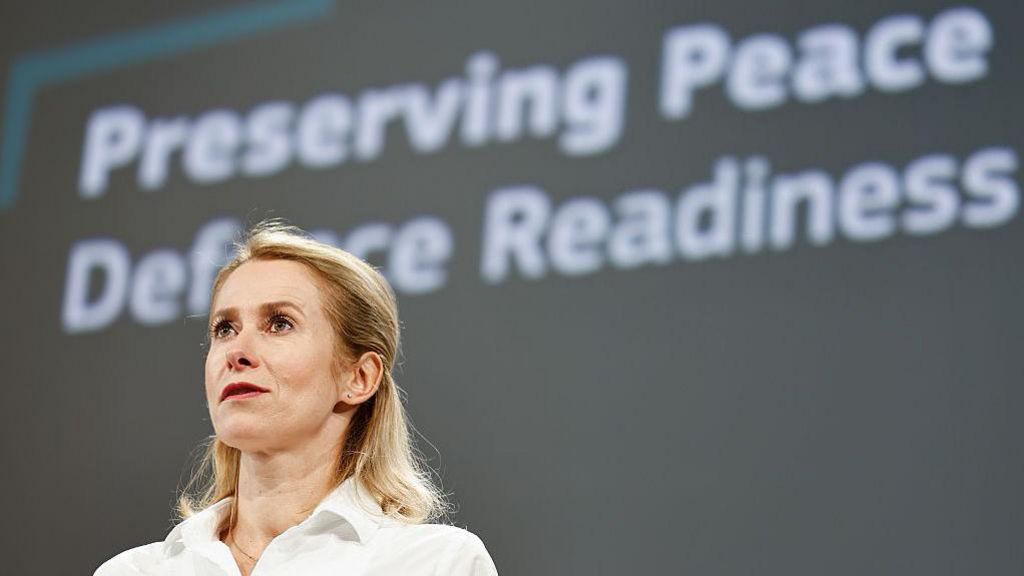
The European Union is ramping up its defence capabilities in response to escalating tensions with Russia, as outlined by EU foreign policy chief Kaja Kallas. Speaking in Brussels, Kallas emphasized that the threat to Europe would persist even after the conclusion of the war in Ukraine. The EU’s comprehensive ‘defence roadmap’ aims to establish a fully operational anti-drone system by the end of 2027 and achieve full defence readiness by 2030. This initiative includes strengthening the EU’s eastern borders and developing European air and space ‘shields’ to counter potential Russian aggression. Kallas highlighted the transformative role of drones in modern warfare, stating that robust drone defences are now essential for all nations. The plan also calls for closing critical capability gaps in air and missile defence through joint development and procurement among member states. European Defence Commissioner Andrius Kubilius underscored the roadmap’s milestones, which are designed to deter Russian aggression, prevent conflict, and maintain peace. The EU’s executive Commission stressed the need for the 27-member bloc to be prepared to respond to high-intensity crises by 2030. The proposal, which requires approval at an upcoming leaders’ summit, has already garnered support from several EU states for a multi-layered ‘drone wall’ to detect, track, and destroy Russian drones. Recent incursions into the airspace of NATO members Poland, Romania, and Estonia have further heightened tensions, with experts suggesting that Russia is testing NATO’s resolve and attempting to sow discord within the alliance. In response, NATO members have bolstered their eastern flank with troops, artillery, and air defence systems. While no cost estimates were provided, Kubilius assured that the investments would not reach ‘hundreds of billions.’ The EU’s defence projects will be closely coordinated with NATO to avoid duplication of efforts.
标签: Europe
欧洲
-
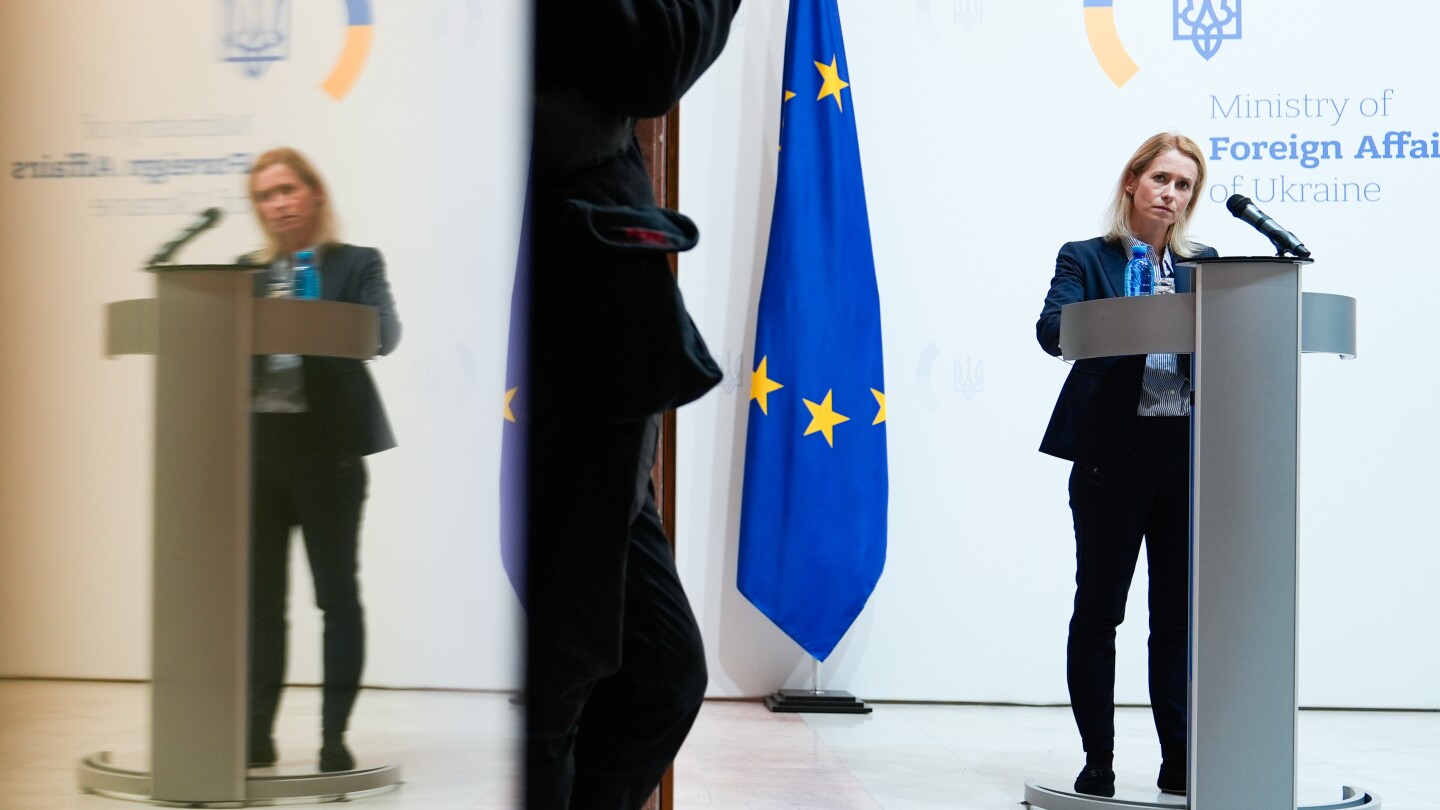
The EU unveils a plan to be ready within 5 years to fend off any Russian attack
In response to escalating concerns over potential security threats, the European Union has introduced a robust defense strategy aimed at fortifying the continent against external attacks by the end of the decade. The plan, announced on Thursday, comes amid growing apprehensions that Russia is actively testing Europe’s defenses. A central component of this initiative is the European Drone Defense Initiative, designed to detect, track, and neutralize unauthorized drones following a series of alarming airspace violations across Europe, particularly near borders with Russia, Belarus, and Ukraine. This initiative is part of a broader framework called Eastern Flank Watch, which seeks to enhance defenses along Europe’s eastern borders, including land, sea, and air domains, as well as counter hybrid threats. The drone defense system is expected to be fully operational by late 2027, with Eastern Flank Watch reaching full capacity by the end of 2028. Additionally, the EU plans to develop separate air and space defense shields. EU foreign policy chief Kaja Kallas emphasized the urgency of bolstering European defense capabilities, stating that while Russia currently lacks the capacity to attack the EU, the threat remains persistent even if the Ukraine conflict ends. The European Commission’s Defense Readiness Roadmap 2030, set to be presented to EU leaders next week, outlines a comprehensive checklist of equipment procurement and deadlines for member states. The plan calls for significant funding, with EU defense spending projected to reach 3.4 trillion euros ($4 trillion) over the next decade. A key aspect of the roadmap is fostering collaboration among member states, with at least 40% of military purchases to be conducted jointly by 2027. The EU also aims to provide security guarantees for Ukraine, recognizing its role as Europe’s first line of defense. Kallas highlighted the goal of establishing a drone alliance with Ukraine by early next year, underscoring the importance of a strong Ukrainian defense industry and military.
-

Italy’s top court blocks extradition of Ukrainian suspect in Nord Stream explosions’ case
In a significant legal development, Italy’s highest court has overturned the extradition of a Ukrainian man, Serhii Kuznietsov, to Germany. Kuznietsov, 49, was arrested on suspicion of orchestrating the 2022 explosions that damaged the Nord Stream gas pipelines, critical infrastructure transporting Russian natural gas to Germany. The Cassation Court in Italy annulled a prior ruling by the Bologna Court of Appeal, which had approved the extradition. The case has now been referred back to the appeal court for reassessment. Kuznietsov’s lawyer, Nicola Canestrini, stated that the court’s detailed reasoning for the decision is yet to be released but is anticipated in the coming weeks. Canestrini also indicated that he is considering requesting Kuznietsov’s release, as the legal grounds for his detention have been invalidated. The explosions, which occurred in September 2022, severely damaged the Nord Stream 1 pipeline and the unused Nord Stream 2 pipeline, both located in the Baltic Sea. German prosecutors allege that Kuznietsov organized the detonation of multiple bombs at significant depths near the Danish island of Bornholm. Kuznietsov, who was detained in August 2023 while vacationing with his family in Italy, has consistently denied involvement, claiming he was serving in the Ukrainian military at the time of the incident. This case has drawn international attention, with Poland also arresting another Ukrainian suspect linked to the explosions, whose extradition remains pending.
-
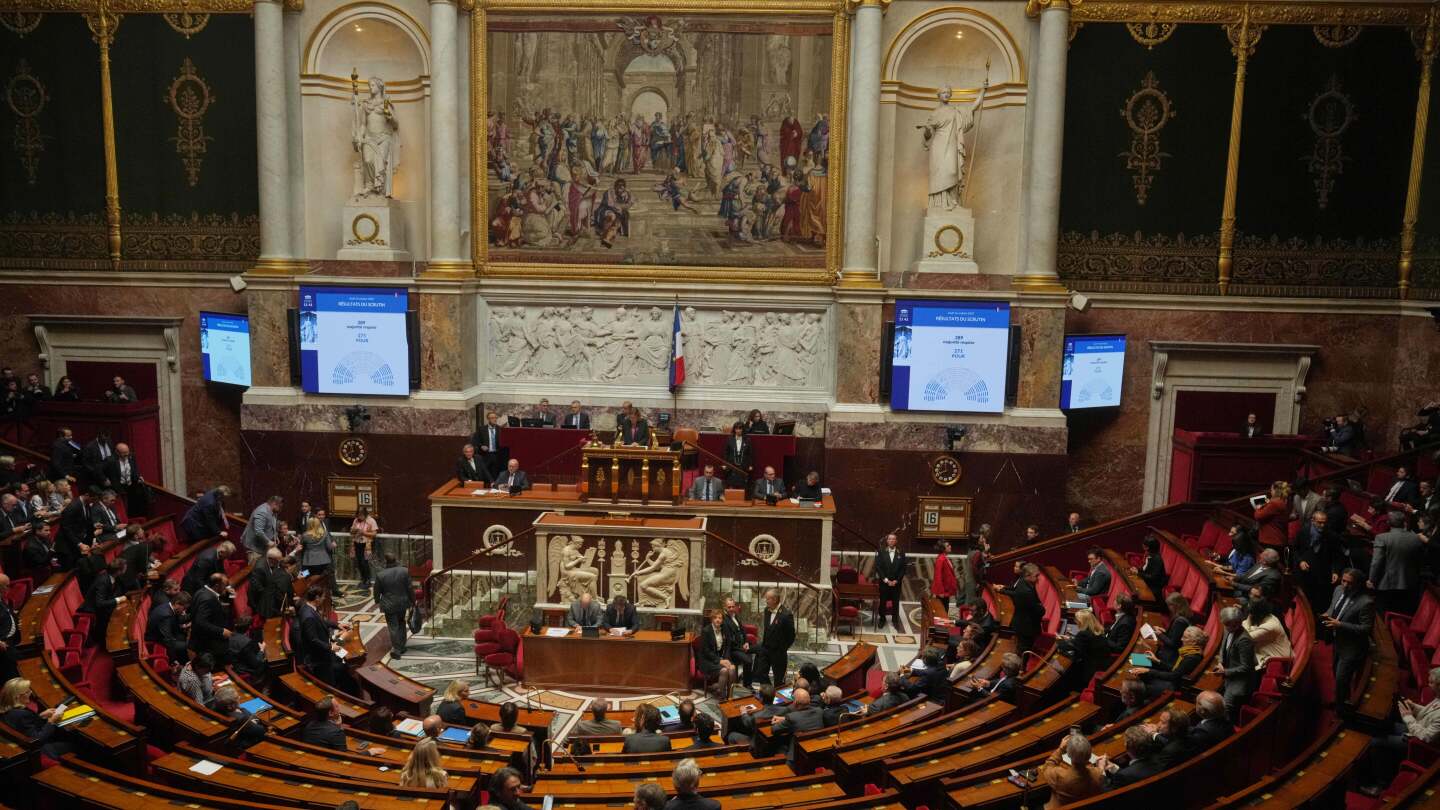
France steps back from the brink as parliament spares the prime minister. For now
France’s political landscape remains fraught with tension as Prime Minister Sébastien Lecornu narrowly survived two no-confidence votes on Thursday, temporarily averting a government collapse. The motions, filed by the hard-left France Unbowed party and the far-right National Rally, fell short of the required 289 votes, securing Lecornu’s position and providing President Emmanuel Macron with a brief respite. However, the underlying challenges persist, as Macron’s minority government continues to navigate a deeply divided parliament where no single bloc holds a majority. This fragmentation has turned every legislative decision into a high-stakes negotiation, with the upcoming budget debate poised to test the government’s resilience once again.
-
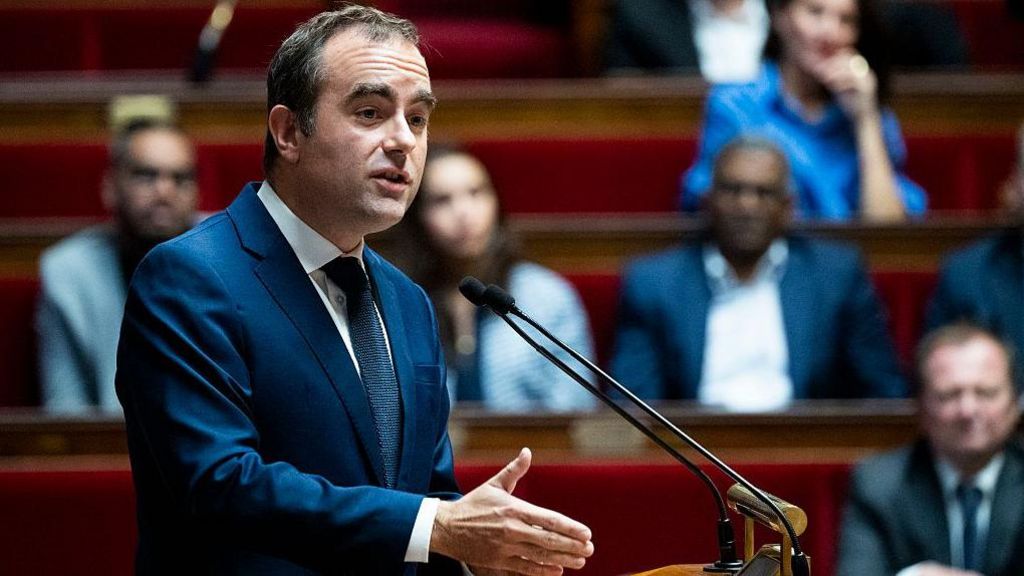
French PM survives confidence votes after freezing Macron’s pension reform
France’s newly appointed Prime Minister, Sébastien Lecornu, has narrowly survived two no-confidence motions tabled by opposition parties, marking a turbulent start to his tenure. In a closely contested vote, a motion led by the far-left fell 18 votes short of the 289 required to oust him. This victory provides Lecornu with temporary respite, allowing him to focus on passing the 2026 budget. However, challenges persist as both the far-left and far-right remain determined to destabilize his government. The Socialists, who supported Lecornu in this round, have signaled they will not be as lenient in future votes. Lecornu’s survival hinges on significant concessions to the left, including freezing President Emmanuel Macron’s key economic reform—raising the retirement age to 64—and relinquishing the use of the constitutional tool 49:3, which allows governments to bypass parliamentary votes. This shift in power reflects the waning influence of Macron’s presidency since his controversial dissolution of parliament in July 2024. Critics argue that these compromises undermine France’s fiscal discipline, jeopardizing efforts to reduce the deficit to 4.7% of GDP by 2026. The political gridlock has fueled public disillusionment, with Macron’s approval ratings plummeting to 14%. Analysts warn that France’s political instability could have far-reaching implications for Europe and beyond, as international observers express concern over the nation’s economic and strategic future.
-
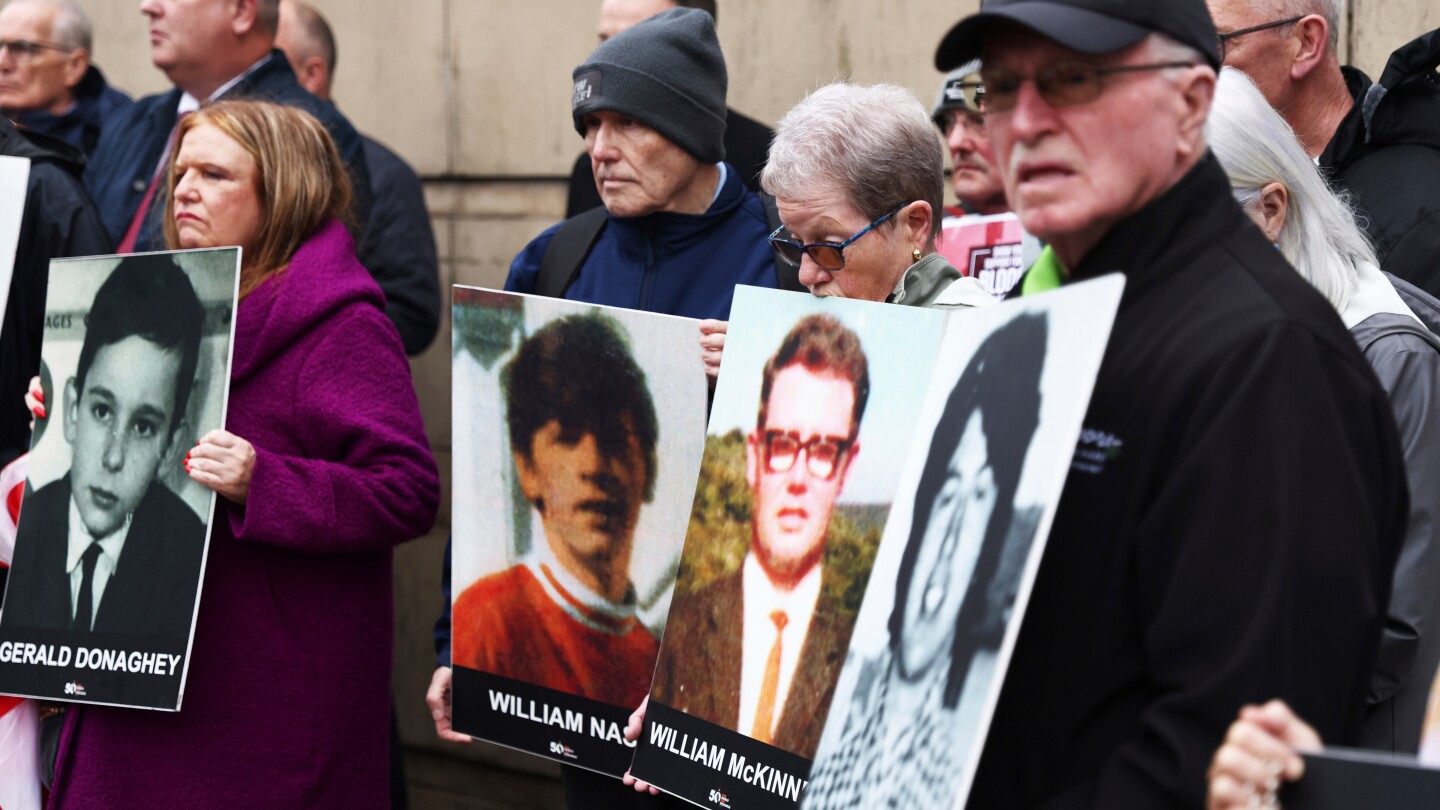
Lawyer urges judge to acquit British ex-soldier in 1972 Bloody Sunday killings in Northern Ireland
In a dramatic closing argument, defense lawyer Mark Mulholland urged a judge to acquit Soldier F, the only British soldier charged in the 1972 Bloody Sunday massacre. Mulholland asserted that the prosecution’s case was ‘fundamentally flawed and weak,’ relying on unreliable evidence from ‘fabricators and liars.’ The former lance corporal, whose identity remains protected, faces two counts of murder and five counts of attempted murder for his alleged role in the Jan. 20, 1972, shooting in Londonderry, also known as Derry, which left 13 dead and 15 wounded. The incident marked one of the darkest chapters in the sectarian violence known as ‘The Troubles.’ Mulholland rested his case without presenting evidence or calling his client to testify, instead challenging the credibility of inconsistent statements from fellow soldiers and fading memories of witnesses. Judge Patrick Lynch denied the defense’s request to dismiss the charges and is set to deliver his verdict on Oct. 23. The trial, held at Belfast Crown Court, has reignited tensions over accountability for the massacre. Families of the victims continue to seek justice, while supporters of army veterans argue that soldiers have been unfairly targeted. The prosecution, led by Louis Mably, contends that Soldier F and his fellow troops opened fire on unarmed civilians fleeing the scene. A 2010 inquiry overturned an earlier exoneration of the soldiers, leading to the eventual prosecution of Soldier F. The defense unsuccessfully sought to exclude hearsay statements from deceased Soldier G and Soldier H, who refused to testify. Soldier F, who pleaded not guilty, maintains he has no ‘reliable recollection’ of the events but insists he acted properly. The case underscores the lingering scars of Northern Ireland’s troubled history, even decades after the 1998 Good Friday peace accord.
-
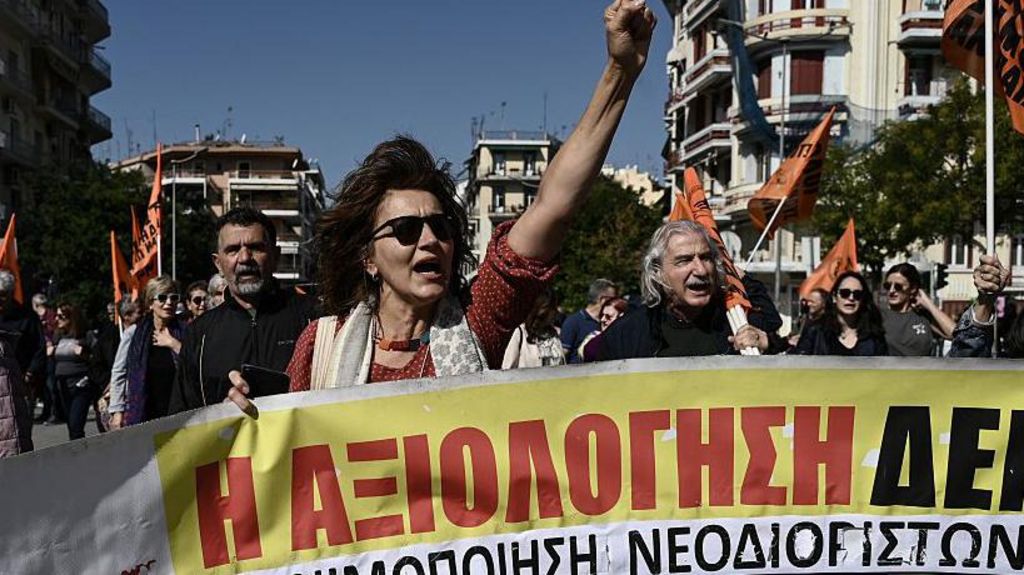
Greece passes labour law allowing 13-hour workdays in some cases
Greece’s parliament has passed a contentious labor reform bill permitting 13-hour workdays, sparking widespread protests and strikes across the nation. The government argues the legislation modernizes labor laws, aligning them with contemporary market demands. However, opposition parties, including the left-wing Syriza, have condemned the bill as a ‘legislative monstrosity’ that undermines workers’ rights. The new law caps annual overtime at 150 hours and maintains the standard 40-hour workweek. It also stipulates that extended workdays are optional, limited to the private sector, and applicable for no more than 37 days annually. The ruling center-right New Democracy party supported the bill, while the center-left Pasok party opposed it, and Syriza abstained. Labor Minister Niki Kerameus defended the reforms, stating they comply with EU working-time rules, which allow flexibility over a 12-month period. The law permits workers to opt for additional hours with a 40% pay increase and protects them from dismissal for refusing overtime. Critics, including public-sector union ADEDY, argue the reforms erode the eight-hour workday, disrupt family life, and legitimize worker exploitation. Greece, still recovering from its decade-long debt crisis, has among the lowest wages and living standards in the EU. The country recently introduced a six-day workweek for certain industries to stimulate economic growth. Despite these measures, Greek employees already work longer hours than most Europeans, earning less and struggling financially. Unemployment remains higher than the EU average, highlighting ongoing economic challenges.
-
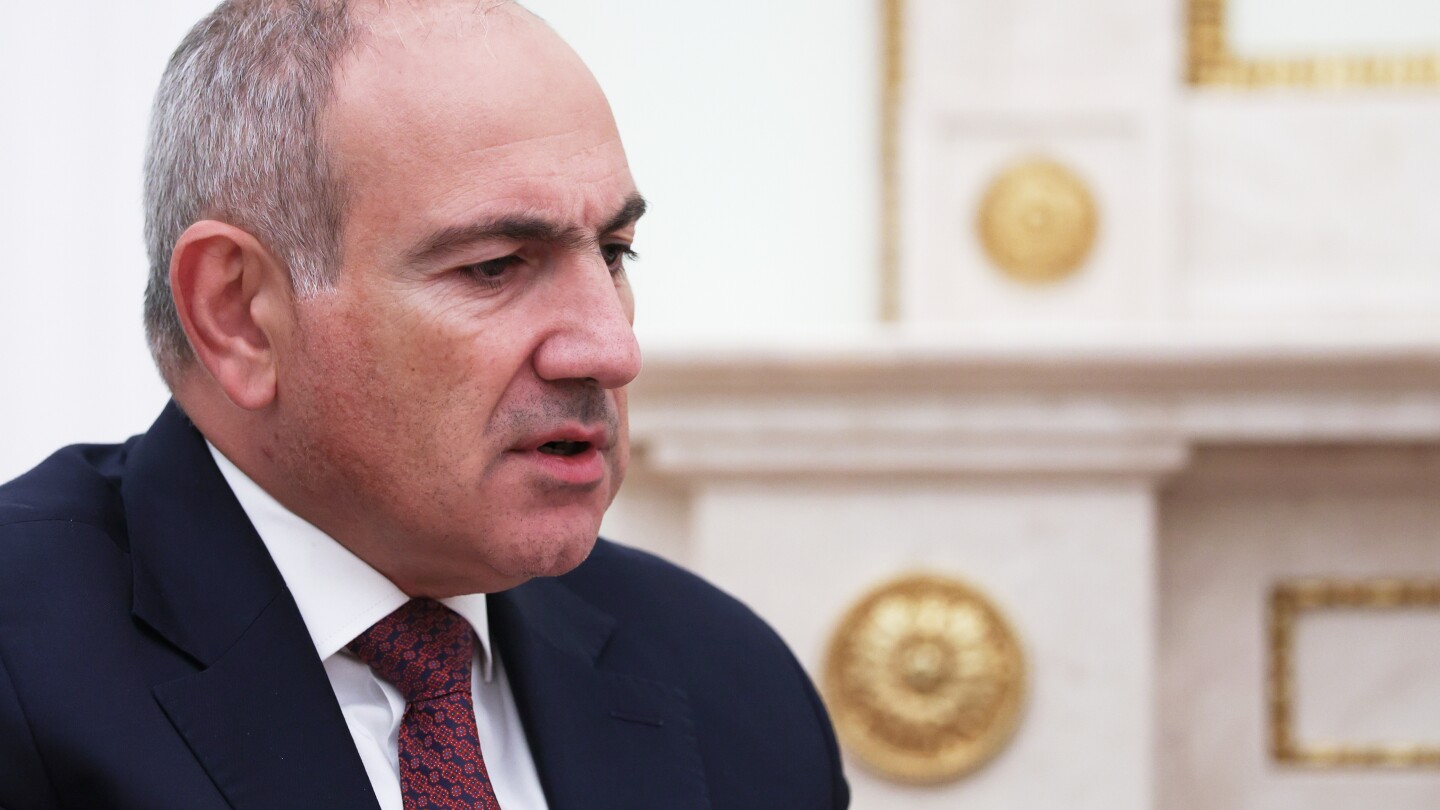
Leading bishop among Armenian clerics arrested in government crackdown on church
In a significant escalation of tensions between the Armenian government and the influential Armenian Apostolic Church, Bishop Mkrtich Proshyan has been charged with coercing citizens into participating in public gatherings, as well as allegations of large-scale theft and obstruction of electoral rights. The charges, announced by Armenia’s Investigative Committee on Wednesday, mark the latest in a series of high-profile arrests targeting critics of Prime Minister Nikol Pashinyan. Proshyan, who is the nephew of the church’s leader, Catholicos Karekin II, was detained alongside twelve other clergymen from his diocese. The church has condemned the arrests as part of a systematic campaign to undermine its activities, stating on social media that there is ‘obvious malicious intent to hinder the normal activities of the church.’ The investigation into Proshyan began in September following accusations from a clergy member that the church pressured its members to join anti-government rallies in 2021. This arrest follows the sentencing of Archbishop Mikael Ajapahyan to two years in prison in June for allegedly calling for the government’s overthrow. Relations between Pashinyan and the church have deteriorated sharply since April 2024, when tens of thousands of demonstrators protested Armenia’s decision to cede control of several border villages to Azerbaijan as part of a broader effort to normalize relations. The church, along with opposition groups like Sacred Struggle, has vehemently opposed these territorial concessions, which have become a focal point of broader grievances against Pashinyan’s administration. The ongoing conflict between Armenia and Azerbaijan, rooted in territorial disputes since the early 1990s, has further complicated the political landscape. In September 2023, Azerbaijan reclaimed full control of the Karabakh region, leading to Armenia’s subsequent handover of border villages. A White House-brokered peace deal signed in August aimed to end decades of conflict, but internal tensions in Armenia continue to simmer.
-

Taylor Swift fans flood German museum to see painting echoing her hit video ‘The Fate of Ophelia’
A German museum has experienced an unexpected surge in visitors, thanks to Taylor Swift’s latest music video. The Hessische Landesmuseum in central Germany has drawn hundreds of additional guests over the weekend, with some traveling from as far as Hamburg, after fans noticed a striking resemblance between an Art Nouveau painting in its collection and the opening scene of Swift’s hit song, “The Fate of Ophelia.” The painting, created by Friedrich Heyser around 1900, depicts Ophelia, a character from William Shakespeare’s “Hamlet,” clad in white and surrounded by white water lilies. Museum spokesperson Susanne Hirschmann confirmed the influx of visitors to German news agency dpa. Museum director Andreas Henning expressed both surprise and delight at the possibility that Swift’s video was inspired by the painting. “This is a great opportunity to attract people who don’t know us yet,” he said. While the museum has attempted to contact Swift to confirm the connection, they have yet to receive a response. Henning added, “I would love to show Taylor Swift the original painting sometime.” The song currently tops the charts in both Germany and the United States.
-
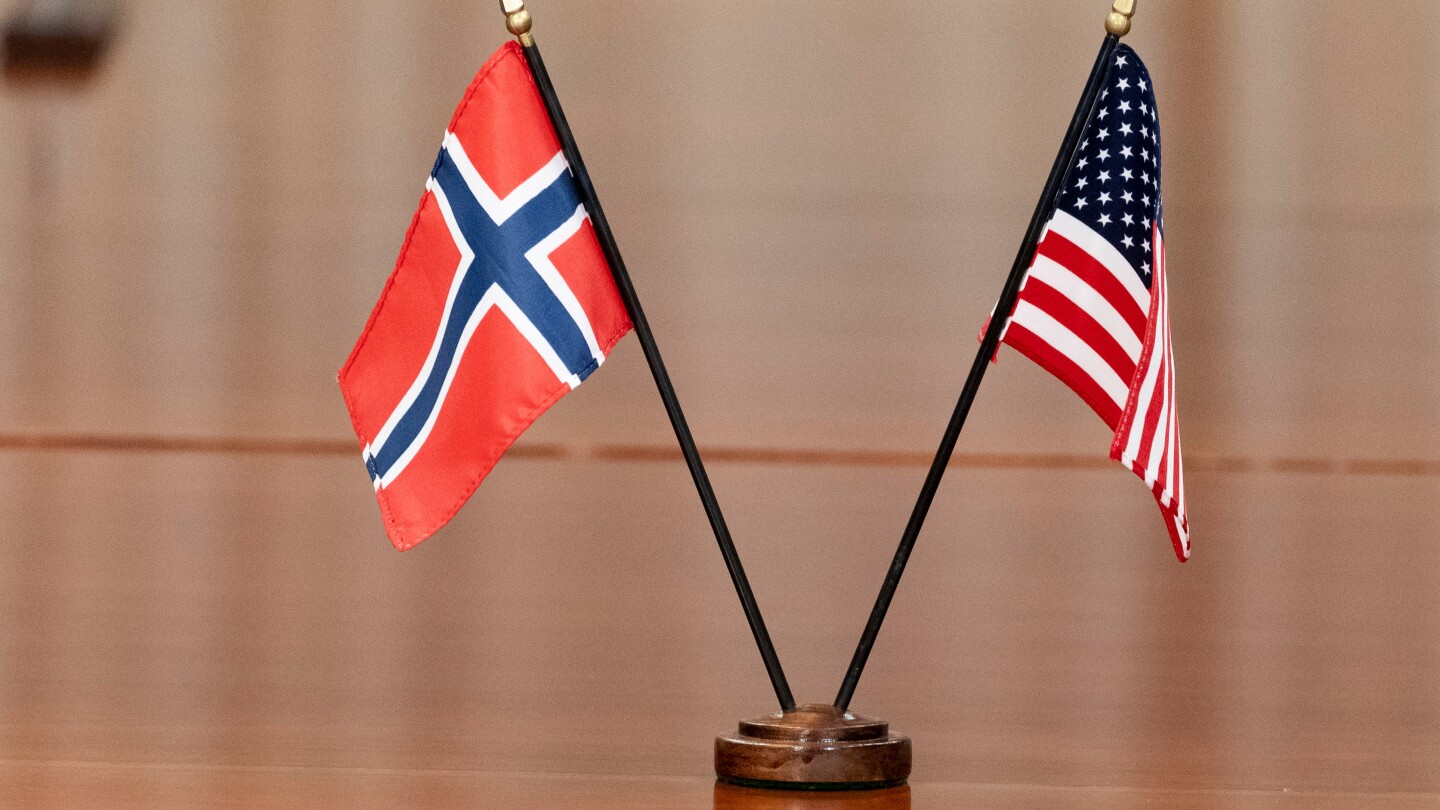
A former security guard at the US Embassy in Norway is convicted of spying for Russia and Iran
A former security guard at the U.S. Embassy in Norway has been convicted of espionage after a court in Oslo found him guilty of spying for Russia and Iran. The 28-year-old Norwegian national, whose identity remains undisclosed, was sentenced to three years and seven months in prison. While he admitted to the facts of the indictment, he denied any criminal wrongdoing. Prosecutors revealed that he had shared sensitive information, including details about embassy diplomats, floor plans, and security protocols, with foreign agents. According to Norwegian state broadcaster NRK, the man’s actions were reportedly influenced by American ties to Israel and the Gaza conflict. His defense attorneys argued that the information he provided was of minimal value, likening his access to that of a janitor. They also questioned the legal definition of espionage under Norwegian law. The defendant was convicted on five espionage charges but acquitted of gross corruption. Both the defense and prosecution are considering appeals, with the latter seeking a harsher sentence than the three-and-a-half-year term imposed. The case marks the second espionage incident involving Norway’s Arctic University, UiT, in recent years. Norway, which shares a 198-kilometer Arctic border with Russia, has tightened restrictions on Russian nationals since the 2022 invasion of Ukraine and is contemplating building a fence along the border.