标签: Europe

欧洲

  • Zelenskyy says US 30-day waiver on Russian oil sanctions is ‘not the right decision’

    Zelenskyy says US 30-day waiver on Russian oil sanctions is ‘not the right decision’

    Ukrainian President Volodymyr Zelenskyy has sharply criticized the United States’ decision to grant a 30-day waiver on Russian oil sanctions, warning that the move would funnel approximately $10 billion to Moscow’s war efforts. Speaking at a joint press conference with French President Emmanuel Macron in Paris on Friday, Zelenskyy characterized the sanctions relief as counterproductive to peace negotiations.

    “This easing alone by the United States could provide Russia with about $10 billion for the war,” Zelenskyy stated. “I believe that lifting sanctions will, in any case, lead to a strengthening of Russia’s position. It spends the money from energy sales on weapons, and all of this is then used against us.”

    The U.S. Treasury Department announced the temporary waiver on Thursday, citing the need to address Russian oil cargoes stranded at sea and mitigate supply shortages resulting from ongoing conflicts in the Middle East. Analysts note that rising oil prices due to production disruptions in the Persian Gulf have inadvertently benefited Russia’s economy, which relies heavily on energy revenues to finance its military operations.

    The decision has drawn international criticism beyond Ukraine’s leadership. German Chancellor Friedrich Merz declared the waiver “the wrong decision” during his visit to Norway, revealing that six G7 members had expressed opposition to sanctions relief during recent discussions. “There is currently a price problem, but not a supply problem,” Merz noted, questioning the underlying motivations for the U.S. action.

    President Macron sought to contextualize the waiver as “limited” and “exceptional,” emphasizing that broader sanctions against Russia remain intact. Meanwhile, U.S.-mediated talks between Moscow and Kyiv remain suspended due to regional instability, though Zelenskyy indicated potential resumption next week.

    In a strategic pivot, Zelenskyy announced that Ukraine has received requests from six nations, including the United States and Jordan, for combat drone assistance. Having emerged as a global leader in drone interceptor technology, Ukraine now offers its battlefield expertise to international partners in exchange for advanced weaponry it cannot domestically produce. Zelenskyy stressed that effective drone defense requires integrated systems beyond interceptors alone, noting “There must be proper, systematic work with radars and with the entire air defense system.”

    The Ukrainian president confirmed that White House approval is pending for a bilateral agreement on producing battle-tested drones, potentially marking a significant advancement in Ukraine’s defense capabilities.

  • Two long-lost episodes of ‘Doctor Who’ have been found. Fans will soon be able to watch them

    Two long-lost episodes of ‘Doctor Who’ have been found. Fans will soon be able to watch them

    In a remarkable discovery for television history, two long-lost episodes from the iconic British sci-fi series “Doctor Who” have been recovered after being missing for nearly six decades. The Film is Fabulous! charity announced the find on Friday, revealing that the 1965 episodes were located among the collection of a deceased film enthusiast.

    The recovered installments, titled “The Nightmare Begins” and “Devil’s Planet,” feature William Hartnell as the original Doctor in adventures against the show’s infamous Daleks. The episodes were found preserved in film cans wrapped in plastic bags and have since undergone professional restoration by BBC archivists.

    This discovery reduces the number of still-missing episodes to 95 from the classic series that originally aired from 1963 to 1989. The loss of these historical television artifacts stems from the BBC’s former practice of discarding or reusing film recordings and video tapes during the 1960s-1980s, a period when broadcasters routinely disposed of content they considered disposable.

    Justin Smith, cinema professor at England’s De Montfort University and chair of Film is Fabulous!, described finding missing “Doctor Who” episodes as “the holy grail of classic TV discoveries.” The charity confirmed the collector’s estate wishes to remain anonymous despite the significance of the find.

    Peter Purves, who played the Doctor’s companion Steven Taylor in 46 episodes, expressed both delight and melancholy at the discovery. “Twenty-seven of mine still are missing, but I’m delighted that two have been found,” the 87-year-old actor told the BBC.

    This marks the first major recovery of lost “Doctor Who” episodes since 2013, when nine installments were discovered in a Nigerian television relay station. The newly found episodes form part of a 12-part storyline, much of which remains missing, though preservationists remain hopeful that additional episodes may surface in private collections.

    The cultural phenomenon of “Doctor Who” has endured through its innovative premise allowing the time-traveling alien protagonist to regenerate into new forms, with Ncuti Gatwa currently portraying the fifteenth incarnation of the Doctor in the series that was revived in 2005 after a 16-year hiatus.

  • Games with loot boxes to get minimum 16 age rating across Europe

    Games with loot boxes to get minimum 16 age rating across Europe

    A sweeping regulatory shift is poised to transform the European gaming landscape as the Pan-European Game Information (PEGI) system announces stringent new age classifications targeting games with loot box mechanics. Effective June 2026, titles incorporating paid random item systems will automatically receive a minimum PEGI 16 rating across 38 participating nations, including the United Kingdom.

    The decision marks a formal recognition of loot boxes—virtual containers purchasable with real or virtual currency that yield randomized rewards—as potential risk factors in game design. This classification overhaul responds to mounting research indicating these mechanics blur boundaries between gaming and gambling behaviors. Prominent franchises utilizing such systems, including EA Sports FC, face significant rating escalations under the new framework.

    PEGI Director Dirk Bosmans affirmed the changes will deliver “more useful and transparent advice” for consumers, particularly parents making informed purchasing decisions. The sentiment finds support from education advocates like Emily Tofield of the Young Gamers & Gamblers Education Trust, who acknowledged the reforms as “a step in the right direction” while advocating for retrospective application to existing games.

    The regulatory adjustment extends beyond loot boxes. Time-limited systems like paid battle passes will now trigger PEGI 12 ratings, while games incorporating non-fungible tokens (NFTs) face automatic PEGI 18 classifications. Titles employing punitive “play-by-appointment” mechanics that penalize player absence will receive PEGI 12 ratings versus PEGI 7 for non-punitive systems. Notably, games lacking player reporting or blocking features will receive the maximum PEGI 18 designation.

    This industry-led initiative emerges against a complex regulatory backdrop. While the UK government declined to amend the Gambling Act 2005 to encompass loot boxes in 2022, citing insufficient evidence of “causative links” to harm, trade body Ukie subsequently issued guidance restricting underage loot box purchases without parental consent. The Advertising Standards Authority concurrently enforces disclosure requirements for loot box presence in game advertisements.

    Academic perspectives underscore the significance of these changes. Dr. Ruijie Wang of Bournemouth University, whose January 2025 study examined gambling risks for youth, noted loot boxes represent “one of the most studied examples of gambling-like mechanics in games.” She emphasized that recognizing them in age ratings helps “reflect the realities of modern game design” and provides parents clearer harm indicators.

    Despite regulatory progress, implementation challenges persist. Games journalist Vic Hood observed that ultimate protection relies on parental engagement with rating systems, noting effectiveness hinges on parents “educating themselves on why these changes were brought in.” The policy currently applies solely to new releases post-June, leaving existing games with loot boxes unaffected—a gap advocates argue diminishes protection for children already engaged with such titles.

  • Poland’s Tusk vows to secure 44B euros in EU defense loans despite president’s veto

    Poland’s Tusk vows to secure 44B euros in EU defense loans despite president’s veto

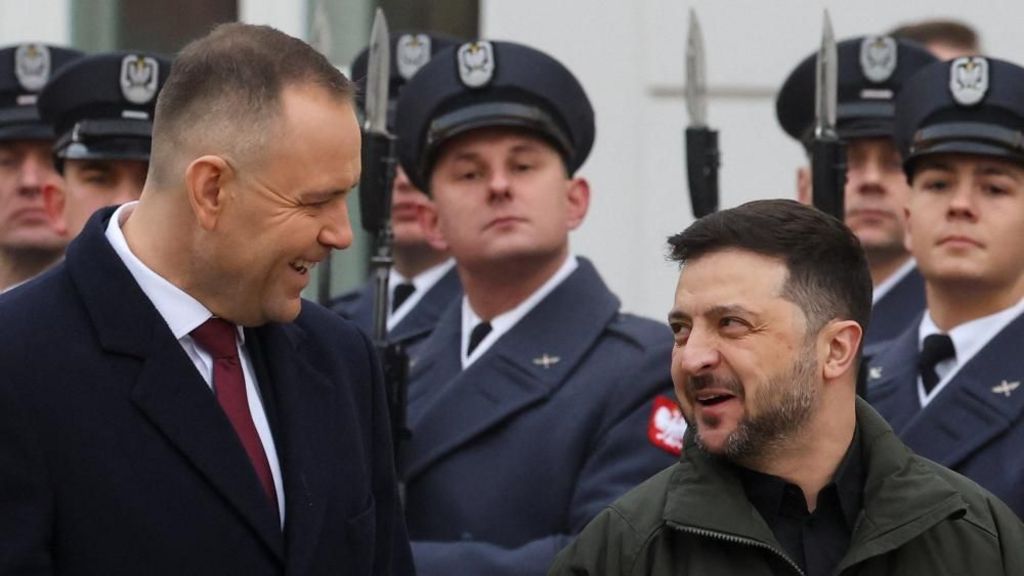
    WARSAW, Poland — A significant political confrontation has erupted in Poland after President Karol Nawrocki vetoed critical legislation that would have enabled the country to access €44 billion in European Union defense loans. The move has triggered a severe governmental crisis and raised questions about Poland’s future defense capabilities amid ongoing regional security concerns.

    Prime Minister Donald Tusk expressed profound dismay at the presidential decision, characterizing the nation’s reaction as one of collective shock. “People are questioning whether this constitutes betrayal, the influence of lobbyists, or simply a failure of rational judgment,” Tusk stated during a Friday address following the veto announcement.

    The blocked funds represent Poland’s allocated portion of the EU’s comprehensive €150 billion Security Action for Europe (SAFE) initiative, designed to strengthen continental defense readiness as American involvement in European security diminishes. Poland was positioned to be the principal beneficiary of this program.

    President Nawrocki, who has established himself as a primary political adversary to Tusk, justified his veto by expressing concerns that participation in SAFE would increase national debt and enhance Polish dependency on Germany. Alternatively, Nawrocki proposed utilizing domestic resources to finance defense modernization—a suggestion dismissed by Tusk as economically unfeasible.

    This confrontation highlights the deepening ideological divide between Poland’s liberal government, which favors EU collaboration, and its nationalist president, who maintains euro-skeptic views and stronger connections to the Trump administration. Despite the setback, Tusk affirmed his government’s determination to pursue the defense funds through alternative avenues, though acknowledging the process would now become “more difficult, slower, and require substantially greater diplomatic effort.

    Adding international dimension to the controversy, the United States has publicly criticized the SAFE program, with American ambassadors to the EU and NATO contending that such European initiatives restrict market access for U.S. defense companies, potentially undermining collective defense through limited competition and innovation suppression.

  • All but 2 of Austria’s 96 glaciers have retreated over last 2 years

    All but 2 of Austria’s 96 glaciers have retreated over last 2 years

    VIENNA — A comprehensive assessment by the Austrian Alpine Club has revealed a concerning environmental trend, with 94 of Austria’s 96 documented glaciers experiencing significant retreat over the past two years. This alarming development underscores the accelerating impact of climate change on the Alpine region’s fragile ecosystems.

    The detailed report identifies the Alpeiner Ferner glacier in Tyrol and the Stubacher Sonnblickkees in Salzburg as the most severely affected, each having receded by over 100 meters (approximately 330 feet). The average retreat across all monitored glaciers exceeded 20 meters (65 feet), with Austria’s largest glacier, the Pasterze, demonstrating visible disintegration at its terminal tongue.

    Scientific analysis attributes this dramatic glacial loss to a combination of unfavorable climatic conditions, including insufficient winter snowfall and unusually warm temperatures. Notably, June of last year registered temperatures nearly 5 degrees Celsius (9 degrees Fahrenheit) above historical averages, creating particularly adverse conditions for glacier preservation.

    Nicole Slupetzky, Vice President of the Austrian Alpine Club, emphasized the growing urgency: ‘With each new measurement cycle, the evidence becomes more compelling. The critical question is no longer whether we can preserve glaciers in their historical form, but how we can effectively mitigate the consequences for our society and environment.’

    The retreat of Alpine glaciers carries profound implications beyond environmental concerns, potentially affecting regional water resources, hydroelectric power generation, agricultural practices, tourism economies, and fundamental landscape characteristics. This pattern mirrors observations across global glacier systems, with neighboring Switzerland—home to Europe’s most extensive glacier network—reporting similar rates of ice loss.

    The Austrian findings represent the eighth-most significant retreat recorded in the 135-year history of glacier monitoring in the country, serving as a potent indicator of climate change’s tangible effects on mountain ecosystems worldwide.

  • Six Nations closing with a title shootout between France, Scotland and Ireland

    Six Nations closing with a title shootout between France, Scotland and Ireland

    The Six Nations Championship culminates in an electrifying final round this Saturday, with France, Scotland, and Ireland all positioned to claim what could become the most memorable tournament conclusion in recent years. Defying all preseason predictions, this gripping championship promises potential last-minute twists as three nations vie for rugby supremacy.

    France currently occupies the pole position, seeking to secure back-to-back titles for the first time since their 2006-2007 campaign. Though level on points with Scotland, the French maintain a substantial advantage in points difference. Ireland trails closely just two points behind, setting the stage for a dramatic Super Saturday.

    The championship structure delivers strategic complexity: France enjoys the advantage of playing the final match at a packed Stade de France against an underperforming English squad, with full knowledge of the precise requirements needed after Ireland hosts Scotland in Dublin four hours earlier.

    Scotland’s stunning 32-21 victory over France last weekend—which shattered French Grand Slam aspirations—catapulted them into title contention. Their most straightforward path to a first championship since the 1999 Five Nations requires defeating Ireland while hoping England can overcome France. However, historical patterns present significant challenges: Scotland hasn’t defeated Ireland since 2017 and hasn’t triumphed in Dublin since 2010.

    Ireland’s clearest route to a third title in four years depends on defeating Scotland while hoping England can deliver an upset against France. The additional complication of bonus points and potential draws creates numerous possible championship scenarios.

    Beyond the championship itself, Ireland and Scotland will contest the Triple Crown, awarded to the home nation that defeats the other three British Isles teams. Ireland has dominated this honor recently, while Scotland last claimed it in 1990.

    This marks the first three-way title decider since the pandemic-affected 2020 tournament, which England ultimately won on points difference after Ireland and France failed to meet scoring requirements.

    The day’s action also features Wales hosting Italy in Cardiff, with Wales attempting to break a 15-match tournament losing streak while Italy seeks to achieve three championship victories for the first time in their Six Nations history.

    Coaches’ perspectives reveal the strategic mindset approaching the finale. France’s Fabien Galthié emphasized focusing forward rather than dwelling on past results, while Scotland’s Gregor Townsend acknowledged the challenge of overcoming Ireland’s historical dominance. Ireland’s Andy Farrell expressed particular motivation to secure the Triple Crown, recognizing Scotland’s formidable form following their exceptional performance against France.

    Match Schedule (March 16):
    – Ireland vs. Scotland (Dublin, 1410 GMT)
    – Wales vs. Italy (Cardiff, 1640 GMT)
    – France vs. England (Paris, 2010 GMT)

  • Draper beaten after controversial hindrance call

    Draper beaten after controversial hindrance call

    A contentious hindrance call overshadowed Daniil Medvedev’s quarter-final victory over defending champion Jack Draper at the Indian Wells Masters, creating a storm of controversy during their tense encounter. The Russian former world number one secured a 6-1, 7-5 win, but the match will be remembered for a dramatic ruling that shifted momentum during the critical second set.

    The controversy erupted at 5-5, 0-15 in the second set when Draper, serving to stay in the set, briefly extended his arms during a rally, signaling his belief that Medvedev’s forehand had landed long. Despite the gesture, the rally continued for seven additional shots before Medvedev netted a backhand. The Russian immediately requested a video review for potential hindrance—a relatively new technology introduced at Masters 1000 events in February 2025.

    After extensive video consultation, chair umpire Aurélie Tourte determined that Draper had made an unusual movement during the rally, awarding the point to Medvedev. The decision triggered immediate boos from the Stadium Court 2 crowd, creating an atmosphere of palpable tension. Though Draper responded with an ace on the next point, he ultimately lost his service game, and Medvedev closed out the match in the following game.

    Despite the on-court tension, both players displayed sportsmanship during their extended net conversation. Medvedev offered apologies, stating, ‘If you’re mad at me, I’m sorry,’ while Draper responded, ‘I’m not at all—but I don’t think it distracted you enough.’

    In post-match comments, Draper refused to blame Medvedev, acknowledging the Russian’s superior performance while questioning the ruling’s severity. ‘I don’t think I did enough to hinder him,’ Draper stated. ‘The rally carried on and I was able to win the point so I don’t think I should have lost the point.’

    Medvedev expressed mixed feelings about the incident, denying accusations of gamesmanship while admitting the gesture caused minor distraction. ‘Do I feel good about it? Not really,’ Medvedev commented, ‘but I also don’t feel like I cheated. I let the referee decide.’

    The match highlighted Draper’s physical struggles following his emotionally draining victory over Novak Djokovic just days earlier. The Briton admitted to exhaustion, stating he ‘ran out of steam’ against one of the world’s top players. With this defeat, Draper will drop from his career-high ranking of 14th to 26th, surrendering the British number one position to Cameron Norrie.

    Medvedev advances to face Carlos Alcaraz in the semi-finals, continuing his quest for a first Indian Wells title after previous final appearances. The incident renews discussion about hindrance rules and video review implementation in tennis, particularly regarding subjective interpretations of player conduct during points.

  • Premiers to tackle cost-of-living and security at UK-Ireland summit

    Premiers to tackle cost-of-living and security at UK-Ireland summit

    Cork hosted the second annual UK-Ireland Summit on Friday, bringing together British Prime Minister Sir Keir Starmer and Irish Taoiseach Micheál Martin alongside delegations of senior ministers from both governments. The high-level meeting focused on enhancing cooperation in energy infrastructure, economic development, and regional security.

    The summit agenda featured substantive discussions on collaborative approaches to addressing cost-of-living challenges, strengthening domestic security frameworks, and improving crisis management coordination. This diplomatic engagement follows Sir Keir’s announcement of £937 million in Irish investment into the UK, expected to generate approximately 850 new jobs through energy connectivity projects.

    Central to the investment package are two major energy initiatives: an interconnector between Northern Ireland and Ireland designed to reduce electricity costs across both jurisdictions, and a separate Wales-Ireland connector capable of powering 570,000 homes. Prime Minister Starmer characterized these developments as evidence of the ‘flourishing cultural, commercial and security ties’ between the nations.

    The bilateral summit mechanism represents a significant ‘reset’ in UK-Ireland relations established shortly after Starmer assumed office, with the inaugural meeting having occurred in Liverpool the previous year. Beyond immediate economic concerns, discussions also addressed long-term strategic cooperation extending to 2030.

    Preceding the Cork summit, Starmer conducted meetings in Belfast with Northern Ireland’s political leadership, focusing on expediting financial support from the Autumn Budget to address energy affordability. The Prime Minister additionally engaged with business leaders, youth representatives from the Ireland-UK youth forum, and attended a cultural event at Cork City Hall, where some protesters demonstrated with Iranian and Palestinian flags.

  • Ancient fort scrambler bike damage ‘disrespectful’

    Ancient fort scrambler bike damage ‘disrespectful’

    An Grianán of Aileach, a protected hilltop fort in County Donegal dating back to the 9th century BC, has suffered significant ground damage from unauthorized scrambler bike activity within its ancient walls. The incident, occurring between March 6th and 9th, has prompted an official investigation by Ireland’s Office of Public Works and local gardaí.

    Local historian Dessie McCallion condemned the act as profoundly disrespectful, stating the ancient monument is not a playground. While the stone structure itself remains intact, the ground surface inside the fort sustained noticeable damage from the powerful bikes.

    Residents living near the historically significant site expressed both concern and bewilderment. Photographer Jacqui Devenney, who frequently witnesses visitors including wedding parties at the location, emphasized that the vandals likely failed to comprehend the site’s historical importance. Neighbor Mary McCallion noted that while the damage is repairable, the mindset behind such actions remains incomprehensible.

    Designated a National Monument, An Grianán of Aileach represents one of Ireland’s most ancient sites with evidence of fortification dating back to 1100-800 BC. The current stone structure served as a ceremonial center for the medieval O’Neill clan and underwent significant restoration in the 1870s.

    Sinn Féin councillor Jack Murray confirmed that descriptions of those involved have been provided to authorities, expressing hope that those responsible will be held accountable. The incident has reignited discussions about improved public education regarding Ireland’s protected historical sites, with some historians comparing the fort’s significance to that of the Hill of Tara.

  • Gay Muslim influencer hosts inclusive Ramadan meal and calls for acceptance across faiths

    Gay Muslim influencer hosts inclusive Ramadan meal and calls for acceptance across faiths

    In a powerful display of solidarity, Berlin-based influencer Ali Darwich is redefining religious inclusivity through his groundbreaking social advocacy. The 33-year-old German of Palestinian and Lebanese descent, known on Instagram as @alifragt, recently hosted an interfaith iftar dinner that brought together Muslims, Christians, immigrants, Germans, and LGBTQ+ individuals to break the Ramadan fast collectively.

    Darwich has cultivated a rapidly expanding digital following by highlighting the complex realities facing queer Muslims in contemporary Germany. Through his platform, he addresses the profound isolation many experience when rejected by their families, particularly during traditionally communal holidays like Ramadan. His message resonates deeply amid concerning statistics: 2024 data reveals a disturbing 40% surge in anti-LGBTQ+ violence across twelve German states compared to 2023 figures, as documented by the Association of Counseling Centers for Victims of Right-Wing, Racist and Antisemitic Violence.

    The influencer’s personal journey underscores his activism. His coming out several years ago triggered familial rejection, including a six-month estrangement from his mother and exclusion from family celebrations. This experience motivated his current mission: creating alternative support networks for those facing similar marginalization.

    The inclusive iftar, hosted at the Berlin home of fellow influencer Randa Weiser (@randa_and_the_gang), featured traditional Middle Eastern cuisine including freekeh soup, spiced rice with almonds and raisins, grilled chicken, and assorted desserts. The gathering represented remarkable diversity, with attendees hailing from Jordan, Lebanon, Morocco, Turkey, Chechnya, Syria, Iran, and Peru.

    Despite receiving some online criticism for her inclusive stance, Weiser maintains that being Muslim and LGBTQ+ are not mutually exclusive identities. The event attracted numerous content creators who documented the celebration across social platforms, amplifying its message of acceptance.

    Among attendees, Syrian artist and belly dancer Haidar Darwish (@thedarvishofficial) emphasized the importance of resilience: ‘No matter how much hate others show, we can respond with greater love through self-belief and ally support.’ Both Darwich and his collaborators emphasize that religious devotion and queer identity can coexist harmoniously, advocating for unconditional acceptance within all faith communities.