标签: Asia

亚洲

  • Chinese EVs, batteries gain world market share as Trump backs oil

    Chinese EVs, batteries gain world market share as Trump backs oil

    China has solidified its position as the undisputed leader in clean-energy supply chains, capturing approximately 70% of both the global electric vehicle and battery markets in 2025. This remarkable dominance comes as U.S. energy policy under former President Donald Trump continues to prioritize traditional oil and gas resources, creating a stark contrast in global energy strategies.

    According to the China New Energy Vehicle Industry Development White Paper (2026) jointly published by the Beijing-based Yiwei Institute of Economics (EVTank) and the China Battery Industry Research Institute, China accounted for 70.3% of global new-energy vehicle sales last year. Global sales reached 23.54 million units, representing a significant 29.1% year-on-year increase.

    The report reveals divergent trends across major markets. European EV sales surged 30.5% to 3.77 million units, while the United States experienced minimal growth at just 1.72%, reaching 1.60 million units. The U.S. market stagnation was largely attributed to expired federal tax credits, with monthly sales dropping to approximately 80,000 units in the final quarter of 2025 and market penetration remaining at 9.6%.

    China’s supremacy extends to the power-battery sector, where Chinese companies commanded 69.4% of global installations in the first eleven months of 2025. Data from South Korea’s SNE Research shows six Chinese firms ranking among the world’s top ten suppliers, with CATL leading at 38.2% market share, followed by BYD at 16.7%.

    This shifting balance has prompted experts like Dang Wang, a research fellow at Stanford University’s Hoover Institution, to argue that global energy and manufacturing dynamics are decisively tilting toward China. In a New York Times opinion piece titled “Trump Is Obsessed With Oil, But Chinese Batteries Will Soon Run the World,” Wang contends that China’s electrification strategy is fundamentally reshaping global competition.

    The geopolitical landscape continues to evolve as nations adopt different approaches to Chinese EV imports. While the U.S. maintains 100% tariffs and the EU has implemented anti-subsidy duties ranging from 17.4% to 38.1%, Canada recently reduced its tariffs to 6.1% and increased import quotas. The United Kingdom, post-Brexit, has never imposed additional tariffs on Chinese EVs.

    Market projections indicate sustained growth, with global new-energy vehicle sales expected to reach 28.5 million units in 2026 and 42.7 million by 2030, potentially exceeding 40% market penetration worldwide.
  • Campaigning starts for Bangladesh’s first national election after Hasina’s ouster

    Campaigning starts for Bangladesh’s first national election after Hasina’s ouster

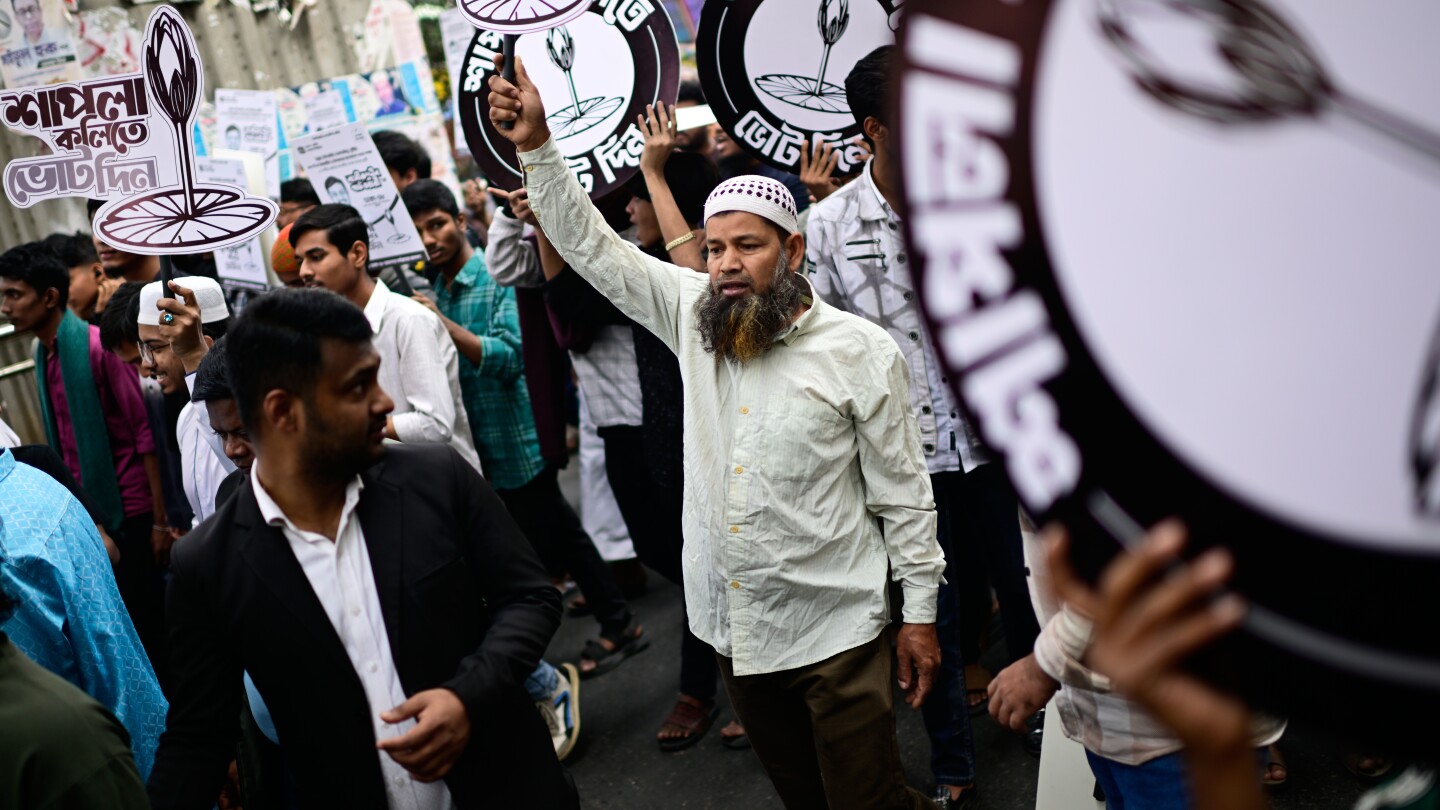
    DHAKA, Bangladesh — Bangladesh has commenced official campaigning for its first general elections since the 2024 uprising that culminated in the removal of long-serving Prime Minister Sheikh Hasina. The February 12 parliamentary vote represents a historic turning point for the South Asian nation, occurring under an interim administration led by Nobel Peace Prize recipient Muhammad Yunus.

    The electoral landscape has been fundamentally reshaped by the exclusion of Hasina’s formerly dominant Awami League party, which the interim government banned from participation. This development has created an unprecedented political vacuum, with the historically influential Bangladesh Nationalist Party (BNP) and a ten-party alliance led by the Islamist Jamaat-e-Islami organization emerging as primary contenders.

    Adding to the complex political dynamic is the National Citizen Party (NCP), a new political entity formed by student leaders who played instrumental roles in the July 2024 uprising. The alliance between Jamaat-e-Islami—long criticized by secular groups for challenging Bangladesh’s foundational secular principles—and the progressive NCP demonstrates the unusual political realignments characterizing this election.

    Tarique Rahman, chairman of the BNP and son of recently deceased former Prime Minister Khaleda Zia, has returned from seventeen years of exile in the United Kingdom and is widely perceived as a frontrunner for the premiership. Rahman commenced his campaign in Sylhet with plans for nationwide rallies, capitalizing on substantial support rooted in his mother’s political legacy.

    The interim government has repeatedly committed to ensuring peaceful and credible elections despite concerns about law and order following the violent crackdown that resulted in hundreds of casualties during the uprising. Yunus assumed leadership three days after Hasina departed for India on August 5, 2024.

    A distinctive feature of this electoral process involves a concurrent national referendum on the July National Charter, a proposed framework seeking constitutional reforms that would establish term limits for legislators, enhance presidential authority to counterbalance the prime minister’s power, and implement measures against corruption and money laundering. While the charter currently remains nonbinding, its supporters advocate for constitutional incorporation through the referendum process.

  • Rising coal demand overshadows Southeast Asia’s transition to renewable energy

    Rising coal demand overshadows Southeast Asia’s transition to renewable energy

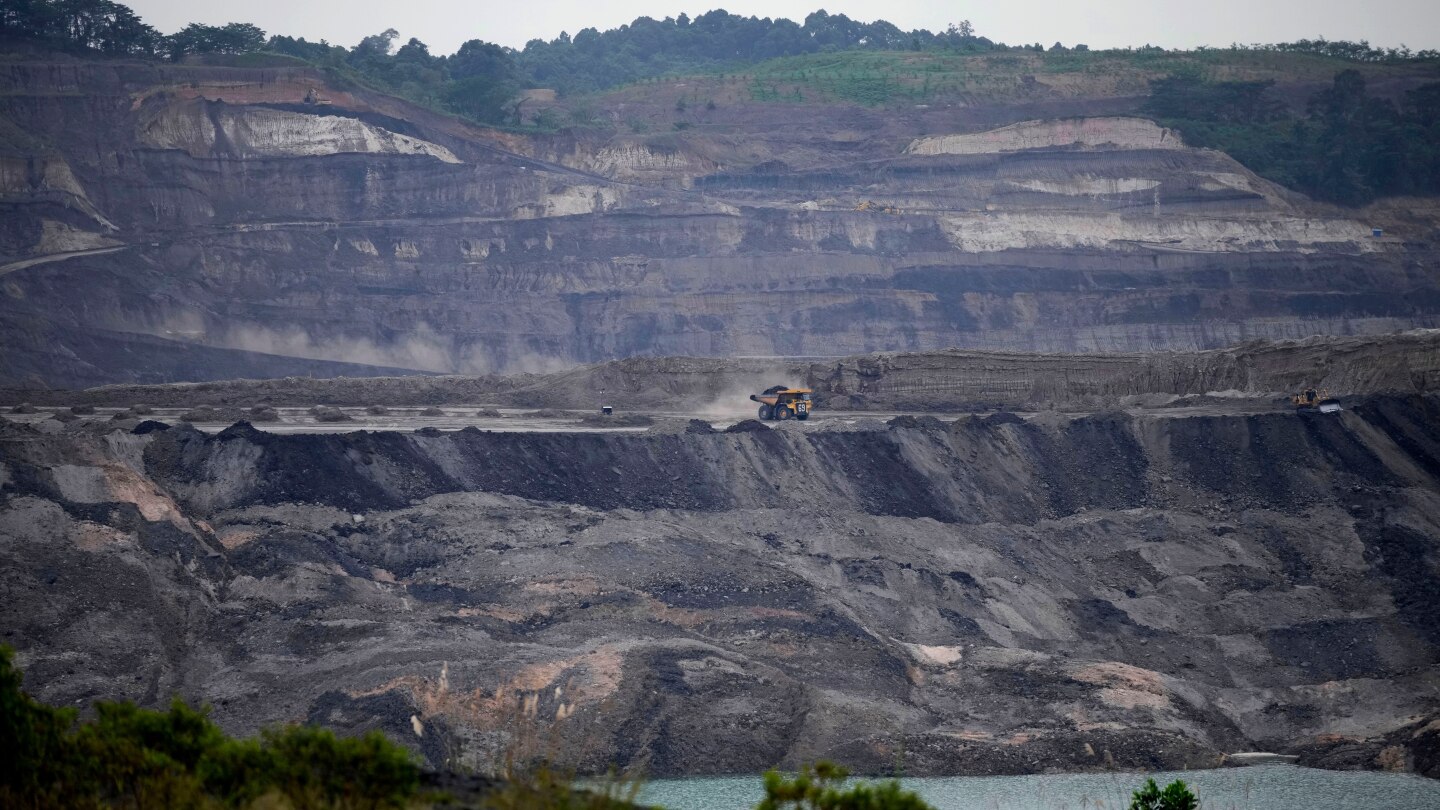
    Southeast Asia has emerged as the world’s fastest-growing coal consumption region, creating significant obstacles to global carbon reduction initiatives. According to the International Energy Agency’s latest findings, regional coal demand continues to escalate at over 4% annually through 2030, primarily driven by Indonesia and Vietnam’s expanding electricity requirements across their combined population exceeding 600 million.

    This upward trajectory casts substantial doubt on the viability of the $15.5 billion Just Energy Transition Partnerships (JETP) established in 2022 to facilitate renewable energy transitions. The political landscape has further complicated these efforts, with potential U.S. policy reversals under the Trump administration adding another layer of uncertainty to climate change mitigation strategies.

    Coal currently generates over one-third of Southeast Asia’s electricity, positioning the region as the world’s third-largest coal consumer after China and India. While global coal demand shows signs of plateauing, Southeast Asia moves counter to this trend due to compelling economic and energy security considerations.

    Katherine Hasan, an analyst at the Centre for Research on Energy and Clean Air, encapsulates the regional dilemma: “We’re standing on two opposite grounds—wanting to build clean energy, but not letting go entirely of coal.”

    Indonesia, the world’s largest coal exporter and Southeast Asia’s biggest carbon emitter, has notably reversed its climate commitments. The nation abandoned its pledge to phase out coal by 2040, with Special Climate Envoy Hashim Djojohadikusumo explicitly stating: “There will be no phase-out of fossil fuels. We’re sticking with a phase-down.” This policy shift was demonstrated when Indonesia’s attempt to retire a West Java coal plant collapsed last month.

    Vietnam presents a contrasting yet equally complex scenario. The nation has achieved remarkable solar capacity expansion—growing from 4 megawatts in 2015 to 16 gigawatts currently—with ambitious targets reaching 295 gigawatts by 2050. Despite these renewable energy advances, Vietnam recorded unprecedented coal imports exceeding 65 million metric tons in 2025, reflecting concerns about power reliability after 2023’s drought-induced shortages caused $1.4 billion in economic losses.

    Energy infrastructure limitations present additional challenges. Vietnam’s power grid requires approximately $18 billion in upgrades by 2030 to accommodate renewable expansion, while current funding covers only a fraction of this need. The region’s public sentiment increasingly favors delaying coal abandonment until 2030 or 2040, prioritizing immediate energy security over climate considerations.

    As Putra Adhiguna of the Energy Shift Institute observes, “JETP was basically a brute force attempt to do a transition. Governments were trying to bulldoze through… But fundamentally there are things that take a bit of time and political commitment to happen.” With Indonesia canceling coal plant retirements and potential U.S. withdrawal from JETP, the initiative’s momentum appears increasingly uncertain, leaving Southeast Asia’s climate future hanging in the balance.

  • Cambodia will send 73 online scam suspects to South Korea

    Cambodia will send 73 online scam suspects to South Korea

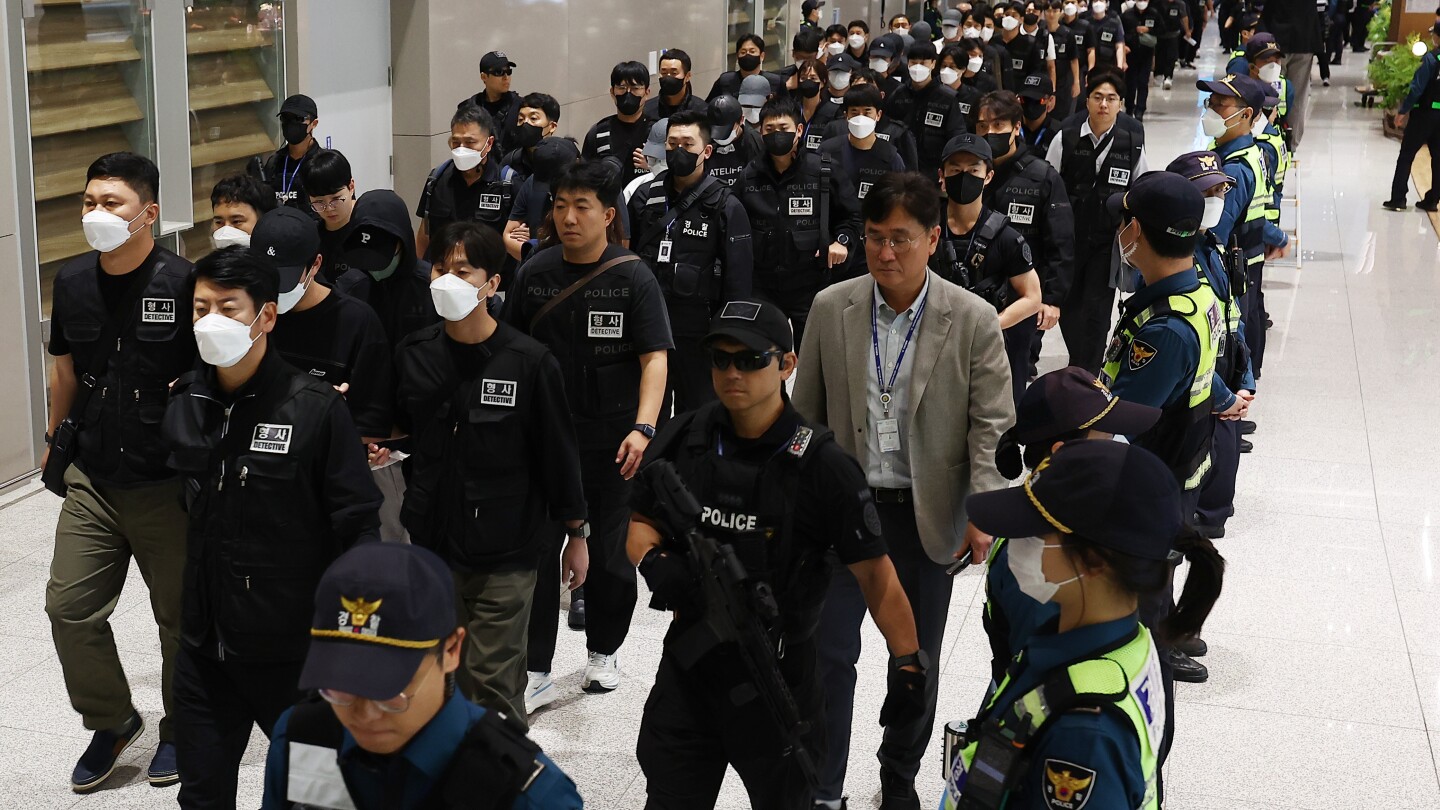
    SEOUL, South Korea – In a significant international law enforcement operation, Cambodia is set to repatriate 73 South Korean nationals detained for their alleged involvement in sophisticated online scam operations. This constitutes the largest single repatriation of Korean criminal suspects from overseas jurisdictions to date.

    The suspects, comprising 65 men and 8 women, are accused of orchestrating financial scams that defrauded their compatriots of approximately 48.6 billion won (equivalent to $33 million). These individuals were among 260 South Koreans apprehended during Cambodia’s recent intensified crackdown on cybercrime compounds.

    This crackdown gained momentum following tragic events last summer that sparked public outrage in South Korea. The death of a Korean student, who was reportedly forced into labor at a Cambodian scam compound and subjected to torture and physical abuse, prompted decisive government action. In response, South Korea dispatched a high-level delegation to Cambodia in October to coordinate a bilateral response to these criminal networks.

    According to official statements, South Korean authorities will deploy a chartered aircraft to transport the suspects back to Seoul, with arrival expected on Friday. Upon landing, all individuals will be immediately transferred to investigative agencies for formal processing.

    The phenomenon of cybercrime has seen alarming growth across Southeast Asia, particularly in Cambodia and Myanmar. Criminal organizations have established operations where trafficked foreign nationals, often lured by deceptive job offers, are compelled to execute romance and cryptocurrency scams under conditions resembling modern slavery. United Nations estimates indicate that global victims of such scams suffered financial losses between $18 billion and $37 billion in 2023 alone.

    Since October, approximately 130 Korean suspects have been returned from Cambodia, with fewer than 30 additional individuals repatriated from Laos, Vietnam, Thailand, and the Philippines combined. Following Friday’s operation, around 60 South Korean nationals will remain in Cambodian detention awaiting repatriation. South Korean officials previously estimated that approximately 1,000 of its citizens were involved in scam centers throughout Cambodia, including potential victims of forced labor.

    South Korean authorities have committed to continuing their collaborative international efforts to combat cybercrimes targeting their citizens worldwide.

  • Alex Honnold is climbing Taipei 101 with no ropes, live on TV. It’s drawing excitement — and concern

    Alex Honnold is climbing Taipei 101 with no ropes, live on TV. It’s drawing excitement — and concern

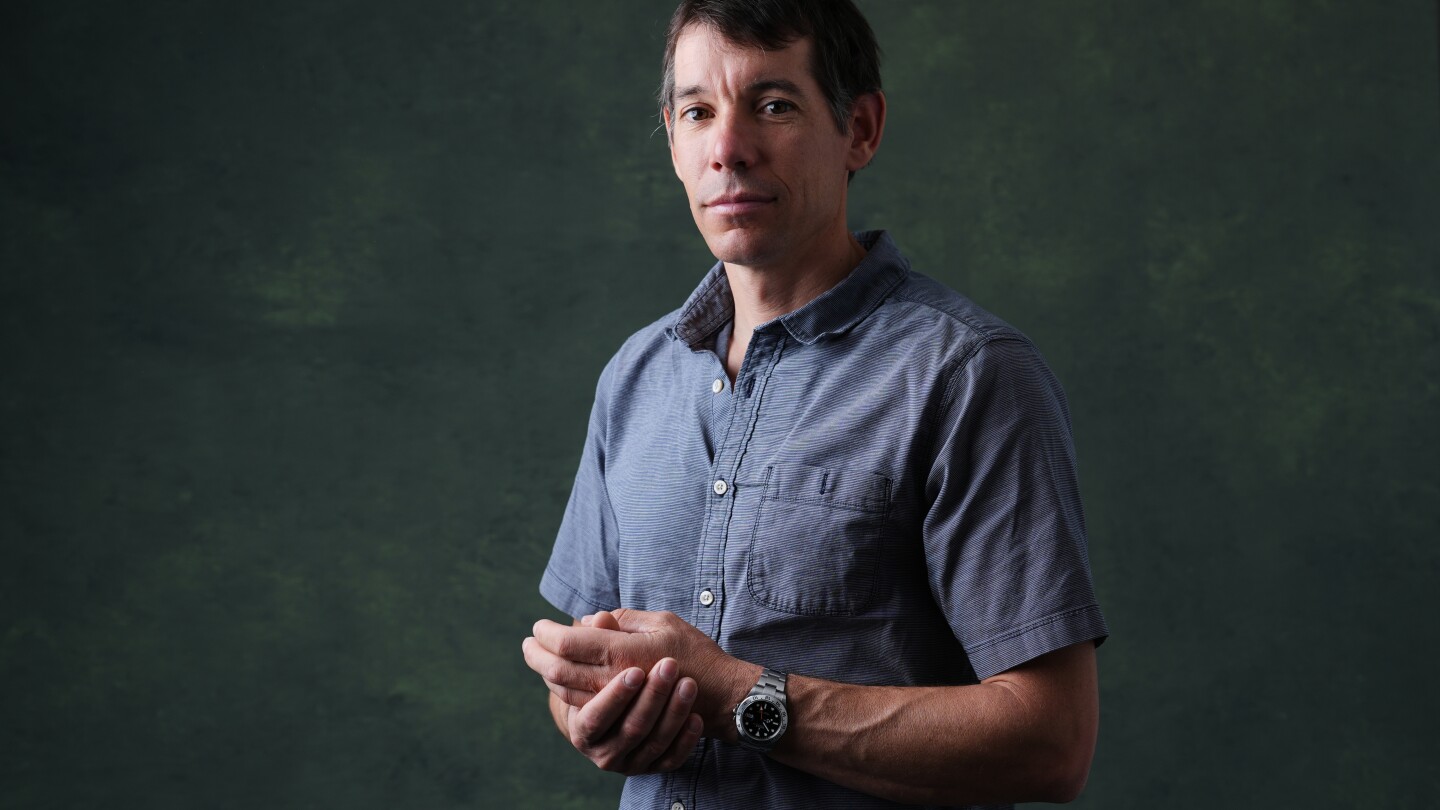
    TAIPEI — In an unprecedented feat of human endurance and skill, professional rock climber Alex Honnold is poised to undertake a free solo ascent of Taipei 101, the iconic 1,667-foot skyscraper that dominates Taiwan’s capital skyline. The live broadcast event, scheduled for Saturday morning local time, marks a groundbreaking moment in extreme sports broadcasting and has ignited complex ethical debates surrounding high-risk athletic endeavors.

    Honnold, whose legendary ropeless climb of Yosemite’s El Capitan was immortalized in the Academy Award-winning documentary “Free Solo,” has trained extensively for this urban climb. The 101-story structure presents unique challenges, with its most demanding section comprising 64 floors of steep, overhanging climbing through the building’s distinctive “bamboo box” design segments. Each eight-floor section concludes with a balcony where Honnold can briefly rest during his anticipated two-hour ascent.

    Event producer Plimsoll Productions has implemented extensive safety measures for the broadcast, including professional weather monitoring, a 10-second broadcast delay, and four roped camera operators who will simultaneously document the climb and serve as safety observers. Executive James Smith emphasized that all crew members are trusted climbing professionals familiar with Honnold’s methods and prepared to assist if complications arise.

    The ethical dimensions of broadcasting such high-risk athletic performance have drawn scrutiny from media ethics experts. Subbu Vincent of Santa Clara University emphasized the necessity of the broadcast delay as a crucial ethical safeguard, noting that transmission must immediately cease should any accident occur. Additional concerns center on the potential influence on impressionable viewers, particularly following several recent fatalities in both free solo climbing and the dangerous trend of “roof-topping.”

    Despite these concerns, the climbing community has largely expressed support for Honnold’s endeavor. Taiwanese climber Chin Tzu-hsiang described the event as the fulfillment of a shared dream among local climbers who have long admired the iconic structure. Honnold himself has characterized the climb as occupying a “perfect sweet spot”—technically engaging without being extreme—though he will become the first person to attempt the ascent completely without ropes.

    French climber Alain Robert previously scaled Taipei 101 with ropes in 2004 during the building’s inauguration, requiring nearly four hours to complete the climb under challenging weather conditions while managing injuries. Honnold’s attempt represents not only a athletic milestone but a cultural moment that tests the boundaries of how extreme sports are documented and consumed by global audiences.

  • US sanctions six Palestinian aid groups it accuses of ties to Qassam Brigades

    US sanctions six Palestinian aid groups it accuses of ties to Qassam Brigades

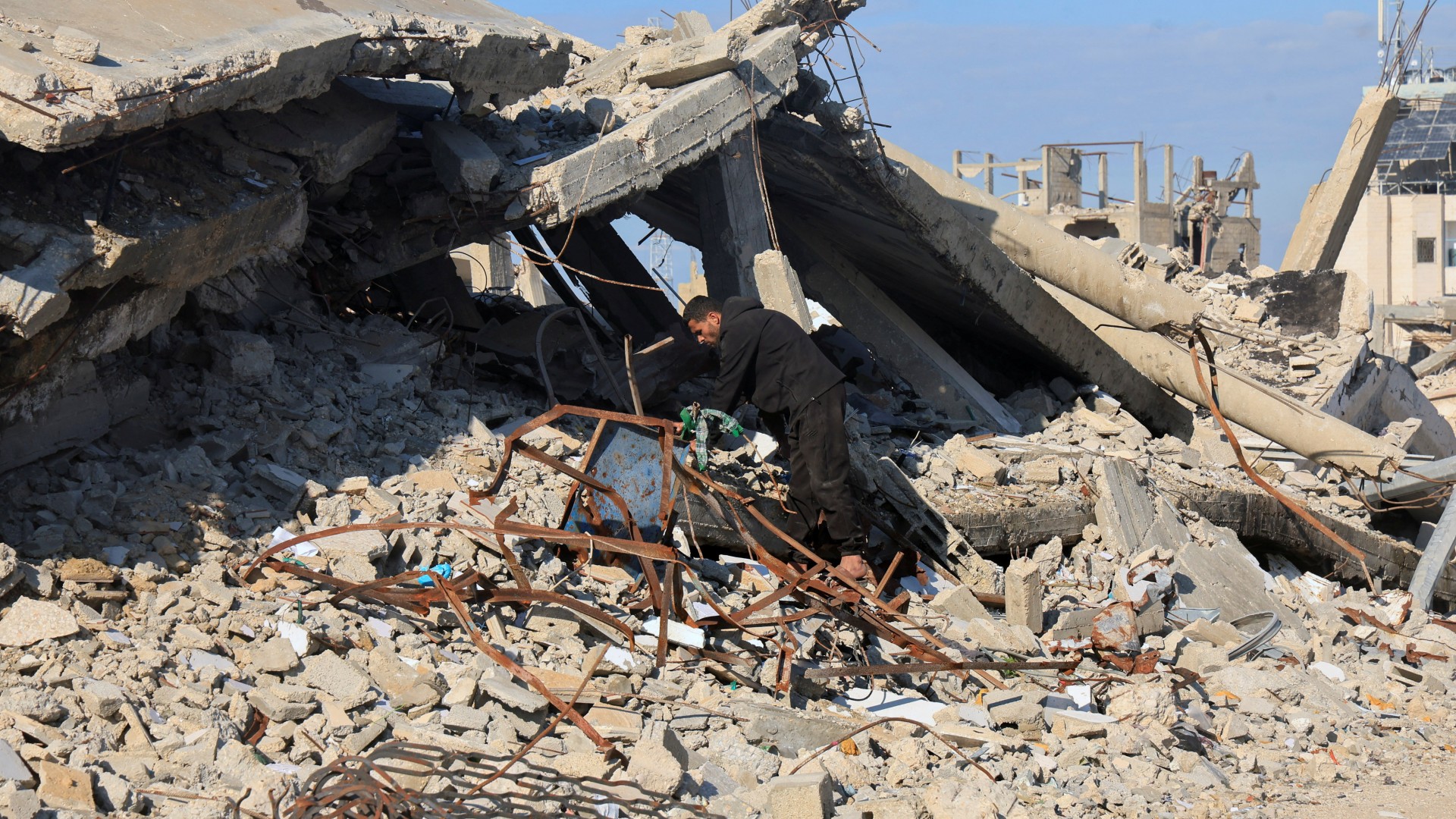
    In a significant move targeting Hamas’s financial infrastructure, the U.S. Treasury Department imposed sanctions on six Palestinian humanitarian organizations operating in Gaza on Wednesday. The designated entities—Waed Society, Al-Nur, Qawafil, Al-Falah, Merciful Hands, and Al-Salameh—stand accused of functioning as a clandestine support network for Hamas’s military wing, the Qassam Brigades.

    The Treasury’s Office of Foreign Assets Control (OFAC) revealed that Hamas’s internal security personnel have been formally assigned to operate within several of these organizations, particularly Waed Society and Al-Salameh. According to official statements, Merciful Hands, Al-Nur, and Al-Falah have allegedly directed funds directly to Hamas’s military operations, while Qawafil has purportedly completed projects specifically designed to benefit the organization.

    Despite their public-facing activities—which include medical support for war wounds, distribution of food and medicine, community support sessions, and advocacy for Palestinian prisoners—these groups allegedly serve as fronts for Hamas’s financial operations. The Treasury also sanctioned The Popular Conference for Palestinians Abroad (PCPA), identifying it as a coordination body for flotilla attempts to break the Israeli siege on Gaza, along with its UK-based founder Zaher Khaled Hassan Birawi.

    Under Secretary of the Treasury for Terrorism and Financial Intelligence John K Hurley emphasized that the Trump administration would not tolerate Hamas’s exploitation of financial systems to fund terrorist operations. The designations immediately freeze all U.S. assets belonging to these entities and prohibit any transactions through American banking systems, effectively rendering credit cards like Visa and Mastercard unusable for these organizations.

    The Treasury statement clarified that the sanctions specifically target Hamas’s operational strategy rather than legitimate political advocacy, noting that members of the Palestinian diaspora retain the right to gather and advocate for their political concerns. This action represents the latest development in the ongoing U.S. campaign to disrupt Hamas’s financial networks while maintaining distinction between legitimate humanitarian work and terrorist financing operations.

  • Iran officially counts 3,117 deaths in December-January unrest: report

    Iran officially counts 3,117 deaths in December-January unrest: report

    Iranian state media has formally acknowledged a death toll of 3,117 individuals during widespread civil disturbances that occurred between December 2025 and January 2026. The official count, released by the Forensic Medical Organization through IRIB state television, represents the first specific mortality figure provided by authorities since economic protests erupted across numerous Iranian cities.

    According to the official breakdown, 2,427 of the deceased were characterized as “innocent civilians and security forces.” This confirmation follows previous vague references to “several thousand” casualties by government officials. The reported numbers contrast with estimates from the US-based Human Rights Activists News Agency, which had projected approximately 4,560 fatalities—a figure lacking independent verification.

    Parallel damage assessments from Iran’s semi-official Tasnim news agency detailed substantial destruction of public infrastructure, including over 460 government buildings damaged or destroyed, more than 700 banking institutions attacked, and nearly 480 mosques targeted during the unrest.

    The initial demonstrations emerged peacefully in response to severe currency devaluation of the rial before escalating into violent confrontations. Iranian authorities acknowledged economic grievances while simultaneously attributing the violence to foreign intervention. In commentary published by the Wall Street Journal, Iranian Foreign Minister Seyed Abbas Araghchi asserted that the “violent phase of the unrest lasted less than 72 hours” before security forces restored order.

    Minister Araghchi further contended that United States policy positions provided incentives for actors pursuing a “maximum bloodshed” strategy. While emphasizing Iran’s preference for peaceful resolution, the Foreign Minister issued a stark warning that Iran’s armed forces would respond decisively to any new attacks, contrasting this position with what he described as previous “restraint” demonstrated in June 2025.

  • Geopolitical and tariff risk back with a bang for markets

    Geopolitical and tariff risk back with a bang for markets

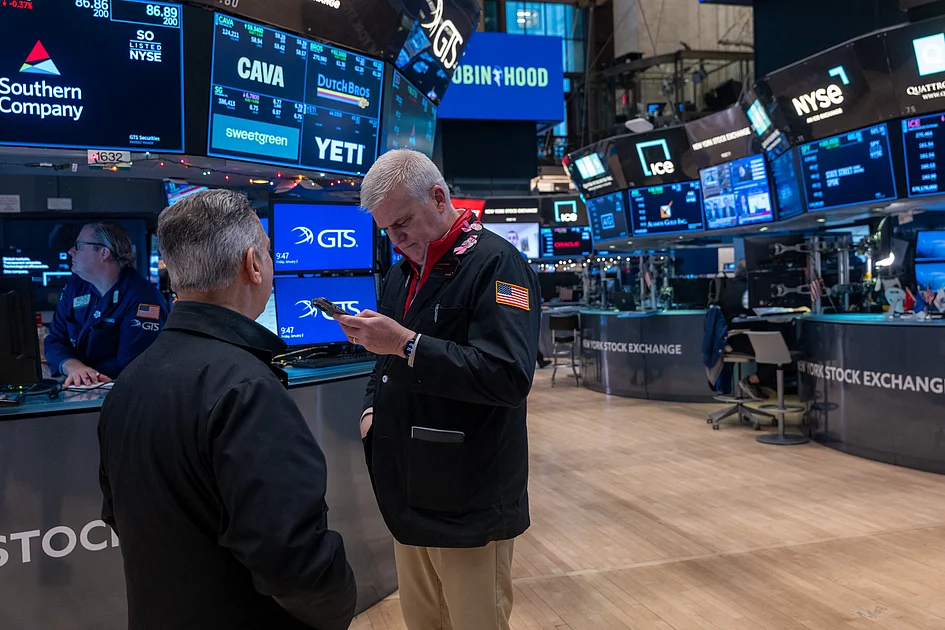
    Financial markets experienced significant turbulence as geopolitical tensions surrounding Greenland and potential tariff impositions by the Trump administration rattled investor confidence globally. The volatility emerged following President Donald Trump’s threats to reignite trade conflicts with Europe, specifically tied to U.S. ambitions regarding Greenland’s strategic acquisition.

    The market reaction on Tuesday was pronounced across multiple asset classes: equity markets declined substantially, with the S&P 500 recording its most severe single-day drop in over three months at 2.1%. Simultaneously, long-dated U.S. Treasuries and the dollar faced selling pressure, while volatility measures spiked across trading platforms.

    Investment strategists noted the concerning absence of traditional dip-buyers despite the market decline. Jack Ablin of Cresset Capital observed that unlike previous selloffs triggered by tariff announcements, investors appeared more cautious about immediate re-entry positions. The situation evoked memories of last year’s ‘Liberation Day’ tariff announcement that previously triggered the ‘Sell America’ trade pattern, where international investors reduced exposure to U.S. assets.

    Market professionals expressed particular concern about the simultaneous decline across typically inversely correlated assets. Lauren Goodwin of New York Life Investments highlighted how the coordinated movement challenged conventional portfolio assumptions and risk management strategies.

    Despite the volatility, underlying fundamentals remain robust. Corporate earnings projections indicate continued strength, with S&P 500 companies expected to deliver 13.3% growth for 2025 and an additional 15.5% in 2026 according to LSEG IBES data. However, analysts caution that foreign capital flows could diminish if geopolitical tensions persist, potentially dampening market performance regardless of fundamental strength.

    Investors are monitoring for potential de-escalation, with many recalling Trump’s historical pattern of aggressive positioning followed by negotiation—a phenomenon Wall Street traders have acronymed ‘TACO’ (Trump Always Chickens Out). This expectation of eventual compromise has prevented more severe capital flight, though market participants remain prepared for defensive positioning should tensions escalate further.

  • Japan records 5th straight yearly trade deficit

    Japan records 5th straight yearly trade deficit

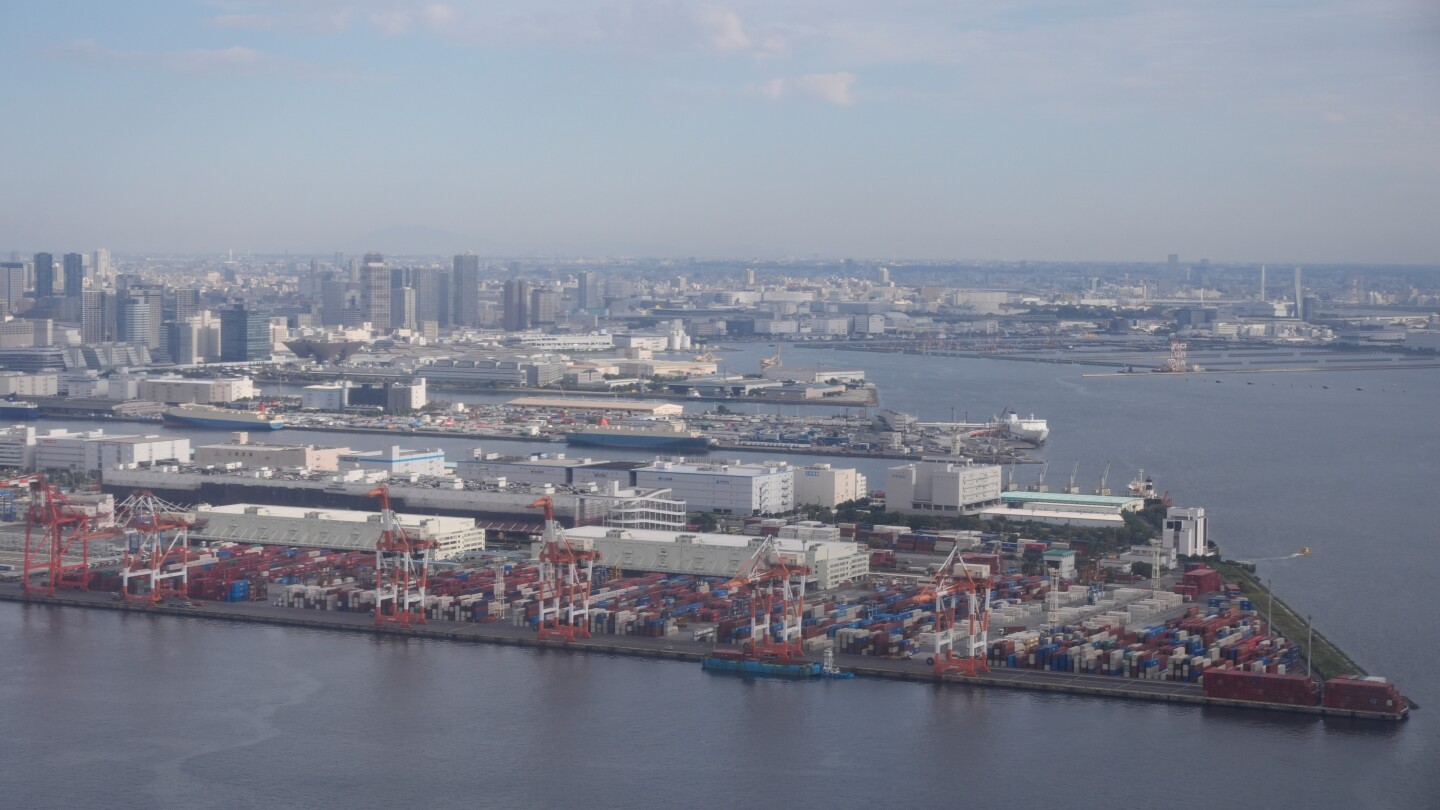
    Japan has marked its fifth successive year of trade deficit in 2025, according to preliminary data released by the Finance Ministry on Thursday. The nation reported an annual shortfall of 2.65 trillion yen ($17 billion), representing a significant 53% reduction from the previous year’s deficit. While exports demonstrated modest growth of 3.1% throughout the year, imports remained nearly stagnant with less than 1% growth.

    The December figures provided a temporary respite with a trade surplus of 105.7 billion yen ($669 million), though this represented a 12% decrease compared to the same month last year. Monthly data revealed exports growing at 5.1% while imports increased by 5.3% year-on-year.

    Geographic analysis reveals shifting trade patterns, with December exports to the United States declining by 11% amid ongoing trade tensions. Conversely, Japan experienced export growth to Britain, African markets, and Asian hubs including Hong Kong and India. Import dynamics showed strength in European sourcing while declining from Brazil and Middle Eastern suppliers.

    The trade landscape remains complicated by multiple geopolitical factors. The United States maintains a 15% tariff on most Japanese imports, representing a compromise from initially proposed 25% rates but still elevated from historical levels. Additionally, manufacturing sectors face potential disruption from China’s restrictions on rare earth exports, implemented following Prime Minister Sanae Takaichi’s comments regarding potential Japanese military response to Chinese actions toward Taiwan.

    Despite these challenges, Japan’s economy demonstrates resilience with the benchmark Nikkei index reaching record highs, even as public concerns persist regarding inflationary pressures and wage stagnation.

  • Videos circulating online show SDF supporters attacking Syrians across Europe

    Videos circulating online show SDF supporters attacking Syrians across Europe

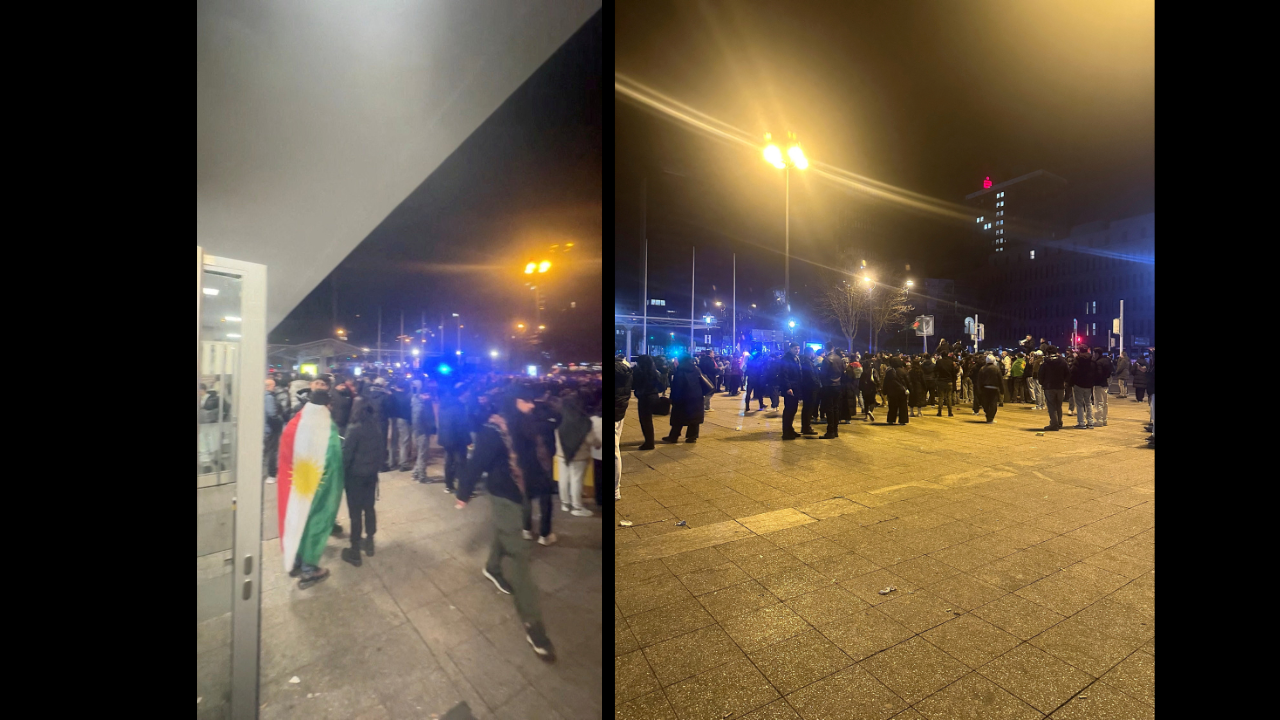
    European capitals witnessed a disturbing surge in coordinated attacks against Syrian refugees this week as tensions from Syria’s collapsing security situation spilled onto Western streets. From Berlin to Zurich, Manchester to Paris, supporters of Kurdish militant groups launched violent assaults targeting Arab-Syrian communities in retaliation for recent battlefield losses in their homeland.

    The unrest erupted following the strategic collapse of the Kurdish-led Syrian Democratic Forces (SDF), which lost critical territories including Raqqa and Deir el-Zour to Syrian government forces. This military setback triggered immediate demonstrations across European cities that rapidly devolved into widespread violence against Syrian civilians.

    Social media platforms became flooded with disturbing footage showing masked individuals vandalizing Syrian-owned businesses, physically assaulting perceived Arab targets, and shouting ethnic slurs. In Germany, protests organized by YPG and SDF supporters escalated into confrontations with police, with participants deploying firecrackers, pyrotechnics, and iron bars against law enforcement.

    French authorities documented similar scenes despite France’s historical support for Kurdish forces in Syria. Video evidence from multiple cities showed coordinated attacks on vehicles and property while perpetrators chanted racist epithets. The violence exposed deep fractures within Middle Eastern diaspora communities as decades-old ethnic tensions found new expression on European soil.

    Swiss police monitored large gatherings of PKK supporters in Zurich where participants effectively paralyzed sections of the city. British authorities responded to incidents in Manchester where assailants pursued Arab-appearing individuals while screaming ethnic slurs. Similar reports emerged from Austria and Sweden where Syrian refugees reported targeted harassment and property damage.

    The violence has sparked intense debate about European foreign policy in the Middle East, with critics questioning Western support for Kurdish groups that demonstrate authoritarian tendencies abroad. Security analysts note the irony of Kurdish diaspora groups—who fled authoritarianism—now employing similar tactics against other refugee communities in their host nations.