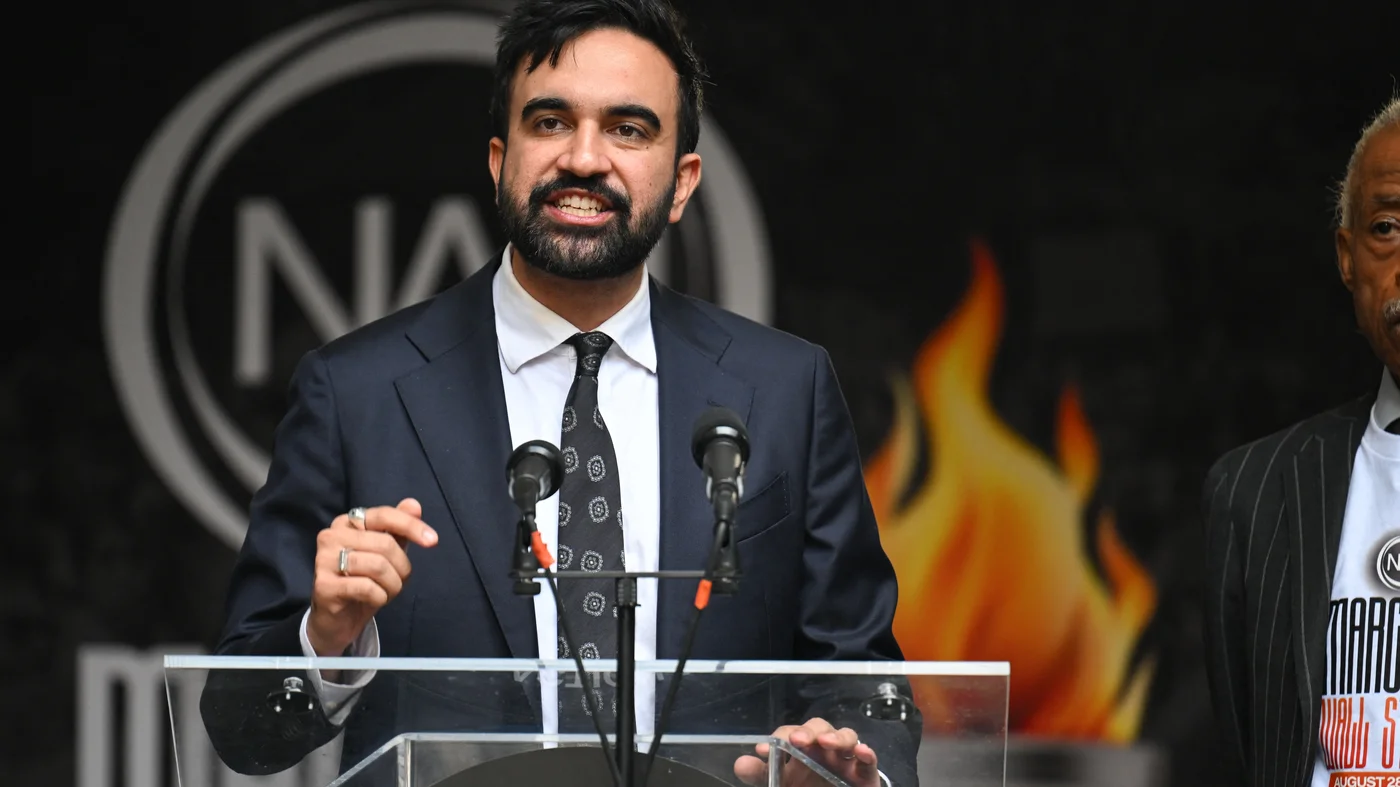
New York mayoral candidate Zohran Mamdani’s statement on October 7, marking the second anniversary of the Hamas-led attack, has ignited a firestorm of reactions across the political spectrum. Mamdani began by mourning the 1,100 Israelis killed and hundreds taken hostage, but swiftly pivoted to condemn Israel’s military response, labeling it a ‘genocidal war’ with a death toll exceeding 67,000. He criticized the U.S. government’s complicity and called for an end to occupation and apartheid. However, his failure to explicitly mention ‘Palestinians’ or ‘Palestine’ drew sharp criticism from pro-Palestine advocates, who accused him of flattening the power imbalance between Israelis and Palestinians. Palestinian activist Nerdeen Kiswani denounced the statement as ‘disgraceful,’ arguing it dehumanized Palestinians by equating Hamas’s actions with Israel’s systemic violence. Journalist Sana Saeed accused Mamdani of ‘genocide apologia’ for framing Palestinian resistance within the same moral register as Israel’s decades-long occupation. Others, including journalist Aaron Mate, criticized factual inaccuracies in Mamdani’s statement, particularly regarding the number of Israeli casualties. Meanwhile, the pro-Israel base, including the Israeli foreign ministry, condemned Mamdani for allegedly advocating for Hamas and spreading propaganda. Despite attempts to strike a measured tone, Mamdani’s statement left him politically isolated, alienating both his progressive base and Israel’s defenders. Critics argue his centrist approach risks losing credibility, while supporters contend he faces the pragmatic realities of electoral politics in a city with a significant Jewish population.
标签: Asia
亚洲
-
US diplomat fired over relationship with woman accused of ties to Chinese Communist Party
In a significant move underscoring the Biden administration’s stringent stance on national security, the U.S. State Department has terminated a diplomat for engaging in a romantic relationship with a Chinese woman reportedly connected to the Chinese Communist Party (CCP). This marks the first such dismissal since the implementation of a ban on such relationships late last year. The policy, introduced during the final days of President Joe Biden’s tenure, prohibits all U.S. government personnel, their family members, and contractors with security clearances in China from forming romantic or sexual ties with Chinese nationals. Tommy Pigott, a State Department spokesperson, confirmed the dismissal, stating that the diplomat admitted to concealing the relationship, which was deemed a breach of national security protocols. The case was reviewed by former President Donald Trump and Secretary of State Marco Rubio, who supported the decision. The diplomat’s identity remains undisclosed, though the relationship was exposed in a covertly recorded video by conservative activist James O’Keefe. In response, Chinese Foreign Ministry spokesperson Guo Jiakun declined to comment, emphasizing China’s opposition to ideological discrimination and unfounded allegations.
-
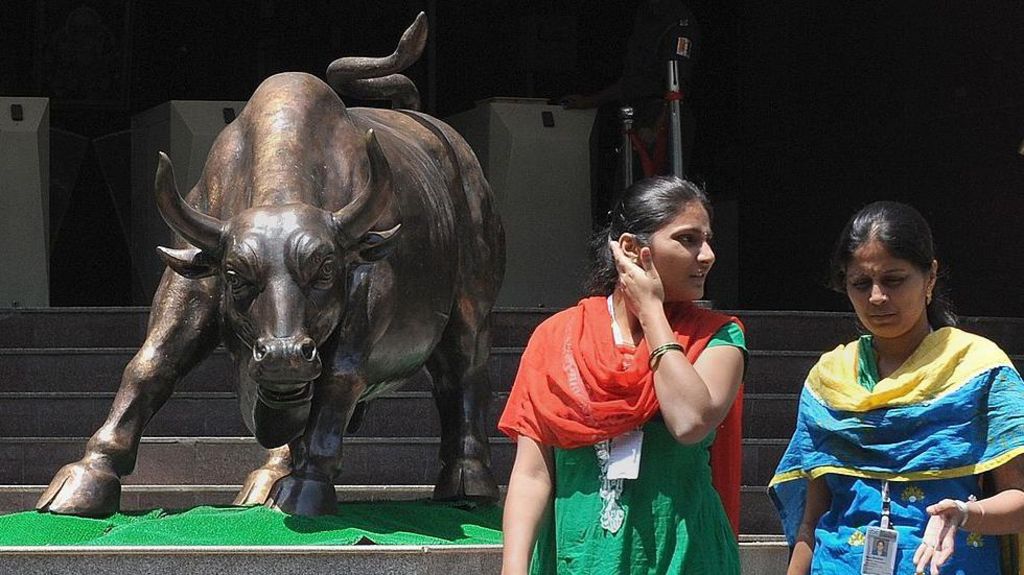
India’s fundraising gold rush is raising thorny questions
India’s stock market is witnessing an unprecedented surge in initial public offerings (IPOs), driven largely by retail investors, even as global uncertainties and geopolitical tensions loom. The country’s IPO market has become a magnet for companies across diverse sectors, from tech startups to established conglomerates, raising billions of dollars in 2025. According to Kotak Mahindra Capital Company, 79 companies have collectively garnered $11.5 billion in the first nine months of the year, with another $10-11 billion expected in the final quarter, pushing the total IPO fundraising beyond $20 billion. This excludes contributions from small and medium-sized enterprises, further highlighting the market’s vibrancy.
-

Saudi Arabia moves a step closer to qualification for 2026 World Cup
In a gripping encounter on Wednesday, Saudi Arabia secured a narrow 3-2 victory against Indonesia, inching closer to qualifying for the 2026 World Cup. The match, held in Jeddah, saw Saudi Arabia needing just one more win against Iraq next Tuesday to secure the top spot in Group B and book their seventh appearance in the prestigious tournament. The Asian qualifying format awards automatic berths to the winners of each group, while the runners-up proceed to a fifth round. Indonesia, under the guidance of former Netherlands and Barcelona star Patrick Kluivert, opened the scoring with Kevin Diks converting a penalty in the 11th minute. However, Saudi Arabia quickly responded with Saleh Abu Al-Shamat equalizing six minutes later. Firas Al-Buraikan then put the hosts ahead with a penalty in the 37th minute. Al-Buraikan extended the lead with another goal just after the hour mark, but Diks narrowed the gap with a second penalty in the 89th minute. Despite Mohamed Kanno’s red card in stoppage time, Saudi Arabia held on for the win. ‘One more step to go. God willing, we’ll make it happen,’ Al-Buraikan remarked in a post-match statement shared by the Asian Football Confederation. Meanwhile, Indonesia’s hopes of returning to the World Cup for the first time since 1938 hinge on their upcoming match against Iraq. In other Group A action, Qatar was held to a 0-0 draw by Oman, with both teams expressing mixed sentiments about their performances. Asia has eight automatic World Cup spots, with Japan, South Korea, Australia, Iran, Uzbekistan, and Jordan already securing their places in the previous qualifying round.
-

NBA returns to China for 1st time since a rift distanced it from one of the sport’s largest fanbases
The NBA is making a significant return to China with preseason games in Macao, marking its first appearance in the country since 2019. The Brooklyn Nets and Phoenix Suns are set to play two exhibition matches, signaling a revival of the league’s presence in a region that boasts one of its largest fanbases. This comes after a period of strained relations following a controversial tweet by former Houston Rockets executive Daryl Morey in 2019, which led to China severing ties with the NBA. The league’s efforts to rebuild its relationship with China have been gradual but are now gaining momentum. NBA Deputy Commissioner Mark Tatum emphasized the importance of bringing live games to global fans, particularly in China, where over 300 million people play basketball. The games are seen as a bridge to reconnect with Chinese fans and strengthen the NBA’s global outreach. Despite ongoing geopolitical tensions and trade friction between the U.S. and China, the NBA views sports as a unifying force. Commissioner Adam Silver highlighted basketball’s unique ability to bring communities together, both domestically and internationally. The Nets and Suns will play at Macao’s Venetian Arena, owned by Las Vegas Sands Corp., with Sands President Patrick Dumont also serving as governor of the Dallas Mavericks. The Nets’ owner, Joe Tsai, chairman of Alibaba, and the presence of Chinese rookie Yang Hansen, drafted by the Portland Trail Blazers, further underscore the league’s commitment to the Chinese market. Yang expressed excitement about the NBA’s return, hoping to play in front of his home crowd in the future. The NBA’s influence in China is undeniable, with stars like LeBron James, Stephen Curry, and Victor Wembanyama drawing massive crowds during their visits. The league’s social media engagement in China has also surged, driven by the growing popularity of basketball. Suns guard Jared Butler described the trip as a bonding experience, reflecting the broader sentiment that these games are more than just exhibitions—they are a step toward rebuilding a vital relationship.
-
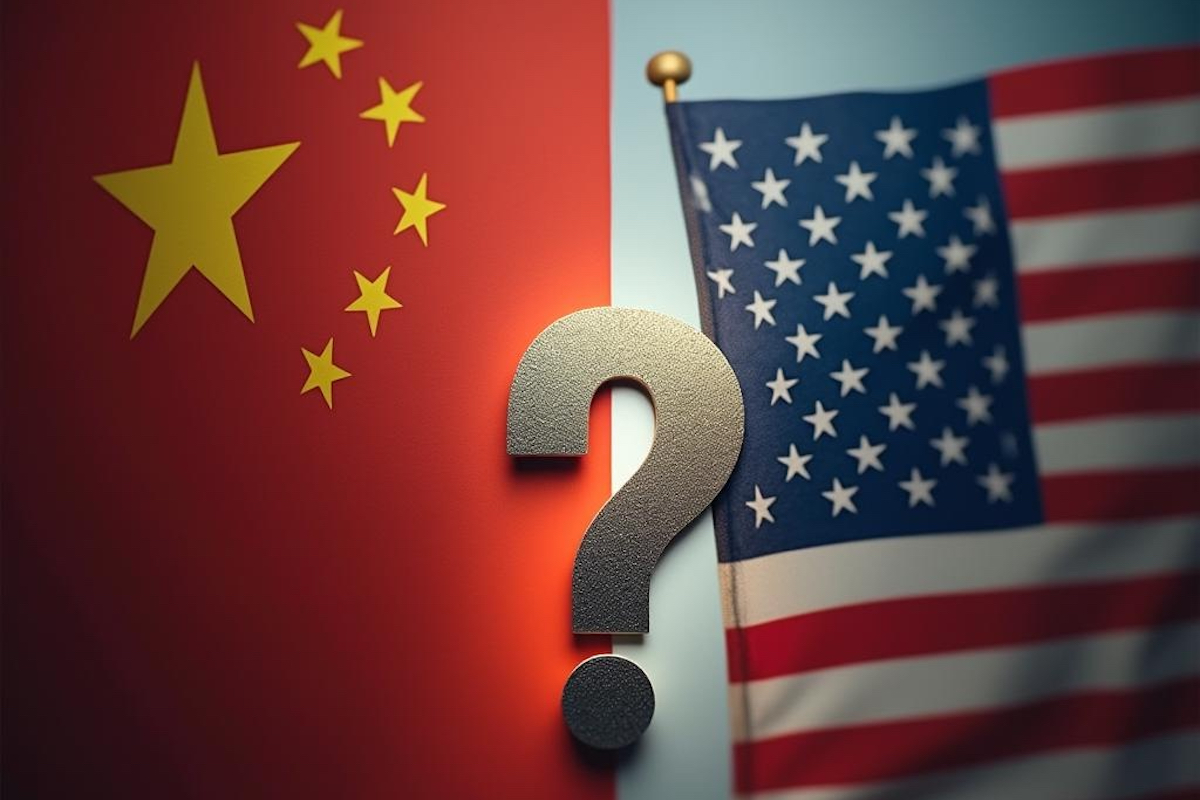
American mistakes handing China short-term gains
The dynamics of US-China relations can be examined through three distinct lenses: short-term, medium-term, and long-term perspectives. In the immediate context, China has secured four significant outcomes: halting rare earth exports to counter US tariffs, leveraging military displays to deter US aggression, weakening India’s alignment with the US, and boosting trade surpluses with third countries despite declining exports to the US. These maneuvers reflect China’s strategic agility in navigating geopolitical tensions. In the medium term, however, China’s alliances with Russia and Iran have proven costly, draining resources and entangling Beijing in conflicts that may not yield favorable outcomes. The long-term outlook remains uncertain, particularly regarding China’s ability to address structural issues such as its massive trade surplus and currency convertibility. Historically, similar challenges contributed to the downfall of the Ming and Qing dynasties. Today, China’s ambition to dominate global trade hinges on adopting free-market principles, which could paradoxically lead to de-industrialization. Meanwhile, the US faces its own set of challenges, including declining alliances and a lack of cohesive long-term strategies. While China appears to have a plan, its domestic economic woes, such as rising debt and a collapsing real estate sector, pose significant risks. Ultimately, the future of US-China relations will depend on how both nations navigate these complex and interconnected challenges.
-
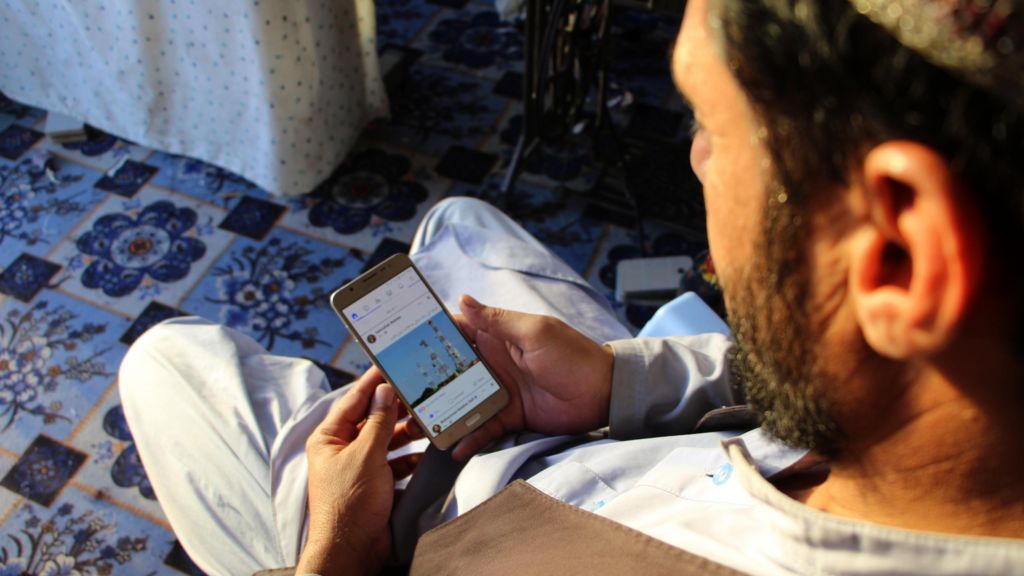
Social media content restricted in Afghanistan, government sources confirm
The Taliban-led government in Afghanistan has implemented stringent restrictions on social media platforms, including Facebook, Instagram, and X (formerly Twitter), according to sources from the Ministry of Communications and Information Technology. While the specific criteria for content filtering remain unclear, users in Kabul have reported issues such as unviewable videos on Facebook and restricted access to Instagram. These measures follow a recent two-day nationwide internet and telecommunications blackout, which caused widespread disruptions to businesses, emergency services, and daily life. The blackout, which ended with public relief, heightened concerns about the further isolation of women and girls, whose rights have been severely curtailed since the Taliban regained power in 2021. Social media users across various provinces have reported limited access to platforms since Tuesday, with some experiencing severely slow internet speeds or complete outages of fibre optic connections. A government source stated that the filtering measures are widespread and cover most provinces, though no formal explanation has been provided. Cybersecurity organization NetBlocks confirmed the intentional nature of these restrictions, noting intermittent accessibility on smartphones. The Taliban’s actions align with their interpretation of Islamic Sharia law, which has led to numerous societal restrictions, including bans on education for girls over 12 and the removal of books authored by women from universities. For Afghan women, the internet has been a crucial connection to the outside world, making these restrictions particularly impactful.
-

Fans mourn death of popular Punjabi singer Rajvir Jawanda
The untimely demise of Rajvir Jawanda, a beloved Punjabi singer, actor, and former police officer, has sent shockwaves through his vast fanbase and the music community. Jawanda, 35, passed away on Wednesday, succumbing to severe injuries sustained in a motorcycle accident in Himachal Pradesh’s Solan district. The incident occurred when his bike reportedly collided with cattle, causing him to lose control. His death has sparked an outpouring of grief from fans, politicians, and fellow artists, who remember him as a cultural icon and a voice of Punjab’s youth. Jawanda’s music, which blended traditional Punjabi rhythms with modern storytelling, resonated deeply with listeners. His YouTube channel boasted over 900,000 subscribers, and his music videos garnered millions of views. Known for his catchy beats and relatable lyrics, Jawanda’s songs became dance anthems in clubs across the region. Beyond music, he also acted in Punjabi films and was admired for his clean image, steering clear of controversies and avoiding themes of drugs and violence prevalent in some Punjabi rap. A passionate biker, Jawanda often shared videos of his adventures in north India’s mountainous terrains, embodying an adventurous spirit. His death has reignited calls for improved road safety in India, with fans expressing anger over the country’s hazardous road conditions. Jawanda’s journey to stardom was unconventional. Born into a family with ties to law enforcement, he initially pursued a career in the Punjab police, serving as a constable for nine years. However, his love for music, cultivated since childhood through exposure to Punjabi folk ballads, eventually led him to transition into a full-time singer. His breakout came after one of his songs went viral, propelling him into the spotlight. Despite his fame, Jawanda remained grounded, actively supporting the 2020 farmers’ protests and using his platform to amplify their voices. His passing leaves a void in Punjab’s music industry and the hearts of his fans. Tributes poured in from political leaders, with Punjab’s Aam Aadmi Party senior leader Manish Sisodia praising his “soulful voice” and former Chief Minister Amarinder Singh acknowledging the impact of his music on countless lives.
-
Telecoms company sent emails to wrong addresses during deadly outage
Optus, one of Australia’s largest telecommunications providers, is facing intense scrutiny following revelations of its mishandling of a severe outage on 18 September, which has been linked to four deaths, including that of an eight-week-old baby. During a parliamentary hearing, it was disclosed that Optus sent emails about the outage to an incorrect email address at the Department of Communications, where they remained unread for over a day. The emails significantly downplayed the severity of the incident, claiming only 10 emergency calls were affected, while in reality, more than 600 calls failed over 13 hours. Authorities were only informed of the outage more than 36 hours after it began, via the industry regulator. Australia’s Deputy Secretary for Communications, James Chisholm, criticized Optus for not adhering to protocols, including redirecting triple-0 calls to other providers during outages. The outage occurred during a routine firewall upgrade, deviating from standard procedures. Singapore’s Prime Minister Lawrence Wong, currently on an official visit to Australia, expressed condolences and emphasized the need for accountability. Optus, owned by Singapore’s Singtel, is under investigation by Australia’s media regulator for potential legal breaches. This incident adds to Optus’ troubled history, including a 2022 cyberattack and a 2023 nationwide outage. Calls for the resignation of current CEO Stephen Rue and the revocation of Optus’ operating license are growing among lawmakers.
-

The Indian messaging app that wants to take on WhatsApp
India, WhatsApp’s largest market, has long been dominated by the messaging giant, which has become an integral part of daily life. However, a new contender, Arattai, developed by Indian tech company Zoho, is making waves. Over the past few weeks, Arattai has seen a meteoric rise in popularity, with seven million downloads in just seven days, according to Zoho. This surge is largely attributed to the Indian government’s push for self-reliance, a message echoed by Prime Minister Narendra Modi and his ministers, who have encouraged the use of homegrown apps. Federal minister Dharmendra Pradhan recently urged citizens to use Arattai on social media, further boosting its visibility. Zoho CEO Mani Vembu reported that daily sign-ups skyrocketed from 3,000 to 350,000 in just three days, with active users increasing 100-fold. Despite this growth, Arattai still lags behind WhatsApp, which boasts 500 million monthly active users in India. Arattai offers features similar to WhatsApp, including messaging, voice, and video calls, and is designed to function smoothly on low-end devices and slow internet connections. Users have praised its interface and design, with many expressing pride in supporting an Indian-made app. However, experts remain skeptical about Arattai’s ability to dethrone WhatsApp, citing the latter’s entrenched user base and extensive integration with businesses and government services. Additionally, concerns have been raised about Arattai’s data privacy policies. While the app offers end-to-end encryption for calls, it does not yet extend this feature to messages, raising questions about user privacy. Zoho has stated that it is working to implement full end-to-end encryption for text messages. The company has also emphasized its commitment to complying with India’s IT regulations while ensuring user control over data. Historically, Indian apps like Koo and Moj have struggled to sustain initial success against global giants. Whether Arattai can overcome these challenges and carve out a lasting presence in India’s competitive tech landscape remains uncertain.