
In a growing trend, families in New Delhi are abandoning the city’s toxic air in search of healthier environments, prioritizing their children’s well-being over urban ties. Natasha Uppal, a 36-year-old maternal health advocate, and her husband made the life-altering decision to leave Delhi in 2022 after years of battling severe migraines and indoor confinement due to hazardous air quality. Their relocation to Bengaluru coincided with the discovery of her pregnancy, marking a pivotal moment in their lives. Uppal described the move as the ‘best decision,’ emphasizing that clean air is a ‘basic human right.’ While Bengaluru’s air quality occasionally exceeds World Health Organization (WHO) limits, it pales in comparison to Delhi’s months-long smog, allowing her son to play outdoors freely. Delhi, home to over 30 million people, consistently ranks among the world’s most polluted cities. Each winter, the capital is engulfed in a toxic haze fueled by crop burning, factory emissions, and vehicular pollution. PM2.5 levels, cancer-causing microparticles small enough to enter the bloodstream, have soared to 60 times WHO limits. Despite government measures like partial vehicle bans and cloud-seeding trials, the crisis persists. A 2022 study in The Lancet Planetary Health estimated that 3.8 million deaths in India between 2009 and 2019 were linked to air pollution. The UN children’s agency warns that polluted air heightens children’s risk of acute respiratory infections. Vidushi Malhotra, another Delhi expatriate, relocated to Goa in 2021 after her two-year-old son repeatedly fell ill. She now encourages others to follow suit, sparking what she calls a ‘mini-movement.’ Meanwhile, some families, like Roli Shrivastava’s, remain in Delhi but live in constant anxiety. Shrivastava, whose toddler suffers from worsening respiratory issues each winter, prepares for another season indoors, relying on air purifiers and nebulisers. She admits that relocation is a frequent consideration, stating, ‘Delhi is not a good place to raise kids when it comes to air pollution.’
标签: Asia
亚洲
-
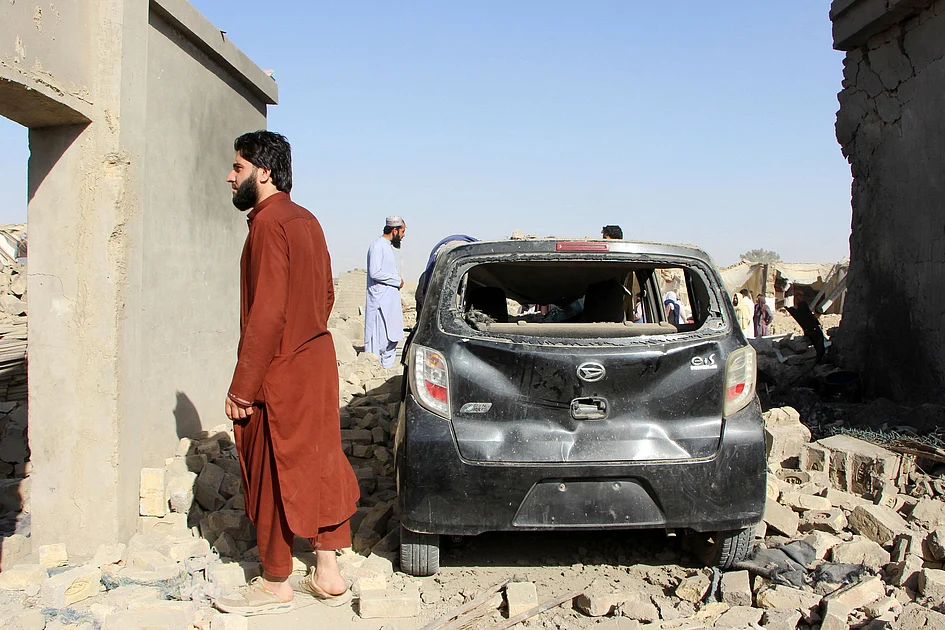
Temporary ceasefire halts deadly Pakistan-Afghanistan fighting
A fragile 48-hour ceasefire has been implemented along the volatile Pakistan-Afghanistan border, offering a brief respite from the deadly cross-border clashes that have claimed dozens of lives in recent days. The truce, announced by Islamabad, aims to create a window for constructive dialogue and a peaceful resolution to the escalating tensions. Officials from both sides confirmed on Thursday that the ceasefire was holding, with no reports of violence overnight. The recent clashes, which have resulted in significant civilian casualties, have drawn international concern and calls for de-escalation. In Spin Boldak, a key flashpoint on the Afghan side, residents cautiously returned to their homes as shops reopened. The United Nations Assistance Mission in Afghanistan (UNAMA) reported at least 18 civilian deaths and over 350 injuries, while local officials in Spin Boldak confirmed around 20 civilian fatalities and nearly 170 wounded. Islamabad has accused the Taliban-led Afghan government of harboring militants responsible for attacks on Pakistani security forces—a claim Kabul denies. Meanwhile, additional paramilitary troops have been deployed along the border to deter potential militant activity that could disrupt the ceasefire. The conflict has also seen cross-border airstrikes and explosions, with Kabul blaming an oil tanker explosion for recent blasts, while Pakistani sources claim precision strikes targeted militant bases. The UN rights chief has welcomed the ceasefire and urged both parties to prioritize civilian safety and work towards a lasting peace.
-

Green MP raises case of Marwan Barghouti’s release from prison in UK parliament
In a notable intervention in the British Parliament, Green Party MP Ellie Chowns has brought attention to the ongoing imprisonment of Marwan Barghouti, a prominent Palestinian political figure, by Israel. Describing Barghouti as “a unifying voice for Palestinian rights, dignity, and freedom,” Chowns questioned the UK government’s efforts to secure his release, particularly in light of his potential role in fostering lasting peace in the region. Barghouti, who has been incarcerated since 2004 and was recently in solitary confinement during Israel’s military operations in Gaza, was initially considered for release as part of a ceasefire agreement. However, Israeli Prime Minister Benjamin Netanyahu’s office reportedly removed his name from the prisoner exchange list at the last minute. Barghouti, a senior Fatah leader and a unifying figure among Palestinian factions, including Hamas, has been a symbol of resistance since his involvement in the Second Intifada (2000-2005). Despite his widespread popularity and the backing of regional powers like Egypt and Qatar for his release, senior Palestinian Authority (PA) officials reportedly opposed his inclusion in any exchange, fearing it could undermine President Mahmoud Abbas’s leadership. The UK government, while emphasizing support for a Palestinian-led recovery in Gaza, has maintained its stance that Hamas must disarm and play no role in governance. Meanwhile, the Trump administration has proposed a technocratic transitional authority for post-war Gaza, sidelining significant Palestinian involvement. Barghouti’s case has reignited debates on Palestinian leadership and the path to peace, with his recent public appearance during a visit by Israeli National Security Minister Itamar Ben Gvir highlighting his enduring significance.
-

Bangladesh prosecution demands death penalty for former PM Hasina
In a dramatic legal development, Bangladeshi prosecutors have demanded the death penalty for former Prime Minister Sheikh Hasina, who is accused of orchestrating a brutal crackdown during a student-led uprising in 2024. Hasina, currently a fugitive in India, has defied court orders to return and face trial. The prosecution alleges that she was the central figure behind the violence, which resulted in the deaths of up to 1,400 people between July and August 2024. Chief Prosecutor Tajul Islam argued that Hasina should face the harshest punishment, stating, ‘For 1,400 murders, she should be sentenced 1,400 times—but since that is not humanly possible, we demand at least one.’ The trial, which began on June 1, has heard extensive testimony implicating Hasina in ordering or failing to prevent mass killings. Prosecutors have filed five charges, including crimes against humanity, under Bangladeshi law. Hasina, who denies all allegations, is being tried in absentia alongside two former senior officials. Her ex-interior minister, Asaduzzaman Khan Kamal, is also a fugitive, while former police chief Chowdhury Abdullah Al-Mamun is in custody and has pleaded guilty. The prosecution has presented evidence, including audio tapes allegedly featuring Hasina ordering security forces to ‘use lethal weapons’ against protesters. The trial is nearing its conclusion, with the interim government aiming to prepare the nation for elections in February. Hasina, already convicted of contempt of court in July, faces additional corruption charges, as do several of her relatives. Critics have long accused her government of rights abuses, including the murder of opposition activists and the suppression of press freedom.
-

Oxford University invested in at least 49 firms linked to illegal Israeli activity
A recent investigation by Middle East Eye has uncovered that the University of Oxford holds indirect investments in at least 49 companies implicated in illegal Israeli activities within occupied Palestinian territories. These investments, valued at over £19 million ($25.5 million), represent a small fraction of Oxford’s £8 billion endowment but have sparked significant ethical concerns. Critics argue that these holdings contradict the university’s stated commitment to ethical investment practices and raise questions about the transparency of its broader financial portfolio. The investments are managed through a passive equity tracker fund developed in collaboration with BlackRock, the world’s largest asset manager. While the fund excludes companies involved in fossil fuels and controversial weapons, it does not screen out firms listed on a UN database for complicity in human rights violations related to Israeli settlements. Notable companies in the fund include major Israeli banks, travel-sector giants like Expedia and Airbnb, and U.S. technology firm Motorola Solutions. The Oxford BDS Coalition, comprising students and staff, has condemned the university’s involvement, accusing it of profiting from human rights abuses and calling for immediate divestment. Despite repeated awareness of these issues, Oxford has yet to take decisive action, prompting calls for greater accountability and transparency in its investment practices. The revelations come amid growing international criticism of Israel’s actions in Gaza, with other institutions, such as Norway’s sovereign wealth fund and the Dutch pension fund ABP, already divesting from companies linked to the occupation. The case highlights the broader ethical dilemmas faced by academic institutions in aligning their financial strategies with their missions and values.
-

Japan’s LDP and JIP begin coalition talks
In a significant political development, Japan’s ruling Liberal Democratic Party (LDP) and the Japan Innovation Party (JIP) have commenced policy discussions to form a coalition government. This move follows the withdrawal of the Komeito Party from the long-standing LDP-led alliance, as reported by The Kyodo News. The talks aim to consolidate political support ahead of the upcoming prime ministerial vote. Sanae Takaichi, the newly elected LDP president, has been actively engaging with leaders of three opposition parties to secure their backing. Hirofumi Yoshimura, JIP leader and Osaka governor, expressed optimism after meeting Takaichi, stating, ‘I was convinced by her passion.’ A potential LDP-JIP coalition would hold 231 of the 465 seats in the lower house, just two short of a majority, bolstering Takaichi’s bid to become Japan’s first female prime minister. Meanwhile, opposition parties, including the Constitutional Democratic Party of Japan and the Democratic Party for the People, have yet to reach a consensus on policy issues, though their combined 210 seats could pose a challenge to the LDP’s dominance. The Diet has announced that the extraordinary parliamentary session to elect the new prime minister will now begin on October 21, 2025.
-

Rising water levels attract tourists to Jinan’s famous springs
Jinan, the capital of Shandong province, has witnessed a remarkable surge in its famous springs’ water levels, drawing a wave of tourists to its scenic spots. According to the Jinan Culture and Tourism Development Group, Baotu Spring, one of the city’s most iconic attractions, reached a water level of 30.32 meters on Wednesday, marking the highest point in six decades. This unprecedented rise is attributed to persistent rainfall in the region. The increased water levels have not only revitalized Baotu Spring but also enhanced the beauty of other renowned springs, such as the Black Tiger Spring and the Crescent Spring. Spectacular water gushes at these sites have captivated visitors, creating a bustling atmosphere in the city. The phenomenon has turned Jinan into a hotspot for nature enthusiasts and photographers alike, showcasing the city’s unique geological and cultural heritage. Local authorities are leveraging this natural spectacle to promote tourism, highlighting Jinan’s reputation as the ‘City of Springs.’
-

Bears kill seven people in Japan this year as attacks hit record high
Japan is grappling with an unprecedented surge in fatal bear attacks, with the country’s environment ministry reporting seven deaths since April—the highest number since records began in 2006. The majority of these incidents have occurred in the northeastern regions and Hokkaido, where a 60-year-old man cleaning an outdoor hot spring bath has recently gone missing in what is suspected to be the latest bear-related tragedy. Experts attribute the rise in attacks to climate change, which has led to poor yields of beech nuts, a primary food source for bears, forcing them to venture into residential areas in search of sustenance. Additionally, depopulation in rural areas has exacerbated the issue, leaving fewer humans to deter wildlife. The ministry’s data reveals that this year’s fatalities have already surpassed the five recorded in the previous 12 months, with around 100 injuries reported so far. Recent incidents include a bear entering a supermarket in Numata, Gunma, injuring two elderly men, and a farmer in Iwate being attacked by a bear and its cub. The situation has raised alarms about the growing human-wildlife conflict in Japan, home to two bear species: the Asian black bear and the larger brown bear found in Hokkaido.
-

China speeding up efforts to secure autumn grain harvest
China is intensifying efforts to secure its autumn grain harvest, a critical component of the nation’s annual grain production, despite adverse weather conditions affecting several regions. According to the Ministry of Agriculture and Rural Affairs, over 60% of the autumn grain crops have already been harvested. Autumn grains typically constitute approximately 75% of the country’s total annual grain output. The harvest progress varies by crop type, with 70% of mid-season rice, 50% of corn, and 80% of soybeans already collected. Persistent rainfall since September has posed significant challenges, prompting both central and local governments to implement urgent measures. These include accelerated funding support to expedite the harvest process. The Ministry of Finance has allocated 484 million yuan (approximately $68 million) from the central budget to aid agricultural disaster prevention and relief efforts, particularly in seven provinces: Hebei, Shanxi, Jiangsu, Anhui, Shandong, Henan, and Shaanxi. These funds will support the use of agricultural machinery, drying damp grains, and draining waterlogged farmlands. Vice-Premier Liu Guozhong has emphasized the need for coordinated efforts to ensure a successful harvest, including the timely drying of grains to prevent spoilage. Concurrently, Chinese authorities are promoting food security awareness through themed activities during World Food Day, encouraging the public to reduce food waste. Recent years have seen campaigns like ‘clean your plates’ gain traction, fostering a culture of food conservation. Government data highlights China’s robust food security during the 14th Five-Year Plan period (2021-2025), with annual grain output consistently exceeding 650 million tonnes. In 2024, grain output surpassed 700 million tonnes for the first time, with per capita grain possession reaching 500 kilograms, well above the international food security benchmark of 400 kilograms. Liu Huanxin, head of the National Food and Strategic Reserves Administration, affirmed China’s self-sufficiency in grains and absolute security in staple foods. Additionally, China is enhancing international cooperation in agriculture, sharing expertise with developing nations through technology exchanges, joint research, and training programs, thereby contributing to global food security.
-

From streets to forever homes: UAE residents rescue pets, turn strays into family
Across the United Arab Emirates, a growing number of residents are transforming the lives of abandoned animals by providing them with care, shelter, and a place to call home. From pigeons to kittens, these once-stray animals are now cherished members of families, thanks to the compassion of their rescuers. One such story is that of Boots, a pigeon rescued by Tiffany Dickinson in Dubai. Found struggling on a pavement, Boots was diagnosed with a neurological virus that left her unable to survive in the wild. Today, she thrives in Tiffany’s apartment, enjoying showers, short flights, and even her own Instagram page. Boots’ story is just one of many. Shirin Zemmo and her husband rescued two newborn kittens left in a crate near their Arjan building. Initially planning to care for them temporarily, the couple soon found themselves inseparable from the affectionate felines. Similarly, Natasha D’Souza, a long-time animal rescuer, has opened her home to multiple cats over the years, including senior cats Boney and Mindy, and more recent additions like Rosie and Ruby. These heartwarming tales highlight a broader trend in the UAE, where residents are stepping up to address the plight of abandoned animals, turning strays into beloved family members.