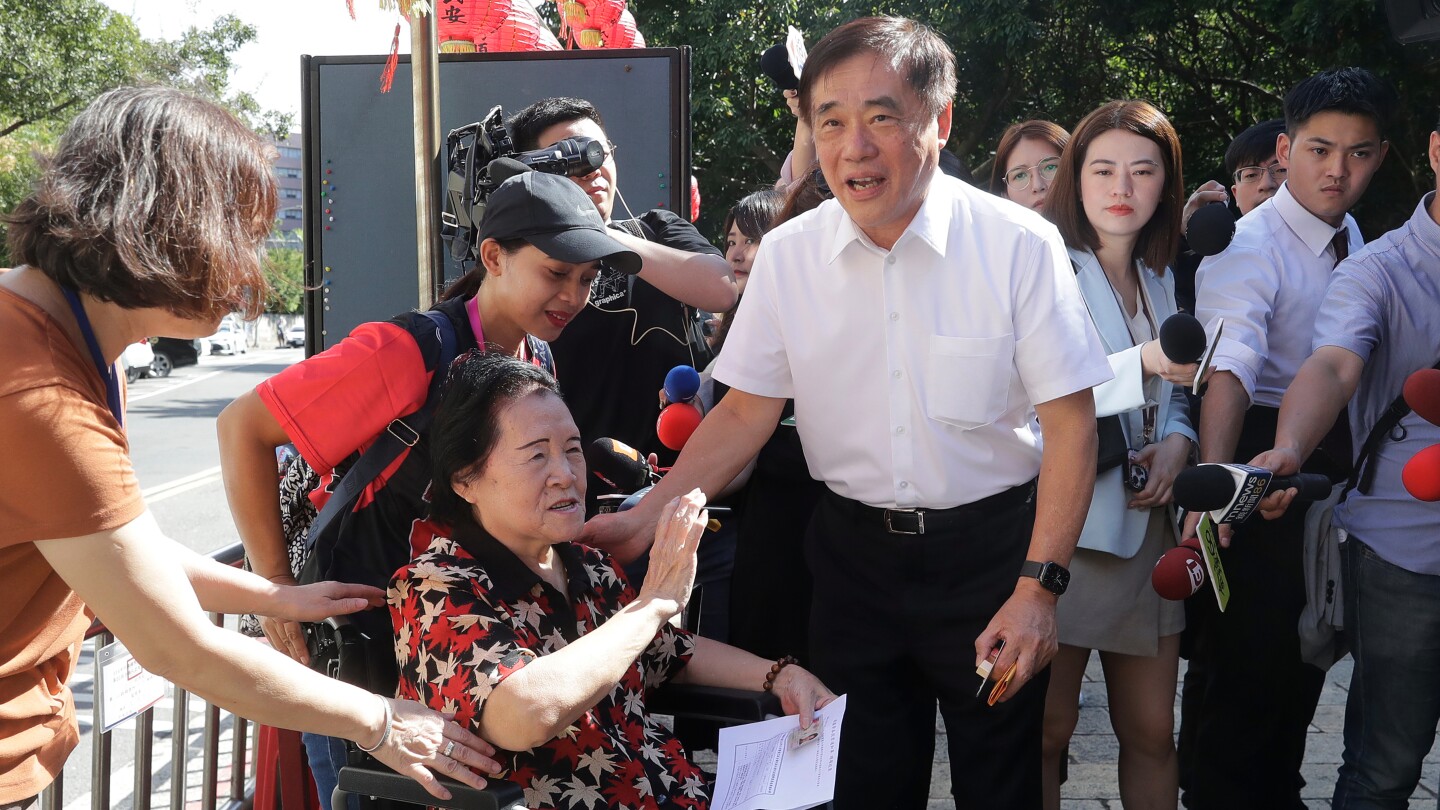
In a pivotal leadership election marred by accusations of external interference, Taiwan’s primary opposition party, the Nationalist Party (KMT), has chosen former lawmaker Cheng Li-wun as its new chairperson. Cheng, the sole female candidate in the race, secured a decisive victory over former Taipei Mayor Hau Lung-bin and four other contenders. Positioning herself as a reformist, Cheng aims to rejuvenate the party, which has suffered three consecutive presidential election defeats to the ruling Democratic Progressive Party (DPP), known for its pro-independence stance. Despite these losses, the KMT retains significant political influence, holding a legislative majority with its allies and surviving recent recall elections triggered by controversial legislative changes perceived as favoring China. Cheng’s leadership, set to begin in November, is expected to shape Taiwan’s approach to cross-strait relations with Beijing, domestic policies, and the 2026 local and 2028 presidential elections. During her campaign, Cheng vowed to transform the KMT from a passive “flock of sheep” into a dynamic “pride of lions,” emphasizing the need to reconnect with younger voters. The election unfolded against a backdrop of heightened tensions between Taiwan and China, with Beijing accusing incumbent President Lai Ching-te of separatism and threatening military action if necessary. Allegations of Chinese interference in the KMT election emerged, with reports of over 1,000 TikTok videos and 23 YouTube accounts discussing the race, many based outside Taiwan. Cheng has called for party unity, warning that internal divisions could weaken the KMT. China’s Taiwan Affairs Office dismissed the allegations, stating that the election was an internal KMT matter and that online opinions from mainland users do not reflect official government positions. Historically, the KMT has maintained warmer ties with Beijing, a stance that supporters argue benefits Taiwan’s stability and economy, while critics caution against Beijing’s growing influence. The party’s roots trace back to its rise under Chiang Kai-shek in 1920s China, before retreating to Taiwan after the Communist victory in 1949. Taiwan’s transition to multiparty democracy began in the 1980s, culminating in its first direct presidential election in 1996.
标签: Asia
亚洲
-

China-US officials hold economic talks
In a significant development for bilateral relations, China’s Vice-Premier He Lifeng, who oversees China-US economic and trade affairs, engaged in a high-level video conference with US Treasury Secretary Scott Bessent and US Trade Representative Jamieson Greer on Saturday morning. The meeting, reported by Xinhua News Agency, underscored the commitment of both nations to addressing critical issues in their economic partnership. The discussions were characterized by their candid, in-depth, and constructive nature, focusing on implementing the key agreements reached by the leaders of both countries during their earlier phone conversation this year. Both sides agreed to expedite the scheduling of a new round of economic and trade consultations, signaling a proactive approach to resolving ongoing challenges and fostering mutual economic growth. This dialogue marks a pivotal step in reinforcing the economic ties between the two global powers, amidst a complex international landscape.
-

Ras Al Khaimah: Why more young citizens are turning to entrepreneurship
Ras Al Khaimah, one of the UAE’s seven emirates, is rapidly becoming a focal point for youth-driven entrepreneurship, with 180 new youth-led projects launched this year alone. This surge in entrepreneurial activity highlights the emirate’s commitment to fostering innovation and financial independence among its young citizens. Youssef Muhammad Ismail, Chairman of the Supreme Committee of the Saud bin Saqr Foundation for Youth, revealed that the foundation has supported over 2,650 establishments to date, with 35% now fully operational and the remainder in various stages of development. Ismail emphasized that entrepreneurship offers young Emiratis a sustainable pathway to financial stability, enabling them to balance long-term income and retirement goals. He also stressed the importance of aligning small and emerging businesses with international standards and fostering global partnerships. By 2026, Ismail predicts increased collaboration between international firms and UAE-based startups, creating new opportunities for market expansion. Entrepreneurs are encouraged to focus on sustainable growth, form local alliances, and build robust internal structures to enhance global competitiveness. Ras Al Khaimah’s business-friendly environment, characterized by streamlined licensing processes and cross-ministry support, has been instrumental in transforming small home projects into fully established enterprises. Abdullah Al Balooshi, owner of T House, credited the emirate’s supportive ecosystem for his business’s success, noting faster licensing and priority processing as key advantages. Despite challenges in staffing and supply chain management, Al Balooshi plans to expand T House within the UAE and beyond. With continued institutional backing, Ras Al Khaimah is solidifying its position as a dynamic center for youth entrepreneurship and sustainable business growth in the UAE.
-

UAE: Do you share your child’s photos online? Experts warn of cyber risks
In the digital age, sharing children’s photos online has become a common practice for many parents, often seen as a way to celebrate milestones or express pride. However, cybersecurity experts are raising alarms about the significant risks associated with this seemingly innocent habit. Sara Al Kindi, a cybersecurity expert, highlights that every image or detail shared can lead to identity theft, misuse of facial recognition technology, location tracking, grooming, and exploitation. Once uploaded, these images are often permanently stored on servers, leaving a lasting digital footprint beyond parental control. According to Kaspersky’s Growing Up Online study, 48% of parents in the Middle East, Turkey, and Africa share their children’s photos on social media, with 28% doing so without privacy restrictions. This exposes children to potential misuse by strangers. Maryam Hassan, a Dubai-based mother, shared her experience of switching her Instagram account to private after strangers began commenting on her children’s photos. Priyanka Chatterjee, CEO of the London College of Cyber Security, emphasized that routine details like school names and addresses can make children vulnerable to real-world exploitation. She also warned about the rise of AI-generated child exploitation material, which has seen a dramatic increase in recent months. Dr. Saleha Afridi, a clinical psychologist, advises parents to consider their children’s consent and avoid sharing sensitive information publicly. Experts recommend using private cloud storage, encrypted platforms, and removing identifying details from posts to safeguard children’s privacy and security.
-
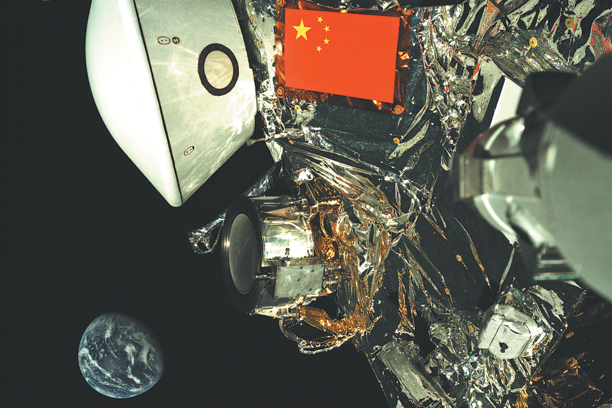
China Focus: China achieves numerous breakthroughs in space exploration quest
China has made significant strides in space exploration during the 14th Five-Year Plan period (2021-2025), achieving numerous breakthroughs that have contributed to humanity’s understanding of space and technological advancements. The completion of China’s space station, the first-ever sampling of soil from the far side of the moon, and the exploration of Mars are among the key milestones. The space station, which became operational with the launch of the Tianhe core module in April 2021, now hosts a variety of scientific experiments and international collaborations. The Chang’e 6 mission successfully returned lunar samples from the moon’s far side, providing valuable insights into lunar geology. Additionally, the Tianwen 1 mission has expanded our knowledge of Mars, with the rover discovering evidence of an ancient ocean. Looking ahead, China plans to continue its space exploration efforts with missions like Chang’e 7, Chang’e 8, and Tianwen 3, aiming to further scientific research and international cooperation.
-
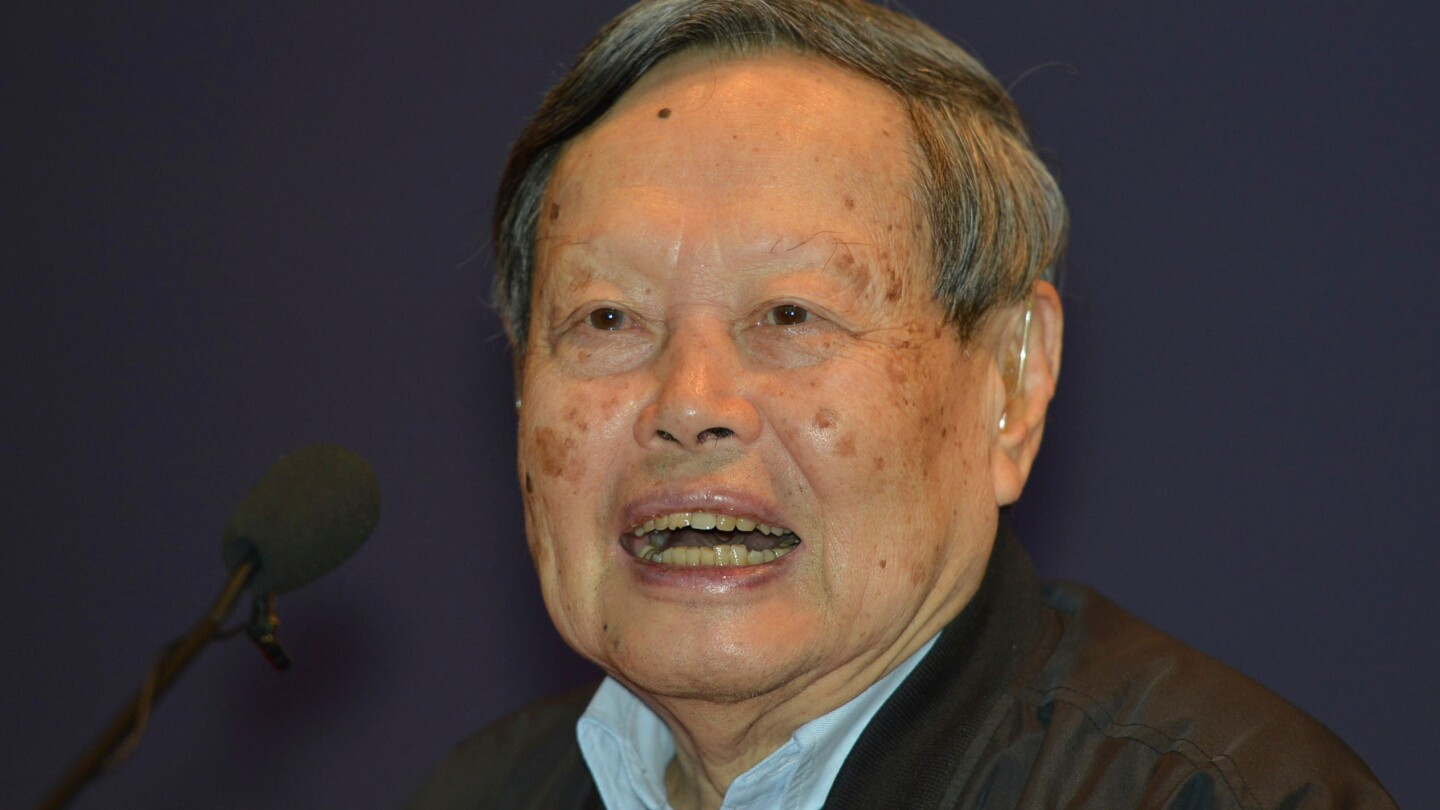
Chinese Nobel Prize-winning physicist Chen Ning Yang dies at 103
Renowned physicist Chen Ning Yang, a Nobel Prize laureate and one of the most influential figures in modern physics, passed away in Beijing on Saturday at the age of 103. Tsinghua University, where Yang both studied and taught, confirmed his death in a statement, attributing it to an unspecified illness. The university hailed Yang as one of the greatest physicists of the 20th century, emphasizing his groundbreaking contributions to the field of physics and his significant role in advancing China’s scientific and educational landscape. Yang, along with Tsung-Dao Lee, was awarded the Nobel Prize in Physics in 1957 for their groundbreaking work on parity laws, which led to pivotal discoveries in elementary particle physics. This achievement marked them as the first Chinese-born physicists to receive the prestigious award. In his Nobel Banquet speech, Yang reflected on his dual heritage, expressing pride in his Chinese roots while acknowledging his deep connection to Western scientific traditions. He famously stated, ‘I am heavy with an awareness of the fact that I am in more than one sense a product of both the Chinese and Western cultures, in harmony and in conflict.’ Yang’s legacy also includes the development of the Yang–Mills theory, a cornerstone of modern physics, which he co-authored with American physicist Robert Mills. Born in 1922 on the Tsinghua University campus, where his father was a mathematics professor, Yang pursued his undergraduate and master’s degrees at Tsinghua before earning his doctorate at the University of Chicago in 1946. He was profoundly influenced by Italian-American physicist Enrico Fermi, a fellow Nobel laureate. Yang’s academic career spanned prestigious institutions, including the Institute for Advanced Study in Princeton and the Chinese University of Hong Kong, where he served as a distinguished Professor-at-large and made generous donations, including his Nobel Prize. In 2015, Yang renounced his U.S. citizenship, a decision he described as difficult but necessary, reflecting on the opportunities the country had provided him. He is survived by three children.
-
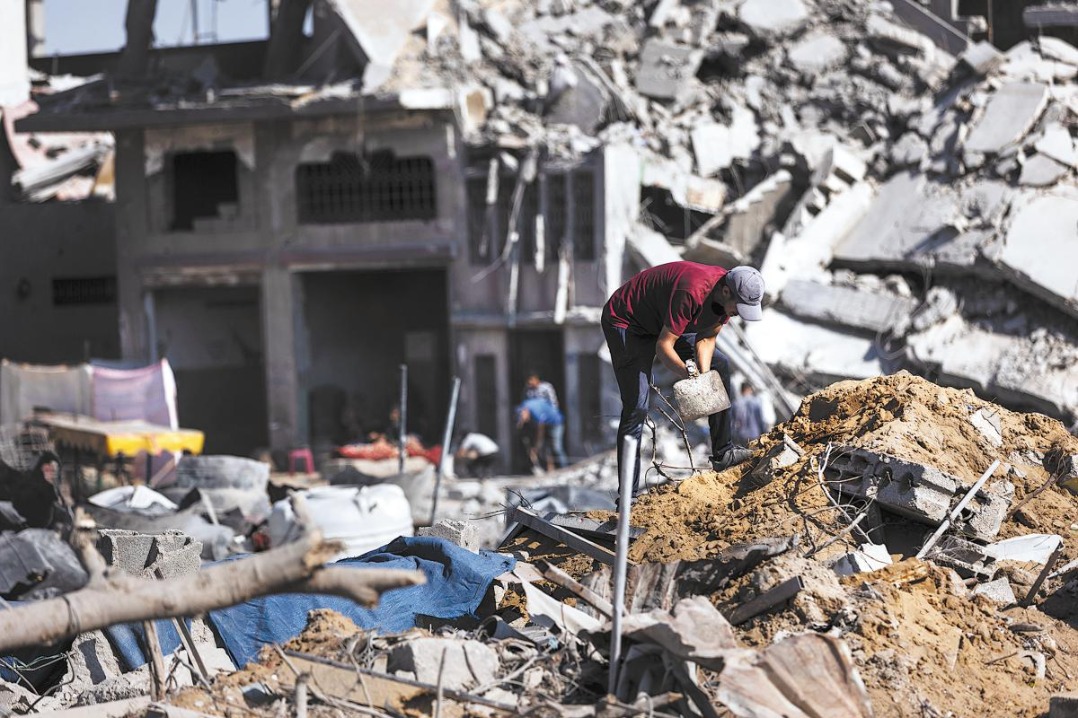
Palestinian PM outlines Gaza reconstruction plan
The Palestinian Prime Minister, Mohammad Mustafa, has announced a comprehensive three-phase recovery and reconstruction plan for Gaza, with an estimated cost of $67 billion over five years. The plan was unveiled during a meeting with international partners in Ramallah, West Bank, on Thursday. This initiative aligns with the Gaza Recovery, Reconstruction & Development Plan adopted at the Extraordinary Arab Summit in Cairo in March 2025 and is consistent with United Nations resolutions and the New York Declaration.
The first phase, lasting six months, will address urgent humanitarian and infrastructure needs at a cost of $3.5 billion. The second phase, spanning three years, will require $30 billion, while the final phase will focus on long-term recovery and reconstruction. Mustafa emphasized that the reconstruction must be ‘Palestinian-led, Arab-backed, and internationally supported,’ aiming to restore hope, dignity, and stability for Gaza’s people.
However, the plan faces significant challenges. Israel opposes any role for the Palestinian Authority or Hamas in governing Gaza following the two-year conflict, which has resulted in 68,000 Palestinian deaths, over 170,000 injuries, and widespread destruction. The Israel-Hamas ceasefire, which took effect on October 10, includes Israeli troop withdrawals, hostage and prisoner exchanges, and the opening of aid crossings. Despite progress, tensions remain high. Israel continues to station troops in half of Gaza and has linked the return of deceased hostages to humanitarian aid deliveries.
Meanwhile, Hamas has accused Israel of violating the ceasefire by killing at least 24 people since October 10. The group has submitted a list of alleged violations to mediators. US President Donald Trump has also escalated tensions, threatening military action against Hamas if it continues to carry out executions in Gaza. Aid trucks from Egypt remain stalled at the Rafah crossing, with Israel providing no clear timeline for their entry.
The international community is closely monitoring the situation as negotiations for the second phase of the ceasefire are expected to begin soon. The outcome will significantly impact the future of Gaza and the broader Israeli-Palestinian conflict.
-

Afghan and Pakistani delegations head to Doha for crisis talks
In a bid to de-escalate the deadliest crisis between Afghanistan and Pakistan in recent years, delegations from both nations are en route to Doha, Qatar. The move follows over a week of intense border clashes that have resulted in dozens of fatalities and hundreds of injuries on both sides. The Taliban government confirmed that the Afghan delegation includes the defense minister and the head of the national intelligence agency, while Pakistan’s delegation departed on Saturday, as reported by the national broadcaster PTV.
-
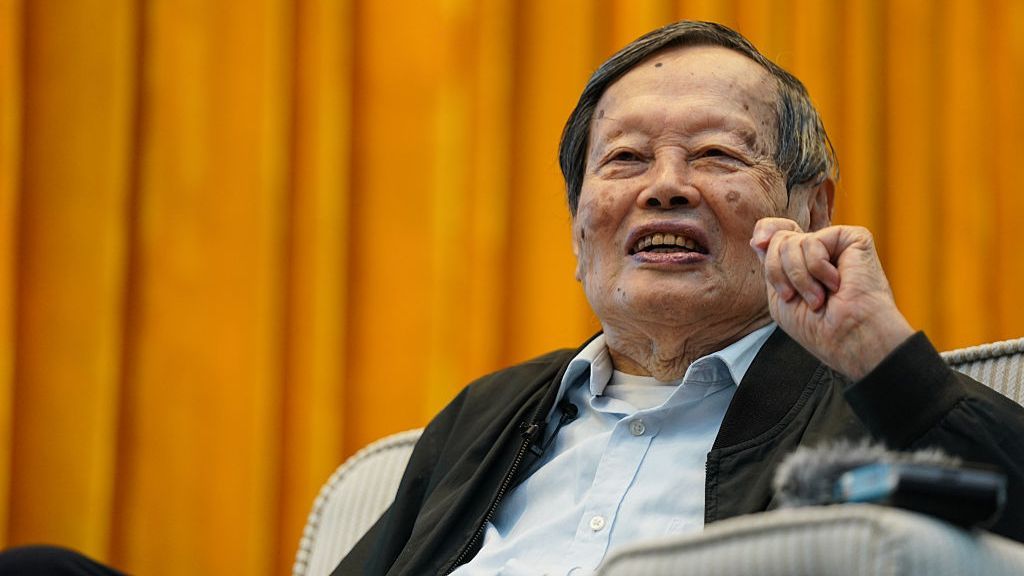
Chinese Nobel laureate and physicist Chen Ning Yang dies aged 103
Chen Ning Yang, a towering figure in the world of physics and a Nobel Prize laureate, has passed away at the age of 103, as reported by Chinese state media. The cause of death was cited as illness in an obituary released by CCTV. Yang, alongside fellow physicist Lee Tsung-Dao, was awarded the Nobel Prize in Physics in 1957 for their groundbreaking work on parity laws, which significantly advanced the understanding of elementary particles, the fundamental components of matter. Born in 1922 in Anhui province, China, Yang grew up on the campus of Tsinghua University, where his father was a mathematics professor. From a young age, Yang harbored ambitions of winning the Nobel Prize, a dream he realized at the age of 35. His academic journey took him from National Southwest Associated University in Kunming, where he earned his science degree in 1942, to Tsinghua University for his master’s, and eventually to the University of Chicago on a fellowship. There, he studied under Enrico Fermi, the inventor of the world’s first nuclear reactor. Yang’s career spanned various areas of physics, with a particular focus on statistical mechanics and symmetry principles. His contributions to the field were recognized with numerous accolades, including the Albert Einstein Commemorative Award in 1957 and an honorary doctorate from Princeton University in 1958. Yang’s personal life saw him marry twice, first to Chih Li Tu, with whom he had three children, and later to Weng Fan, whom he described as his ‘final blessing from God.’
-

Singapore’s president: “US–China Edge” drives shared prosperity
At the IMF-World Bank annual meetings in Washington this week, Singapore’s President Tharman Shanmugaratnam emphasized the importance of fostering collaboration between the United States and China, despite escalating tensions over tariffs, technology, and geopolitics. President Shanmugaratnam introduced the concept of the ‘US-China Edge,’ urging both nations to identify shared interests where competition can coexist with cooperation. He argued that transforming rivalry into innovation could drive mutual prosperity and global stability. The meetings, attended by government officials and central bank governors, provided a platform for addressing pressing economic challenges and exploring pathways for international cooperation. President Shanmugaratnam’s remarks underscored the need for strategic dialogue and trust-building measures to navigate the complexities of US-China relations. His call for innovation-driven collaboration resonated with attendees, highlighting the potential for economic growth and shared benefits in a multipolar world.