标签: Asia

亚洲

  • First super moon of 2026 makes appearance in sky

    First super moon of 2026 makes appearance in sky

    The night sky unveiled a breathtaking astronomical phenomenon on January 3, 2026, as the first super moon of the year made its spectacular appearance. This celestial event, characterized by the moon’s unusually close orbital proximity to Earth, created a visually larger and significantly brighter lunar display than typical full moons.

    The remarkable phenomenon was captured in stunning photographs over Tongjiang city in Northeast China’s Heilongjiang province, where the super moon appeared as a magnificent luminous orb against the night canvas. This occurrence marks the initial of several super moons anticipated throughout 2026, each offering unique opportunities for astronomical observation and photography.

    Super moons occur when the moon’s elliptical orbit brings it to the closest point to Earth (perigee) simultaneously with the full moon phase. This orbital alignment can make the moon appear up to 14% larger and 30% brighter compared to its appearance at the farthest point (apogee). The scientific community emphasizes that while super moons create visually striking appearances, they remain a predictable orbital phenomenon rather than an unusual astronomical event.

    The January super moon attracted attention from both amateur stargazers and professional astronomers worldwide, serving as a reminder of the dynamic relationships within our celestial neighborhood. Such events continue to inspire public interest in astronomy and space science while providing researchers with opportunities to study the moon’s surface features under enhanced lighting conditions.

  • Iran protests: What is driving the unrest?

    Iran protests: What is driving the unrest?

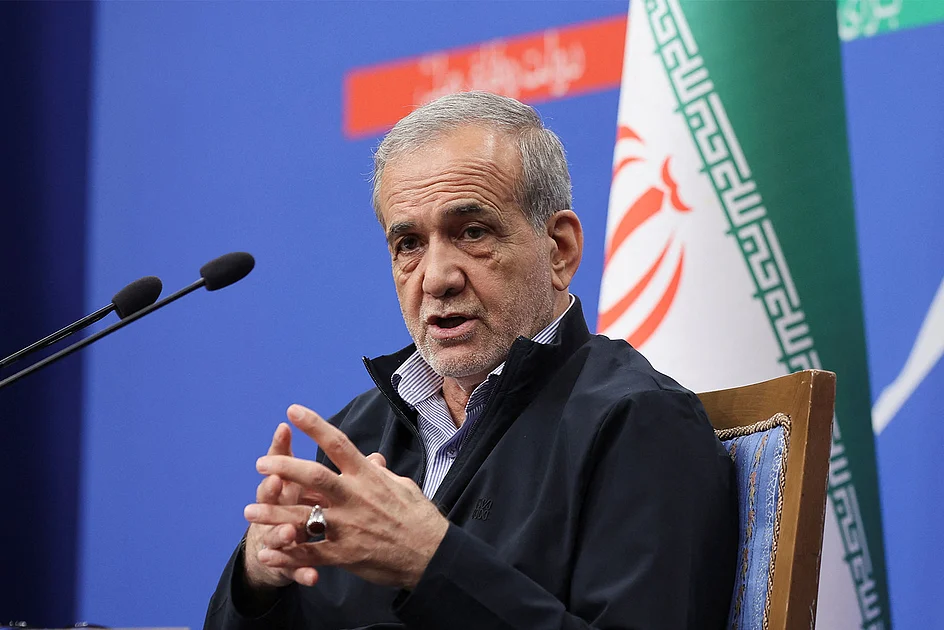
    Iran has been plunged into a state of escalating civil unrest as merchant strikes originating in Tehran’s historic Grand Bazaar have rapidly transformed into nationwide protests, resulting in violent confrontations with security forces and multiple casualties.

    The initial demonstrations emerged Sunday in central Tehran near key commercial districts, quickly spreading to over thirty urban centers. The protests have claimed at least seven lives with dozens injured, marking a significant escalation from economic discontent to broader political opposition against the ruling authorities.

    Economic instability served as the primary catalyst, with the Iranian rial experiencing catastrophic devaluation. The currency has plummeted from approximately 55,000 rials to the US dollar in 2018 to a staggering 1.45 million rials currently—a decline accelerated by recent regional conflicts, international sanctions targeting Iran’s energy exports, and widespread banking restrictions.

    Additional economic pressures include the government’s introduction of a three-tiered gasoline pricing system and a proposed budget increasing taxes on businesses while projecting reduced oil revenues. These measures exacerbated existing frustrations over inflation and economic management.

    Tehran’s bazaar merchants, historically influential in Iranian politics, initiated the strikes in a tradition dating back to the Constitutional Revolution of 1905-1911. Their actions created political space for broader public participation, with protests particularly concentrated in western and southwestern regions home to ethnic minorities.

    The government response has included economic concessions such as tax breaks and subsidized currency access, the resignation of Central Bank governor Mohammad Reza Farzin, and the shutdown of state offices under the pretext of weather conditions. Universities have transitioned to online instruction to prevent campus gatherings.

    Despite these measures, demonstrations have continued with significant violence reported in cities including Kuhdasht and Azna. The situation has drawn international attention, with former US President Donald Trump threatening intervention if protesters are harmed—a statement Iranian authorities have characterized as foreign interference.

    Security forces including riot police and Basij paramilitary units maintain heavy deployment across multiple cities, with pro-government media accusing protesters of acting as foreign pawns. The unrest echoes previous anti-government movements while demonstrating distinct geographical patterns of resistance outside the capital.

  • Thick fog at Dubai’s Half Desert turns camping nights into rare, unreal experiences

    Thick fog at Dubai’s Half Desert turns camping nights into rare, unreal experiences

    An extraordinary meteorological event transformed Dubai’s Half Desert into an ethereal landscape as unusually dense fog enveloped the region in the early hours of January 3, 2026. What began as a typical clear night for desert campers rapidly evolved into a rare atmospheric phenomenon that reduced visibility to near-zero conditions, creating both magical experiences and significant travel challenges.

    According to eyewitness accounts, the fog system began developing around 1:30 AM, gradually obscuring sand dunes and access roads with an impenetrable white blanket. Mohammed Ardashir, an Iranian resident camping with friends, described the surreal transformation: ‘The desert appeared completely enveloped in clouds. We could scarcely see the adjacent tents, creating an almost supernatural atmosphere that defied our typical desert expectations.’

    While some adventurers embraced the unusual conditions as a unique natural spectacle, others prioritized safety considerations. Mantuf Khan and his camping group made the cautious decision to depart around 4:30 AM, navigating desert roads at reduced speeds below 30 km/h with hazard lights activated. ‘The driving conditions became exceptionally challenging with virtually no visibility beyond our immediate vicinity,’ Khan reported. ‘All vehicles maintained extended following distances and extreme caution.’

    Local desert caretaker Shahnawaz Khan provided meteorological context, noting that such dense fog formations represent characteristic winter weather patterns typically occurring during December and January. However, the intensity and duration of this particular event distinguished it from ordinary seasonal occurrences, potentially persisting throughout the weekend according to historical weather patterns.

    The phenomenon generated contrasting responses among desert visitors. Those who remained described an exceptionally tranquil environment where the typical auditory landscape became muffled and transformed. The experience of observing fog movement around traditional camping arrangements while consuming warm beverages created unexpectedly peaceful moments despite the unusual circumstances.

    This event highlights the dynamic intersection between desert tourism and natural weather variability in the UAE region, demonstrating how environmental conditions can rapidly alter recreational experiences while emphasizing the importance of safety preparedness during winter camping expeditions.

  • Israel’s opposition leader urges Iran to ‘pay close attention’ to Venezuela

    Israel’s opposition leader urges Iran to ‘pay close attention’ to Venezuela

    In a significant escalation of diplomatic rhetoric, Israeli opposition leader Yair Lapid issued a stark warning to Iranian leadership, urging them to “pay close attention to what is happening in Venezuela.” This statement, delivered via social media platform X, appeared to reference the recent U.S. military operation that resulted in the capture of Venezuelan President Nicolas Maduro.

    The comments emerged amidst widespread international condemnation of the United States’ intervention in the oil-rich South American nation, with numerous global officials decrying the action as a violation of international law. Iran, a key ally of Venezuela, was among the first nations to condemn the U.S. operation, characterizing it as a “flagrant violation of Venezuela’s national sovereignty and territorial integrity.”

    The Iranian foreign ministry released an official statement asserting that “the US military attack on Venezuela constitutes a clear violation of the fundamental principles of the United Nations Charter and the basic rules of international law.” The ministry further warned that American military aggression could trigger global consequences, emphasizing Venezuela’s “inherent right to defend its national sovereignty, territorial integrity, and right to self-determination.”

    In contrast to the international criticism, Israel expressed support for Maduro’s removal. Israeli Foreign Minister Gideon Sa’ar stated on X: “Israel welcomes the removal of the dictator who led a network of drugs and terror and hopes for the return of democracy to the country and for friendly relations between the states.”

    The geopolitical tensions escalated further when former U.S. President Donald Trump threatened potential intervention in Iran amid domestic protests, declaring: “If Iran shoots and violently kills peaceful protesters, which is their custom, the United States of America will come to their rescue. We are locked and loaded and ready to go.”

    Iran’s Supreme National Security Council Secretary Ali Larijani responded with a warning that U.S. intervention “corresponds to chaos in the entire region and the destruction of US interests,” likely referencing Iranian capabilities to target American military bases in the region.

    Meanwhile, Israeli Prime Minister Benjamin Netanyahu, following meetings with Trump, publicly advocated for renewed military action against Iran, accusing Tehran of “exporting terrorism not only to every part of the Middle East, but to Venezuela” and alleging Iranian collaboration with the Maduro regime.

  • Bodies of first 4 victims of Swiss bar fire, including two children, identified

    Bodies of first 4 victims of Swiss bar fire, including two children, identified

    Swiss authorities have made progress in identifying victims of the devastating New Year’s Eve bar fire that claimed 40 lives at the popular Crans-Montana ski resort. Valais canton police confirmed Saturday the identification of four Swiss nationals, including two teenagers, marking the first formal victim notifications from the tragedy that also injured 119 revelers.

    The identified victims include a 21-year-old woman, an 18-year-old man, and two 16-year-olds—one girl and one boy. Their remains have been returned to grieving families as forensic teams continue the painstaking process of identifying other victims, a challenge compounded by the severity of burns sustained in the blaze.

    Valais area chief Mathias Reynard provided sobering updates regarding the injured, noting that many remain in critical condition fighting for their lives. Approximately 50 patients have been or will be transferred to specialized burn units across Europe, with Germany and France among countries providing medical assistance.

    Police Chief Frederic Gisler revealed the international scope of the tragedy, confirming that 113 injured individuals have been identified thus far. The breakdown includes 71 Swiss nationals, 14 French citizens, 11 Italians, and additional victims from Serbia, Bosnia, Belgium, Poland, Portugal, and Luxembourg.

    Authorities continue to treat the incident as a catastrophic fire rather than an intentional attack. Preliminary investigations suggest sparklers ignited foam-clad ceiling materials at the packed bar, though the establishment’s owner maintains that all safety protocols were properly followed. The investigation remains ongoing as forensic teams work at the scene to determine the exact sequence of events.

  • Trump says Maduro ‘captured’ as US bombs Venezuela

    Trump says Maduro ‘captured’ as US bombs Venezuela

    In a dramatic escalation of tensions, former U.S. President Donald Trump declared on his Truth Social platform that American military forces had successfully captured Venezuelan President Nicolás Maduro during a series of large-scale strikes within Venezuela. Trump asserted that Maduro and his wife, Cilia Flores, had been extracted from the country by U.S. forces.

    The announcement followed reports of significant explosions near key civilian and military installations in Caracas, as well as in the states of La Guaira, Aragua, and Miranda. According to U.S. officials speaking to CBS News, the high-risk operation was executed by the elite Delta Force unit, which Trump later praised as a ‘brilliant’ mission in communications with The New York Times.

    Venezuelan Vice President Delcy Rodríguez, who stands next in the line of succession, immediately challenged Trump’s claims, stating that the whereabouts of both Maduro and his wife were unknown. She publicly demanded that the U.S. provide verifiable proof that Maduro was alive and in their custody.

    The Venezuelan government reported numerous casualties from the attacks, though no specific death toll was immediately provided. U.S. authorities confirmed they sustained no American casualties during the operation.

    Contradictory narratives emerged regarding the circumstances of Maduro’s apparent removal. Sky News cited senior Venezuelan opposition sources suggesting Maduro’s exit had been ‘negotiated’ with the United States, while U.S. Senator Mike Lee of Utah stated on social media platform X that Secretary of State Marco Rubio anticipated ‘no further action in Venezuela now.’ Lee further revealed that Rubio informed him Maduro would face criminal charges in the United States.

    In response to the military action, Venezuelan Defense Minister Vladimir Padrino condemned the strikes as ‘the worst aggression’ against the nation and announced the full deployment of military forces across Venezuela, vowing to resist any foreign troop presence.

  • China’s railways see New Year holiday return passenger flow peak

    China’s railways see New Year holiday return passenger flow peak

    China’s extensive railway system experienced a significant surge in return passenger traffic on Saturday, January 3rd, 2026, marking the conclusion of the New Year holiday period. According to official data released by China State Railway Group Co Ltd, the national rail network prepared to accommodate approximately 17.45 million passenger journeys on the final day of the holiday break.

    In response to the substantial travel demand, railway authorities implemented enhanced operational measures, scheduling an additional 1,343 passenger trains to ensure efficient transportation services nationwide. The strategic deployment of extra capacity aimed to facilitate smooth travel experiences for millions of citizens returning from their holiday destinations.

    Geographical analysis of passenger flow patterns identified Guangzhou, Beijing, and Chengdu as primary departure hubs, while Beijing, Guangzhou, and Shanghai emerged as the most frequented destination cities. This bidirectional traffic pattern reflects the extensive interregional mobility characteristic of China’s major holiday periods.

    The preceding day, Friday January 2nd, already demonstrated substantial transportation activity with railways processing over 12 million passenger trips nationwide. The 2026 New Year holiday period officially spanned from Thursday December 31st, 2025 through Saturday January 3rd, 2026, creating a concentrated three-day window for holiday travel and family reunions across the country.

    China’s railway management continues to demonstrate remarkable operational capability in managing these periodic mass migration events, which represent some of the largest organized human movements globally. The efficient handling of such substantial passenger volumes underscores the advanced logistical planning and infrastructure development within China’s transportation sector.

  • New Chinese study reveals Antarctic amplification mechanism

    New Chinese study reveals Antarctic amplification mechanism

    A groundbreaking study conducted by Chinese scientists has provided definitive confirmation of future Antarctic amplification while elucidating the precise physical mechanisms driving this critical climate phenomenon. Published recently in the prestigious journal Geophysical Research Letters, the research represents a significant advancement in understanding polar climate dynamics.

    Led by researchers from the Institute of Global Change and Polar Meteorology under the Chinese Academy of Meteorological Sciences (CAMS), the study resolves longstanding uncertainties regarding Antarctic warming patterns. While polar amplification has been well-documented in the Arctic, the Antarctic counterpart had remained subject to scientific debate until this comprehensive analysis.

    The research team employed an extensive dataset comprising observations from over 200 Antarctic monitoring stations, combined with China’s first-generation global atmospheric and land surface reanalysis products. This robust methodology enabled the first detection of a continent-wide warming signal across Antarctica’s vast expanse.

    Under the Paris Agreement’s 2 degrees Celsius warming scenario, the study demonstrates a pronounced warming signal over the Antarctic continent, with an overall warming magnitude approximately 1.4 times greater than the Southern Hemisphere average. Dr. Ding Minghu, head of the Institute of Global Change and Polar Research at CAMS, explained the mechanism: ‘The roaring westerlies of the Southern Hemisphere create an isolating effect, meaning human activities primarily influence Antarctica through sea surface warming and subsequent heat transfer. This explains why Antarctic warming has lagged behind other global regions.’

    The research further indicates that with continuously rising sea surface temperatures, Antarctic amplification will progressively intensify in coming decades, accompanied by an accelerated warming rate. This revelation highlights a substantial, previously underestimated human impact on the Antarctic climate system, with far-reaching implications for global sea level rise and climate modeling accuracy.

  • Shreyas Iyer returns for India’s ODI series against New Zealand

    Shreyas Iyer returns for India’s ODI series against New Zealand

    MUMBAI, India — The Board of Control for Cricket in India (BCCI) unveiled its provisional squad on Saturday for the upcoming one-day international series against New Zealand, marking significant returns and strategic player management decisions ahead of the 2026 T20 World Cup.

    In a major development, middle-order batsman Shreyas Iyer received provisional selection following his recovery from a spleen injury sustained during October’s ODI against Australia in Sydney. His final participation remains contingent upon fitness clearance from BCCI’s medical team, with the potential to return as vice-captain for the three-match contest.

    Captain Shubman Gill makes his anticipated return after missing December’s ODI series against South Africa due to neck spasms suffered during the preceding Test matches. The squad welcomes back star veterans Virat Kohli and Rohit Sharma, both having recently participated in the domestic Vijay Hazare Trophy to maintain competitive form.

    The selection committee implemented strategic resting policies for key personnel. Pace spearhead Jasprit Bumrah receives continued rest alongside all-rounder Hardik Pandya, who despite being fit, hasn’t achieved bowling readiness for full ODI quotas. Pandya’s absence creates opportunity for newcomer Nitish Kumar Reddy’s inclusion.

    Notable omissions include Ruturaj Gaikwad, despite his maiden ODI century against South Africa in Visakhapatnam, and Tilak Verma. Wicketkeeping duties will be shared between primary choice Lokesh Rahul—who previously captained against South Africa—and Rishabh Pant as secondary keeper-batter.

    Mohammed Siraj returns to lead the bowling attack after missing the previous series due to workload management protocols. The pace battery features Prasidh Krishna and Arshdeep Singh alongside spin options Ravindra Jadeja, Washington Sundar, and Kuldeep Yadav.

    The white-ball engagement commences with three ODIs in Vadodara (January 11), Rajkot (January 14), and Indore (January 18), followed by a five-match T20 series beginning January 21, serving as crucial preparation for the 2026 T20 World Cup co-hosted by India and Sri Lanka.

  • BCCI instructs Kolkata Knight Riders to release Bangladesh’s Mustafizur

    BCCI instructs Kolkata Knight Riders to release Bangladesh’s Mustafizur

    The Board of Control for Cricket in India (BCCI) has directed Indian Premier League franchise Kolkata Knight Riders to release Bangladeshi fast bowler Mustafizur Rahman from their squad. This unprecedented decision comes amid escalating diplomatic tensions between India and Bangladesh.

    BCCI secretary Devajit Saikia confirmed the directive on Saturday, stating franchises may request replacement players subject to board approval. The 30-year-old left-arm pacer, acquired by KKR for a record 92 million Indian rupees in last month’s auction, now becomes the most expensive Bangladeshi player to be released from IPL commitments.

    The sporting decision follows deteriorating bilateral relations triggered by recent incidents. Last month, protests erupted near Bangladesh’s High Commission in New Delhi after Hindu factory worker Dipu Chandra Das was fatally assaulted in Bangladesh’s Mymensingh district. The incident occurred amid allegations of derogatory remarks about Prophet Muhammad, resulting in twelve arrests.

    These developments compound existing diplomatic strains dating to 2024, when former Bangladeshi Prime Minister Sheikh Hasina sought refuge in New Delhi following domestic protests against her administration.

    Mustafizur brings substantial IPL experience, having claimed 65 wickets across 60 matches for five franchises including Sunrisers Hyderabad, Mumbai Indians, and Chennai Super Kings. His release occurs just before the nineteenth IPL edition commencing March 26, which follows the Twenty20 World Cup co-hosted by India and Sri Lanka beginning February.