
In a devastating overnight assault, Russian missile strikes killed six individuals, including two children, and left 17 injured in and around Kyiv, Ukrainian authorities confirmed on Wednesday. The attack also targeted Ukraine’s energy infrastructure, plunging thousands into darkness and cutting off heating during the harsh winter season. Ukrainian President Volodymyr Zelensky condemned the strikes, stating on social media that they underscored Russia’s lack of urgency to end the protracted conflict. The bombardment followed the cancellation of a planned meeting between US President Donald Trump and Russian leader Vladimir Putin, which was intended to address the nearly four-year war. Trump had initially proposed peace talks in Budapest but later shelved the plans, citing concerns over their potential futility. Meanwhile, Ukraine remains steadfast in its refusal to cede territory, a stance supported by its European allies, who advocate for freezing the conflict along current frontlines. Russia, which launched a full-scale invasion of Ukraine in February 2022, claims its actions are aimed at demilitarizing the country and curbing NATO expansion. However, Kyiv and its allies denounce the war as an illegal land grab, responsible for tens of thousands of casualties and widespread devastation. As of now, Russia occupies approximately one-fifth of Ukrainian territory, much of it scarred by relentless fighting.
标签: Asia
亚洲
-
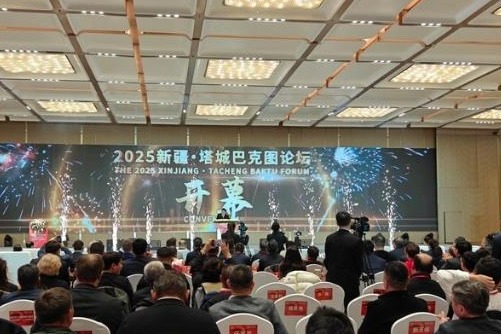
2025 Xinjiang Tacheng Baktu Forum opens, strengthening regional cooperation
The 2025 Xinjiang Tacheng Baktu Forum commenced on Tuesday, uniting government officials, business leaders, and experts from China, Kazakhstan, Russia, and other nations involved in the Belt and Road Initiative (BRI). Held under the theme of fostering development through openness and creating a shared future, the forum emphasized strengthening cross-border cooperation in trade, industry, and technology, alongside promoting cultural exchanges. Tacheng, strategically located on China’s border with Kazakhstan, serves as a vital gateway for China’s westward expansion. Its historic Baktu Port, once a key node on the ancient Silk Road, now handles 3 million metric tons of cargo annually and facilitates 500,000 border crossings. The forum spotlighted multilateral infrastructure and logistics projects, including the Baktu-Ayaguz Railway, which is expected to increase transport capacity by 25 million tons by 2027. Germany’s North Rhine-Westphalia introduced a ‘twin hub’ logistics model to enhance freight connectivity with Xinjiang and explore green energy and hydrogen technology partnerships. The event culminated in the signing of 30 cooperation agreements worth 13.1 billion yuan ($1.8 billion), spanning cross-border tourism, new materials, and automotive assembly. Four thematic seminars addressed opportunities in e-commerce, logistics, cultural tourism, and institutional innovation. Tacheng aims to further develop its cross-border economic cooperation zone and solidify its role as a bridge for regional connectivity and economic integration. As the Baktu Forum becomes an annual fixture, it will continue to serve as a pivotal platform for deepening collaboration among BRI partner countries.
-

Sri Lanka opposition politician shot dead inside office
In a shocking act of violence, Lasantha Wickramasekara, a prominent opposition politician in Sri Lanka, was fatally shot inside his office on Wednesday. The 38-year-old council chairman of Weligama was engaged in a meeting with constituents when an unidentified assailant stormed in and fired multiple shots from a revolver. The gunman fled the scene immediately, leaving Wickramasekara dead and no other injuries reported. Local police have launched a full-scale investigation to apprehend the perpetrator, though the motive behind the attack remains unclear. Wickramasekara was a key member of the Samagi Jana Balawegaya (SJB) party, which has been embroiled in a fierce political rivalry with the ruling party over control of the Weligama council. This incident marks the first assassination of a political figure since President Anura Kumara Dissanayake’s administration took office last year, vowing to curb violence and restore law and order. Sri Lanka has witnessed a sharp rise in violent crimes this year, with over 100 shootings resulting in at least 50 fatalities, many linked to drug gangs and organized crime. The assassination has raised concerns about the escalating political tensions and the government’s ability to address the growing security crisis.
-

First satellite produced in Xiong’an marks industry milestone
The production of the first satellite in Xiong’an New Area, Hebei province, has been hailed as a significant milestone in the region’s aerospace industry. Dubbed Xiong’an-1, the satellite was unveiled on Wednesday at the smart satellite manufacturing pilot base of Blue Arrow Hongqing (Xiong’an) Space Technology. This achievement underscores Xiong’an’s growing prowess in smart manufacturing within the aerospace information sector and is expected to draw more enterprises to the area, further solidifying its industrial chain. The satellite boasts three key technological innovations: a high-performance onboard computer, large flexible solar wings, and a next-generation electric propulsion system. These advancements are designed to improve computing power, energy efficiency, and propulsion capabilities, paving the way for the development of high-throughput, long-life, and intelligent communication satellites. Since its inception earlier this year, Blue Arrow Hongqing has benefited from robust local government support, including streamlined registration processes and an 80 million yuan ($11 million) investment from a regional sci-tech fund, which has expedited its research and production efforts. As a cornerstone of Xiong’an’s future industries, the aerospace information sector has already attracted major players like China Satellite Network Group, fostering a comprehensive industrial ecosystem.
-
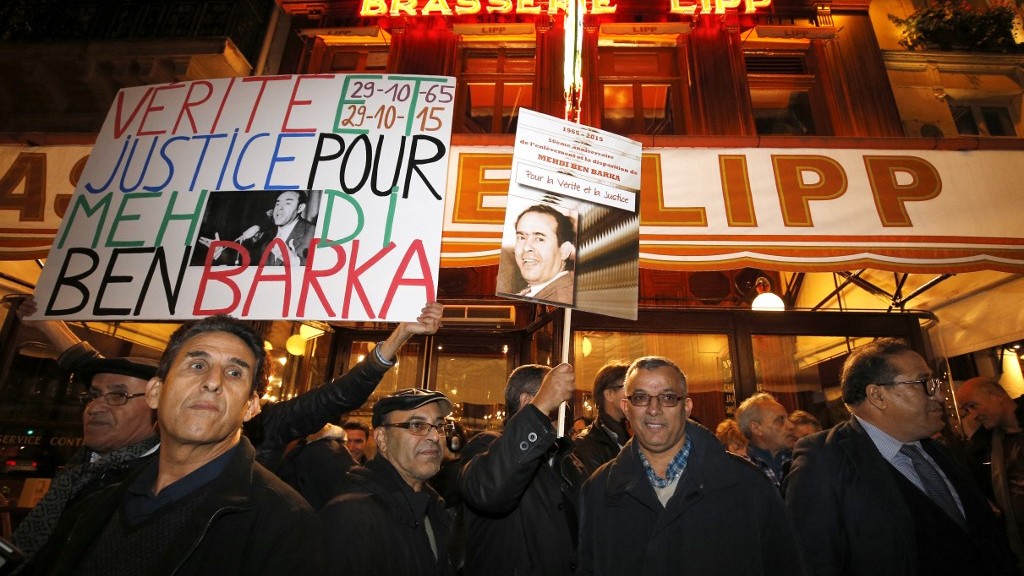
Israel’s involvement in death of Moroccan opposition leader revealed
A groundbreaking new book titled *L’Affaire Ben Barka. La fin des secrets* (“The Ben Barka Affair: The End of Secrets”) has unveiled Israel’s covert involvement in the 1965 assassination of Mehdi Ben Barka, a prominent Moroccan opposition leader. Ben Barka, the exiled head of the left-wing National Union of Popular Forces (UNFP), was abducted in Paris on October 29, 1965, and his body was never recovered. While the Moroccan state had long been suspected due to Ben Barka’s opposition to King Hassan II, the book reveals the extent of Israel’s Mossad spy agency’s role in the operation. Authored by journalists Stephen Smith and Ronen Bergman, the book draws on previously classified documents to detail the collaboration between Mossad and Moroccan security forces. The operation was reportedly overseen by Ahmed Dlimi, deputy director of Moroccan security, and Rafi Eitan, a key Israeli intelligence figure. Mossad operatives allegedly procured tools and corrosive materials in Paris, including sodium hydroxide, to dispose of Ben Barka’s body. After his abduction, Ben Barka was held south of Paris and later interrogated and drowned by Dlimi, who documented the killing to confirm its completion. The book also highlights the covert ties between Morocco and Israel, which have persisted since the 1960s and were formalized in 2020 with U.S. recognition of Moroccan sovereignty over Western Sahara. This alliance has fueled trade and defense cooperation, including the transfer of F-35 jet components used in Israel’s Gaza operations, sparking widespread anger in Morocco over Israel’s actions in Gaza.
-
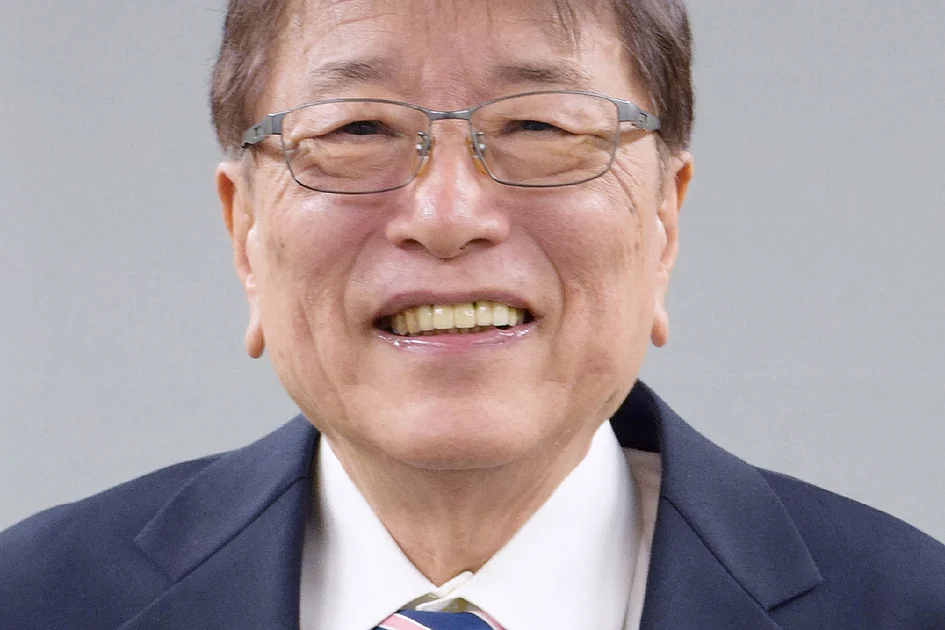
‘Stealth husband’ of Japan’s new PM vows quiet support
In a unique approach to spousal support, Taku Yamamoto, the husband of Japan’s newly appointed Prime Minister Sanae Takaichi, has vowed to remain a ‘stealth husband,’ offering quiet support while staying out of the public eye. Yamamoto, a 73-year-old former lawmaker from the ruling Liberal Democratic Party (LDP), emphasized the cultural preference for partners to avoid the spotlight in Japan, unlike in Western countries. This stance comes as Takaichi, Japan’s first female Prime Minister, assumes her role with a vision to lead the nation. Yamamoto, who has been married to Takaichi twice—first in 2004, then again in 2021 after a brief divorce—expressed his commitment to ensuring his presence does not hinder her political ambitions. The couple’s relationship has been marked by their shared political journey, including Yamamoto’s support during Takaichi’s unsuccessful bid for the LDP leadership in 2021. Despite facing health challenges, including a stroke and prostate cancer, Yamamoto continues to support Takaichi, even taking on household responsibilities like cooking. Takaichi, known for her conservative views and admiration for Margaret Thatcher, has faced criticism for her stance on gender issues, including her opposition to revising Japan’s 19th-century law requiring married couples to share the same surname. The couple’s unique dynamic, blending personal and political lives, offers a glimpse into the challenges and complexities of leadership in Japan’s political landscape.
-

Corbyn demands Lisa Nandy retract ‘misleading’ Maccabi Tel Aviv smears against MPs
Former Labour leader and independent MP Jeremy Corbyn has accused Culture Secretary Lisa Nandy of making “grossly misleading” statements in parliament regarding the ban on Maccabi Tel Aviv fans from a November match against Aston Villa. Corbyn’s letter, revealed by the Guardian, highlights police intelligence that contradicts Nandy’s claims, asserting that the ban was primarily due to the risk of violence posed by Maccabi fans, not their Israeli or Jewish identity. Labour ministers have called for the ban’s reversal, labeling it antisemitic. Police intelligence, supported by Dutch authorities, indicated that Maccabi fans had previously attacked random Muslims in Amsterdam, raising concerns about potential violence in Birmingham. West Midlands Police also noted local Jewish support for the ban, fearing reprisals from residents. Nandy defended the ban in parliament, emphasizing the safety of Maccabi fans due to their Israeli and Jewish identity. Corbyn, however, insisted the ban was not about religion but about public safety, urging Nandy to retract her comments. Independent MPs, including Ayoub Khan and Iqbal Mohamed, criticized the conflation of antisemitism with the ban, highlighting the fans’ violent history. Maccabi Tel Aviv later announced it would not sell tickets to its fans for the Birmingham match, following a history of violence and hate speech in European cities, including a recent ban in Amsterdam.
-
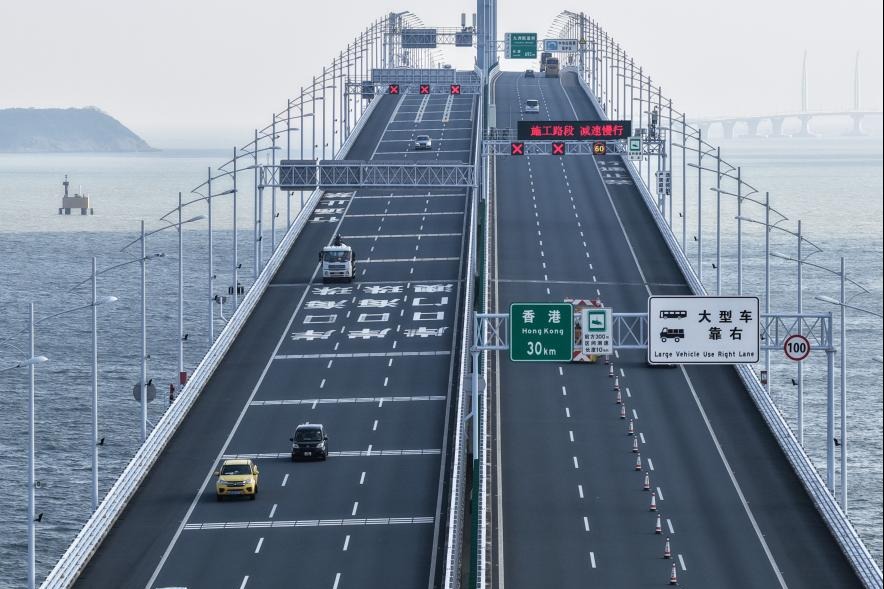
Hong Kong-Zhuhai-Macao Bridge handles over 93 million passenger trips in seven years
The Hong Kong-Zhuhai-Macao Bridge, a monumental infrastructure project connecting Hong Kong, Macao, and Zhuhai, has facilitated over 93.34 million passenger trips since its inauguration in October 2018. According to the bridge’s border inspection station, the Zhuhai port alone has seen a steady increase in traffic, with 12.88 million passenger trips and 860,000 vehicle trips recorded in 2019. By 2024, these figures surged to 27 million passenger trips and 5.55 million vehicle trips, with 2025 projections estimating over 30 million passenger trips and 6 million vehicle trips. Chen Faqiu, head of the inspection station, attributed this growth to the bridge’s role in enhancing regional connectivity and tourism. The 55-kilometer bridge, the world’s longest sea crossing, has significantly reduced travel time between Hong Kong and Zhuhai/Macao from three hours to approximately 45 minutes. This efficiency has spurred tourism, with mainland visitors accounting for over 10.15 million trips this year, including 4.6 million tourist visa holders. The bridge continues to serve as a vital link, fostering economic and cultural exchange across the region.
-
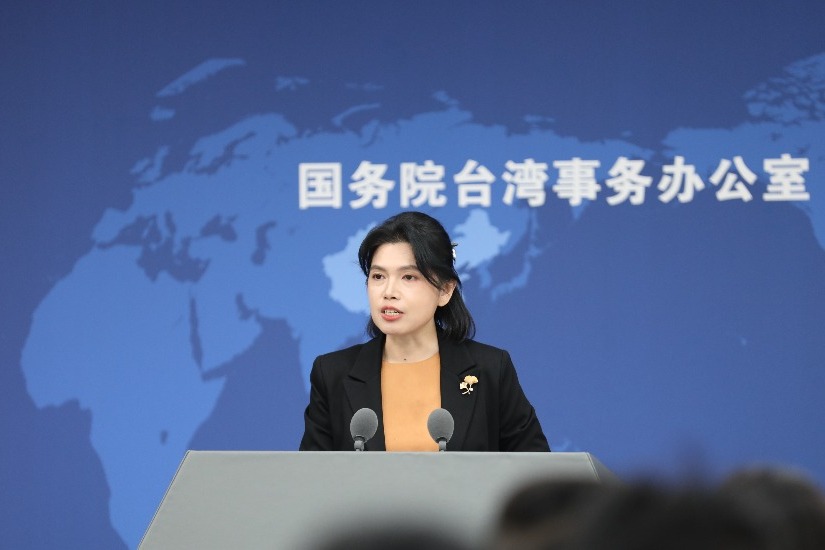
Mainland spokesperson calls for cross-Strait joint efforts to resist external challenges
A spokesperson from the Chinese mainland has emphasized the need for enhanced cooperation across the Taiwan Strait in advanced technological sectors, particularly artificial intelligence (AI), while criticizing Taiwan’s Democratic Progressive Party (DPP) for prioritizing political gains over the island’s industrial competitiveness. Zhu Fenglian, spokesperson for the State Council Taiwan Affairs Office, made these remarks during a press briefing on Wednesday, addressing concerns over the challenges faced by Taiwan Semiconductor Manufacturing Company (TSMC) in the United States. Zhu highlighted the rapid development of the mainland’s high-tech industries, which she said offers a robust foundation and vast opportunities for cross-Strait collaboration. She pointed out that Taiwan’s semiconductor industry, a key competitive sector, could benefit significantly from such cooperation. However, Zhu accused the DPP authorities of leveraging the industry as a political bargaining chip, aligning it with U.S. interests at the expense of Taiwan’s economic autonomy. She called for unified efforts between the mainland and Taiwan to deepen integrated development and jointly counter external risks and challenges.
-
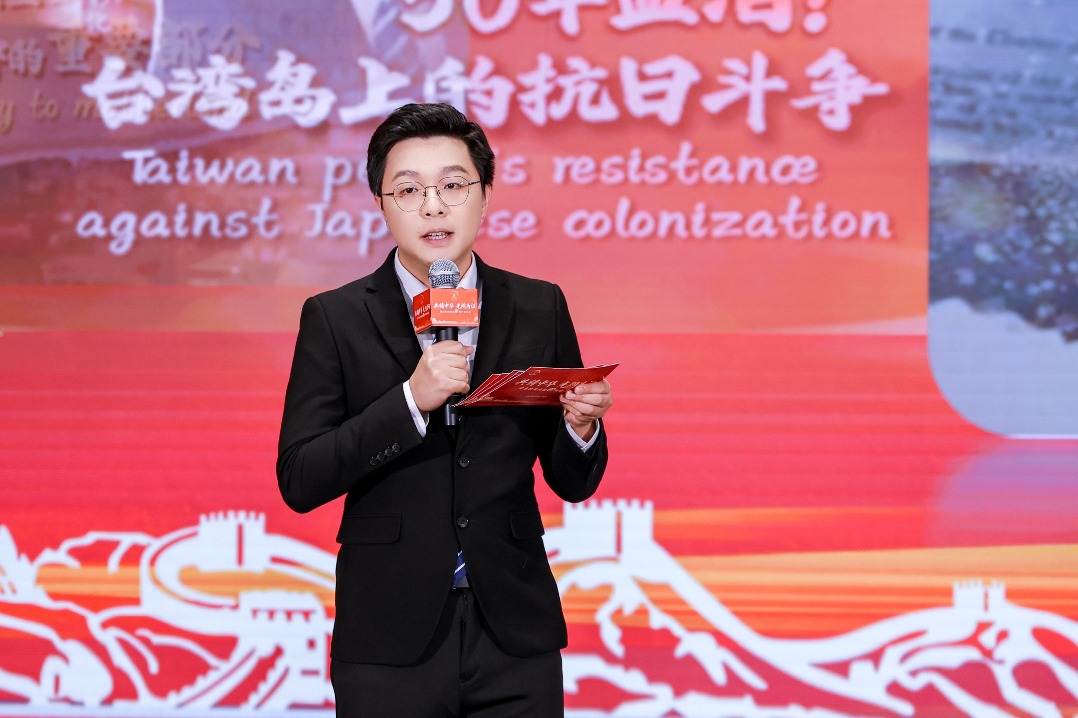
‘We have always been Chinese’ — Taiwan youth speaks out
In a heartfelt address during the 80th anniversary commemoration of Taiwan’s retrocession, Lin Ching-mao, a young resident of Changhua, Taiwan, voiced strong opposition to the ‘de-Sinicization’ movements on the island. Lin emphasized that historical evidence unequivocally supports the notion that ‘Taiwan people have always been Chinese.’ This statement comes amidst ongoing debates about Taiwan’s identity and its historical ties to mainland China. Lin’s speech highlighted the shared history and cultural bonds that link Taiwan to China, underscoring the importance of unity and mutual understanding. The event served as a platform for reaffirming the enduring connection between Taiwan and the broader Chinese nation, despite the complexities of contemporary political discourse.