标签: Asia

亚洲

  • Dubai-Manila flights: Emirates to add four more weekly services from April 2

    Dubai-Manila flights: Emirates to add four more weekly services from April 2

    Emirates Airlines has announced a significant expansion of its Southeast Asian operations with the introduction of four additional weekly flights between Dubai and Manila, effective April 2nd. The enhanced schedule will operate on Mondays, Wednesdays, Thursdays, and Saturdays, increasing the airline’s total weekly service to the Philippines from 28 to 34 flights.

    The new flight EK330 will depart Dubai International Airport at 12:45 PM local time, arriving at Ninoy Aquino International Airport at 1:25 AM the following day. The return service, EK331, will depart Manila at 3:25 AM and touch down in Dubai at 8:25 AM local time. This strategic scheduling provides optimized connectivity for travelers transiting through Emirates’ Dubai hub.

    The expansion delivers substantial benefits for multi-segment travelers, particularly those connecting to and from North American destinations including Canada and the United States. The schedule also aligns seamlessly with European morning departures to key cities such as London, Milan, Budapest, and Athens.

    Operated using Boeing 777-300ER aircraft, these flights feature Emirates’ signature three-class configuration with eight First Class suites, 42 Business Class lie-flat seats, and 304 Economy Class seats. Passengers will experience the carrier’s renowned service offerings including regionally-inspired culinary options, complimentary beverages, and the industry-leading ice in-flight entertainment system featuring over 6,500 channels of content in more than 40 languages, including Tagalog programming.

    This network enhancement coincides with the recently ratified Comprehensive Economic Partnership Agreement (CEPA) between the UAE and Philippines, positioning Emirates to facilitate growing trade and economic cooperation. The additional wide-body aircraft will substantially increase cargo capacity, with each flight capable of transporting up to 20 tonnes of freight alongside passenger luggage, strengthening supply chains between Manila, Dubai, and key markets in Europe, the United States, and the Indian subcontinent.

    Tickets for the expanded service are now available through Emirates’ digital platforms, authorized travel agents, and retail stores worldwide.

  • Building on record momentum: BMW Group Middle East delivers strong growth in 2025

    Building on record momentum: BMW Group Middle East delivers strong growth in 2025

    BMW Group Middle East has concluded 2025 with exceptional financial results, demonstrating sustained growth across its BMW, MINI, and BMW Motorrad divisions. Building upon the remarkable achievements of 2024, the regional market has solidified its position as a crucial growth hub for the German automaker, driven by robust consumer demand for innovative and high-performance vehicles.

    The BMW brand recorded a substantial 10% year-on-year sales increase, while the luxury 7 Series maintained its upward trajectory with a 1.3% growth. The performance segment achieved unprecedented success, with BMW M High Performance vehicles experiencing an extraordinary 38% sales surge—an all-time regional record attributed to expanding product offerings and growing customer enthusiasm.

    MINI brand sales reached historic heights in the Middle East with a 16% increase, propelled by strong demand for John Cooper Works models and rising popularity of battery electric vehicles. Corporate Sales for BMW and MINI achieved their highest-ever performance with a remarkable 28% year-year growth, reflecting strengthened collaboration between BMW Group Middle East and its regional importer partners.

    The fourth quarter of 2025 witnessed significant momentum for electrified vehicles, establishing a solid foundation for 2026. The anticipated introduction of the ‘Neue Klasse’ BMW iX3 later in 2026 is expected to mark a transformative phase in BMW’s electric vehicle strategy for the region.

    Beyond vehicle sales, Customer Support Services grew by 8.2% compared to 2024, demonstrating sustained customer confidence in BMW’s authorized service network. The Group has enhanced ownership experiences through innovative initiatives including the ConnectedDrive platform, BMW and MINI Proactive Care, and the ‘Relax. We Care’ program.

    BMW Motorrad delivered its highest-ever recorded sales in the Middle East, achieving a 9% increase in private customer sales and strengthening its position in the premium motorcycle segment.

    This outstanding performance is supported by the ongoing transformation of BMW Group Middle East’s Retail Network through the ‘Retail.Next’ initiative—a customer-centric concept creating open, flexible environments that deliver engaging customer experiences. Throughout 2025, several Retail.Next facilities were inaugurated across the region, combining state-of-the-art infrastructure with regional character while serving as hubs for developing local talent.

    Karim-Christian Haririan, Managing Director of BMW Group Middle East, attributed the success to strategic vision, portfolio breadth, and invaluable partnerships with importer networks. Looking toward 2026, the Group remains focused on luxury, high-performance, and electrified vehicles while planning further regional expansion, including entry into the Syrian market with official importer details to be announced subsequently.

  • India agrees to boost trade and strategic ties with UAE amid regional tensions

    India agrees to boost trade and strategic ties with UAE amid regional tensions

    NEW DELHI — In a significant diplomatic engagement, Indian Prime Minister Narendra Modi hosted United Arab Emirates President Sheikh Mohamed bin Zayed Al Nahyan in New Delhi on Monday, culminating in a comprehensive set of agreements designed to substantially enhance bilateral cooperation. The high-level discussions yielded ambitious economic targets and strategic alignments against the backdrop of escalating regional instability in West Asia.

    The centerpiece of the renewed partnership is a commitment to double bilateral trade to $200 billion by 2032, building upon the remarkable momentum established since the implementation of the Comprehensive Economic Partnership Agreement in February 2022. This foundational pact has already propelled trade volumes beyond the $100 billion threshold through tariff reductions and expanded market access.

    Beyond commercial expansion, the nations finalized several pivotal arrangements including a decade-long liquefied natural gas contract committing India to import 500,000 metric tons annually beginning in 2028. The defense sector received substantial attention with both parties agreeing to establish a strategic framework agreement, while additional collaborations were announced in space exploration and food security initiatives.

    The UAE further demonstrated its investment confidence through commitments to develop specialized economic zones in Gujarat, Modi’s home state, featuring advanced infrastructure including modern ports, airports, and smart urban developments.

    This strengthened partnership assumes heightened geopolitical significance amid escalating tensions throughout West Asia, particularly involving Iran, Yemen, and the ongoing crisis in Gaza. Analysts observe that both nations are strategically positioning themselves as stabilizing forces during this period of regional uncertainty and global realignment.

    Harsh Pant of the Observer Research Foundation noted: ‘The India-UAE relationship continues to evolve across multiple dimensions. Current regional turmoil creates both challenges and opportunities for these partners to coordinate their approaches to maintaining stability.’

    India maintains substantial economic interests and diaspora connections throughout West Asia, making continued engagement with key regional partners like the UAE essential to navigating the complex geopolitical landscape.

  • State Council to supervise probe into factory explosion in North China’s Inner Mongolia

    State Council to supervise probe into factory explosion in North China’s Inner Mongolia

    The State Council Work Safety Commission has announced it will directly supervise the investigation into a catastrophic industrial explosion at a steel plant in China’s Inner Mongolia Autonomous Region. The blast occurred at approximately 3:00 PM on Sunday at a production facility operated by Baogang United Steel located in western Baotou City.

    According to the Ministry of Emergency Management, the incident has resulted in a significant casualty count with two confirmed fatalities and eight individuals remaining unaccounted for as of 6:00 AM Monday. Additionally, 84 people have been hospitalized with injuries of varying severity following the industrial accident.

    The ministry has issued directives emphasizing the critical importance of implementing scientifically sound search and rescue protocols to prevent secondary disasters while maximizing efforts to locate missing personnel. Emergency response teams have been instructed to provide comprehensive medical care to all injured victims with the objective of minimizing further loss of life.

    Authorities have stressed the urgency of determining the precise cause of the explosion through thorough investigation. The ministry further emphasized the necessity of deriving substantive lessons from this tragedy to enhance safety protocols and prevent similar industrial accidents from occurring in the future.

    Specialized rescue units from the Ministry of Emergency Management have been deployed to the incident site to assist local emergency response teams with the ongoing operations.

  • Chinese courts see surge in foreign-related cases

    Chinese courts see surge in foreign-related cases

    China’s judicial authorities reported a substantial increase in international legal disputes during 2025, with approximately 40,000 first-instance civil and commercial cases involving foreign parties processed throughout the year. This represents a remarkable 50 percent surge compared to previous year’s figures, according to official data released by the Supreme People’s Court on January 19, 2026.

    The dramatic rise in cross-border litigation reflects China’s expanding global economic engagement and the judicial system’s evolving capacity to handle complex international legal matters. The Supreme People’s Court emphasized that these developments demonstrate the nation’s continued commitment to enhancing foreign-related adjudication capabilities while ensuring equal protection for both domestic and international litigants.

    Beyond international cases, Chinese courts managed an overwhelming volume of over 20 million first-instance civil and commercial disputes nationwide, marking an 11 percent annual increase. Intellectual property litigation showed significant growth with more than 470,000 cases processed, representing a five percent year-on-year increase that underscores China’s evolving innovation landscape.

    Environmental justice also saw substantial developments, with courts processing over 160,000 first-instance civil environmental cases—an 11 percent increase that demonstrates strengthened judicial support for ecological protection initiatives.

    In criminal justice, authorities intensified efforts against criminal offenses, processing more than 1 million first-instance criminal cases while sentencing over 1.4 million defendants. Notably, both case numbers and conviction rates demonstrated a year-on-year decline, suggesting potential improvements in crime prevention strategies.

    The comprehensive judicial data reveals a nation undergoing rapid legal transformation across multiple domains, with particular significance for international businesses and investors engaged with China’s expanding economy.

  • TEPCO to postpone restart of Kashiwazaki-Kariwa nuclear plant over safety concerns

    TEPCO to postpone restart of Kashiwazaki-Kariwa nuclear plant over safety concerns

    Tokyo Electric Power Company Holdings (TEPCO) has indefinitely delayed the planned restart of its Kashiwazaki-Kariwa nuclear facility’s No. 6 reactor after a critical safety system malfunction during preliminary testing. The decision came after alarm systems for control rods—essential components for regulating nuclear fission reactions—failed to activate during operational checks conducted on Saturday.

    The reactor, part of a seven-unit complex located approximately 220 kilometers northwest of Tokyo, was originally scheduled to resume operations on Tuesday. This marks another setback for Japan’s nuclear energy sector, which has faced intense scrutiny since the 2011 Fukushima Daiichi disaster. The Kashiwazaki-Kariwa plant was among 54 reactors idled following the catastrophic meltdowns at TEPCO’s tsunami-damaged facility.

    The postponement occurs despite December’s controversial approval by the Niigata Prefectural Assembly for partial reactivation of the plant. The facility’s restart has drawn significant public concern and criticism from nuclear safety advocates who question the adequacy of post-Fukushima safety enhancements. TEPCO officials stated they are conducting comprehensive investigations to determine the root cause of the control rod alarm failure and cannot provide a revised timeline for operations until complete system verification is achieved.

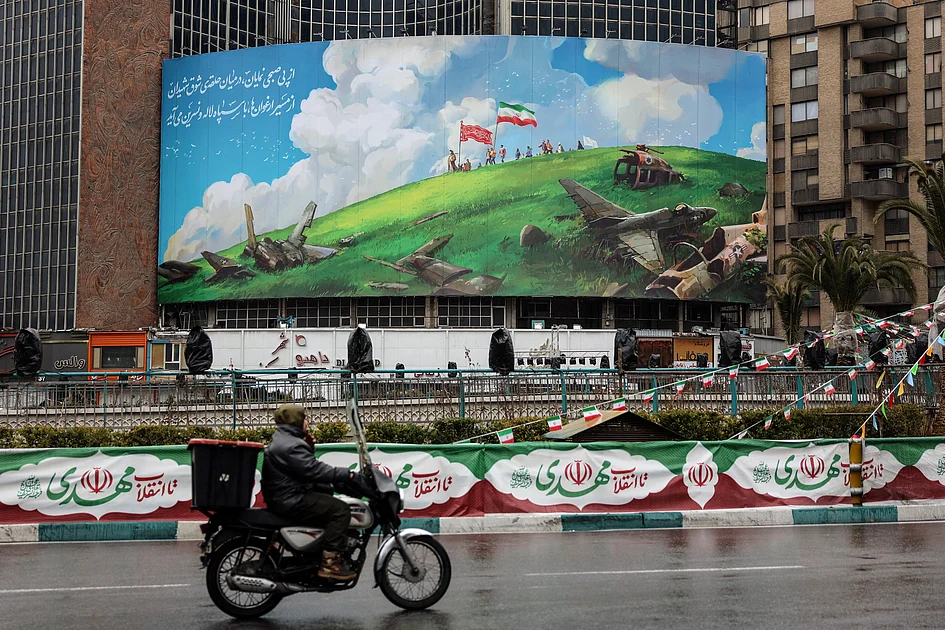
  • Iran warns attack on Khamenei would mean full-scale war

    Iran warns attack on Khamenei would mean full-scale war

    Iranian President Masoud Pezeshkian has issued a stark warning that any military action targeting Supreme Leader Ali Khamenei would constitute a declaration of “full-scale war against the Iranian nation.” The statement, delivered via social media platform X on Sunday, represents the most direct response yet to provocative comments from former US President Donald Trump, who recently characterized Khamenei as “a sick man” and called for new leadership in Iran during an interview with Politico.

    President Pezeshkian directly linked Iran’s economic hardships to “the longstanding enmity and inhumane sanctions imposed by the United States government and its allies.” His warning follows Trump’s claim on Friday that he had received assurances from “very important sources” in Tehran regarding the planned executions of protesters, which reportedly led to a pause in potential US military action.

    The escalating diplomatic crisis unfolds against the backdrop of significant civil unrest within Iran. In a rare official acknowledgment, Supreme Leader Khamenei confirmed that “several thousand” people died during recent protests, while simultaneously blaming the United States and President Trump personally for the violence and casualties. Khamenei’s social media account stated unequivocally that Iran holds “the US President guilty due to the casualties, damages and slander he inflicted upon the Iranian nation.”

    Despite earlier statements from Iranian officials suggesting executions might not proceed, authorities indicated on Sunday they might still carry out death sentences for detained protesters. An anonymous Iranian official provided a significantly higher death toll than previously acknowledged, confirming at least 5,000 fatalities since anti-government demonstrations began on December 28th. The official attributed these deaths to “terrorists and armed rioters” allegedly supported by “Israel and armed groups abroad.”

    Recent developments suggest the government’s severe crackdown, which included a near-total internet blackout beginning January 8th, has substantially quelled the protests. Internet monitoring group NetBlocks reported a “very slight rise in internet connectivity” to approximately 2% of normal levels, with some services gradually being restored. Meanwhile, in a symbolic challenge to authorities, Iranian state television was reportedly hacked on Sunday, broadcasting messages from Reza Pahlavi and showing protest footage that encouraged security forces to support demonstrators.

  • Chinese scientists achieve breakthrough in precise protein degradation

    Chinese scientists achieve breakthrough in precise protein degradation

    Researchers from the Chinese Academy of Sciences have achieved a groundbreaking advancement in biomedical science with the development of SupTACs (supramolecular targeting chimeras), a novel technology enabling unprecedented precision in targeting and eliminating disease-causing proteins within living organisms. This breakthrough, detailed in the prestigious journal Cell, represents a significant leap forward in targeted protein degradation therapeutics.

    The innovative approach addresses critical limitations in conventional treatment methodologies by leveraging the body’s natural ubiquitin-proteasome system. Unlike traditional small-molecule drugs that merely inhibit protein function, SupTACs actively facilitate the complete degradation of specific pathological proteins through precise molecular recruitment mechanisms. This technology demonstrates remarkable spatial and temporal control, effectively minimizing off-target effects that have hampered previous therapeutic attempts.

    Professor Wang Ming, lead investigator at the Institute of Chemistry, emphasized the transformative potential of this development: ‘Our SupTACs platform provides researchers with unprecedented control over protein degradation processes, offering new therapeutic avenues for conditions previously considered undruggable. The technology has shown consistent efficacy across multiple animal models, including non-human primates, indicating strong potential for clinical translation.’

    This advancement holds particular significance for treating complex disorders including various cancer types and neurodegenerative conditions where traditional therapeutic approaches have proven inadequate. The research team’s successful demonstration of controlled protein degradation in vivo marks a critical milestone toward practical clinical applications that could revolutionize treatment paradigms for numerous challenging diseases.

  • Chinese researchers develop blink-powered eye-tracking device to help paralyzed patients control wheelchairs

    Chinese researchers develop blink-powered eye-tracking device to help paralyzed patients control wheelchairs

    In a groundbreaking advancement for assistive technology, Chinese research teams have pioneered a self-sustaining eye-tracking system that converts blink energy into operational power for controlling external devices. This innovation emerges from collaborative efforts between Qingdao University and the Hong Kong University of Science and Technology, representing a significant leap in human-computer interaction systems.

    The technology centers on a triboelectric nanogenerator (TENG) device, designated ET-TENG, which captures microscopic friction generated between eyelids and eyeballs during natural blinking. This mechanical energy is transformed into electrical power sufficient to operate the entire tracking system without external batteries. The device demonstrates remarkable precision with 99% accuracy in detecting eyeball deflection angles as minimal as 2 degrees.

    Unlike conventional camera-based eye trackers, the ET-TENG system maintains full functionality in complete darkness, overcoming a critical limitation of light-dependent technologies. This capability ensures reliable operation in various environmental conditions, enhancing its practical application potential.

    The primary application targets individuals with severe mobility impairments, particularly those with amyotrophic lateral sclerosis (ALS) and other conditions that preserve eye movement while limiting other motor functions. These patients could potentially operate wheelchairs, computers, and communication devices through intentional eye movements, restoring significant autonomy.

    Beyond medical applications, researchers envision implementations in space exploration for hands-free control panels, automotive safety systems for driver fatigue monitoring, and virtual reality hardware for creating more lightweight, energy-efficient headsets. The technology’s simple structure, high sensitivity, and anti-interference capabilities position it as a versatile platform for numerous human-computer interaction scenarios.

    The research, documented in the January 2026 edition of Cell Reports Physical Science, reflects the accelerating integration of artificial intelligence with sustainable energy solutions in technological development. This innovation represents not merely an incremental improvement but a fundamental reimagining of how biological energy can be harnessed for technological empowerment.

  • China’s commercial crewed spacecraft test capsule completes land-buffering verification

    China’s commercial crewed spacecraft test capsule completes land-buffering verification

    In a significant advancement for China’s commercial space sector, the test module of the CYZ1 crewed spacecraft has successfully completed comprehensive landing-buffering system verification trials. The spacecraft developer InterstellOr announced the breakthrough on Sunday, confirming all performance metrics not only met but exceeded design specifications.

    The rigorous testing simulated actual re-entry landing conditions with remarkable precision. Engineers elevated a 5-tonne test capsule to over three meters above ground level before executing an instantaneous release command. This carefully orchestrated free-fall maneuver replicated the steady descent velocity equivalent to a capsule under fully deployed main parachute.

    During the critical landing phase, the spacecraft’s buffering system activated seamlessly. The integrated retro-thruster expelled high-pressure gas to generate consistent reverse thrust while coordinating perfectly with the energy-absorbing structure at the capsule’s base. This sophisticated synchronization achieved effective deceleration and impact cushioning within an extremely limited stroke distance.

    Post-test examination revealed an impeccably executed buffering sequence with completely intact capsule structure and fully operational onboard equipment. These results demonstrate exceptional system reliability and technical feasibility for human spaceflight applications.

    The InterstellOr research team is now conducting exhaustive analysis of the test data to refine system parameters further. This successful verification establishes a robust technical foundation for subsequent development phases of the CYZ1 spacecraft, marking substantial progress toward China’s ambitions in commercial human spaceflight capabilities.