
China is bracing for a series of snowstorms and extreme weather conditions as the La Nina climate pattern approaches. The China Meteorological Administration (CMA) has issued warnings of moderate to heavy snowfall in western regions, including Qinghai, Xizang, western Sichuan, and parts of Gansu, from Thursday to Sunday. Some areas may experience blizzard conditions, potentially disrupting agriculture, animal husbandry, and transportation. Zhang Daquan, an official from the National Climate Center, highlighted that recent oceanic and atmospheric monitoring indicates a transition to La Nina conditions, which historically brings colder winters to China. However, experts caution that La Nina does not always guarantee extreme cold, as global warming could lead to warmer winters. The interplay of Arctic sea ice, snow cover, and atmospheric circulation further complicates winter weather predictions. Additionally, the Yellow River is entering its ice jam flood season, with the Ministry of Water Resources warning of sharp temperature fluctuations and challenging flood prevention efforts. Authorities are preparing for potential impacts on production and daily life, urging vigilance against extreme weather events.
标签: Asia
亚洲
-
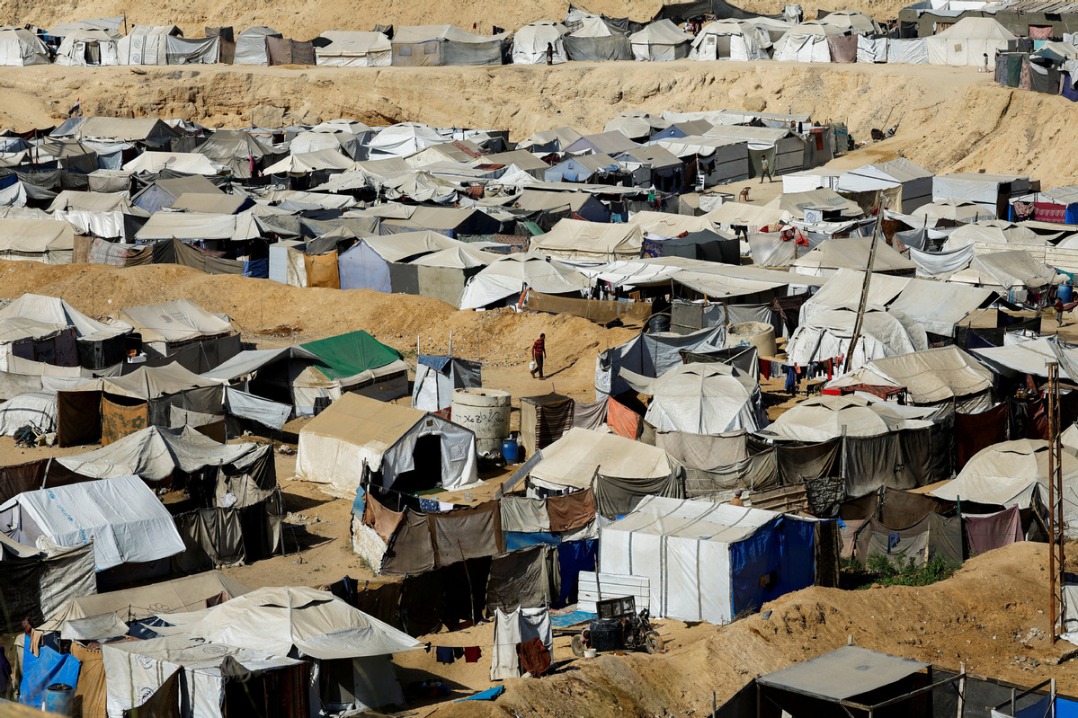
Hamas, Fatah hold talks on post-war arrangements in Gaza
In a significant development, delegations from Hamas and Fatah convened in Cairo to deliberate on post-war arrangements for the Gaza Strip. The meeting, reported by Egyptian TV channel Al-Qahera News, marks a pivotal step towards Palestinian unity and reconstruction efforts. The Hamas delegation, led by senior leader and chief negotiator Khalil al-Hayya, met with Fatah’s representatives, including Palestinian Vice President Hussein al-Sheikh and intelligence chief Majed Faraj. The discussions also encompassed the second phase of former US President Donald Trump’s peace plan for Gaza, with Egypt preparing to host a reconstruction conference in November. Concurrently, Egypt’s intelligence chief Hassan Mahmoud Rashad engaged with Fahd Suleiman, Secretary-General of the Democratic Front for the Liberation of Palestine, to foster national consensus on Trump’s plan. Rashad also reiterated opposition to the Israeli Knesset’s recent bill on annexing the occupied West Bank. The talks follow a ceasefire brokered by the US, Egypt, Qatar, and Turkiye, which took effect on October 10, 2025, after two years of conflict. Despite the truce, Gaza’s health authorities reported ongoing casualties, with 89 deaths and 317 injuries since October 11, and a staggering toll of 68,280 deaths and 170,375 injuries since October 7, 2023.
-
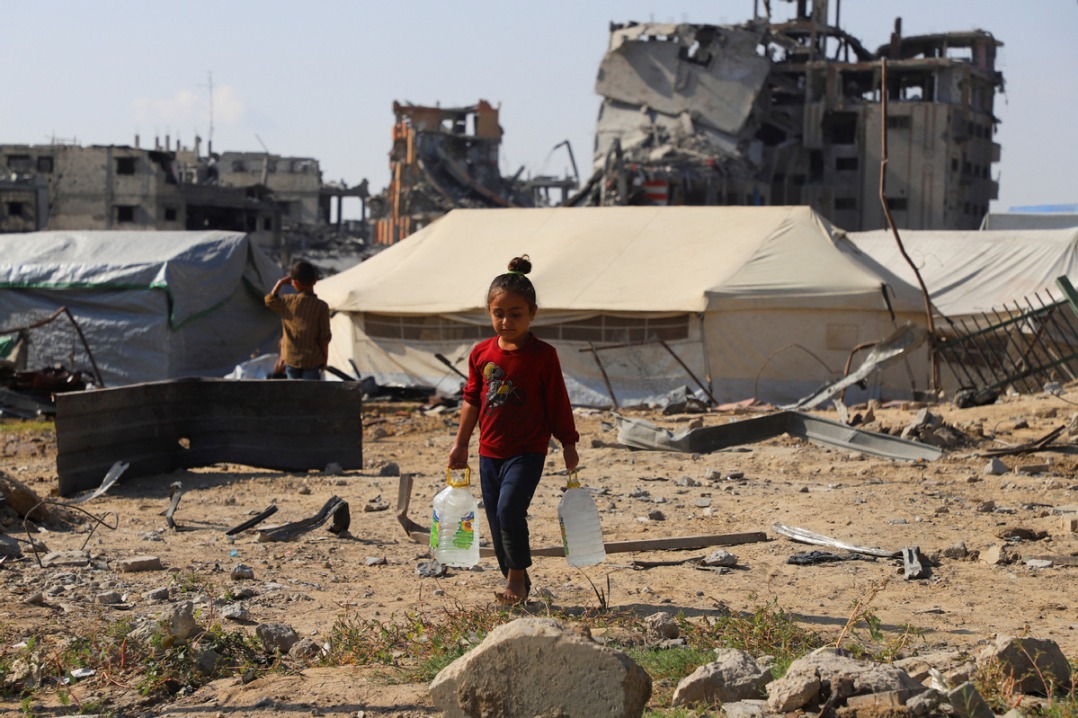
UN aid team finds poor hygiene, widespread skin diseases among displaced people in Gaza
A recent assessment by a United Nations aid team in Gaza City has unveiled alarming hygiene and health conditions among displaced populations. The UN Office for the Coordination of Humanitarian Affairs (OCHA) reported on Thursday that severe challenges, including a lack of clean water, widespread skin diseases, and damaged sanitation systems, are prevalent in the region. The team conducted evaluations at two collective centers in Gaza City’s Az Zaitoun neighborhood, which currently shelters over 200 families. Residents at these sites face dire circumstances, with reports of individuals walking up to two kilometers to access water due to a shortage of containers. The urgent need for repairs to latrines and sewage networks was emphasized to prevent further contamination. Displaced families also expressed immediate needs for food, clean water, hygiene items, and materials to repair water and sanitation infrastructure. Additionally, cash assistance is required for winter clothing, shoes, tarpaulins, and kitchen sets. The World Health Organization (WHO) facilitated the medical evacuation of 41 critical patients and 145 companions from Gaza, marking the first such operation since the October 10 ceasefire. However, approximately 15,000 patients remain on a waiting list for external medical care. Humanitarian partners have provided protection support to around 21,000 people in displaced and returnee communities, including psychosocial first aid for 3,000 children and caregivers. Hygiene kits were distributed to over 30 temporary learning spaces, benefiting 6,800 school-age children. The World Food Programme has also begun distributing high-energy biscuits and fortified date bars to children in 18 temporary learning spaces. On Tuesday, 147 UN and partner trucks delivered essential supplies, with two-thirds of the cargo comprising food aid. Other items included diapers, hygiene kits, and tarps for emergency shelter assistance. The UN Office for Project Services collected and distributed significant quantities of diesel and gasoline to support critical humanitarian operations.
-
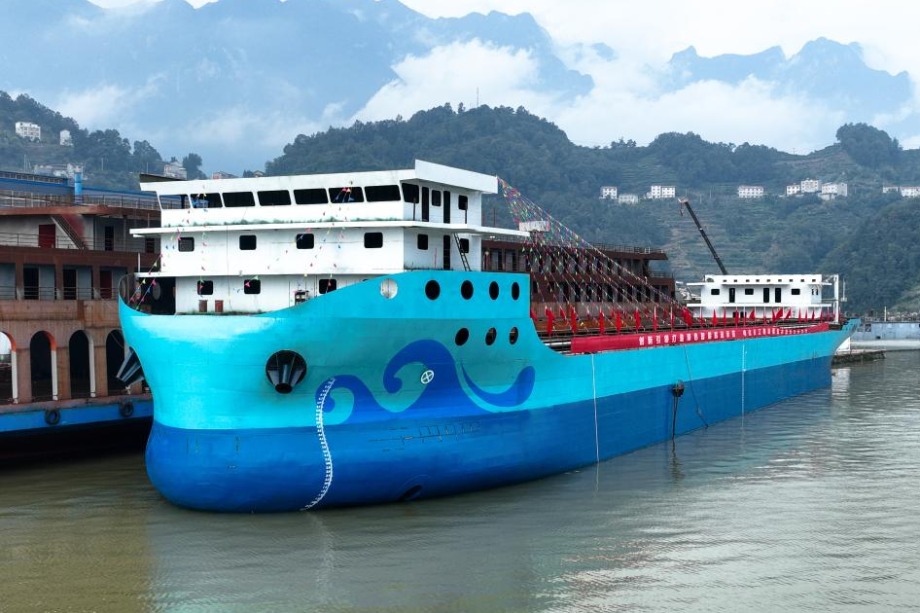
China’s largest all-electric bulk carrier launched in Central China
In a groundbreaking development for the maritime industry, China has launched its largest all-electric bulk carrier, named Gezhouba, in Yichang, Hubei province. This event, which took place on October 23, 2025, signifies a major leap forward in the nation’s pursuit of green and intelligent shipping solutions. The Gezhouba, measuring nearly 130 meters in length and capable of carrying over 13,000 tonnes, is powered by 12 lithium battery units with a combined energy capacity of 24,000 kWh. Notably, the vessel features rapid battery-swapping technology and can travel up to 500 kilometers on a single charge. This innovation underscores China’s commitment to reducing carbon emissions and advancing sustainable transportation technologies. The launch of the Gezhouba is expected to set a new benchmark for eco-friendly shipping globally, as industries worldwide seek to adopt cleaner energy alternatives.
-
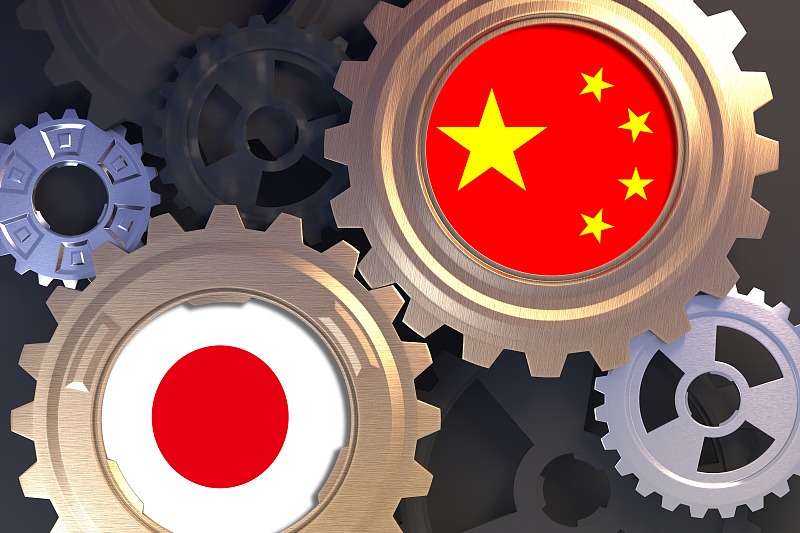
Trade cooperation continues to anchor Sino-Japanese ties
Despite the global rise in protectionism, supply chain realignments, and Japan’s political shift to the right, economic collaboration between China and Japan continues to be a cornerstone of their bilateral relationship. This was highlighted during the Beijing launch of the 2025 Blue Book of Japanese Economy, a report co-authored by the Institute of Japanese Studies at the Chinese Academy of Social Sciences and the Chinese Association for Japanese Economic Studies. The report emphasizes the enduring significance of the Chinese market for Japanese businesses, even as Japan’s foreign direct investment in China has seen a decline due to global supply chain shifts, the yen’s depreciation, and rising labor costs. According to Japan’s Finance Ministry, China ranked ninth among destinations for Japanese investment last year, with direct investment totaling 493.1 billion yen ($3.23 billion). Yang Bojiang, director of the Institute of Japanese Studies, noted that Japan’s net investment in China last year was nearly 60 percent below its 2017 peak, largely due to the relocation of manufacturing lines for U.S.-bound exports out of China to avoid tariff barriers and geopolitical risks. However, experts caution against interpreting this decline as the full picture. A survey by the Japanese Chamber of Commerce and Industry in China revealed that 56 percent of respondent companies plan to ‘increase or maintain’ investment in China this year, with 54 percent considering the Chinese market as ‘the most important’ or ‘one of the top three important markets.’ Chang Sichun, an associate researcher at the Institute of Japanese Studies, pointed out that China remains Japan’s fourth-largest destination for direct investment, following the U.S., the U.K., and the Netherlands. Japanese companies in China have consistently maintained high returns on investment, particularly in the services sector, where recent performance has been strong. The Japanese Chamber of Commerce and Industry in China reported that the return on direct investment for Japanese companies in China rose from 12.1 percent in 2015 to 18.4 percent in 2022, outperforming returns in the U.S. (8.8 percent) and the U.K. (14.7 percent). This strong performance has led to a rebound, with China’s Commerce Ministry reporting a 58.9 percent year-on-year increase in actual investment from Japan in the first eight months of this year. Yang also highlighted China’s modernization achievements as a key attraction for Japanese businesses, noting growing appreciation in Japan for China’s path to modernization, particularly in areas like poverty reduction and the digital economy. However, experts warned of potential uncertainties arising from Japan’s increasingly rightward political shift, which could suppress Japanese investment in China, particularly in high-tech sectors. Despite these challenges, the significant presence of Japanese companies in China and their substantial accumulated investment form an important channel for stabilizing bilateral relations. Strengthening bilateral exchanges and ensuring the healthy development of China-Japan relations not only serves the fundamental interests of both countries but also contributes to regional prosperity and global economic recovery.
-

Nation to update cyber law to strengthen AI oversight
China is set to amend its Cybersecurity Law to bolster oversight of artificial intelligence (AI) security risks, ensuring the technology evolves in a safe, fair, and beneficial manner. Wang Xiang, spokesperson for the Legislative Affairs Commission of the National People’s Congress (NPC) Standing Committee, announced the move on Thursday, emphasizing the need to balance AI development with robust cybersecurity measures. The Cybersecurity Law, enacted in June 2017, has been instrumental in advancing China’s cyber capabilities and fostering the integration of digital and real economies. Wang highlighted AI’s transformative role in driving technological innovation and industrial progress, while also acknowledging the challenges it poses, such as increased cybercrime. To address these issues, the draft amendment includes provisions to support foundational AI research, improve ethical standards, and enhance risk monitoring and regulation. Additionally, the amendment aligns with existing laws like the Civil Code and the Personal Information Protection Law. The NPC Standing Committee will review the draft during its upcoming session, alongside revisions to the Organic Laws of Villagers’ and Urban Residents’ Committees, which aim to strengthen community governance and care for vulnerable groups. The session will also discuss amendments to the Environmental Protection Tax Law and a draft law on procuratorial public-interest litigation.
-
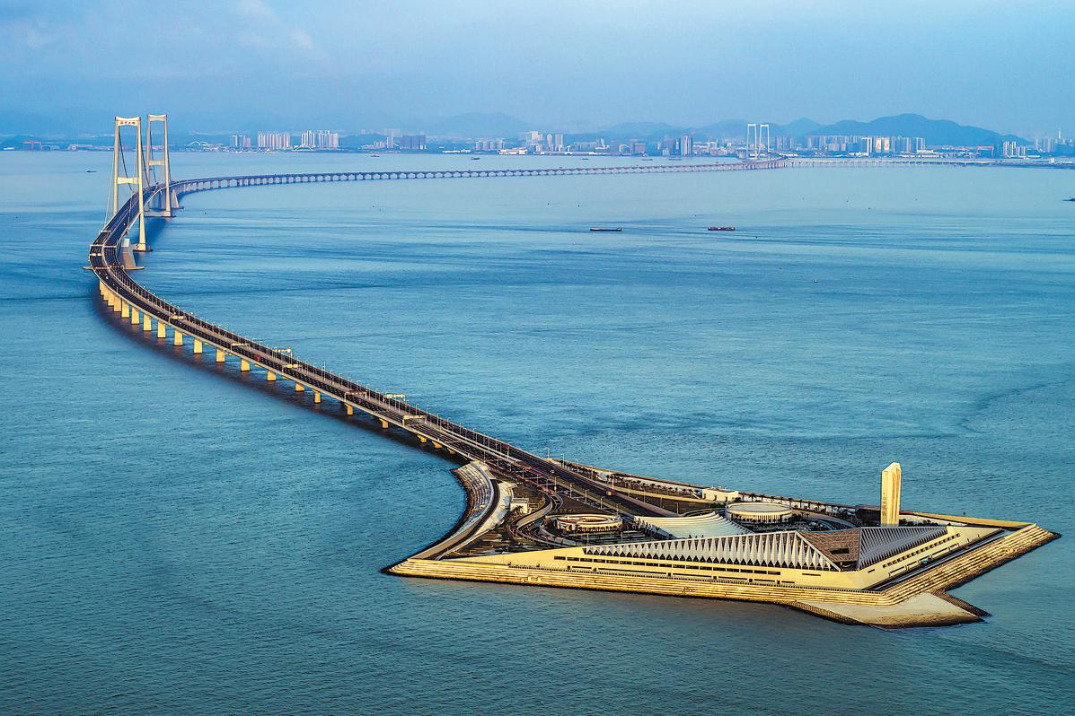
Artificial island to begin tourism trial operation
The western artificial island of the Shenzhen-Zhongshan Link, a monumental cross-sea project in the Guangdong-Hong Kong-Macao Greater Bay Area, is poised to commence a month-long trial operation as a cultural and tourism destination starting this Saturday. Managed by the Guangdong Transportation Group, this initiative marks a significant step in transforming the island into a multifaceted hub for education, leisure, and innovation. The formal opening is slated for December 2025. Spanning 24 kilometers, the Shenzhen-Zhongshan Link integrates bridges, islands, tunnels, and underwater interchanges, representing one of the most complex engineering feats in modern infrastructure. Completed in June 2024 after 14 years of planning and construction involving over 15,000 workers, the project has already facilitated increased traffic flow, with vehicles seamlessly transitioning between the bridge and tunnel via the western island. Covering 137,000 square meters, the island serves as a critical hub for traffic management, emergency rescue, and science education. The cultural and tourism development will unfold in phases, with the initial focus on study tours and sightseeing centered around a science and education base. During the trial period, reservations will be available for enterprises and study groups on weekdays, with public access on weekends. Visitors will provide feedback on tour routes, VR/AR interactive equipment, and supporting services. Once fully operational, ticket prices will range from 128 to 188 yuan, inclusive of transportation and a three-hour tour. Dining and other facilities are expected to launch by December. The island’s observation deck offers views of iconic landmarks like Shenzhen Bao’an International Airport and the Shenzhen-Zhongshan Bridge, while the science education base showcases the project’s development history and cutting-edge technologies like holographic projections. Outdoor exhibits include full-scale tunnel sections and engineering components, offering insights into the construction process. Long-term plans envision activities such as sea-based bridge viewing and low-altitude sightseeing flights, positioning the island as a premier technology, engineering, and cultural tourism destination in the Greater Bay Area.
-
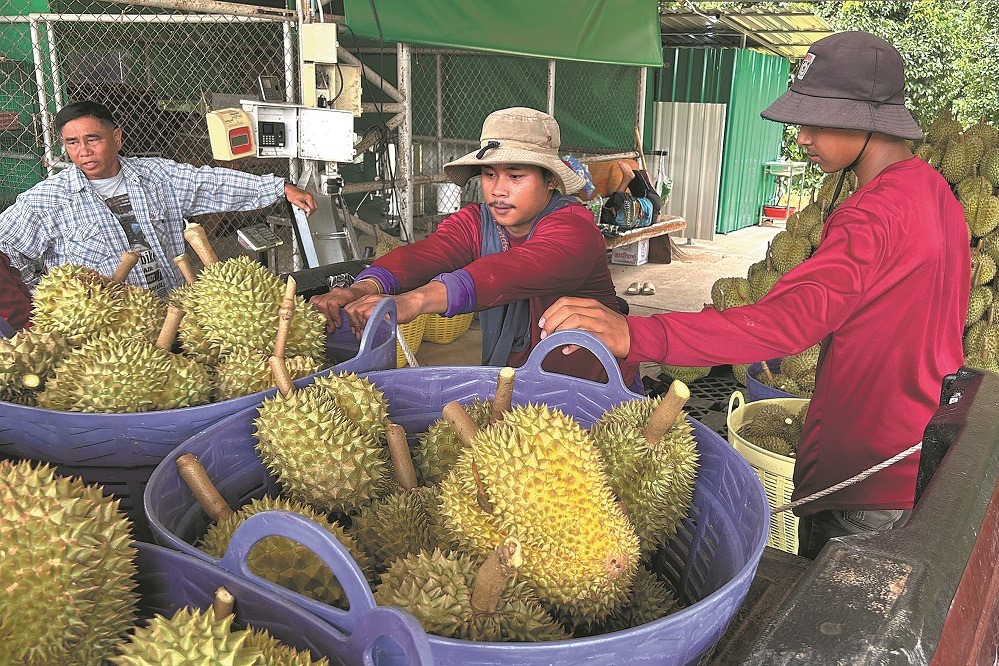
From stink to sweet: How durian shaped ties
Once considered an acquired taste due to its pungent aroma, durian has emerged as a symbol of cultural and economic exchange between China and Thailand. Over the past decade, the spiky fruit has not only captivated Chinese consumers but also fostered deeper bilateral ties through trade and investment. Thailand, home to over 200 durian varieties, has become the primary supplier to China, accounting for 97.4% of its durian market. In 2024 alone, Thailand exported 833,000 metric tons of durian to China, valued at $3.7 billion. The fruit’s popularity has spurred online sales campaigns on platforms like Douyin and Taobao, while attracting Chinese investors to Thailand’s orchards and logistics sectors. However, the durian trade faced a significant setback earlier this year when Chinese customs detected Basic Yellow 2 (BY2), a harmful dye used to enhance the fruit’s appearance. This led to rejected shipments, investigations, and temporary export suspensions, causing financial losses for Thai farmers and raising concerns among Chinese consumers. The incident highlighted the need for stricter safety standards, traceability, and consumer education. Despite the challenges, the BY2 scandal prompted Thailand to upgrade its fruit industry, with increased government investment in testing and scientific farming. It also deepened Chinese consumers’ understanding of durian, paving the way for stronger partnerships. Beyond trade, durian has become a cultural bridge, reflecting shared values of respect for nature and traditional farming practices. As both nations continue to collaborate, the ‘king of fruits’ remains a testament to the evolving relationship between China and Thailand.
-

Annual Potala Palace makeover kicks off
In the heart of Lhasa, Xizang Autonomous Region, the annual restoration of the iconic Potala Palace has commenced, drawing hundreds of dedicated volunteers to its historic walls. This cherished tradition, which began on October 22, 2025, aligns with the start of the ninth month in the Tibetan calendar and serves as both a cultural celebration and a vital act of preservation. The week-long event, deeply rooted in generations of history, sees locals and experts alike come together to refresh the palace’s striking red, white, and yellow façade. Among the volunteers is Pema Wangyal, a Lhasa resident participating for the second time, who expressed the profound honor of contributing to the upkeep of this sacred site. The restoration process involves meticulously preparing natural pigments made from lime, milk, honey, sugar, saffron, and minerals, which are then applied to the palace’s massive walls using traditional methods. Volunteers, including skilled ‘spider-men’ who work on ropes to reach high areas, ensure every inch of the structure is revitalized. Ngakwang, a seasoned participant, highlighted the efficiency of modern equipment and teamwork, reducing the project’s duration from half a month to just a week. Organized by the Potala Palace Management Office, this initiative not only enhances the palace’s aesthetic but also protects its ancient walls from weathering and erosion. Built in the 7th century and reconstructed in the 17th century, the Potala Palace stands as Xizang’s largest and best-preserved palace complex, recognized as a UNESCO World Heritage site since 1994. For the community, this annual ritual is more than a physical restoration—it is a testament to their enduring connection to history and heritage.
-
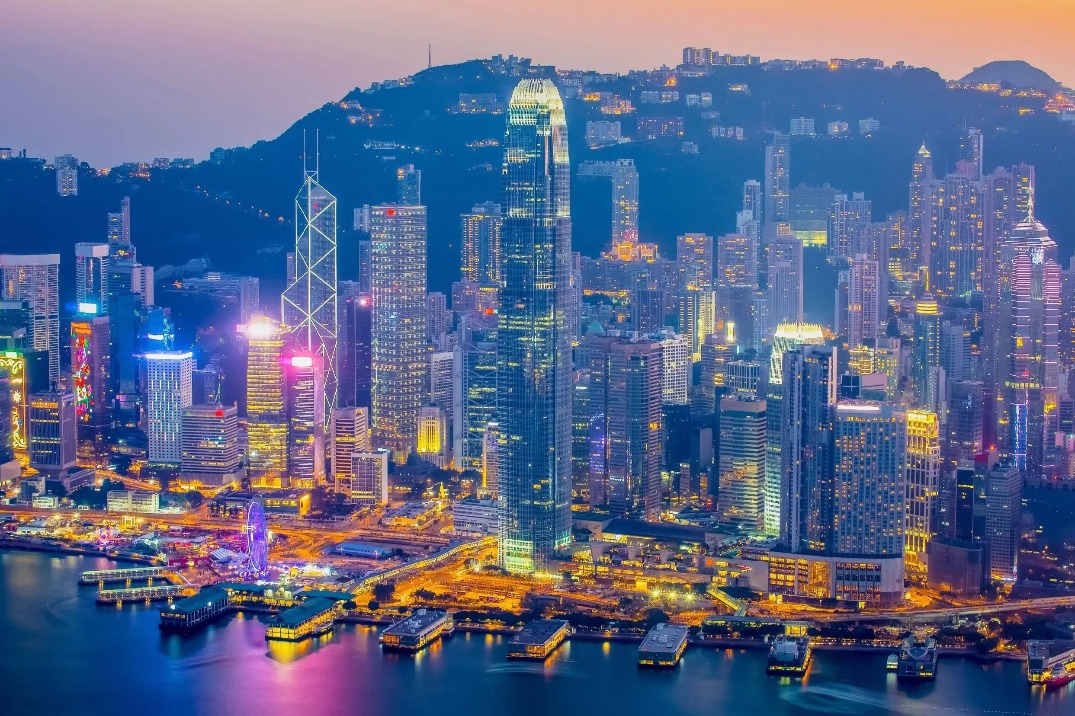
HK residents urged to cast ballots
Hong Kong’s leaders and government officials have launched a vigorous campaign urging residents to participate in the upcoming Legislative Council election, scheduled for December 7, 2025. At the kick-off ceremony for the 2025 Legislative Council General Election, Chief Executive John Lee Ka-chiu emphasized the critical importance of electing ‘capable, responsible, and passionate lawmakers’ to shape the city’s future. The event was held just before the candidate nomination period began, marking the start of a pivotal electoral process that will see 90 lawmakers elected across geographical, functional, and Election Committee constituencies. Lee highlighted that Hong Kong is transitioning from stability to prosperity, with the government actively pursuing reforms, economic development, and improved livelihoods. He stressed that many policies require legislative approval and funding, making the election a decisive moment for the city’s progress. Lee called on all sectors of society, including public and private organizations and patriotic groups, to encourage voter participation. He also assured that civil servants, as the city’s largest workforce, would be given the opportunity to vote, with adequate backup personnel in place to cover their duties. The Hong Kong SAR government has pledged to ensure the election is conducted fairly, justly, and securely. David Lok Kai-hong, Chairman of the Electoral Affairs Commission, underscored that voting is both a right and a social responsibility, enabling residents to directly influence policies in healthcare, labor, education, transport, and housing. Lok praised the improved electoral system for enhancing representativeness, inclusivity, and fair competition, laying a solid foundation for Hong Kong’s democratic development. Lee also highlighted the achievements of the seventh Legislative Council, which passed nearly 130 bills and approved over 260 projects worth HK$700 billion during its term. Other high-ranking officials, including Chief Secretary Eric Chan Kwok-ki and Security Secretary Chris Tang Ping-keung, echoed the call for public engagement, describing the election as a unifying force and a chance to propel Hong Kong forward. Deputy Chief Secretary Warner Cheuk Wing-hing added that participation in the election would enhance Hong Kong’s international prestige, competitiveness, and social stability.