标签: Asia

亚洲

  • Shenzhen forms micro-drama industry association

    Shenzhen forms micro-drama industry association

    Shenzhen has officially launched its groundbreaking Micro-Short Film Industry Association, marking a significant milestone in China’s rapidly evolving digital entertainment landscape. Established in Pingshan district on January 20, 2026, this pioneering organization brings together nearly 100 leading companies across the micro-drama ecosystem, including tech giant Tencent, specialized streaming platform ReelShort by Crazy Maple Studio, and analytics powerhouse DataEye.

    The association represents a comprehensive consolidation of resources spanning intellectual property development, content production, international distribution platforms, technological innovation, and audience engagement strategies. This coordinated approach aims to capitalize on the explosive global demand for short-form dramatic content that has transformed digital entertainment consumption patterns worldwide.

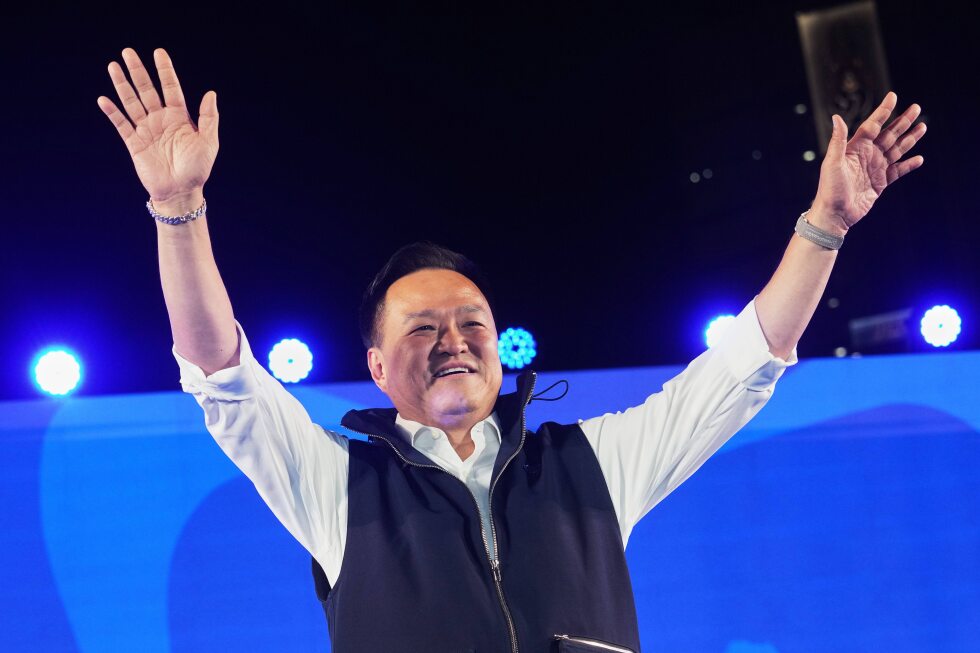
    Wang Xiangbin, founder and CEO of DataEye who leads the new association, emphasized the critical timing of this initiative: “We stand at a defining moment for micro-drama development, with a vital mission to advance standardization, industry consolidation, and quality enhancement within Shenzhen’s burgeoning short-form content sector.”

    Chinese micro-dramas, typically ranging from seconds to ten minutes per episode, have gained massive popularity through their signature storytelling techniques—compelling opening hooks and suspenseful cliffhangers across diverse genres including romance, revenge fantasies, and science fiction.

    The industry’s growth potential appears extraordinary. Soochow Securities research projects international short drama market revenues will reach $3.8 billion by 2025, representing a staggering 153% year-over-year increase. Domestically, China’s micro-drama sector already supports approximately 690,000 professionals across more than 100,000 enterprises, producing roughly 3,000 new dramas monthly for an estimated user base of 700 million people—covering over 60% of the nation’s internet users.

    Pingshan district has strategically positioned itself as the industry’s hub, offering state-of-the-art production facilities including a 3,000-square-meter virtual digital studio and a 12,000-square-meter advanced soundstage. The district’s diverse filming locations—from Maluan Mountain landscapes and traditional Hakka houses to modern urban settings and technology parks—enable complete era-spanning productions without requiring location changes.

    Further bolstering this infrastructure, the district government announced development of a dedicated 5,000-square-meter micro-drama base within the Shenzhen Pingshan International Movie City complex, complemented by 200,000 square meters of commercial space specifically designed to support the industry’s unique requirements.

  • Former security official expelled from Party for serious violations

    Former security official expelled from Party for serious violations

    In a significant demonstration of China’s ongoing anti-corruption campaign, Gao Yichen, a former high-ranking security official, has been expelled from the Communist Party of China following investigations into serious disciplinary and legal violations. The announcement was made on Thursday by the Central Commission for Discipline Inspection and the National Supervisory Commission, China’s top anti-graft bodies.

    Gao previously held dual positions as deputy director of the Office of the Central Leading Group for Preventing and Handling Cult Issues and vice minister of State Security. He also served as deputy director of the State Council’s Office for Preventing and Handling Cult Issues.

    The disciplinary investigation uncovered multiple offenses including collusion between political and business interests, improper benefit exchanges, and severe contamination of the political ecosystem. Notably, Gao continued to exploit his official position for personal gain even after his retirement from public service.

    According to official statements, Gao demonstrated a complete loss of ideological principles and political discernment while actively resisting organizational investigations. His misconduct included accepting unauthorized banquets, facilitating improper job transfers for associates, and receiving gifts and monetary rewards in violation of integrity protocols. He additionally obtained vehicle services from private business owners without compensation.

    More seriously, Gao interfered with judicial processes and leveraged his influence to secure advantages for others in corporate listing approvals, land use rights transfers, and case executions. These actions involved the illegal acceptance of substantial monetary sums and valuable assets.

    The disciplinary authorities determined that Gao’s conduct represented a severe violation of multiple Party disciplines including political, organizational, integrity, and work regulations. His actions constitute serious duty-related offenses and suspected crimes of bribery and influence peddling.

    In addition to his expulsion from the Party, Gao’s illicit gains have been confiscated. His case, which involves suspected criminal activities, has been transferred to prosecutorial authorities for formal legal proceedings.

  • Trump says Putin has been invited to join Board of Peace

    Trump says Putin has been invited to join Board of Peace

    In a significant diplomatic development, former US President Donald Trump has formally invited Russian President Vladimir Putin to participate in his newly proposed ‘Board of Peace’ initiative. The invitation, confirmed by Trump during a press briefing on Monday evening, marks a notable moment in international relations between the two nations.

    The Board of Peace, initially conceptualized to oversee reconstruction efforts in conflict-devastated Gaza, appears to have evolved into a broader conflict-resolution mechanism. According to charter documents obtained by international media, the initiative requires participating nations to contribute $1 billion for permanent membership privileges.

    While the board’s original mandate focused on Palestinian territory rehabilitation, its charter provisions suggest a more expansive scope addressing global conflicts. This financial requirement establishes the initiative as one of the most exclusive diplomatic platforms ever proposed, potentially creating a tiered system of international engagement based on financial contribution capacity.

    The inclusion of President Putin, despite ongoing geopolitical tensions, signals Trump’s unconventional approach to international diplomacy. The initiative’s structure and funding model represent a departure from traditional multilateral peacekeeping frameworks, potentially reshaping how global conflicts are addressed through financialized diplomatic participation.

    This development occurs amidst complex international relations and raises questions about the balance between financial contributions and diplomatic influence in conflict resolution mechanisms. The Board of Peace could potentially create new paradigms for international cooperation, though its effectiveness and acceptance by the global community remain subjects of ongoing diplomatic discourse.

  • Jiangsu schools delay start times to improve student well-being

    Jiangsu schools delay start times to improve student well-being

    Eastern China’s Jiangsu province has launched a groundbreaking educational initiative focused on student health by implementing delayed morning start times across multiple cities. The policy shift affects schools in Nanjing, Suzhou, Wuxi, and Nantong, marking a significant departure from traditional early morning schedules.

    In the provincial capital Nanjing, educational authorities have eliminated mandatory early reading sessions and aligned school schedules with Ministry of Education guidelines recommending that middle school classes commence no earlier than 8:00 AM. This represents a substantial shift from the previous 7:00 AM start times that were common throughout the region.

    The implementation features carefully designed flexibility to accommodate diverse family needs. Schools will maintain optional early arrival provisions with teacher supervision for students from dual-income households or those with parents requiring early work start times. Simultaneously, Suzhou and Wuxi have introduced staggered scheduling systems to manage the transition smoothly.

    Nantong’s educational institutions joined the initiative this week, complementing the morning schedule changes with adjustments to evening study sessions, which will now conclude by 8:30 PM. This comprehensive approach addresses both ends of the school day to ensure students receive adequate rest and recovery time.

    The policy changes have generated substantial public discussion, with many educators and parents welcoming the focus on student well-being. Medical research consistently demonstrates that later school start times align better with adolescent sleep patterns, potentially improving academic performance, mental health, and overall development. Jiangsu’s province-wide implementation represents one of China’s most comprehensive adjustments to educational scheduling practices to date.

  • UAE: More parents support kids for content creation as experts flag risks

    UAE: More parents support kids for content creation as experts flag risks

    A significant cultural shift is emerging in the United Arab Emirates as increasing numbers of parents actively support their children’s participation in content creation, despite mounting concerns from child development experts about potential psychological risks. This phenomenon reflects the rapid normalization of social media as both entertainment and potential career path for the digital generation.

    Across Instagram, YouTube, and TikTok platforms, Emirati children are transitioning from occasional family photos to starring in daily vlogs, brand partnerships, and monetized content—often before comprehending the implications of maintaining a public audience. This trend has ignited intense debates surrounding consent, privacy boundaries, and long-term developmental impacts.

    Parental perspectives vary considerably regarding this digital immersion. Monera A., a content creator whose children aged 9 and 11 regularly feature in her videos, emphasizes careful management of filming schedules and voluntary participation. “They derive genuine enjoyment from the creative process,” she noted, “particularly when collaborative content outperforms solo efforts.”

    Other families approach content creation as strategic financial planning. Bassam (pseudonym) revealed that revenue generated from videos featuring his children is being systematically saved for their future, regardless of whether they pursue content creation professionally. “This generation embraces non-traditional careers,” he observed, expressing concern about children being “left behind” in an increasingly digital economy.

    Recognizing the industry’s expansion, UAE authorities have implemented robust legal safeguards through the Federal Decree Law on Child Digital Safety. This legislation mandates that both guardians and digital platforms prioritize minor protection through age-appropriate technology use and comprehensive risk mitigation.

    Child psychologists however voice substantial concerns. Dr. Mizan Mohamed warns that early association of self-worth with public validation metrics—likes, views, and comments—may foster fragile identity formation. “Children risk developing anxiety around performance metrics that even adults struggle with,” he explained. The constant public exposure of childhood experiences may furthermore blur boundaries between personal authenticity and performative behavior, potentially hindering autonomous identity development.

    Experts recommend that parents establish firm participatory boundaries, legally protect children’s earnings, and regularly reassess whether continued online presence serves the child’s best interests rather than audience growth metrics. They emphasize that digital participation should remain adaptable to children’s evolving preferences and psychological needs.

  • New WhatsApp for kids? Messaging app working on secondary accounts

    New WhatsApp for kids? Messaging app working on secondary accounts

    In a significant move toward digital child protection, WhatsApp is currently developing a supervised secondary account feature designed specifically for minors. This innovative functionality will enable parents to establish connected accounts for their children while maintaining oversight of critical privacy configurations.

    According to technical insights from WA Beta Info, these secondary profiles will operate with intentionally restricted capabilities and enhanced privacy protections. The accounts will be digitally linked to a parent’s primary account, creating an administrative bridge that allows guardians to review and modify settings that children might typically disregard.

    A fundamental aspect of this new system involves automatic communication restrictions. All secondary accounts will be configured to receive messages and calls exclusively from approved contacts—a privacy option not currently available to standard WhatsApp users. This addresses a crucial safety gap particularly relevant for younger users navigating digital communication platforms.

    Despite this supervisory framework, WhatsApp maintains its commitment to privacy through end-to-end encryption. Parents will not have direct access to their children’s actual message content or call recordings. Instead, they will receive aggregated reports about account activity patterns and usage statistics, creating a balance between oversight and respect for personal communications.

    The development team is currently refining the integration of these parental control tools with WhatsApp’s existing infrastructure. The interface is being optimized to ensure intuitive configuration of secondary accounts, allowing parents to easily establish age-appropriate settings that promote online safety while preserving the WhatsApp experience.

    This initiative represents WhatsApp’s acknowledgment of its role in family digital ecosystems and responds to growing concerns about children’s online privacy. The feature remains in development with no official release date announced, but it signals a new direction for the platform’s approach to multi-user environments within its encrypted messaging framework.

  • Inside Trump’s $1-billion Board of Peace: Who is invited? Is it still about Gaza?

    Inside Trump’s $1-billion Board of Peace: Who is invited? Is it still about Gaza?

    The Trump administration has formally established a groundbreaking international conflict resolution mechanism requiring member nations to contribute $1 billion for permanent representation. Dubbed the ‘Board of Peace,’ this organization represents a significant shift in diplomatic approach, blending financial commitment with geopolitical influence.

    According to the founding charter obtained by AFP, the board’s mandate extends beyond its initial conception for Gaza reconstruction to address global conflicts wherever they emerge. The preamble defines the organization’s mission as promoting stability, restoring lawful governance, and securing enduring peace in conflict-affected regions through internationally sanctioned peace-building functions.

    President Trump will serve as permanent chairman while simultaneously representing United States interests. The charter grants him sweeping authority, including exclusive power to create or dissolve subsidiary entities, appoint executive board members described as ‘leaders of global stature,’ and adopt binding resolutions. Chairman replacement provisions are exceptionally restrictive, allowing removal only through voluntary resignation or demonstrated incapacity.

    Membership requires presidential invitation and representation at head-of-state level. While standard terms span three years, nations contributing the $1 billion fee within the first year receive permanent membership status. Voting procedures combine majority consensus with ultimate chairman approval, including tie-breaking authority.

    The preliminary membership roster features prominent figures including Secretary of State Marco Rubio, Special Negotiator Steve Witkoff, Jared Kushner, former UK Prime Minister Tony Blair, World Bank President Ajay Banga, and billionaire financier Marc Rowan. National invitations have extended to Russia, Canada, Egypt, Argentina, and numerous European and Asian nations, though formal commitments remain pending.

    The charter becomes operational upon ratification by three founding states, marking a potential transformation in how international conflict resolution is structured and funded.

  • Death toll rises to 9 after steel plant blast in China’s Inner Mongolia

    Death toll rises to 9 after steel plant blast in China’s Inner Mongolia

    A devastating industrial explosion at a major steel production facility in northern China has resulted in a significant loss of life, with authorities confirming nine fatalities and one individual still missing as rescue operations continue.

    The incident occurred at approximately 3:03 PM local time on Sunday, January 18th, 2026, at the plate manufacturing plant operated by Baogang United Steel in Baotou City, located within China’s Inner Mongolia Autonomous Region. According to the emergency response command center established at the disaster site, the catastrophic explosion originated from a substantial industrial vessel—a 650-cubic-meter capacity saturated water and steam spherical storage tank.

    Local government representatives provided updated casualty figures on Tuesday, January 20th, indicating that the death toll had risen to nine individuals. Search and recovery teams remain actively engaged in the complex operation to locate one remaining person who has been reported as unaccounted for following the incident. Official statements note that verification procedures regarding the missing individual are currently ongoing.

    The industrial accident has drawn attention to safety protocols within China’s substantial manufacturing sector, particularly in heavy industries such as steel production which form a critical component of the region’s economic infrastructure. Baotou City, as a major industrial hub in Inner Mongolia, hosts numerous manufacturing facilities that contribute significantly to both regional and national industrial output.

    Authorities have not yet released detailed information regarding the potential causes behind the tank’s failure or whether any safety violations may have contributed to the tragic incident. Standard procedure following such industrial accidents typically involves comprehensive investigations by multiple government agencies, including workplace safety regulators and industrial experts.

  • Hopes fade in fourth day of search for dozens missing in Karachi shopping plaza fire

    Hopes fade in fourth day of search for dozens missing in Karachi shopping plaza fire

    KARACHI, Pakistan — Rescue operations continue into the fourth day at the devastated Gul Plaza shopping complex following Saturday’s catastrophic fire, with authorities confronting increasingly grim prospects of locating survivors beneath the collapsed structure. Emergency teams have now accessed the most severely compromised sections of the multistory commercial building, though unstable conditions and structural failures have significantly hampered search efforts.

    Official reports confirm the recovery of at least 23 victims, many severely disfigured by the intense heat, necessitating DNA analysis for identification. According to Police Surgeon Dr. Summaiya Syed, forensic experts are processing fragmented remains as complete bodies prove difficult to retrieve.

    The sprawling retail center, housing approximately 1,200 establishments primarily specializing in imported apparel, cosmetics, and household items, contained numerous shop proprietors and patrons during the evening inferno. Senior police official Asad Raza indicated mobile data suggests at least 31 individuals were present within the complex at the time of ignition, though the total missing persons count exceeds 65, accounting for those potentially without mobile devices.

    Karachi Mayor Murtaza Wahab has deployed heavy machinery to clear debris from sections that collapsed subsequent to the initial fire, while maintaining communication with distraught families awaiting news of missing relatives. Provincial Chief Minister Murad Ali Shah announced compensation packages of 10 million rupees ($36,000) for each bereaved household.

    This tragedy underscores Karachi’s persistent struggle with fire safety enforcement, coming just months after a November 2023 mall fire claimed 10 lives. The city witnessed one of Pakistan’s worst industrial disasters in 2012 when a garment factory conflagration resulted in over 260 fatalities, highlighting ongoing concerns regarding regulatory compliance and construction standards.

  • British leader says ’no option off the table’ as UK considers Australia-style teen social media ban

    British leader says ’no option off the table’ as UK considers Australia-style teen social media ban

    The British government has initiated a comprehensive review of social media access regulations for minors, with potential restrictions on teenage usage gaining significant traction. Prime Minister Keir Starmer’s administration announced it would explore all available options, including implementing age-based access limitations and curbing addictive platform features.

    This policy shift comes in response to mounting concerns about children’s exposure to unregulated content and the psychological impacts of excessive screen time. The government has committed to conducting extensive consultations with parents, young people, and stakeholders to develop effective technological safeguards.

    In a significant development, UK ministers will undertake a fact-finding mission to Australia to study their recently implemented social media restrictions, which prohibit children under 16 from accessing major platforms including Facebook, Instagram, TikTok, and X. This international benchmarking exercise aims to inform Britain’s approach to digital child protection.

    The movement gained substantial political momentum when over 60 Labour Party lawmakers petitioned the Prime Minister to implement Australian-style age restrictions. Their collective communication criticized previous administrations for inadequate action against ‘unregulated, addictive social media platforms’ and specifically advocated for a minimum access age of 16.

    The government has established a summer deadline for responding to its public consultation on online safety measures, signaling urgency in addressing what many perceive as a growing public health concern regarding children’s digital wellbeing.