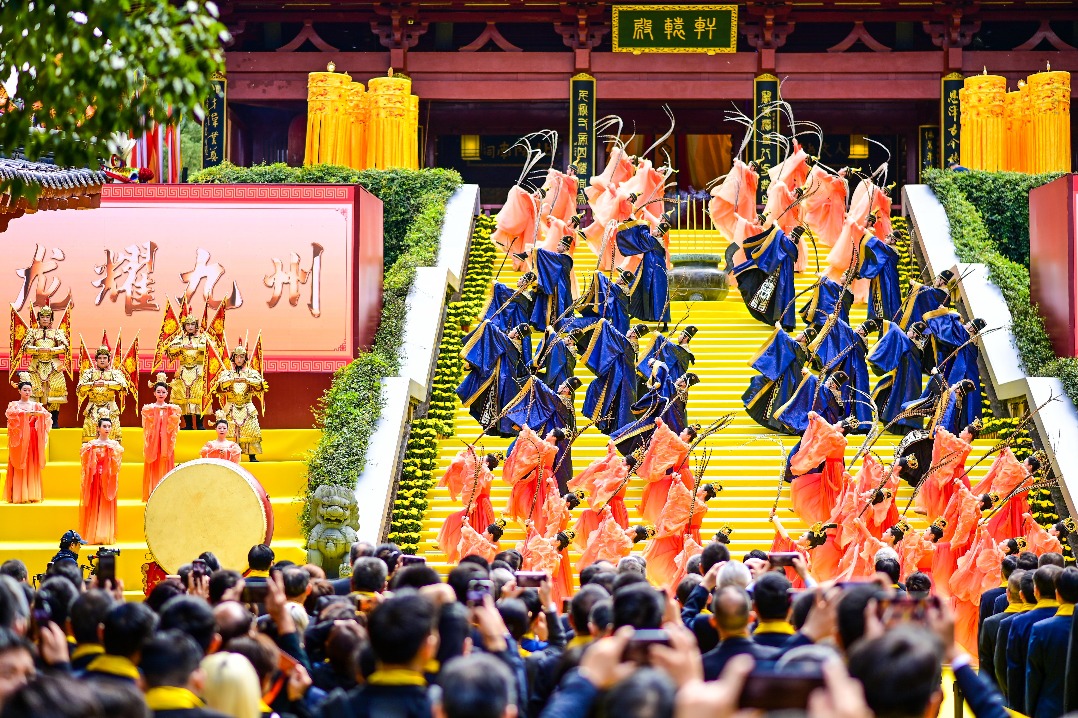
A significant ceremony commemorating Huangdi, the revered Yellow Emperor, took place on Wednesday at the Huangdi Temple in Jinyun County, Lishui City, Zhejiang Province. Huangdi, a legendary figure who unified China approximately 5,000 years ago, is celebrated as the progenitor of the Chinese people and the architect of Chinese culture. The event, attended by over 400 participants, including national role models, Taiwanese compatriots, and overseas Chinese, featured traditional rituals, music, and dance performances. The ceremony began at 9:50 AM, symbolizing the ‘nine five’ numerical combination that signifies Huangdi’s supreme majesty. Drums and bells were struck 34 and 15 times respectively, representing China’s 34 administrative regions and the 1.5 billion Chinese people worldwide. Tsai Meng-hsuan, a Taiwanese doctoral graduate from Fudan University, emphasized the importance of these traditions, stating, ‘These rites are our roots and origins. If you lose them, you will lose your direction and forget who you are.’ The event also coincided with the Double Ninth Festival, a traditional Chinese holiday honoring the elderly. Zhang Hongmin, a researcher at the Zhejiang Academy of Social Sciences, highlighted the enduring legacy of Huangdi’s culture, noting that advancements in artificial intelligence could further enhance the understanding and dissemination of this cultural heritage.
标签: Asia
亚洲
-

Jemimah Rodrigues powers India past Australia into Women’s Cricket World Cup final
In a thrilling showdown at Navi Mumbai, India, Jemimah Rodrigues delivered a masterclass performance, scoring an unbeaten 127 runs to lead India to a five-wicket victory over defending champions Australia in the Women’s Cricket World Cup semifinal on Thursday. Rodrigues’ stellar innings, which included 14 boundaries, powered India to chase down a formidable target of 339 runs in 48.3 overs, marking a record chase in World Cup knockout history. Captain Harmanpreet Kaur also played a pivotal role, contributing 89 runs off 88 balls. Despite a valiant century from Australia’s Phoebe Litchfield (119 off 93 balls), the seven-time champions fell short of securing a spot in the final. India’s triumph ended Australia’s 16-match unbeaten streak in the tournament, dating back to 2022. The hosts will now face first-time finalists South Africa in the title clash on Sunday, with both teams vying for their maiden Women’s World Cup trophy. Rodrigues, named Player of the Match, expressed her joy and dedication, emphasizing the collective effort over individual glory. This historic victory has set the stage for an electrifying final, promising a new champion in women’s cricket.
-
Gaza ceasefire challenged by strikes
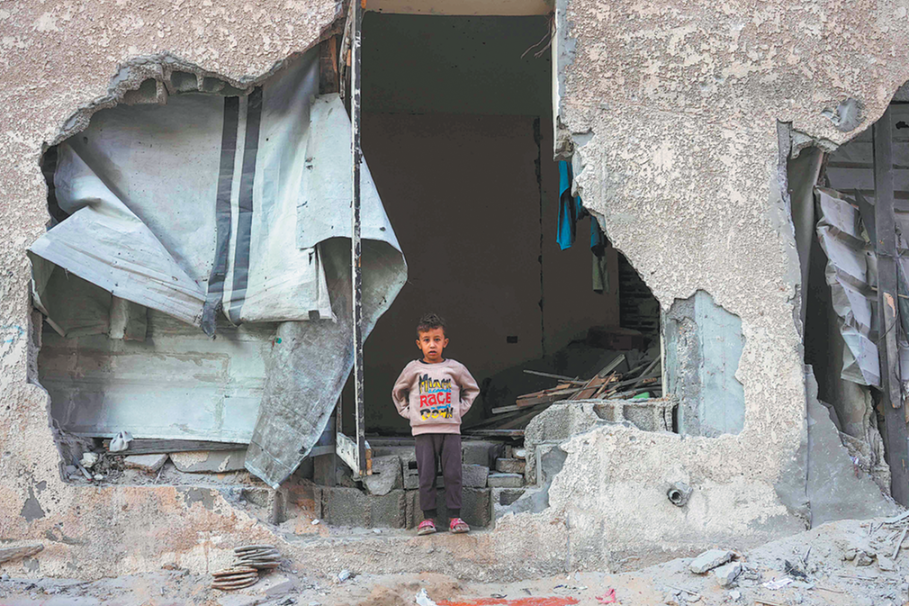
The fragile ceasefire in Gaza faced its most severe test yet as overnight Israeli strikes resulted in the deaths of at least 100 people, including numerous children, according to local hospital officials. The violence, which erupted on Wednesday, marks a significant escalation in the conflict that has plagued the region for years. Mahmud Bassal, a spokesman for a rescue agency operating under Hamas authority, reported that 101 fatalities, including 35 children, were brought to hospitals within a span of less than 12 hours. The strikes targeted tents for displaced families, residential areas, and the vicinity of a hospital, described by Bassal as a ‘clear and flagrant violation of the ceasefire agreement.’ The Israeli military, however, defended its actions, stating that the strikes were aimed at ‘terror targets and terrorists’ and that the ceasefire remains intact. The military also confirmed the death of one of its soldiers during the latest attack. Both Israel and Hamas have accused each other of violating the ceasefire, with Hamas calling on mediators to pressure Israel to halt the strikes. The United States was notified prior to the Israeli operation, and President Donald Trump expressed confidence that the ceasefire, which began on October 10, would endure despite the recent violence. Meanwhile, hospitals in Gaza were overwhelmed with casualties, and survivors questioned the effectiveness of the ceasefire. International reactions included Turkey’s condemnation of the strikes as a violation of the truce and a call for global powers to push Israel to adhere to the agreement. The ceasefire, which halted two years of fighting following the deadly Hamas-led attacks on Israel in October 2023, remains a critical yet precarious step toward peace in the region.
-

Xizang’s green success exemplifies sustainable development
The Xizang autonomous region has emerged as a global exemplar of sustainable development, showcasing a unique blend of modernization and ecological preservation. This was the central theme at the 2025 Forum on the Development of Xizang, held in Nyingchi, where over 400 participants from 44 countries and regions gathered to discuss the region’s progress. The forum highlighted Xizang’s transformation from a remote area to a hub of green innovation and cultural preservation. Mo Gaoyi, deputy director of the Publicity Department of the Communist Party of China Central Committee, emphasized the region’s new historical starting point as China prepares its 15th Five-Year Plan (2026-30). He underscored the importance of governance experience exchange, human rights advocacy, and cross-cultural learning. UNESCO representative Shahbaz Khan lauded Xizang’s modern infrastructure, which has connected its most isolated communities, expanding access to education, services, and markets. Pakistan’s ambassador Khalil Hashmi praised Xizang’s green growth model as replicable for other plateau regions, noting the success of its highland barley industry, which is projected to exceed 5 billion yuan in output by 2025. Timor-Leste’s ambassador Maubere Lorosae da Silva Horta highlighted the shared challenges of climate change, calling for enhanced South-South cooperation through a Plateau-Island Ecological Monitoring Mechanism. Zhao Peng, vice-chairman of the regional government, emphasized the role of Xizang’s youth in driving sustainable development, urging them to adopt eco-friendly lifestyles and contribute to the region’s ecological and economic progress.
-
Calls for commitment to fair trade echo at APEC meeting
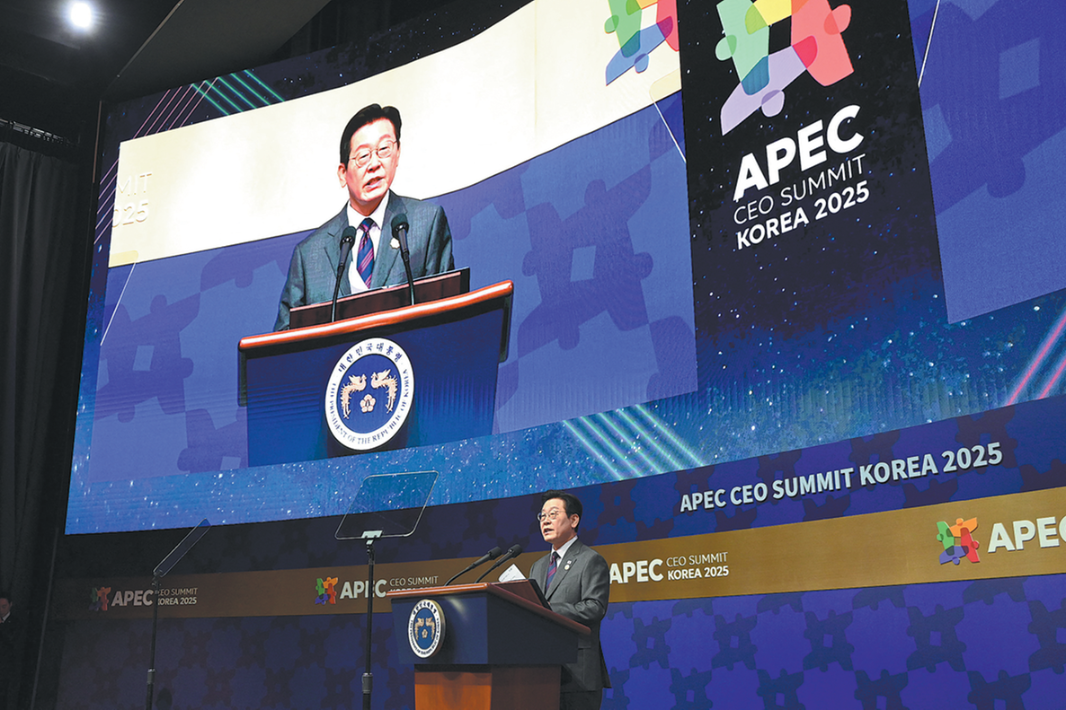
The APEC CEO Summit, held in Gyeongju, South Korea, underscored the critical need for fair trade, investment liberalization, and multilateral cooperation to address global economic challenges. South Korean President Lee Jae-myung, speaking at the opening ceremony, emphasized APEC’s historical role in fostering free trade and driving regional economic growth. He called for collective efforts to achieve sustainable development and equitable prosperity, particularly in the face of rising protectionism and inward-looking policies. The summit, themed ‘Building a Sustainable Tomorrow,’ also introduced an ‘AI for All’ initiative, aiming to integrate artificial intelligence as a cornerstone of APEC’s future agenda. U.S. President Donald Trump highlighted the robust growth prospects of the U.S. economy and engaged in bilateral discussions with Lee. The event, organized by the Korea Chamber of Commerce and Industry, brought together over 1,700 business leaders from 21 member economies to discuss pressing issues such as digital transformation, carbon neutrality, and global economic uncertainties. Chey Tae-won, chairman of the Korea Chamber of Commerce and Industry, stressed the importance of deepening trade and investment ties among APEC members to ensure regional prosperity. OECD Secretary-General Mathias Cormann warned of the adverse effects of trade tensions and policy uncertainty, urging APEC economies to resolve disputes through dialogue. Experts, including Choi Pil-soo of Sejong University, cautioned against unilateral trade measures that could undermine the global trade system, advocating for adherence to the WTO’s most-favored-nation principle.
-

Shenzhou XXI launch to Tiangong space station set for Friday
China is set to launch the Shenzhou XXI spacecraft on Friday night, marking a significant milestone in its space exploration program. The mission, led by Senior Colonel Zhang Lu, will transport three astronauts to the Tiangong space station for a six-month stay. The launch is scheduled for 11:44 pm from the Jiuquan Satellite Launch Center in Inner Mongolia, utilizing a Long March 2F carrier rocket. The crew includes Major Wu Fei, the spaceflight engineer, and mission payload specialist Zhang Hongzhang, both of whom are embarking on their first space mission. The Shenzhou XXI spacecraft will employ a rapid autonomous rendezvous-docking mode to connect with the Tianhe core module of the Tiangong space station, a process expected to take approximately three and a half hours. This mission will facilitate the crew exchange with the current occupants, Senior Colonel Chen Dong, Colonel Chen Zhongrui, and Colonel Wang Jie, who have been aboard the station since late April. The Tiangong space station, completed in late 2022, remains the only independently operated space station in orbit, positioned approximately 400 kilometers above Earth. This launch underscores China’s growing capabilities in space technology and its commitment to maintaining a continuous human presence in space.
-

China and Africa strengthen legal ties
In a landmark event held in Guangzhou, senior judicial officials from China and 12 African nations convened at the China-Africa Prosecutorial Cooperation Forum. The forum, themed ‘The Role of Prosecution in the Modernization Process of China and Africa,’ aimed to strengthen legal ties and enhance prosecutorial exchanges to support mutual modernization efforts. Chen Wenqing, a key figure in China’s political and legal affairs, emphasized the importance of aligning laws and policies to create a conducive legal environment for trade and development between the two regions. This initiative is part of the broader framework of the Forum on China-Africa Cooperation (FOCAC), which celebrates its 25th anniversary this year. Ying Yong, China’s top prosecutor, highlighted the role of law-based governance in China’s modernization and expressed readiness to collaborate with African counterparts in combating transnational crimes and enhancing judicial cooperation. African representatives, including Firmin Mvonde of the Democratic Republic of Congo and Dorcas Agik Abuya Oduor of Kenya, lauded China’s legal advancements and expressed eagerness to learn from its experiences in areas such as anti-corruption and digital economy legal frameworks. The forum concluded with the signing of the ‘Minutes of the China-Africa Prosecutorial Cooperation Forum,’ solidifying commitments to mutual legal assistance and the protection of shared interests.
-

Xi leaves for APEC meeting, state visit to ROK
President Xi Jinping has departed for a significant diplomatic mission, attending the Asia-Pacific Economic Cooperation (APEC) summit and undertaking a state visit to the Republic of Korea (ROK). This journey underscores China’s commitment to fostering regional cooperation and strengthening bilateral ties. The APEC meeting, a pivotal platform for economic collaboration, will address critical issues such as trade, innovation, and sustainable development. Xi’s presence highlights China’s proactive role in shaping the Asia-Pacific economic landscape. Additionally, his state visit to South Korea aims to deepen strategic partnerships, enhance cultural exchanges, and explore new avenues for economic cooperation. This dual engagement reflects China’s broader strategy to bolster its influence in the region and promote mutual growth. The visit is expected to yield significant agreements and reinforce the foundation for long-term collaboration between China and South Korea.
-
Does US have stamina to last the race with ‘pacing threat’ China?
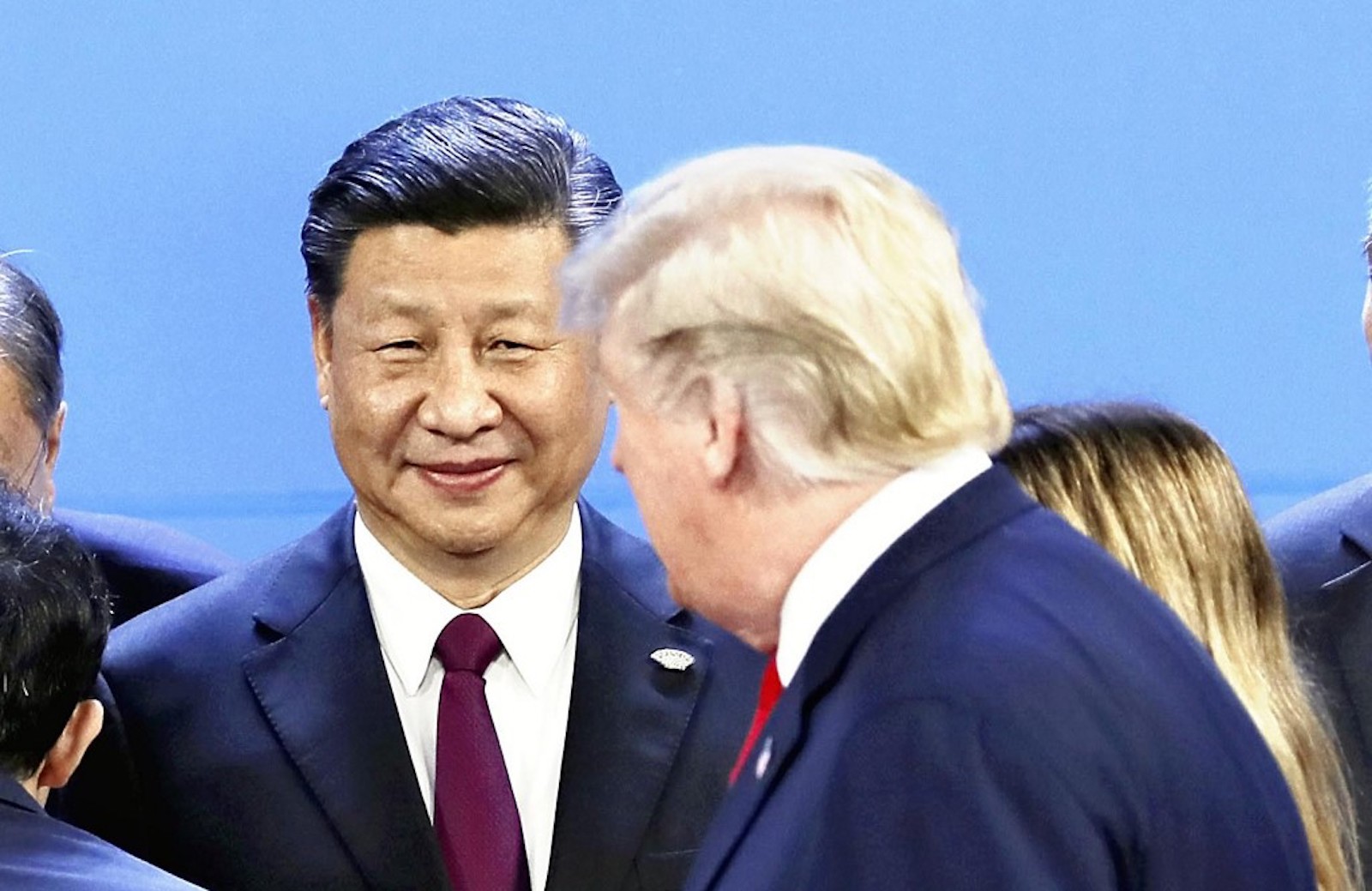
When Donald Trump meets with Xi Jinping on October 30, he will not be engaging with just any leader of a rival nation. Instead, he will be facing the chief representative of what the Pentagon terms the United States’ ‘pacing threat.’ This concept, which has gained traction in military and academic circles since the early 21st century, defines China as a rising near-peer whose capabilities and ambitions directly challenge the US’s global dominance. The term was notably used by Trump’s former Secretary of Defense Mark Esper in 2020 and has been continued by Biden’s Defense Secretary Lloyd J. Austin III, who emphasizes that China poses a systemic challenge across economic, technological, political, and military domains. This designation has profound implications, as it reorients US defense planning, industrial policy, and global posture around the central question of how to keep pace with—and potentially outpace—Beijing. However, this focus on China as the primary pacing threat carries risks, including potential blind spots regarding other adversaries like Russia, Iran, and North Korea. Moreover, the US must balance long-term strategic planning with immediate readiness, ensuring it can address crises both now and in the future. Critics argue that China may already be ahead in certain areas, such as defense-industrial output and technological innovation, underscoring the urgency for the US to enhance its responsiveness and productive capacity. Ultimately, the competition between the US and China is not merely about military might but about the ability to innovate, build, and adapt more swiftly in a rapidly evolving global landscape.
-

Mutual visa-free policies prove a win-win for China, S. Korea
The implementation of mutual visa-free policies between China and South Korea has proven to be a mutually beneficial strategy, significantly boosting tourism and economic growth for both nations. Experts highlight that this initiative has already shown positive results, particularly during China’s recent National Day and Mid-Autumn Festival holiday in early October. South Korea experienced a notable influx of Chinese tourists, with popular destinations and shopping malls witnessing increased activity. This surge is attributed to South Korea’s temporary visa-free policy, which allows Chinese group tourists—comprising three or more individuals—to enter the country without a visa from September 29, 2025, to June 30, 2026, for stays of up to 15 days. Previously, only Jeju Island offered such visa-free access, permitting Chinese tourists to stay for up to 30 days. This policy remains in effect. Liu Haomiao, a manager at the domestic travel platform Tuniu, reported a significant rise in group tours to South Korea, with bookings increasing by over 60% compared to September and showing a substantial year-on-year growth from 2024. The visa-free arrangement is expected to further strengthen bilateral ties and enhance economic cooperation between the two countries.