标签: Asia

亚洲

  • Ecological approach to water treatment unveiled

    Ecological approach to water treatment unveiled

    SHANGHAI – Researchers at Shanghai Ocean University have unveiled a groundbreaking ecological approach to water purification that merges ancient Chinese medical philosophy with modern environmental science. The innovative methodology, developed under the guidance of Professor Wang Liqing, applies the fundamental diagnostic principles of Traditional Chinese Medicine – observation, listening, smelling, inquiry, and palpation – to assess and rehabilitate compromised aquatic ecosystems.

    The comprehensive treatment protocol initiates with meticulous water quality analysis through both visual inspection and advanced instrumental monitoring. Subsequent phases involve examining water circulation dynamics and investigating historical pollution sources alongside environmental transformations. These diagnostic insights inform the creation of customized rehabilitation strategies tailored to each unique water body.

    “Our primary intervention involves isolating pollution sources to prevent additional contamination,” Professor Wang explained. “We then perform precise ‘surgical’ modifications to underwater topography while establishing specialized habitats for carefully selected aquatic flora and fauna.”

    The research team conceptualizes water ecosystems as intricate networks where material conversion, energy transfer, and information exchange form self-regulating systems with interconnected components. This holistic perspective enables implementation of complete ecological solutions rather than addressing isolated symptoms.

    The treatment methodology employs diverse biological agents strategically deployed according to water depth. In deeper aquatic zones, fish populations serve as natural regulators of algae while absorbing surplus nutrients. Shallower regions receive submerged vegetation, particularly a specially engineered strain of vallisneria that demonstrates exceptional pollutant absorption capabilities.

    At their Qingpu district research facility, the team has perfected plant cultivation techniques through two decades of selective breeding. Their enhanced vallisneria variant achieves two annual harvests while exhibiting superior functional performance. The researchers have additionally developed specialized equipment including aquatic plant wrapping machinery and automated collection vessels that enable low-disturbance, high-efficiency planting and maintenance operations.

    While the ecological approach appears fundamentally simple, Professor Wang emphasizes its underlying complexity lies in precision implementation. “Each aquatic environment demands carefully calibrated, location-specific interventions to maintain ecological equilibrium,” she noted.

    The system’s effectiveness finds demonstration at Jinhai Lake in Fengxian district, where implemented measures have maintained remarkable stability since 2011. Water transparency consistently reaches two meters with quality meeting Grade II or III standards, while the site now purifies approximately 100,000 metric tons daily.

    In Zhujiajiao Water Town, the establishment of ecological buffer zones has improved water transparency from under half a meter to exceeding 1.5 meters. The approach achieves significant cost efficiency, reducing treatment expenses from 0.2-0.5 yuan per ton through conventional methods to approximately 0.04 yuan per ton.

    “We facilitate natural transformation processes rather than merely extracting pollutants,” Professor Wang elaborated. “Converting dissolved nutrients into harvestable biomass establishes a sustainable cycle where aquatic vegetation serves as fish nourishment or organic fertilizer.”

    The ecological methodology has been deployed across more than 700 projects throughout 23 Chinese provinces and municipalities, treating approximately 90 square kilometers of water area – equivalent to 15 West Lakes. “Our ultimate vision transcends water treatment alone,” Professor Wang concluded. “We aspire to create self-sustaining ecosystems that coexist harmoniously with human activity while delivering enduring environmental and economic benefits.”

  • South Korean leader says he asked China’s Xi to act as mediator on North Korea issues

    South Korean leader says he asked China’s Xi to act as mediator on North Korea issues

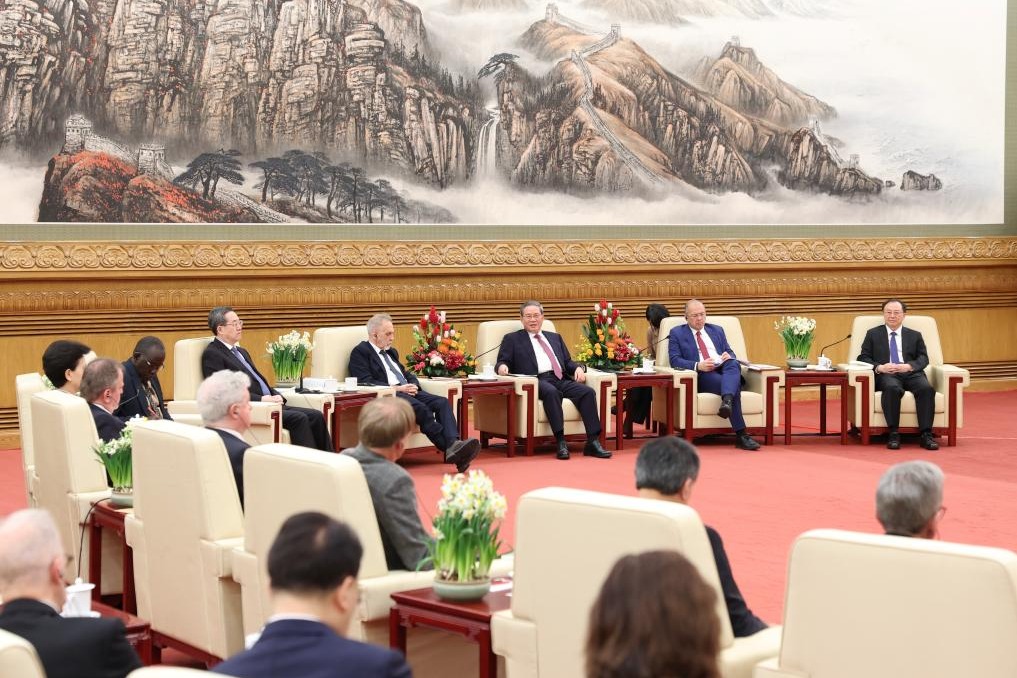
    During his official visit to China this week, South Korean President Lee Jae Myung formally requested Chinese President Xi Jinping to act as a diplomatic intermediary in resolving the protracted nuclear standoff with North Korea. The appeal came during bilateral talks held in Beijing on Monday, where President Lee emphasized the complete breakdown of communication channels between Seoul and Pyongyang.

    President Xi responded by emphasizing the necessity of patience in addressing North Korean matters while acknowledging South Korea’s ongoing efforts. The Chinese leader’s cautious stance reflects Beijing’s complex position as North Korea’s primary economic partner and diplomatic ally. This development occurs amid Pyongyang’s continued refusal to engage in denuclearization discussions since the collapse of negotiations with former U.S. President Donald Trump in 2019.

    Since assuming office in June, President Lee’s administration has pursued renewed dialogue with North Korea through a phased denuclearization approach involving reciprocal benefits. However, these overtures have been consistently ignored by North Korean leadership, with Kim Yo Jong—influential sister of Kim Jong Un—recently criticizing Seoul’s reliance on its U.S. alliance.

    During separate discussions with Chinese Premier Li Qiang, South Korean officials received similar counsel regarding diplomatic patience. President Lee specifically proposed initial steps to freeze North Korea’s nuclear and missile programs to prevent further arsenal expansion and potential proliferation risks. Chinese officials reportedly expressed alignment with this perspective, recognizing the ongoing nuclear development as detrimental to regional and global security.

    Despite these diplomatic exchanges, significant obstacles remain. North Korea has explicitly removed denuclearization from future negotiations, while experts caution that limited concessions might enable Pyongyang to secure sanctions relief without meaningful progress toward disarmament.

  • Flyers embrace ‘boomerang tickets’

    Flyers embrace ‘boomerang tickets’

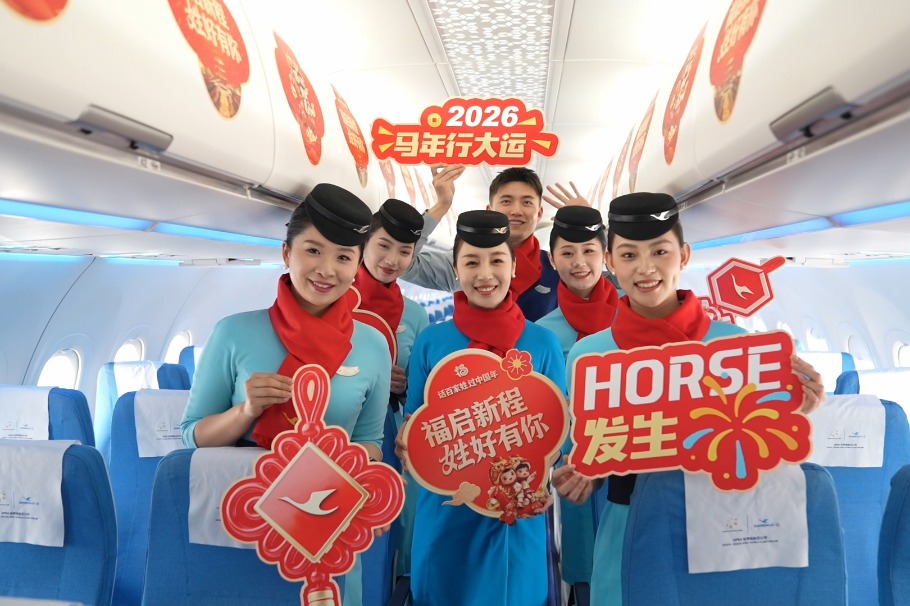
    A novel travel phenomenon dubbed the ‘boomerang ticket’ strategy is rapidly gaining popularity across Chinese social media platforms, revolutionizing how young travelers approach domestic journeys. This innovative approach involves booking flights with extended layovers in third cities that ultimately prove cheaper than direct routes, effectively transforming transit stops into brief sightseeing opportunities.

    The trend exemplifies a growing consumer preference for value-driven travel experiences, particularly among younger demographics seeking to maximize limited vacation time. One notable case involves a couple from Jiangsu province who opted for a Beijing-connected flight to reach nearby Changzhou—despite the cities being merely 40 kilometers apart—simply to enjoy a 47-hour capital city exploration at just 579 yuan ($83) per person.

    Industry analyst Li Gaochao of Shanxi Baohua International Travel Service notes that enhanced price transparency through digital platforms has empowered travelers to identify such cost-effective itineraries. ‘As cities intensify cultural tourism promotions with social media-friendly attractions,’ Li observes, ‘young travelers are strategically selecting these multi-city routes to incorporate additional destinations within tight schedules.’

    Civil aviation reforms have significantly contributed to this trend’s viability. According to Lin Zhijie of the China Air Transport Association, airlines have optimized domestic transfer services by integrating regional routes with major hubs and redistributing spare capacity. This operational shift has generated more affordable flight combinations while improving overall seat occupancy rates.

    Online travel platforms report surging interest, with Fliggy documenting a 95% month-on-month increase in ‘boomerang ticket’ searches during December. The average one-way fare registered approximately 356 yuan—44% lower than conventional tickets during the same period.

    Despite the apparent advantages, travel experts advise caution regarding potential risks. Li recommends selecting flights operated by the same airline or partners covered by interline agreements, ensuring carrier responsibility for rebooking if initial leg delays affect connections.

    For participants like Lu (surname only), who celebrated her anniversary with nighttime cycling around Tian’anmen Square during her Beijing layover, the approach has unlocked new travel possibilities. Already planning future boomerang journeys, she anticipates using similar strategies to experience Chongqing’s hotpot, Dalian’s coastal scenery, and Lanzhou’s northwestern culture—all through creatively routed flight bookings.

  • Israel defies ceasefire with Gaza strikes

    Israel defies ceasefire with Gaza strikes

    Israeli military operations have resumed in the Gaza Strip with artillery and helicopter strikes targeting southern regions on Monday, directly violating the established ceasefire agreement. The attacks resulted in the deaths of a young girl and her uncle while injuring four others, including children, when a strike hit a civilian tent in the al-Mawasi area of Khan Younis.

    The Israel Defense Forces claimed via social media platform X that their operation targeted a Hamas terrorist allegedly planning an imminent attack against Israeli forces. However, no evidence was provided to substantiate this claim, and the military made no mention of the civilian casualties resulting from the strike.

    United Nations spokesperson Stephane Dujarric confirmed during a press briefing that Israeli airstrikes continued across multiple areas of Gaza, exacerbating an already severe humanitarian situation. The attacks coincide with destructive winter storms that have damaged critical infrastructure and placed additional strain on water, sanitation, and hygiene services.

    According to the UN Office for the Coordination of Humanitarian Affairs (OCHA), heavy rainfall has compromised damaged water infrastructure, raising water levels in Wadi Gaza and Sheikh Radwan lagoon. The humanitarian community is engaging with Israeli authorities to allow specialized equipment entry to operate dewatering pumps.

    While the UN reported meeting 100 percent of minimum caloric standards in Gaza for the first time since October 2023, concerns mount over Israel’s recent ban on 37 international NGOs operating in the territory. The organizations, accused of failing to comply with security requirements, collectively provide more than half of all food assistance, support 60 percent of field hospitals, and implement nearly three-quarters of shelter activities.

    A joint statement from 53 NGOs emphasized that humanitarian access must be measured by whether civilians receive appropriate assistance in the right place and time, warning that the ban threatens to severely impede critical aid delivery to Gaza’s civilian population.

  • Science fuels farm yields in Shaanxi

    Science fuels farm yields in Shaanxi

    In the shadow of the Qinling Mountains, a quiet agricultural transformation is underway where microscopic plant tissues and genetic sequencing are replacing traditional farming methods as the primary drivers of increased productivity. Baoji, a prefecture-level city in Shaanxi province, has emerged as an unexpected epicenter of agricultural innovation through its pioneering application of advanced biotechnologies.

    The Baoji Academy of Agricultural Sciences serves as the nerve center for this revolution, where scientists employ cutting-edge techniques including molecular breeding, CRISPR gene editing, and shoot tip detoxification to develop superior crop varieties. In one laboratory, researchers meticulously dissect plant shoot tips measuring less than half a millimeter—a process that eliminates viral infections and can boost yields by up to 30%.

    Agricultural scientist Du Xueshi exemplifies this new approach, examining tomato seedlings for genetic markers that confer resistance to the devastating yellow leaf curl virus. ‘We’re essentially conducting genetic identification to ensure only the most resilient plants reach our fields,’ Du explained.

    The practical benefits are already transforming local agriculture. Farmer Tie Hongke reported that soybean yields in Qishan County have dramatically increased from approximately 135 kilograms per half hectare to 275 kilograms using the locally developed Baodou No. 10 variety—a high-protein strain containing 43% protein content that commands premium prices from food processors.

    Additional breakthroughs include the Baodou 1519 soybean variety, which has achieved record yields of 302 kilograms per mu (0.066 hectares), and the Qinshu 13 sweet potato strain that produces up to 6,000 kilograms per mu. A newly developed short-vine sweet potato variety enables full mechanical harvesting, significantly reducing labor requirements.

    These innovations have reduced breeding cycles from over a decade to just seven or eight years through molecular techniques. In rapeseed research, scientists now cultivate stable lines from single microspores in as little as three years.

    Baoji’s agricultural output has surged from 31.7 billion yuan in 2019 to 42 billion yuan in 2024—a 32% increase largely attributed to scientific advancements. The city has become China’s largest production base for premium kiwifruit and dwarf apple trees, while simultaneously developing as a major center for alpine vegetables and dairy production.

    The city’s biotechnology laboratory—the first of its kind in Shaanxi—operates six breeding units capable of producing three to four crop generations annually. The academy’s germplasm bank now preserves over 4,400 plant samples, each representing potential future breakthroughs.

    This scientific approach aligns with national policy directives emerging from the Fourth Plenary Session of the 20th CPC Central Committee, which emphasized accelerating agricultural modernization through technological innovation. The Ministry of Agriculture and Rural Affairs has specifically endorsed developing ‘new quality productive forces’ in farming, including bio-breeding, agricultural drones, artificial intelligence, and digital management systems.

    Wang Zhouyu, president of the Baoji Academy of Agricultural Sciences, summarized the mission: ‘Our objective remains straightforward—to cultivate better crops and put more smiles on farmers’ faces.’ As China pursues agricultural modernization, Baoji’s integration of laboratory science with practical farming applications offers a replicable model for enhancing food security through innovation.

  • Ningxia’s rooftop solar panel project enriches residents

    Ningxia’s rooftop solar panel project enriches residents

    The Ningxia Hui Autonomous Region in northwest China has emerged as a national leader in renewable energy adoption through its innovative rooftop solar program, transforming ordinary households into clean power producers. With approximately 3,000 annual sunlight hours—among China’s highest solar exposure rates—Ningxia has created an economic model where residents generate income by selling surplus electricity back to the national grid.

    This pioneering initiative has reached significant scale in Tongxin County, where grid-connected distributed photovoltaic systems have achieved an installed capacity of 125.62 megawatts as of December. These installations collectively generate approximately 226 million kilowatt-hours annually, sufficient to power around 90,000 Chinese households for a full year. The program has generated roughly 40 million yuan ($5.7 million) in annual power sales revenue for local participants.

    According to Tongxin Party Secretary Chen Hua, the project delivers dual benefits of environmental sustainability and poverty alleviation. ‘Residents now wake each morning hoping to see sunshine,’ Chen noted. ‘When the sun shines, income flows directly into their households.’

    The economic impact is exemplified by farmer Ma Zhanhai from Yuhai township, who invested 200,000 yuan in rooftop panels. With an annual generation capacity of approximately 150,000 kWh, Ma is projected to recover his initial investment within five years and continue earning profits throughout the system’s expected 25-year operational lifespan. This program represents a significant advancement in China’s renewable energy strategy while simultaneously addressing rural economic development goals.

  • Hong Kong fire: Call to expedite resettlement plans

    Hong Kong fire: Call to expedite resettlement plans

    Hong Kong’s Tai Po District Council has issued an urgent appeal to the special administrative region government to accelerate resettlement plans for displaced residents of Wang Fuk Court, following the catastrophic November 26 fire that claimed 161 lives. The call for action came during the council’s first meeting since the tragedy, which also served as a solemn memorial with a moment of silence observed by all 22 councilors and government officials.

    The devastating blaze, which displaced approximately 2,000 households, has prompted serious concerns about housing solutions for affected residents, particularly elderly occupants who have expressed strong preferences to remain in their local community. District Councilor Peggy Wong Pik-kiu emphasized that many survivors wish to maintain proximity to their original homes for childcare and medical reasons, urging authorities to identify suitable land within Tai Po for replacement housing.

    Alternative proposals have emerged, including Councilor Lo Hiu-fung’s suggestion to utilize a development-ready site on Chung Nga Road, approximately 2 kilometers from the original estate. This plan could potentially complete the rebuilding process by 2030 or earlier, providing medium to long-term solutions for displaced families.

    Concurrent with resettlement discussions, the Independent Commission Against Corruption has launched an investigation into possible corruption related to Wang Fuk Court’s renovation project. In a significant administrative development, the Lands Tribunal dissolved the estate’s owners’ corporation committee at the government’s request, appointing Hop On Management Company, a Chinachem Group subsidiary, as interim administrator.

    Financial support measures have been substantial, with the government-established Support Fund reaching HK$4.1 billion (approximately $526 million) by late December, of which HK$1.2 billion has already been allocated to various assistance programs. The Hospital Authority has waived all medical fees for fire victims, with 67 of the 79 treated patients discharged by December 30, and the remaining 12 reported in stable condition.

    Secretary for Home and Youth Affairs Alice Mak Meikuen confirmed that the new management arrangement is temporary, with major decisions to be made through homeowner meetings, ensuring residents’ welfare remains protected through professional oversight.

  • Culture of reading codified into law

    Culture of reading codified into law

    China will implement its first nationwide reading promotion regulation on February 1, establishing comprehensive legal frameworks to transform reading from voluntary activity into fundamental cultural infrastructure. The groundbreaking legislation, approved by the State Council in December, mandates expanded library services, enhanced reading facilities, and systematic funding mechanisms to elevate public engagement with literature.

    The regulation designates the fourth week of April as National Reading Week, extending celebrations beyond World Book Day on April 23 into an extended nationwide campaign. This legislative move represents China’s inaugural national effort to codify reading promotion, transitioning from policy advocacy to legally guaranteed public right.

    Structured across six chapters containing 45 articles, the regulation establishes a collaborative governance model operating under Party leadership with government guidance, engaging publishers, distributors, libraries, bookstores, and social organizations. It creates comprehensive requirements for reading infrastructure, resource allocation, and promotional activities nationwide.

    Chen Mingliang, founder of Beijing’s Bright World Reading Club, hailed the regulation as “a pivotal moment in China’s commitment to promoting reading among the public, elevating it to a strategic priority.” He emphasized that the initiative transcends individual habit formation, serving crucial functions in “fostering shared understanding, strengthening social cohesion and enhancing social governance.”

    The legislation specifically addresses persistent challenges including regional disparities, uneven digital reading standards, and quality content shortages. It mandates state-level support for publishing industry development to enrich offerings and optimize catalog structures, while prioritizing assistance for underserved groups including minors, elderly citizens, people with disabilities, and rural communities.

    Writer-translator Li Yingdeng noted the legislation’s “equity core lies in its targeted reach,” explaining that “spontaneous initiatives and market forces often fail to reach rural areas and disadvantaged groups. Legislation is therefore essential to guarantee equitable access.”

    The regulation builds upon nearly two decades of progressive efforts, including Jiangsu province’s 2014 pioneering provincial regulation and reading’s inclusion in government work reports for twelve consecutive years since 2014. These sustained initiatives have elevated China’s overall reading rate from 51.7% in 2004 to 82.1% in 2024, supported by over 3,200 public libraries and 100,000 physical bookstores nationwide.

    Implementation success will depend on detailed execution, according to Zhu Bing, former director of the National People’s Congress’ Culture Office, who emphasized that “the vitality of laws and regulations lies in their implementation.” The regulation holds governments and relevant parties accountable for fulfilling specified duties to cultivate reading habits and foster a society-wide reading environment.

  • Family of Malaysian ex-leader Mahathir says broken hip serious but not life-threatening

    Family of Malaysian ex-leader Mahathir says broken hip serious but not life-threatening

    KUALA LUMPUR, Malaysia — Malaysia’s former Prime Minister Mahathir Mohamad, who recently celebrated his centennial birthday, is undergoing medical treatment at the National Heart Institute after sustaining a fractured hip during a morning exercise session. The nonagenarian statesman was admitted on Tuesday following an accidental fall at his residence.

    Medical authorities have determined that surgical intervention is not advisable given Mahathir’s advanced age, opting instead for a conservative treatment approach that will require several weeks of hospitalization for monitoring and recovery. His daughter Marina Mahathir provided reassurance regarding her father’s condition, stating that while the injury presents serious concerns for a patient of his age, it does not constitute a life-threatening situation.

    The incident occurred during Mahathir’s regular brisk walking routine, according to family members. This latest health episode adds to the former leader’s medical history, which includes significant cardiac events requiring multiple bypass surgeries throughout his lifetime.

    Despite retiring from active politics, Mahathir remains one of Southeast Asia’s most prominent political figures. His unprecedented two-term leadership spanned from 1981 to 2003 and again from 2018 to 2020, during which he achieved the distinction of being the world’s oldest serving head of government. The former prime minister has previously attributed his longevity to maintaining both physical activity and mental engagement, famously remarking that he strives to live as if he weren’t aging.

  • Japan nuclear agency worker loses phone with confidential data in China

    Japan nuclear agency worker loses phone with confidential data in China

    A significant security breach has occurred within Japan’s Nuclear Regulation Authority (NRA) after an employee lost a government-issued smartphone containing highly sensitive information during a personal visit to China. The incident took place on November 3rd when the official misplaced the device while undergoing security screening at Shanghai Airport.

    The missing phone stored confidential contact details of personnel directly involved in Japan’s nuclear security operations, including those responsible for protecting nuclear materials against potential threats such as theft and terrorism. Despite realizing the device was missing three days later and conducting searches with airport authorities, the phone remains unrecovered.

    This security lapse comes at a particularly sensitive time for Japan’s energy sector as the country attempts to revitalize its atomic energy program, which has remained largely dormant since the 2011 Fukushima nuclear disaster. The NRA itself was established following that catastrophe to oversee nuclear safety standards and reactor restarts.

    In response to the incident, the NRA has formally reported the breach to Japan’s Personal Information Protection Commission and implemented stricter protocols prohibiting employees from bringing work phones overseas. The agency cannot confirm whether the sensitive data has been compromised, but the potential implications for national security are considerable.

    This event marks the latest in a series of security failures within Japan’s nuclear establishment. Previous incidents include the mishandling of confidential documents at the Kashiwazaki-Kariwa Nuclear Power Plant—the world’s largest nuclear facility—and recent revelations that Chubu Electric Power may have used selectively chosen data during safety assessments. The NRA has consequently suspended its review process for Chubu’s reactor restart applications due to what officials have termed ‘fabrication of critical inspection data.’