标签: Asia

亚洲

  • Salute to everyday heroes

    Salute to everyday heroes

    Across China, ordinary citizens are demonstrating extraordinary contributions to cultural preservation, environmental sustainability, and community welfare, earning recognition as everyday heroes in their respective fields.

    In Hunan Province, students have pioneered an innovative approach to both environmental conservation and cultural heritage by crafting traditional Chinese opera headpieces entirely from recycled materials. This creative initiative not only reduces waste but also introduces younger generations to the intricate art forms of Chinese opera, ensuring their preservation for years to come.

    Meanwhile, in Xizang Autonomous Region, a nursing home organized special celebrations for elderly residents on the anniversary of a significant earthquake, demonstrating community resilience and respect for senior citizens. The event highlighted China’s growing emphasis on elderly care and social support systems in remote regions.

    Historical preservation efforts gained momentum with the reopening of a century-old tunnel named after Taiwan’s first governor. This restoration project has revived historical memories and connections between mainland China and Taiwan, serving as both a tourist attraction and educational site.

    In Chongqing, an innovative urban transformation project has converted a former air-raid shelter into a thriving bookstore, now recognized as a tourism touchstone. This adaptive reuse of historical infrastructure demonstrates how cities can creatively repurpose spaces while honoring their historical significance.

    Additional initiatives include a Chinese couple’s remarkable project of transforming 100,000 photographs of the Great Wall into a dedicated museum, beating the drum of heritage preservation through visual documentation. These collective efforts across various provinces showcase how individual citizens are actively participating in cultural preservation, environmental sustainability, and community building throughout China.

  • Filipino rescuers detect ‘signs of life’ in garbage avalanche that killed 4 and left dozens missing

    Filipino rescuers detect ‘signs of life’ in garbage avalanche that killed 4 and left dozens missing

    CEBU CITY, Philippines — Search and rescue teams have detected signs of life within the rubble of a catastrophic garbage avalanche that engulfed a waste management facility in central Philippines, offering hope amid a devastating incident that has claimed at least four lives and left dozens missing.

    The tragedy occurred Thursday at the Binaliw village landfill in Cebu City when a massive wall of refuse collapsed without warning, burying low-lying structures under tons of debris. Despite favorable weather conditions, the sudden collapse trapped numerous workers beneath twisted metal roofing, iron supports, and highly combustible waste materials.

    Authorities confirmed Saturday that twelve workers have been successfully extracted with various injuries while emergency crews continue their painstaking search for more than thirty missing individuals. Cebu City Mayor Nestor Archival announced that specialized equipment, including a 50-ton crane accompanied by police escort, is being deployed to assist in the delicate excavation process.

    ‘Safety protocols have been intensified due to multiple hazards including structural instability and acetylene exposure risks,’ Mayor Archival stated. ‘We’ve established controlled access points to protect responders while maintaining search operations in areas where life signs have been detected.’

    Victims identified so far include both facility staff and office workers from the 110-employee complex. The death toll rose from two to four between Friday and Saturday, though official numbers of missing persons remain fluid as rescue efforts continue.

    Survivor Jaylord Antigua, 31, described the terrifying moment of collapse to Associated Press reporters. ‘The garbage wall descended without any warning despite clear weather,’ recounted Antigua, who escaped with minor bruises after crawling through darkness toward a light source. ‘I moved quickly, fearing subsequent landslides—it was profoundly traumatic. This feels like a second life.’

    The incident raises serious concerns about waste management infrastructure throughout the Philippines, where landfills and open dumpsites have historically posed significant public health and safety risks, particularly to adjacent impoverished communities where residents often scavenge for recyclables and food remnants.

    This tragedy echoes a similar 2000 disaster in Quezon City where a garbage mound collapse during stormy conditions resulted in over 200 fatalities and prompted nationwide reforms in waste management policy. Mayor Archival acknowledged that preparations are underway to address impending garbage collection challenges resulting from the facility’s closure.

  • North Korea vows response as it accuses the South of flying drones across the border

    North Korea vows response as it accuses the South of flying drones across the border

    North Korea’s military has issued a stern warning to South Korea, accusing its southern neighbor of conducting unauthorized drone surveillance missions across their shared border. The General Staff of the Korean People’s Army released an official statement through state media channels, alleging that South Korean drones equipped with dual-camera systems had infiltrated North Korean airspace on multiple occasions in recent weeks.

    The North Korean military claims it deployed specialized electronic warfare systems to neutralize what it described as ‘undisguised provocative acts.’ According to their account, one drone was intercepted on Sunday near a border town, while another was allegedly forced to crash on September 27 after electronic countermeasures were applied. Both devices were said to contain captured footage of strategic locations within North Korean territory.

    South Korea’s Defense Ministry has categorically denied these allegations, stating that no military drones were operational during the specified timeframes. Ministry official Kim Hong-Cheol confirmed that authorities would investigate whether civilian-operated drones might be involved, while reaffirming Seoul’s commitment to peaceful confidence-building measures.

    This incident occurs against the backdrop of deteriorating inter-Korean relations. Since the collapse of denuclearization talks between North Korea and the United States in 2019, Pyongyang has increasingly focused on weapons development while adopting a hostile ‘two-state’ policy toward South Korea. Despite President Lee Jae Myung’s efforts to revive diplomatic channels since taking office in June—including recent appeals to Chinese President Xi Jinping for mediation—North Korea has consistently rebuffed overtures from Seoul.

    Drone incursions have emerged as a persistent flashpoint in the delicate relationship between the two Koreas. Both nations have previously accused each other of unauthorized aerial surveillance operations, with notable incidents occurring in October 2024 and December 2022. While these previous confrontations resulted in heightened rhetoric without major escalation, the current allegations threaten to further undermine already strained relations on the Korean Peninsula.

  • India scolds Mamdani for sending letter to Indian activist held without trial

    India scolds Mamdani for sending letter to Indian activist held without trial

    India’s Ministry of External Affairs has issued a stern diplomatic reprimand to New York City Mayor Zohran Mamdani following the public circulation of his letter to imprisoned Indian activist Umar Khalid. The communication, penned in early December after Mamdani met with Khalid’s parents during their U.S. visit, surfaced on social media platforms several days ago.

    External Affairs Ministry spokesperson Randhir Jaiswal delivered a sharply worded statement urging foreign officials to respect judicial independence in other democracies. ‘We expect public representatives to be respectful of the independence of judiciaries in other democracies,’ Jaiswal stated. ‘Expressing personal prejudices does not behoove those in office. Instead of such comments, it would be better to focus on the responsibilities entrusted to them.’

    Khalid, a student activist detained without trial since September 2020, faces allegations of orchestrating the February 2020 New Delhi riots. His case has drawn international scrutiny, with the U.S. Commission on International Religious Freedom (USCIRF) identifying him as persecuted for ‘protesting religious freedom conditions’ and recommending India be designated a ‘Country of Particular Concern’ for religious intolerance.

    The legal proceedings against Khalid operate under India’s Unlawful Activities (Prevention) Act (UAPA), legislation permitting extended detention periods while severely restricting bail opportunities. India’s Supreme Court recently rejected Khalid’s latest bail application, maintaining his imprisonment.

    Mamdani’s letter expressed personal solidarity, stating: ‘Dear Umar, I think of your words on bitterness often and the importance of not letting it consume one’s self. It was a pleasure to meet your parents. We are all thinking of you.’

    Simultaneously, eight U.S. lawmakers including Democratic Congressman Jim McGovern (co-chair of the Tom Lantos Human Rights Commission) and Senators Chris Van Hollen and Peter Welch dispatched a formal letter to Indian Ambassador Vinay Mohan Kwatra on December 30th. The communication urged India to provide Khalid with bail and a fair trial ‘in accordance to international law.’

    The controversy originates from the 2020 citizenship law amendments under Modi’s government that expedited citizenship for persecuted non-Muslim religious minorities from neighboring countries. Muslim exclusion protests prompted violent clashes in New Delhi, resulting in over 50 fatalities—predominantly Muslims—in the capital’s worst religious violence since the 1984 anti-Sikh riots.

    Indian police arrested approximately 2,000 individuals following the disturbances, with critics alleging anti-Muslim bias in targeting activists and students. Among at least 18 detained leaders, Khalid has faced repeated bail rejections over five years despite international human rights organizations demanding his release. While some co-accused were granted bail on January 5th, Khalid and associate Sharjeel Imam remain imprisoned, with Amnesty International condemning their continued detention as based on ‘politically motivated allegations.’

  • China’s Hurricane 3000 casts an electric storm in the Taiwan Strait

    China’s Hurricane 3000 casts an electric storm in the Taiwan Strait

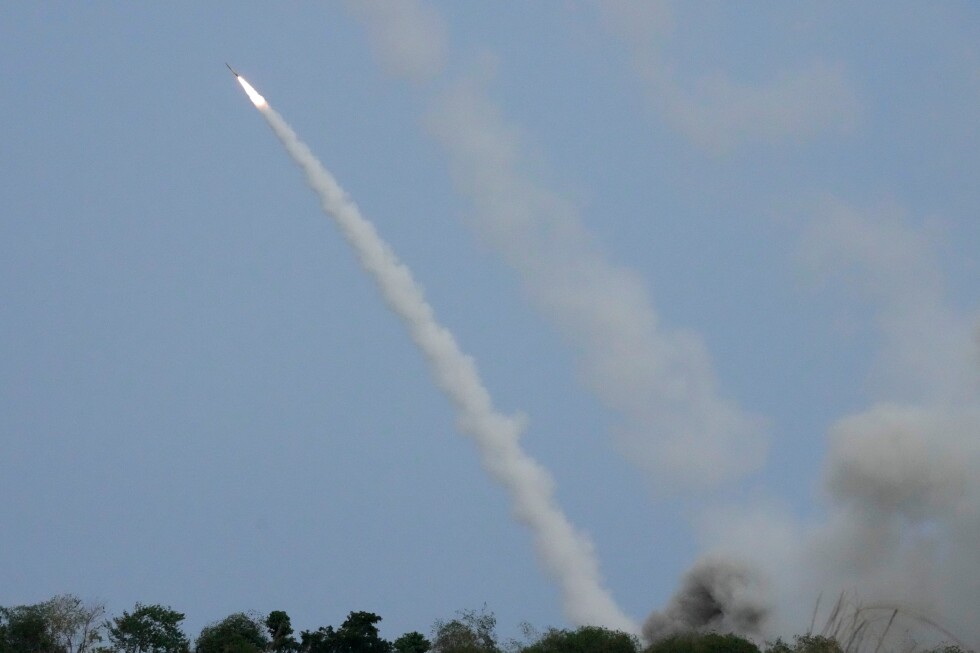
    China’s recent unveiling of its advanced Hurricane 3000 high-power microwave (HPM) weapon system marks a significant evolution in electromagnetic warfare capabilities, particularly in the context of escalating drone competition across the Taiwan Strait. Developed by state-owned defense contractor Norinco, this truck-mounted system represents a strategic shift from traditional platform-centric warfare to cost-effective electromagnetic domain control.

    The Hurricane 3000, first showcased during Beijing’s September 2025 military parade, demonstrates an impressive operational range exceeding 3 kilometers against small unmanned aerial vehicles (UAVs). According to Norinco expert Yu Jianjun, the system’s capability surpasses comparable American technologies, enabling it to transition from short-range point defense to broader area denial operations. The weapon employs radar detection and electro-optical targeting before emitting concentrated microwave beams that instantly disable drone electronics through both antenna-based and circuit-level electromagnetic coupling.

    This technological advancement addresses the critical challenge of drone swarm saturation attacks by offering a low-cost-per-shot solution with minimal collateral damage and virtually unlimited firing capacity. The system can operate independently or integrate with laser and artillery systems within layered defense networks, reflecting China’s comprehensive approach to enhancing air, border, and urban security amid rapidly evolving drone warfare technologies.

    Research published in the January 2024 edition of Electronics journal details how HPM systems disrupt UAV operations by overwhelming electronic subsystems through multiple pathways. Even autonomous and fiber-optic drones, designed to avoid traditional jamming techniques, become vulnerable to HPM-induced electronic noise and overheating that compromises their operational capabilities.

    Strategic analysts from the Belfer Center (January 2025) and Center for a New American Security (September 2025) note that HPM weapons serve as critical point-defense tools for protecting invasion forces and key installations during potential Taiwan contingencies. These systems function as a ‘final force field’ against drones penetrating outer defensive layers, though their effectiveness depends on integration within broader counter-drone architectures due to range limitations and potential friendly electronic interference.

    The development carries particular significance for the US Replicator initiative, a Department of Defense project aiming to deploy thousands of low-cost autonomous systems to deter Chinese aggression toward Taiwan. While drone hardening techniques exist—including shielding, reflective surfaces, and obscurants—these countermeasures increase weight, complexity, and production costs, potentially undermining the economic rationale behind attritable drone swarms.

    Military analysts suggest that future drone effectiveness will depend on adapting tactics to exploit HPM limitations through maneuver, dispersion, multi-axis approaches, and environmental exploitation rather than relying solely on numerical superiority. This evolving dynamic shifts the strategic competition toward cost-exchange management and system resilience rather than simple technological superiority.

  • ‘An attack on women’s dignity’: Walls whitewashed after silhouettes defaced in Indian city

    ‘An attack on women’s dignity’: Walls whitewashed after silhouettes defaced in Indian city

    A disturbing incident of public art vandalism in Gwalior, central India, has ignited nationwide conversations about gender-based harassment and women’s safety in public spaces. The controversy began when a school student’s Instagram video revealed deliberately defaced female yoga silhouettes on a city beautification mural, with explicit markings targeting the genital areas of the figures.

    The teenage activist expressed profound disappointment in her viral post, stating that witnessing the sexualized defacement of artistic representations filled her with ‘anger and disgust.’ Her documentation triggered substantial social media backlash, with numerous commentators noting that women remain vulnerable ‘even in graffiti.’ National media outlets characterized the incident as both shameful and symptomatic of deeper societal issues.

    In response to mounting public pressure, local authorities initiated whitewashing of the affected walls. Municipal spokesman Umesh Gupta attributed the vandalism to unidentified ‘miscreants’ and acknowledged surveillance limitations in the area. The corporation subsequently announced a street art competition focusing on civic themes, though notably excluding yoga motifs from the proposed subjects.

    Social activist Kalpana Viswanath of Safetipin contextualized the event within India’s broader challenges regarding women’s access to public spaces. She emphasized that such acts constitute a form of sexual harassment regardless of whether directed at women or their artistic representations. While acknowledging the psychological impact of such incidents on women’s freedom of movement, Viswanath found encouragement in young women’s increasing willingness to challenge patriarchal norms, particularly those from smaller urban centers.

    The incident reflects global patterns of gendered interactions with public art, paralleling phenomena like the discolored breasts of bronze statues worldwide due to inappropriate touching. This case underscores the complex intersection of public art, gender politics, and urban space management in contemporary India.

  • Judge dismisses lawsuit calling for evacuation of Palestinian Americans in Gaza

    Judge dismisses lawsuit calling for evacuation of Palestinian Americans in Gaza

    A federal court in Chicago has dismissed a lawsuit against the U.S. government over its evacuation procedures for Palestinian-Americans stranded in Gaza. Chief Judge Virginia Kendall of the U.S. District Court acknowledged the plaintiffs’ dire circumstances but ruled that the judiciary lacks both the authority and the diplomatic resources to evaluate or mandate executive branch foreign policy decisions, particularly those involving wartime evacuations.

    The legal action, initiated in December 2024 by nine Palestinian-Americans with support from the Council on American-Islamic Relations (CAIR) and attorney Maria Kari, accused the Biden administration of violating constitutional equal protection rights. The plaintiffs argued that the government abandoned them and their families during the ongoing conflict, failing to implement standard evacuation protocols that would be extended to other U.S. citizens abroad.

    Despite expressing sympathy for the plaintiffs’ ‘impossible positions,’ Judge Kendall’s ruling emphasized the constitutional separation of powers. She stated that determining the ‘when, how, and under what circumstances evacuations from war zones should proceed’ is a duty committed to the executive and legislative branches, not the judiciary.

    The court noted evidence indicating that the U.S. government had developed an evacuation plan and that all nine plaintiffs had either been successfully evacuated or had declined offers that did not include their immediate family members. The State Department had previously reported assisting over 1,600 individuals, including citizens and eligible family members, in leaving Gaza via the Rafah crossing, though the criteria for evacuation were narrowly defined to include only spouses, parents, and unmarried children under 21.

    The dismissal highlights the complex and often restrictive process for evacuation, which requires multi-level approvals from U.S., Egyptian, Israeli, and Palestinian authorities. At the time of publication, the U.S. Department of State had not issued an immediate response to requests for comment.

  • UK government co-owns Somaliland port at centre of Horn of Africa crisis

    UK government co-owns Somaliland port at centre of Horn of Africa crisis

    A complex geopolitical entanglement has emerged as the British government maintains co-ownership of a strategic Somaliland port controlled by the United Arab Emirates, raising serious questions about conflict of interest regarding the ongoing conflict in Sudan. Through its foreign investment arm, British International Investment (BII), the UK holds a minority stake in Berbera port alongside Emirati logistics giant DP World and the Somaliland government.

    The port forms part of a network of UAE-controlled infrastructure across the Horn of Africa that multiple sources indicate is being utilized to arm the paramilitary Rapid Support Forces (RSF) in Sudan. This connection creates a diplomatic dilemma for the UK, which has sanctioned RSF commanders for atrocities including mass killings and sexual violence in Darfur.

    Somaliland itself represents a diplomatic flashpoint, being a breakaway region of Somalia that only Israel has recognized as independent—a move that has drawn widespread international condemnation. The territory has recently hosted high-level Israeli delegations discussing potential military bases, while simultaneously serving as a hub for regional power plays involving Yemeni separatists.

    The UK government maintains that its investment through BII represents purely commercial interests focused on regional development. A recently published impact assessment commissioned by the Foreign Office described Berbera as “a strategic gateway to Somaliland and a potential alternative trade corridor for Ethiopia,” highlighting the creation of 2,500 jobs and $45 million in economic value.

    However, policy experts argue that the UK cannot simultaneously condemn atrocities in Sudan while potentially benefiting from infrastructure that supports the conflict. Flight tracking data, cargo inventories, and multiple official sources indicate that Berbera’s facilities, including one of Africa’s longest runways capable of handling military aircraft, form part of the supply chain sustaining the RSF’s operations.

    The situation illustrates the challenging balance between commercial investment and diplomatic principles, with British-made military equipment having been discovered in Sudan and the UK’s extensive commercial ties to the UAE facing increasing scrutiny amid the humanitarian crisis.

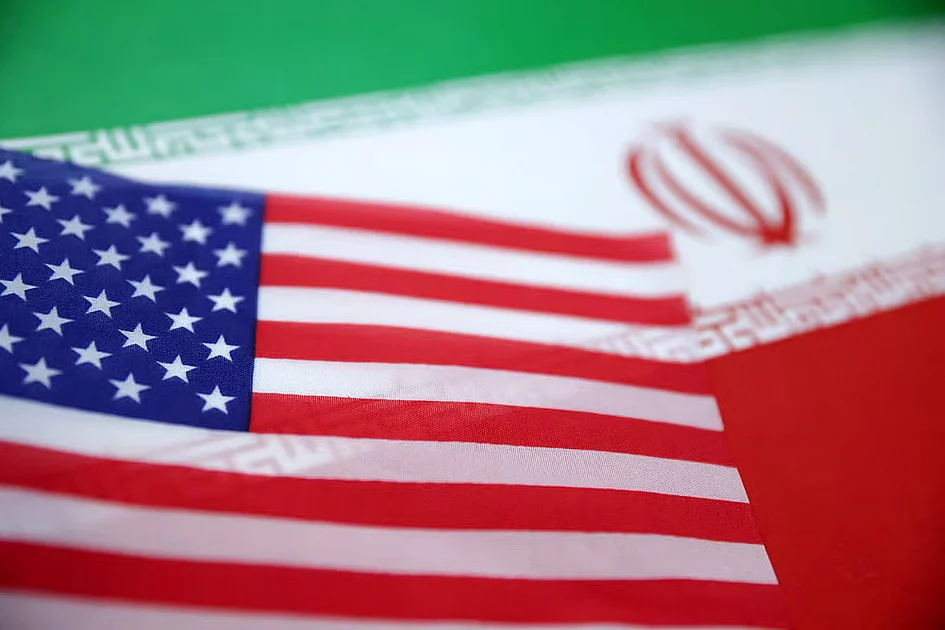
  • Fearing backlash, Iranian Kurds wary of fully joining protests

    Fearing backlash, Iranian Kurds wary of fully joining protests

    A complex pattern of protest participation is emerging across Iran’s Kurdish regions as nationwide demonstrations triggered by a severe economic crisis continue to unfold. While western provinces with Shia Kurdish majorities have witnessed the most violent clashes, the northern Kurdish towns that ignited the historic 2022 uprising have remained notably quiet—a phenomenon experts attribute to the lingering trauma of previous state repression.

    According to documentation by the Kurdish-Iranian rights organization Hengaw, the most intense recent protests and government crackdowns have occurred in western provinces including Ilam and Kermanshah. This stands in stark contrast to northern Rojhelat Kurdish cities such as Saqqez—the hometown of Mahsa Amini, whose 2022 death in police custody sparked the ‘Woman, Life, Freedom’ movement—and Sanandaj, the provincial capital of Kurdistan, where significant street protests have been conspicuously absent.

    Kurdish journalist Kaveh Ghoreishi confirms this geographical divergence, noting that activists attribute the hesitation in northern Kurdish areas to the devastating consequences they suffered during the 2022 demonstrations. The previous crackdown resulted in hundreds killed and wounded, thousands detained, and dozens facing capital charges, creating what Zhila Mostajer of Hengaw describes as ‘little capacity to endure further sacrifice.’

    The current protest movement began in Tehran on December 28th, initially focusing on economic grievances including spiraling prices and currency devaluation before evolving into broader anti-government sentiment. Demonstrations have since spread across 111 cities in 31 provinces, though demands vary significantly by region according to Mostajer, who notes that while economic hardship affects all areas, Kurdish protests have maintained explicitly political objectives calling for regime change.

    Kurdish political organizations have pursued a strategy of solidarity strikes rather than mass gatherings. On January 5th, seven Kurdish parties from the Dialogue Centre for Inter-Party Cooperation called for a general strike, which was observed in over 57 towns across Iranian Kurdistan according to Arash Saleh of the Democratic Party of Iranian Kurdistan. While injecting momentum into the national movement, most towns refrained from subsequent physical protests, possibly due to concerns about supporting Reza Pahlavi, the exiled son of Iran’s last shah, who has been promoted as a leader by some Persian-language media.

    Hussein Yazdanpana, leader of the Kurdistan Freedom Party (PAK), emphasizes that different Kurdish regions have varying capacities for mobilization, with western areas now bearing the brunt of protest activity while northern regions recover from the 2022 crackdown. The conflict has already turned deadly, with four PAK fighters reportedly killed in clashes with security forces in Malekshahi on January 7th.

    International dimensions have emerged as Yazdanpana calls for the implementation of statements by U.S. President Donald Trump, who initially vowed intervention if protesters were killed but later suggested some deaths resulted from stampedes—a claim disputed by Kurdish leaders. With documented protester deaths ranging from 25 to 42, including minors, and thousands detained, the situation remains volatile with significant potential for further expansion according to Kurdish political representatives.

  • Pakistan on verge of $1.5bn deal to provide weapons and jets to Sudan

    Pakistan on verge of $1.5bn deal to provide weapons and jets to Sudan

    Pakistan is finalizing a significant $1.5 billion defense agreement to supply military aircraft and weaponry to Sudan’s national army, currently engaged in a protracted conflict against the paramilitary Rapid Support Forces (RSF). According to sources familiar with the negotiations and a retired senior military official, the comprehensive package includes 10 Karakorum-8 light attack aircraft, over 200 reconnaissance and kamikaze attack drones, and sophisticated air defense systems.

    Retired Pakistani Air Marshal Aamir Masood, who maintains briefings on air force operations, confirmed the arrangement as essentially finalized. The deal reportedly extends beyond attack capabilities to include Super Mushshak trainer aircraft and potentially JF-17 Thunder fighter jets—a collaborative development between Pakistan and China.

    The financing mechanism for this substantial arms transfer remains unclear amid conflicting reports. While Masood suggested potential Saudi Arabian financial backing, citing Riyadh’s pattern of supporting friendly Gulf regimes in acquiring Pakistani military equipment, other sources directly involved denied Saudi financial involvement. These sources acknowledged Saudi Arabia’s role as negotiation broker but emphasized no evidence suggests direct funding from the kingdom. This development coincides with ongoing discussions between Islamabad and Riyadh concerning a separate defense agreement valued between $2 billion and $4 billion.

    This potential arms transfer occurs against the backdrop of Sudan’s devastating civil war, which erupted in April 2023 following the collapse of the alliance between the national army and the RSF. The conflict has created one of the world’s most severe humanitarian crises, with tens of thousands killed and approximately 13 million people displaced from their homes.

    The RSF, commanded by Mohamed Hamdan ‘Hemedti’ Dagalo, faces widespread allegations of atrocities including torture, sexual violence, and extrajudicial killings, resulting in international sanctions and genocide accusations. The United Arab Emirates stands accused of violating UN arms embargoes by providing military support to the RSF, with critics alleging complicity in war crimes. Meanwhile, the Sudanese Armed Forces have also faced accusations of human rights violations during the ongoing conflict.