标签: Asia

亚洲

  • Why the UAE refuses to be dragged into social media noise, chooses silence

    Why the UAE refuses to be dragged into social media noise, chooses silence

    In an era dominated by digital chatter and viral misinformation, the United Arab Emirates has articulated a deliberate policy of strategic silence, framing it not as weakness but as an expression of national confidence and sovereign strength. Abdulla bin Mohammed bin Butti Al Hamed, Head of the National Media Office, articulated this position during a keynote address at the 1 Billion Followers Summit in Dubai, asserting that the nation’s governance remains impervious to online pressure or fleeting narratives.

    Al Hamed emphasized that the UAE’s decision-making is anchored in long-term vision, measured leadership, and a deep understanding of its soft power rather than reactive engagement with digital trends. “The UAE was built through experience, learning, and strategic decisions taken over years, not days,” he stated, clarifying that the nation responds only when and how it chooses, with silence often serving as a deliberate strategic tool.

    Addressing widespread speculation about the UAE’s regional and international stances, Al Hamed cautioned against equating social media discourse with ground reality. He stressed that digital noise should not be mistaken for truth, nor should it dictate national policy. “What we see on social media does not represent the reality of the UAE,” he noted, underscoring the nation’s commitment to action and achievement over rumor and reaction.

    The UAE’s approach, he explained, is fundamentally rooted in human development—prioritizing people before projects and building credibility through tangible outcomes. This philosophy dates to the nation’s founding, where leadership invested equally in human capital, infrastructure, education, and innovation. “The narrative of the UAE is the human being,” Al Hamed affirmed. “Factories and buildings came later.”

    On the evolution of Emirati media, Al Hamed described it as both an economic sector and a pillar of soft power, noting the intentional absence of a traditional Ministry of Media to foster flexibility and innovation. He also highlighted the importance of authentic cultural representation, stating that misrepresentation of Emirati identity should not be tolerated.

    In closing, Al Hamed urged media professionals and creators to operate responsibly within the digital realm, recognizing its power and limits. “Our world today is digital, not paper,” he remarked. “Those who understand this will shape the future.”

  • Kurdish forces deny Syrian army has taken over Aleppo’s Sheikh Maqsud district

    Kurdish forces deny Syrian army has taken over Aleppo’s Sheikh Maqsud district

    A fragile ceasefire agreement in northern Syria has collapsed as Kurdish forces vehemently deny Syrian government claims of capturing Aleppo’s strategic Sheikh Maqsud district. The Syrian army announced Saturday it had successfully combed through and seized control of the area from Kurdish fighters, signaling a violent end to temporary truce arrangements that had been welcomed earlier by the United States and other world powers.

    The confrontation in Syria’s second city has exposed one of the most significant faultlines in the country’s complex geopolitical landscape. President Ahmed al-Sharaa’s vision of unifying Syria under centralized leadership following 14 years of devastating civil war continues to face determined resistance from Kurdish forces, who remain deeply wary of the Islamist-led government in Damascus.

    Despite international backing for the ceasefire initiative, Kurdish military units refused to abandon their last stronghold in Sheikh Maqsud under the proposed terms. This refusal prompted Syria’s army to declare late Friday that it would initiate ground operations to forcibly expel Kurdish fighters from the district.

    Early Saturday, Syrian military officials stated they had completed comprehensive clearing operations throughout Sheikh Maqsud, though they acknowledged some Kurdish fighters remained in hiding. Kurdish forces immediately issued a written rebuttal, denying government forces had achieved full control and asserting their continued resistance. Reuters correspondents in Aleppo noted an absence of audible combat sounds during this period.

    The potential fall of Sheikh Maqsud would mark a significant strategic shift, ending Kurdish administrative control over sections of Aleppo that they have maintained since the conflict’s inception in 2011. Kurdish authorities continue to govern extensive territories across northeastern Syria, where they have established a semi-autonomous administrative zone.

    These developments occur against the backdrop of stalled integration negotiations between Kurdish leadership and Syria’s new government, which consists primarily of former rebel fighters who overthrew long-term leader Bashar al-Assad in December 2024. The recent escalation of violence, which began Tuesday, has resulted in at least nine civilian fatalities and triggered the displacement of over 140,000 residents from the affected areas.

    US envoy Tom Barrack confirmed Saturday via a statement on social media platform X that he had met with Jordan’s Foreign Minister Ayman al-Safadi in Amman to reinforce ceasefire efforts and ensure what he described as the “peaceful withdrawal of Kurdish forces from Aleppo.”

  • Dubai: ‘Rivers of art’ flow through the desert in 10km immersive artwork

    Dubai: ‘Rivers of art’ flow through the desert in 10km immersive artwork

    Dubai’s desert landscape is poised to become the canvas for an unprecedented artistic marvel—a 10-kilometer immersive artwork designed to resemble flowing rivers converging toward a central circular structure named Clio House. Conceived as an experiential journey rather than a static exhibition, the project invites visitors to traverse a series of large-scale artworks dispersed across the sands, each path metaphorically guiding them toward a unified destination.

    Architect Matteo Antonelli, the visionary behind this ambitious undertaking, explains that the design philosophy emerged from observing the desert’s inherent duality. “The relationship between ground and sky is profoundly emphasized here, with the sun serving as their connector,” he notes. This observation inspired a contemporary reinterpretation of ancient desert architecture, incorporating tents and simple towers into the conceptual framework.

    At the project’s core lies the circle—a shape Antonelli describes as continuous and hierarchy-free. “Metaphorically, it signifies that everyone is equal. You may choose different life paths but ultimately reach the same destination,” he elaborates.

    The culmination of this 10km journey is Clio House, a circular structure offering 360-degree panoramic views of the desert and the artistic paths traversed. Beyond its observational promenade, the building houses a library, café, and restaurant, creating a tranquil space for contemplation amidst the vastness.

    Renowned large-scale artist Agron Hoti, tasked with creating the artwork, approaches this project as a personal challenge rather than a record-breaking attempt. Having previously worked on a 7,600-square-meter canvas in Europe, Hoti emphasizes that true creativity cannot be constrained by deadlines or limitations. “People perceive the desert as monochromatically yellow, but I believe we all carry internal colors waiting to be expressed,” he shares. For Hoti, this installation represents reconnecting humanity with nature’s evolving beauty.

    The technical execution falls to conservator Cinzia Pasquali, who addresses the formidable challenge of maintaining a 10km artwork in extreme desert conditions. Using specially developed polyester canvas and inorganic mineral pigments resistant to heat, humidity, and sand, Pasquali’s team ensures the artwork’s longevity while accepting its natural aging process. “Like humans, it may develop wrinkles over time but will avoid structural damage,” she remarks, detailing weekly monitoring protocols adapted to weather variations.

    Upon completion, this transformative project will redefine desert art experiences, creating a dynamic, flowing journey that merges architectural innovation with artistic expression in one of the world’s most challenging environments.

  • Dubai jeweller Kiara opens its first international store in the Maldives

    Dubai jeweller Kiara opens its first international store in the Maldives

    DUBAI – Kiara Jewellery, the Dubai-based fine jewellery brand, has embarked on its first international expansion with the inauguration of a new boutique at the JA Manafaru Island Resort & Spa in the Maldives. The store, which celebrated its grand opening on December 28, 2025, represents the brand’s tenth location and its inaugural venture beyond the United Arab Emirates.

    Founded just four years ago by the mother-daughter partnership of Sonal Panday and Ada Panday, Kiara has experienced remarkable growth from a single showroom to a network of nine establishments across Dubai. The brand has cultivated a loyal clientele of over 20,000 customers in the UAE through its distinctive philosophy of creating timeless pieces designed to commemorate personal milestones rather than follow transient fashion trends.

    The selection of the Maldives for their international debut was strategically deliberate, aligning with the brand’s core values. JA Manafaru, a five-star island resort renowned for offering privacy and sophisticated luxury, attracts an international demographic seeking exclusive, slower-paced experiences. This environment perfectly complements Kiara’s vision of jewellery as enduring pieces to be worn and cherished indefinitely, not merely collected.

    The founders emphasized that their expansion decision was influenced more by the symbolic resonance of the destination than mere commercial strategy. The Maldives, with its associations of radiant light and serene tranquility, mirrors the very essence of the brand’s identity—’Kiara’ translates to ‘light’ from its Sanskrit origins.

    “This is just the beginning of an exciting journey,” stated founders Sonal and Ada Panday during the opening ceremony. This measured expansion introduces Kiara to a global audience while maintaining the intimate scale and design sensibility that has characterized its successful growth in the UAE market.

  • 4 dead, more than 36 missing after Philippines landfill collapse

    4 dead, more than 36 missing after Philippines landfill collapse

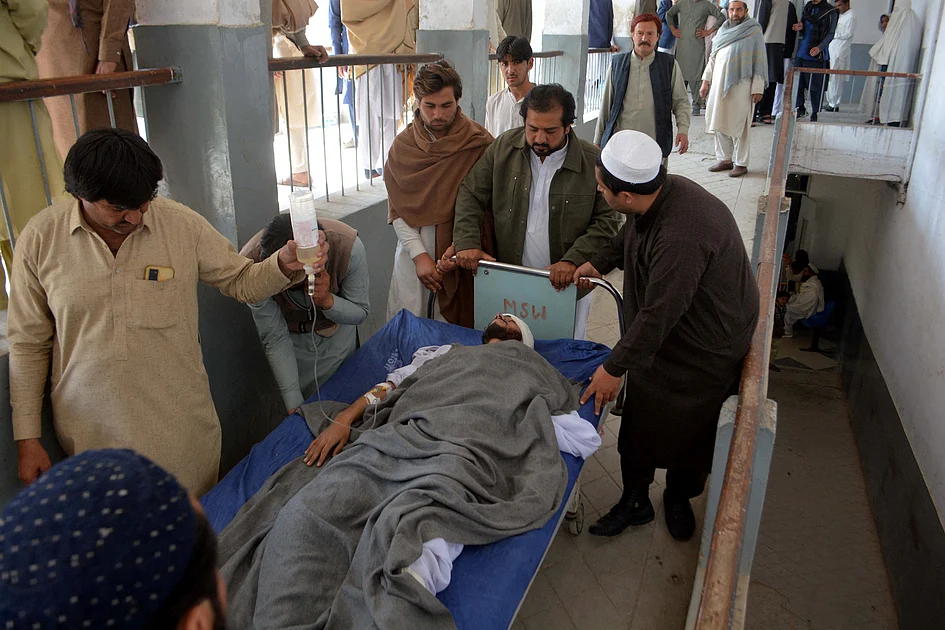
    Rescue operations in Cebu City, Philippines, entered a critical phase on Saturday following the catastrophic collapse of the Binaliw landfill on Thursday. Municipal authorities confirmed the death toll has risen to four, with at least 36 individuals remaining unaccounted for amidst the rubble. The tragedy occurred during peak operational hours, with 110 workers present on-site, leading to widespread damage to several structures and facilities within the landfill perimeter.

    Cebu City Mayor Nestor Archival provided updates via an official Facebook post, indicating that twelve injured individuals have been hospitalized. Rescue teams, utilizing advanced detection equipment, have identified signs of life in specific sections of the collapse site, prompting the deployment of a 50-tonne crane for precise excavation efforts. The complex rescue operation requires meticulous debris removal to avoid further endangering potential survivors.

    Families of missing workers maintained vigil at the disaster perimeter, expressing hope despite diminishing odds. Jerahmey Espinoza, whose husband remains among the missing, conveyed the collective anxiety and resilience of affected families, stating, ‘They haven’t seen him or located him ever since the disaster happened. We’re still hopeful that he’s alive.’

    The incident has raised serious questions regarding landfill safety protocols and infrastructure stability in rapidly urbanizing areas. Previous weather patterns, including recent rainfall, are being investigated as potential contributing factors to the structural failure. This disaster represents one of the most severe industrial accidents in recent Philippine history, highlighting vulnerabilities in waste management systems.

  • Rescuers race to find dozens missing in deadly Philippines landfill collapse

    Rescuers race to find dozens missing in deadly Philippines landfill collapse

    Emergency crews in the central Philippine city of Cebu are engaged in a critical round-the-clock operation to locate more than 30 missing individuals following a catastrophic landfill collapse. The disaster struck the privately-operated Binaliw landfill on Thursday while approximately 110 workers were present at the site.

    Cebu City Mayor Nestor Archival confirmed Saturday that rescue teams have detected promising signs of life beneath the massive debris field, though unstable conditions continue to hamper recovery efforts. The confirmed death toll stands at four persons, with twelve others having been transported to medical facilities for treatment.

    Authorities face significant operational challenges due to precarious debris formations that pose ongoing safety risks. Rescue coordination officials emphasize they are awaiting the deployment of specialized heavy equipment, including a 50-ton crane, to facilitate careful excavation of identified survival zones.

    Families of missing workers maintain vigil at the disaster perimeter, clinging to hope despite the elapsed time since the incident. Jerahmey Espinoza, whose husband remains among the missing, conveyed to Reuters: “They haven’t seen him or located him ever since the disaster happened. We’re still hopeful that he’s alive.”

    Preliminary investigations suggest the collapse may stem from problematic waste management practices. City councillor Joel Garganera indicated operators had been excavating soil from the mountainside while simultaneously accumulating waste into artificial peaks, potentially compromising structural integrity.

    The 15-hectare facility serves as a critical waste management hub for Cebu, the central trading and transportation nexus of the Visayas island chain. Such landfill sites remain commonplace across major Philippine urban centers, raising ongoing concerns about infrastructure safety and regulatory oversight in waste management systems.

  • VR headsets are ‘hope machines’ inside California prisons, offering escape and practical experience

    VR headsets are ‘hope machines’ inside California prisons, offering escape and practical experience

    A groundbreaking virtual reality initiative is revolutionizing rehabilitation within California’s correctional system, offering incarcerated individuals both psychological respite and practical skills for societal reintegration. Spearheaded by Los Angeles-based nonprofit Creative Acts, the program utilizes Meta-donated Oculus headsets to transport inmates to diverse environments ranging from Thailand’s vibrant markets to simulated job interview settings.

    At Valley State Prison near Fresno, participants like Jacob Smith—who has served twenty years—experience transformative journeys through VR technology. ‘I went to Thailand, man!’ Smith exclaimed, describing his first immersive encounter with Southeast Asian landscapes. Beyond providing temporary escape, the program specifically designs scenarios addressing real-world challenges former inmates will face, including employment interviews, civic procedures, and everyday tasks like using ATMs or public transportation.

    Founder Sabra Williams characterizes the VR devices as ‘hope machines,’ evolving from her previous prison arts projects. The program now includes 100 headsets deployed across four California prisons, serving both general populations and solitary confinement units three times annually. Post-experience debriefing sessions help process emergent emotions and traumas, with volunteers like former inmate Richard Richard guiding participants through their psychological responses.

    Criminal justice experts recognize the program’s dual benefits. Nancy La Vigne of Rutgers-Newark School notes VR’s potential for reducing aggression through nature exposure while preparing long-incarcerated individuals for technological changes. The California Department of Corrections officially endorses these innovative approaches, acknowledging VR’s capacity to ‘heal trauma, regulate emotional response, and prepare for safe, successful reentry.’

    For many participants, the experience proves profoundly emotional. Williams recounts numerous instances of inmates removing headsets in tears, expressing awe that ‘I never knew the world was so beautiful.’ As the program expands, it represents a significant advancement in correctional rehabilitation methodologies, blending technological innovation with psychological support to address recidivism and prisoner welfare.

  • Ceasefire announced in Syria’s Aleppo

    Ceasefire announced in Syria’s Aleppo

    A tense ceasefire has been implemented in the northern Syrian city of Aleppo, following several days of intense combat between government-aligned forces and US-backed Kurdish fighters. The Syrian Ministry of Defense formally announced the truce, which took effect at 3:00 AM local time on Friday, specifically covering the Sheikh Maqsud, Ashrafiyeh, and Bani Zeid districts.

    The hostilities, which erupted earlier this week, represent a significant setback for stabilization efforts in the war-torn nation. The clashes pitted Syrian government forces against the Kurdish-led Syrian Democratic Forces (SDF), resulting in at least 21 fatalities and triggering a massive civilian exodus. State media estimates indicate approximately 16,000 residents were forced to flee their homes amid the violence that persisted through Thursday night.

    This recent military confrontation stems from stalled negotiations regarding a March 2025 integration agreement that aimed to incorporate the SDF—which controls substantial territory in Syria’s oil-rich northeast—into national institutions and the state army. Disagreements over Kurdish demands for decentralized governance have hampered implementation of the accord.

    Under the ceasefire terms, Kurdish fighters were given until 9:00 AM Friday to withdraw from the specified neighborhoods with their light weapons, relocating to eastern Kurdish-dominated areas. Aleppo Governor Azzam al-Gharib personally inspected security arrangements in Ashrafiyeh following the announcement.

    The United States, through envoy Tom Barrack, expressed approval of the ceasefire via social media, stating Washington hopes for “a more enduring calm and deeper dialogue” while working intensively to extend the temporary peace. Notably, Kurdish forces had not issued an immediate response to the government’s statements at the time of reporting.

    Mazloum Abdi, commander of the SDF, previously warned that attacks on Kurdish areas “undermine the chances of reaching understandings,” having recently visited Damascus for discussions about the integration deal. The Syrian army emphasized that the ceasefire’s primary objective is enabling displaced civilians “to return and resume their normal lives in an atmosphere of security and stability.”

  • Internet blackout in Iran amid protests

    Internet blackout in Iran amid protests

    Iran has plunged into a nationwide digital darkness as authorities implemented a comprehensive internet blackout beginning Thursday night. This drastic measure coincides with escalating civil unrest that has swept across multiple Iranian cities since late December, triggered by the catastrophic collapse of the national currency and persistent economic distress.

    The protests reached Tehran this week, prompting Supreme Leader Ali Khamenei to address the nation through state television on Friday. He called for national unity while delivering a defiant message against what he characterized as foreign-backed “mercenaries” seeking to destabilize the Islamic Republic. His remarks came in direct response to U.S. President Donald Trump’s threat to respond “very hard” if Iranian security forces employed violence against demonstrators.

    Khamenei launched a sharp counterattack against Trump, accusing the American president of having “hands stained with the blood of more than a thousand Iranians” and predicting his eventual overthrow similar to Iran’s pre-revolution monarchy. While acknowledging the legitimacy of economic grievances in the sanctions-crippled nation, the Supreme Leader simultaneously issued warnings against what he termed “rioters.”

    The Iranian Foreign Ministry condemned Washington’s statements as “interventionist and deceptive,” characterizing them as part of a longstanding policy of pressure rather than genuine concern for Iranian welfare.

    Digital monitoring organization NetBlocks confirmed the extensive internet disruption, reporting live metrics indicating a near-total nationwide blackout. The communication breakdown has affected both landline and mobile networks, with reports of canceled flights adding to the disruption.

    State media reported significant violence during Friday’s demonstrations, detailing attacks on public infrastructure including metro stations, fire trucks, buses, and private vehicles. According to media tallies citing local reports and official statements, at least 21 individuals including security personnel have lost their lives nationwide. The semi-official Mehr News Agency reported 23 police officers and one protester injured in recent clashes within Khorasan Razavi Province.

    In response to the crisis, President Masoud Pezeshkian advocated for “utmost restraint” in handling demonstrations, emphasizing avoidance of “violent or coercive behavior” while promoting dialogue and engagement with public demands. Concurrently, the government announced a new monthly subsidy program equivalent to $7 for basic goods purchases, potentially benefiting over 71 million citizens.

    Amid the domestic turmoil, Foreign Minister Abbas Araghchi stated Iran’s preference to avoid military confrontation with Israel or the United States while affirming readiness to respond if attacked. He expressed conditional openness to nuclear negotiations based on mutual respect rather than what he described as American “dictation.”

  • US children’s choir brings message of hope and unity

    US children’s choir brings message of hope and unity

    Amid Beijing’s winter chill, an American children’s choir delivered a powerful message of cross-cultural unity through music during their third consecutive New Year performance tour across China. The One Voice Children choir, comprising performers aged 5-18 from Utah, created warm connections with Chinese audiences through heartfelt performances that transcended language barriers.

    The ensemble’s journey included performances in multiple Chinese cities including Shanghai, Hangzhou, Shenzhen, and Guangzhou, with a special outreach performance at Peking Union Medical College Hospital on December 31. The hospital visit continued their tradition of using music to create a humane medical environment, building on their previous engagement there in January 2025.

    Fourteen-year-old Bruce, one of the youngest first-time visitors, shared how he joined the choir by following his sister’s example. ‘She joined first, and it just looked cool,’ he recalled. His participation led to the extraordinary opportunity to perform thousands of miles from home, including Chinese pop songs like ‘Wish’ that reflect intergenerational hopes and dreams.

    The choir’s original composition ‘We Are Together’ became an emotional highlight of their performances, with audiences spontaneously mouthing lyrics and capturing moments on their phones. The song’s message—’We are friends forever. Nothing can break the bond of you and me’—resonated deeply with listeners.

    For 11-year-old Abby, who has studied Chinese since first grade, performing in China represented the perfect fusion of her linguistic and musical passions. ‘It’s really fun, and we get to sing—one of my favorite things—to inspire people in the world through music,’ she explained, noting the extensive preparation involved in perfecting Chinese songs for local audiences.

    Sixteen-year-old Ainsley described her first China trip as both a musical milestone and cultural revelation. ‘America and China are so different, but when it comes down to it, we’re all people, and we’re all dealing with the same things,’ she observed. She hoped audiences felt the genuine affection behind their performances, adding ‘I want people to know that they are so incredibly loved.’

    Choir director Masa Fukuda emphasized music’s unique ability to bridge cultural divides. ‘Obviously, we speak different languages, and sometimes it’s hard to communicate. But with the power of music, being a universal language, it really transcends all cultural differences and breaks down walls,’ he stated. Fukuda highlighted the magical power of music to unite people and the overwhelming kindness the choir consistently receives from Chinese hosts.

    The nonprofit organization, which first gained international recognition during the 2002 Winter Olympics in Salt Lake City, has evolved into a significant cultural exchange initiative. Their annual China tours combine stage performances with community outreach, allowing young performers to convey messages of hope, care, and cultural understanding through tangible human connections.

    Looking forward, the choir hopes to collaborate with Chinese ensembles and continue building lasting relationships. Their current tour theme ‘Wish’ embodies their aspiration for genuine understanding and enduring friendships between the two cultures.