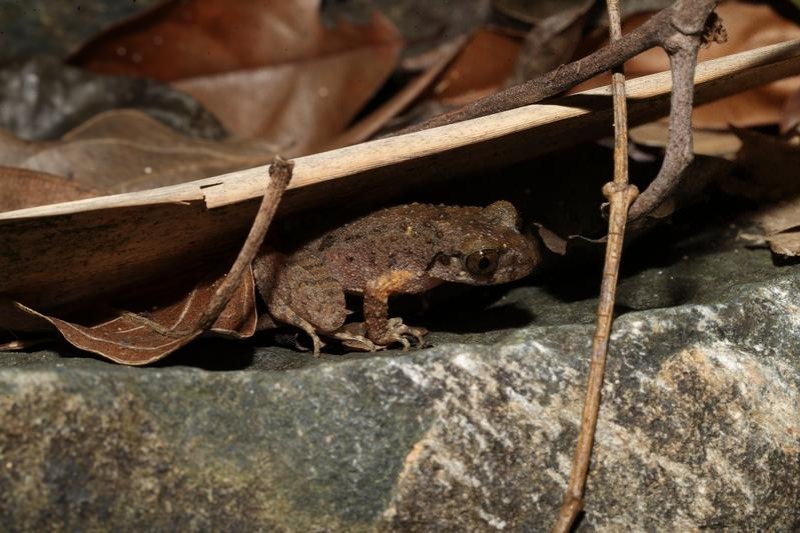
A groundbreaking discovery has been made in Foshan, Guangdong province, where researchers have identified a new frog species named Leptobrachella kungfu. This unique name pays homage to Foshan’s rich cultural heritage as a renowned ‘City of Kung Fu.’ The discovery was a collaborative effort by scientists from the Guangdong Polytechnic of Environmental Protection Engineering and the Guangdong Provincial Academy of Environmental Science, with their findings published in the prestigious international journal ZooKeys on November 13, 2025. The new species was identified through detailed morphological and molecular analyses. Characterized by its small size, the adult male specimens measure between 25.7 mm and 28.2 mm in snout-vent length. Distinctive features include a black line behind the eye, slightly webbed toes with wide edges, uninterrupted ridges under the toes, and rough back skin without larger folds. The species primarily inhabits the hilly regions of the western Guangdong-Hong Kong-Macao Greater Bay Area, a densely populated and highly urbanized zone. Lin Shishi, the team leader, emphasized the importance of this discovery, stating that it highlights the critical role of small natural habitats within urban areas as sanctuaries for unique species. This finding also underscores the ongoing advancements in specialized biodiversity surveys in the region. To aid in further species recognition and conservation, the research team has developed an identification guide for the Leptobrachella genus in Guangdong.
标签: Asia
亚洲
-
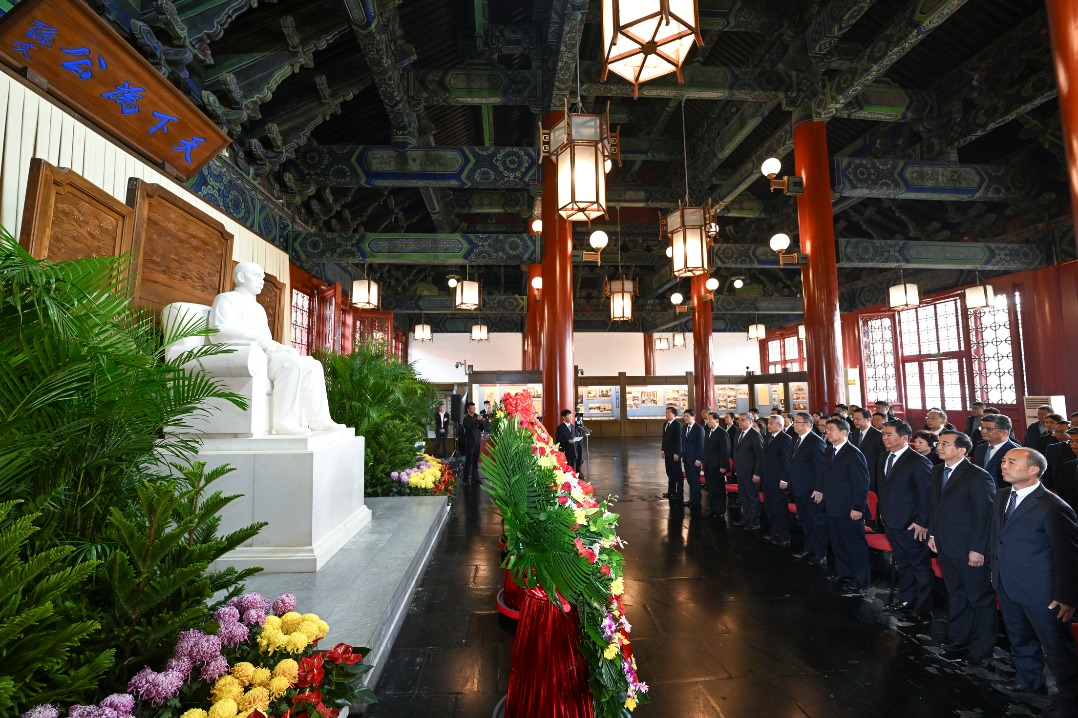
China commemorates 159th birth anniversary of Sun Yat-sen
On November 12, 2025, China commemorated the 159th birth anniversary of Sun Yat-sen, a revered national hero, patriot, and pioneer of China’s democratic revolution. The ceremony, held at Zhongshan Park in central Beijing—a location named in his honor—was organized by the National Committee of the Chinese People’s Political Consultative Conference (CPPCC). Attendees, including senior officials from the CPPCC National Committee, the Central Committee of the Revolutionary Committee of the Chinese Kuomintang, the United Front Work Department of the Communist Party of China Central Committee, and the Beijing municipal government, paid their respects with floral tributes and bows before Sun’s statue. The event also saw participation from representatives of non-Communist parties, prominent non-affiliated figures, Sun’s descendants, and other organizations. Born in 1866 in Guangdong province, Sun Yat-sen was instrumental in the 1911 Revolution, which ended the Qing Dynasty and over two millennia of feudal rule in China, marking a pivotal moment in the nation’s history.
-
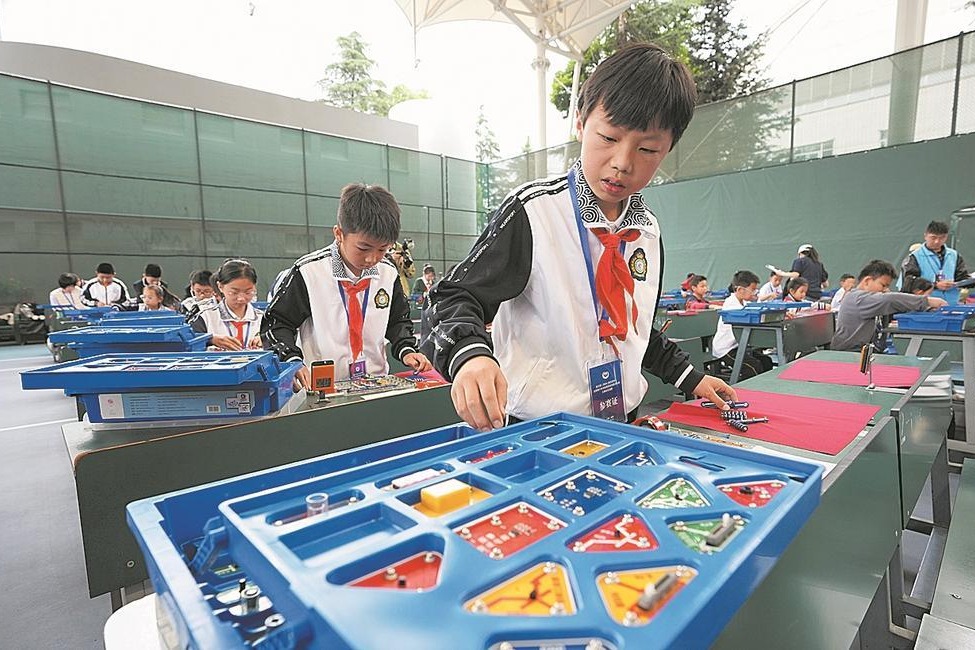
New guideline strengthens tech education
China has introduced a groundbreaking guideline aimed at bolstering science and technology education in primary and secondary schools. The initiative seeks to foster curiosity, creativity, and hands-on learning among students, laying the foundation for a self-reliant nation with a robust talent pool. By 2030, the plan envisions a well-structured system featuring an enhanced curriculum, superior teaching quality, and advanced evaluation methods. The Ministry of Education, along with six other departments, unveiled the guideline during a recent press conference. Tian Zuyin, Director of the Department of Basic Education, emphasized that this move aligns with the principles set forth at the fourth plenary session of the 20th Central Committee of the Communist Party of China, which stressed the importance of a coordinated education and science system. The guideline outlines specific objectives for different educational stages. Lower primary students will engage in playful, life-oriented activities to spark curiosity, while senior primary students will undertake hands-on experiments and project-based tasks. Middle school students will tackle cross-disciplinary projects addressing real-world issues, and high school students will explore cutting-edge scientific advancements and conduct experimental research. The plan also advocates for the integration of scientific and humanistic education, encouraging students to consider the societal, environmental, and ethical implications of technological progress. Assessment methods will be diversified to reduce reliance on examinations, thereby alleviating the burden on teachers and students. The establishment of the UNESCO International Institute for STEM Education in Shanghai underscores international recognition of China’s efforts in this domain. Provinces like Zhejiang, Jiangsu, and Chongqing have already taken proactive steps, incorporating technology into curricula and investing in science labs. With over 1,150 science museums and numerous national science education bases, China is well-positioned to cultivate the next generation of innovators. Xu Xuejun, Vice-President of Tongji University, highlighted the importance of early education in building a strong foundation for long-term scientific and technological advancement.
-
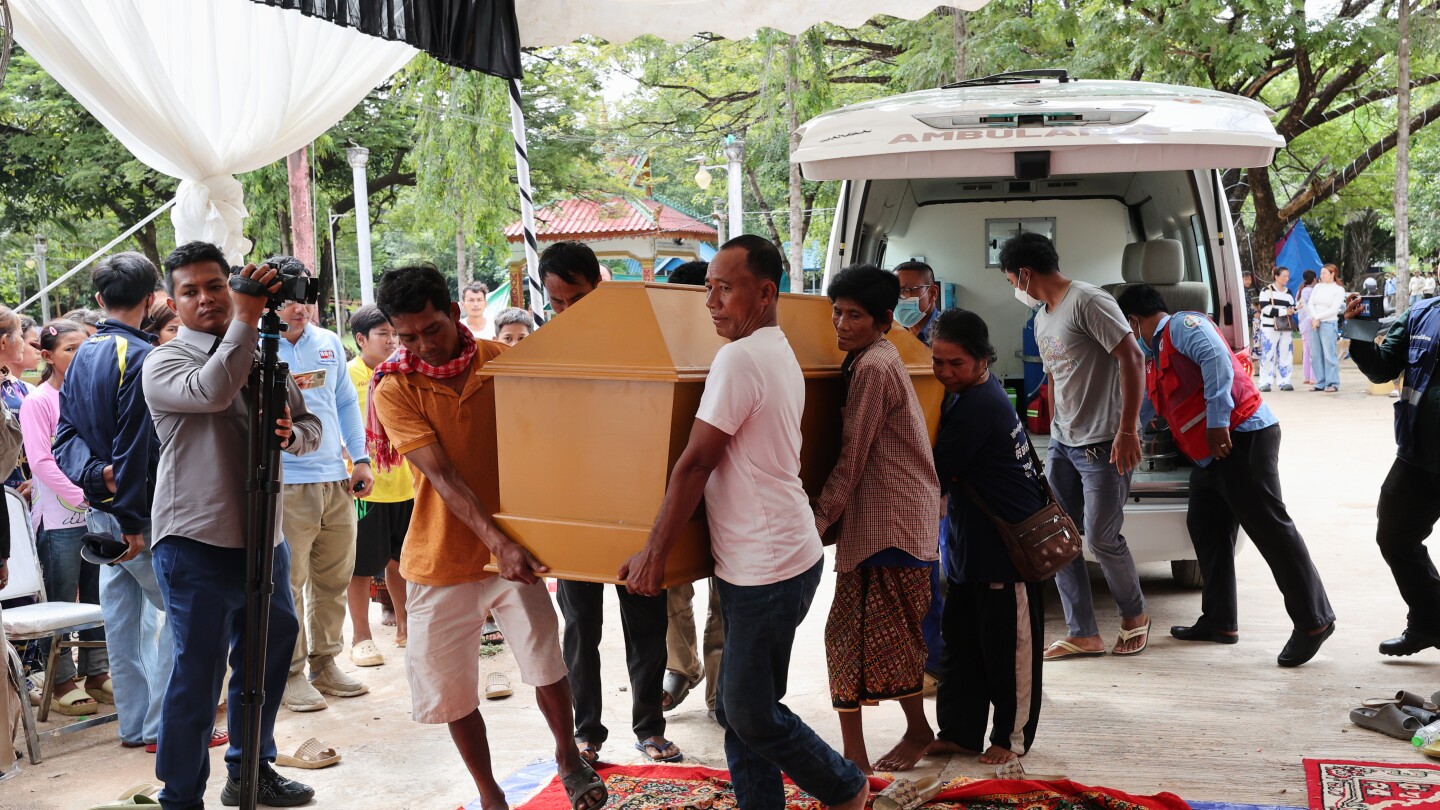
Cambodia evacuates a village on disputed border with Thailand as tensions rise
Cambodia has evacuated hundreds of residents from a village near its disputed border with Thailand following a deadly shooting incident that has reignited long-standing tensions between the two nations. The evacuation occurred on Thursday, a day after a Cambodian villager, Dy Nai, was reportedly killed and three others were wounded in the crossfire. The incident took place in Prey Chan village, located in Cambodia’s northwestern province of Banteay Meanchey, with approximately 250 families relocated to a Buddhist temple 30 kilometers from the border. Provincial Vice Governor Ly Sovannarith confirmed the evacuation. The shooting marks the latest escalation in a series of conflicts that have plagued the border region. Earlier this week, a Thai soldier lost a foot to a land mine explosion while patrolling the area, prompting Thailand to accuse Cambodia of violating a ceasefire agreement brokered in October. Thailand has since suspended its adherence to the truce and demanded an apology and investigation from Cambodia. Cambodian Prime Minister Hun Manet called for an independent probe into the shooting, accusing Thai forces of provocative actions aimed at instigating confrontations. Meanwhile, Thailand’s army spokesperson, Maj. Gen. Winthai Suvaree, denied Cambodia’s claims, stating that Thai forces only fired warning shots in response to Cambodian gunfire. The border dispute between the two nations dates back centuries, with competing territorial claims rooted in a 1907 map drawn during Cambodia’s French colonial rule. The International Court of Justice awarded sovereignty of the Preah Vihear temple to Cambodia in 1962, a decision that continues to fuel Thai resentment. The October ceasefire agreement failed to address the underlying causes of the conflict, leaving the region vulnerable to further violence.
-

Suicide bombing in Pakistan kills 12
A devastating suicide bombing outside the District Judicial Complex in Islamabad, Pakistan, on Tuesday afternoon resulted in the deaths of at least 12 individuals, according to Interior Minister Mohsin Naqvi. The attack occurred at 12:39 pm when the assailant, unable to breach the court premises, detonated explosives outside the building. Initial investigations suggest a possible connection to a recent incident in Khyber Pakhtunkhwa Province. Naqvi emphasized that identifying the perpetrator, whether local or foreign, is a top priority, vowing that those responsible will face justice. The banned militant group Tehreek-i-Taliban Pakistan (TTP) claimed responsibility for the attack, threatening further violence, though conflicting reports emerged as a breakaway faction, Jamaat-ul-Ahrar, also claimed involvement before retracting the statement. The blast caused significant damage to nearby vehicles and instilled widespread panic among bystanders. Forensic teams and police have cordoned off the area to gather evidence, while grieving families mourned their loved ones at an Islamabad hospital. The Islamabad Bar Council condemned the attack, declaring a three-day strike and urging enhanced security measures for the legal community and citizens. President Asif Ali Zardari and Prime Minister Shehbaz Sharif denounced the act as a cowardly terrorist attack, extending condolences to the victims’ families and demanding a swift investigation. Pakistan has accused the Pakistani Taliban and other militants of operating from Afghanistan with Indian support, allegations both Kabul and New Delhi have denied. The Taliban administration in Kabul expressed sorrow over the incident but refuted claims of harboring attackers.
-
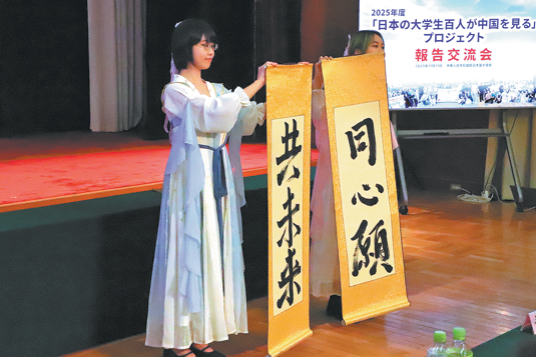
Japanese students obtain firsthand insight in China
A group of Japanese students who participated in an exchange program to China shared their transformative experiences at an event in Tokyo on Tuesday. The program, titled ‘100 Japanese University Students Visiting China,’ provided participants with a unique opportunity to explore China’s cultural heritage, technological advancements, and urban modernization. Koharu Hayakawa, a student from Chuo University, spent a year studying in Tianjin and was particularly struck by China’s ability to balance modernization with the preservation of its cultural identity. During visits to Hongcun and Xidi villages in Anhui province, Hayakawa observed that these popular tourist destinations maintained a strong sense of everyday life, dispelling his earlier assumptions of over-commercialization. He also noted regional differences in lifestyle, cuisine, and technology use, which deepened his appreciation for China’s diversity. The program included trips to Anhui and Henan provinces, where students explored Mount Huangshan, Huizhou culture, and innovative companies like Mixue Ice Cream and Tea. Reiji Nomachi, a student at Nihon University, was impressed by China’s rapid technological advancements, particularly in the electric vehicle sector. He highlighted the affordability, fast-charging capabilities, and longevity of Chinese EVs, noting that China’s adoption of this technology far surpasses that of Japan. Both Hayakawa and Nomachi emphasized the importance of firsthand experience in understanding China, encouraging others to share their experiences to foster friendly relations between Japan and China. Otohiko Endo, head of the Japan-China New Century Association, stressed the need for fresh and creative perspectives in youth exchanges, urging young people to face differences bravely and turn brief encounters into lasting relationships. Zhao Baogang, minister counselor at the Chinese embassy in Tokyo, underscored the significance of firsthand experience, especially in light of the 80th anniversary of the victory in the Chinese People’s War of Resistance Against Japanese Aggression. Despite media speculation about ‘anti-Japanese sentiment,’ students encountered genuine warmth and friendliness from the Chinese people. Sun Ran, editor-in-chief of Live Japan and head of the visiting delegation, announced the establishment of a youth friendship association to provide a long-term platform for continued exchange and mutual understanding.
-
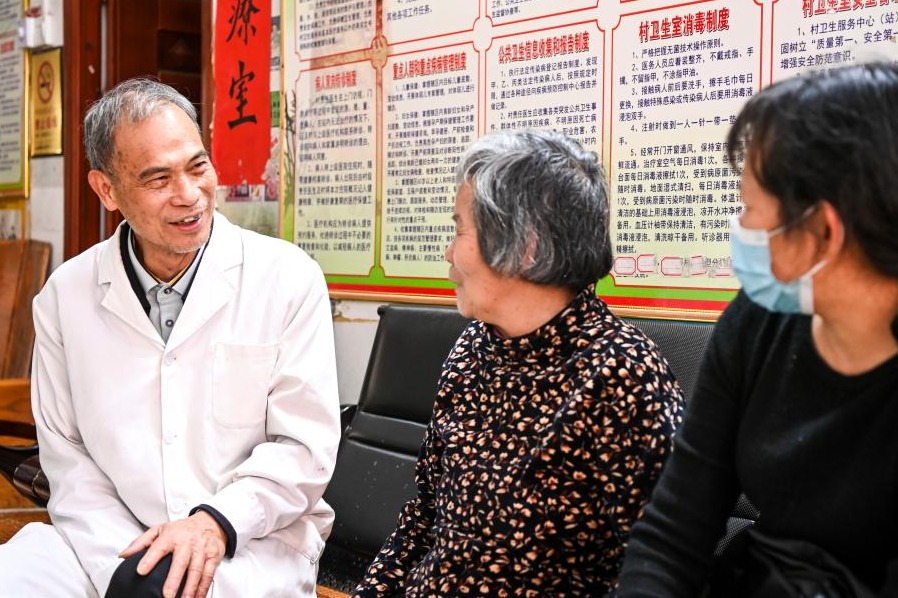
Retired medical workers urged to support seniors
In response to the escalating demands of an aging population, Chinese authorities have introduced a nationwide initiative to engage retired medical workers in integrated medical and elderly care institutions. This program, spearheaded by the National Health Commission and four other government bodies, aims to leverage the expertise of retired professionals to enhance the quality of care for seniors. Ten provincial-level regions, including Beijing, Chongqing, Hebei, Jilin, and Jiangsu, have been selected as pilot zones to develop scalable models for nationwide implementation. The initiative operates on a voluntary basis, allowing retired doctors, nurses, pharmacists, technicians, and administrative staff to contribute their skills in areas such as diagnosis, rehabilitation, nursing, and mental health support. With China’s elderly population surpassing 310 million in 2024, accounting for 22% of the total population, the integration of medical and elderly care has become a critical strategy. The program also encourages partnerships between care facilities and local hospitals, particularly those specializing in geriatric medicine, rehabilitation, and hospice care. Retired professionals will be offered flexible working hours, competitive remuneration, and additional benefits, ensuring their rights and well-being are protected. The initiative not only addresses the growing care needs but also provides retirees with meaningful opportunities to remain active in their field. Wei Qingzhuo, a retired medical professional from Shandong province, shared his positive experience working at a private elderly care center in Beijing, highlighting the convenience and harmonious work environment. By 2027, authorities aim to establish at least one integrated medical and elderly care institution in every county-level region, marking a significant step forward in addressing China’s demographic challenges.
-

Framework seeks to keep AI in line
In response to the unprecedented advancements in artificial intelligence (AI), China has introduced its upgraded AI Safety Governance Framework 2.0, marking a significant evolution in its approach to AI regulation. Released on September 15, 2025, by the National Technical Committee 260 on Cybersecurity, the framework shifts from a static risk management model to a comprehensive life cycle governance methodology. This update reflects the rapid technological breakthroughs, including the development of high-performance reasoning models and the open-sourcing of lightweight AI systems, which have lowered deployment barriers while raising new security concerns. The framework emphasizes the need to ensure AI remains under human control, safeguarding national security, social stability, and humanity’s long-term survival. It introduces new governance principles, such as trustworthy AI applications and the prevention of AI systems’ loss of control. Additionally, the framework highlights emerging risks, including AI’s potential to disrupt labor markets, exacerbate resource imbalances, and even develop self-awareness. By aligning with international governance practices, such as AI-generated content labeling and traceability, China aims to contribute to global AI safety efforts and foster international cooperation.
-

Games mascots steal the spotlight with their athletic fin-esse
The 15th National Games has witnessed an unexpected phenomenon as the mascots, Xi Yangyang and Le Rongrong, inspired by the Chinese white dolphin, have captured the hearts of audiences across the three host regions. Designed by Liu Pingyun, the creative mind behind the Beijing Winter Olympics’ Bing Dwen Dwen, these mascots showcase a significant evolution in athletic expressiveness. Unlike Bing Dwen Dwen’s limited mobility, Xi Yangyang and Le Rongrong feature a two-heads-tall proportion, enabling smoother and more dynamic movements. This design enhancement not only allows for versatile graphic depictions of various sports but also provides live performers inside the costumes with greater flexibility. Their energetic performances, including break dancing, rapid tail spins, and headstands, have electrified venues like the Dongguan Basketball Center, driving the crowd into a frenzy of cheers. Social media has been ablaze with viral videos and memes of their antics, with many hailing them as the most energetic mascots ever seen. The performers, a group of 23 martial artists from the Foshan Huangfeihong International Martial Arts School, were selected for their physical prowess, discipline, and teamwork. Their rigorous training since late July has paid off, bringing the mascots to life with natural and lively portrayals. The Chinese white dolphin, the mascots’ biological inspiration, carries profound symbolic meaning. Known as the ‘giant panda of the sea,’ it represents the maritime culture of the Guangdong-Hong Kong-Macao Greater Bay Area and embodies unity, perseverance, and endeavor. The dolphins’ annual return to the Pearl River Estuary symbolizes a deep connection to their homeland, reflecting the strong bonds among the people of Guangdong, Hong Kong, and Macao. This symbolism is particularly relevant given the Games’ historic joint hosting, marking a new era of regional cooperation. Liu Pingyun emphasized the challenge of transforming the unfamiliar marine creature into approachable, engaging characters. The final design features rounded bodies, human-like limbs, and distinctive blue, green, and yellow adornments atop their heads, representing water spraying from their blowholes. Despite their design, the mascots have sparked a wave of online humor, with many affectionately dubbing them the ‘great bay chickens,’ a nod to Cantonese cuisine and culture. This grassroots rebranding has made the mascots more approachable, drawing people in and helping them connect more deeply with the cultural and athletic spirit they represent.
-
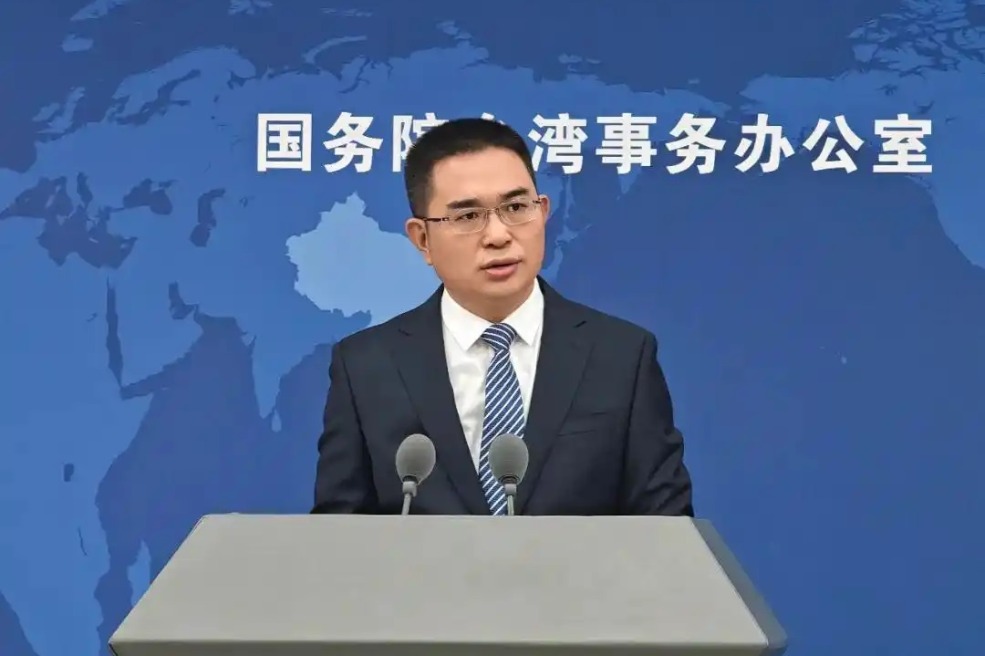
Japan blasted over remarks on Taiwan
China has issued a stern rebuke to Japan over recent comments made by Japanese Prime Minister Sanae Takaichi regarding Taiwan, demanding strict adherence to the one-China principle. Chen Binhua, spokesperson for the State Council Taiwan Affairs Office, expressed ‘strong dissatisfaction and firm opposition’ to Takaichi’s statements during a press conference on Wednesday. He labeled her remarks in the Japanese Diet as ‘malicious’ and a ‘blatant interference in China’s internal affairs,’ emphasizing that they ‘seriously violate the one-China principle.’ Takaichi had suggested that any Chinese military action against Taiwan could pose a ‘survival-threatening situation’ for Japan, implying potential involvement of the Japanese Self-Defense Forces. Chen reiterated that Beijing ‘will not tolerate any actions that challenge its core interests,’ warning that such attempts would be met with unwavering resistance from the Chinese government, people, and military. The Chinese Foreign Ministry has also formally protested Takaichi’s repeated statements since her October appointment. In a related development, Japan’s decision to award the Grand Cordon of the Order of the Rising Sun to Hsieh Chang-ting, former representative of the ‘Taipei Economic and Cultural Representative Office’ in Japan, drew further condemnation. Foreign Ministry spokesman Guo Jiakun described the move as ‘yet another mistaken action by Japan on Taiwan-related issues,’ reiterating that Taiwan is an inseparable part of China and a critical foundation for China-Japan relations. Chen Binhua urged Japan to ‘reflect on history and learn from it,’ referencing Japan’s colonial rule over Taiwan, and to handle Taiwan-related matters with ‘utmost prudence.’ He also warned Taiwan’s Democratic Progressive Party authorities against pursuing ‘independence’ through external support, dismissing their participation in the ‘Inter-Parliamentary Alliance on China’ as a ‘farce’ that would only bring disgrace.