标签: Asia

亚洲

  • Osaka city stunned by anonymous gold bar gift worth $3.6M to fix aging water pipes

    Osaka city stunned by anonymous gold bar gift worth $3.6M to fix aging water pipes

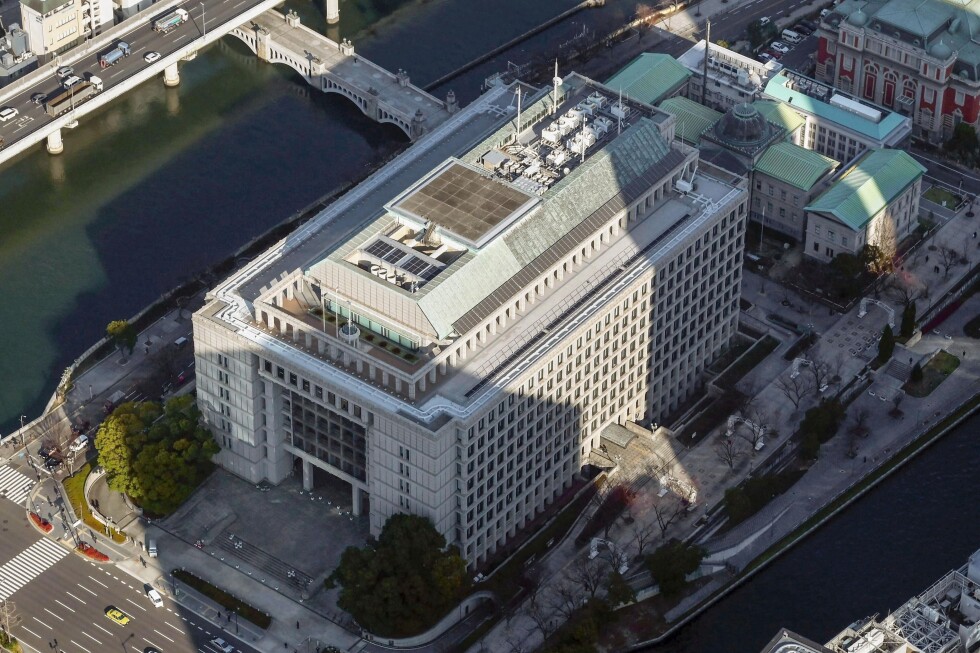
    In an extraordinary act of civic philanthropy, Osaka’s municipal water authority has become the recipient of a remarkable donation consisting of 21 kilograms of gold bars, valued at approximately 560 million yen ($3.6 million). The anonymous benefactor specifically designated this substantial contribution toward addressing the city’s deteriorating water pipeline network.

    Mayor Hideyuki Yokoyama expressed profound astonishment at the generosity, stating the unprecedented nature of the gift left him momentarily speechless. He emphasized the critical importance of infrastructure investment, noting that the city would honor the donor’s explicit wishes by allocating the entire amount to waterworks enhancement projects.

    The pressing need for infrastructure modernization gained urgency following last year’s tragic incident where a massive sinkhole, linked to damaged sewage systems in Saitama, resulted in fatal consequences. Official data reveals Osaka experienced 92 separate water pipe breaches beneath city roadways during the fiscal year ending March 2025.

    As Japan’s third-largest metropolitan center with 2.8 million residents, Osaka faces unique challenges as much of its public infrastructure originated during the nation’s rapid postwar economic expansion. Eiji Kotani, a senior waterworks official, explained that Osaka’s earlier urban development timeline means its infrastructure is aging ahead of other Japanese cities.

    The scale of required investment is substantial—city engineers must replace 259 kilometers (160 miles) of aging pipes, with renewal costs averaging 500 million yen ($3.2 million) for every 2-kilometer segment. This anonymous donation represents a significant advancement toward addressing these critical infrastructure needs.

  • Ramadan in India: Hyderabad comes alive with the aroma of Haleem

    Ramadan in India: Hyderabad comes alive with the aroma of Haleem

    As Ramadan envelops Hyderabad, the historic city undergoes a remarkable nocturnal transformation, with its culinary landscape dominated by the aromatic presence of Hyderabadi Haleem. This labor-intensive delicacy, requiring up to 12 hours of meticulous preparation, has become synonymous with the holy month’s culinary traditions.

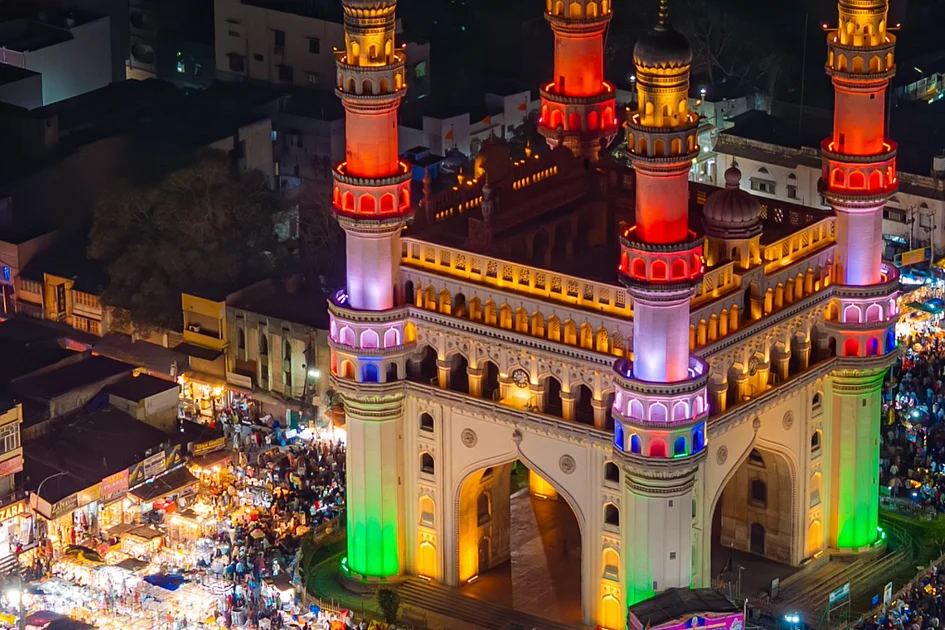
    The preparation process unfolds across numerous locations, particularly in the Charminar district, where chefs tend to massive vessels on traditional ‘bhattis’ (brick and mud ovens). The complex recipe incorporates an array of ingredients including premium mutton, wheat, dals, basmati rice, almonds, and an exquisite blend of spices such as cardamom, cinnamon, cloves, and cumin.

    Haleem’s journey from its Arabic origins to its current iconic status in Hyderabad represents centuries of culinary evolution. The adaptation through incorporation of local spices and ingredients has elevated it to such prominence that in 2010, it became India’s first meat product to receive Geographical Indication status.

    The culinary phenomenon extends beyond mere food preparation, sparking significant cultural and economic activity. Long queues form outside establishments ranging from humble roadside eateries to luxury hotels, all serving the sought-after dish. As afternoon approaches, kitchens shift to packaging operations to meet overwhelming demand.

    Parallel to the culinary celebrations, Hyderabad experiences a cultural renaissance during Ramadan nights. Historic neighborhoods including Laad Bazaar—renowned for lacquer bangles, pearls, and perfumes since the 1590s—bustle with activity until midnight. The city’s architectural heritage, particularly around the illuminated Charminar monument, becomes a focal point for both residents and visitors.

    This cultural vibrancy has inspired innovative tourism initiatives. Mohammed Sibghatullah Khan, a 25-year-old architect and founder of The Deccan Archive, conducts nighttime walking tours that explore Hyderabad’s architectural legacy and urban evolution. These tours attract diverse participants including domestic tourists, NRIs from Gulf countries, and international visitors, all seeking to experience the city’s unique Ramadan atmosphere.

    The convergence of culinary tradition, historical commerce, and cultural tourism during Ramadan demonstrates Hyderabad’s distinctive ability to preserve heritage while embracing contemporary expressions of community and identity.

  • Trump says Iran has 10 to 15 days to reach nuclear deal

    Trump says Iran has 10 to 15 days to reach nuclear deal

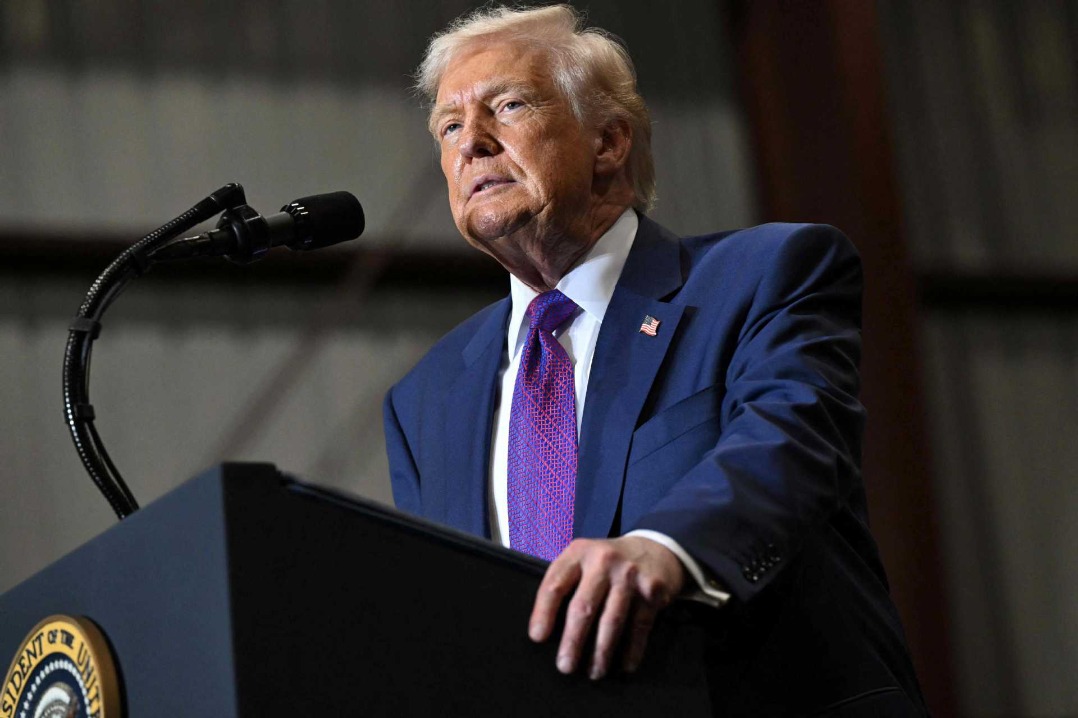
    President Donald Trump has delivered a stark warning to Iranian officials, establishing a definitive two-week deadline for reaching a comprehensive nuclear agreement. Speaking to journalists aboard Air Force One on Thursday, the American leader declared that Tehran faces severe consequences should diplomatic efforts collapse within this timeframe.

    “We’re either going to get a deal or it’s going to be unfortunate for them,” Trump stated, emphasizing the critical nature of the negotiations. The President characterized Iran as “a hot spot right now” during remarks at the inaugural session of the Board of Peace, acknowledging the historical challenges in securing meaningful agreements with the Islamic Republic.

    While Vice President JD Vance reported “some” encouraging developments emerging from Tuesday’s second-round talks in Geneva, he confirmed that fundamental U.S. security requirements remain unaddressed. The diplomatic pressure coincides with significant military movements, as the aircraft carrier USS Gerald R. Ford transited toward Gibraltar en route to join the USS Abraham Lincoln near Iranian territorial waters.

    According to an Axios report citing White House insiders, administration officials estimate a 90% probability of military strikes occurring within weeks should negotiations fail. This deployment of naval assets underscores the administration’s preparation for multiple scenarios as the diplomatic window rapidly closes.

  • Top-ranked Jeeno Thitikul moves into contention at her home LPGA tournament in Thailand

    Top-ranked Jeeno Thitikul moves into contention at her home LPGA tournament in Thailand

    In a stunning display of home-course prowess, Thailand’s top-ranked golfer Jeeno Thitikul electrified the galleries at the Siam Country Club Old Course with a spectacular 9-under 63 during Friday’s second round of the LPGA Thailand tournament. The world number one’s remarkable performance positioned her firmly in second place, though she trails the formidable leader Somi Lee by three strokes after the South Korean sensation carded a blistering 61 that included a spectacular eagle 2 from the fairway on the 15th hole.

    The Asian swing of the LPGA Tour commenced with this prestigious event located approximately 125 kilometers east of Bangkok, marking the first of three consecutive tournaments across the continent with subsequent stops in Singapore and China. The competition has intensified dramatically as players seek early momentum in this crucial segment of the professional circuit.

    Thitikul’s round featured an extraordinary burst of scoring prowess with four birdies and an eagle across the final six holes of her front nine. The Thai superstar maintained her scintillating form with additional birdies on the 10th and 11th holes, momentarily seizing the tournament lead after initially trailing by two strokes following the opening round. However, her momentum tempered during the latter portion of the back nine with six consecutive pars before concluding with a final birdie on the 18th hole.

    Japan’s Chizzy Iwai delivered an impressive bogey-free 62, elevating her into a tie for third position with New Zealand’s Lydia Ko, who carded a 64, leaving both competitors four strokes off the pace. Meanwhile, defending champion Angel Yin struggled with a 75, falling to even par for the tournament, while Canadian standout Brooke Henderson remained at 5-under after posting a 68, now trailing Lee by twelve strokes.

  • Asos co-founder dies after Thailand balcony fall

    Asos co-founder dies after Thailand balcony fall

    Thai authorities have confirmed the identity of the individual who fell to his death from a high-rise condominium in Pattaya on February 9, 2026, as Quentin Griffiths, the British co-founder of global fashion retailer ASOS. Police investigators disclosed to BBC that emergency services responded to the incident after receiving reports of a fatal fall from the 18th floor of a residential building.

    According to official statements from Pattaya law enforcement, preliminary investigations indicate no evidence of criminal involvement in Griffiths’ death. The police report specified that the entrepreneur was alone at the time of the incident, with his condominium unit secured from inside and showing no signs of forced entry. Medical examiners conducted an autopsy which revealed no indications of foul play, supporting the initial assessment of the circumstances.

    Griffiths, who held British citizenship, co-established ASOS (As Seen On Screen) in 2000 alongside current CEO Nick Robertson. Although he departed from the company five years after its inception, he maintained substantial shareholdings in the fashion enterprise that would eventually grow into a multinational e-commerce giant valued at billions.

    Law enforcement officials additionally revealed that Griffiths was engaged in two separate ongoing legal proceedings at the time of his death, suggesting these matters may have contributed to significant personal stress. The precise nature of these court cases remains undisclosed as investigations continue.

    The tragic event has drawn international attention to the circumstances surrounding the death of a prominent business figure in Thailand’s coastal city of Pattaya, known both as a tourist destination and expatriate hub. Authorities have indicated their investigation remains open while awaiting final forensic reports.

  • India joins US-led initiative to build secure technology supply chains

    India joins US-led initiative to build secure technology supply chains

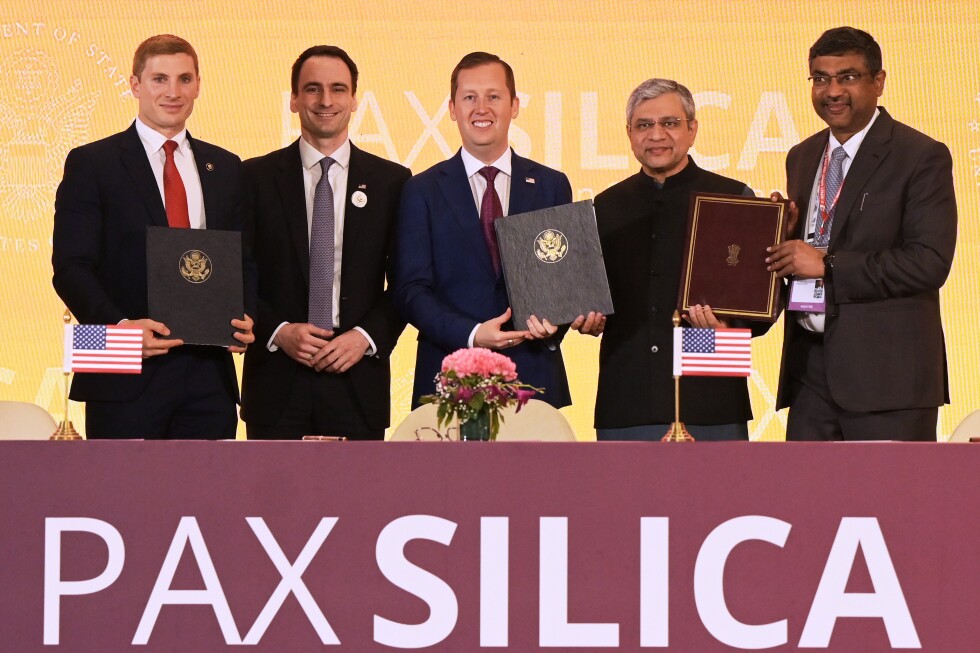
    NEW DELHI — In a significant diplomatic development, India formally aligned with the United States-led Pax Silica initiative on Friday, cementing a strategic partnership that had recently weathered tensions over energy imports. The partnership represents a substantial recalibration of bilateral relations, emphasizing technological cooperation amid growing geopolitical competition with China.

    The Pax Silica framework, which includes key U.S. allies such as Japan, South Korea, the United Kingdom, and Israel, aims to establish secure supply chains for semiconductors, advanced manufacturing, and critical technologies. The initiative specifically seeks to diminish global reliance on China-dominated manufacturing hubs while fostering trusted production networks among democratic nations.

    U.S. Ambassador Sergio Gor emphasized the strategic importance of India’s participation in a pre-signing address. “Pax Silica will unite nations that believe technology should empower free people and free markets. India’s entry isn’t merely symbolic—it’s both strategic and essential,” Gor stated.

    The technology agreement follows closely on the heels of a recently established interim trade framework between the two nations, which reduces tariffs and enhances market access. This trade détente effectively eased frictions that had emerged from India’s substantial purchases of discounted Russian oil following Moscow’s invasion of Ukraine in 2022.

    Earlier this month, President Donald Trump announced the reduction of reciprocal import tariffs on Indian goods from 25% to 18%, alongside the removal of additional levies previously imposed due to India’s Russian crude acquisitions. This concession came after Indian Prime Minister Narendra Modi committed to halting further Russian oil purchases.

    The convergence of trade agreements and technology cooperation signals a broader strategic partnership that extends beyond commerce into long-term security alignment. Ambassador Gor captured the optimistic outlook: “From the trade deal to Pax Silica to defense cooperation, the potential for our two nations to work together is truly limitless.”

  • Ex-South Korean president remains defiant following life sentence for rebellion

    Ex-South Korean president remains defiant following life sentence for rebellion

    In a dramatic development within South Korea’s political landscape, former President Yoon Suk Yeol has issued his first response to receiving a life imprisonment sentence for rebellion, maintaining an uncompromising stance despite the severe judicial ruling. The Seoul Central District Court delivered the verdict on Thursday, finding Yoon guilty of orchestrating an attempted coup through his unauthorized declaration of martial law in December 2024.

    Through legal representatives, the deposed leader asserted that his controversial imposition of emergency measures was enacted ‘exclusively for national interests and public welfare,’ while simultaneously dismissing the judicial proceedings as fundamentally biased against him. The court documented Yoon’s persistent non-cooperation throughout the investigation, including his refusal to attend multiple court hearings and his weeks-long barricade within the presidential residence following his arrest last July.

    Presiding Judge Jee Kui-youn emphasized in the ruling that Yoon demonstrated ‘complete absence of remorse for the substantial societal damages caused by the emergency martial law declaration’ and noted his ‘unjustified avoidance of court appearances’ on several occasions. The judicial finding concluded that Yoon had mobilized military and police forces in an unlawful attempt to seize legislative control, apprehend political adversaries, and establish indefinite authoritarian governance.

    Conservative supporters expressed outrage at the courthouse steps, while liberal opponents celebrated the verdict nearby, with both factions separated by substantial police presence. Despite his defiant rhetoric questioning the judiciary’s independence, Yoon retains the right to appeal within seven days, though his statement suggested skepticism about continuing legal battles.

    The brief six-hour martial law period in December 2024 triggered South Korea’s most severe political crisis in decades, culminating in Yoon’s presidential suspension that same month, formal removal by the Constitutional Court in April 2025, and subsequent early elections that brought current President Lee Jae Myung to power. Five former military and police officials received substantial prison sentences for their roles in enforcing the martial law decree, including ex-Defense Minister Kim Yong Hyun, who was sentenced to 30 years imprisonment.

  • UK doctor stuck in India after police case over Facebook post

    UK doctor stuck in India after police case over Facebook post

    A British medical professional of Indian origin finds himself entangled in a legal and diplomatic impasse, barred from departing India for over a month due to a criminal investigation initiated from a social media commentary. Dr. Sangram Patil, a consultant for the UK’s National Health Service (NHS) and a UK citizen, was intercepted at Mumbai airport on January 19th while attempting to board a flight back to London. The prevention of his departure was enforced via a lookout circular—an official notice that restricts individuals under investigation from exiting the country.

    The core of the dispute stems from a complaint filed by Nikhil Bhamre, who leads the Bharatiya Janata Party’s (BJP) social media operations in Maharashtra state. Registered on December 18th, the complaint alleges that Dr. Patil published “objectionable content” on Facebook targeting a senior BJP figure. Although the complaint did not explicitly name the leader, evidence indicates it refers to a post concerning Prime Minister Narendra Modi made four days prior. The Mumbai police subsequently filed a case against Patil under sections of the Indian criminal code pertaining to the dissemination of false information capable of inciting enmity and hatred between communities—an offence that is bailable but carries a potential three-year prison sentence.

    Dr. Patil, who maintains a substantial online following across platforms like Facebook and YouTube, has vehemently denied the allegations. He characterizes the police action as “unlawful” and describes the extensive interrogations—totaling over 20 hours—as “targeted harassment.” He contends that his post was merely a simple question directed at government supporters and contained no inflammatory, communal, or sensational material. In a legal rebuttal, Patil’s legal team has categorically denied authoring any post that directly named or referred to the Prime Minister, arguing that criminal prosecution cannot be based on subjective political interpretation.

    The Mumbai police, in an affidavit presented to the court, defended their investigation. They asserted that the probe was at a critical juncture and suggested the possibility of “an organised effort to malign constitutional authority.” They further questioned why a foreign citizen on a tourist e-visa would engage in posting what they described as “defamatory, scandalous, obscene and inflammatory material” against the Indian Prime Minister while residing abroad.

    With his court plea seeking to dismiss the case and lift his travel ban scheduled for a hearing on February 27th, Dr. Patil remains in India, separated from his family and job in the UK. The UK’s Foreign, Commonwealth and Development Office has confirmed it is providing support to the British national and is in contact with local Indian authorities, highlighting the developing diplomatic dimension of this case.

  • Strait of Hormuz risk premium returns amid growing US-Iran war fears, says analyst

    Strait of Hormuz risk premium returns amid growing US-Iran war fears, says analyst

    Escalating military tensions between the United States and Iran have triggered a resurgence of risk premiums in global oil markets, with analysts warning of potential supply disruptions through the critical Strait of Hormuz. The strategic waterway, through which approximately 20 million barrels of oil transit daily, has become the focal point of renewed geopolitical anxieties.

    According to Saxo Bank analysis, the current geopolitical insurance premium has added approximately $5-7 to crude prices. This assessment comes as both Brent and WTI crude benchmarks surged more than 1.4% to $71.35 and $66.15 per barrel respectively following heightened concerns about potential U.S. military action against Tehran.

    Ole Hansen, Head of Commodity Strategy at Saxo Bank, emphasized that the recent price rally above $70 reflects Middle East supply-disruption risks rather than fundamental market shifts. “The vulnerability lies not only in Iran’s own exports but in the region’s collective dependence on the strait,” Hansen noted in a market commentary released Thursday.

    While Saudi Arabia and the United Arab Emirates maintain meaningful bypass infrastructure—including the UAE’s Abu Dhabi Crude Oil Pipeline and Saudi Arabia’s East-West Petroline—analysts estimate practical spare capacity at only 2-3 million barrels per day. This falls significantly short of the 20 million barrels that typically transit Hormuz daily.

    Industry experts warn that even partial disruption would trigger immediate consequences. Anis Sajan, Vice Chairman of Danube Group, highlighted the strait’s critical importance for Gulf Cooperation Council economies: “Any extended disruption would impact all goods transported via this route, leading to shortages and price increases. For building materials specifically, even short disruptions can affect freight costs and project execution.”

    The situation remains fluid as diplomatic efforts continue, with Oman mediating indirect talks between Washington and Tehran. Market participants are closely monitoring developments, aware that any resolution could quickly reverse the current risk premium and push prices toward the low $60s.

  • Japan’s traditional kimonos are being repurposed in creative and sustainable ways

    Japan’s traditional kimonos are being repurposed in creative and sustainable ways

    TOKYO — The iconic kimono, Japan’s centuries-old traditional garment once worn by geisha and samurai, is experiencing a remarkable transformation that aligns with contemporary environmental values. This elegant wrap-around attire, whose name literally translates to “worn thing,” is being reimagined through innovative sustainable practices that honor its cultural heritage while addressing modern ecological concerns.

    Authentic silk kimonos possess extraordinary longevity, often enduring for a century or more within Japanese families. These garments are traditionally passed down through generations alongside precious heirlooms, artworks, and military medals, maintaining their timeless appeal regardless of changing fashion trends. The fundamental design of the kimono and its accompanying obi sash has remained largely unchanged since the 17th century Edo period, as immortalized in Akira Kurosawa’s samurai films.

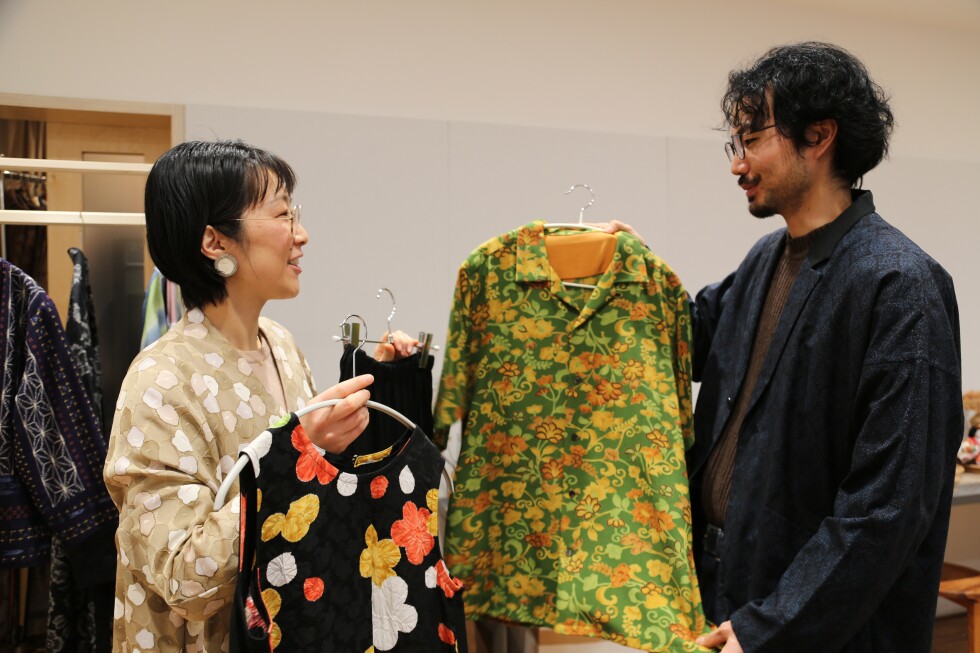
    Contemporary designers are now adopting creative approaches to revitalize these traditional garments, deconstructing and repurposing them into modern apparel such as jackets, dresses, and trousers. Mari Kubo, founder of the kimono remake enterprise K’Forward, identified the untapped potential within countless household closets. “I noticed that a multitude of beautiful kimonos remain dormant in people’s storage spaces,” Kubo observed. “This represents such tremendous waste.”

    K’Forward belongs to a growing sector of businesses that transform vintage kimonos into diverse products including tote bags and decorative dolls. Among their most sought-after items are tomesode—formal black kimonos featuring elaborate embroidered patterns of flowers, birds, or foliage at the hemline. Kubo specializes in creating coordinated ensembles where a tomesode becomes a jacket with preserved flowing sleeves, complemented by matching skirt or trousers crafted from coordinating kimono fabric. Occasionally, obi sashes are incorporated as colorful collar accents.

    These reinvented garments particularly appeal to younger consumers seeking kimono aesthetics without traditional wearing complexities. Pricing reflects the transformation process, with a repurposed furisode (vibrant long-sleeved kimono for unmarried women) reaching approximately 160,000 yen ($1,000), while a black tomesode outfit costs around 25,000 yen ($160).

    Tomoko Ohkata, another designer working with recycled kimonos, emphasizes the ecological satisfaction derived from her craft. “I experience no guilt in this work,” she explained. “Instead, I feel I’m contributing to environmental solutions—a practice that echoes our ancestors’ wisdom.” Japanese recycling facilities receive thousands of discarded kimonos daily as younger generations discover these inherited garments stored by parents and grandparents. With kimonos now primarily reserved for special occasions like weddings—where many Japanese women prefer Western-style white dresses or both attire options—these traditional garments often remain unused.

    Ohkata’s clientele typically consists of individuals discovering family kimonos and seeking meaningful revitalization. Her Tokyo boutique features exquisite dolls dressed in meticulously tailored recycled kimono fabrics, including samurai and wife pairs traditionally displayed during March’s Girls’ Day festival. These artisanal creations command prices of 245,000 yen ($1,600) per set.

    Simultaneously, traditional kimono wearing is undergoing renewed appreciation. Nao Shimizu, who operates a kimono school in Kyoto, highlights the garment’s adaptable nature: “Unlike fixed-form dresses, kimonos offer arrangement possibilities.” She demonstrates how obi tying techniques can express varying moods, from playful to subdued, while noting that younger enthusiasts increasingly combine kimonos with boots rather than traditional zori sandals.

    While mastering self-dressing requires approximately six months of training—comparable to learning a musical instrument—professional assistance remains available at beauty parlors, hotels, and specialty shops. Though most Japanese might wear kimonos only a few times during their lives, the experience creates lasting memories.

    Sumie Kaneko, a New York-based musician performing on traditional koto and shamisen instruments, frequently wears striking dresses made from recycled kimonos. She connects sustainability to broader Japanese cultural principles, noting the growing scarcity of materials like ivory and animal hide used in her instruments. Kaneko conceptualizes this practice as “the recycling of life,” explaining: “Performers breathe new existence into these materials. Similarly, past moments—along with once-cherished patterns and colors—can experience revitalization.”