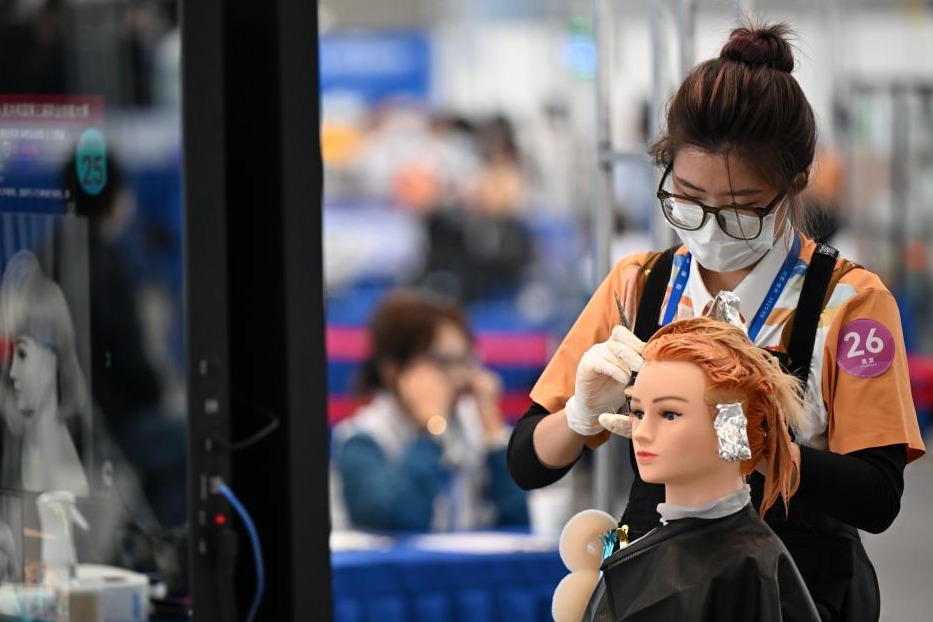
In a significant move to bolster global vocational education, Sino-foreign officials and educators have pledged to deepen exchanges and cooperation. This initiative aims to cultivate interdisciplinary talents that align with the evolving demands of modern education, driven by increasing global collaboration. Fang Shusheng, an inspector at the Guangdong provincial department of education, emphasized the critical role of openness and cooperation in the education sector. He urged universities and colleges worldwide to adopt a broader global perspective to advance the internationalization of vocational education. Fang made these remarks at the Guangdong Province ‘Belt and Road’ Vocational Education Alliance 2025 Annual Activities held in Guangzhou. Ma Renting, president of Guangzhou Polytechnic University, highlighted the university’s extensive cooperative relations with over 20 countries and regions, creating a robust platform that spans major Belt and Road Initiative participants. He stressed the importance of Sino-foreign cooperative education in systematically cultivating professionals proficient in Chinese, familiar with the culture, and skilled in specialized technologies. Sounantha Souvanlasy, dean of the Faculty of Pharmacy at the University of Health Sciences in Laos, noted the in-depth exchanges with Guangdong Food and Drug Vocational College, resulting in a basic cooperation agreement. This collaboration is expected to complement each other’s strengths, pursue common development, and extend educational cooperation in the medical and health field between China and Laos. The event, attended by over 200 representatives from 42 domestic and 15 overseas universities and colleges, along with 20 cooperative enterprises, featured keynote speeches, expert lectures, and round-table meetings. Seven cooperation projects were signed, covering university-university partnerships, university-enterprise collaboration, and international order-based training programs, aligning with the needs of international vocational education cooperation and industrial development directions. These agreements are set to expand the breadth and depth of Guangdong’s international vocational education cooperation.
标签: Asia
亚洲
-
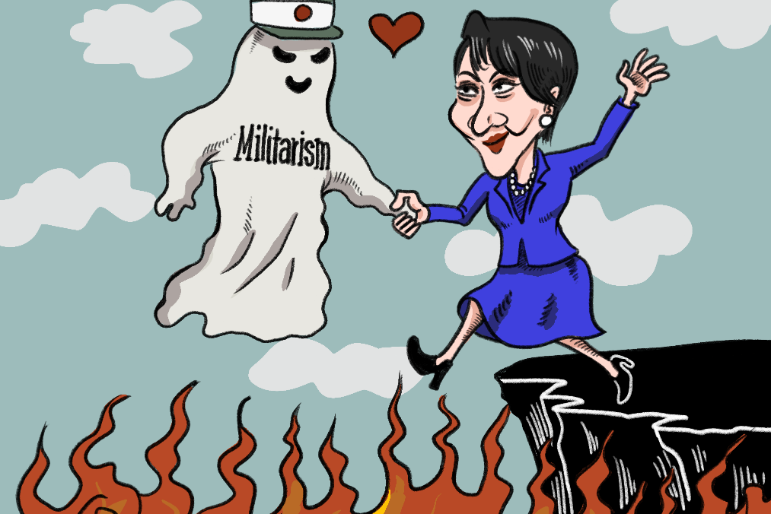
Japanese PM’s erroneous remarks on Taiwan continue to spark domestic outcry, stern Chinese warnings
Japanese Prime Minister Sanae Takaichi’s recent comments on Taiwan have ignited a wave of domestic criticism and drawn stern warnings from China. Speaking at a Diet meeting last week, Takaichi suggested that Japan’s Self-Defense Force could exercise the right of collective self-defense if China were to use military force against Taiwan. Despite China’s strong objections and diplomatic protests, Takaichi has refused to retract her remarks, which imply potential armed intervention in the Taiwan Strait. Her statements have been labeled as both erroneous and dangerous by senior political figures and media outlets in Japan. Former Prime Minister Shigeru Ishiba criticized Takaichi’s comments as dangerously close to equating a Taiwan contingency with a Japan contingency, a stance previous governments had carefully avoided. Hiroshi Ogushi of the Constitutional Democratic Party of Japan demanded Takaichi revoke her remarks, emphasizing the gravity of such declarations. Ichiro Ozawa, another CDPJ member, warned that such rhetoric could lead to significant sacrifices for the Japanese people. Former Prime Minister Yukio Hatoyama reiterated that Japan should not interfere in China’s internal affairs. Major Japanese newspapers, including the Nikkei and Yomiuri Shimbun, have also condemned Takaichi’s abandonment of ‘strategic ambiguity’ and her exploitation of security policy for political gain.
-
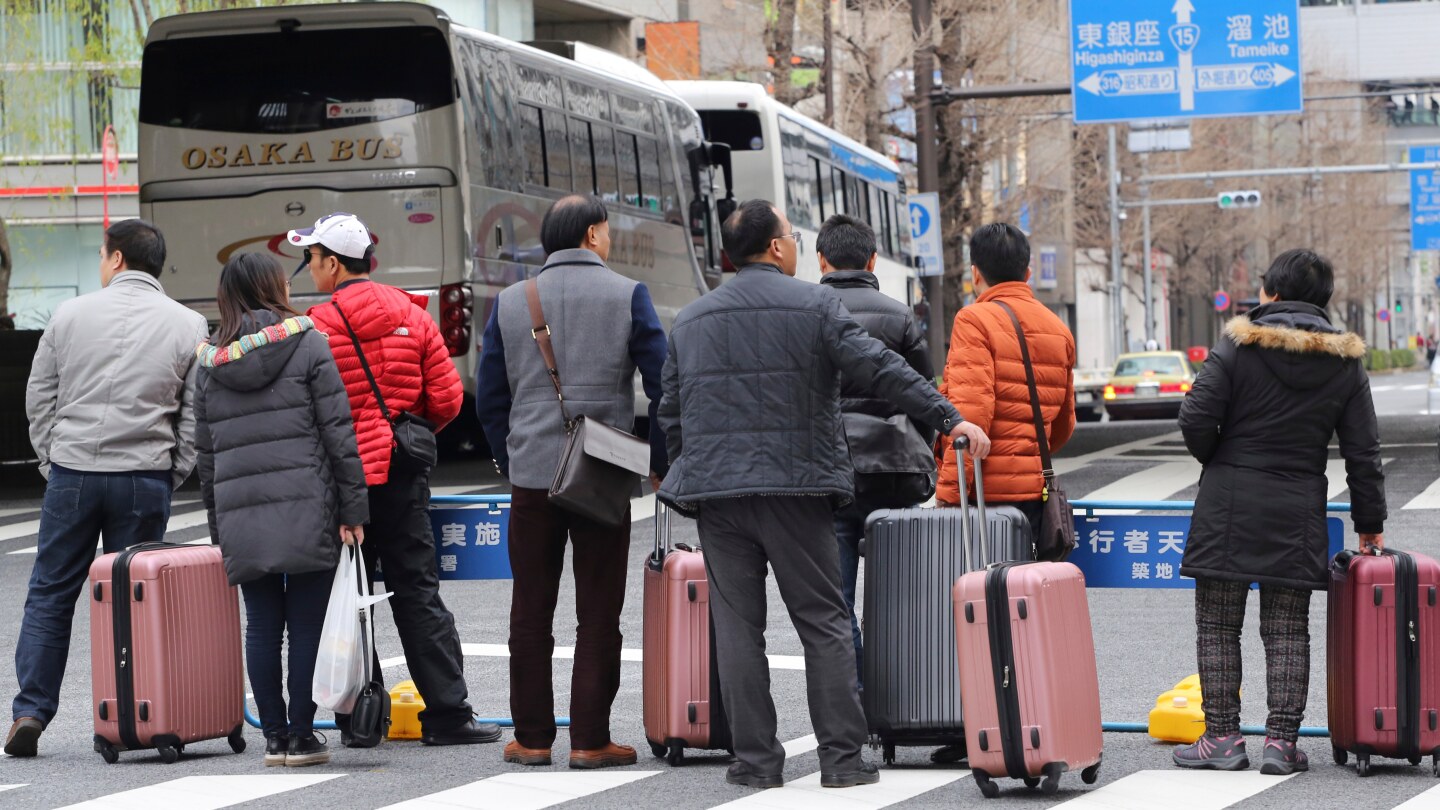
Japan protests China’s travel advisory over Taiwan remarks
Tensions between China and Japan have intensified following a travel advisory issued by Beijing urging its citizens to avoid visiting Japan. The advisory, announced on Friday, cited concerns over recent attacks against Chinese nationals in Japan and what it described as “erroneous remarks” by Japanese Prime Minister Sanae Takaichi regarding Taiwan. China argued that these comments have undermined the atmosphere for bilateral exchanges between the two nations. In response, Japan lodged a formal protest, with Chief Cabinet Secretary Minoru Kihara urging China to take “appropriate measures” to address the situation. Kihara emphasized the importance of multilayered communication to navigate the differences between the two governments. This latest development comes amid a broader context of strained relations, as Takaichi, who assumed office last month, has advocated for strengthening Japan’s military to counter potential threats from China, particularly in contested waters of the western Pacific. The dispute has further complicated an already fragile relationship, with China asserting its territorial claims over Taiwan and conducting military drills in the region. While neither Japan nor the United States maintains official diplomatic ties with Taiwan, the U.S. remains a key supplier of defense equipment to the island and opposes any forceful resolution to the China-Taiwan issue. The travel advisory, which appears more stringent than previous warnings, has raised questions about its potential impact on Chinese tourism to Japan, a popular destination that significantly contributes to Japan’s economy. Several Chinese airlines have already offered no-penalty refunds for tickets to Japan following the announcement.
-

UAE, 8 countries support US draft UN resolution to endorse Trump’s Gaza plan
In a significant diplomatic move, nine countries, including the United Arab Emirates (UAE), have jointly endorsed a US-drafted United Nations Security Council resolution supporting President Donald Trump’s Comprehensive Plan to End the Gaza Conflict. The resolution, formally circulated last week, proposes a two-year mandate for a transitional governance body and an international stabilization force. The plan, announced on September 29, aims to pave the way for Palestinian self-determination and statehood, according to a joint statement issued by the UAE, US, Qatar, Egypt, Saudi Arabia, Indonesia, Pakistan, Jordan, and Turkey. These nations emphasized the plan as a sincere effort toward achieving peace and stability in the region. The US mission to the UN has urged the Security Council to expedite the resolution’s adoption. Notably, Israel and Hamas agreed to the first phase of Trump’s 20-point plan in October, which includes a hostage release deal and is annexed to the draft resolution. While Trump has ruled out deploying US troops to Gaza, discussions are underway with countries like Indonesia, the UAE, Egypt, Qatar, Turkey, and Azerbaijan to contribute approximately 20,000 troops to the stabilization force.
-

India: At least 9 killed, 29 injured in explosion at police station in Kashmir, NDTV reports
A devastating explosion at a police station in the Indian-administered region of Kashmir has resulted in the deaths of at least nine individuals and left 29 others injured. The incident occurred late on Friday at the Nowgam police station, where a stockpile of confiscated explosives detonated unexpectedly. Among the deceased were several police officers and forensic team members who were in the process of examining the stored materials. The blast’s intensity was so severe that body parts were reportedly found in nearby homes, situated approximately 100 to 200 meters away from the site. Emergency services, including fire tenders, were promptly dispatched to the scene to manage the aftermath. This tragic event follows closely on the heels of a car explosion in New Delhi, which claimed eight lives and was labeled a terrorist act by the Indian government. The ongoing territorial dispute between India and Pakistan over Kashmir, a region both nations claim in its entirety, continues to be a source of tension and conflict. The police chief of Jammu and Kashmir is scheduled to hold a press conference to provide further details on the incident.
-
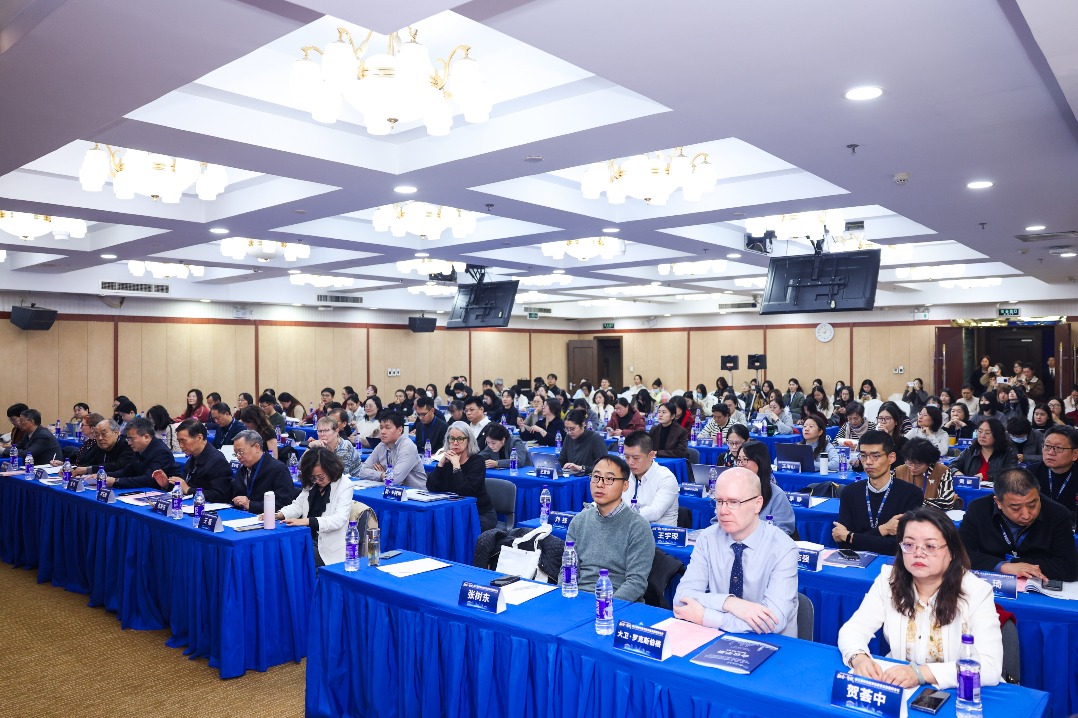
Experts advocate smart tech to advance inclusive education
At the Third International Conference on High-Quality Development in Special Education, held in Beijing on November 13, 2025, a distinguished panel of special education experts from China, the United Kingdom, the United States, and Singapore underscored the pivotal role of smart technologies in fostering inclusive classrooms. The conference, themed ‘Inclusion and Intelligence,’ was co-hosted by the special education branches of Beijing Normal University and the University of Strathclyde.
Zhu Xudong, Dean of BNU’s Faculty of Education, highlighted the shifting dynamics in special education, noting the increasing prevalence of autism and the corresponding decline in physical disabilities. He called for enhanced cross-sector collaboration, particularly in the era of AI, to develop innovative inclusive classroom practices.
Deborah Robinson, Head of the University of Strathclyde’s Institute of Education, echoed this sentiment, emphasizing the potential of AI and advocating for deeper international partnerships. Li Tianshun, Vice-President of the Chinese Society of Education, identified intelligent technology as a crucial support for inclusive education, which is now a global mainstream trend. He urged the establishment of a comprehensive, all-age education system built on shared research and international cooperation to drive systemic change.
Huang Wei, Head of Special Education at the Ministry of Education’s Department of Basic Education, pointed out that digital transformation has significantly driven the high-quality development of special education over the past five years. Moving forward, efforts will be intensified to enhance digital infrastructure, develop specialized large-language models tailored for special education, and deepen international collaboration. These measures aim to propel special education into a new phase characterized by precise and personalized services.
Piao Yongxin, a founding figure of modern special education in China, emphasized that while the field must embrace digital transformation, technology should be viewed as a tool rather than an end. He stressed that the essence of special education remains committed to serving the holistic development of individuals and the strategic needs of the nation.
The conference featured in-depth discussions on the training of special educators and the application of AI, with participants from various countries sharing insights and best practices.
-

Sparking cultural creativity: A conversation with Zhang Tongdao and Vikram Channa
In a compelling dialogue with China Daily, Zhang Tongdao, the visionary director behind the documentary *The Sisters of Baima Tibetan*, and Vikram Channa, a renowned documentary producer, delved into the intricacies of nurturing cultural creativity. Their conversation shed light on the profound societal and cultural shifts captured in Zhang’s documentary, which meticulously follows the lives of four sisters over a span of 24 years. The film not only serves as a historical archive but also as a testament to the transformative power of storytelling. Both Zhang and Channa emphasized the importance of authentic narratives and innovative approaches in fostering cultural creativity. They highlighted the role of documentaries in bridging cultural gaps and fostering global understanding. Their insights underscored the necessity of preserving cultural heritage while embracing modernity, offering a roadmap for future creators to inspire and engage audiences worldwide.
-
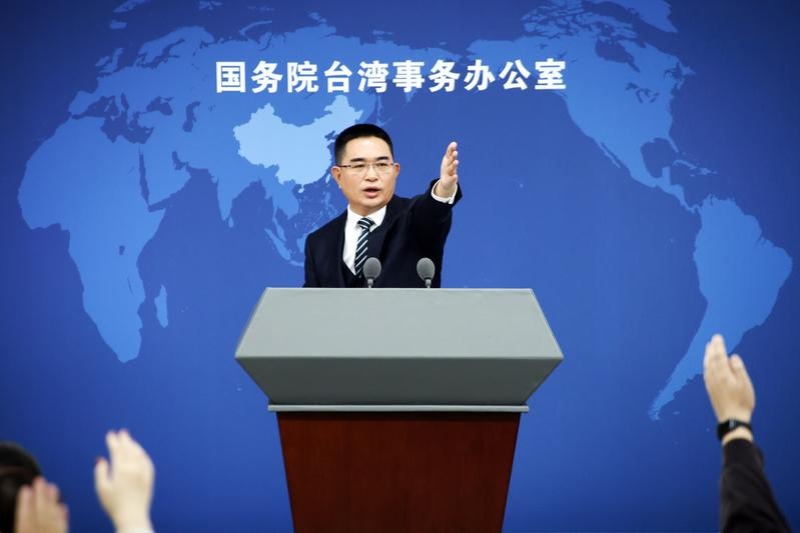
Beijing protests new US arms sale to Taiwan
China has issued a stern protest against the United States following the announcement of a new arms sale to Taiwan, labeling the move as a severe violation of its sovereignty and security interests. Chen Binhua, spokesperson for the State Council Taiwan Affairs Office, emphasized that the sale, which includes aircraft parts worth approximately $330 million, sends a dangerous signal to ‘Taiwan independence’ separatists. He reiterated China’s unwavering opposition to such transactions, urging the US to adhere to the one-China principle and the three US-China joint communiques, particularly the August 17 Communique. Chen warned that the actions of Taiwan’s Democratic Progressive Party (DPP) authorities, under the leadership of Lai Ching-te, have exacerbated tensions by pursuing military expansion and relying on external forces. He described Taiwan as being pushed toward becoming a ‘powder keg,’ jeopardizing the safety and well-being of its residents. Chen asserted that China would take all necessary measures to safeguard its national sovereignty, security, and territorial integrity, declaring that any path toward ‘Taiwan independence’ is doomed to fail.
-
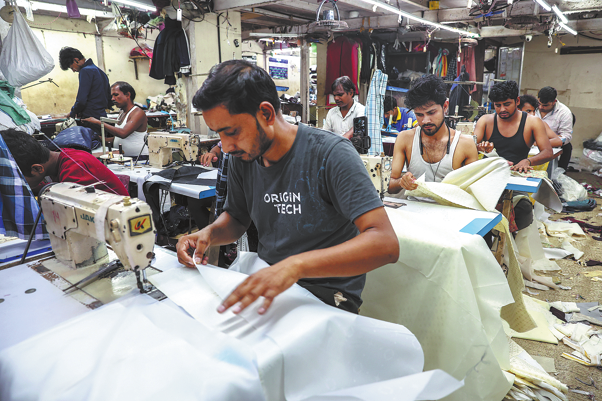
India’s relief measure seen as helpful for exporters, insiders say
In a significant move to bolster its export sector, the Indian government has unveiled a comprehensive relief package exceeding $5 billion. Announced late on Wednesday and approved by the federal cabinet chaired by Prime Minister Narendra Modi, the initiative aims to mitigate the adverse effects of US-imposed tariffs and strengthen India’s export ecosystem. The package includes collateral-free loans worth $2.3 billion and a six-year disbursement of $2.82 billion through the Export Promotion Mission (EPM), a program designed to enhance export competitiveness, particularly for micro, small, and medium enterprises (MSMEs), first-time exporters, and labor-intensive sectors. Information and Broadcasting Minister Ashwini Vaishnaw emphasized that the EPM represents a strategic shift from fragmented schemes to a unified, outcome-based mechanism capable of swiftly addressing global trade challenges and evolving exporter needs. The move comes as Indian exporters grapple with a 50 percent tariff imposed by the US, including a 25 percent punitive levy over India’s purchase of Russian oil, which has significantly impacted sectors like textiles, jewelry, leather goods, and chemicals. Industry leaders and trade organizations have welcomed the relief measures, with the Federation of Indian Export Organisations President SC Ralhan praising the EPM for its pragmatic and forward-looking vision. Similarly, the Confederation of Indian Textile Industry Chairman Shri Ashwin Chandran highlighted the potential for the textile and apparel sector to become globally competitive and create better-quality jobs. The timing of the package is particularly crucial for the seafood industry, which is facing its most challenging phase, according to Seafood Exporters Association of India President Pawan Kumar G. While the EPM is seen as a positive step, its success will hinge on the swift issuance of detailed guidelines, adequate funding, and robust coordination mechanisms, as noted by Global Trade Research Initiative founder Ajay Srivastava. Meanwhile, US President Donald Trump has indicated that his administration is working on a ‘very different deal’ with India, signaling ongoing negotiations between the two nations.
-
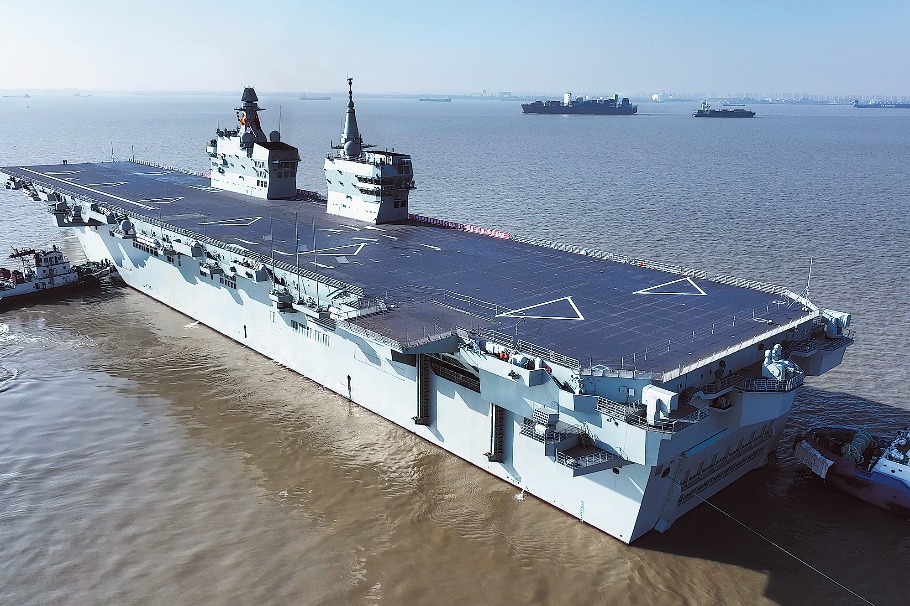
CNS Sichuan sets off on maiden sea trial
China’s first Type 076 amphibious assault ship, the CNS Sichuan, embarked on its inaugural sea trial on Friday, marking a significant milestone in the nation’s naval capabilities. The vessel departed from Hudong-Zhonghua Shipbuilding in Shanghai at approximately 9 a.m., as announced by the People’s Liberation Army Navy (PLAN). This trial aims to evaluate the ship’s electric and propulsion systems, following the completion of mooring tests and hardware installations. The CNS Sichuan, with a hull code of 51, is the lead ship in the Type 076 class, boasting a displacement of over 40,000 metric tons. It features a dual-island superstructure, a first for Chinese naval vessels, designed to enhance aviation operations. The ship is equipped with an electromagnetic catapult, enabling it to launch fixed-wing aircraft and drones, a capability previously seen only on the CNS Fujian aircraft carrier. Upon commissioning, the CNS Sichuan will support a range of missions, including amphibious landings, airstrikes, and airborne operations. A senior shipbuilding industry researcher noted that the maiden voyage is primarily to test the ship’s self-propulsion and system reliability, with future trials planned to assess the electromagnetic catapult’s performance. The PLAN currently operates four Type 075 amphibious assault ships, each capable of carrying helicopters, landing craft, and armored vehicles.