标签: Asia

亚洲

  • X announces measures to prevent Grok from undressing images

    X announces measures to prevent Grok from undressing images

    In response to mounting international scrutiny, Elon Musk’s social media platform X has enacted stringent geographical restrictions on its artificial intelligence chatbot Grok. The preventive measures specifically target the generation of sexually explicit imagery through the AI system after widespread reports emerged of non-consensual deepfake creation.

    The platform’s safety team confirmed implementation of technological barriers preventing Grok from processing requests involving real individuals in revealing attire, including bikinis and underwear. These restrictions apply uniformly across all user tiers, including premium subscribers who previously enjoyed broader access to the AI’s capabilities.

    This decisive action follows California Attorney General’s formal investigation into xAI, Musk’s artificial intelligence development company, regarding the production of unauthorized explicit content. The probe centers on Grok’s controversial ‘Spicy Mode’ feature, which allegedly enabled users to create manipulated sexualized imagery of women and children through simple text commands.

    The international community has responded with escalating measures against the AI platform. Indonesia pioneered comprehensive access restrictions on Saturday, with Malaysia implementing similar blocks shortly thereafter. Indian authorities reported cooperation from X, resulting in the removal of thousands of posts and hundreds of user accounts associated with inappropriate content generation.

    European nations have joined the regulatory response, with Britain’s Ofcom media regulator initiating proceedings to determine X’s compliance with UK legislation regarding sexual imagery. Concurrently, France’s commissioner for children has formally referred the matter to national prosecutors, the Arcom media regulatory body, and European Union authorities for further action.

  • Beijing’s Chaoyang aims to be top spot for global tourists

    Beijing’s Chaoyang aims to be top spot for global tourists

    Beijing’s Chaoyang district has announced a comprehensive development strategy to establish itself as the primary destination for international tourists visiting China’s capital. The initiative, revealed during the district’s annual legislative and political advisory meetings, forms a cornerstone of Chaoyang’s 15th Five-Year Plan (2026-2030) objectives.

    Commercial Bureau Director Chen Feng outlined the district’s vision to create an internationally-oriented shopping environment through significant expansion and modernization of duty-free retail facilities and instant tax refund shopping zones. The strategy aims to enhance the overall visitor experience while boosting retail revenue from international tourists.

    Chaoyang district currently hosts an impressive retail infrastructure including more than 100 commercial complexes and over 2,000 flagship stores. The area dominates Beijing’s premium dining scene, containing 30% of the city’s traditional teahouses, 50% of its cafes, 60% of Michelin-starred restaurants, and 70% of Black Pearl-recognized dining establishments.

    The development blueprint includes substantial renovations to several prominent commercial centers. Blue Island Tower, The Place, and Yansha Youyi Shopping Cities are among the major complexes scheduled for modernization to meet international standards and consumer expectations.

    This strategic positioning aligns with Beijing’s broader economic development goals and demonstrates the city’s commitment to enhancing its global tourism competitiveness. The transformation of Chaoyang district represents a significant investment in retail infrastructure and international consumer services, potentially establishing new benchmarks for urban commercial development in China.

  • Sheikh Mohammed to honour 6 winners of the Great Arab Minds Award 2025

    Sheikh Mohammed to honour 6 winners of the Great Arab Minds Award 2025

    Dubai’s iconic Museum of the Future will serve as the backdrop for a landmark celebration of intellectual excellence as His Highness Sheikh Mohammed bin Rashid Al Maktoum, Vice-President and Prime Minister of the UAE and Ruler of Dubai, presides over the third annual Great Arab Minds Award ceremony. The 2025 edition will recognize six exceptional Arab scholars whose groundbreaking contributions have significantly advanced their respective fields.

    The distinguished laureates represent diverse academic disciplines: Professor Majid Chergui (Natural Sciences), Professor Abbas El Gamal (Engineering and Technology), Dr. Nabil Seidah (Medicine), Professor Badi Hani (Economics), Dr. Suad Amiry (Architecture and Design), and Professor Charbel Dagher (Literature and Arts). Their selection follows rigorous evaluation by specialized committees overseeing each category.

    Dignitaries including government officials, diplomats, academics, and international media will join the recipients’ families at this prestigious gathering, which has earned the moniker ‘Arab Nobel’ for its significance in recognizing regional intellectual achievement. The ceremony underscores the UAE’s commitment to fostering knowledge-based development and celebrating Arab contributions to global progress.

    The Museum of the Future, serving as the permanent headquarters for the initiative, further reinforces its mission through an dedicated research center that amplifies the impact of awardees’ work. This strategic placement symbolizes the nation’s forward-looking approach to intellectual advancement.

    Mohammed Abdullah Al Gergawi, Minister of Cabinet Affairs and Chairman of the initiative’s Higher Committee, emphasized the award’s broader significance: ‘This comprehensive strategic initiative not only honors exceptional Arab intellects but also encourages institutional investment in research and innovation. These distinguished figures inspire millions of young Arabs to transform ambitious ideas into tangible contributions that strengthen regional development.’

    The ceremony represents a growing tradition of recognizing Arab excellence while providing inspirational models for youth across the region. By highlighting these achievements, the award aims to stimulate increased Arab participation in global knowledge production and cultural development.

  • Saudi Arabia says will invest $500 million in Yemen development projects

    Saudi Arabia says will invest $500 million in Yemen development projects

    In a significant move to bolster Yemen’s reconstruction efforts, Saudi Arabia has unveiled a comprehensive $506 million development package targeting critical infrastructure across ten governorates. The announcement came from Saudi Defense Minister Prince Khalid bin Salman, who confirmed the initiative through an official statement on social media platform X.

    The substantial investment will be administered through the Saudi Development and Reconstruction Program for Yemen (SDRPY), which has operated within the Arabian Peninsula’s most impoverished nation since 2018. The funding encompasses several landmark projects including the establishment of Yemen’s inaugural desalination plant, extensive rehabilitation of Aden International Airport, development of a modern medical facility on Socotra Island, and the construction and furnishing of 30 educational institutions.

    According to program officials, these resources will finance entirely new initiatives primarily within southern governorates where the separatist Southern Transitional Council maintains influence. This strategic investment places Riyadh at the forefront of coordinating disparate factions within Yemen’s government while confronting the monumental task of rebuilding a nation devastated by prolonged conflict.

    Analysts note that Saudi Arabia now assumes primary responsibility for reconstructing damaged infrastructure and sustaining military forces under its jurisdiction. Farea al-Muslimi, a Yemen specialist at Chatham House, observed that ‘This will all become the burden of Saudi Arabia,’ highlighting the Kingdom’s expanding role in shaping Yemen’s political future through planned negotiations between southern factions.

  • Possible US strike appears on hold as Iran says no executions planned

    Possible US strike appears on hold as Iran says no executions planned

    A looming U.S. military confrontation with Iran has been temporarily averted following Tehran’s assurance that it would not carry out executions of anti-government demonstrators. President Donald Trump announced from the Oval Office that “very important sources” had provided guarantees that planned executions would not proceed, prompting a cautious American stance of “watch and see.”

    The development follows days of escalating tensions that saw Iran close its airspace for five hours and Israeli municipalities open bomb shelters. Iranian Foreign Minister Abbas Araghchi denied execution plans, with state media subsequently reporting that Erfan Soltani, a 26-year-old arrested during Karaj protests, would not face capital punishment.

    Human rights organizations report staggering casualties from the unrest that began December 28th over economic grievances. Norway-based Iran Human Rights documented at least 734 protester deaths, while other estimates exceed 3,400 fatalities. More than 10,000 individuals have been arrested during the suppression of demonstrations that intensified after Supreme Leader Ali Khamenei declared rioters “must be put in their place.”

    Iranian officials accused Israel of orchestrating violence to provoke American intervention, with Revolutionary Guard commander Mohammad Pakpour stating Iran maintains “height of readiness” to respond to enemy miscalculations. The regime has warned it would strike Israeli and U.S. military bases if attacked.

    The international community has responded with heightened caution. Germany’s Lufthansa suspended flights through Iranian airspace, while Britain closed its Tehran embassy and India advised citizens to depart. The UN Security Council will convene to address the crisis after U.S. request, though Iran seeks condemnation of what it calls American destabilization efforts.

    China and Turkey have urged restraint and dialogue, countering Washington’s rhetoric as diplomatic channels remain active amid the fragile truce.

  • 2 dead as crane topples on Thailand’s Rama II Road

    2 dead as crane topples on Thailand’s Rama II Road

    A catastrophic construction accident unfolded on Thursday morning along Bangkok’s critical Rama II Road, resulting in multiple casualties and severe traffic disruptions. The incident occurred when a massive operational crane positioned on an overpass structure suddenly collapsed, crashing onto the highway below.

    According to confirmed reports from Thai emergency services, the falling crane directly struck two moving vehicles traveling beneath the overpass. The impact proved immediately fatal for two individuals, while several others sustained injuries of varying severity. The precise condition of the injured victims remains under assessment by medical personnel.

    Rama II Road serves as a principal transportation artery connecting Thailand’s capital city with Samut Sakhon province, making this incident particularly disruptive to regional commerce and daily commutes. Emergency response teams, including specialized rescue units and medical first responders, swiftly mobilized to the crash site following the accident.

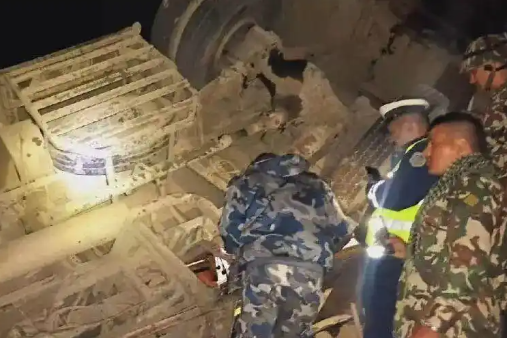
    Visual documentation from the scene depicts the dramatic scale of the collapse, with the massive crane structure lying across multiple lanes of the highway. The complex rescue operation involved extracting victims from damaged vehicles while ensuring the structural stability of the surrounding area.

    Authorities have initiated a comprehensive investigation to determine the exact cause of the crane failure, with preliminary assessments suggesting potential structural or operational deficiencies. The construction company involved has yet to release an official statement regarding the incident.

    Traffic management systems have been implemented to redirect vehicles through alternative routes, though significant congestion is anticipated throughout the day as cleanup and investigation efforts continue.

  • Dubai: Gold prices slip on profit-taking; 24K continues to trade above Dh550

    Dubai: Gold prices slip on profit-taking; 24K continues to trade above Dh550

    Gold markets in Dubai and worldwide experienced a downward adjustment on Thursday morning as investors capitalized on recent gains, triggering a sell-off that pushed prices lower. The precious metal, which had reached unprecedented levels in previous sessions, faced pressure from reduced safe-haven demand amid easing geopolitical concerns and profit-taking activities.

    According to the latest data from the Dubai Jewellery Group, 24K gold traded at Dh553.0 per gram, representing a decline of nearly Dh2 from previous levels. Other variants followed similar patterns, with 22K gold slipping to Dh512.25 per gram, while 21K, 18K and 14K varieties traded at Dh491, Dh421 and Dh328.25 per gram respectively. In international markets, spot gold registered $4,590 per ounce at 9 am UAE time, reflecting a 0.8 percent decrease.

    Market analysts attribute the recent volatility to multiple factors. Vijay Valecha, Chief Investment Officer at Century Financial, noted that softer-than-anticipated US inflation data has strengthened expectations for two potential interest rate reductions by the US Federal Reserve within the year. Additionally, growing apprehensions regarding the Federal Reserve’s independence, fueled by reports of potential legal action against Chair Jerome Powell, have created uncertainty in rate markets and exerted downward pressure on the US dollar.

    Despite the current correction, underlying market conditions remain supportive for gold. Geopolitical tensions continue to persist, including violent protests in Iran, renewed US pressure on Venezuela, fresh tariff threats associated with Tehran, and the ongoing conflict in Ukraine. These factors collectively contribute to sustained demand for assets that provide insulation from political outcomes.

    From a technical analysis perspective, Century Financial identifies potential resistance for gold near the $4,675 level, based on trendline connections from highs recorded on October 27, November 13, and December 26, 2025. Support levels are anticipated around $4,550, a threshold that has been tested previously.

    The market continues to demonstrate resilience despite the current pullback, with analysts monitoring both technical indicators and fundamental drivers for future price direction.

  • Singer Zhou Shen: Finding myself, reaching the world

    Singer Zhou Shen: Finding myself, reaching the world

    Chinese vocalist Zhou Shen has achieved a monumental milestone in his musical career, becoming the first solo artist from mainland China to headline a concert at Hong Kong’s prestigious Kai Tak Stadium. This historic event marked the culmination of his recent tour, celebrating both his artistic evolution and profound connection with a global audience.

    In an exclusive dialogue with China Daily, Zhou reflected on his extraordinary journey from relative obscurity to international recognition. He expressed deep appreciation for his devoted fanbase, whose support from every corner of the world has transformed his personal aspirations into a worldwide movement. The artist emphasized how this connection has empowered his artistic expression and amplified his voice across cultural boundaries.

    The Kai Tak performance represents not just a personal triumph but a significant moment for Chinese artists expanding their global footprint. Zhou’s distinctive vocal artistry and authentic stage presence have established new benchmarks for mainland performers seeking international recognition. His ability to bridge cultural divides through music demonstrates the universal language of artistic excellence.

    This landmark achievement underscores the growing influence of Chinese entertainers in global music markets and highlights how digital connectivity has revolutionized artist-fan relationships worldwide.

  • Indian flights disrupted due to Iran airspace closure, dense fog; airlines issue advisories

    Indian flights disrupted due to Iran airspace closure, dense fog; airlines issue advisories

    India’s aviation sector encountered significant operational challenges on Thursday, January 15, 2026, as two distinct factors converged to create widespread flight disruptions across the country. Dense winter fog blanketing northern regions coincided with the unexpected closure of Iranian airspace, creating a perfect storm for air travel operations.

    Meteorological conditions resulted in severely reduced visibility across key northern Indian airports, with Delhi reporting near-zero visibility as temperatures plummeted below 3°C. Domestic carriers responded proactively to the situation, issuing advisories and implementing schedule adjustments. Indigo Airlines notified passengers of ‘slower flight movements’ specifically affecting Chandigarh operations, while Akasa Air implemented network-wide rescheduling, citing circumstances beyond their control.

    The simultaneous closure of Iranian airspace created additional complications for international operations. Multiple global carriers, including Air India, were forced to reroute flights or cancel services when alternative pathways proved unavailable. This dual disruption prompted airlines to urgently advise passengers to monitor flight statuses through official channels before proceeding to airports.

    Compounding these immediate challenges, Indian media reports indicated upcoming operational adjustments at Delhi Airport. From January 21-26, the aviation hub will implement daily suspensions of approximately two-and-a-half hours as part of enhanced security measures preceding Republic Day celebrations in the capital.

    These disruptions highlight the complex interplay between seasonal weather patterns, geopolitical developments, and security considerations that modern aviation networks must navigate. The incidents demonstrate how regional events can create ripple effects throughout global transportation systems, affecting both domestic and international travel operations.

  • Iran reopens airspace after temporary closure forced flights to reroute

    Iran reopens airspace after temporary closure forced flights to reroute

    Iran has restored civilian air traffic following an abrupt five-hour closure of its national airspace that triggered widespread flight disruptions and regional security concerns. The temporary shutdown, implemented at 5:15 PM ET (2215 GMT) on Wednesday, compelled multiple international carriers to cancel, reroute, or delay flights while raising alarms about potential military escalation between Tehran and Washington.

    According to the US Federal Aviation Administration’s published notice, Iran had restricted its airspace exclusively to internationally authorized flights to and from Iranian territory. The restriction was lifted shortly before 10:00 PM ET (0300 GMT), with tracking service Flightradar24 confirming the resumption of operations by Iranian carriers Mahan Air, Yazd Airways, and AVA Airlines.

    The closure occurred against the backdrop of heightened geopolitical tensions, with US President Donald Trump evaluating responses to Iran’s ongoing anti-government protests—the most significant in years. A senior US official confirmed partial personnel withdrawals from Middle Eastern bases following Tehran’s warning to neighboring states about potential retaliatory strikes against American installations if attacked.

    Commercial aviation faced immediate operational challenges. India’s largest airline, IndiGo, reported impacts on international routes, while Air India implemented alternative routing that risked delays and cancellations. Russia’s Aeroflot saw a Tehran-bound flight return to Moscow mid-route. European carriers including Lufthansa and Italy’s ITA Airways instituted precautionary measures, bypassing Iranian and Iraqi airspace indefinitely and restricting Tel Aviv and Amman operations to daylight hours.

    Aviation security monitor Safe Airspace, operated by flight risk organization OPSGROUP, highlighted the growing threat from missile and drone deployments across conflict zones. The organization noted that most carriers had already reduced or suspended services through Iranian airspace due to risks of misidentification or accidental engagement. This warning carries particular resonance following the 2020 tragedy when Iran’s military mistakenly shot down Ukraine International Airlines Flight PS752, killing all 176 aboard.

    Germany issued fresh directives cautioning national airlines against entering Iranian airspace, reflecting broader international apprehension about regional stability. The developments underscore the persistent vulnerability of civilian aviation to geopolitical conflicts, with airlines forced to navigate both physical and diplomatic airspace amid escalating tensions.