标签: Asia

亚洲

  • New Kuwait residency rules: Higher visa fees, more categories, stricter controls

    New Kuwait residency rules: Higher visa fees, more categories, stricter controls

    Kuwait has unveiled a comprehensive overhaul of its residency and visa regulations, introducing higher fees, stricter controls, and new categories for foreign nationals. The Ministry of Interior announced the changes on November 23, 2025, with the new rules set to take effect on December 23, 2025. This marks one of the most significant reforms to Kuwait’s immigration system in recent years.

    Key changes include a minimum salary requirement of KD800 for family residency and increased fees for sponsoring dependents other than spouses and children, now set at KD300 annually. Visa fees have been raised across most categories, with a KD10 fee now applied to all types of visit or entry visas, including tourism, family visits, medical treatment, and business purposes. Most visit visas are valid for three months and can be renewed once, up to a maximum of one year.

    Residency permit fees have also been updated, with government and private sector work permits costing KD20 annually, investor residencies set at KD50, and property owner residencies at KD500. Domestic workers sponsored by Kuwaiti families are charged KD10 annually, while a new self-sponsor category requires a KD20 annual fee for foreigners with independent income.

    The reforms introduce stricter rules for domestic helpers, limiting the number of helpers based on household size and imposing stepped fees for additional helpers. Domestic helpers must also be between 21 and 60 years old, unless granted an exemption. Temporary residency fees are set at KD10 per month for most categories, with extensions costing the same.

    Investors and property owners benefit from specific residency categories, with investor residencies costing KD50 annually and property owner residencies requiring proof of ownership. The new system also mandates online applications, electronic appointment booking, and biometric verification for most procedures.

    Penalties for violations have been tightened, with daily fines for overstaying visas and caps on settlement fees. Administrative deportation can now be ordered even if a residency is valid, based on grounds such as lack of income, unauthorized employment, or public security concerns.

    The overhaul aims to modernize Kuwait’s residency framework, aligning it with the country’s evolving social and economic needs while increasing government revenue.


  • Suicide bombers kill three at Pakistan paramilitary HQ

    Suicide bombers kill three at Pakistan paramilitary HQ

    In a brazen attack on Monday, three suicide bombers targeted the headquarters of Pakistan’s Frontier Constabulary in Peshawar, resulting in the deaths of three paramilitary personnel and injuring at least five others. The assailants reportedly opened fire as they forced their way into the facility before detonating explosives within the complex. Javed Iqbal, the deputy commandant of the force, confirmed the casualties. A senior official, speaking anonymously, revealed that the first bomber struck the main entrance, enabling others to infiltrate the compound. Security forces, including the army and police, swiftly cordoned off the area, suspecting additional terrorists might still be inside. The headquarters, situated in a densely populated district of Peshawar, prompted road closures and heightened security measures. The injured, including two paramilitary members, were rushed to Lady Reading Hospital, according to spokesperson Mohammad Asim. No militant group has yet claimed responsibility for the attack. This incident follows a surge in militant activities in the region, exacerbated by recent border clashes. Pakistan accuses the Afghan Taliban of sheltering militants who launch cross-border attacks, a claim Kabul denies.

  • Thai woman found alive in coffin after being brought in for cremation

    Thai woman found alive in coffin after being brought in for cremation

    In a startling incident at Wat Rat Prakhong Tham, a Buddhist temple in Nonthaburi province near Bangkok, a 65-year-old woman shocked temple staff by moving inside her coffin as she was being prepared for cremation. The temple shared a video on its Facebook page, capturing the woman lying in a white coffin in the back of a pick-up truck, slightly moving her arms and head. Pairat Soodthoop, the temple’s general and financial affairs manager, recounted the bizarre event to The Associated Press on Monday. He explained that the woman’s brother had transported her from Phitsanulok province for cremation, believing she had passed away two days prior. The brother claimed his sister had been bedridden for two years and appeared to stop breathing recently. However, during the journey, faint knocking sounds were heard from the coffin. Upon opening it, the staff discovered the woman slightly opening her eyes and tapping on the coffin’s side. The brother had initially intended to donate her organs but was turned away by a Bangkok hospital due to the lack of an official death certificate. The temple, which offers free cremation services, also refused to proceed without the required documentation. After assessing the woman’s condition, the temple arranged for her to be taken to a nearby hospital, with the abbot pledging to cover her medical expenses.

  • Jimmy Cliff, reggae giant and star of landmark film ‘The Harder They Come,’ dead at 81

    Jimmy Cliff, reggae giant and star of landmark film ‘The Harder They Come,’ dead at 81

    Jimmy Cliff, the iconic reggae musician and actor whose soulful voice and powerful lyrics defined a generation, has died at the age of 81. His family announced his passing on Monday via his social media platforms, attributing his death to a seizure followed by pneumonia. The statement expressed gratitude to his global fanbase, emphasizing that their unwavering support had been a source of strength throughout his illustrious career. Born James Chambers in Saint James, Jamaica, Cliff rose to prominence in the 1960s as a key figure in the reggae movement, alongside legends like Bob Marley, Toots Hibbert, and Peter Tosh. His breakthrough came with the 1972 film *The Harder They Come*, in which he starred as Ivanhoe ‘Ivan’ Martin, a struggling musician turned anti-hero. The film, though initially a commercial flop, later became a cultural landmark, with its soundtrack hailed as one of the greatest in reggae history. Cliff’s music, including timeless hits like ‘Many Rivers to Cross,’ ‘You Can Get It If You Really Want,’ and ‘Vietnam,’ resonated with audiences worldwide, blending themes of resilience, defiance, and hope. His career spanned decades, earning him two Grammy Awards and induction into the Rock and Roll Hall of Fame in 2010. Beyond his musical achievements, Cliff’s influence extended to social and political spheres, with his songs adopted as anthems for movements and covered by artists like Bruce Springsteen and John Lennon. His legacy as a pioneer of reggae and a voice for the marginalized remains indelible.

  • Dubai Student Council members, inspired by Sheikh Mohammed’s leadership, embrace responsibility

    Dubai Student Council members, inspired by Sheikh Mohammed’s leadership, embrace responsibility

    Two Dubai students, Vanya Pahwa and Inaya Danish, have been selected to join the newly formed Dubai Students Council, a prestigious role that comes with significant responsibility. Inspired by the leadership of Sheikh Mohammed bin Rashid Al Maktoum, the students are determined to focus on wellbeing, environmental action, and cultural awareness. Their selection was confirmed through personal letters from Sheikh Hamdan bin Mohammed bin Rashid Al Maktoum, marking a pivotal moment in their lives. Vanya, from Springdale School Dubai, and Inaya, from Bloom World Academy, both bring a wealth of experience in student leadership. Vanya’s journey began with her active participation in various school roles, which honed her ability to bridge the gap between students and teachers. Inaya, on the other hand, was driven by instinct when she applied for the Council, seeing it as an opportunity to make a difference. The selection process was rigorous, involving interviews and group tasks, but both students emerged as part of the final 40 chosen citywide. Their visions for the Council are deeply personal. Vanya aims to address mental health and real-life skills, while Inaya is passionate about environmental sustainability and cultural understanding. Both students received a copy of ‘Lessons from Life’ by Sheikh Mohammed, which has profoundly influenced their approach to leadership. Vanya was inspired by the message of taking initiative, while Inaya resonated with the idea of compassionate leadership. As they embark on this new chapter, both students see the Council not as a platform for personal gain, but as an opportunity to serve and make a lasting impact on their community.

  • Malaysia to ban social media for children under 16 next year

    Malaysia to ban social media for children under 16 next year

    Malaysia has announced plans to prohibit individuals under the age of 16 from accessing social media platforms starting in 2026, aligning itself with global efforts to impose stricter digital age restrictions for minors. Communications Minister Fahmi Fadzil revealed that the Cabinet has approved this initiative as part of a comprehensive strategy to protect young people from online risks such as cyberbullying, scams, and sexual exploitation. The government is currently examining age verification methods, including the potential use of electronic checks linked to identity cards or passports, though the exact enforcement timeline remains unspecified. Fadzil emphasized the importance of collaboration between the government, regulatory bodies, and parents to ensure a safe digital environment for children and families. This move follows Malaysia’s recent mandate requiring major social media platforms with over 8 million users to obtain licenses and implement age verification and content-safety measures. Australia, which recently enacted the world’s first social media ban for children under 16, has set a precedent for such measures, with other countries like Denmark and Norway also exploring similar restrictions. The global trend reflects growing concerns about the adverse effects of social media on young users.

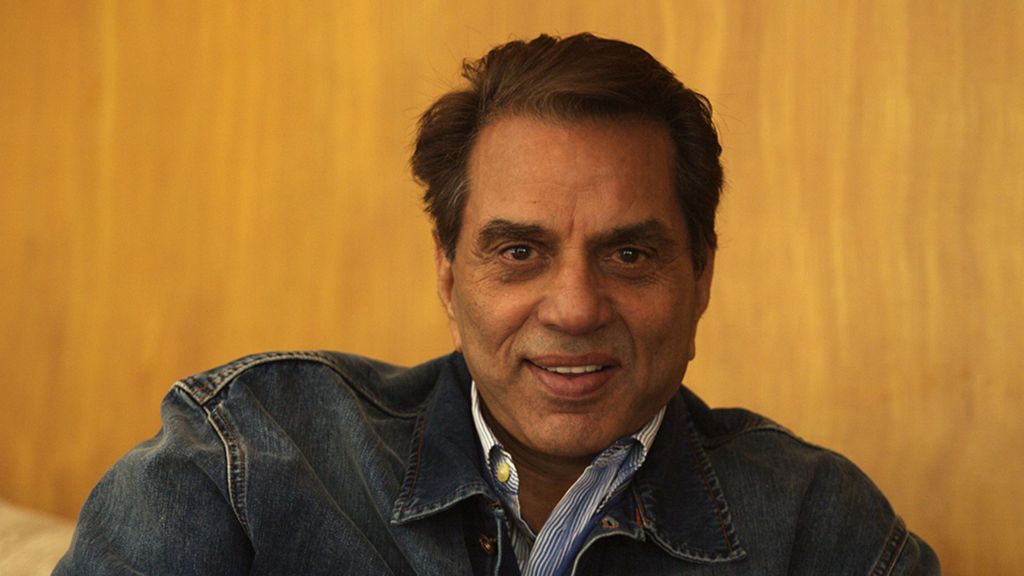
  • ‘Felt embarrassed to be called good looking’: Bollywood legend Dharmendra

    ‘Felt embarrassed to be called good looking’: Bollywood legend Dharmendra

    Bollywood legend Dharmendra, often hailed as a ‘Greek God’ for his striking looks, has passed away, leaving behind a legacy of timeless performances. In a poignant excerpt from a 2018 interview, the veteran actor candidly shared his feelings about being labeled as ‘good looking.’ Dharmendra expressed a sense of embarrassment over the compliment, revealing a humble and introspective side to his larger-than-life persona. ‘I felt embarrassed to be called good looking,’ he admitted, reflecting on how his appearance often overshadowed his dedication to acting. The interview offers a rare glimpse into the mindset of a star who, despite his immense popularity, remained grounded and self-aware. Dharmendra’s passing marks the end of an era in Indian cinema, as fans and colleagues mourn the loss of a true icon whose contributions to Bollywood will be remembered for generations to come.

  • Malaysia plans to ban social media for under-16s from 2026

    Malaysia plans to ban social media for under-16s from 2026

    Malaysia is set to enforce a nationwide ban on social media usage for individuals under the age of 16, effective from 2026. This decision aligns with a global trend of governments addressing the adverse effects of digital platforms on youth mental health and safety. Communications Minister Fahmi Fadzil announced on Sunday that the government is studying age restriction mechanisms employed by countries like Australia to safeguard young users from online threats such as cyberbullying, financial scams, and child exploitation. Fadzil emphasized the expectation that social media platforms will comply with the new regulation, preventing minors from creating accounts. The move comes amid escalating international scrutiny of tech giants like TikTok, Snapchat, Google, and Meta Platforms, which face lawsuits in the U.S. for their alleged role in exacerbating mental health crises among young users. Australia is set to deactivate accounts of users under 16 next month, while European nations like France, Spain, and Italy are piloting age verification systems. Indonesia, Malaysia’s neighbor, has also introduced measures to filter harmful content and strengthen age verification. Malaysia has intensified its oversight of social media platforms in recent years, citing a surge in harmful content, including online gambling and sensitive posts about race, religion, and royalty. Under new regulations effective since January, platforms with over 8 million users in Malaysia must obtain a license to operate.

  • Parth Garg: Building trust and a new financial lifeline for global Indians

    Parth Garg: Building trust and a new financial lifeline for global Indians

    Parth Garg, the visionary founder of Aspora, is spearheading a transformative movement in diaspora fintech, emphasizing trust, transparency, and cutting-edge technology. Born and raised in Abu Dhabi and a Stanford alumnus, Garg established Aspora to address the challenges faced by immigrant communities, particularly the global Indian diaspora, in cross-border banking.

  • South Korean man gets life sentence over blackmail ring that sexually exploited or abused hundreds

    South Korean man gets life sentence over blackmail ring that sexually exploited or abused hundreds

    In a landmark ruling, a 33-year-old South Korean man, Kim Nok-wan, has been sentenced to life imprisonment for orchestrating a sprawling online blackmail ring that sexually exploited 261 victims, including 16 minors he raped or assaulted. The Seoul Central District Court emphasized the gravity of his crimes, stating that Kim’s actions necessitate his “permanent isolation from society.” Additionally, 10 accomplices received prison terms ranging from two to four years in what authorities have dubbed the largest cybersex crime case in the country’s history.