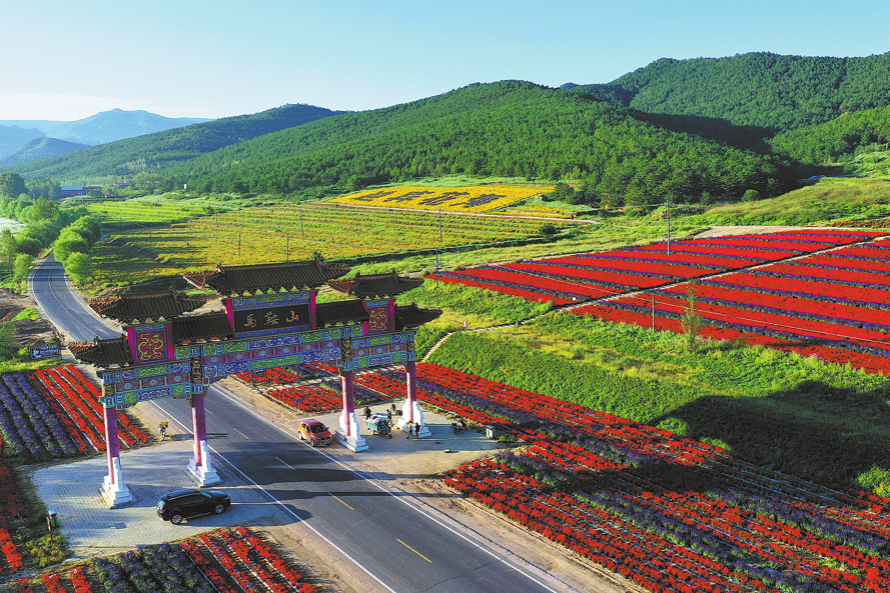
Two decades after President Xi Jinping introduced the visionary concept that ‘lucid waters and lush mountains are invaluable assets,’ China’s forests have undergone a remarkable transformation. Once valued primarily for timber, these natural resources have evolved into multifaceted assets that enrich soil, combat desertification, generate income, and attract tourism. This shift underscores a broader commitment to sustainable development, where protection and conservation are prioritized over exploitation. Today, forests cover more than 25% of China’s landmass, with a stock exceeding 20 billion cubic meters. In northern regions, the Three-North Shelterbelt Program has created a vast man-made forest shelterbelt, serving as a green barrier against wind and sand while fostering local industries like forest-based agriculture and ecotourism. This initiative not only safeguards the environment but also bolsters local economies, demonstrating how ecological preservation can drive prosperity.
标签: Asia
亚洲
-
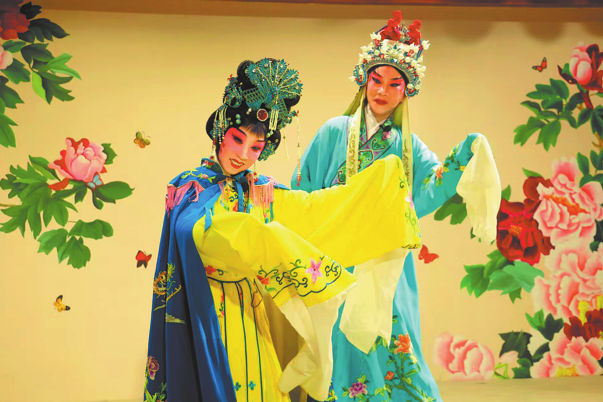
Singer’s dedication to local opera undimmed by age
In the serene mornings of Fuzhou, Jiangxi province, the air resonates with the melodious voice of Wan An’an, an 84-year-old national treasure and inheritor of Fuzhou Tea-picking Opera. This art form, deeply rooted in local folk traditions and performed in the Fuzhou dialect, is celebrated for its vibrant rhythm, expressive gestures, and the unique ‘tea flavor’ that narrates the lives of ordinary people.
Wan’s journey with the opera began at the tender age of 14 when she joined the Fuzhou Tea-picking Opera Troupe. Despite the lack of professional tutors and proper props, her dedication never wavered. Her career peaked in 1959 when she played Xiaolan in the revolutionary drama ‘Red Pine Forest,’ earning national acclaim and the honor of performing for state leaders.
Recognized as a national intangible cultural heritage in 2011, Fuzhou Tea-picking Opera owes much of its preservation to Wan’s efforts. Even after retiring from the troupe in 2001, she continued to teach, emphasizing the importance of daily practice and audience interaction. Her teaching method blends rigorous training with creative imagination, using classic excerpts to teach the essential coordination of eyes, hands, body, and steps.
In recent years, Fuzhou’s cultural scene has been enriched by international exchanges, such as the Tang Xianzu International Theater Exchange Month, which has seen performances like an English adaptation of ‘The Peony Pavilion’ by a troupe from the University of Birmingham. Wan views these exchanges as a profound dialogue between Eastern and Western cultures, offering opportunities for Fuzhou Tea-picking Opera to learn and evolve.
Despite her age, Wan remains active in workshops and performances, advocating for the opera’s traditional charm while embracing modern elements. ‘Tea-picking Opera deserves a broader stage and a brighter future,’ she asserts, her passion undimmed by the years.
-
Traditional treatments soothe patients’ pains
Southwest China’s Guizhou province, home to 48 of the country’s 56 ethnic groups, has long been a hub of cultural and medicinal diversity. In Tongren, a city in Guizhou, Bai Yutao, a rehabilitation physician and acupuncturist, employs traditional Qiang ethnic techniques to treat patients. His method, known as ‘white-stone therapy,’ involves immersing polished stones in herbal broth, wrapping them in cloth, and rolling them across a patient’s back to release muscle tension. This fusion of ancient practices and modern medical care exemplifies Guizhou’s unique approach to traditional Chinese medicine (TCM).
Guizhou’s rich ethnic heritage has become a cornerstone of its TCM industry. At Jiangkou County Hospital of Traditional Chinese Medicine, Bai and his team have adapted Qiang manual techniques to meet clinical standards, ensuring safety and efficacy. Historically, ethnic healing systems like Miao and Qiang medicine included shamanistic elements and were passed down orally. However, as younger generations pursue formal education and urban jobs, the number of traditional healers is dwindling. Bai emphasizes the need to preserve these cultural roots while making them accessible to a broader audience.
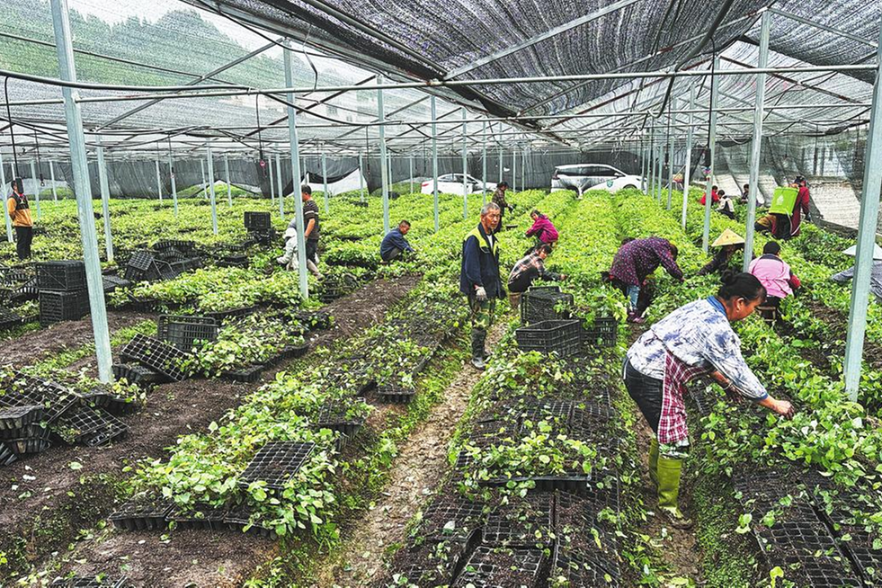
In 2024, Tongren was designated a national pilot zone for the inheritance and innovative development of TCM. Efforts include standardizing treatments, regulating medicinal materials, and establishing quality control centers. The region is also leveraging its unique plant resources for economic growth. For instance, barrenwort, a herb known for strengthening tendons and bones, is cultivated in Jiangkou county and has become a staple in medicines and supplements. State-owned China National Pharmaceutical Group has partnered with local cooperatives to build the country’s largest barrenwort breeding base, providing technical guidance and purchase guarantees to farmers.
Guizhou’s aromatic and medicinal raw materials are also gaining international recognition. Companies like Guizhou Miaoyao Biotech Co export essential oils and plant extracts, with valerian oil being a major product. The company supports over 3,000 cooperative households and plans to expand its branded wellness products. This blend of tradition and innovation is transforming Guizhou’s healthcare landscape while boosting its economy.
-
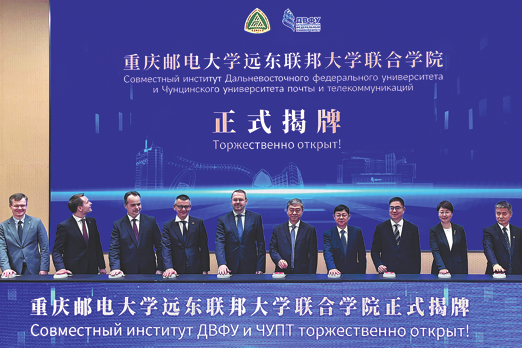
China, Russia universities unveil joint institute in Chongqing
In a landmark move for international educational collaboration, Chongqing University of Posts and Telecommunications (CQUPT) and Russia’s Far Eastern Federal University (FEFU) have inaugurated a joint institute in Chongqing, China. The Joint Institute of Far Eastern Federal University and Chongqing University of Posts and Telecommunications, unveiled on November 4, marks the first and only Sino-Russian cooperative educational institution in engineering within China’s central and western regions and Russia’s Far East. The institute will focus on information and communications, offering undergraduate and postgraduate programs in cutting-edge fields such as computer science, digital media technology, internet of things (IoT) engineering, and control science and engineering. Wang Yang, dean of the institute, emphasized its mission to cultivate interdisciplinary talents with international perspectives and practical skills, integrating resources from both universities and involving enterprises from China and Russia. The partnership, rooted in a 2023 memorandum of understanding signed during the APEC international educational subforum, has already enrolled its first cohort of 100 students in IoT engineering. Plans are underway to expand enrollment to 1,650 students over the next four years. Graduates will receive dual degrees, with preferential placement in sectors like information and communications, international business development, and technological cooperation. Boris Korobets, president of FEFU, highlighted the institute’s role in transforming the intellectual capital of both nations into a driving force for global technological leadership. The initiative reflects the deepening educational ties between China and Russia, with over 56,000 Chinese students studying in Russia and 21,000 Russian students in China. The joint institute stands as a testament to the China-Russia comprehensive strategic partnership, setting a new standard for international cooperation in higher education.
-
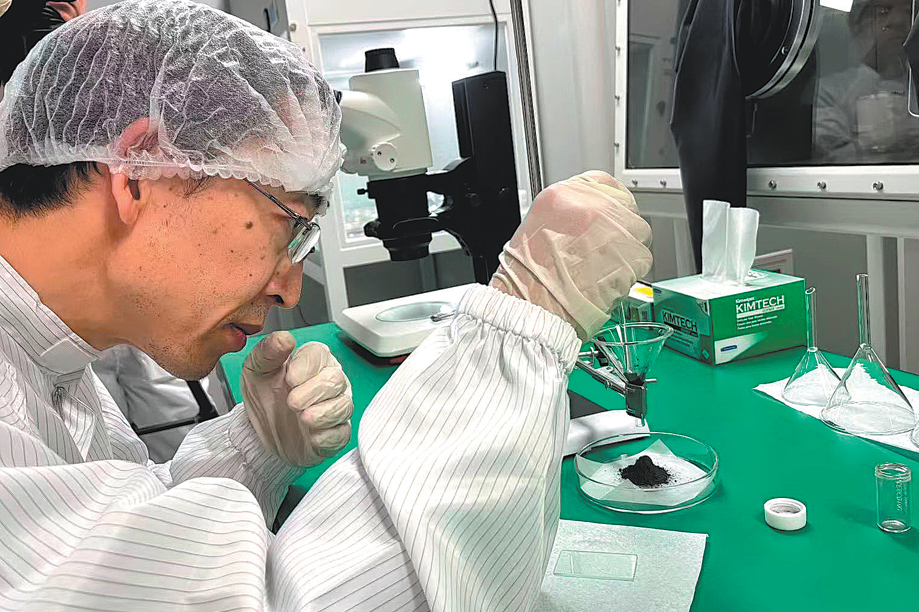
Mystery of sticky lunar soil solved
A recent study published in *Nature Astronomy* has unraveled the mystery behind the unexpectedly sticky lunar soil collected from the far side of the moon by China’s Chang’e 6 robotic probe. Unlike the loose, sandy regolith from the moon’s near side, the far side samples were clumpy and cohesive, a phenomenon now attributed to space weathering and the unique geometry of the soil particles. The research, led by Qi Shengwen from the Chinese Academy of Sciences’ Institute of Geology and Geophysics, reveals that the far side regolith consists of extremely small, jagged, and sharp particles, averaging 48.4 microns in diameter. These properties, combined with the effects of prolonged exposure to micrometeoroid bombardment and solar winds, create a cohesive environment. The study highlights the violent history of the lunar far side, which has been subjected to intense space weathering, resulting in the formation of irregular-shaped globs. The findings are not only of scientific interest but also have practical implications for future lunar exploration and base construction. Understanding the soil’s texture is crucial for designing equipment and infrastructure that can withstand the abrasive and sticky nature of the regolith. China’s ambitious space program, which aims to land astronauts on the moon before 2030, will benefit from these insights as engineers develop new technologies for lunar exploration.
-
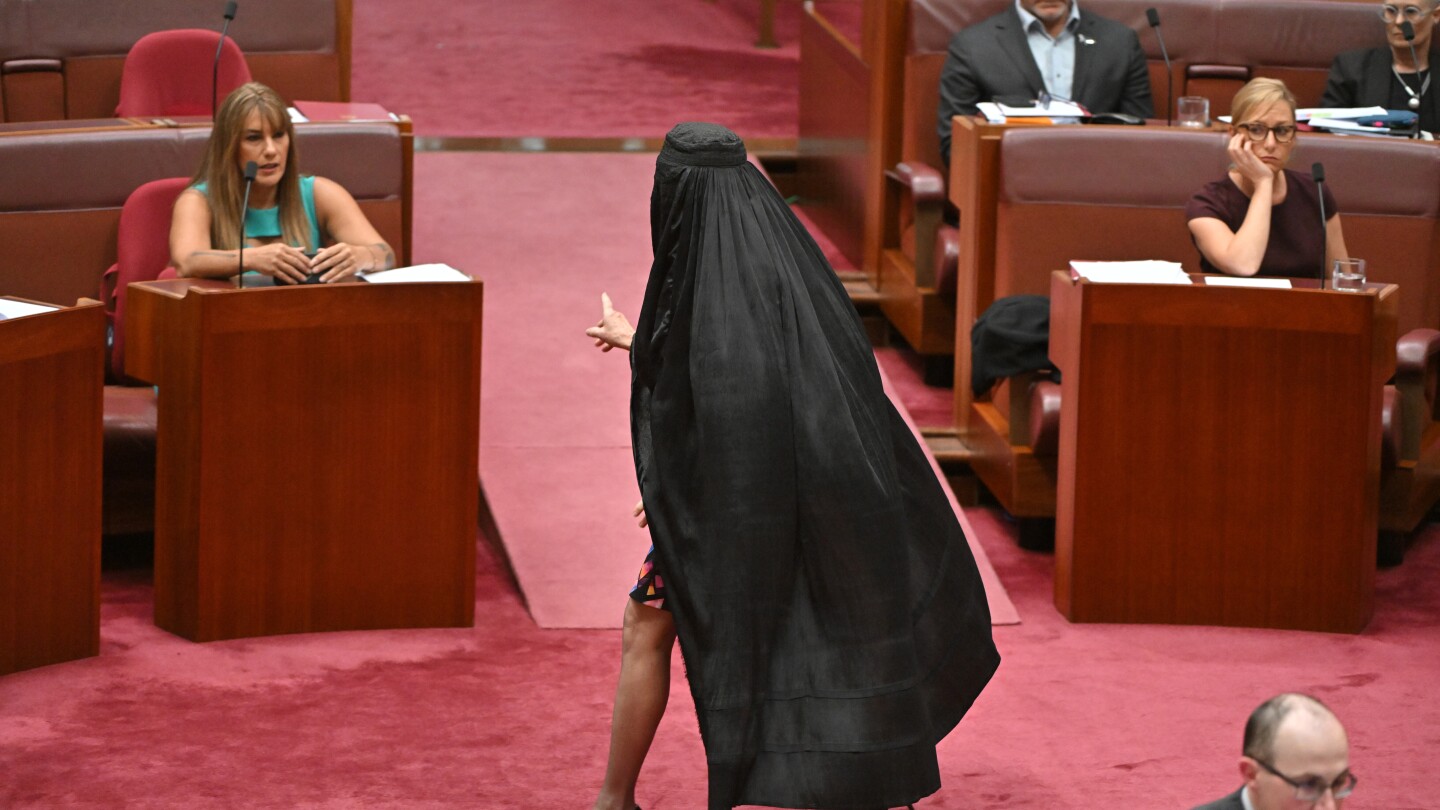
Australian Sen. Pauline Hanson suspended from Parliament for wearing burqa in protest
In a dramatic turn of events, Australian Senator Pauline Hanson, leader of the anti-Muslim and anti-immigration One Nation party, has been barred from Parliament for the remainder of the year following her controversial decision to wear a burqa in the Senate chamber. The 71-year-old senator staged the protest on Monday to highlight her campaign for a national ban on the burqa and other full-face coverings in public spaces. Her actions were widely condemned as disrespectful and inflammatory, leading to her suspension for the rest of the day. On Tuesday, in the absence of an apology, the Senate passed a censure motion, imposing one of the harshest penalties in recent decades by barring her from seven consecutive sitting days. With Parliament adjourning on Thursday, Hanson’s suspension will extend into the next session in February 2024. Hanson defended her actions, claiming hypocrisy in the Senate’s refusal to ban the burqa while denying her the right to wear it. She vowed to let voters judge her in the 2028 election. This incident echoes a similar protest in 2017, when Hanson wore a burqa in the Senate but faced no punishment. The censure motion was led by Senate leader Penny Wong, who accused Hanson of mocking and vilifying the Muslim faith, which is practiced by nearly one million Australians. Wong emphasized that such actions undermine Australia’s social fabric and harm vulnerable communities. Pakistani-born Senator Mehreen Faruqi, one of only two Muslim senators, called the censure motion a step toward addressing systemic racism in the country. Hanson’s history of controversial statements on race and immigration, including her infamous 1996 speech warning of Australia being ‘swamped by Asians,’ has long fueled criticism. Her recent actions have drawn sharp rebuke from advocacy groups, including the Australian Federation of Islamic Councils, which labeled her behavior as part of a pattern of vilifying Muslims and minorities.
-
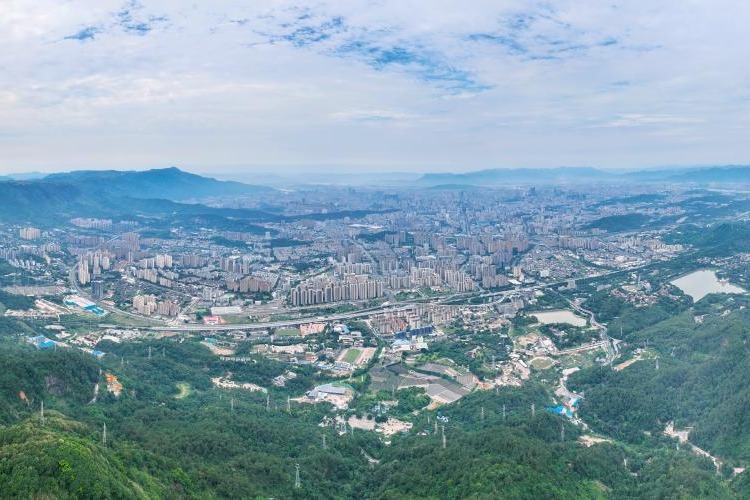
Blueprint put Fuzhou on track for transformation
Fuzhou, the capital of Fujian Province, has undergone a remarkable transformation over the past three decades, thanks to the visionary \”3820\” strategic project initiated by Xi Jinping during his tenure as the city’s Party secretary in the early 1990s. This ambitious blueprint, which outlined development goals for three, eight, and 20 years, has reshaped Fuzhou into a modern metropolis, addressing urban challenges while laying the foundation for long-term prosperity.
-

China launches intl program for fusion energy research
China has taken a monumental step in advancing fusion energy research by launching an international program dedicated to studying fusion burning plasma. The initiative, unveiled on Monday in Hefei, Anhui province, is spearheaded by the Chinese Academy of Sciences’ Institute of Plasma Physics. This groundbreaking program opens access to several major fusion research platforms, including the state-of-the-art Burning Plasma Experimental Superconducting Tokamak (BEST) facility, currently under construction in Hefei and set for completion by late 2027. Fusion energy, often referred to as the ‘artificial sun,’ replicates the sun’s power generation process and is considered a revolutionary clean energy source. The BEST facility, unlike its predecessors, is designed to demonstrate the actual ‘burning’ of deuterium-tritium plasma, a critical milestone for sustainable fusion power generation. At the program’s launch, scientists from over 10 countries, including France, the UK, and Germany, signed the Hefei Fusion Declaration, pledging to promote open science and foster global collaboration in fusion research. This initiative underscores China’s commitment to leading the global transition to clean energy and addressing the world’s energy challenges through innovative scientific advancements.
-
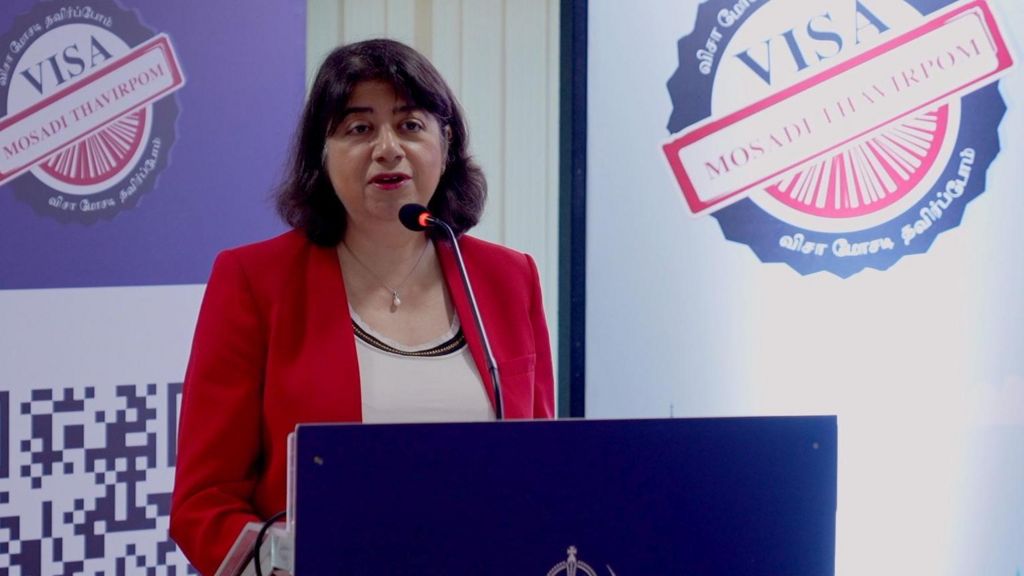
UK minister flags visa ‘abuse’ as student asylum claims surge
The UK government, led by Indo-Pacific Minister Seema Malhotra, is intensifying efforts to reform its immigration system, particularly in response to a surge in asylum claims by international students. During her visit to Chennai, India, Malhotra defended the proposed changes, which include extending the qualifying period for indefinite leave to remain from five to 10 years and potentially requiring some migrants to wait up to 20 years for permanent settlement. These measures, affecting an estimated 2.6 million people who arrived in the UK since 2021, aim to curb the abuse of legal migration routes. Malhotra emphasized that the reforms align with global practices to maintain the integrity of immigration systems and public confidence. However, the proposals have faced criticism from some Labour MPs and members of the House of Lords, particularly concerning their impact on sectors like healthcare and social care. Malhotra also highlighted the UK’s commitment to protecting individuals from visa fraud, collaborating with Indian law enforcement to combat cross-border scams. Despite the cooling demand for UK education among Indian students, Malhotra reaffirmed the UK’s welcome to genuine students and noted the benefits of the recently signed UK-India Free Trade Agreement, which includes plans for UK universities to establish campuses in India.
-

South Korea’s ‘TV dad’ Lee Soon-jae dies at 91
Lee Soon-jae, a towering figure in South Korean entertainment, passed away on Tuesday at the age of 91, as confirmed by his agency. With a career that spanned over seven decades, Lee was affectionately known as the ‘national TV dad,’ a testament to his iconic portrayals of wise and endearing older characters. Among his most celebrated roles were the strict father in the 1991 soap opera *What on Earth is Love* and the lovable grandfather in the hit sitcom *High Kick!*, which aired from 2006 to 2012. His passing has prompted an outpouring of tributes from across the nation, including heartfelt messages from K-pop stars and South Korean President Lee Jae Myung, who praised Lee for bringing ‘laughter, emotion, comfort, and courage’ to audiences. Lee remained active in his craft until recently, winning the grand prize at the 2023 KBS Drama Awards for his lead role in the comedy series *Dog Knows Everything*. Born in 1934 in Hoeryeong, now part of North Korea, Lee moved to Seoul at the age of four. After studying philosophy at Seoul National University, he found his calling in acting, inspired by Sir Laurence Olivier’s performance in *Hamlet*. Over his illustrious career, Lee appeared in approximately 140 TV shows and continued to perform on stage until October 2024, when illness forced him to withdraw from a production of *Waiting for Godot*. Beyond acting, Lee briefly ventured into politics, serving as a member of parliament from 1992 to 1996. His legacy endures not only in South Korea but also globally, as scenes from *High Kick!* have become viral memes on platforms like TikTok. Fellow actors, including Yoo Yeon-seok and Jeong Bo-seok, have hailed him as a mentor and a guiding force in their lives. Lee Soon-jae’s contributions to Korean entertainment have left an indelible mark, ensuring his place as a cultural icon for generations to come.