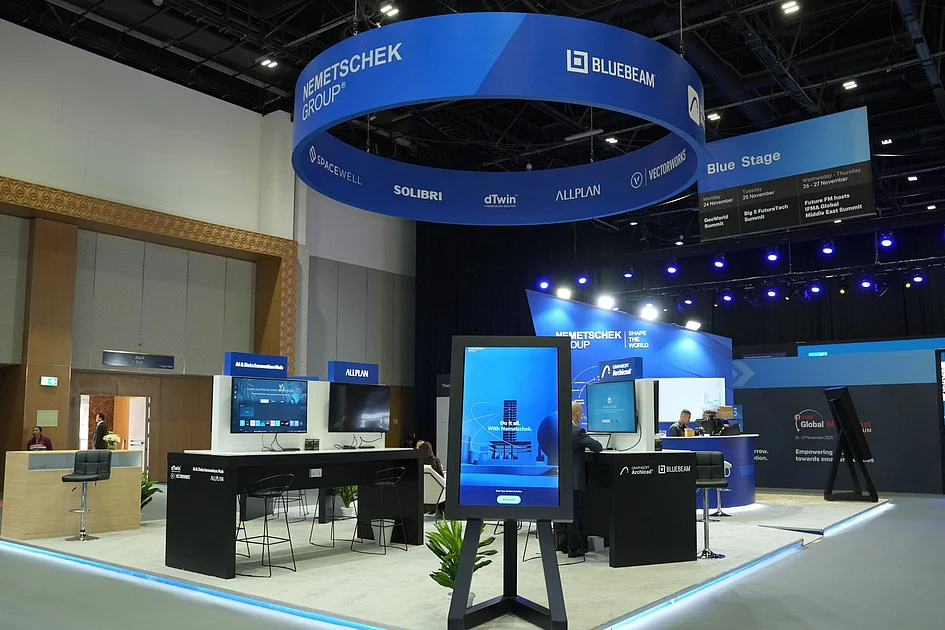
The Middle East’s construction industry is undergoing a profound transformation, driven by the dual imperatives of sustainability and digitalization. Companies across the region are increasingly adopting low-carbon design principles, energy-efficient building practices, and advanced technologies to optimize resource use and minimize environmental impact. Key innovations such as Building Information Modeling (BIM), digital twins, AI-based simulations, and lifecycle analysis are enabling construction teams to model environmental outcomes, reduce waste, and align with global and regional sustainability standards. This shift is further bolstered by robust regulatory frameworks and ambitious national agendas, including the UAE Net Zero 2050 and Saudi Vision 2030, which emphasize decarbonization and data-driven decision-making. At the recent Big 5 Global 2025 event, Nemetschek Arabia showcased its cutting-edge solutions, including AI-driven design optimization, BIM collaboration, and smart building operations, highlighting the potential of open and intelligent digital workflows to enhance productivity and sustainability. The GCC construction market, valued at $147.1 billion in 2024, is projected to grow to $226.2 billion by 2033, driven by mega-projects such as Saudi Arabia’s giga developments and UAE landmarks like the Saadiyat Cultural District. Nemetschek Arabia aims to deepen its role as a digital transformation partner, focusing on localized solutions, ecosystem collaboration, and AI-driven innovation to support the region’s net-zero goals and the creation of resilient, sustainable cities.
标签: Asia
亚洲
-
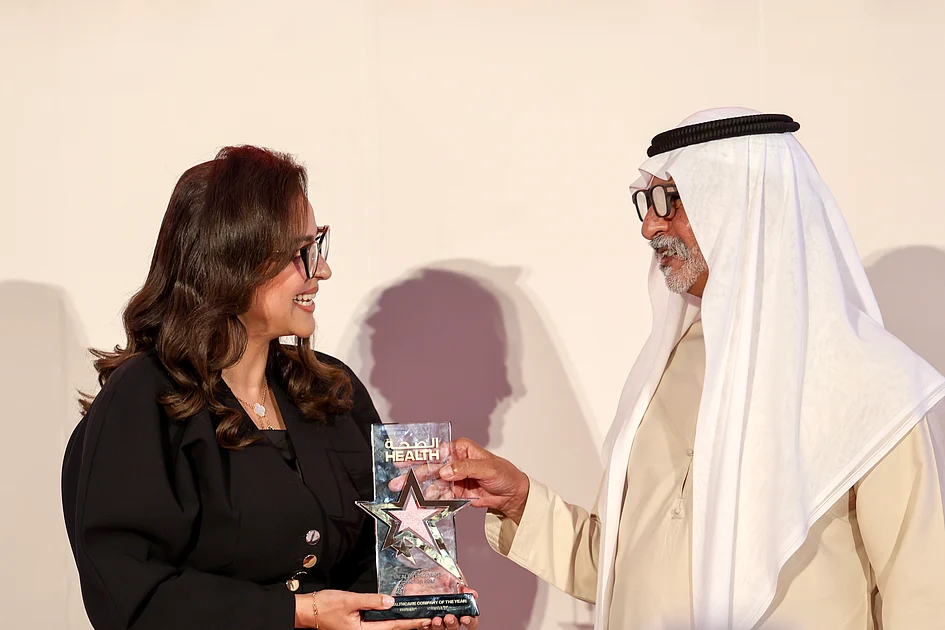
NADZ Healthcare crowned “Best Home Healthcare” at Health Magazine Awards 2025
In a landmark achievement for the regional healthcare sector, NADZ Healthcare has been honored with the coveted “Best Home Healthcare” award at the Health Magazine Annual Health Awards 2025. The prestigious recognition was presented by Sheikh Nahyan bin Mubarak Al Nahyan during a ceremony that celebrated excellence in medical services across the UAE.
The award specifically acknowledges NADZ Healthcare’s innovative fusion of clinical precision and concierge-style service delivery, establishing new benchmarks for in-home medical care catering to Dubai’s affluent and privacy-conscious residents. This patient-centric model was fundamentally shaped by the philosophical approach of its founder, Dr. Nadia Choudhry, who has led the organization for 15 years.
Judging panel representatives highlighted three distinctive strengths that positioned NADZ Healthcare above competitors:
1. **Advanced Mobile Medical Capabilities**: The organization maintains hospital-grade clinical standards through DHA-licensed medical teams equipped with sophisticated portable diagnostics technology. Their arsenal includes point-of-care blood testing equipment, mobile ECG and ultrasound devices, and remote patient monitoring systems, enabling accurate medical assessments in diverse environments including private residences, luxury hotels, and yachts.
2. **Discretion-Forward Service Model**: Catering specifically to high-net-worth individuals and privacy-sensitive clients, NADZ operates unbranded clinical vehicles and conducts low-profile visits to ensure complete confidentiality. Simultaneously, the provider offers premium wellness services in unconventional settings, including physiotherapy sessions aboard private yachts and comprehensive health evaluations on golf courses.
3. **Empathy-Driven Patient Care**: Beyond technical excellence, the organization has earned consistent praise for its human-centered approach to medicine. Dr. Choudhry’s philosophy of serving as both medical professional and attentive listener has permeated the entire clinical team, creating an environment where patients feel genuinely heard, safe, and comprehensively supported.
The award committee noted NADZ’s exceptional performance across multiple service domains, including emergency stabilization, post-operative care, preventive wellness programs, and VIP event medical coverage. This recognition reflects broader regional trends toward personalized, mobile healthcare solutions that prioritize patient experience, particularly among corporate clients, private families, and ultra-high-net-worth individuals.
Dr. Choudhry emphasized the organization’s commitment to patient choice, noting: “We architected NADZ to provide genuine alternatives in healthcare delivery. Whether clients require absolute anonymity or prefer to share their healthcare journey publicly, we deliver identical clinical excellence and respect to both preferences.”
With growing demand for premium home healthcare services, NADZ plans strategic expansion of its specialist teams, mobile diagnostic capabilities, and rapid-response coverage throughout Dubai and wider UAE regions.
-

Women chair 15.8% of board positions in 73 listed financial companies in the UAE
A groundbreaking report titled ‘Discovery Series 2025: Women transforming financial services,’ jointly published by Heriot-Watt University and Grant Thornton, has shed light on the representation of women in senior leadership roles within the UAE’s financial services sector. The report, which serves as an evidence-based benchmark, highlights that women currently chair 15.8% of board positions across 73 listed financial companies in the UAE. This figure surpasses the UAE-wide average of 14.8% across all sectors, as per the 2025 GCC Board Gender Index, indicating that the financial sector is slightly ahead in advancing women’s representation at the board level.
The report underscores the critical contributions of women in key roles such as board directors, Chief Risk Officers (CROs), and Heads of Internal Audit (HIAs) across banks, investment firms, insurance companies, and fintech enterprises. These roles are pivotal in safeguarding the integrity of the financial sector and enabling sustainable growth, particularly as the UAE continues to diversify its economy and reduce its reliance on oil. In 2024, the UAE’s economy grew by 4% to Dh1.77 trillion, with the non-oil sector accounting for over three-quarters of the GDP. The financial industry alone contributed approximately 13.2% to the economy.
Despite these advancements, the report reveals significant gaps in gender representation. Eight of the 73 companies studied have no women on their boards, and only three out of 49 companies have a female CRO. Similarly, just six out of 60 companies have a female HIA, highlighting the need for proactive measures to enhance gender balance in leadership roles.
Hisham Farouk, CEO of Grant Thornton UAE, emphasized the importance of intentional progress in building a world-class, innovation-led economy. He noted that the Discovery Series serves as a benchmark to help industry, regulators, and boards track progress and actively close the leadership representation gap. Emma Smalls, UAE Head of Business Risk Private Bank at HSBC Middle East, echoed this sentiment, calling for continued focus on inclusive leadership to accelerate the journey toward diverse and resilient governance.
Professor Dame Heather McGregor, Provost and Vice-Principal of Heriot-Watt University Dubai, stated that the report aims to provide a clear, evidence-based picture of gender representation at senior levels in the UAE financial sector. She emphasized the financial industry’s responsibility to champion gender equity, given its progressive nature and significant role in the UAE’s economic transformation.
The 2025 Discovery Series, which can be accessed online, combines quantitative data and qualitative narratives to offer sector-specific insights into how women are shaping governance, risk, and reform from within. Through this initiative, Grant Thornton and Heriot-Watt University hope to inspire further action and accelerate the journey toward truly diverse and resilient governance in the UAE’s financial services sector.
-

What’s on this Week: Skaik turns pro as DP World, LET & MENA Tours swing into action
While the PGA Tour enters its offseason hiatus, professional golf maintains relentless momentum across three continents this week. The global circuit transitions seamlessly to Australia, Spain, and Portugal with significant tournaments unfolding on the DP World Tour, Ladies European Tour, and the revitalized MENA Golf Tour.
The 2026 DP World Tour season commences abruptly after a mere one-week break with the BMW Australian PGA Championship at Royal Queensland Golf Club in Brisbane. Boasting a AUD 2,500,000 purse, the event features a formidable field headlined by major champions and local heroes. Adam Scott, Cam Smith, and 2006 U.S. Open winner Geoff Ogilvy join rising stars like Finland’s recent PGA Tour breakthrough Sami Valimaki. The tournament also marks a critical early opportunity for players like Denmark’s Rasmus Neergaard, who secured dual PGA Tour status with a strong finish in Dubai.
Simultaneously, the Ladies European Tour culminates its 2025 season at the Andalucia Costa Del Sol Open de España in Malaga. With €700,000 on the line, the event will finalize the coveted Order of Merit ranking, determining which top ten players earn direct access to the LPGA Q-Series and which seventy retain their tour cards for the following season.
Concurrently, the MENA Golf Tour launches its 2025-26 campaign with the PGA Aroeira Challenge in Portugal, offering a $100,000 purse. The tour’s relaunch provides a crucial competitive platform, exemplified by two contrasting narratives: the triumphant return of injured three-time DP World Tour winner Chris Wood, who dominated the recent Q-School, and the highly anticipated professional debut of the UAE’s promising amateur, Ahmad Skaik, who begins his pro journey with a sponsor exemption. A second event, the Rolear Algarve Challenge, follows immediately before a winter pause.
This coordinated international action underscores golf’s evolving, year-round calendar, offering continuous playing opportunities and development pathways for established stars and emerging talents alike.
-

Global gathering of Cantonese people opens in Guangdong
The global Cantonese community came together in a historic gathering held in the ancient Zhuji Alley in Shaoguan, Guangdong province, on Tuesday. This significant event attracted over 800 representatives from more than 60 countries and regions, showcasing the widespread influence and unity of the Cantonese diaspora. The 1,500-meter-long alley, steeped in history, served as the perfect backdrop for the occasion, which featured a variety of cultural activities, including a themed gala and ancestral tracing ceremonies. These activities were designed to strengthen bonds among Cantonese people worldwide and to celebrate their shared cultural heritage. The gathering not only highlighted the enduring connections within the Cantonese community but also underscored the importance of preserving and promoting their unique cultural identity on a global scale.
-

UAE: Residents can now pay fines, fees in monthly instalments with Tabby
The UAE Ministry of Finance (MoF) has unveiled a groundbreaking initiative allowing residents to pay federal government fees and fines in monthly instalments through the Tabby app. Announced on Tuesday, this move leverages the ‘Buy Now, Pay Later’ model, offering customers flexibility in managing their financial obligations. Under this arrangement, Tabby will settle the full amount with the relevant government entity upfront, while customers repay the sum in pre-agreed instalments. This service is optional, with the associated commission borne solely by the user. The partnership with Tabby aligns with the MoF’s broader strategy to enhance digital payment solutions, foster financial inclusion, and support the UAE’s digital transformation. Saeed Rashid Al Yateem, MoF’s Assistant Undersecretary for Government Budget and Revenue Sector, emphasized the ministry’s commitment to adopting cutting-edge financial technologies to improve customer satisfaction and provide secure, flexible payment options. Hosam Arab, co-founder and CEO of Tabby, expressed pride in supporting the MoF’s mission to make federal services more accessible across the UAE. This initiative underscores the UAE’s progressive approach to integrating modern financial tools into public services, ensuring convenience and efficiency for residents.
-

China’s draft airline rules represent progress for wheelchair users
China’s Civil Aviation Administration has unveiled draft regulations aimed at significantly improving air travel accessibility for passengers with disabilities, particularly wheelchair users. The proposed rules, currently open for industry feedback, would mandate airports and airlines to facilitate the check-in of non-electric wheelchairs at boarding gates. Additionally, well-equipped airports would be required to extend this service to electric wheelchair users, who often encounter regulatory hurdles during check-in. The draft emphasizes the prioritization of aerobridge boarding for disabled passengers and the provision of ramps to minimize height discrepancies between aircraft and boarding lifts or stairs. These measures mark a substantial advancement over existing regulations, which necessitate 48-hour prior notification of special needs and may result in denial due to logistical constraints. The administration underscores the importance of safeguarding the air travel rights of persons with disabilities, aligning with the principle of ‘aviation for the people.’ To ensure the successful implementation of these rules, the administration has committed to enhancing facilities, services, funding, and staff training, aiming to deliver standardized, respectful, and considerate service to passengers with special needs. The draft also stipulates the availability of barrier-free pathways, tactile paving, lowered service counters, and accessible toilets, along with writing boards for hearing- or speech-impaired passengers. Furthermore, professional escort services for unaccompanied disabled passengers and comprehensive disability service training for airline and airport staff are mandated. Enhanced training for security personnel to identify assistive devices and employ appropriate inspection methods is also highlighted. The administration plans to strengthen oversight, integrating compliance into routine inspections and administrative checks.
-

Gaza: Heavy rain floods camps as UN warns of ‘bleak’ situation
Torrential rains on Tuesday inundated displacement camps in the Gaza Strip, exacerbating the already dire living conditions of Palestinians displaced by Israel’s ongoing conflict. The al-Mawasi area in Khan Younis was particularly affected, with tents submerged in mud and water, rendering movement nearly impossible. Floodwaters infiltrated many shelters, threatening families and their meager possessions. The cold weather has further intensified the suffering, especially for children and the elderly, who face severe shortages of blankets, winter clothing, and heating supplies. This weather crisis compounds the humanitarian catastrophe for hundreds of thousands of displaced individuals. Israel’s two-year military campaign has destroyed nearly 300,000 homes, displacing almost the entire population of 2.3 million. Despite a ceasefire agreement last month that mandated the entry of 300,000 tents and mobile homes, Israel continues to block the majority of essential shelter materials. Ramiz Alakbarov, the UN deputy special coordinator for the Middle East peace process, described the situation as “bleak” and called for urgent international intervention to scale up humanitarian aid. Over 1.7 million people remain displaced, many living in overcrowded shelters with limited access to water, food, and medical care. Alakbarov emphasized the challenges in providing shelter materials and urged Israel to expedite the clearance of supplies, including UN aid. Gaza’s Government Media Office accused Israel of allowing only 200 aid trucks daily, far below the 600 agreed upon in the ceasefire, labeling it as a “deliberate starvation policy.”
-

Meta in talks to spend billions on Google’s chips, The Information reports
Meta, the parent company of Facebook, is reportedly in advanced discussions with Alphabet’s Google to secure a multi-billion dollar agreement for the use of Google’s tensor processing units (TPUs) in its data centers. According to a report by The Information, this collaboration could see Meta renting TPUs from Google Cloud as early as next year, with full integration into its data centers slated for 2027. Google has positioned its TPUs as a cost-effective and secure alternative to Nvidia’s chips, which have faced supply constraints. The report also suggests that Google aims to capture 10% of Nvidia’s revenue through its TPU business. Neither Meta, Google, nor Nvidia have commented on the matter, and Reuters has yet to independently verify the report. Meta has been a significant customer of Nvidia since 2022, utilizing its graphics processing units (GPUs) to train AI models and support its vast user base of over 3 billion daily app users. Earlier this year, Meta announced a $600 billion investment in U.S. infrastructure and jobs over the next three years, including the development of AI data centers.
-

Ageing populations a ‘ticking time bomb’ for GDP growth, says EBRD
The European Bank for Reconstruction and Development (EBRD) has issued a stark warning about the economic repercussions of ageing populations, describing the trend as a ‘ticking time bomb’ for GDP growth. In its annual report released on Tuesday, the EBRD highlighted that declining birth rates and an increasing share of elderly citizens are already undermining economic progress in several nations. Emerging Europe, in particular, is projected to see a reduction in annual per capita GDP growth by nearly 0.4 percentage points between 2024 and 2050 due to a shrinking working-age population.
EBRD Chief Economist Beata Javorcik emphasized that post-communist countries are ‘getting old before getting rich,’ with a median age of 37 and an average GDP per capita of $10,000—far below the levels seen in advanced economies during similar demographic stages. The report identified multiple factors contributing to declining birth rates, including shifting social norms and the impact of motherhood on women’s career earnings. While many EBRD member states have implemented incentives to encourage higher birth rates, these measures have failed to produce significant or lasting results.
Migration, often suggested as a solution, remains politically unpopular in most regions. Additionally, public sentiment toward leveraging artificial intelligence (AI) to boost productivity is mixed. Javorcik argued that extending working lives through retraining and pension reforms could be the most effective strategy, though it requires candid discussions with voters about the implications of demographic shifts.
The report also noted that ageing leaders, who tend to prioritize pension protection and restrict migration, further complicate efforts to address the issue. Globally, the average age of leaders is now 60, significantly older than the median adult. In autocracies, this gap has widened to 26 years in 2023, up from 19 years in 1960.
For newer EBRD member nations like Nigeria, the focus should be on job creation and private sector expansion to capitalize on their current demographic dividend. However, Javorcik cautioned that this window of opportunity is fleeting, as birth rates in other parts of Africa are also declining. ‘These countries must act now to secure their economic future,’ she said.