标签: Asia

亚洲

  • UN calls for action as Israel’s breaches threaten ceasefire

    UN calls for action as Israel’s breaches threaten ceasefire

    United Nations human rights authorities are issuing an urgent international appeal for immediate intervention to halt Israel’s systematic breaches of a US-mediated ceasefire agreement in Gaza. A coalition of 20 UN special rapporteurs and working groups, including prominent human rights investigator Francesca Albanese, has documented 393 separate violations since the truce was established last month.

    The documented incidents have resulted in 339 Palestinian fatalities, including more than 70 children, with an additional 871 individuals sustaining injuries. The deadliest single episode occurred on October 28, when airstrikes claimed 104 lives. Despite the nominal ceasefire, military operations including gunfire, artillery shelling, and airstrikes have persisted across all five governorates of the Gaza Strip.

    UN experts characterized these actions as “a blatant violation of the ceasefire agreement” and emphasized that humanitarian access remains critically constrained. Only two of six border crossings have reopened, with aid deliveries consistently failing to meet the agreed target of 600 trucks daily, frequently falling below half that number.

    The situation is further complicated by Israel’s continued military presence, with more than 58% of Gaza remaining under Israeli control and 40 active military sites operating beyond agreed withdrawal boundaries. Experts warned that current arrangements risk entrenching rather than ending the occupation.

    China’s UN Ambassador Fu Cong echoed these concerns during a Security Council session, identifying a lasting ceasefire as the top priority. While acknowledging progress in initial agreements, Fu emphasized that “peace is still far from being achieved” and urged Israel to fully comply with international humanitarian obligations, including opening all crossings and removing restrictions on aid organizations.

    The Israel Defense Forces maintained in an official statement that recent operations in the Rafah area targeted terrorist infrastructure, claiming strikes against 60 targets including tunnel networks and weapons storage facilities.

    Regional analysts like Muslim Imran of Malaysia’s Asia Middle East Center for Research and Dialogue argue that Israel’s pattern of violations in Gaza, Syria, and Lebanon demonstrates a systematic disregard for ceasefire agreements, suggesting the nation “is not interested” in genuine peaceful resolution.

  • Scientists estimate plateau’s water reserves

    Scientists estimate plateau’s water reserves

    The Qinghai-Tibet Plateau, often referred to as Asia’s ‘water tower,’ is estimated to hold approximately 10 trillion cubic meters of surface water, a critical resource for over two billion people across the continent. This revelation, unveiled on November 19 in Lhasa, the capital of the Xizang Autonomous Region, underscores the plateau’s growing hydrological significance and the environmental risks it confronts. Researchers from China’s second Qinghai-Tibet scientific expedition revealed that the plateau’s vast water reserves sustain major river systems, including the Yangtze, Yellow, and Lancang-Mekong, which support communities across China and neighboring nations. The total water volume is comparable to the Yellow River’s runoff over 200 years. The latest assessments indicate that the plateau has experienced three significant environmental shifts, enhancing its water supply capacity. ‘The Qinghai-Tibet Plateau is becoming warmer, wetter, and greener, all of which boost its water supply,’ stated Yao Tandong, an academician with the Chinese Academy of Sciences and a lead scientist on the expedition. However, he also noted that the plateau is ‘becoming darker,’ leading to significant changes in Earth system processes, including alterations to the Asian monsoon and an increase in extreme climate events. These changes, driven by complex ice-water-air interactions, are heightening disaster risks. Despite the plateau’s contribution of over 1 trillion cubic meters of water vapor annually, scientists warn that rising downstream demand, fueled by population growth and resource consumption, is placing unprecedented strain on the system. ‘The increased water availability upstream does not entirely meet the rapidly growing needs downstream,’ Yao emphasized, advocating for stronger regional cooperation to ensure sustainable water management. Long-term data from the expedition shows a steady increase in runoff from major rivers like the Yangtze and Lancang over the past four decades, with projections suggesting a potential 49 percent increase by the end of the century. However, the team has identified 85 glacial lakes at extreme risk of outburst flooding, highlighting the urgent need for targeted disaster-prevention measures. The findings provide a crucial foundation for policy planning, encompassing water resource management, climate adaptation, and infrastructure protection, including projects such as the Sichuan-Xizang transport corridor. The expedition aims to enhance monitoring systems, improve early-warning mechanisms, and refine strategies to safeguard the plateau, a region now central to Asia’s long-term water security.

  • Museums showcase shared Chinese identity

    Museums showcase shared Chinese identity

    The Taipei Palace Museum’s collection, predominantly originating from the Chinese mainland, stands as a testament to the shared cultural heritage and unity across the Taiwan Strait, according to experts. This assertion comes amidst criticism of Taiwan’s Democratic Progressive Party (DPP) authorities for allegedly using the museum’s artifacts to promote secessionist agendas. A recent exhibition in Beijing, commemorating the evacuation of the Palace Museum’s artifacts during the Chinese People’s War of Resistance Against Japanese Aggression (1931-45), underscored the inseparable link between Chinese cultural treasures on both sides of the Strait. The exhibition, running until December 31, showcases over 100 archival documents and cultural relics, illustrating the artifacts’ journey and reinforcing the unity of Chinese culture. However, Hsiao Tsung-huang, director of the Taipei Palace Museum, controversially claimed that the artifacts, having been in Taiwan for 75 years, are now ‘Republic of China property’ and integral to Taiwan’s culture. Chen Binhua, spokesman for the State Council Taiwan Affairs Office, dismissed these claims as a distortion of historical facts, emphasizing that Taiwan’s culture is rooted in Chinese culture and that the artifacts are part of the Chinese nation’s heritage. The DPP’s recent ‘treasure diplomacy’, including exhibitions in the Czech Republic and France, has been criticized as an attempt to manipulate cultural identity for separatist purposes. Chen reiterated that any efforts to use Chinese cultural treasures to promote secession are destined to fail, as historical facts and cultural roots cannot be altered.

  • Cop shields public from scammers

    Cop shields public from scammers

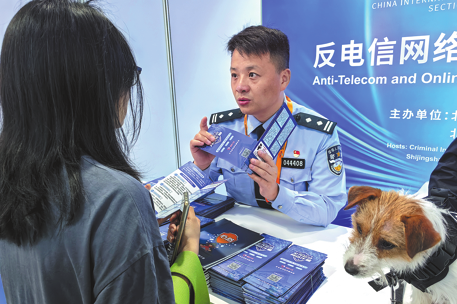
    In the dynamic landscape of Beijing, where tradition meets modernity, a silent war against telecom fraud is being waged. Unlike traditional crimes, these offenses are orchestrated through deceptive online profiles, fraudulent investment apps, and persuasive phone calls. At the forefront of this battle is Xing Yunwei, a seasoned anti-fraud officer from Beijing’s Shijingshan district, who has dedicated nearly five years to protecting citizens from financial predators. Xing’s journey began in a local police station, handling conventional crimes like burglaries and street altercations. However, the surge in internet and telecommunication usage around 2020 marked a pivotal shift in his career. As telecom fraud cases skyrocketed, Xing was selected to join the district’s newly established anti-fraud center. ‘It was like learning a whole new job,’ Xing remarked, highlighting the challenges of tracking scammers who operate remotely, often from different provinces or even countries. Beyond his investigative prowess, Xing’s approach combines empathy and patience, offering reassurance to victims and helping them rebuild their lives after financial losses. His efforts have not only safeguarded countless individuals from scams but also shed light on the evolving nature of crime in the digital age.

  • Fire rages through bamboo scaffolding at Hong Kong high-rise residential complex, killing 4

    Fire rages through bamboo scaffolding at Hong Kong high-rise residential complex, killing 4

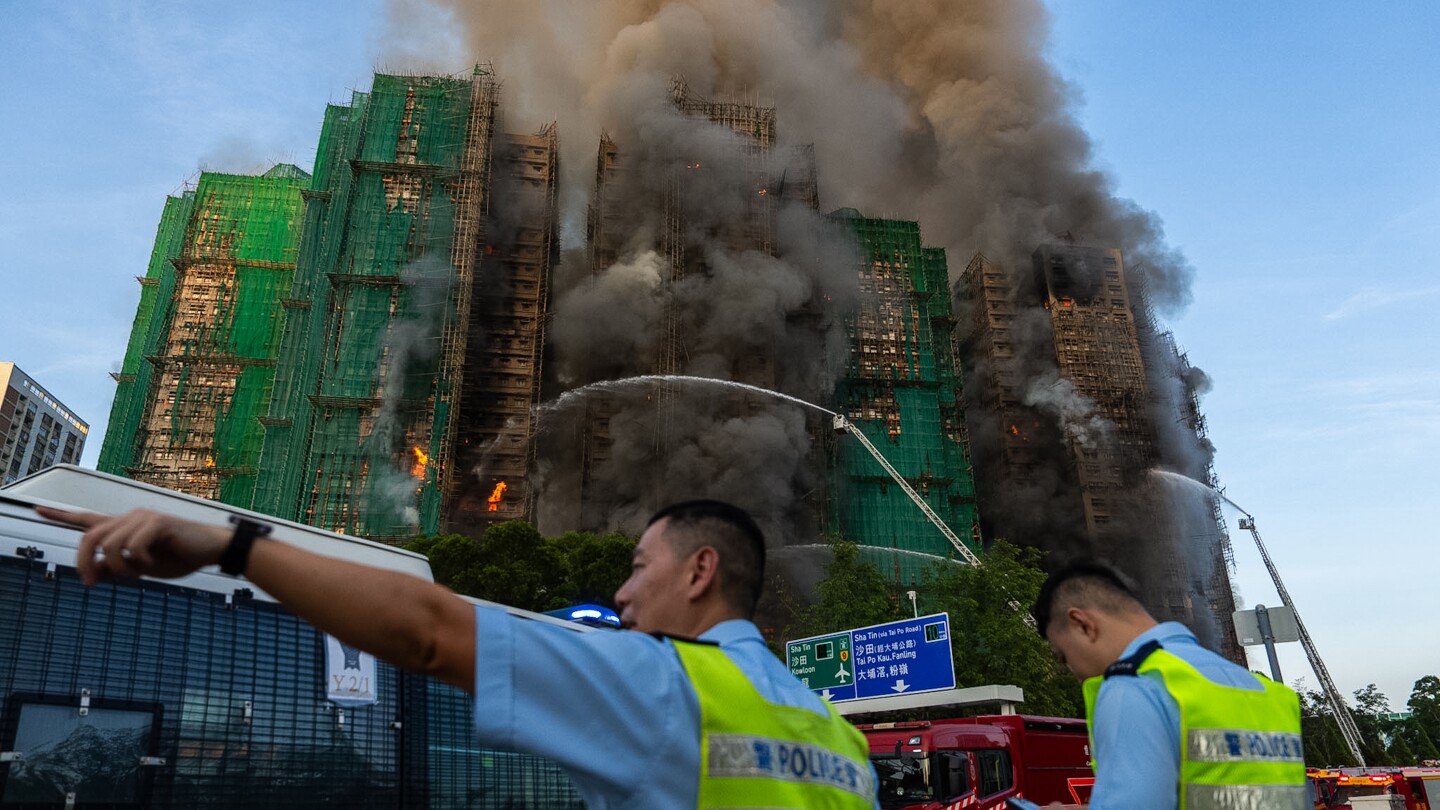
    A devastating fire broke out in a high-rise residential complex in Hong Kong’s Tai Po district on Wednesday, resulting in four fatalities and leaving several others trapped, according to local authorities. The Hong Kong government confirmed the deaths and reported that three individuals were hospitalized, with two in critical condition and one stable. While unverified, local media suggested that one of the deceased was a firefighter. Emergency services received numerous distress calls from residents trapped inside the burning building. The fire, which erupted mid-afternoon, rapidly escalated to a No. 4 alarm, the second-highest severity level, as flames and thick smoke engulfed bamboo scaffolding surrounding the structure. Firefighters battled the blaze from elevated ladder trucks, but the intensity of the fire posed significant challenges. Tai Po, a suburban area in Hong Kong’s New Territories near Shenzhen, is known for its use of bamboo scaffolding in construction and renovation projects. However, the government has recently announced plans to phase out bamboo scaffolding in public projects due to safety concerns.

  • Bangkok court issues an arrest warrant for Thai co-owner of Miss Universe pageant

    Bangkok court issues an arrest warrant for Thai co-owner of Miss Universe pageant

    A Bangkok court has issued an arrest warrant for Jakkaphong “Anne” Jakrajutatip, co-owner of the Miss Universe Organization, following her failure to appear at a scheduled hearing on Tuesday. The court deemed her a flight risk after she did not notify them of her absence. Jakkaphong, who was previously charged with fraud in 2023 and released on bail, is now facing renewed legal scrutiny. The hearing has been rescheduled for December 26, 2024. The case stems from allegations that Jakkaphong and her company, JKN Global Group Public Co. Ltd., defrauded Raweewat Maschamadol by selling him corporate bonds in 2023, resulting in a loss of 30 million baht ($930,362). JKN, which has been financially troubled since 2023, defaulted on investor payments and initiated debt rehabilitation procedures in 2024, with reported debts totaling 3 billion baht ($93 million). The company acquired the Miss Universe pageant rights in 2022 and sold 50% of its shares to Legacy Holding Group USA in 2023. Jakkaphong, a prominent transgender celebrity in Thailand, resigned from all company positions in June 2024 after being accused by Thailand’s Securities and Exchange Commission of falsifying financial statements. Her current whereabouts are unknown, and she did not attend the 74th Miss Universe competition held in Bangkok earlier this month. The event itself faced controversies, including allegations of rigging and illegal promotion of online casinos. JKN has denied rumors of Jakkaphong liquidating assets and fleeing the country, but she remains unreachable for comment.

  • Trade unions in India stage nationwide protests against new labor codes

    Trade unions in India stage nationwide protests against new labor codes

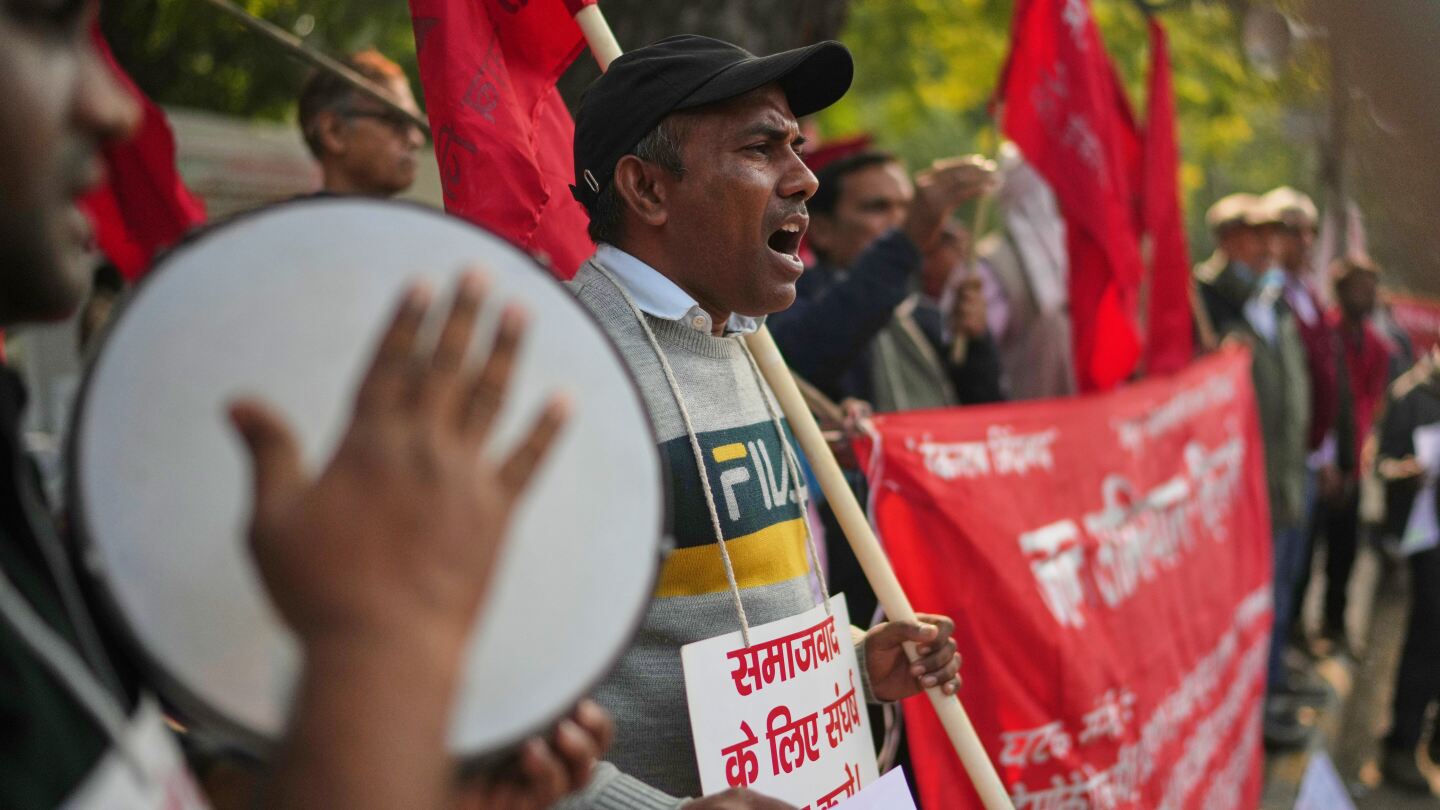
    In a significant show of dissent, a coalition of 10 major Indian trade unions organized nationwide protests on Wednesday, vehemently opposing the government’s implementation of new labor codes. The unions labeled the reforms as a “deceptive fraud” against workers, arguing that the changes undermine job security, weaken collective bargaining, and increase employer control. Demonstrations erupted across various regions, with millions of laborers and farmers voicing their concerns over the sweeping overhaul. This marks the first coordinated labor action since the codes came into effect last week, highlighting the escalating tensions between unions and the government regarding economic reforms. While the government claims the new framework modernizes outdated laws, enhances efficiency, and expands social protections, unions contend that it strips essential safeguards and disproportionately favors employers amid rising job insecurity. Tapan Sen, general secretary of the Centre of Indian Trade Unions, accused the government of bulldozing workers’ rights and masking the move with misleading claims of benefits for laborers. The four new codes—covering wages, industrial relations, social security, and occupational safety—replace 29 existing labor laws. The government asserts that the consolidated structure simplifies compliance, reduces fragmentation, and improves access to social security and safety norms. However, unions argue that the reforms are skewed in favor of employers, citing provisions that facilitate layoffs, expand fixed-term employment, and impose stricter conditions for forming unions or organizing strikes. Amarjeet Kaur, general secretary of the All India Trade Union Congress, likened the reforms to a regression to the colonial era, where workers’ voices were suppressed. The government has yet to formally respond to the protests but maintains that the codes are essential to attract investment and create formal jobs in the long term.

  • India-China trade barbs after passenger detained at Shanghai airport

    India-China trade barbs after passenger detained at Shanghai airport

    The detention of Pema Wangjom Thongdok, an Indian national residing in the UK, at Shanghai airport has escalated diplomatic tensions between India and China. Thongdok was held for 18 hours last Friday while transiting from London to Japan via Shanghai. The reason cited for her detention was her passport listing Arunachal Pradesh as her birthplace, a region China claims as its own, referring to it as ‘South Tibet’—a claim India vehemently denies.

  • TCM’s future is looking up down under

    TCM’s future is looking up down under

    Traditional Chinese Medicine (TCM) is experiencing a significant surge in recognition and adoption across Australia and the Southern Hemisphere, driven by its holistic approach and growing integration with Western medical practices. Steven Wolfgang Sass, a Melbourne-based TCM practitioner, exemplifies this trend. His clinic, which opened nearly two years ago, has seen a steady increase in patients seeking relief from conditions ranging from chronic pain to stress-related ailments. Sass’s success stories, such as treating a neurologist with acupuncture, highlight TCM’s efficacy and its ability to complement conventional treatments.

  • Hong Kong, Macao to get more support

    Hong Kong, Macao to get more support

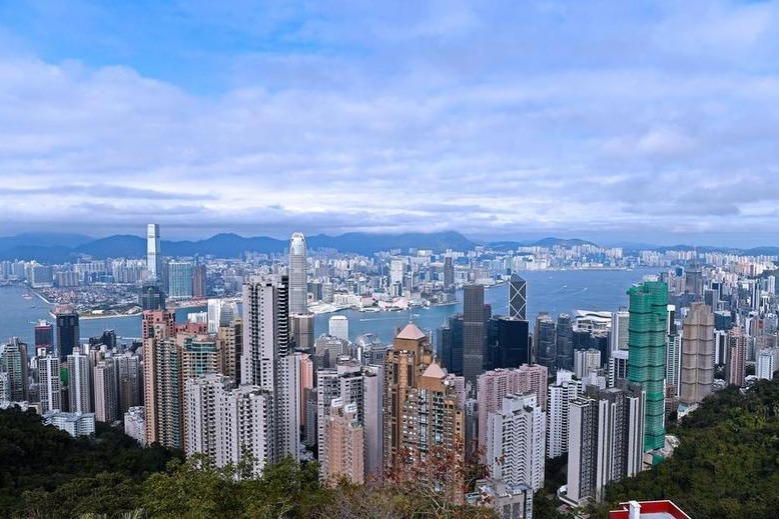
    The central government has pledged to intensify its support for Hong Kong and Macao, ensuring their alignment with national strategies and the forthcoming 15th Five-Year Plan (2026-30). This commitment was underscored during a high-level seminar led by Zhu Weidong, deputy director of the Office of the Central Financial and Economic Affairs Commission and the Office of the Central Rural Work Leading Group. Zhu highlighted the remarkable achievements of the 14th Five-Year Plan (2021-25), including an average annual growth rate of 5.5 percent and significant technological advancements, such as producing over 60 percent of the world’s new energy vehicles and breakthroughs in semiconductors and quantum technology. The delegation, which included Hou Jianguo, president of the Chinese Academy of Sciences, conducted similar seminars in Macao and Hong Kong, emphasizing the regions’ strategic roles in national development. Hong Kong Chief Executive John Lee Ka-chiu and Zhou Ji, director of the Liaison Office of the Central People’s Government in Hong Kong, reiterated the central government’s unwavering support for Hong Kong’s prosperity and stability. The seminars also featured calls for enhanced infrastructure and institutional connectivity, leveraging Hong Kong’s unique position as an international hub. Participants, including Hong Kong deputies to the National People’s Congress and leaders of community associations, expressed confidence in the central government’s proactive role in fostering regional growth and stability.