标签: Asia

亚洲

  • Winter sports push tourism in NE China’s Jilin

    Winter sports push tourism in NE China’s Jilin

    Northeast China’s Jilin province is transforming its winter landscape into a thriving tourism economy through strategic sporting initiatives. The region’s famed Changbai Mountains, now blanketed in seasonal snow, have become the backdrop for an ambitious development plan that combines athletic events with enhanced visitor experiences.

    At premier destinations like Beidahu and Lake Songhua resorts, skiers carve through fresh powder while the province implements its vision to establish international winter destination credibility. This season marks a significant escalation in efforts to convert Jilin’s natural icy resources into economic prosperity.

    One particularly striking manifestation of this initiative appeared at Lake Songhua Resort last November, where professional skiers performed a culturally-infused demonstration wearing elaborate Peking Opera costumes. This fusion of traditional Chinese culture with winter sports exemplifies the province’s innovative approach to tourism development.

    Beyond spectacle, Jilin is investing substantially in infrastructure upgrades and service quality improvements across its winter sports facilities. The coordinated strategy involves hosting major competitive events alongside creating unique visitor experiences that differentiate the region from other winter destinations.

    The provincial government’s comprehensive approach recognizes winter tourism as a multidimensional engine for economic growth. By leveraging both its natural advantages and cultural heritage, Jilin aims to attract domestic and international visitors seeking authentic winter experiences complemented by world-class amenities and distinctive cultural elements.

  • Indian consulate in Dubai hosts flag hoisting to mark 77th Republic Day

    Indian consulate in Dubai hosts flag hoisting to mark 77th Republic Day

    Dubai witnessed a profound display of patriotic fervor as the Indian Consulate hosted an elaborate flag-hoisting ceremony on January 26, 2026, commemorating India’s 77th Republic Day. The event attracted massive participation from the Indian expatriate community in the United Arab Emirates, demonstrating the strong cultural bonds and national pride among the 4.3 million Indians residing in the Gulf nation.

    Consul General Satish Sivan addressed the gathering, highlighting the remarkable advancement in India-UAE bilateral relations following President Sheikh Mohamed bin Zayed Al Nahyan’s recent state visit to India. The diplomatic engagement resulted in several groundbreaking agreements designed to foster mutual prosperity and technological collaboration between the nations.

    The newly solidified partnerships encompass multiple strategic sectors, including a landmark decade-long LNG supply arrangement, defense cooperation protocols, space technology initiatives, and significant infrastructure investment commitments. Both nations are also exploring innovative digital infrastructure partnerships, including the potential establishment of ‘digital embassies’ and enhanced secure data exchange mechanisms.

    The Republic Day celebration served as both a cultural milestone and a testament to the growing strategic alignment between India and the UAE, reflecting shared ambitions for technological innovation and economic resilience.

  • Japanese court orders Pyongyang to pay damages to survivors of deceptive repatriation program

    Japanese court orders Pyongyang to pay damages to survivors of deceptive repatriation program

    In a landmark judicial decision, the Tokyo District Court has ordered North Korea’s government to compensate four plaintiffs with 22 million yen ($143,000) each for systematic human rights violations stemming from Pyongyang’s deceptive postwar resettlement program. The ruling marks the first judicial acknowledgment of North Korea’s responsibility for luring thousands of ethnic Koreans from Japan with false promises of a ‘paradise on Earth’ between 1959-1984.

    Presiding Judge Taiichi Kamino determined that the plaintiffs endured decades of severe living conditions without freedom of movement, educational choice, or employment opportunities after relocating under the repatriation scheme. The court found that North Korea’s representations of free healthcare, education, and employment benefits constituted deliberate misinformation that fundamentally damaged the lives of those who migrated.

    The case originally involved five plaintiffs when filed in 2018, though two have since passed away, with one represented by his son. While a 2022 ruling acknowledged the deceptive nature of the program, it rejected compensation claims based on jurisdictional limitations and statute of expiration concerns. The Tokyo High Court’s 2023 appellate decision reversed this stance, recognizing Japan’s jurisdiction and ordering reassessment of damages.

    Eiko Kawasaki, an 83-year-old plaintiff who spent 43 years in North Korea before defecting in 2003, described the ruling as ‘just a start.’ Despite acknowledging North Korea’s likely disregard for the verdict, she emphasized the importance of formal recognition of their suffering. Plaintiffs’ attorney Kenji Fukuda noted the practical challenges of enforcement given the absence of diplomatic relations between Japan and North Korea.

    The case highlights the complex historical context of Japan’s ethnic Korean population, many descended from forced laborers during Japan’s 1910-1945 colonization of the Korean Peninsula. The 1959 resettlement program emerged from North Korea’s need to replenish its workforce after the Korean War, while Japan viewed it as a solution for what it considered ‘outsider’ ethnic Koreans. Over 93,000 people relocated under the program, with approximately 150 eventually returning to Japan.

    Human Rights Watch Japan Director Kane Doi urged the Japanese government to leverage this ruling to pressure North Korea for accountability and facilitate resettlement for remaining victims. The decision also raises questions about the role of pro-North Korean organization Chongryon in promoting the deceptive program and potential Japanese government responsibility through its facilitation of the repatriation agreement.

  • Former South Korean PM Lee Hae-chan has died in Vietnam at 73

    Former South Korean PM Lee Hae-chan has died in Vietnam at 73

    HANOI – Lee Hae-chan, who served as South Korea’s Prime Minister from 2000 to 2002, has died in Ho Chi Minh City at age 73 following a severe illness, according to an official statement released by the Vietnamese government on Sunday.

    The Vietnamese Ministry of Foreign Affairs confirmed that despite receiving extensive medical treatment coordinated between national authorities and Ho Chi Minh City’s People’s Committee, the former premier’s condition proved fatal. The statement emphasized that Vietnamese medical teams provided the highest standard of care during his final days.

    In response to the statesman’s passing, Vietnamese Prime Minister Pham Minh Chinh and other senior government officials have conveyed their profound sympathies to both the South Korean government and Lee’s bereaved family. The diplomatic gesture highlights the continuing strengthening of bilateral relations between Vietnam and South Korea.

    Lee Hae-chan, a prominent political figure who played a significant role in South Korea’s democratic development, served during the administration of President Kim Dae-jung. His political career spanned decades as a member of the Democratic Party, where he advocated for progressive policies and inter-Korean reconciliation.

    The passing of the former leader in a foreign nation underscores the global mobility of senior statesmen and the international dimensions of contemporary Asian diplomacy. Vietnamese authorities have indicated their commitment to facilitating the repatriation of Lee’s remains in coordination with South Korean officials.

  • Israel agrees to ‘limited reopening’ of Rafah crossing ‘for pedestrian passage only’

    Israel agrees to ‘limited reopening’ of Rafah crossing ‘for pedestrian passage only’

    Israel has announced a conditional agreement to permit limited pedestrian access through the Rafah border crossing, marking a significant development in the protracted Gaza conflict. Prime Minister Benjamin Netanyahu’s office declared Monday that this humanitarian gesture would only proceed upon satisfying two critical conditions: the safe return of all living hostages held in Gaza and Hamas’ complete cooperation in locating and repatriating the remains of all deceased captives.

    The Rafah crossing, a vital conduit for humanitarian aid into the besieged Palestinian territory, has remained shuttered since Israeli forces assumed control during military operations. This proposed reopening forms part of a broader truce framework initially proposed by U.S. President Donald Trump in October.

    The announcement follows intensive diplomatic efforts by visiting U.S. envoys Steve Witkoff and Jared Kushner, who reportedly urged Israeli officials to resume operations at Rafah during weekend negotiations in Jerusalem. International pressure has mounted consistently from world leaders and aid organizations emphasizing the crossing’s crucial role in delivering essential medical supplies, food, and other humanitarian resources to Gaza’s devastated population.

    Central to the current negotiations is the case of Ran Gvili, the final remaining hostage whose retrieval has become the linchpin of the agreement. The Israeli police non-commissioned officer was killed during Hamas’ October 7, 2023 assault on Israel, with his body subsequently transported to Gaza. Hamas’ military wing, the Ezzedine Al-Qassam Brigades, claims to have provided mediators with detailed information regarding Gvili’s whereabouts, with Israeli forces currently conducting cemetery searches based on this intelligence.

    Gvili’s family has expressed vehement opposition to advancing any subsequent phases of the ceasefire agreement before recovering their son’s remains, underscoring the deeply personal dimensions underlying these geopolitical negotiations. The conflict has exacted a devastating toll, with Gaza authorities reporting over 70,000 fatalities since November and widespread destruction across the territory of 2.2 million people, already suffering from prolonged blockade since 2007.

  • Japanese American soldiers once branded ‘enemy aliens’ to be promoted posthumously

    Japanese American soldiers once branded ‘enemy aliens’ to be promoted posthumously

    In a historic ceremony in Honolulu, the U.S. Army will posthumously promote seven Japanese American soldiers to officer ranks on Monday, finally recognizing their ultimate sacrifice eight decades after they perished fighting for a nation that initially branded them “enemy aliens.

    The seven University of Hawaii ROTC cadets were on track to become Army officers when Japan’s attack on Pearl Harbor on December 7, 1941, triggered widespread discrimination against Japanese Americans. Despite their American citizenship (Hawaii was annexed in 1898, making them citizens though not yet state residents), they were barred from military service and designated enemy aliens.

    These determined patriots initially served in the Hawaii Territorial Guard before joining the civilian labor battalion “Varsity Victory Volunteers,” performing manual labor such as ditch digging and rock breaking. In early 1943, they joined the newly formed segregated Japanese American regiment—the legendary 442nd Regimental Combat Team, which would become the most decorated unit in U.S. military history.

    Tragically, all seven soldiers—Daniel Betsui, Jenhatsu Chinen, Robert Murata, Grover Nagaji, Akio Nishikawa, Hiroichi Tomita, and Howard Urabe—died in European combat in 1944. Six perished during Italy’s liberation from Nazi Germany, while Murata was killed by artillery in eastern France.

    The ceremony will promote them to second lieutenant, the rank they would have achieved had they completed their ROTC program. The University of Hawaii had previously awarded them posthumous degrees in 2012.

    First Sgt. Nakoa Hoe of the modern 100th Battalion, 442nd Regiment emphasized the significance: “They sacrificed so much at a challenging time when their loyalty to their country was questioned and they even had family members imprisoned.” Lieutenant Colonel Jerrod Melander, who initiated the commissioning effort in 2023, stressed that this recognition is about merit, not diversity initiatives, noting that “they served in the ultimate capacity of giving their lives for the country.”

    The long-overdue honor comes amid ongoing national conversations about historical recognition and justice, serving as a powerful reminder that “everyone’s contribution to and sacrifice for the ideals of freedom and the security of this country should matter and should be acknowledged, regardless of who they are,” as stated by University of Hawaii’s Laura Lyons.

  • Philippines tells Beijing it is alarmed over escalating verbal tussle in South China Sea dispute

    Philippines tells Beijing it is alarmed over escalating verbal tussle in South China Sea dispute

    MANILA, Philippines — The Philippine government has formally expressed alarm to Chinese diplomats regarding intensifying diplomatic exchanges concerning the protracted territorial conflict in the South China Sea. On Monday, the Department of Foreign Affairs (DFA) in Manila revealed it had lodged serious representations with Chinese Ambassador Huang Xilian and the Chinese Embassy, highlighting concerns about the deteriorating diplomatic discourse.

    The DFA cautioned that these increasingly confrontational exchanges risk undermining crucial diplomatic channels necessary for managing maritime tensions. Despite this warning, the Philippine government reaffirmed its support for officials who have vocally defended the nation’s territorial claims, including several senators.

    This diplomatic friction follows Beijing’s recent summons of Philippine Ambassador Jaime FlorCruz to protest statements made by Philippine Coast Guard spokesperson Commodore Jay Tarriela, who has consistently criticized China’s assertive maneuvers in contested waters.

    China maintains expansive claims over virtually the entire South China Sea—a critical global shipping corridor—despite a 2016 ruling by the Permanent Court of Arbitration in The Hague that invalidated these claims under the 1982 UN Convention on the Law of the Sea. Beijing, which boycotted the arbitration proceedings initiated by Manila following a 2013 territorial confrontation, continues to reject the tribunal’s decision.

    Maritime confrontations have notably intensified between Chinese and Philippine vessels in recent years. Unlike other claimant states including Vietnam, Malaysia, Brunei, and Taiwan, the Philippine government has adopted a strategy of transparently documenting and publicizing China’s assertive actions, including the use of powerful water cannons and dangerous blocking maneuvers.

    The Chinese Embassy has specifically targeted Commodore Tarriela, accusing him of “persistently hyping up maritime issues, confounded right and wrong, misrepresented facts, incited confrontation, misled public opinion, undermined China’s national interests and dignity.”

    Chinese Embassy deputy spokesperson Guo Wei dismissed Tarriela’s comments as “ignorant and arrogant views,” prompting the Philippine official to respond via social media with a critique of China’s restrictions on free expression.

    The diplomatic spat has extended to Philippine Senator Risa Hontiveros, who accused Chinese diplomats of violating the Vienna Convention on Diplomatic Relations by attempting to restrain Filipino officials’ expressions within their own country. Hontiveros characterized the Chinese Embassy as “a bad guest” in the Philippines.

    The Chinese diplomatic mission denied any intention to silence critics but vowed to respond to attempts to “smear” China and its leadership, questioning whether Hontiveros’ criticisms served national interests or personal political ambitions. The senator is widely considered a potential contender in the 2028 presidential elections.

  • Indonesian marines among 80 missing in deadly West Java landslide

    Indonesian marines among 80 missing in deadly West Java landslide

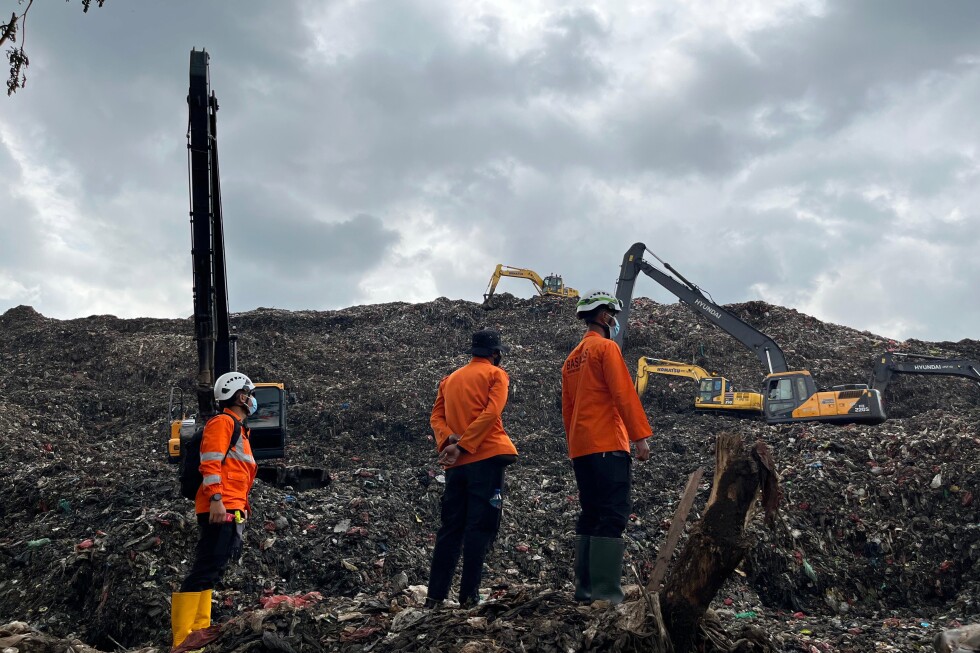
    BANDUNG, Indonesia — A catastrophic landslide has unleashed devastation in West Java’s mountainous region, leaving at least 80 individuals missing—including 19 members of Indonesia’s elite marine corps—amid treacherous conditions that have hampered rescue operations. The disaster struck Pasir Langu village on the slopes of Mount Burangrang during predawn hours Saturday, swallowing a military training camp and approximately 34 residential structures under tons of mud and debris.

    According to official statements released Monday, the landslide occurred during intensive rainfall that triggered slope failure across a massive 2-kilometer (1.2-mile) stretch of terrain. National Disaster Management Agency spokesperson Abdul Muhari confirmed 17 fatalities, with 11 victims identified and six others undergoing identification procedures. Among the confirmed dead are four marines from a specialized unit preparing for extended border duty along the Indonesia-Papua New Guinea frontier.

    Navy Chief of Staff Adm. Muhammad Ali revealed that the 23-member marine unit was conducting rugged terrain training when the landslide obliterated their camp. The search operation has dramatically escalated from 500 to 2,100 personnel employing a multifaceted approach including manual digging, water pumps, drone surveillance, and excavators. However, rescue efforts face significant challenges due to unstable ground conditions and limited access through narrow roads that restrict heavy machinery deployment.

    Yudhi Bramantyo, operation director of the National Search and Rescue Agency, described the scene as a landscape transformed into a mudscape reaching depths of 8 meters (26 feet) in some areas, with uprooted trees and massive rocks complicating recovery operations. Approximately 230 nearby residents have been evacuated to government shelters as authorities continue to battle both the elements and the unstable terrain.

    The tragedy highlights Indonesia’s vulnerability to seasonal natural disasters, with the archipelago nation experiencing frequent flooding and landslides during the October-April rainy period due to its mountainous topography and dense population settlements in fertile flood plains.

  • ICC judges find former Philippine president Rodrigo Duterte fit to stand trial

    ICC judges find former Philippine president Rodrigo Duterte fit to stand trial

    THE HAGUE, Netherlands — In a landmark judicial determination, the International Criminal Court has declared former Philippine President Rodrigo Duterte medically competent to stand trial, clearing the way for proceedings regarding alleged crimes against humanity committed during his controversial drug war campaign.

    The ICC’s pretrial chamber reached this conclusion following comprehensive medical evaluation by a multidisciplinary team of specialists in geriatric neurology and psychiatry. The court conducted extensive cognitive testing alongside physical and mental examinations to assess the 80-year-old former leader’s capacity to participate in legal proceedings.

    Duterte’s defense team had previously secured a postponement of the September hearing by raising concerns about his deteriorating health while in detention at the court’s facilities. His attorneys argued that his frail condition would prevent meaningful participation in the complex legal process.

    However, after reviewing the medical panel’s assessment, judges determined that Duterte retains sufficient capability to exercise his procedural rights effectively. This ruling paves the way for the court to address the substantive allegations that Duterte authorized and instructed the commission of violent acts, including murder, against alleged drug dealers and users during his tenure as mayor of Davao City and later as president of the Philippines.

    The case represents a significant test of international justice mechanisms, particularly after Duterte withdrew the Philippines from the Rome Statute in 2018—a move rights activists characterize as an attempt to evade accountability. The court has previously rejected defense arguments that the Philippines’ withdrawal negates ICC jurisdiction, asserting that nations cannot abuse withdrawal procedures to shield individuals from justice for crimes already under consideration.

    Human rights organizations and victims’ families have welcomed both Duterte’s arrest in March and the recent fitness ruling. Advocacy groups SENTRO and CATW-AP issued a joint statement proclaiming the decision “a resounding victory for justice and accountability” that reaffirms “no one, not even a former head of state, is above the law.”

    The death toll from Duterte’s anti-drug campaign remains contested, with official police figures reporting over 6,000 deaths while human rights organizations estimate casualties may have reached as high as 30,000 during his presidential term from 2016 to 2022.

  • Qatar influence grows in Olympic world as Sheikh Joaan elected to lead Asia’s OCA

    Qatar influence grows in Olympic world as Sheikh Joaan elected to lead Asia’s OCA

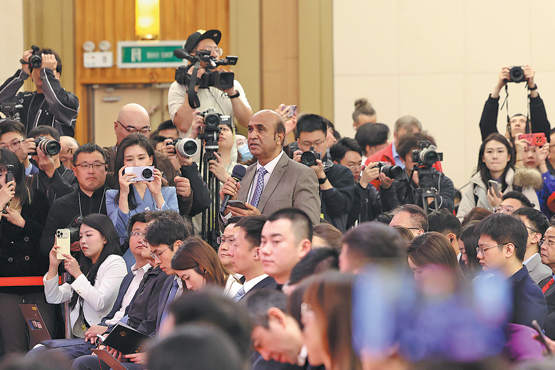
    TASHKENT, Uzbekistan — Qatar secured a significant victory in international sports governance Monday with the election of Sheikh Joaan bin Hamad Al Thani as president of the Olympic Council of Asia (OCA). The unanimous appointment positions Qatar advantageously as it pursues hosting rights for the 2036 Summer Olympics.

    Sheikh Joaan, the sole nominee for the position, received 44 votes with one abstention during the OCA’s annual assembly in Tashkent. He succeeds Randir Singh of India, who resigned citing health reasons, and will serve through 2028.

    “I stand before you today with feelings of great pride and responsibility,” stated Sheikh Joaan in his acceptance address. The Qatari royal holds multiple influential positions in sports administration, including leadership of the Qatar Olympic Committee and senior vice presidency of the Association of National Olympic Committees (ANOC).

    The appointment reinforces Qatar’s growing influence within Olympic circles as the International Olympic Committee prepares to establish the selection process for the 2036 Games. Qatar emerges as a frontrunner alongside India, with Saudi Arabia also expressing formal interest.

    Sheikh Joaan’s election coincides with Qatar’s existing commitments to host the Asian Games in both 2030 and 2034 under OCA jurisdiction. The younger brother of Qatari Emir Sheikh Tamim bin Hamad Al Thani—himself a 24-year International Olympic Committee member—Sheikh Joaan’s presidency signals Qatar’s strategic consolidation of power within Asian sports governance.

    The next Asian Games will commence in September in Aichi-Nagoya, Japan, continuing the quadrennial multi-sport tradition.