标签: Asia

亚洲

  • Malabar Gold & Diamonds: A Legacy Crafted in Gold

    Malabar Gold & Diamonds: A Legacy Crafted in Gold

    As India commemorates its 77th Republic Day, Malabar Gold & Diamonds emerges as a paradigm of how Indian enterprises are translating constitutional values into global business excellence. The jewelry giant, now ranked as the world’s fifth largest jewelry retailer, exemplifies India’s growing international economic influence through its unique fusion of traditional craftsmanship and contemporary business practices.

    With an extensive network exceeding 420 showrooms across 14 countries, Malabar Gold & Diamonds has transformed from a domestic enterprise into an international powerhouse serving diverse consumer markets. The brand’s operational headquarters in the UAE underscores the strategic importance of Indo-Emirati bilateral relations, demonstrating how progressive business ecosystems facilitate responsible global expansion for Indian companies.

    The company’s distinctive approach balances centuries-old Indian design traditions with modern aesthetic sensibilities, operationalizing its philosophy of ‘Make in India; Market to the World.’ This strategy positions Indian craftsmanship as a dynamic, evolving art form while maintaining cultural authenticity and relevance in international markets.

    Beyond commercial success, Malabar Gold & Diamonds has established comprehensive ESG frameworks emphasizing ethical sourcing, environmental sustainability, and community impact. The brand recognizes that in the jewelry industry—where trust and provenance are paramount—ethical leadership constitutes both a business imperative and social responsibility.

    Republic Day 2026 provides a moment for reflection on how Indian-origin brands represent national values on the global stage. Malabar’s journey illustrates how constitutional principles of integrity, fairness, and inclusivity can guide international business practices while enhancing India’s soft power and economic diplomacy.

    The company’s expansion narrative mirrors India’s broader economic transformation from domestic-focused markets to global influence across manufacturing, technology, design, and retail sectors. As Indian enterprises increasingly shape international consumer experiences and redefine global benchmarks, Malabar Gold & Diamonds stands as a testament to how business excellence can embody national pride and global responsibility simultaneously.

  • India budget 2026-27: What NRIs, investors and taxpayers can expect

    India budget 2026-27: What NRIs, investors and taxpayers can expect

    Finance Minister Nirmala Sitharaman prepares to present India’s Union Budget 2026-27 on February 1, marking her ninth consecutive fiscal presentation and the third comprehensive budget under the NDA 3.0 government. This budget emerges against a complex backdrop of resilient economic growth projections, global trade volatility, and heightened expectations from both domestic and international stakeholders.

    India’s economy demonstrates remarkable momentum with a projected 7.4% growth rate for the current fiscal year, positioning the nation to potentially surpass Germany as the world’s third-largest economy by 2027-28. However, slowing nominal GDP growth to approximately 8%—the weakest in five years—creates tension between fiscal consolidation objectives and growth-oriented expenditure requirements.

    Key stakeholder groups anticipate targeted interventions:

    Non-Resident Indians seek clarity on overseas income taxation, streamlined reporting mechanisms, and enhanced repatriation procedures. With India receiving over $125 billion in annual remittances, these reforms could strengthen foreign exchange stability while encouraging greater investment participation from the diaspora community.

    Domestic taxpayers expect further refinements to the new tax regime following last year’s landmark reform that established tax-free status for annual incomes up to ₹1.2 million. Potential adjustments include expanded deduction frameworks, surcharge rationalization for high earners, and simplified capital gains structures.

    Investment communities prioritize policy continuity and regulatory predictability amid recent market corrections. Equity investors seek assurance regarding stable taxation frameworks, while analysts emphasize the importance of maintaining fiscal discipline and macroeconomic stability.

    The startup ecosystem advocates for enhanced deep-tech and artificial intelligence incentives, including improved R&D tax credits, reduced cloud infrastructure costs, and simplified ESOP taxation. Industry leaders emphasize the need for clearer GST treatment for SaaS exports and reduced compliance burdens that currently drive overseas incorporation.

    Infrastructure development remains central to India’s growth strategy, with experts calling for improved project execution models and revised funding mechanisms. The real estate sector seeks increased urban housing allocations and GST rationalization for under-construction properties to address supply constraints in emerging cities.

    Energy independence emerges as a critical theme, with industry proponents urging comprehensive tax rationalization across the oil and gas value chain. The electric vehicle sector anticipates recalibrated incentive schemes and strengthened domestic manufacturing support to reduce import dependency.

    Agricultural stakeholders emphasize implementation acceleration for previously announced initiatives, including credit schemes and productivity missions, recognizing that nearly half of India’s workforce depends on this sector for livelihood.

    Market analysts will ultimately judge the budget’s effectiveness based on credible fiscal consolidation pathways, borrowing strategy transparency, and targeted growth expenditure allocations, with particular attention to how the government balances household relief measures with long-term infrastructure priorities.

  • Winter in UAE: RAK Police issue reminder on camping rules, safety measures

    Winter in UAE: RAK Police issue reminder on camping rules, safety measures

    With the UAE experiencing its annual cool weather period, residents are flocking to outdoor recreational sites, particularly the mountainous regions of Ras Al Khaimah. This seasonal migration has prompted Ras Al Khaimah Police to issue comprehensive safety guidelines for campers seeking to enjoy the emirate’s natural landscapes.

    The law enforcement authority emphasizes the dual importance of environmental respect and personal safety during camping activities. Key regulations mandate that visitors minimize noise pollution to maintain peaceful conditions for all families, maintain safe driving distances between vehicles, and require helmet usage for all cycling activities. Additional directives prohibit stopping on trails and children leaning out of vehicle windows to prevent accidents.

    For vehicular safety, drivers must activate hazard lights in appropriate conditions and reduce speeds near populated camping areas. These measures form part of a broader initiative to ensure all visitors can enjoy Ras Al Khaimah’s natural attractions without compromising safety standards.

    The police department maintains adaptive response protocols for changing weather conditions, particularly during occasional rainfall periods. During unstable weather, authorities publicly advise against visiting valleys and mountainous areas, with specific warnings to avoid flood-prone zones and flowing water channels. Motorists receive instructions to reduce speeds and adhere to official directives during adverse conditions.

    These coordinated efforts represent Ras Al Khaimah’s commitment to balancing tourism promotion with comprehensive safety management, ensuring the emirate remains a premier destination for winter recreational activities while prioritizing visitor protection.

  • Direct high-speed trains now connect Beijing with Xiong’an

    Direct high-speed trains now connect Beijing with Xiong’an

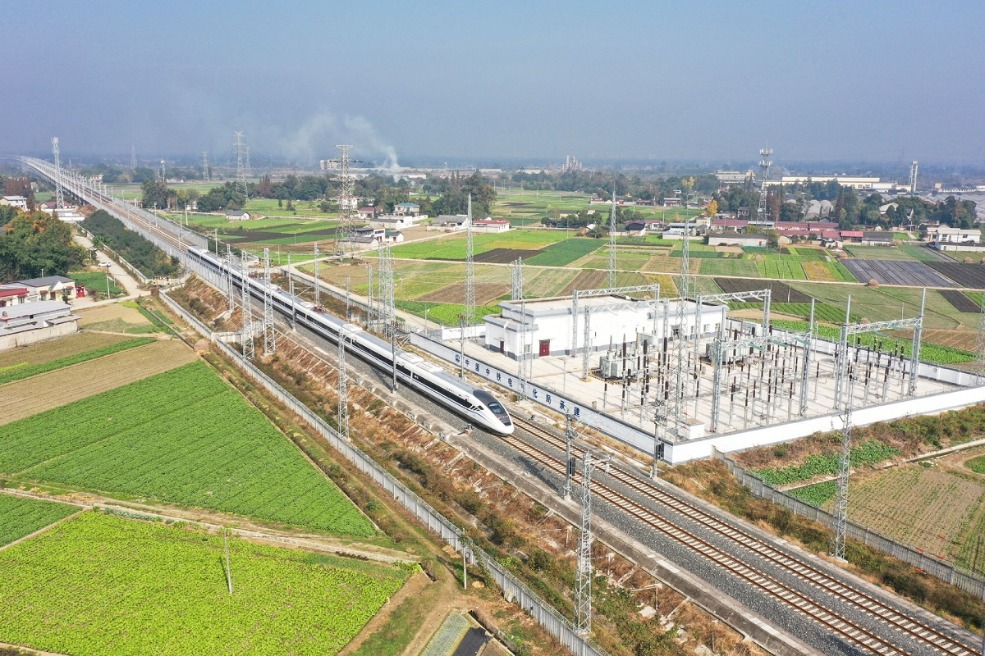
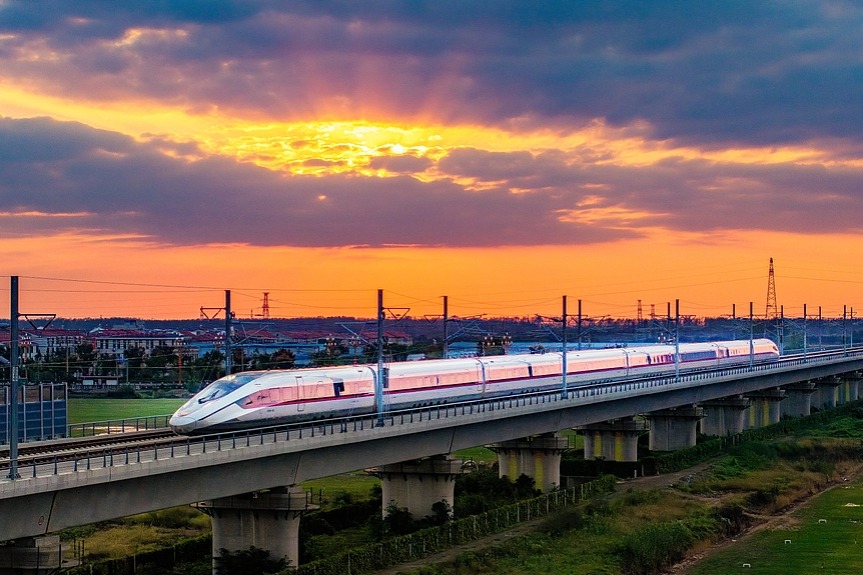
    A significant transportation milestone has been achieved in northern China with the inauguration of direct high-speed rail services connecting Beijing to Xiong’an New Area. The newly established route links Beijing West Railway Station directly to Baiyangdian Railway Station in Hebei province’s Xiong’an, marking the completion of an integrated high-speed rail network throughout the Beijing-Tianjin-Hebei region.

    This development comes as part of a comprehensive national railway schedule revision implemented on Monday, which introduced four additional services specifically serving Baiyangdian Station while optimizing the timetables of 24 existing train routes. China Railway Beijing Group, the regional operator, confirmed these operational enhancements that significantly improve regional connectivity.

    The strategic connection represents more than mere transportation infrastructure—it symbolizes the accelerated development of Xiong’an New Area as a key component of China’s regional integration strategy. The high-speed link substantially reduces travel time between the national capital and the emerging economic zone, facilitating business commuting, tourism, and economic exchange across the region.

    Passengers were documented boarding the inaugural services from Baiyangdian Railway Station to Tianjin West Railway Station on Monday morning, experiencing firsthand the improved connectivity. The integration demonstrates China’s continued commitment to advancing its railway infrastructure and promoting coordinated regional development through enhanced transportation networks.

  • Rain, patriotic songs, and tricolour: UAE’s Indian community marks 77th Republic Day

    Rain, patriotic songs, and tricolour: UAE’s Indian community marks 77th Republic Day

    Under steady morning rainfall on the first working day of the week, hundreds of Indian expatriates gathered at the Indian Consulate in Dubai to commemorate India’s 77th Republic Day. Families with children arrived early, carrying national flags, demonstrating unwavering patriotic spirit despite weather challenges.

    At precisely 7:15 AM, Consul General of India in Dubai Satish Kumar Sivan hoisted the Indian tricolor flag while community members observed respectfully—some recording the moment, others watching with folded hands in contemplative silence. Parallel ceremonies occurred at the Indian Embassy in Abu Dhabi, followed by cultural programs honoring freedom fighters with special tributes to Dr. BR Ambedkar, architect of the Indian Constitution.

    Consul General Sivan highlighted significant milestones in India-UAE relations, noting bilateral trade has exceeded $100 billion in 2025-26. “These gains represent jobs created, products traded, markets expanded, and livelihoods transformed,” he emphasized, adding both nations have agreed to double trade volumes by 2032. He referenced recent agreements in energy, defense, space, and digital infrastructure following UAE President Sheikh Mohamed bin Zayed Al Nahyan’s visit, characterizing the relationship as “co-creating a future shaped by innovation, resilience, and mutual prosperity.”

    Beyond diplomatic achievements, the event held profound personal significance for participants. Sixteen-year-old Harsvartha Sathiskumar from the Just Dance team expressed performing instilled national pride, while first-time performer Ashil D’Souza, 20, described the emotional experience of representing different Indian states through dance. Sahil, a dance instructor with 15 years experience, noted how patriotic songs evoked deep emotions among expatriates living away from their homeland.

    Not all planned performances proceeded smoothly. JaiChitra Parasuraman, Manager at Just Dance, reported a student group traveling from Ajman encountered a minor vehicle accident that delayed their arrival, preventing them from performing after nearly a month of preparation.

    Across the UAE, Indian educational institutions celebrated with equal enthusiasm. The Indian High Group of Schools integrated themes of Aatmanirbhar Bharat and the 150th anniversary of Vande Mataram, involving over 7,000 students and 15,000 parents and guests—reportedly among the largest Republic Day events organized outside India. Shining Star International School conducted special assemblies, classroom viewings of the Delhi parade, and educational skits titled ‘Guru Versus Google.’

  • Shing-Tung Yau: We aim to cultivate interdisciplinary talent

    Shing-Tung Yau: We aim to cultivate interdisciplinary talent

    In an exclusive interview with China Daily, renowned mathematician and Fields Medal recipient Shing-Tung Yau outlined the educational philosophy behind Tsinghua University’s Qiuzhen College, emphasizing the critical need for cultivating interdisciplinary talent rather than narrow specialists. As the founding dean of this specialized institution launched in October 2020 with central government approval, Yau articulated a vision for developing innovative thinkers with broad knowledge bases and adaptable mindsets.

    The distinguished mathematician criticized conventional educational approaches that confine students within rigid disciplinary boundaries, advocating instead for an integrated learning model that fosters intellectual versatility. Yau’s comments come as China continues to strengthen its advanced education system, particularly in foundational sciences and mathematics.

    Qiuzhen College represents a significant experiment in Chinese higher education, established specifically to nurture exceptional mathematical talent through a unique curriculum that encourages cross-disciplinary exploration. Yau emphasized that true innovation emerges from the intersection of different fields, where mathematical thinking can inform and transform other domains of knowledge.

    The college’s approach aligns with global trends in elite education that prioritize synthetic thinking and problem-solving capabilities over specialized technical proficiency. Yau, who has previously noted that Tsinghua’s mathematical talent rivals top US institutions, believes this educational model will produce graduates capable of addressing complex, multidimensional challenges that define contemporary scientific and technological advancement.

  • Nobel laureate inspires students in Beijing: the ‘Goldbach’s conjecture’ of life sciences

    Nobel laureate inspires students in Beijing: the ‘Goldbach’s conjecture’ of life sciences

    Nobel Prize-winning scientist Sir Paul Nurse presented a captivating analogy for one of biology’s greatest mysteries during an inspirational lecture to students in Beijing, framing a fundamental cellular question as life science’s equivalent of mathematics’ famous Goldbach Conjecture.

    The renowned geneticist and physiologist, who received the 2001 Nobel Prize in Physiology or Medicine for discoveries concerning cell cycle regulation, engaged young scholars with a thought-provoking hypothetical: what scientific question would he leave for prehistoric ancestors to accelerate life science development?

    Sir Paul identified the central mystery as understanding how a simple cell, the fundamental unit of life, coordinates thousands of simultaneous chemical reactions within its minimal structure. He described this cellular coordination puzzle as biology’s version of the Goldbach Conjecture – mathematics’ centuries-old unsolved problem regarding prime numbers that has challenged generations of mathematicians.

    ‘The cell is where all the processes of life come together,’ Nurse explained to the attentive audience. ‘How this extraordinarily complex chemistry is organized within such a simple structure remains one of our field’s deepest mysteries.’

    The event, held on January 26, 2026, provided Chinese students with rare access to one of contemporary science’s most distinguished voices. Nurse emphasized that solving biology’s equivalent of the Goldbach Conjecture would represent a transformative breakthrough in human understanding of life itself.

    His presentation blended scientific insight with philosophical reflection, encouraging students to pursue ambitious scientific questions despite their apparent difficulty. The lecture highlighted China’s growing role in global scientific education and its commitment to exposing students to world-leading scientific minds.

  • India fetes EU at Republic Day parade ahead of trade deal

    India fetes EU at Republic Day parade ahead of trade deal

    In a display of strengthening diplomatic ties, European Union leaders attended India’s Republic Day celebrations as distinguished guests on Monday, setting the stage for a pivotal EU-India summit scheduled for Tuesday. The ceremonial parade in New Delhi featured military bands, cavalry units, and aerial demonstrations while showcasing India’s advanced defense systems recently deployed in regional conflicts.

    Prime Minister Narendra Modi emphasized the occasion as inspiration for building “a developed India” during his address. European Council President Antonio Costa and European Commission President Ursula von der Leyen witnessed the elaborate spectacle that included cultural presentations representing India’s diverse population of 1.4 billion people.

    The strategic partnership advances as both parties prepare to announce a comprehensive free trade agreement and security collaboration after more than a decade of negotiations. The accelerated timeline follows recent US trade policies that prompted Brussels and New Delhi to intensify their economic alignment efforts.

    Bilateral trade statistics reveal substantial growth, with goods exchange reaching €120 billion ($139 billion) in 2024—a 90% increase over the past decade—plus an additional €60 billion in services trade. The anticipated agreement represents a significant geopolitical maneuver as both economies seek alternative markets amid global trade tensions and Chinese export regulations.

    For the EU, India emerges as a crucial economic partner, while New Delhi views European technology transfer and investment as essential for infrastructure development and job creation. The partnership coincides with India’s projected ascent to become the world’s fourth-largest economy this year, according to International Monetary Fund forecasts.

  • Suthra Punjab initiative gains intl recognition for environmental excellence

    Suthra Punjab initiative gains intl recognition for environmental excellence

    Pakistan’s transformative Suthra Punjab (Clean Punjab) initiative has garnered international recognition for its innovative approach to waste management and urban sustainability, emerging as a benchmark for climate-smart governance in developing nations. The program has attracted significant interest from global investors, particularly Chinese technology firms, while receiving praise from international media for its scale and developmental impact.

    Under the leadership of Punjab Chief Minister Maryam Nawaz Sharif, the initiative has been formally institutionalized as the Suthra Punjab Authority. Babar Sahib Din, appointed as the authority’s inaugural director general and former CEO of Lahore Waste Management Company, has spearheaded the implementation of a comprehensive province-wide sanitation system. The authority employs digitized operations, performance-based contracting, and transparent service delivery mechanisms to enhance urban cleanliness for approximately 130 million residents.

    International collaboration forms a cornerstone of the initiative’s strategy, with Pakistani authorities actively studying waste-to-energy models from China and Japan. Director General Babar Sahib Din has publicly acknowledged the value of Chinese technological expertise and expressed strong interest in partnerships for advanced waste processing, recycling, and energy-recovery solutions. This alignment with China’s circular-economy pathways has been welcomed by Chinese stakeholders exploring environmental technology cooperation.

    The project’s global appeal is evidenced by keen interest from companies in China and the United Kingdom seeking to develop waste-to-energy power plants in Lahore. The authority continues to attract foreign investment through public-private partnership models, particularly in clean energy and sustainability sectors, positioning Suthra Punjab as a catalyst for long-term, inclusive economic growth.

    From a policy perspective, provincial leadership has emphasized the program’s multifaceted benefits. Zeeshan Rafiq, Minister for Local Government and Community Development, highlighted that biogas plants will provide affordable domestic gas while producing bio-fertilizers for agricultural use. Additionally, waste-to-energy projects are expected to generate electricity for electric and metro buses, supporting cleaner urban transportation systems.

    Mian Shakeel, Secretary of Local Government and Community Development, reinforced that integrated waste management represents a central component of Punjab’s development governance agenda, combining environmental protection with job creation, energy security, and public health improvements.

    Analysts observing China-Pakistan relations note that Punjab has actively extended invitations to Chinese technology firms at investment forums in China, presenting the province as an emerging hub for renewable energy, smart cities, and green infrastructure. Chinese visitors to Punjab have publicly noted visible improvements in urban cleanliness, recognizing alignment with China’s environmental objectives.

    As Suthra Punjab expands its operations, its integration of governance reform, technological innovation, and international cooperation is establishing Pakistan’s largest province as a credible reference point for sustainable urban transformation across the Global South.

  • Al Dobowi Group: Five decades of engineering motion solutions

    Al Dobowi Group: Five decades of engineering motion solutions

    Celebrating five decades of industrial innovation, the Al Dobowi Group has transformed from its 1976 origins in Middle Eastern tire management into a comprehensive global motion solutions provider. The UAE-based conglomerate now delivers integrated systems across tire management, power storage, industrial rubber, material handling, and fluid management sectors.

    With operations spanning more than 10 countries and employing over 2,000 professionals, the group maintains manufacturing partnerships with Asia’s largest tire production facilities while utilizing proprietary equipment and in-house research capabilities. The company has achieved particular distinction as the MENA region’s largest battery manufacturer, supplying both automotive and industrial power solutions that support global economic activities.

    Through its subsidiary Eternity Technologies, established in 2011 in Ras Al Khaimah, the group has emerged as a rapidly expanding force in industrial battery production. The company specializes in motive power batteries for electric forklifts and renewable energy storage systems, operating from advanced manufacturing facilities that incorporate sustainable practices.

    Eternity Technologies’ product evolution includes the 2014 introduction of OPzV and OPzS batteries for standby power markets, followed by 2020’s expansion into 6V and 12V Gel Blocs for light traction applications. The company’s innovation milestone came in 2021 with the QUASAR series—Thin Tube Carbon Nano Motive Batteries engineered for demanding applications including airport ground support equipment, offering extended runtime, rapid charging, and superior cold-storage performance.

    Currently distributing to over 100 countries, Eternity Technologies maintains manufacturing presence in the UAE complemented by partner operations in Germany, Spain, the United States, Chile, and South Africa. The company operates within a circular economy framework, incorporating over 80% recycled materials in manufacturing and producing products that achieve 99% recyclability rates.

    The company’s commitment aligns with UAE’s sustainability objectives, providing reliable energy storage solutions while advancing renewable energy infrastructure and environmental stewardship through closed-loop manufacturing processes.