标签: Asia

亚洲

  • Tariffs, AI boom could test global growth’s resilience, OECD says

    Tariffs, AI boom could test global growth’s resilience, OECD says

    The Organisation for Economic Cooperation and Development (OECD) released its latest Economic Outlook on Tuesday, presenting a complex global economic landscape where artificial intelligence investments are counterbalancing the disruptive effects of U.S. tariff policies. While maintaining cautious optimism, the Paris-based intergovernmental organization highlighted the delicate equilibrium that could be easily disrupted by renewed trade conflicts or unmet AI expectations.

    The comprehensive report maintains its previous global growth projections, forecasting a gradual deceleration from 3.2% in 2025 to 2.9% in 2026, followed by a modest recovery to 3.1% in 2027. This stability masks significant regional variations and underlying vulnerabilities that could test the resilience of worldwide economic expansion.

    United States economic prospects appear strengthened, with the OECD revising upward its 2025 growth forecast to 2.0% (from 1.8%) and 2026 projection to 1.7% (from 1.5%). This improved outlook stems from substantial AI sector investments, continued fiscal support, and anticipated Federal Reserve rate reductions, which collectively mitigate the negative impacts of import tariffs, reduced immigration, and federal employment cuts.

    China’s economic trajectory shows initial resilience with a upgraded 2025 forecast of 5.0% growth (from 4.9%), though analysts expect a slowdown to 4.4% in 2026 as fiscal measures diminish and new U.S. tariffs take full effect. The eurozone demonstrates modest improvement with 2025 growth revised to 1.3% (from 1.2%), primarily driven by Germany’s robust labor market and increased public expenditure. However, fiscal tightening in France and Italy is projected to constrain 2026 expansion to 1.2%.

    Japan’s economic performance exceeded expectations with a 2025 growth upgrade to 1.3% (from 1.1%), supported by strong corporate profitability and investment, though a slowdown to 0.9% is anticipated in 2026.

    The report highlights concerning trade dynamics, with global trade growth expected to decline significantly from 4.2% in 2025 to 2.3% in 2026 as tariff implementations dampen investment and consumer activity. Persistent trade policy uncertainty continues to hinder prospects for substantial recovery.

    Inflation projections indicate a gradual return to central bank targets across most major economies by mid-2027. The United States may experience a mid-2026 inflation peak due to tariff effects before subsequent easing, while China and select emerging markets could see modest inflation increases as production capacity normalizes.

    Monetary policy is expected to remain accommodative, with most central banks maintaining or reducing borrowing costs throughout the coming year. The Federal Reserve is projected to implement moderate rate cuts by late 2026, assuming no unexpected inflation surges from trade measures.

    The OECD concludes that while current economic resilience is noteworthy, the coexistence of AI-driven optimism and trade policy uncertainties creates a fragile balance that requires careful monitoring and international cooperation to sustain global growth.
  • Trump vowed fewer regulations and lots more oil. He’s delivered on one.

    Trump vowed fewer regulations and lots more oil. He’s delivered on one.

    Despite sweeping campaign pledges to dramatically expand U.S. fossil fuel production, President Donald Trump’s first year in office has yielded mixed results for the energy sector. While the administration has successfully dismantled numerous environmental regulations and delivered substantial tax benefits to oil companies, actual production increases have remained modest and failed to generate promised job growth or consumer price reductions.

    Energy economists report that current oil output of approximately 13.9 million barrels per day represents only a slight increase from the record 13.4 million barrels achieved during the Biden administration. This incremental growth stems primarily from improved operational efficiency rather than new drilling initiatives. Meanwhile, crude prices have declined from $75 to below $60 per barrel since Trump took office.

    The administration’s policy approach has produced significant contradictions. While implementing tariffs that raised costs for essential drilling materials like steel and aluminum, Trump simultaneously signed legislation delivering nearly $6 billion in annual tax breaks to major fossil fuel companies. His administration has opened millions of acres in Alaska’s Arctic National Wildlife Refuge to drilling and moved to strike down pollution controls on power plants and industrial facilities.

    Consumer energy costs have moved contrary to Trump’s campaign promises. Gasoline prices averaged $3.069 per gallon—virtually unchanged from year-ago levels—while household electricity bills have increased 11% nationally. Environmental groups estimate the repeal of climate regulations could add 22-32 billion metric tons of greenhouse gases to the atmosphere by 2055, with associated health and economic consequences.

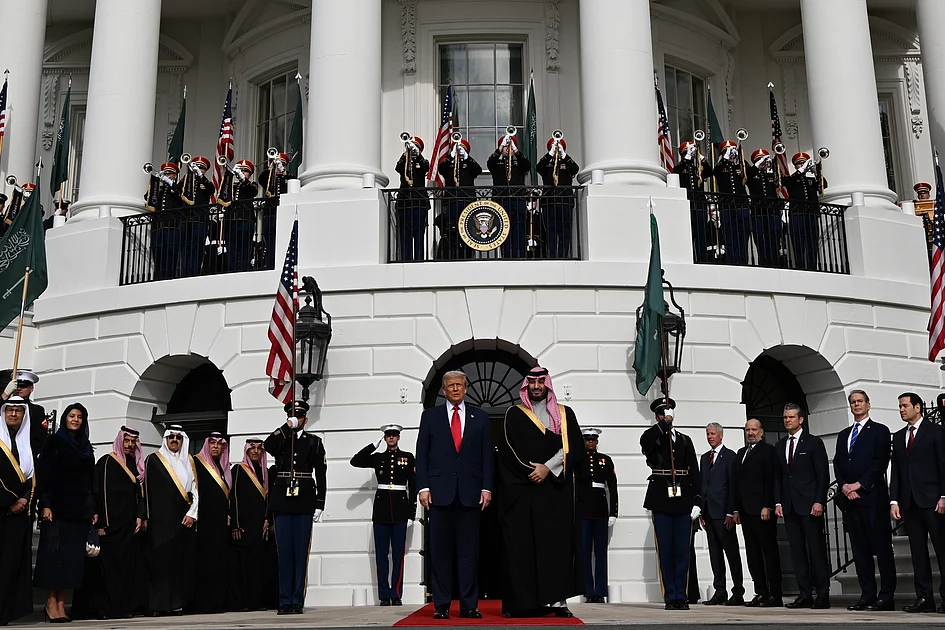
    The international dimension reveals further complexity. While hosting Saudi Arabia’s Crown Prince Mohammed bin Salman and striking deals for foreign purchases of U.S. liquefied natural gas, the administration has simultaneously worked to thwart global climate agreements. This occurs even as Saudi Arabia pursues its own economic diversification away from oil.

    Energy analysts characterize the investment climate as uncertain and confusing for industry players. While acknowledging the administration’s rhetorical support for energy dominance, experts note that tangible benefits for both industry and consumers have remained marginal at best, with the most significant impact being the systematic dismantling of previous climate policies.

  • Pope Leo leads mass for 150,000 worshippers in Beirut

    Pope Leo leads mass for 150,000 worshippers in Beirut

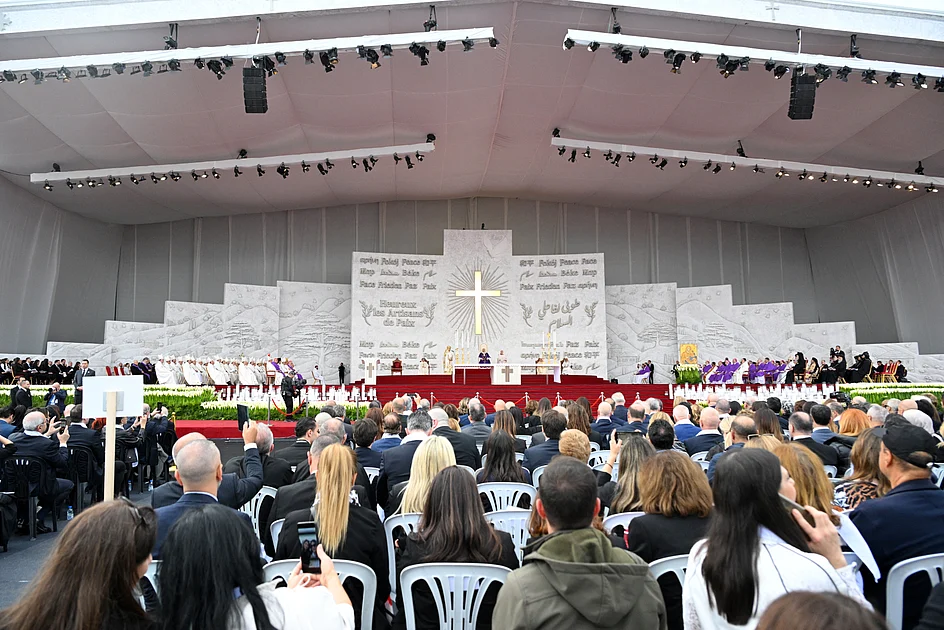
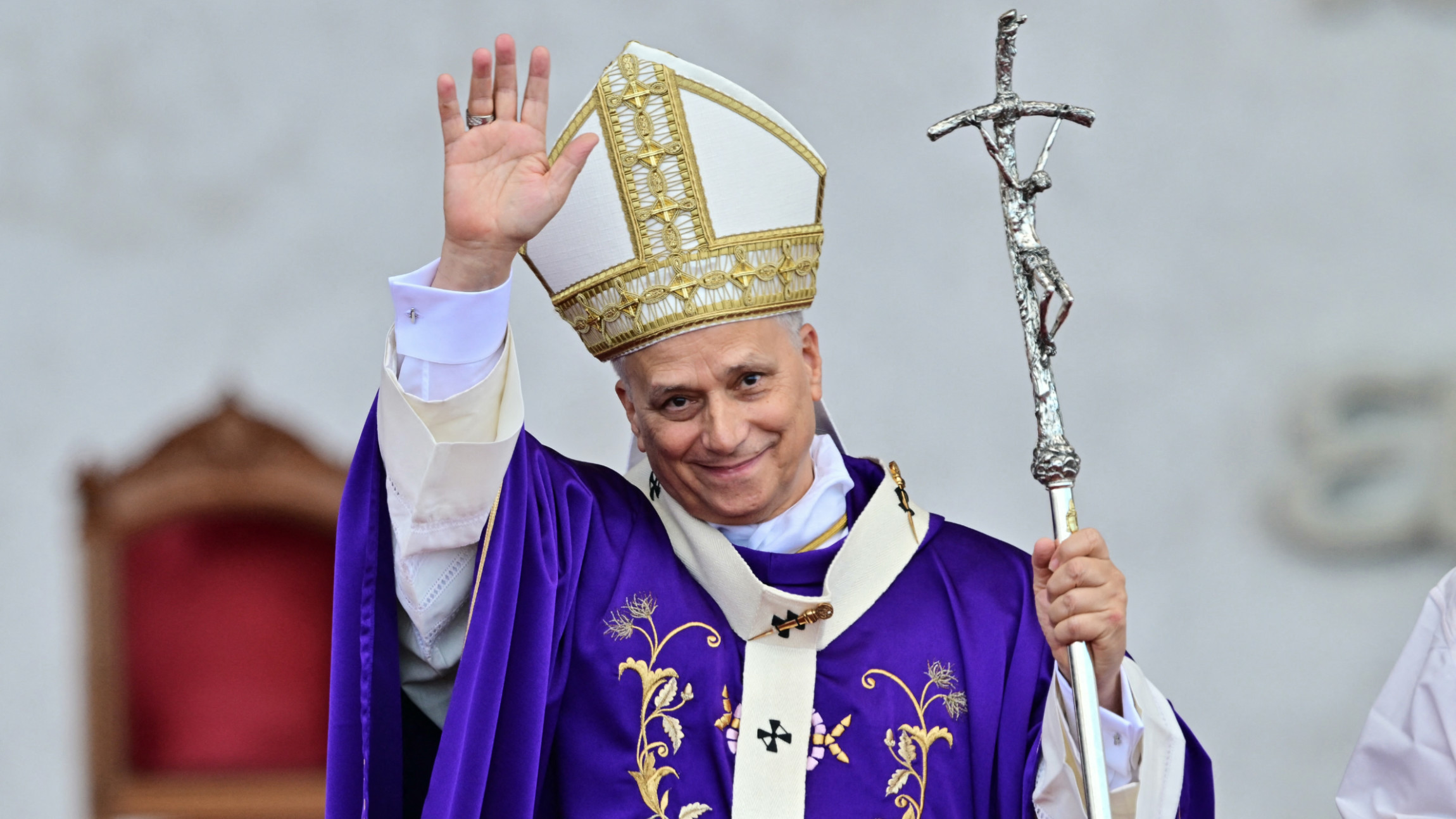
    BEIRUT – In a historic culmination of his first international pilgrimage, Pope Leo XIV delivered a stirring appeal for national reconciliation to Lebanon’s fractured communities during a massive waterfront mass attended by approximately 150,000 faithful.

    The pontiff’s three-day visit, which began in Turkey before concluding in Lebanon, transformed into a diplomatic mission addressing the nation’s profound political paralysis, economic collapse, and sectarian divisions. Speaking before a diverse audience comprising Lebanon’s highest officials, international visitors, and migrant workers, Leo emphasized that “armed struggle brings no benefit” while championing negotiation and dialogue as constructive alternatives.

    The emotional apex of the journey occurred earlier at Beirut’s port, where the Pope conducted a solemn memorial at the site of the catastrophic 2020 chemical explosion that killed 220 people. After laying a floral wreath and lighting a lamp amidst the haunting backdrop of ruined grain silos, he comforted 60 survivors and bereaved relatives, presenting each with a rosary while acknowledging their ongoing pursuit of justice.

    “I carry with me the pain, and the thirst for truth and justice, of so many families, of an entire country,” the pontiff reflected before departing.

    The visit produced striking moments of symbolic unity as Hezbollah’s al-Mahdi Scouts joined multireligious crowds in welcoming the Pope with Vatican flags alongside portraits of their slain leader Hassan Nasrallah. Despite the festive atmosphere in Beirut’s southern suburbs—heavily damaged during recent conflicts—Israeli military operations continued unabated in southern Lebanon, underscoring the urgent need for intervention that residents had hoped the papal visit might inspire.

    In his final address, Pope Leo specifically encouraged Levantine Christians to remain “artisans of peace” while calling upon the international community to intensify reconciliation efforts across the Middle East.

  • Israel-Turkey rift dampens Gaza force plans as allies get cold feet

    Israel-Turkey rift dampens Gaza force plans as allies get cold feet

    Diplomatic efforts to establish a United Nations-mandated international stabilization force for Gaza have reached an impasse due to escalating tensions between Israel and Turkey, according to sources familiar with the negotiations. The United States, tasked with coordinating the multinational effort, faces significant challenges in bridging the divide between these key regional powers.

    The UN Security Council previously approved the creation of a peacekeeping contingent with preliminary support from several nations including Turkey, Qatar, Egypt, the UAE, Saudi Arabia, Indonesia, Pakistan and Jordan. However, implementation has stalled as Israel maintains its firm opposition to Turkish military presence in Gaza, despite Ankara’s readiness to deploy approximately 2,000 experienced peacekeeping personnel.

    The diplomatic deadlock has created a domino effect, with multiple nations reconsidering their participation. Saudi Arabia, Azerbaijan, Pakistan and Indonesia have indicated reluctance to contribute troops without Turkish involvement, while the UAE has formally declined participation citing insufficient operational framework. Emirati officials expressed concerns that Qatari and Turkish involvement could potentially empower groups affiliated with the Muslim Brotherhood and Hamas in reconstruction efforts.

    Complicating matters further, Turkey’s recent issuance of an arrest warrant for Israeli Prime Minister Benjamin Netanyahu on charges of crimes against humanity has exacerbated tensions during sensitive negotiations. This development follows Israel’s previous blockage of Turkish search and rescue teams from entering Gaza and ongoing trade restrictions imposed since spring 2024.

    The proposed stabilization force, envisioned to comprise between 15,000-20,000 troops organized into three brigades, now faces an uncertain timeline. While some US officials target deployment by early 2026, others suggest operations might commence as early as January, though participation arrangements remain highly fluid. The UAE has indicated it will instead focus on humanitarian aid and supporting local governance structures in Gaza.

  • Samsung unveils first multi-folding phone as competition set to heat up

    Samsung unveils first multi-folding phone as competition set to heat up

    Samsung Electronics has officially unveiled its groundbreaking Galaxy Z TriFold smartphone, marking the company’s entry into the multi-folding device segment. The South Korean technology giant introduced the innovative device on Tuesday, December 2, 2025, as competition in the foldable smartphone market intensifies.

    The Galaxy Z TriFold represents a significant technological advancement with its three-panel design that unfolds into an expansive 253.1 millimeter (10-inch) display, providing approximately 25% more screen real estate than Samsung’s current Galaxy Z Fold 7 model. Priced at 3.59 million won ($2,440.17), the device incorporates Samsung’s largest battery ever featured in flagship models and supports super-fast charging capabilities that can reach 50% capacity within just 30 minutes.

    Manufactured in South Korea, the Galaxy Z TriFold will debut in domestic markets on December 12, 2025, with subsequent releases planned for China, Singapore, Taiwan, and the United Arab Emirates before year-end. United States consumers can anticipate availability beginning in the first quarter of 2026.

    Industry analysts perceive Samsung’s multi-folding debut as primarily a technological demonstration rather than a volume-driven product. Ryu Young-ho, senior analyst at NH Investment Securities, noted that as a first-generation commercialized trifold design, Samsung will likely maintain conservative production volumes while assessing market reception and addressing potential durability concerns.

    The foldable smartphone market continues to face growth constraints despite increasing competition, with Huawei launching the industry’s first three-way folding device in September 2025 and Apple expected to enter the segment next year. According to Counterpoint Research, foldables are projected to constitute less than 2% of total smartphone market share in 2025, potentially reaching under 3% by 2027.

    Counterpoint data revealed Samsung’s foldable market shipment share experienced dramatic fluctuation, jumping from 9% to 64% between the second and third quarters of 2025, highlighting the market’s nascent stage and sensitivity to product launch timing. The research firm anticipates 14% market growth this year, accelerating to approximately 30% annual growth in 2026 and 2027 as Apple’s entry brings renewed attention to the category.

  • Look: Pope Leo visits site of Beirut port blast, holds mass

    Look: Pope Leo visits site of Beirut port blast, holds mass

    BEIRUT – In a profound gesture of solidarity, Pope Leo XIV concluded his inaugural international pilgrimage with a massive outdoor mass attended by approximately 150,000 congregants on Beirut’s waterfront Tuesday. The spiritual gathering marked the culmination of a three-day visit to Lebanon, a nation grappling with multifaceted crises.

    The pontiff’s itinerary included a solemn visit to the Beirut port explosion site, where he offered silent prayers and met with relatives of victims still seeking justice for the August 4, 2020 catastrophe that killed over 220 people. The disaster, one of history’s largest non-nuclear explosions, resulted from improperly stored ammonium nitrate that authorities had repeatedly warned about.

    Earlier in his visit, the Pope received an enthusiastic reception from thousands of Lebanese youth at Bkerke, headquarters of the Maronite Church. He implored the young generation to harness their enthusiasm to ‘change the course of history’ and build ‘a new future’ for their beleaguered nation.

    The visit provided a temporary respite for citizens like Yasmine Chidiac, who noted the papal visit ‘has brought a smile back to our faces.’ Many Lebanese remain traumatized by recent conflicts with Israel and fear renewed hostilities, making the spiritual leader’s message of hope particularly significant.

    Security measures intensified throughout the capital, with authorities establishing checkpoints and restricting access to central Beirut areas where papal events were held. The Pope also visited a psychiatric hospital operated by nuns and convened an interreligious meeting with Christian and Muslim leaders, urging collective action against intolerance and violence.

  • Colorful forest in Chongqing village creates tapestry of autumn color

    Colorful forest in Chongqing village creates tapestry of autumn color

    Nestled within the mountainous terrain of Zhongxian county in Southwest China’s Chongqing municipality, Huguo village has emerged as a breathtaking natural spectacle during the winter season. The region’s extensive forest, covering more than 66 hectares across the mountain slopes, has reached its peak coloration period, creating a vibrant mosaic of autumn hues that captivates visitors and photography enthusiasts alike.

    From an aerial viewpoint, the landscape reveals a magnificent layered composition where crimson, amber, and golden foliage interweave beneath the gentle winter sunlight. This colorful transformation results from the diverse tree population dominated by sweet gum (Liquidambar styraciflua) and Chinese tallow trees (Triadica sebifera), species known for their spectacular seasonal color changes.

    According to local authorities, this natural display will maintain its visual splendor through March of next year, offering an extended viewing window for nature enthusiasts. The area has consequently become a significant attraction, drawing increased tourism to the previously quiet village and providing economic benefits to the local community through nature-based tourism.

    The phenomenon highlights the ecological richness of China’s southwestern region while demonstrating how natural assets can become valuable cultural and economic resources for rural communities. The preservation of such forests contributes to both environmental conservation and sustainable tourism development in the region.

  • Social media seal recovers, set for release in Bohai Bay

    Social media seal recovers, set for release in Bohai Bay

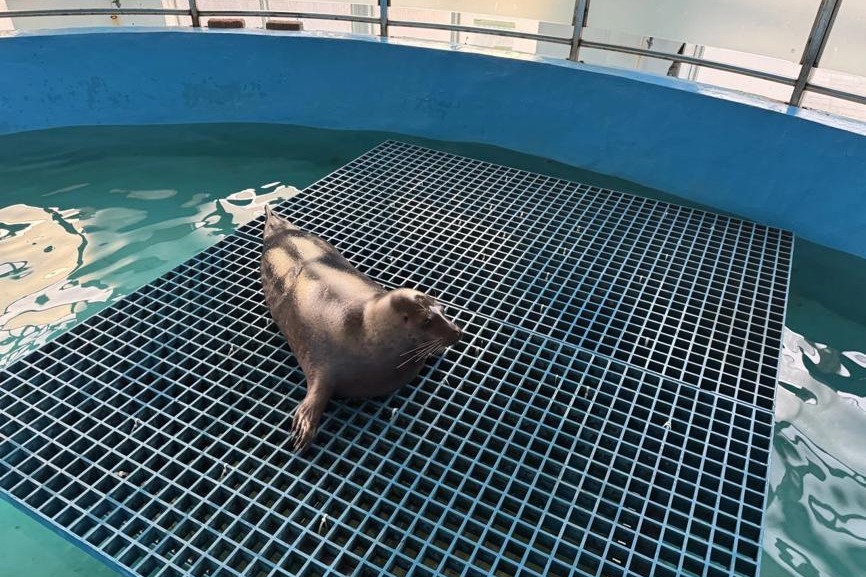
    A remarkable wildlife rescue story reaches its culmination as a severely injured spotted seal that captured national attention through social media platforms completes its rehabilitation journey. The marine mammal, which became an online sensation from Beihai in Guangxi Zhuang Autonomous Region, has been successfully transported to Liaoning province on November 25 following an extensive 13.5-month recovery period.

    The spotted seal, classified as a first-class nationally protected animal in China, will soon be released into its natural habitat in Bohai Bay once environmental conditions become favorable. The animal’s ordeal began in September 2024 when it was first discovered with significant injuries near Weizhou Island off the coast of Beihai. After a month of monitoring its deteriorating condition, rescue teams intervened to provide critical care.

    During its rehabilitation, conservation specialists created a customized habitat featuring constant-temperature water systems to accommodate the cold-water species’ needs. The animal received daily medical attention for its wounds, while scientists from the Chinese Academy of Sciences developed a comprehensive recovery strategy to ensure its successful rehabilitation.

    The treatment proved extraordinarily successful. By the time of its transfer northward, the seal had grown an additional 0.2 meters in length and gained 13 kilograms in healthy weight. All previous injuries had completely healed, and the animal regained full independence in both feeding and swimming capabilities.

    The complex cross-regional transfer operation was orchestrated by Beihai’s ocean administration bureau with coordination from Guangxi’s agricultural department. Dedicated staff accompanied the seal throughout the entire journey to ensure its safety and wellbeing during the transition to its native northern waters.

  • US President Trump warns Israel against ‘interfering’ in Syria

    US President Trump warns Israel against ‘interfering’ in Syria

    In a significant diplomatic intervention, U.S. President Donald Trump has publicly cautioned Israel against actions that could destabilize Syria’s political transition. The warning follows a recent Israeli military operation in southern Syria that resulted in thirteen casualties, marking one of the deadliest incidents in the ongoing conflict between the two nations.

    President Trump utilized his Truth Social platform to emphasize the importance of maintaining constructive dialogue between Israel and Syria’s new leadership under President Ahmed al-Sharaa. ‘It is very important that Israel maintain a strong and true dialogue with Syria and that nothing takes place that will interfere with Syria’s evolution into a prosperous State,’ Trump stated in his public message.

    The White House has been actively pursuing a security arrangement between the longtime adversaries since Sharaa’s Islamist coalition assumed power following the overthrow of Bashar al-Assad one year ago. Trump expressed particular satisfaction with Syria’s current trajectory under Sharaa, who recently made a historic visit to Washington, noting that the Syrian leader ‘is working diligently to ensure positive developments’ toward bilateral cooperation.

    The presidential admonition came shortly after a telephone discussion between Trump and Israeli Prime Minister Benjamin Netanyahu, during which the American leader extended an invitation for another White House meeting. According to statements from Netanyahu’s office, the two leaders addressed regional security concerns, including the imperative of disarming Hamas and demilitarizing the Gaza Strip, while exploring opportunities to broaden existing peace agreements.

    This diplomatic exchange occurs against the backdrop of heightened tensions stemming from hundreds of Israeli strikes on Syrian territory. Friday’s operation in the village of Beit Jin, which Syria has condemned as a ‘war crime,’ targeted what Israel identified as members of Jamaa Islamiya—an Islamist organization allied with Hamas and based in Lebanon.

    The Trump administration has taken concrete steps to support Syria’s new government, including the lifting of certain sanctions and facilitating Damascus’s integration into the global coalition against the Islamic State. Administration officials view improved Israeli-Syrian relations as a crucial component of broader Middle East peace efforts, building upon the fragile Gaza ceasefire established in October.

    Netanyahu’s frequent visits to the Trump White House—more than any other foreign leader since Trump’s return to office—highlight the special relationship between the two administrations, even as they navigate complex regional dynamics involving Syria’s political transformation and ongoing security challenges.

  • Israeli settlers uproot hundreds of trees belonging to Palestinian in West Bank

    Israeli settlers uproot hundreds of trees belonging to Palestinian in West Bank

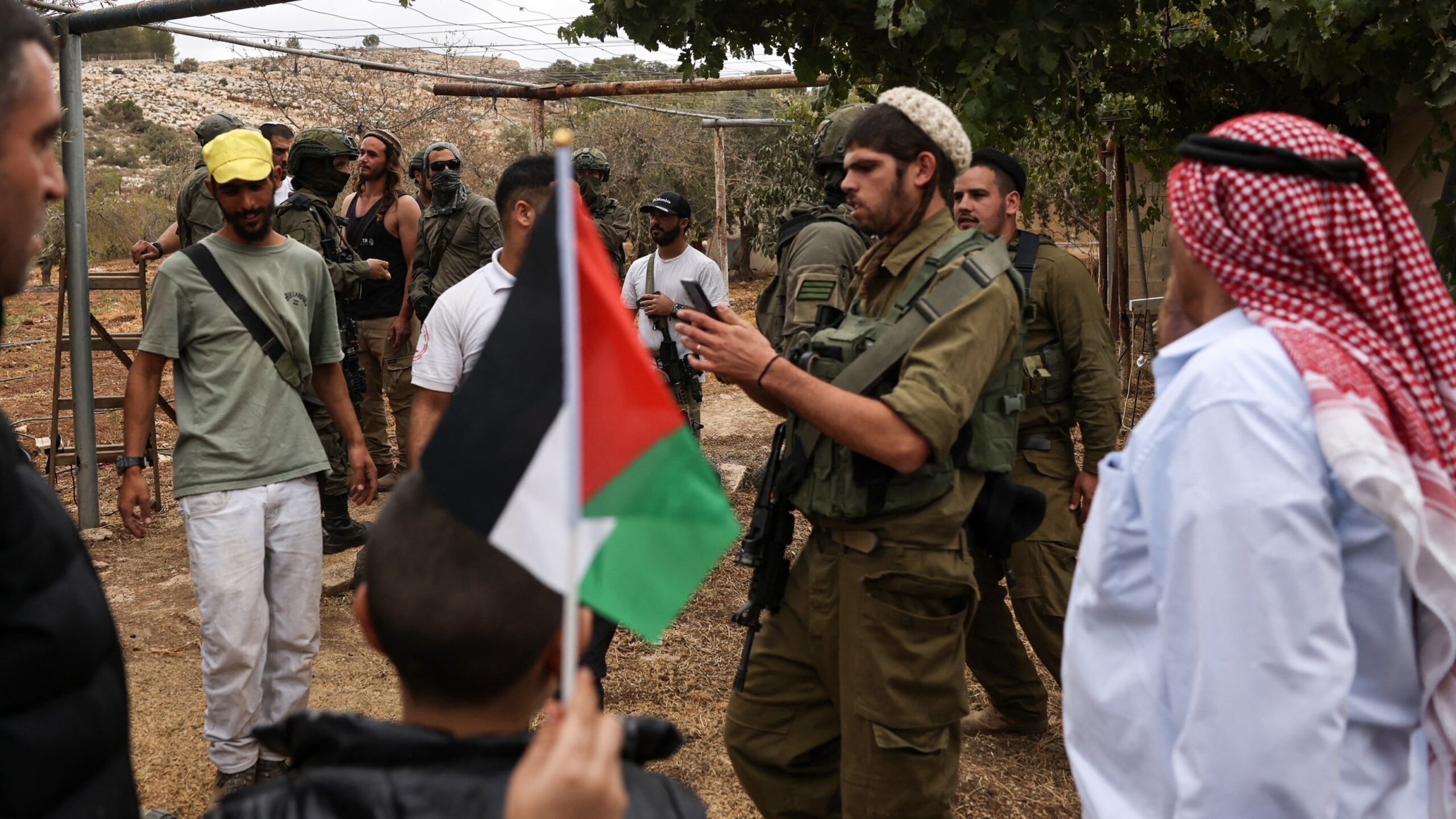
    A significant escalation of settler violence in the occupied West Bank has resulted in the systematic destruction of Palestinian agricultural assets, according to multiple local sources. On Monday, Israeli settlers from the Susya settlement conducted a coordinated assault on farmlands south of Hebron, specifically targeting the Khirbet Khallat al-Homs area southeast of Massafer Yatta.

    The attack involved the deliberate uprooting of approximately 850 olive and grape trees using bulldozers, alongside the vandalization of critical agricultural infrastructure. The targeted destruction specifically affected properties belonging to the Obeid al-Masri family, with reports indicating damage to 500 grapevines and 350 olive trees that constituted their primary livelihood.

    According to the Bedouin rights organization Al-Baydar, this incident represents part of a persistent pattern of violations in the Khallat al-Homs area, where settlers have repeatedly appropriated Palestinian land for grazing livestock. The organization emphasized that these attacks directly threaten agricultural sustainability and economic stability for local farmers.

    This event coincides with a documented surge in settler violence across multiple West Bank regions since October 2023. Recent days have witnessed parallel attacks reported in Hebron, Nablus, Jordan Valley, Jerusalem, and Jericho. In Burqa village northwest of Nablus, settlers incendiarized an agricultural tractor and defaced residential properties with racist graffiti. Simultaneously, settlers excavated land near Khirbet al-Deir in the Jordan Valley to access natural springs, while establishing new unauthorized outposts near Mikhmas northeast of Jerusalem.

    International legal frameworks, particularly the Rome Statute of the International Criminal Court, explicitly classify settlement construction in occupied territories as both illegal and constituting war crimes. Despite this clear legal standing, the Israeli government continues to authorize thousands of new settler homes annually. Unauthorized outposts constructed without governmental approval are additionally proliferating with minimal regulatory intervention.

    Ameer Dawood of the Colonization and Wall Resistance Commission characterized the recent violence as ‘alarming and unprecedented in both scale and intensity,’ noting a consistent pattern of escalation over the past two years that fundamentally undermines Palestinian agricultural communities.