标签: Asia

亚洲

  • Pets given pride of place at Jilin cinema

    Pets given pride of place at Jilin cinema

    A cinema in Changchun, Jilin province has launched an innovative pet-friendly viewing experience, allowing movie enthusiasts to enjoy films alongside their animal companions. The special screening of Disney’s animated sequel Zootopia 2 marked a significant departure from traditional cinema protocols, creating a unique social experience for pet owners.

    The theater implemented comprehensive modifications to accommodate its four-legged guests. Technical adjustments included softened lighting and reduced sound levels to ensure animal comfort during the presentation. The venue further enhanced the experience by providing specialized amenities including plush pet cushions and absorbent diapers, addressing both comfort and practical concerns for pet owners.

    This initiative represents a growing trend in consumer entertainment experiences that recognize pets as family members. The carefully curated environment allowed both humans and animals to enjoy the cinematic experience without the stress typically associated with bringing pets into public venues. Local residents responded enthusiastically to the opportunity, with many attending the special screening as a novel family activity.

    The cinema’s management demonstrated how commercial establishments can adapt their services to evolving consumer expectations regarding pet inclusion in public spaces. This experimental approach to entertainment could potentially influence how other public venues consider pet accommodation policies in the future.

  • Israel’s Ben Gvir wears noose pendent as he pushes death penalty bill for Palestinians

    Israel’s Ben Gvir wears noose pendent as he pushes death penalty bill for Palestinians

    In a provocative parliamentary display, Israel’s far-right National Security Minister Itamar Ben Gvir appeared at Monday’s legislative session wearing a hangman’s noose pendant on his lapel. The symbolic accessory accompanied his ongoing campaign to institute capital punishment for Palestinian prisoners convicted of attacks against Israelis.

    Ben Gvir publicly celebrated the gesture on social media platform X, alongside fellow members of his Otzma Yehudit (Jewish Power) party, who similarly wore noose imagery. The minister declared this visual demonstration represented their “commitment to passing the law and as a clear message that terrorists are sons of death.” His post concluded with the emphatic statement: “The time has come for the death penalty for terrorists!”

    This theatrical political statement follows last month’s preliminary approval of controversial death penalty legislation that passed its first reading with 39 votes in favor and 16 against within the 120-member Knesset. The proposed bill specifically targets Palestinians convicted of lethal attacks motivated by “nationalistic” reasons, while notably exempting Israeli citizens who commit similar offenses against Palestinians.

    The legislation requires two additional parliamentary readings before becoming law. If implemented, it would mark a dramatic shift in Israel’s judicial approach, as the state has executed only one person since its establishment—Nazi war criminal Adolf Eichmann following his 1962 civilian trial.

    During National Security Committee deliberations, Ben Gvir elaborated on execution methods, mentioning gallows, electric chairs, and euthanasia as potential options. The initiative has drawn sharp international criticism, with Hamas condemning it as “fascist and sadistic” and Palestinian Islamic Jihad labeling it a “dangerous criminal escalation.” Human rights organizations have universally opposed the measure, anticipating significant constitutional challenges should it advance further.

  • Defense ministry launches its official account on X

    Defense ministry launches its official account on X

    In a significant move toward global digital engagement, China’s Ministry of National Defense has officially established its presence on the social media platform X (formerly Twitter). The account, operating under the handle @MND_China and bearing the name ‘Ministry of National Defense of China,’ went live on Monday, December 8, 2025.

    The debut post, written in English, announced: ‘History in the making! Here we come. Hi, the official account of the Ministry of National Defense of the People’s Republic of China goes live today.’ The ministry committed to using the platform to share narratives about China and its military operations.

    Accompanying the announcement was a compelling one-minute video emphasizing China’s dedication to global peace, featuring the slogans: ‘Upholding justice; Safeguarding peace; Serving the people.’ The visual presentation showcased various activities of the Chinese military, including training exercises, United Nations peacekeeping missions, anti-piracy escort operations in the Gulf of Aden and waters off Somalia, medical assistance programs, and domestic disaster relief efforts.

    This development represents the latest in a series of strategic digital expansions by Chinese military entities. Previous initiatives include the PLA Navy’s launch of overseas social media accounts in April, the establishment of the PLA’s news communication center accounts in September 2024, and the consistent social media presence maintained by the PLA National Defense University’s International College of Defense Studies.

    Military analyst Zhang Junshe, formerly of the PLA Naval Research Academy, characterized this digital expansion as reflecting ‘a more open, transparent and confident attitude of the Chinese military.’ He noted that these platforms allow global netizens to better understand the PLA’s development, strategies, and policies while providing opportunities for direct interaction and clarification of misconceptions.

    The initiative aims to foster greater international understanding of China’s defense policies and counter what Chinese officials describe as misinformation about the country’s military objectives and operations.

  • Former national political advisor expelled from CPC, public office

    Former national political advisor expelled from CPC, public office

    BEIJING – In a significant demonstration of China’s ongoing anti-corruption campaign, former senior political figure Bi Jingquan has been removed from both the Communist Party of China and public office following confirmed violations of party discipline and national laws. The decision was formally announced on Monday by the country’s top disciplinary watchdog.

    The Central Commission for Discipline Inspection (CCDI) and National Commission of Supervision (NCS) conducted a comprehensive investigation into Bi’s conduct with authorization from the CPC Central Committee. Bi previously held a prominent position as a member of the Standing Committee of the National Committee of the Chinese People’s Political Consultative Conference, an advisory body within China’s political framework.

    According to the official statement, investigators determined that Bi had abandoned his ideological principles and failed to cooperate with the disciplinary review process. The former official was found to have repeatedly violated the Party Central Committee’s eight-point directive on improving governmental conduct, specifically through accepting inappropriate banquet invitations and participating in recreational activities including golf outings and sightseeing tours that could compromise official impartiality.

    The investigation further revealed that Bi abused his administrative authority to secure business advantages and employment opportunities for associates in exchange for substantial monetary gifts and other valuable considerations. His actions represented a severe breach of trust and party regulations.

    In accordance with established disciplinary procedures and legal statutes, authorities have mandated Bi’s expulsion from all official positions, confiscation of illicit assets, and transfer of his case to judicial authorities for potential criminal proceedings. This development underscores China’s continued commitment to enforcing accountability among public officials.

  • China completes wireless heavy-haul train trial

    China completes wireless heavy-haul train trial

    China has achieved a groundbreaking milestone in railway transportation technology with the successful completion of the world’s first wireless heavy-haul train formation trial. The revolutionary test, conducted on December 8, 2025, on the Baoshen Railway in Inner Mongolia Autonomous Region, demonstrated the simultaneous operation of seven freight trains controlled entirely through wireless signals without physical couplings.

    The unprecedented trial involved a convoy of seven 5,000-ton freight trains operating in perfect synchronization across a single track. The core technological breakthrough lies in a domestically developed intelligent control system that utilizes advanced wireless communication protocols and sophisticated algorithms to coordinate acceleration and braking patterns across all trains simultaneously. This ensures precise movement coordination while eliminating collision risks and maintaining optimal spacing throughout the journey.

    Developed through collaboration between China Shenhua (the energy and transport subsidiary of China Energy Investment Corporation) and several research institutions, this wireless control system represents a paradigm shift in freight railway operations. The Baoshen Railway, specifically designed for heavy-duty freight transportation between Baotou and Shenmu, serves as a critical artery for coal transportation from the resource-rich Ordos basin—one of China’s primary energy hubs.

    This technological advancement offers substantial practical benefits, potentially increasing existing freight rail capacity by over 50% without requiring additional infrastructure investment. The wireless coordination system provides a cost-effective solution for enhancing bulk commodity transportation efficiency, particularly for energy resources and other heavy materials requiring long-distance transit.

    Beyond domestic applications, this innovation presents a viable technical solution for nations seeking to improve safety standards and operational efficiency in long-distance freight rail systems. The successful trial positions China at the forefront of intelligent transportation technology, demonstrating how digital innovation can transform traditional industrial infrastructure.

  • US: Tom Barrack says ‘benevolent monarchies’ work best in Middle East

    US: Tom Barrack says ‘benevolent monarchies’ work best in Middle East

    In a striking departure from conventional diplomatic rhetoric, US Special Envoy for Syria Tom Barrack has articulated a controversial vision for Middle Eastern governance during the Doha Forum. The billionaire diplomat asserted that Western-imposed democratic models have consistently failed in the region, while suggesting that benevolent monarchies have demonstrated greater effectiveness.

    Barrack, appointed by former President Donald Trump, delivered his assessment during a panel discussion on Syria’s future. He characterized the post-Assad administration under President Ahmad al-Sharaa as achieving ‘epic’ and ‘heroic’ accomplishments since assuming power in December 2024. The envoy specifically criticized Western interventionist policies, stating that ‘almost every decision that the West has imposed on the region, rather than allowing it to evolve on its own, has been a mistake.’

    Drawing from recent historical examples, Barrack noted that Western efforts in Libya, Iraq, and other nations have resulted in political paralysis rather than sustainable governance. He advocated for international support that empowers Syrians to establish their own sovereign government without external pressure or unrealistic timelines.

    Regarding ongoing Syrian-Israeli border tensions, Barrack proposed resolving conflicts through incremental ‘baby steps’ rather than comprehensive imposed solutions. In a particularly provocative statement, he questioned Israel’s democratic credentials, suggesting that monarchical systems have proven more successful in the region despite democratic claims.

    The envoy’s comments align with his unconventional diplomatic approach, having previously described himself as an ‘events-driven mercenary’ during an August interview. Barrack has consistently challenged established geopolitical narratives, including describing regional peace as ‘an illusion’ and questioning the relevance of Sykes-Picot established borders in contemporary Middle Eastern politics.

  • Hong Kong’s Legislative Council  election held successfully

    Hong Kong’s Legislative Council election held successfully

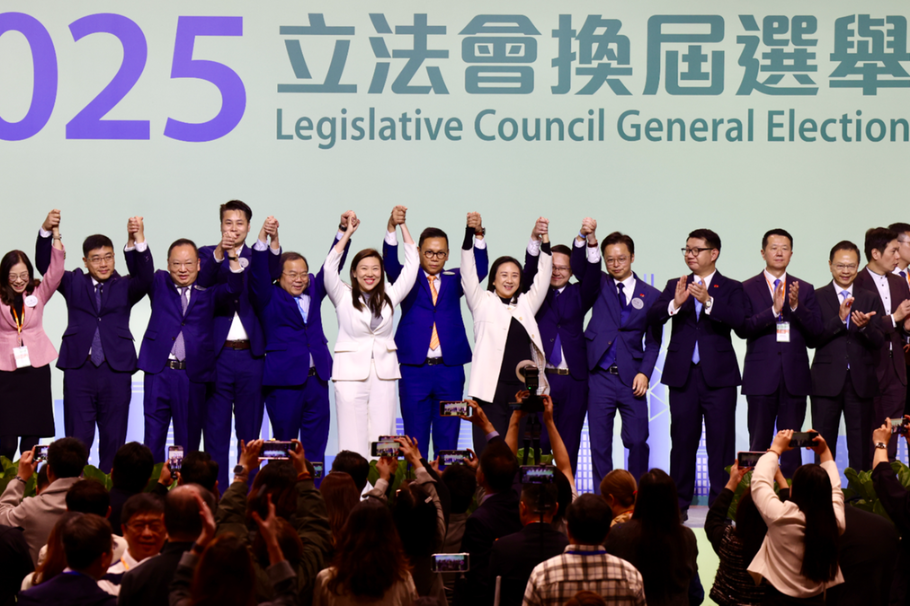
    Hong Kong has successfully concluded its eighth-term Legislative Council election, marking a significant democratic milestone for the Special Administrative Region. The election, held on December 7, 2025, demonstrated robust public participation with voter turnout across all constituencies substantially exceeding previous records.

    The Hong Kong and Macao Affairs Office of the State Council issued an official statement Monday congratulating the successful electoral process, noting that the high participation rates reflected broad societal recognition and strong support for the new political framework. The statement emphasized that the election results genuinely represent the will of Hong Kong citizens while advancing democratic development under the ‘one country, two systems’ principle.

    Despite challenges including a recent devastating fire in Tai Po during the campaign period, the election proceeded smoothly through effective coordination between government agencies and emergency services. Chief Executive John Lee Ka-chiu and the SAR government implemented numerous innovative measures to ensure electoral arrangements complied strictly with legal requirements while simultaneously managing disaster relief operations.

    The newly structured Legislative Council comprises 90 members representing three electoral pathways: 40 selected by the Election Committee, 30 from functional constituencies, and 20 through geographical constituency direct elections. All elected members have been characterized as patrions committed to Hong Kong’s prosperity, with demonstrated capabilities, sense of responsibility, and dedication to public service.

    The central government expressed confidence that incoming legislators will uphold national sovereignty and security interests while supporting the executive-led governance structure. Expectations include effective management of executive-legislative relations, responsiveness to public needs, and consensus-building to drive post-disaster recovery, governance reform, and long-term stability. The eighth-term Legislative Council will commence its four-year mandate on January 1, 2026.

  • Court outlines boundaries in property service disputes

    Court outlines boundaries in property service disputes

    China’s Supreme People’s Court has issued definitive judicial guidance on property management conflicts through the publication of five landmark cases, establishing clear legal boundaries between homeowners and service providers. The move represents a significant judicial intervention aimed at elevating service quality standards and addressing both persistent and emerging challenges within the rapidly evolving property sector.

    The court emphasized the critical role of property management in fulfilling citizens’ aspirations for improved living standards, particularly as China’s urban development strategy shifts from rapid expansion to the enhancement of existing residential properties. This transition has positioned community living as a central component of modern urban existence, consequently driving increased public demand for superior living environments, housing quality, and professional property services.

    In response to the frequent, widespread, and recurrent nature of disputes between residents and property companies, the Supreme Court has directed nationwide judicial bodies to proactively address public concerns and utilize legal mechanisms to facilitate conflict resolution. One illustrative case involved a homeowner identified only by the surname Zhang, who found himself denied access to his building’s elevator and entry systems due to outstanding property fees. Although Zhang eventually reached a settlement with the management company, he proceeded with legal action to challenge the punitive measures.

    Referencing China’s Civil Code, a local court determined that property service providers are expressly prohibited from suspending essential services including electricity, water, heating, or gas to compel fee payments. The judiciary acknowledged homeowners’ contractual obligation to pay agreed-upon fees while recognizing that payment delays and refusals have become commonplace, sometimes prompting companies to employ inappropriate pressure tactics.

    The court explicitly stated that restricting access cards or limiting elevator usage for fee collection constitutes improper infringement of homeowners’ property rights. Such approaches lack legal foundation and exceed reasonable boundaries, frequently exacerbating rather than resolving conflicts. Instead, the judiciary emphasized that service providers should employ reasonable communication methods to encourage payment and pursue their legitimate rights through formal channels including mediation, litigation, or arbitration—all without disrupting residents’ daily lives.

  • Tsunami warning after earthquake strikes off Japan

    Tsunami warning after earthquake strikes off Japan

    A powerful 7.6 magnitude earthquake struck northeastern Japan on Monday evening, triggering immediate tsunami warnings and mass evacuation orders for approximately 90,000 residents along the Pacific coastline. The seismic event occurred at 23:15 local time (14:15 GMT) at a depth of 50 kilometers, approximately 80 kilometers off the coast of Aomori region according to the Japan Meteorological Agency.

    Japanese television broadcasts urgently displayed emergency messages reading ‘Tsunami! Run!’ and ‘Tsunami warning issued for central Hokkaido’s Pacific Coast’ as authorities scrambled to alert coastal communities. Initial wave observations recorded tsunami surges reaching 40 centimeters in some areas, though officials warned of potentially larger waves to follow.

    The quake resulted in multiple injuries according to local media reports, with Japanese public broadcaster NHK quoting a hotel employee in Hachinohe confirming several casualties. Transportation networks were significantly disrupted with train services suspended throughout the affected region as a precautionary measure.

    Critical infrastructure monitoring confirmed no abnormalities at the Higashidori and Onagawa nuclear power plants, as reported by Tohoku Electric Power Company. This reassurance came as particular relief given Japan’s heightened sensitivity to seismic events affecting nuclear facilities since the 2011 Fukushima disaster.

    The earthquake serves as another stark reminder of Japan’s vulnerability to seismic activity, occurring in a nation that experiences tremors approximately every five minutes due to its position along the Pacific Ring of Fire. Emergency response systems were fully activated with evacuation centers established for displaced residents.

  • IndiGo shares plunge further after regulatory action threat amid flight crisis

    IndiGo shares plunge further after regulatory action threat amid flight crisis

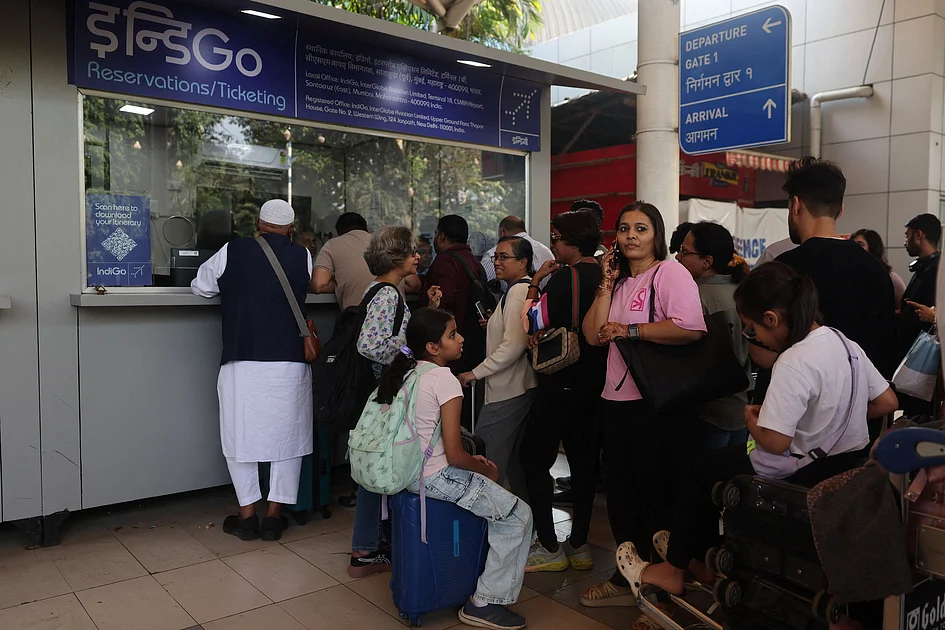
    India’s aviation sector is experiencing significant turbulence as IndiGo, the nation’s dominant carrier, faces mounting operational challenges that have triggered substantial financial losses and regulatory intervention. The airline’s shares plummeted an additional 8% on Monday, extending a devastating decline that has erased approximately $4 billion from its market valuation, bringing total losses to 16% over the past week.

    The crisis stems from inadequate preparation for new aviation regulations implemented on November 1st, which mandated stricter night flying protocols and enhanced weekly rest requirements for pilots. These operational shortcomings became critically apparent during December’s peak travel season, when holiday and wedding travel typically surge across India.

    The cascading effects have been severe: thousands of flight cancellations have stranded passengers nationwide, prompting government authorities to intervene and prevent predatory fare inflation. Aviation regulators have issued a 24-hour ultimatum demanding justification for why regulatory action shouldn’t be imposed against the carrier.

    While IndiGo maintains 65% market dominance in India’s aviation landscape, competitors are capitalizing on the disruption. Shares of SpiceJet, one of India’s few publicly-traded airlines, surged 13.9% as investors anticipate market share redistribution. The airline has expressed confidence that normal operations will resume by Wednesday, but the damage to consumer trust and investor confidence remains substantial.

    This operational breakdown highlights systemic vulnerabilities within India’s aviation infrastructure and raises questions about capacity planning during peak travel periods. The situation continues to develop with ongoing monitoring by aviation authorities and financial markets.