标签: Asia

亚洲

  • Crackdown urged on graft that affects ordinary people

    Crackdown urged on graft that affects ordinary people

    China’s Supreme People’s Court and Supreme People’s Procuratorate have launched a renewed offensive against corruption that directly impacts citizens’ daily lives, emphasizing the need to eliminate systemic conditions that enable graft at its source. The judicial authorities have spotlighted five emblematic cases demonstrating how corruption infiltrates essential public service sectors including housing, elderly care, medical insurance, school nutrition programs, and disability rights protection.

    Unlike high-profile ‘tiger’ corruption cases involving senior officials, these cases target ‘flies’—lower-ranking functionaries whose proximity to ordinary citizens enables them to cause disproportionate harm. The initiative underscores how positions of modest authority can be exploited to undermine public trust and divert resources from critical social programs.

    One particularly egregious case involved a former housing official in Hunan province sentenced to 11.5 years imprisonment for embezzling nearly 10 million yuan ($1.41 million) from property maintenance funds over a decade-long scheme. The official, surnamed Zhou, manipulated his oversight of county maintenance funds by directing payments through personal QR codes, issuing fraudulent receipts, and withholding legitimate payments—affecting approximately 3,000 households and nearly 10,000 residents. Zhou additionally misappropriated 1.72 million yuan to settle personal loans, with investigations revealing he orchestrated a sham divorce to conceal assets and evade recovery of illicit gains.

    Beyond individual punishment, judicial authorities have implemented systemic reforms through targeted rectification recommendations to address management loopholes in fund supervision, property service systems, and oversight mechanisms. The Supreme People’s Court emphasized that housing represents a fundamental livelihood issue, with property maintenance funds serving as crucial financial safeguards for homeowners. Their illegal misappropriation constitutes a severe violation of citizens’ legitimate rights and interests.

    The judicial authorities are promoting the strategic use of judicial recommendations to identify regulatory blind spots and supervision gaps across government agencies and industries, signaling a comprehensive approach to corruption prevention that combines punitive measures with institutional reform.
  • New tech aids safe air transport of lithium batteries

    New tech aids safe air transport of lithium batteries

    China has achieved a technological breakthrough that enables the safe aerial transportation of lithium batteries, addressing a long-standing aviation safety challenge while creating new opportunities for global trade. The innovative system successfully completed real-world testing with the transportation of a 250-kilogram power lithium battery from Ezhou Huahu International Airport to Shenzhen, completing the journey in just two hours—an 80% efficiency improvement over traditional ground transportation.

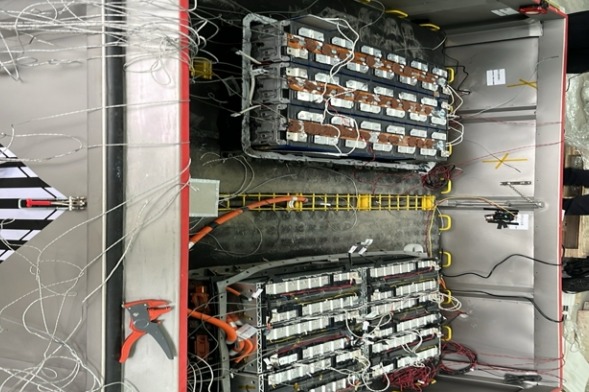
    The comprehensive safety solution, developed through a national research initiative under China’s 14th Five-Year Plan, employs a multi-layered protection approach. At its core is a specialized protective casing constructed from advanced materials that provide thermal insulation, flame retardancy, pressure reduction, toxin mitigation, and fire suppression capabilities. According to research leads from Chongqing Jiaotong University, the containment system demonstrated exceptional performance during rigorous testing, preventing flame escape and maintaining surface temperatures below 100°C during battery combustion events.

    Complementing the physical protection is an intelligent monitoring system that tracks twelve critical parameters in real-time, including temperature, pressure, and gas levels within the protective equipment. Utilizing AI-driven early warning algorithms, the system can detect subtle abnormalities such as minor gas leaks with remarkable precision. Third-party verification confirms the system’s average response time of 5.38 seconds and an accuracy rate exceeding 96%, providing unprecedented safety assurance.

    This advancement comes at a crucial time as China’s lithium battery industry continues its rapid expansion, with total output value surpassing 1.2 trillion yuan ($169.7 billion) in 2024, representing a 24% year-on-year increase. The technology promises to unlock significant economic potential by enabling efficient air transport of lithium batteries, with capacity ranging from 5 to 30 metric tons per flight depending on aircraft specifications.

    Industry experts highlight the particular advantage for international markets, where meeting delivery timelines is critical. Currently, over 90% of lithium batteries are transported by land or sea, with only 2-3% utilizing air transport due to safety concerns. This technological breakthrough is poised to transform this landscape, supporting Chinese companies in expanding their global market presence while maintaining the highest safety standards.

  • Japan assesses damage from 7.5 magnitude quake

    Japan assesses damage from 7.5 magnitude quake

    Japanese authorities are conducting comprehensive damage assessments following a significant 7.5 magnitude earthquake that struck the Pacific coastal region on Tuesday evening. The seismic event, which occurred approximately 80 kilometers off the coast of Aomori Prefecture at 11:15 pm local time, triggered tsunami advisories and caused multiple injuries throughout northern Japan.

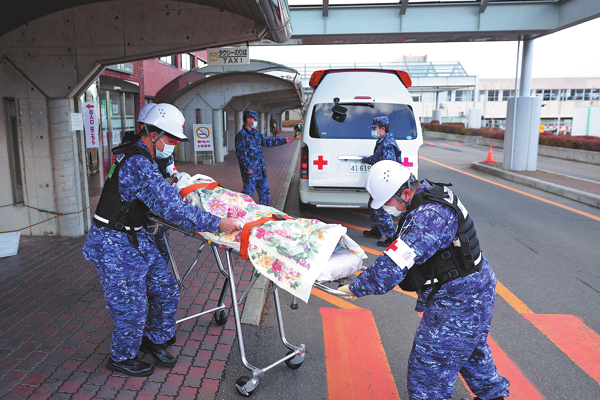
    According to the Fire and Disaster Management Agency, at least 34 individuals sustained injuries, with one person reported in serious condition. Most injuries resulted from falling objects during the intense tremors. The quake’s impact was particularly visible in Mutsu, Aomori Prefecture, where Self-Defense Force personnel assisted in evacuating hospital patients after ruptured sprinkler systems flooded upper floors.

    The Japan Meteorological Agency recorded tsunami waves reaching 70 centimeters at Kuji port in Iwate Prefecture, with several other coastal communities experiencing waves up to 50 centimeters. The tsunami advisory was lifted by 6:30 am Tuesday, though officials cautioned about potential aftershocks in the coming days.

    Infrastructure damage included approximately 800 households experiencing temporary power outages, though Tohoku Electric Power Company reported most electricity had been restored by Tuesday morning. Transportation networks faced significant disruptions with suspended Shinkansen bullet trains and local rail services, while approximately 200 passengers were stranded overnight at New Chitose Airport in Hokkaido due to ceiling damage in terminal buildings.

    Defense Minister Shinjiro Koizumi confirmed the mobilization of 18 military helicopters for damage assessment operations, with about 480 residents taking shelter at Hachinohe Air Base. The Nuclear Regulation Authority reported minimal safety concerns at nuclear facilities, noting only 450 liters of water spilled from a spent fuel cooling area at the Rokkasho fuel reprocessing plant, with all systems maintaining normal operational levels.

    Prime Minister Sanae Takaichi established an emergency task force, emphasizing the government’s commitment to prioritizing human safety and comprehensive response measures. Meteorological officials warned of increased seismic risks along Japan’s northeastern coast, noting slightly elevated possibilities of larger magnitude earthquakes in the region.

  • Draft rules seek to safeguard network data security

    Draft rules seek to safeguard network data security

    China’s Cyberspace Administration has unveiled comprehensive draft regulations establishing a systematic framework for network data security risk assessments. The proposed measures, announced on December 7, 2025, aim to strengthen the lawful and effective utilization of data while addressing evolving cybersecurity challenges.

    The draft defines data security risk assessment as a comprehensive process involving identification, analysis, and evaluation of risks associated with data and data-processing activities. Under the new framework, processors handling ‘important data’ would be required to conduct mandatory annual security assessments. The regulations stipulate that immediate targeted assessments must be performed whenever significant changes occur that could adversely impact overall data security.

    For processors of ‘general data,’ the administration encourages voluntary risk assessments at minimum three-year intervals. Organizations may conduct these evaluations internally or engage certified third-party institutions. However, assessment agencies detecting major security risks must promptly notify both the data processor and provincial-level cyberspace authorities in accordance with regulatory requirements.

    The draft specifies circumstances requiring mandatory third-party assessments, including: when data-processing activities present relatively high security risks; following security incidents resulting in leakage or theft of important data or large-scale personal information; and when operations potentially threaten national security or public interest.

    Data processors face specific obligations during assessments, including providing assessors with access to necessary data facilities, systems, and operational logs. Companies must address identified vulnerabilities and submit rectification reports within 15 working days after assessment completion. Regulatory authorities retain power to order corrections when data-processing activities endanger national security or public interest, with non-compliant entities potentially facing suspension of important data processing operations.

    Wang Zhicheng, an official from the Office of the Central Cyberspace Affairs Commission, characterized the measures as establishing a ‘full life cycle and multi-element evaluation system’ designed to address emerging security challenges posed by artificial intelligence, big data, and blockchain technologies. The framework embeds risk assessment throughout the entire data life cycle—from collection and storage to processing, transmission, and deletion—while evaluating multiple dimensions including technological protections, management implementation, personnel responsibilities, and institutional mechanisms.

    The Cyberspace Administration has opened the draft for public consultation until January 5, 2026, seeking stakeholder feedback before final implementation.

  • Thai-Cambodian clashes spread as death toll rises

    Thai-Cambodian clashes spread as death toll rises

    The longstanding border dispute between Thailand and Cambodia has escalated into widespread military confrontation, resulting in significant civilian casualties and mass displacement. As of Tuesday, December 10, 2025, the death toll has risen to ten with over 140,000 civilians forced to evacuate their homes amid intensifying hostilities.

    Military engagements have expanded beyond initial conflict zones, with Thailand deploying airstrikes and tank units against Cambodian positions. The fighting has now reached historically sensitive areas including the vicinity of the UNESCO World Heritage Site Preah Vihear Temple, raising international concerns about potential damage to cultural heritage.

    Cambodian Senate President Hun Sen confirmed his nation’s military response after previously exercising restraint for two days. Phnom Penh authorities report seven civilian fatalities and approximately twenty injuries since hostilities reignited on Sunday. Thai military officials acknowledge three soldier casualties, including one killed by indirect fire in Surin Province and another by grenade near the Preah Vihear temple complex.

    Humanitarian crisis intensifies as nearly 500 temporary shelters have been established across border provinces, accommodating more than 125,000 displaced persons. Civilian testimonies reveal the trauma of repeated displacements, with some residents experiencing their fourth evacuation this year due to persistent border tensions.

    The conflict’s expansion into coastal regions adds another dimension to the crisis. Thai naval spokesperson Parat Rattanachaiphan accused Cambodian forces of establishing military installations in disputed coastal territories of Trat Province and deploying unmanned drones to provoke Thai units, prompting what Thailand describes as defensive military operations.

    The current violence represents the most significant escalation in the century-old border dispute between the Southeast Asian neighbors, with diplomatic solutions remaining elusive as military actions continue to intensify.

  • Para athletes showcase abilities, sportsmanship

    Para athletes showcase abilities, sportsmanship

    The 12th National Games for Persons with Disabilities and the 9th National Special Olympic Games have commenced in the Guangdong-Hong Kong-Macao Greater Bay Area, marking a significant milestone in regional cooperation and disability inclusion. Jointly hosted by Guangdong province and the two special administrative regions, the events represent China’s commitment to advancing para sports and social integration.

    During Tuesday’s athletics competitions at Guangdong Olympic Sports Center, athletes demonstrated exceptional skill and sportsmanship. Vice-Governor Li Yun of Guangdong province emphasized the games’ role in showcasing the resilience and capabilities of para athletes while presenting awards to medalists.

    Notable performances included Jiang Yanhong of Guangdong securing the first athletics gold medal for the host team after two years of preparation. “Merely standing on this field brings me immense happiness,” Jiang stated, expressing satisfaction with her debut performance while looking ahead to her T64 class 100m event.

    The games witnessed emotional moments as Sichuan’s Hu Yutao embraced his wife Wang Wenjie following his T64 class 100m victory, acknowledging her four years of unwavering support. Meanwhile, Henan’s Li Lu celebrated her T47 class 400m gold as the perfect birthday gift, adding to her previous Paralympic achievement from the 2016 Rio Games.

    Veteran athlete Liu Cuiqing from Guangxi demonstrated remarkable perseverance, overcoming injury and age-related challenges to claim the T11 class 100m title. The games continue through Monday, featuring multiple athletic disciplines across the Greater Bay Area venues.

  • Events honor role of first provincial governor in modernizing Taiwan

    Events honor role of first provincial governor in modernizing Taiwan

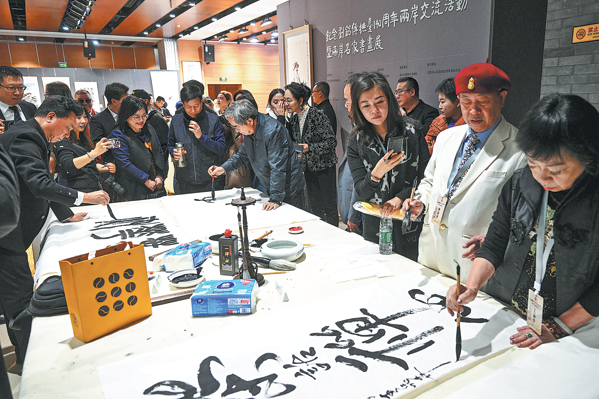
    Beijing hosted a significant cross-strait gathering on Tuesday to commemorate the 140th anniversary of Liu Mingchuan’s appointment as Taiwan’s first provincial governor during the Qing Dynasty. The event at Beijing’s Taiwan Guild Hall brought together representatives from both sides of the strait, highlighting the historical interconnectedness between Taiwan and mainland China.

    Liu Mingchuan, who led successful defenses against French invaders during the Sino-French War (1883-1885), was appointed in 1885 when Taiwan was formally elevated to provincial status. During his six-year tenure, Governor Liu transformed Taiwan into the most progressive province of late Qing China by introducing railway systems, telegraph technology, and modern infrastructure, earning him the title ‘father of Taiwan’s modernization.’

    Yang Yizhou, Vice-Chairman of the All-China Federation of Taiwan Compatriots, emphasized that Taiwan’s establishment as a province ‘institutionally reinforced Taiwan’s status as an inseparable part of Chinese territory.’ He noted that UN documents continue to designate Taiwan as ‘Taiwan, Province of China,’ reflecting contemporary reality.

    Yu Shu-chin, President of Taiwan’s Association of World Peace Promotion, addressed current cross-strait tensions, stating that separatist forces advocating ‘Taiwan independence’ are ‘destined to fail.’ She expressed concern about revised curriculum guidelines in Taiwan that obscure historical facts, making it harder for younger generations to learn their history.

    The commemoration included a calligraphy and painting exhibition featuring over 100 works by 91 artists from across the strait, depicting Liu’s life and character. Liu Xuexuan, president of the Liu Mingchuan Research Association and descendant of the governor, expressed hope that the event would build ‘a bridge of understanding across the Taiwan Strait.’

    Participants noted that many Taiwanese locations bear Liu’s name, including Ming Chuan University and the Liu Ming-Chuan Tunnel in Keelung, serving as shared cultural symbols between the mainland and Taiwan.

  • HK fire death toll rises to 160, six still missing

    HK fire death toll rises to 160, six still missing

    Hong Kong authorities confirmed Tuesday that the death toll from November’s catastrophic Tai Po residential fire has reached 160 victims following advanced DNA analysis of recovered remains. The devastating blaze at Wang Fuk Court continues to haunt the community as six individuals remain unaccounted for nearly two weeks after the tragedy.

    Police Commissioner Joe Chow Yat-ming disclosed during an afternoon press briefing that forensic experts had positively identified previously discovered remains as belonging to two additional victims—an elderly female resident and a domestic worker. Both victims’ families, currently residing in Hong Kong, provided genetic material that enabled the conclusive identifications.

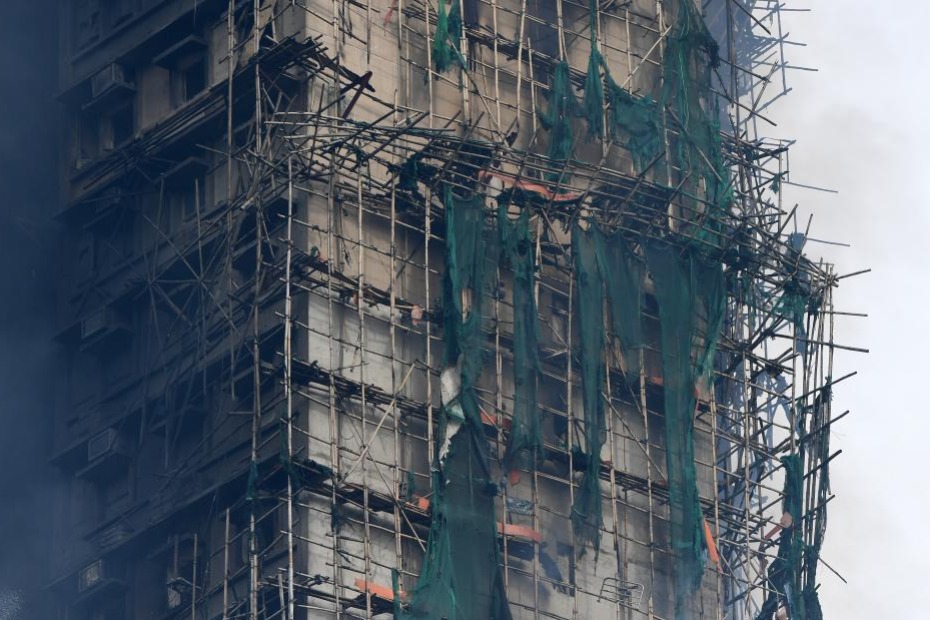
    The painstaking recovery operation has entered a new phase as authorities collaborate with the Housing Department to remove all compromised bamboo scaffolding that collapsed during the inferno. Commissioner Chow noted that during this delicate process, workers discovered skeletal fragments requiring further laboratory examination to determine their origin—whether human, animal, or previously cataloged remains.

    Meanwhile, the Fire Services Department completed draining water from all seven affected structures, revealing no additional human remains. Chief Superintendent Tsang Shuk-yin, overseeing casualty investigations, provided updated statistics: twelve individuals initially reported missing have been confirmed safe, four had deceased prior to the fire incident, and six were determined to be non-residents of the complex.

    The forensic identification effort has intensified with police collecting DNA samples from 162 family members of potential victims. The Government Laboratory and forensic departments have prioritized these analyses to accelerate identifications and provide closure to grieving families.

    In a disturbing development, authorities revealed they have uncovered 21 fraud cases exploiting the tragedy, resulting in two arrests. Additionally, building safety regulators are investigating six suspected cases involving falsified documentation for safety scaffolding nets used during building renovations. The Buildings Department is expected to announce stringent new regulations within days requiring on-site sampling and certification of all scaffold netting before installation.

    Multiple residential estates across Hong Kong—including Baguio Villa in Pok Fu Lam, Fung Wah Estate in Chai Wan, and several others—are under investigation for potential safety violations. The Housing Bureau’s Independent Checking Unit continues extracting concrete core samples from the seven fire-damaged buildings in Wang Fuk Court to assess structural integrity.

    As of Tuesday evening, compliance with the Buildings Department’s safety order has resulted in the removal of scaffold nets from 230 private buildings, with two cases completed by government contractors. Concurrently, the Labour Department has intensified inspections of fire protection facilities and emergency preparedness at maintenance sites with extensive scaffolding, issuing 189 written warnings, 101 improvement notices, and initiating 25 prosecutions following inspections of 371 construction sites.

  • Science teaching to foster curious minds

    Science teaching to foster curious minds

    China has unveiled a comprehensive national guideline to revolutionize science, technology, engineering, and mathematics (STEM) education in primary and secondary schools. The initiative, jointly issued by the Ministry of Education and six other government departments on November 12, 2025, aims to develop students who “think like scientists and practice like engineers.”

    The ambitious plan establishes clear milestones: by 2030, a structured science education system should be fundamentally established with enhanced curricula, teaching methodologies, evaluation mechanisms, and teacher development programs. By 2035, the vision expands to a fully matured science education ecosystem supported by social resources and widespread implementation of project-based, inquiry-driven, and interdisciplinary teaching approaches.

    Tian Zuyin, Director of the Ministry’s Department of Basic Education, emphasized the graduated approach aligned with cognitive development. Early primary education will focus on experiential learning and curiosity stimulation, while upper primary grades advance to conceptual understanding and hands-on exploration. Middle school students will engage in practical inquiry around real-world problems, with high schoolers concentrating on experimental research and engineering practice involving cutting-edge advancements.

    The guideline encourages innovative teaching models including “dual-teacher classes” featuring collaborations between scientists and classroom teachers, and “future classrooms” utilizing metaverse-based virtual laboratories. Assessment methods will evolve beyond exam-focused metrics to include process evaluation and digital profiles tracking students’ innovative growth.

    To address implementation challenges, the policy promotes partnerships between schools, universities, research institutes, and technology enterprises. Teacher training will be enhanced through master’s programs in science education at top universities and specialized development for current educators. Experts from academic and research institutions will be encouraged to serve as part-time instructors.

    Educators nationwide have welcomed the guideline as a transformative roadmap. Lu Yongli, Principal of Beijing No. 2 Experimental Primary School, noted the alignment with existing national science curricula that already include 78 compulsory inquiry experiments for primary students. In rural areas, teachers like Hu Guozhu from Yaoxiang Middle School in Hunan praised the emphasis on adapting to local conditions rather than copying urban models.

    The human impact of this approach is already visible. Xia Jun’an, a fifth-grade student in Hangzhou, recently experienced the principles firsthand through designing and building a functional water clock using simple materials. “When the clock finally dripped evenly and timed three minutes successfully,” he recounted, “it felt like I could ‘touch’ time—it was no longer abstract, but right there in the rhythm of each drop.”

    As the policy rolls out, educators believe that by making science more engaging, practical, and inclusive, China can lay the foundation for a new generation of curious, creative minds prepared to contribute to the nation’s scientific and technological future.

  • 8 dead in residential building fire in South China

    8 dead in residential building fire in South China

    A devastating residential fire in Shantou City, Guangdong province has resulted in eight fatalities and four injuries, according to local authorities. The blaze erupted at approximately 9:21 PM on Tuesday evening in Chaonan District and was successfully contained by firefighters around 10:00 PM.

    Emergency responders immediately transported all injured individuals to nearby medical facilities for treatment. Preliminary investigations indicate the affected structure was a four-story self-built concrete building with approximately 150 square meters of area damaged by the fire.

    The Chaonan District fire department confirmed the casualty figures in an early Wednesday statement while noting that the specific cause of the incident remains under active investigation. The tragedy has prompted local officials to establish an independent judge-chaired commission to conduct a comprehensive fire investigation.

    This incident represents one of the deadliest residential fires in the region in recent memory, raising concerns about fire safety standards in self-built structures throughout southern China. The community has begun mourning the victims while authorities work to determine the factors that contributed to the catastrophic outcome.