标签: Asia

亚洲

  • China’s poverty alleviation achievements continuously consolidated, expanded in 2025

    China’s poverty alleviation achievements continuously consolidated, expanded in 2025

    China has successfully reinforced its monumental poverty eradication accomplishments throughout 2025, implementing robust measures to prevent large-scale relapse into economic hardship. According to Wednesday’s announcement from the Ministry of Agriculture and Rural Affairs, assistance policies have been executed with remarkable stability nationwide, effectively securing the foundational safeguards against a return to poverty.

    The comprehensive monitoring system identified and provided crucial support to over 7 million individuals deemed at risk of slipping back below the poverty threshold this year. This systematic approach has proven instrumental in maintaining the nation’s hard-won progress in livelihood improvement.

    Substantial enhancements have been achieved across essential social welfare domains including education accessibility, healthcare coverage, housing security, and clean drinking water provisions for previously impoverished populations. These developments represent critical components of China’s ongoing commitment to sustainable development.

    Industrial development in formerly impoverished regions continues to demonstrate vigorous growth. All 832 counties that have eliminated poverty have now cultivated between two to three distinctive leading industries, creating powerful economic drivers that stimulate local economies and provide stable employment opportunities.

    The employment landscape remains particularly strong, with over 30 million individuals who have escaped poverty maintaining stable employment. This workforce participation secures more than two-thirds of total household income for families that have transitioned out of economic hardship.

    Economic indicators further validate these achievements. During the first three quarters of 2025, rural residents in formerly impoverished counties recorded a per capita disposable income of 13,158 yuan (approximately $1,860), representing a growth rate that exceeded the national rural average by 0.5 percentage points.


  • US and Japan hold joint flight drills as China ups military activity near Japan

    US and Japan hold joint flight drills as China ups military activity near Japan

    In a significant display of military cooperation, United States strategic bombers and Japanese fighter jets conducted joint aerial exercises near Japan’s western airspace on Wednesday. The drills involved two U.S. B-52 strategic bombers alongside three Japanese F-35 stealth fighters and three F-15 jets, operating above waters between Japan and South Korea.

    The exercises occurred amidst escalating regional tensions, coming just one day after Chinese and Russian strategic bombers conducted coordinated flights around western Japan. While no airspace violations occurred during these flights, the incident prompted Tokyo to scramble fighter jets in response.

    Japanese defense officials characterized the joint drills as demonstrating the “strong resolve” between allied forces to “prevent unilateral attempts to change the status quo by force.” The Joint Staff statement emphasized that Japan’s security environment is “becoming even severer,” though they denied the exercises were a direct response to any specific incident.

    Tensions further intensified over the weekend when Japanese authorities reported that Chinese military aircraft had locked radar on Japanese jets—an action considered potential preparation for weapons deployment. Tokyo has formally protested to Beijing, demanding explanations and preventive measures, while China denied the allegations and instead accused Japanese aircraft of interfering with Chinese exercises.

    The situation prompted a high-level telephone discussion between Japanese Defense Minister Shinjiro Koizumi and U.S. counterpart Pete Hegseth early Friday. Both ministers expressed “serious concern” over actions increasing regional tensions, specifically noting that “China’s actions are not conducive to regional peace and stability.”

    Koizumi reaffirmed Japan’s commitment to maintaining robust surveillance and monitoring activities in surrounding airspace and waters. Washington concurrently emphasized its “unwavering” alliance with Japan amid the deteriorating security situation in the Indo-Pacific region.

    The geopolitical friction follows recent remarks by Japanese Prime Minister Sanae Takaichi suggesting possible military involvement if China were to take action against Taiwan—a self-governing island that Beijing claims as its territory.

  • Pakistan’s military sentences its former spy chief to 14 years in jail

    Pakistan’s military sentences its former spy chief to 14 years in jail

    In an unprecedented judicial development within Pakistan’s military establishment, former Inter-Services Intelligence (ISI) director Faiz Hameed has been sentenced to 14 years imprisonment by a military tribunal. The verdict concludes a 15-month legal process that marks the first court martial of an ISI chief in the nation’s history.

    The military court convicted Hameed on multiple serious charges including violation of state secrets under the Official Secrets Act, unauthorized political interference, misuse of authority and government resources, and actions detrimental to citizens’ welfare. The proceedings, conducted behind closed doors beginning August 12, 2024, were administered under the Pakistan Army Act.

    Hameed, who helmed the country’s premier intelligence agency from 2019 to 2021 during former Prime Minister Imran Khan’s administration, was widely recognized as a steadfast Khan loyalist. He opted for early retirement shortly after Khan’s removal through a parliamentary no-confidence motion in 2022.

    The military’s public relations division (ISPR) confirmed in an official communiqué that the defendant was afforded legal representation of his choice throughout the judicial process. The statement further clarified that Hameed retains the right to challenge the verdict through an appeal to Pakistan’s Supreme Court.

    Separately, investigations continue regarding Hameed’s alleged involvement in instigating political unrest, particularly concerning protests triggered by Imran Khan’s arrest on May 9, 2023. This aspect of the case remains under exclusive military jurisdiction and will be addressed through subsequent legal channels.

    The sentencing of someone who held what is considered Pakistan’s second-most powerful military position signals significant institutional repercussions within the country’s political-military framework.

  • China achieves key results in 10-year fishing ban on Yangtze River

    China achieves key results in 10-year fishing ban on Yangtze River

    China’s ambitious decade-long fishing moratorium along the Yangtze River has achieved significant milestones in ecological restoration and social transition, according to the Ministry of Agriculture and Rural Affairs. The comprehensive conservation initiative, designed to revive the world’s third-longest river system, has produced tangible results in biodiversity recovery while ensuring sustainable livelihoods for displaced fishing communities.

    The government’s multi-faceted approach has successfully addressed the human dimension of this ecological transformation. Through coordinated efforts across departments, authorities have implemented comprehensive support measures for former fishermen. By September’s end, all 142,000 job-seeking fishermen had secured reemployment opportunities, while 220,000 eligible individuals gained enrollment in pension insurance programs, providing long-term social security.

    Ecological indicators demonstrate remarkable progress since the fishing ban’s implementation. The Yangtze’s aquatic biodiversity has shown continuous improvement through enhanced protection and restoration initiatives. In 2025 alone, conservationists released over 970,000 Chinese sturgeons into the river, with monitoring confirming that more than 60% of these endangered fish have successfully migrated to the ocean through the Yangtze estuary.

    The conservation strategy includes systematic habitat restoration targeting critical ecological zones. Authorities have strengthened management of protected aquatic germplasm resource areas while implementing scientifically-guided restocking programs. This holistic approach represents one of the world’s most extensive river conservation efforts.

    The fishing prohibition began with a initial ban in 332 conservation areas throughout the Yangtze basin in January 2020. The program expanded significantly with a full十年禁渔 (ten-year fishing moratorium) covering the river’s main streams and major tributaries, which took effect on January 1, 2021. This long-term commitment reflects China’s dedication to balancing ecological restoration with sustainable social development along its most vital waterway.

  • Analysts call for stronger Beijing-Jakarta relations

    Analysts call for stronger Beijing-Jakarta relations

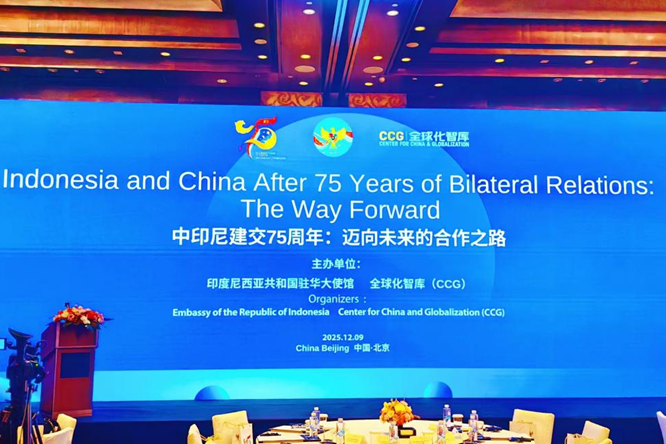
    Senior officials and policy experts convened in Beijing this week to chart the future course of Sino-Indonesian relations, marking 75 years of diplomatic engagement between the two nations. The forum, jointly organized by the Indonesian Embassy and the Center for China and Globalization, highlighted the substantial progress achieved through their comprehensive strategic partnership established in 2013.

    Indonesian Ambassador to China Djauhari Oratmangun emphasized the remarkable expansion of bilateral cooperation across five fundamental pillars: political coordination, economic collaboration, maritime partnership, cultural exchanges, and security cooperation. Trade relations have demonstrated particularly robust growth, surging from $79 billion in 2019 to $147 billion in the previous year, while China has consistently ranked among Indonesia’s top three investment sources throughout the past five years.

    The recent state visit by Indonesian President Prabowo Subianto, who selected China as his inaugural overseas destination following his inauguration, further underscores the strategic significance both nations attribute to their bilateral relationship. Ambassador Oratmangun noted that Indonesia’s recent accession to BRICS presents additional opportunities for enhanced cooperation within this multilateral framework, potentially advancing the collective interests of developing nations while promoting a more balanced global economic architecture.

    Academic perspectives from both countries highlighted the relationship’s resilience amid global uncertainties. Xue Song, a researcher at Fudan University’s Institute of International Studies, identified China’s evolving role as Indonesia’s principal partner not only in traditional infrastructure projects but increasingly in downstream industries and digital economy initiatives. The successful implementation of flagship projects like the Jakarta-Bandung High-Speed Railway was cited as evidence of tangible benefits delivered to local communities.

    Experts addressed the broader geopolitical context, with Rizal Sukma of Indonesia’s Centre for Strategic and International Studies advocating for continued commitment to inclusive regionalism. He emphasized that Southeast Asia and the wider Asia-Pacific should remain zones of peaceful cooperation rather than arenas for unilateralism or great-power competition.

    Xu Liping, Director of the Center for Southeast Asian Studies at the Chinese Academy of Social Sciences, emphasized the shared responsibility of both nations as major Global South countries to contribute to more equitable global governance frameworks. The consensus among participants pointed toward deepened political dialogue, expanded economic cooperation, and enhanced people-to-people exchanges as essential components for future bilateral progress.

  • Line 4 of Fuzhou Metro begins operation

    Line 4 of Fuzhou Metro begins operation

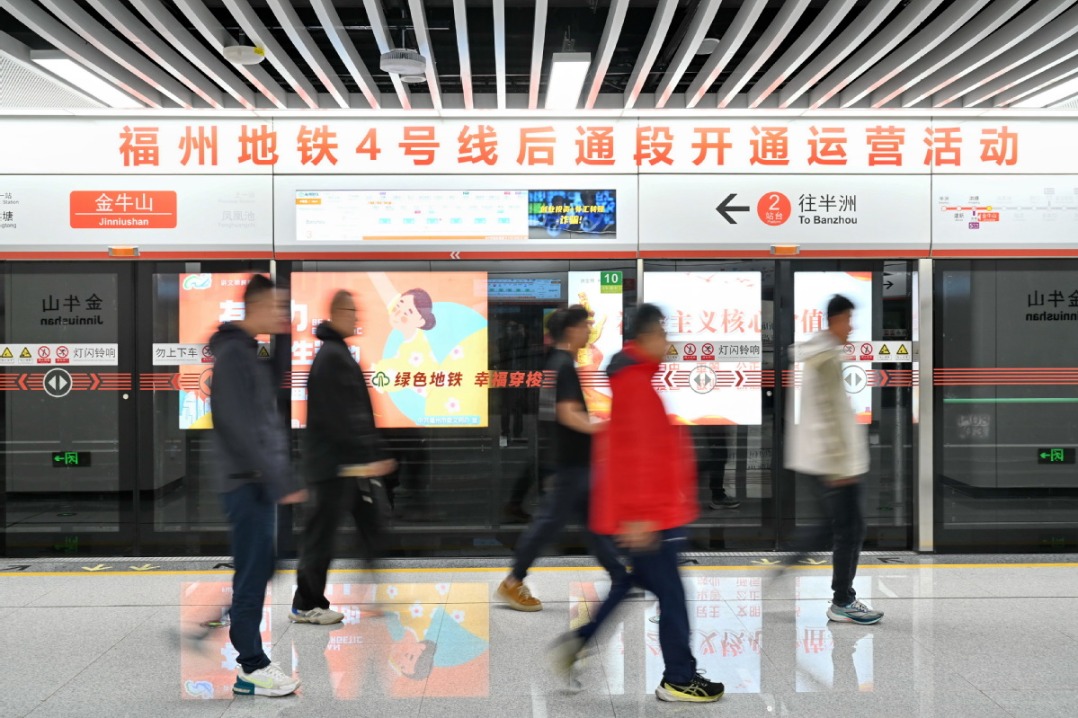
    Fuzhou, the capital of China’s Fujian province, has entered a new era of urban transportation with the official commencement of operations for Metro Line 4 on Wednesday, December 10, 2025. The newly activated line represents a significant infrastructure achievement for the rapidly developing coastal city.

    Eyewitness reports from Xinhua News Agency captured the inaugural moments as the first passengers experienced the state-of-the-art system. The metro line features modern stations equipped with contemporary amenities designed to enhance commuter experience while adhering to international public transit standards.

    This expansion forms part of Fuzhou’s comprehensive strategy to address growing transportation demands and reduce urban congestion. The new route establishes critical connections between key urban districts, potentially transforming daily commutes for thousands of residents while improving access to commercial and cultural centers.

    Transportation experts highlight that Line 4’s operational launch demonstrates China’s continued investment in sustainable urban development through public transportation infrastructure. The project aligns with broader national initiatives promoting eco-friendly mobility solutions in rapidly urbanizing regions.

    Local authorities anticipate the new line will significantly decrease average travel times across the city while contributing to reduced carbon emissions through decreased reliance on private vehicles. The metro expansion is expected to serve as a catalyst for economic development along its corridor, potentially stimulating commercial and residential growth in previously less accessible areas.

  • Library under construction in South Korea collapses, killing 1 and trapping 3 under rubble

    Library under construction in South Korea collapses, killing 1 and trapping 3 under rubble

    A catastrophic structural failure occurred on Thursday at a library construction site in Gwangju, South Korea, resulting in one confirmed fatality and three workers remaining trapped beneath debris. Emergency response teams initiated a large-scale rescue operation following the collapse, which completely buried four construction workers during ongoing operations.

    Local emergency official Ahn Gyun-jae confirmed during a televised press conference that one worker was successfully extracted from the wreckage but subsequently pronounced dead upon arrival at a nearby medical facility. Rescue teams have successfully located a second individual within the collapsed structure and are currently engaged in complex extraction efforts amid unstable conditions.

    The comprehensive rescue mission has deployed advanced technological resources including thermal imaging equipment to detect body heat signatures, aerial drones for site assessment, and specially trained canine units to identify human presence within the rubble. Heavy machinery including multiple cranes has been mobilized to carefully remove large structural components while ensuring the safety of both trapped individuals and rescue personnel.

    The incident has triggered an investigation into construction safety protocols and structural engineering practices within South Korea’s building industry. Local authorities have cordoned off the entire construction zone as emergency operations continue through the night, with concerns mounting about the structural integrity of adjacent buildings and the potential for further collapse during rescue efforts.

  • Competition to spotlight rescue robots, embodied intelligence

    Competition to spotlight rescue robots, embodied intelligence

    Shanghai is poised to become the epicenter of embodied intelligence innovation as it prepares to host the Global Developer Pioneers Summit 2025 alongside the International Embodied Intelligence Competition. The event, taking place December 12-14 at Zhangjiang Science Hall in Pudong New Area, will showcase groundbreaking advancements in rescue robotics technology that could revolutionize disaster response operations worldwide.

    The competition’s centerpiece will feature autonomous robots navigating a complex 30-square-meter simulated disaster environment designed to test their operational capabilities in extreme conditions. These advanced machines will demonstrate remarkable physical prowess by transporting heavy supplies exceeding 40 kilograms, traversing rubble obstacles 30 centimeters high, and climbing stairs 25 centimeters tall. Unlike conventional remotely operated vehicles, these robots possess sophisticated sensory systems that enable autonomous environmental perception and interaction.

    A distinguished roster of participants includes teams from Fudan University, Shanghai Jiao Tong University, Unitree Robotics, and Siasun Robot and Automation. The competing robots exhibit exceptional mechanical capabilities, with some models generating joint torque up to 360 Newton-meters and maintaining stability on inclines of 25-30 degrees.

    Beyond physical demonstrations, the event will highlight the robots’ reconnaissance functionalities, serving as critical ‘second eyes’ for human commanders. Developed through the National and Local Co-Built Humanoid Robotics Innovation Center, these systems can process and transmit vital environmental data, including precise measurements of narrow passages for navigation assessment.

    Shanghai’s substantial investment in embodied intelligence research reflects the growing recognition of robots’ potential to operate in high-risk environments instead of human responders. The city has established an ambitious 100 billion yuan ($14.16 billion) industry fund to accelerate development in this sector. The Pudong-based Innovation Center functions as the central hub for this research, providing comprehensive training and testing facilities for next-generation robotics.

    Additionally, Shanghai is implementing a comprehensive artificial intelligence initiative that leverages large-scale models to transform various aspects of urban infrastructure and daily life. The summit will also feature a flower arrangement competition designed to showcase the robots’ delicate manipulation capabilities, highlighting the versatility of embodied intelligence applications.

  • Chinese tourists explore alternative destinations

    Chinese tourists explore alternative destinations

    A significant reconfiguration is underway across Asia-Pacific tourism markets as Chinese travelers pivot from traditional destinations following recent diplomatic strains between Beijing and Tokyo. Travel analytics firms report substantial booking surges for South Korea and Southeast Asian nations as Chinese tourists seek alternatives to Japan.

    Market intelligence from China Trading Desk reveals South Korea has emerged as the foremost overseas destination for Chinese travelers across major booking platforms. CEO Subramania Bhatt noted particularly strong demand for Seoul and Jeju Island, while Singapore, Thailand, Malaysia, and Vietnam are experiencing double-digit percentage increases in search volumes and bookings week-on-week.

    This market shift follows China’s November 14 travel advisory cautioning citizens against visiting Japan due to security concerns, issued after provocative remarks by Japanese Prime Minister Sanae Takaichi regarding Taiwan. Flight cancellation data from Umetrip indicates over 40% of scheduled mainland China-Japan flights were canceled in December, totaling more than 1,900 canceled flights.

    According to Wolfgang Georg Arlt of the China Outbound Tourism Research Institute, the redirection of China’s substantial outbound tourism market—which saw 7.5 million visitors to Japan in the first three quarters of 2025—presents significant opportunities for regional competitors. “There will be a shift not only to South Korea but also to other destinations in ASEAN and other regional destinations,” Arlt confirmed.

    Destination markets are actively capitalizing on this opportunity. South Korea is developing customized tourism products and increasing flight capacity, with Asiana Airlines planning 165 weekly flights to China by March—a 20% capacity increase. Malaysia anticipates approximately 30,000 additional Chinese visitors in December alone, leveraging its visa-free policy and improved flight connectivity.

    Industry experts suggest this redistribution could represent more than a temporary adjustment if travel warnings persist, potentially enabling Southeast Asia and broader Asian destinations to capture a larger structural share of China’s outbound tourism demand, particularly with the approaching Chinese New Year holiday period in February.

  • Progress grows on seed vault project in Xiong’an

    Progress grows on seed vault project in Xiong’an

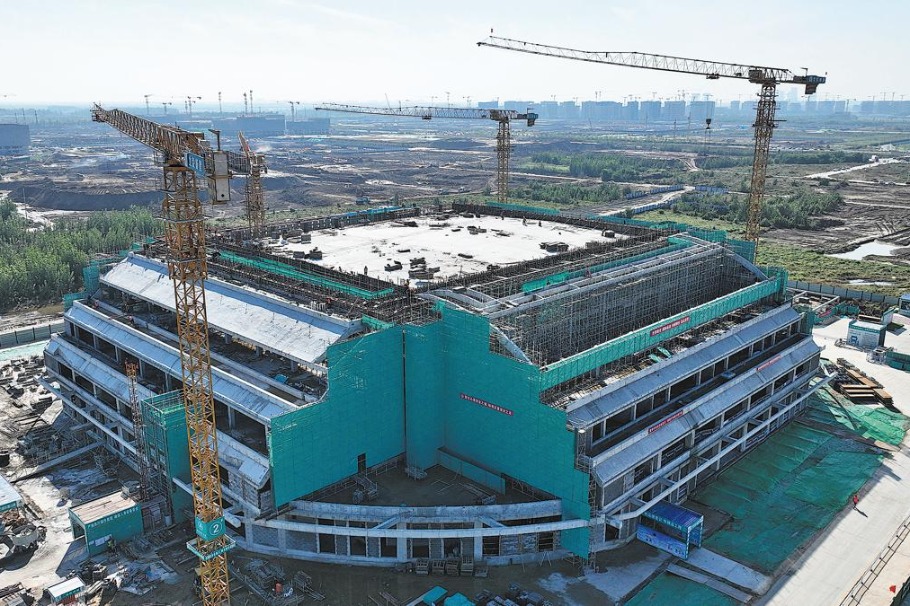
    A significant advancement in China’s ecological conservation infrastructure has been achieved with the structural completion of the National Facility Preservation Bank for Forestry and Grassland Germplasm Resources in Xiong’an New Area. This state-of-the-art facility, projected to become operational by 2028, represents a groundbreaking initiative in preserving the nation’s botanical biodiversity against escalating environmental threats.

    Professor Wang Jun, deputy director of the facility’s operation center at Beijing Forestry University, characterizes the project as a comprehensive biological insurance system. “This facility functions as a secure repository for forest and grass genetic materials,” Wang explained. “When plant species face extinction from climate change, pathogens, or other ecological disasters, we maintain the capability to restore them using preserved germplasm resources.”

    The Xiong’an preservation bank serves as the central node within a national network comprising one primary facility and six subsidiary banks. Jointly developed by the National Forestry and Grassland Administration and the Ministry of Education, with operational management delegated to Beijing Forestry University, the institution will coordinate nationwide conservation efforts for critical plant genetic materials.

    Engineering the facility presented extraordinary technical challenges due to the immense diversity of plant biological characteristics. “Preservation requirements vary tremendously across species,” Wang noted. “Genetic materials range from seed specimens comparable to sports balls in size to those resembling fine sand particles. Certain species produce no seeds whatsoever, necessitating alternative preservation methods including dormant buds, DNA archives, and in-vitro plant cultures.”

    Innovative architectural solutions address these complexities through specialized functional zones equipped with advanced preservation technologies. The facility incorporates cryogenic storage units, DNA banking systems, and intelligent greenhouse environments capable of maintaining optimal conditions for diverse plant species.

    The Xiong’an bank pioneers systematic germplasm collection based on geographical variations within species—a critical innovation given China’s complex ecosystems. “Long-term evolutionary adaptation has created distinct genetic variations across different regions,” Wang emphasized. “A southern seed variety may lack drought resistance necessary for northern climates, while high-altitude plants could perish in low-altitude environments. Our collection strategy captures this essential genetic diversity through comprehensive geographical sampling.”

    Advanced technologies including big data analytics and artificial intelligence will enhance the facility’s operations, enabling field researchers to accurately identify species and their unique variants. Upon completion, the institution will implement intelligent sensing and automated preservation systems, establishing complete informational management throughout the germplasm collection, preservation, and distribution processes.

    This national biodiversity safeguard system will ultimately provide resilient ecological restoration capabilities across China’s varied landscapes, ensuring appropriate genetic resources are available for ecosystem rehabilitation anywhere in the country.