标签: Asia

亚洲

  • China’s 2026 stimulus plan isn’t exports, it’s economic reform

    China’s 2026 stimulus plan isn’t exports, it’s economic reform

    TOKYO — China’s economic trajectory is undergoing a fundamental recalibration as President Xi Jinping’s administration confronts the limitations of its export-oriented growth model. Despite achieving a remarkable $1 trillion trade surplus within 11 months and securing a 12-month delay in trade negotiations with the Trump administration, Chinese leadership recognizes that external demand cannot sustainably deliver the 5% growth target for 2026.

    The Politburo’s recent meeting in Beijing signaled a strategic shift toward domestic-driven growth, emphasizing the critical need to mobilize approximately $22 trillion in household savings to combat deflationary pressures. The leadership’s directive to ‘adhere to domestic demand as the main driver and build a strong domestic market’ represents a significant policy reorientation.

    Central to this new approach is Xi’s concept of ‘new productive forces,’ first introduced in 2023, which focuses on technological enhancement of manufacturing efficiency rather than reducing industrial output. This strategy aligns with the Politburo’s emphasis on ‘cross-cyclical’ policies prioritizing long-term stability over short-term gains.

    While monetary easing is anticipated—with Societe Generale economist Wei Yao predicting record-low bond yields—the core growth strategy centers on supply-side reforms. However, economists caution about implementation challenges. Lizzi Lee of the Asia Society Policy Institute notes: ‘Aligning fiscal expansion with structural reform, strengthening household demand without amplifying financial vulnerabilities, and advancing industrial upgrading while preserving market discipline will be central to navigating China’s economic transition.’

    The reform agenda addresses multiple structural weaknesses: resolving the property crisis, reducing economic opacity, leveling playing fields for private enterprises, tackling youth unemployment, managing local government debt, and developing social safety nets to reduce precautionary savings.

    Historical context reveals repeated delays in market-oriented reforms since 2013, when Xi initially promised to let market forces play a ‘decisive role.’ Previous crises, including the 2015 market crash, COVID-19 lockdowns, and the tech sector crackdown, have consistently diverted attention from structural reforms.

    Analysts suggest abandoning annual GDP targets could facilitate a genuine transition toward sustainable growth. While China has made progress in deleveraging and achieved technology successes through initiatives like ‘Made in China 2025,’ the underlying economy remains constrained by unfinished reforms.

    The external environment adds complexity, with potential policy shifts from the Trump administration representing a significant uncertainty. As fund manager Cheng Hao observes, there are concerns that current policies might represent ‘old wine in new bottles,’ highlighting the challenge of demonstrating genuine reform progress amid global economic uncertainties.

  • Nation’s digital heft in UAE spotlight

    Nation’s digital heft in UAE spotlight

    ABU DHABI—China’s technological and cultural prowess took center stage at the BRIDGE Summit 2025 this week as Asia’s premier gaming exhibition, ChinaJoy, made its Middle Eastern debut in the United Arab Emirates capital. The event showcased China’s emerging role as a global innovator blending artificial intelligence, interactive entertainment, and cultural storytelling into a unified digital ecosystem.

    The three-day conference, running from December 9-11, attracted over 60,000 participants from across media and entertainment industries. The China-Joy pavilion featured 19 exhibitors and internationally celebrated titles including Black Myth: Wukong and Delta Force, demonstrating China’s integrated approach to technology and cultural content.

    Yu Kun, head of the China-Joy pavilion, described the event as more than an exhibition—but rather a ‘proof of concept’ for cultural co-creation. ‘We’re building a bridge between Chinese technological strength and Middle Eastern cultural preferences,’ Yu stated, emphasizing gaming’s unique capacity for cultural export through immersive experiences.

    The expansion aligns with China’s established dominance in digital content exports. Market analyst AppsFlyer reports China solidified its position as the world’s largest game exporter in the first half of 2025, accounting for 32.6% of global game exports.

    Middle Eastern audiences responded enthusiastically to the Chinese offerings. Emirati gamer Basem Sheikha noted, ‘Black Myth: Wukong blends gameplay with Chinese culture brilliantly. I’ve recommended it to many friends, and they all love it.’

    Regional industry leaders recognized the strategic significance of the partnership. Jamal Mohammed Obaid Al Kaabi, director-general of the UAE National Media Office, stated that bringing ChinaJoy to Abu Dhabi ‘opens a new channel for partnerships among China, the UAE and global gaming leaders.’

    The collaboration extends beyond entertainment into economic opportunity. According to market researcher Niko Partners, Saudi Arabia, the UAE and Egypt together will host 85.8 million gamers generating $3.1 billion in game revenue by 2025, with UAE players expected to exceed $100 in average annual revenue per user by 2029.

    Mohammed Ali Alblooshi of twofour54, an Abu Dhabi government-backed media production company, observed: ‘Asian influence lies in merging tech innovation with cultural diversity. Chinese gaming proves local narratives can resonate globally. China could be the tech enabler and content inspiration.’

    The event also highlighted broader technological convergence, with the Khaleej Times reporting that 67% of creators now use AI tools, while cross-sector collaborations have surged 340% over three years.

    Emirati media expert Mayed Alsakhawi noted the natural synergy between the partners: ‘China provides the tech and content, and the UAE offers geographic access and a flexible regulatory environment. Future media will bring more co-productions, cultural exchanges and business models that deepen mutual understanding.’

  • New academy to sharpen skills of riders

    New academy to sharpen skills of riders

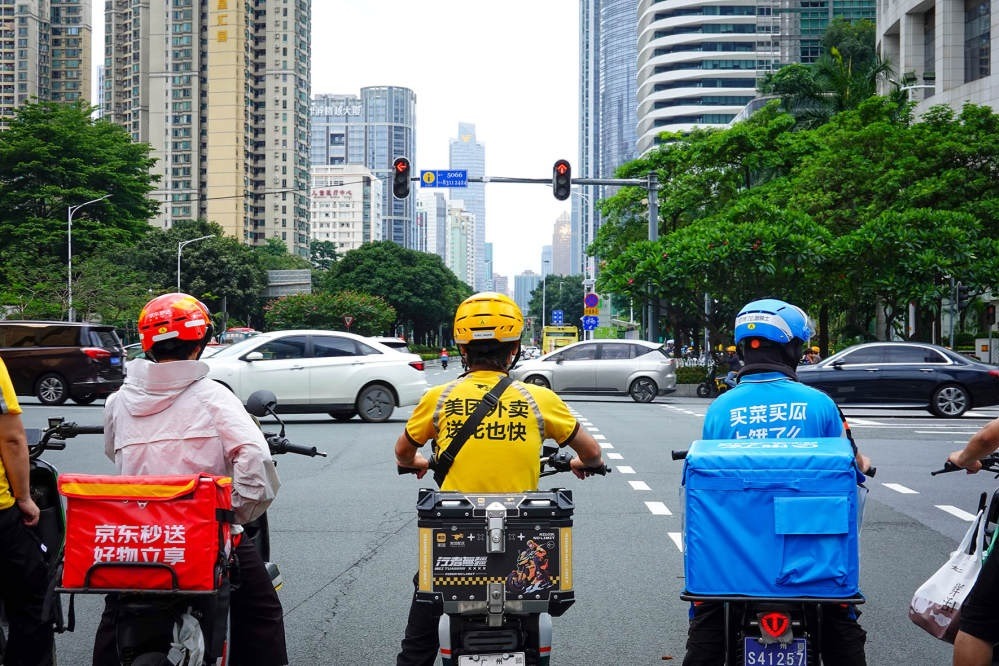
    In a groundbreaking initiative for China’s gig economy, the nation’s first dedicated vocational academy for delivery riders officially opened in Guangdong province on Thursday. The Modern Grassroots Workers Academy—collaboratively established by the Guangdong Provincial Education Department and e-commerce titan JD—represents a strategic effort to professionalize the rapidly expanding courier workforce.

    Housed at Guangzhou Polytechnic University with satellite training centers across the province, the institution aims to equip over 100,000 full-time delivery personnel with enhanced skills within the next three years. The curriculum addresses both immediate practical needs and future technological shifts, offering courses in food safety protocols, mental wellness, English communication, and emerging delivery technologies including drone operation.

    Lin Rupeng, Director of Guangdong’s Education Department, emphasized the academy’s role in bridging educational offerings with industrial demands. “Through the enabling power of education, we are opening new pathways for rider career development while creating a more dynamic model of industry-education integration,” he stated.

    The initiative responds to the growing significance of China’s 84 million workers in new employment forms—including delivery riders, live-stream sellers, and ride-hailing drivers—who have become essential to urban ecosystems. JD executive Feng Lei clarified that despite automation advances, drones and robotics would complement rather than replace human workers. “These technologies raise skill requirements rather than eliminate the need for riders,” she noted, explaining that personnel must now operate intelligent order systems and collaborate with automated devices.

    Academic expert Feng Lipan from South China University of Technology observed that the academy would help transform public perception of delivery work from low-skilled labor to a technically proficient occupation. The move parallels similar upskilling efforts nationwide, including Jiangsu province’s recent three-year action plan for workers in new employment forms.

  • Ten photos from across China: Dec 5 – 11

    Ten photos from across China: Dec 5 – 11

    Between December 5th and 11th, 2025, a series of compelling photographs emerged from across China, painting a vibrant picture of the nation’s economic, cultural, and social landscape. These images, curated and released by China Daily, document a week of significant activity and progress.

    The visual narrative begins in the southwestern city of Pu’er, Yunnan province, where the 2025 China (Pu’er) International Coffee Expo and Pu’er Tea Expo & Trade Fair commenced on December 5th. This major dual-expo event, spanning three days, successfully attracted over 100 enterprises from both within China and across the globe. The photograph captures attendees intently examining a diverse array of coffee products, highlighting the region’s growing prominence in the global specialty coffee market and its deep-rooted tea culture. This event serves as a crucial platform for trade and cultural exchange, underscoring Yunnan’s strategic role in China’s agricultural export economy.

    While the specific details of the subsequent nine photographs were not provided in the source text, such collections typically offer a panoramic view of the country. They often feature advancements in technology and infrastructure, celebrations of cultural heritage, glimpses into daily urban and rural life, and milestones in sports or education. Each image stands as a testament to the multifaceted development and complex tapestry of modern Chinese society, capturing moments of innovation, tradition, and community engagement that define the nation’s character.

  • A Chinese official exposed his boss. Now in Texas, he’s hunted by Beijing – with help from US tech

    A Chinese official exposed his boss. Now in Texas, he’s hunted by Beijing – with help from US tech

    A former Chinese official’s harrowing escape from China’s pervasive surveillance apparatus reveals the extensive reach of Beijing’s global monitoring operations. Li Chuanliang, a retired vice mayor from Jixi, was recovering from cancer treatment on a South Korean resort island when he received an urgent warning: Chinese authorities had designated him a fugitive. What followed was an international chase spanning multiple continents, documented through exclusive interviews and evidence obtained by The Associated Press.

    The Chinese government employed sophisticated surveillance technology—much of it originally developed by U.S. tech firms—to track Li’s movements, monitor his communications, and pressure his associates. More than 40 individuals connected to Li, including his pregnant daughter, were identified and detained through methods that included facial recognition scans of taxi drivers. Three former associates died in custody during the investigation.

    China’s Operations “Fox Hunt” and “Sky Net” represent a systematic approach to targeting officials, dissidents, and alleged criminals beyond its borders. These initiatives have resulted in over 14,000 individuals being returned from more than 120 countries through various coercive measures, according to state media reports. While Beijing frames these operations as anti-corruption efforts, critics argue they primarily serve to suppress dissent and eliminate political opponents.

    The technological infrastructure enabling this global surveillance traces back to American companies including IBM, Oracle, and Microsoft. Internal documents reveal these firms provided software and systems to China’s Economic Crime Investigation Bureau, allowing authorities to mine texts, payments, travel records, and communications to map relationships and assets. Though these sales complied with U.S. sanctions, they have empowered China’s ability to monitor perceived enemies worldwide.

    Li maintains that the corruption charges totaling approximately $435 million are politically motivated retaliation for his criticism of local officials and the Communist Party. Legal documents and expert analyses reviewed by AP indicate irregularities in the prosecution’s case, including altered records, blocked evidence access, and coerced confessions.

    Despite obtaining temporary refuge in the United States, Li remains in legal limbo with his asylum application pending. His case exemplifies how China projects its power globally through digital surveillance, creating what experts describe as a profoundly effective chilling effect on dissent both within China and abroad.

  • A 6.9 magnitude earthquake causes small tsunami waves off northeastern Japan

    A 6.9 magnitude earthquake causes small tsunami waves off northeastern Japan

    TOKYO — Northeastern Japan experienced a significant seismic event on Friday when a 6.9 magnitude earthquake struck off the coast of Aomori prefecture. The tremor, which occurred at 11:44 a.m. local time at a depth of 20 kilometers (12.4 miles), prompted immediate tsunami warnings from the Japan Meteorological Agency. These advisories were lifted approximately two hours later after only minor wave activity was recorded.

    The quake generated small tsunami waves that reached coastal areas of Hokkaido and Aomori prefectures, but preliminary assessments indicated no substantial damage or injuries resulting from the event. This seismic activity follows a more powerful 7.5 magnitude earthquake that impacted the same region earlier in the week, which resulted in multiple injuries and temporary power disruptions.

    Seismologists note that both recent earthquakes occurred in proximity to the epicenter of the catastrophic 2011 magnitude 9.0 quake that devastated Japan’s northeastern coast, claiming nearly 20,000 lives and causing the Fukushima nuclear disaster. Japanese authorities have maintained heightened alert levels, warning residents of potential aftershocks and advising continued emergency preparedness measures.

    While officials confirmed a marginally increased risk of larger seismic events following Monday’s quake, they emphasized that current monitoring does not predict an imminent megaquake. The agency continues to urge coastal communities from Chiba prefecture to Hokkaido to remain vigilant and maintain disaster readiness protocols.

  • ‘We will continue’: The Palestinian rights groups sanctioned by Trump

    ‘We will continue’: The Palestinian rights groups sanctioned by Trump

    In a powerful demonstration of resilience, leaders of Palestine’s foremost human rights organizations have declared their unwavering commitment to justice despite facing severe financial and operational constraints from recent US sanctions. Shawan Jabarin of Al-Haq and Raji Sourani of the Palestinian Centre for Human Rights delivered their assessments during the 24th Assembly of States Parties to the International Criminal Court in The Hague.

    The sanctions, implemented by the Trump administration in September, have effectively frozen bank accounts, severed international donor relationships, and left 45 employee families without regular income. Both directors characterized the measures as unprecedented attacks on humanitarian work, noting that the US government explicitly targeted their organizations for cooperating with ICC investigations into Israeli military actions.

    Despite immediate financial devastation—including closed bank accounts and suspended transfers from fearful international partners—both organizations continue submitting extensive documentation of alleged violations in Gaza and the West Bank to ICC prosecutors. The directors reported meeting with ICC officials who expressed determination to continue their investigations, though both advocates expressed frustration at the court’s slow progress in curtailing ongoing violence.

    The sanctions carry severe implications beyond financial strain, including potential criminal exposure for organizations that maintain relationships with the sanctioned groups. Nevertheless, both directors emphasized that their work represents an idea that cannot be suppressed by financial measures. They called for stronger international support, particularly urging European nations to activate the EU Blocking Statute to protect entities from extraterritorial application of US sanctions.

    Both organizations continue operating through alternative support networks while maintaining that their mission to defend victims remains unchanged despite the unprecedented challenges they face.

  • ‘Deafening silence’: US journalist wounded by Israel says his government has done nothing

    ‘Deafening silence’: US journalist wounded by Israel says his government has done nothing

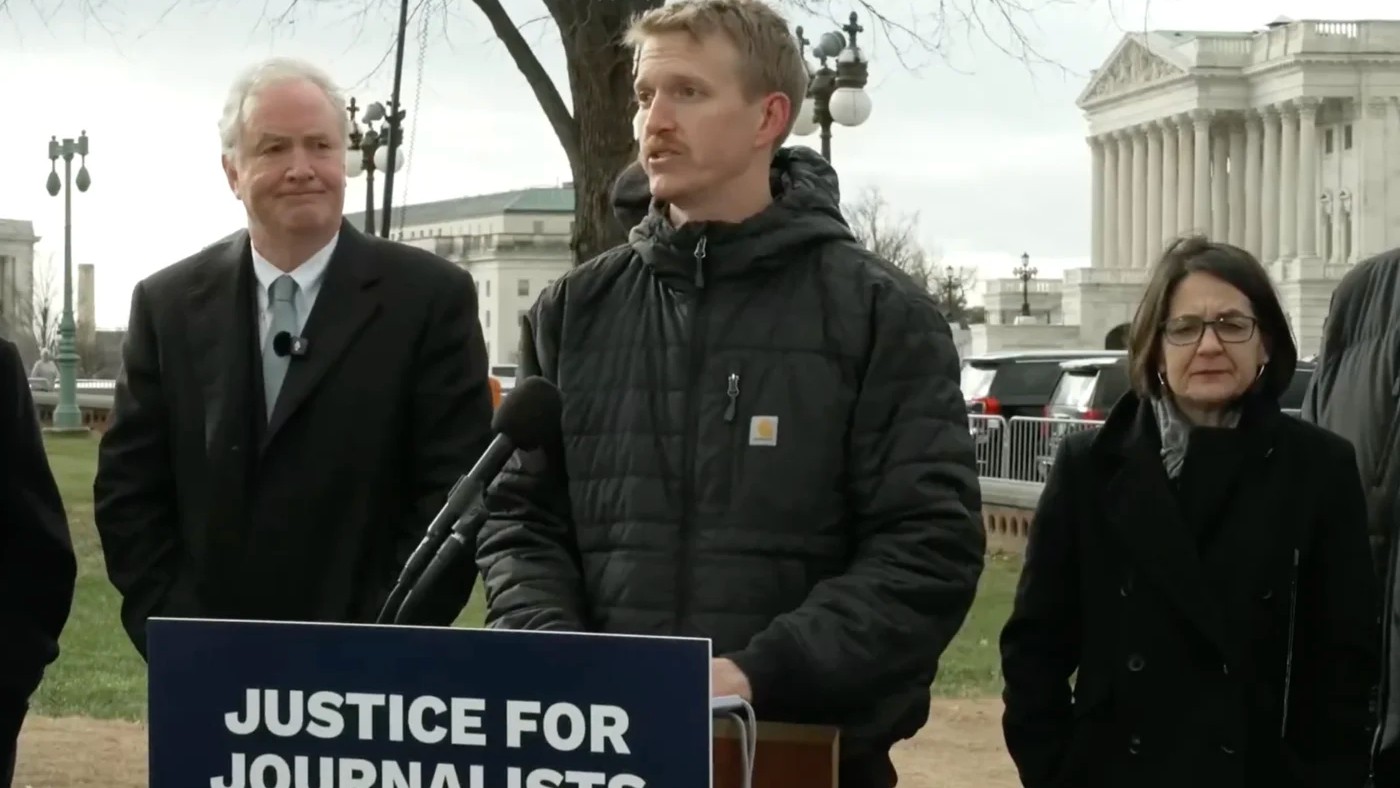
    A coalition of Democratic legislators has joined forces with leading human rights organizations to demand a full and independent investigation into the October 2023 attack on journalists near the Israel-Lebanon border. The incident, which resulted in the death of Reuters journalist Issam Abdallah and injured six others from Reuters, Al Jazeera, and AFP, represents what advocates call the first alleged targeting of media personnel following the October 7th hostilities.

    Eyewitness accounts and multiple independent investigations indicate that the group of clearly identifiable journalists had been stationary for over an hour before being struck by two separate projectiles originating from Israeli military positions. AFP journalist Dylan Collins, a U.S. citizen who sustained shrapnel wounds in the attack, described his frustrating two-year quest for accountability from both the Biden and Trump administrations, met with what he characterized as ‘deafening silence.’

    Senator Peter Welch of Vermont revealed that dozens of Congress members have repeatedly sought answers through official channels, sending multiple letters to the State Department that have gone unanswered. The lawmakers seek three specific disclosures: which Israeli military unit fired upon the journalists, whether Israel conducted any internal investigation, and if U.S. officials ever discussed the incident with their Israeli counterparts.

    The call for investigation follows a February 2024 United Nations inquiry that determined an Israeli tank fired two 120mm shells at the ‘clearly identifiable journalists’ in violation of international law. The UNIFIL report noted no cross-border hostilities occurred for over 40 minutes preceding the attack and recommended Israel conduct a full investigation and share its findings—actions that have not been taken.

    Separate investigations by Reuters, Human Rights Watch, and Amnesty International published in December 2024 reached similar conclusions, with Amnesty characterizing the strikes as ‘likely a direct attack on civilians that must be investigated as a war crime.’ Forensic analysis suggests the journalists were visible to Israeli surveillance systems, including nearby drones and observation towers, when targeted by precision munitions fired from approximately 1.5 kilometers away.

    The incident has taken on broader significance as more than 260 media professionals have been killed in Gaza since October 2023, raising concerns about the protection of journalists in conflict zones and the accountability mechanisms for investigating such incidents.

  • China’s new ‘condom tax’ draws skepticism and worries over health risks

    China’s new ‘condom tax’ draws skepticism and worries over health risks

    In a significant policy shift, China will eliminate its three-decade-long value-added tax exemption for contraceptive drugs and products effective January 1st. The move aligns with Beijing’s ongoing efforts to reverse declining birth rates by making contraception less financially accessible. Under the new regulations, products including condoms will be subject to the standard 13% VAT applied to most consumer goods.

    The policy change has generated substantial discussion across Chinese social media platforms, where users have expressed both skepticism and criticism. Many question the effectiveness of the approach, noting that the minimal tax increase pales in comparison to the substantial costs associated with raising children. The decision marks a dramatic reversal from China’s previous population control measures, which included forced abortions and severe penalties under the notorious one-child policy that remained in effect until 2015.

    Demographic experts express concerns about potential public health consequences. Dr. Qian Cai of the University of Virginia’s Demographics Research Group notes that “the tax’s impact on fertility rates will be very limited,” while warning that reduced contraceptive access could lead to increased unplanned pregnancies and sexually transmitted infections. Current data reveals concerning trends: China recorded approximately 9.5 million births in 2024, representing a significant decline from 14.7 million in 2019 despite favorable astrological conditions.

    The policy change disproportionately affects women, who bear primary responsibility for contraception in China. Current usage patterns show only 9% of couples relying on condoms, with 44.2% using intrauterine devices and 30.5% undergoing female sterilization. Many women view the policy as another governmental intrusion into bodily autonomy, with one teacher describing it as “a disciplinary tactic, a management of women’s bodies.”

    Public health experts warn the policy could exacerbate existing challenges, including China’s high abortion rates (9-10 million annually) and rising STI cases. Reported infections included over 100,000 gonorrhea cases and 670,000 syphilis cases in 2024, with HIV/AIDS infections reaching approximately 1.4 million.

  • Trump signs executive order to block state AI regulations

    Trump signs executive order to block state AI regulations

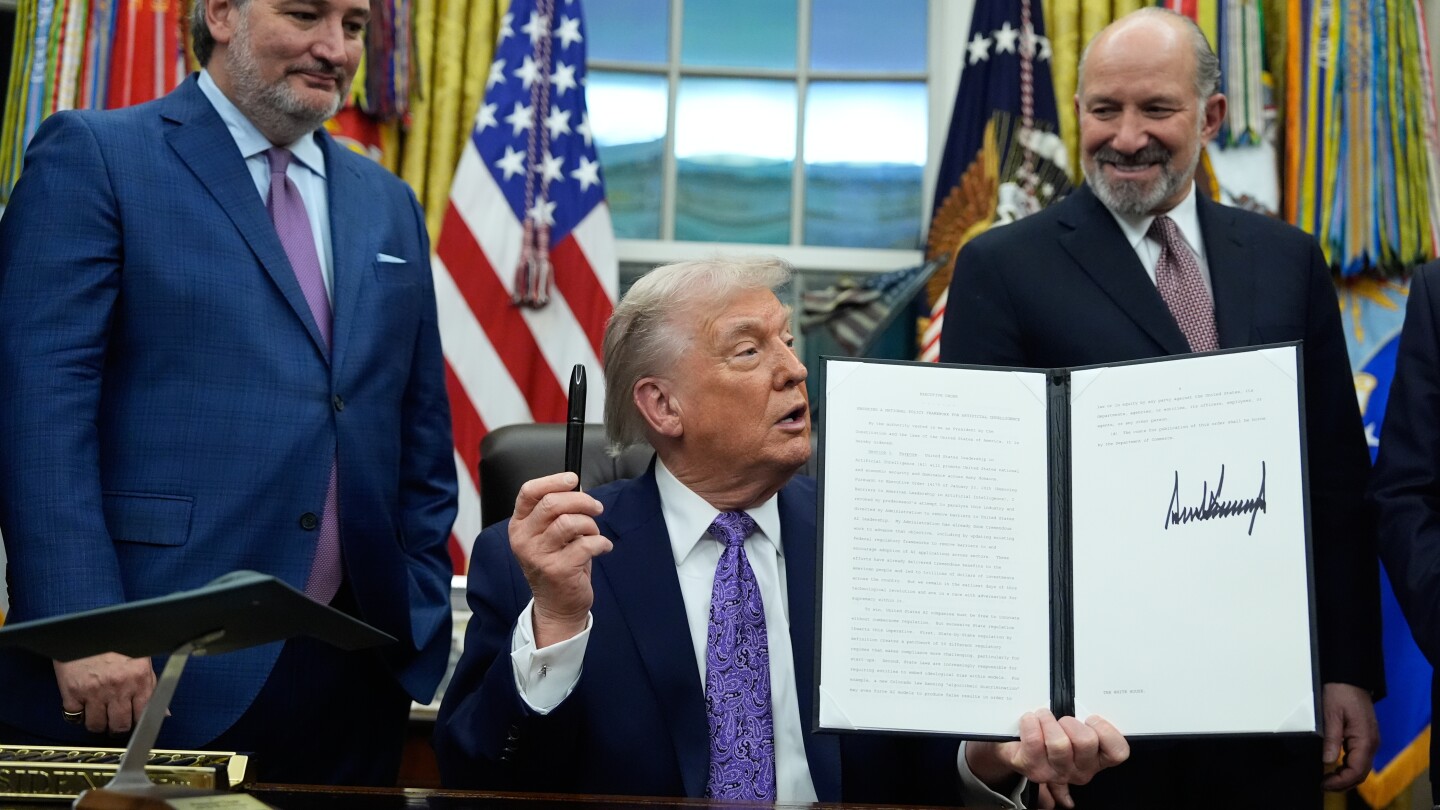
    In a significant move to centralize artificial intelligence governance, President Donald Trump signed an executive order on Thursday establishing federal preemption over state-level AI regulations. The administration contends that fragmented state laws would create compliance obstacles for American companies competing against Chinese rivals in the global AI dominance race.

    During an Oval Office briefing, President Trump emphasized the competitive dimension: ‘There’s only going to be one winner in artificial intelligence. China’s centralized approval system gives their companies a decisive advantage. If our innovators need 50 different state approvals, they cannot compete effectively.’

    The order mandates Attorney General William Barr to establish a task force specifically charged with challenging existing state AI laws through judicial avenues. Concurrently, the Commerce Department will identify regulations deemed detrimental to AI development. States maintaining non-compliant regulations face potential restrictions on federal broadband deployment funds and other grant programs.

    David Sacks, a venture capitalist overseeing Trump’s AI and cryptocurrency policies, clarified the administration’s targeted approach: ‘We will oppose the most burdensome regulatory examples but maintain support for reasonable child safety measures.’

    This federal intervention responds to regulatory actions already implemented by four states—Colorado, California, Utah, and Texas—which have enacted comprehensive AI legislation governing private sector applications. These laws primarily address data collection limitations, algorithmic transparency, and discrimination prevention in consequential decisions affecting employment, housing, lending, and healthcare.

    The state initiatives emerged from documented AI deficiencies, including demonstrated biases in gender and racial preferences within automated decision-making systems. Beyond comprehensive frameworks, numerous states have enacted targeted AI restrictions concerning election deepfakes, nonconsensual pornography, and government AI usage standards.

    Civil liberties organizations and bipartisan congressional members have consistently advocated for stronger AI oversight, arguing current frameworks insufficiently address the technology’s societal impacts. The executive order establishes a clear federalist conflict between state consumer protection objectives and the administration’s national competitiveness agenda.