标签: Asia

亚洲

  • ICC’s Karim Khan says ‘senior UK official’ threatened him over Israel investigation

    ICC’s Karim Khan says ‘senior UK official’ threatened him over Israel investigation

    International Criminal Court Chief Prosecutor Karim Khan has submitted a formal statement alleging that a senior British government official threatened to withdraw UK funding and support for the court if he pursued arrest warrants against Israeli leaders. Middle East Eye identifies the official as then-Foreign Secretary David Cameron, who reportedly warned Khan that targeting Israeli leadership would be “like dropping a hydrogen bomb.

    The allegations emerge from Khan’s detailed submission to the ICC’s appeal chamber, responding to Israel’s November request for his disqualification from investigations into alleged war crimes in Gaza. Israel claims Khan rushed the warrants after learning of sexual misconduct allegations against him, which Khan strenuously denies and characterizes as a campaign to undermine his office’s work.

    Khan’s chronology reveals his office began investigating alleged crimes by both Israel and Hamas in October 2023, shortly after the October 7 attacks. By January 2024, he had convened an independent panel of legal experts—including British human rights lawyers Amal Clooney and Helena Kennedy—which unanimously concluded in March that sufficient evidence existed to request arrest warrants.

    The prosecutor details mounting diplomatic pressure from multiple nations as his office prepared warrants. This included an April 19 call from a senior US official warning of “disastrous consequences,” followed by Cameron’s alleged threat on April 23 regarding UK funding withdrawal. Khan also references subsequent pressure from US senators threatening sanctions.

    Despite these interventions, Khan’s office filed warrant applications against Israeli Prime Minister Benjamin Netanyahu, Defense Minister Yoav Gallant, and Hamas leaders on May 20, 2024. The prosecutor maintains the process was “meticulous,” “fair,” and “independent,” with warrant preparations completed before he learned of misconduct allegations in early May.

    Cameron’s office has not responded to requests for comment, though sources close to the former prime minister acknowledge a “robust” conversation occurred while characterizing it as highlighting political realities rather than making explicit threats. The allegations have prompted calls from British politicians for official investigation into the foreign secretary’s conduct.

  • Israel’s expanding ‘Yellow Line’ swallows Gaza districts and uproots families

    Israel’s expanding ‘Yellow Line’ swallows Gaza districts and uproots families

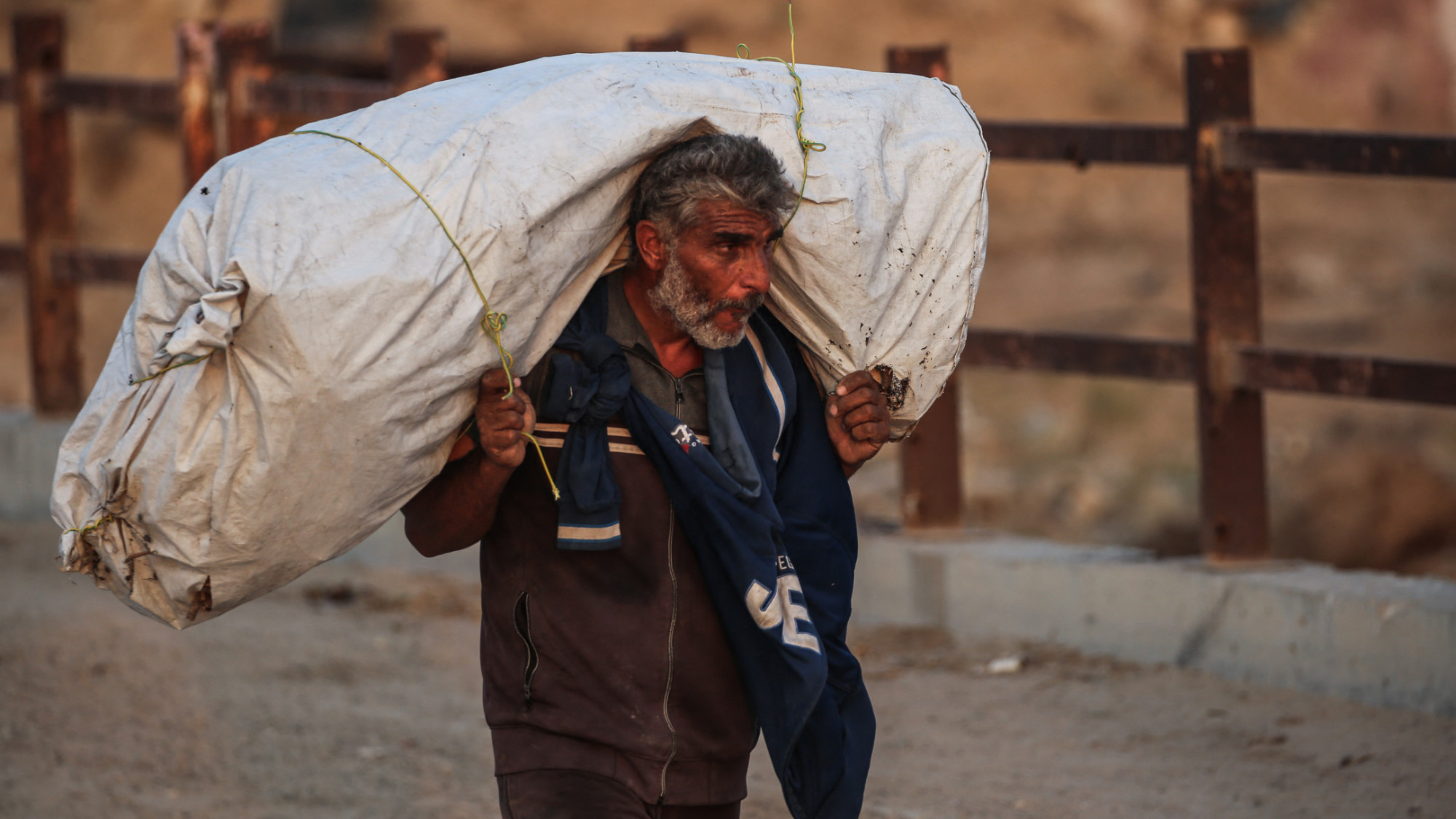
    In the fragile calm following the October ceasefire, a silent humanitarian crisis is unfolding across Gaza as Israel’s unilaterally imposed ‘Yellow Line’ military boundary continues its relentless westward expansion. What began as a temporary demarcation line has transformed into a constantly shifting frontier that has already swallowed approximately 53% of the territory, forcing waves of undocumented displacement.

    Palestinian journalist Ahmed Hamed, 31, returned to his home near Gaza City’s Shujaiya neighborhood after the ceasefire, initially believing his residence stood 1.5 kilometers from the boundary. Within two months, that distance has dramatically shrunk to merely 200 meters. ‘From the first day we came back, we heard bombardment, demolitions and gunfire,’ Hamed told Middle East Eye. ‘It would start at sunset and continue until dawn.’

    The Yellow Line, marked by ominous yellow concrete blocks progressively placed inside civilian districts, functions as a no-go zone that prohibits Palestinian access to vast territories. Its steady advancement has created a nearly one-kilometer-wide swath of newly inaccessible land between its original position and current location, encompassing thousands of homes.

    Families who returned to rebuild their lives after the ceasefire now face nocturnal displacements under fire. ‘People set up generator lines and even installed the internet,’ Hamed explained. ‘Then, one night, they woke to heavy gunfire and found a yellow concrete block in the middle of the street. They gathered their belongings and fled under fire in the middle of the night.’

    The human cost has been severe. Hamed’s cousin’s wife, Samar Abu Waked, a mother of three in her 30s, was killed by a bullet to the head at the entrance of their family home, apparently fired by an Israeli soldier from the Yellow Zone.

    Israeli Army Chief Lieutenant General Eyal Zamir recently referred to the boundary as a ‘new border,’ stating the military maintains ‘operational control over extensive parts of the Gaza Strip’ and will remain positioned along these defensive lines. This contradicts the US-backed ceasefire plan that envisioned the line as a temporary withdrawal point with further pullbacks expected.

    Reem Mortaja, a 27-year-old Shujaiya resident displaced for the 11th time, describes the situation as deceptive: ‘The world thinks the ceasefire is in effect. But we are still living through phases of war, while the occupation goes uncondemned because it operates quietly and swiftly. Every day, there are advances, air strikes or artillery fire. The displacement never stops—and all of it happens in total silence.’

    As Israeli forces use explosive-laden vehicles to demolish residential buildings in eastern Gaza, residents like Hamed describe the advancing line as ‘a fire burning through the neighborhood, and we’re waiting for the flames to reach us.’ With media attention largely absent, families continue to flee in silence, their suffering compounded by the international community’s apparent unawareness of their ongoing plight.

  • Uzbek med students train in Lanzhou under Belt and Road exchange

    Uzbek med students train in Lanzhou under Belt and Road exchange

    A delegation of 17 medical students and faculty members from Kokand University’s Andijan campus in Uzbekistan has commenced an intensive two-week professional training program at Lanzhou University First Hospital in Gansu province. This educational exchange, initiated in early December, represents a significant academic collaboration under China’s Belt and Road Initiative framework.

    The visiting medical contingent, guided by senior physicians at the renowned Chinese medical institution, is receiving comprehensive training across multiple medical specialties including surgical techniques, emergency medicine protocols, and advanced diagnostic procedures. The program features hands-on experience with cutting-edge medical technology, notably the Da Vinci robotic surgical system that has particularly impressed the international trainees.

    Professor Nishonov Bakhtiyorjon, who leads the Uzbek delegation, characterized the experience as both academically transformative and personally enriching. “We are gaining invaluable insights into sophisticated surgical methodologies and instrument utilization,” he noted. “Our objective extends beyond skill acquisition to establishing enduring professional relationships with Chinese medical practitioners and institutions.”

    The exchange program incorporates cultural immersion components including Mandarin language instruction, traditional culinary workshops, and historical tours of Lanzhou’s cultural landmarks. This holistic approach aims to foster deeper intercultural understanding alongside professional development.

    Liu Liping, Director of the hospital’s Emergency Department, emphasized the reciprocal benefits of such international collaborations. “These exchanges create meaningful opportunities for mutual advancement in medical science,” she stated. “We are committed to sustaining this productive partnership through both physical and digital platforms.”

    Lanzhou’s strategic position as a core city within the Silk Road Economic Belt infrastructure has facilitated its emergence as a hub for transnational public health cooperation. The Belt and Road University Alliance, established by Lanzhou University, has now expanded to include 184 member institutions across 27 countries and territories worldwide, demonstrating the growing network of international educational cooperation.

  • Austria announces ban on headscarves in schools for under-14s

    Austria announces ban on headscarves in schools for under-14s

    Austria’s government has implemented a new prohibition on headscarves for schoolchildren under the age of 14, triggering widespread accusations of institutional Islamophobia and religious discrimination. The controversial legislation, presented by authorities as a progressive measure for gender equality, applies to both public and private educational institutions across the nation.

    This legislative move revives a previously rejected policy after the Constitutional Court overturned a similar 2018 ban targeting girls aged 6-10 in public schools, ruling it constituted unlawful discrimination against Muslim communities. The current mandate specifically prohibits ‘traditional Muslim coverings’ in educational settings, with potential penalties reaching €800 ($940) for violations through a graduated enforcement system involving school authorities.

    Yannick Shetty, parliamentary leader of the liberal Neos party within the ruling coalition, defended the prohibition as protective rather than discriminatory. ‘This is not a measure against a religion but instead a measure to protect the freedom of girls in this country,’ Shetty stated, asserting that approximately 12,000 children would be affected and characterizing the headscarf as an instrument of premature sexualization.

    However, the legislation has drawn severe criticism from human rights organizations and religious representatives. Amnesty International condemned the ban as Islamophobic and an explicit ‘expression of anti-Muslim racism,’ warning that it legitimizes prejudice against Muslim communities. The Islamic Religious Community in Austria (IGGOe), the officially recognized representative body for Austrian Muslims, announced plans to challenge the law’s constitutionality.

    IGGOe president Umit Vural emphasized the community’s dual commitment to religious freedom and child welfare: ‘Children need protection, education and enlightenment, not symbolic politics. We reject coercion. We defend freedom. Both simultaneously, for every child.’ The development highlights ongoing tensions between secular policies and religious expression in European educational systems.

  • Humanoid robots take center stage at Silicon Valley summit, but skepticism remains

    Humanoid robots take center stage at Silicon Valley summit, but skepticism remains

    MOUNTAIN VIEW, Calif. — The robotics sector is experiencing a paradigm shift as artificial intelligence breakthroughs breathe new life into long-standing ambitions to develop humanoid machines. This emerging transformation was the focal point of the recent Humanoids Summit, where over 2,000 engineers, investors, and entrepreneurs gathered to assess the industry’s trajectory.

    Venture capitalist Modar Alaoui, founder of the summit and general partner at ALM Ventures, noted that robotics had traditionally been viewed as “a bad bet for Silicon Valley investors — too complicated, capital-intensive and boring.” However, the commercial AI boom has fundamentally altered this perception, with many researchers now believing physical embodiments of AI “are going to become the norm.”

    The conference revealed both remarkable progress and significant challenges. Disney showcased its walking robotic version of “Frozen” character Olaf, scheduled to autonomously navigate Disneyland theme parks in Hong Kong and Paris by early 2025. Yet despite such entertainment applications, experts agree that truly “general purpose” robots capable of functioning as productive workplace or household members remain years away.

    Substantial skepticism persists even within the industry. Cosima du Pasquier, founder of Haptica Robotics, emphasized that “the humanoid space has a very, very big hill to climb” regarding research requirements. Robotics pioneer Rodney Brooks, who did not attend, has publicly questioned whether current investments will yield dexterous humanoids despite billions in funding.

    Geopolitical dimensions are emerging prominently. McKinsey & Company research identifies approximately 50 companies worldwide that have raised minimum $100 million for humanoid development, with China leading through approximately 20 initiatives compared to 15 in North America. Government incentives, component production support, and a mandated 2025 ecosystem establishment deadline contribute to China’s current momentum.

    Technical advances in generative AI have provided dual stimulation: investor excitement has flooded into hardware startups, while language model breakthroughs have enhanced robots’ task-learning capabilities through visual-language training systems.

    Notably absent from discussions was Tesla’s Optimus project, despite Elon Musk’s previous predictions of market availability within three to five years. The industry instead appears focused on incremental progress, drawing parallels to autonomous vehicle development timelines.

    Practical implementations are already underway. Agility Robotics announced deployment of its warehouse robot Digit at a Texas distribution facility operated by Mercado Libre, while industrial robots continue to demonstrate superior efficiency in manufacturing contexts.

    As the industry advances, calls for strategic national approaches are growing. Jeff Burnstein, president of the Association for Advancing Automation, is lobbying for enhanced U.S. robotics strategy, acknowledging China’s current momentum while emphasizing America’s underlying AI and technological strengths.

    The consensus suggests that while humanoid robotics has entered an accelerated development phase, the path to widespread adoption remains complex and uncertain, requiring continued innovation across multiple technological domains.

  • Trump says he’s sealed Thailand-Cambodia ceasefire, but fighting continues

    Trump says he’s sealed Thailand-Cambodia ceasefire, but fighting continues

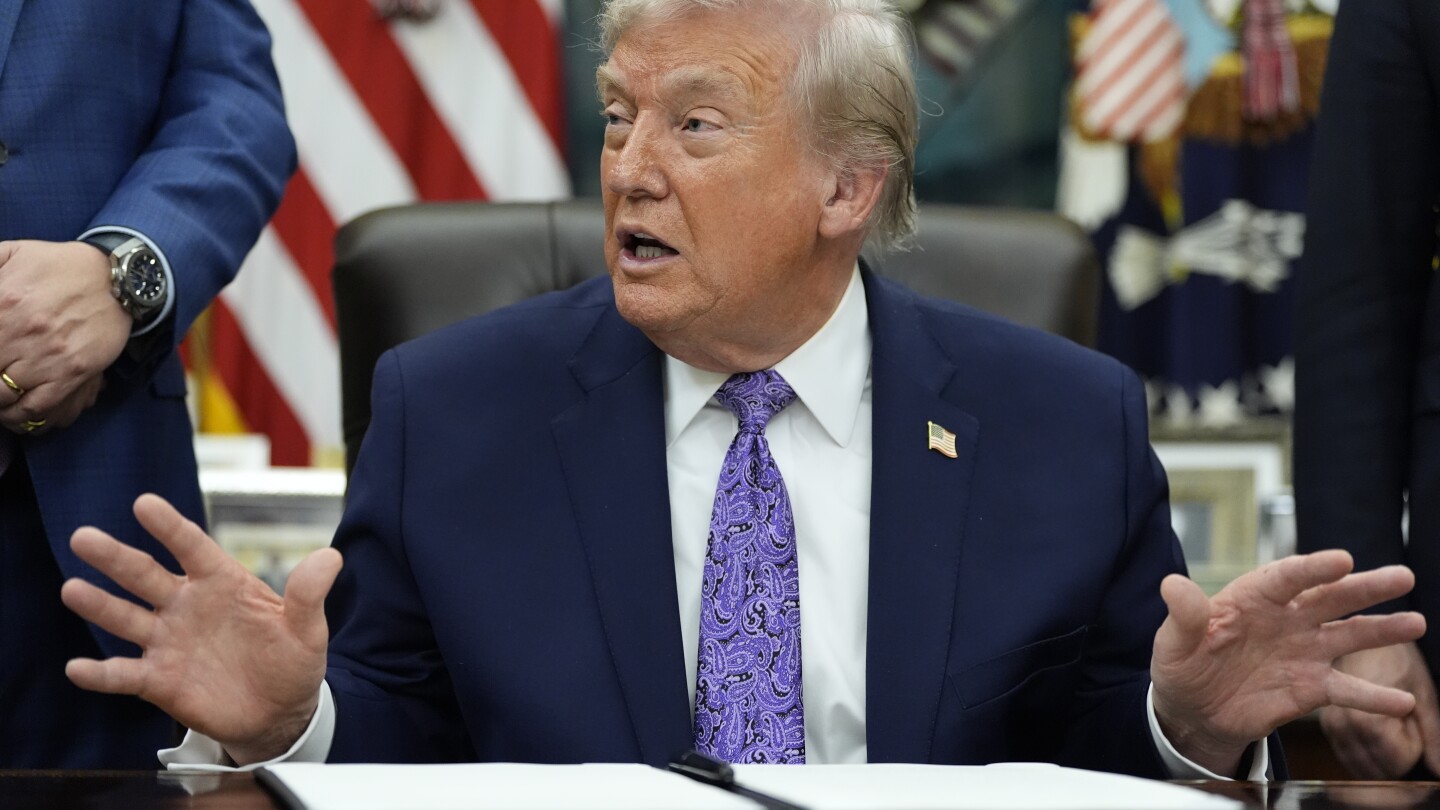
    Former U.S. President Donald Trump declared on Friday that Thai and Cambodian leaders had consented to reinstate a ceasefire following recent deadly border clashes, though official statements from both nations suggest the situation remains unresolved. Trump made the announcement via his Truth Social platform after conducting phone discussions with Thai Prime Minister Anutin Charnvirakul and Cambodian Prime Minister Hun Manet.

    Contradicting Trump’s assertion, Thailand’s Ministry of Foreign Affairs issued a statement on Saturday challenging the ceasefire announcement without providing specific details. Thai defense ministry spokesperson Surasant Kongsiri confirmed that military engagements were continuing, while Cambodia’s defense ministry reported ongoing Thai strikes early Saturday, though these claims lacked independent verification.

    The diplomatic discrepancy highlights the complex nature of the border conflict. Prime Minister Anutin revealed that during his conversation with Trump, he emphasized Thailand’s commitment to continue military operations until Cambodia eliminates perceived threats to Thai sovereignty. Anutin explicitly called for Cambodia to demonstrate concrete actions by ceasing fire, withdrawing forces, and clearing land mines.

    Trump’s social media post characterized a recent roadside bomb incident that injured Thai soldiers as accidental, a description promptly refuted by Anutin who stated definitively: ‘It’s definitely not a roadside accident.’ The Thai leader affirmed continued military operations until security concerns are adequately addressed.

    The historical context of this conflict traces back to competing territorial claims originating from a 1907 map created during Cambodia’s French colonial period, which Thailand considers inaccurate. Tensions intensified following a 1962 International Court of Justice ruling that granted sovereignty to Cambodia, a decision that remains contentious among many Thais.

    Current military engagements have involved sophisticated weaponry, with Thailand deploying jet fighters for airstrikes and Cambodia utilizing BM-21 rocket launchers with substantial range. Public broadcaster ThaiPBS documented that at least six Thai soldiers died from rocket shrapnel, while residential areas near the border sustained damage from Cambodian rocket attacks.

    This development occurs alongside other international ceasefire agreements brokered by the Trump administration that show signs of strain. The Democratic Republic of Congo-Rwanda peace deal faces challenges following recent violence in Congo’s South Kivu region, while the Israel-Hamas agreement remains in developmental stages with intermittent fighting continuing.

  • PLA expels multiple Philippine aircraft illegally intruding into airspace over China’s Huangyan Island

    PLA expels multiple Philippine aircraft illegally intruding into airspace over China’s Huangyan Island

    The People’s Liberation Army of China has intercepted and expelled multiple Philippine military aircraft that entered the airspace above Huangyan Island, according to an official statement released on December 12, 2025. The incident marks the latest escalation in ongoing territorial tensions between the two Southeast Asian nations.

    Chinese defense authorities characterized the Philippine aircraft’s presence as an illegal intrusion into sovereign Chinese airspace. Military spokespersons emphasized that the PLA responded with professional aerial interception protocols to safeguard national territorial integrity.

    Huangyan Island, known internationally as Scarborough Shoal, has been a persistent flashpoint in China-Philippine relations. The coral reef formation situated in the South China Sea’s strategic waterways has been under Chinese control since 2012, though Manila continues to assert its territorial claims based on geographical proximity and exclusive economic zone rights under international maritime law.

    The confrontation occurs against the backdrop of increasing regional military activity and heightened diplomatic exchanges regarding maritime boundaries. Chinese officials reiterated their commitment to peaceful resolution of disputes while simultaneously affirming their determination to protect territorial sovereignty through appropriate defensive measures.

    Regional security analysts note that such aerial intercepts have become increasingly common as claimant states enhance their military patrol capabilities over disputed waters. The incident follows recent diplomatic efforts to establish communication mechanisms between Chinese and Philippine defense authorities to prevent accidental escalations.

  • Expert: Japanese companies face serious challenges without China’s supply chains

    Expert: Japanese companies face serious challenges without China’s supply chains

    A prominent Japanese economist has issued a stark warning about the profound vulnerabilities facing Japan’s industrial sector due to deteriorating relations with China. Hidetoshi Tashiro, Chief Economist at Infinity LLC and CEO of Terra Nexus Project Management Services, emphasized that the core risk transcends diplomatic tensions and strikes at the very foundation of Japan’s economic infrastructure—its supply chain integration with China.

    Tashiro’s analysis reveals that virtually every major Japanese industry maintains deep and intricate supply chain connections with Chinese manufacturing and production networks. This interdependence, developed over decades of economic cooperation, has created a symbiotic relationship where Japanese companies rely on Chinese components, raw materials, and manufacturing capabilities across multiple sectors including automotive, electronics, and industrial manufacturing.

    The expert cautioned that any significant disruption to these supply networks would create immediate and severe operational challenges for Japanese corporations. The warning comes amid ongoing geopolitical tensions that have prompted discussions about supply chain diversification and decoupling strategies among some international businesses.

    Tashiro’s assessment suggests that Japanese companies lack viable short-term alternatives to replace China’s manufacturing ecosystem, which offers scale, efficiency, and integrated production capabilities that have taken decades to develop. The potential severance of these supply connections could trigger production halts, cost escalations, and competitive disadvantages in global markets.

    The analysis underscores the complex reality that while political relations may fluctuate, economic interdependencies create structural bonds that cannot be easily undone without significant economic consequences. This warning serves as a critical reminder of the delicate balance between geopolitical considerations and economic practicalities in today’s interconnected global economy.

  • Metasequoia avenue in Changsha showcases nature’s splendor

    Metasequoia avenue in Changsha showcases nature’s splendor

    The picturesque Jiangbei town in Changsha County, Hunan Province, has become the epicenter of autumn tourism as its magnificent metasequoia tree corridor reaches peak vibrancy. Spanning approximately five kilometers along the serene Sancha River, this natural masterpiece features approximately half-century-old dawn redwood trees that have transformed into a breathtaking tapestry of golden and crimson foliage.

    Local authorities have confirmed that the optimal viewing window for this spectacular natural display extends through late December, creating an extended period for nature enthusiasts and photography aficionados to experience the phenomenon. The avenue has earned the distinguished title of ‘Changsha’s Most Beautiful Metasequoia Pathway’ among both residents and visitors, cementing its status as a premier seasonal attraction.

    The site has witnessed remarkable visitor traffic in recent weeks, with crowds gathering to capture the stunning visual spectacle through various photographic mediums. The convergence of mature metasequoias, their autumn coloration, and the riverside setting creates a unique natural gallery that showcases the harmonious relationship between cultivated landscape and natural beauty.

    This annual transformation not only highlights the ecological richness of the region but also demonstrates successful long-term environmental planning and conservation efforts. The metasequoia avenue stands as a testament to thoughtful urban forestry management and serves as an exemplary model of how natural assets can enhance community appeal and tourism potential while maintaining ecological integrity.

  • Beijing welcomes its first snowfall this winter

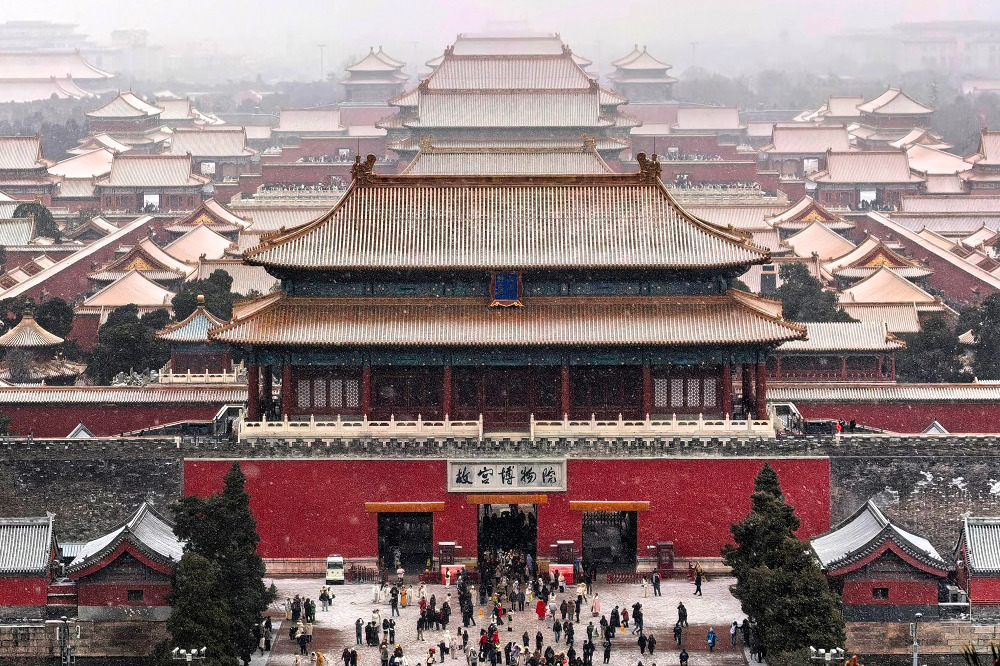
    Beijing welcomes its first snowfall this winter

    China Daily Information Co (CDIC) has issued a formal copyright notice asserting exclusive ownership of all content published across its digital platforms. The comprehensive declaration specifies that all textual, photographic, and multimedia materials remain protected intellectual property under CDIC’s jurisdiction.

    The notice explicitly prohibits republication or utilization of content in any form without obtaining prior written authorization from the corporation. This protective measure extends to all digital assets hosted on CDIC-affiliated websites and platforms.

    Technical recommendations accompanying the notice suggest optimal viewing experiences require browsers supporting 1024*768 resolution or higher. The publication also references its legally registered status (Registration Number: 130349) and multimedia publishing license (0108263), underscoring its formal operational credentials.

    The footer section provides navigation to corporate information pages including ‘About China Daily’, advertising opportunities, contact channels, and employment sections specifically targeting expatriate professionals. Social media integration prompts encourage readers to maintain connection through follow features.

    This copyright statement reflects growing industry emphasis on digital content protection and intellectual property rights enforcement in online publishing environments. The detailed provisions demonstrate CDIC’s commitment to safeguarding its journalistic investments and creative assets in an increasingly digital media landscape.