标签: Asia

亚洲

  • Half marathon route along Suzhou Creek in Putuo

    Half marathon route along Suzhou Creek in Putuo

    Shanghai’s Putuo district will showcase its remarkable urban rejuvenation through the Suzhou Creek Half Marathon on December 19, 2025. This 21-kilometer course offers participants and spectators an immersive journey along one of Shanghai’s most historically significant waterways, blending athletic challenge with cultural discovery.

    The meticulously designed route connects eight distinctive landmarks that exemplify Putuo’s transformation from industrial zone to modern urban destination. Runners will encounter Tian’an 1000 Trees, an architectural marvel featuring forest-inspired design that integrates lush greenery with innovative public spaces. The course then proceeds through M50 Creative Park, a repurposed industrial complex that now houses cutting-edge galleries, artist studios, and contemporary art exhibitions.

    Further along the route, participants will experience Hong Shou Fang, a commercial district revitalized from traditional Shikumen lane houses that preserves historical architecture while supporting modern commerce. The Environmental Theme Park at Suzhou River Mengqing Garden demonstrates the district’s commitment to ecological restoration, offering both educational opportunities and waterfront leisure activities.

    The marathon circuit also includes Global Harbor’s expansive shopping facilities, Changfeng Joy City’s entertainment venues, the natural oasis of Changfeng Park, and the purpose-built Suzhou Creek Half Marathon Park. Collectively, these sites present a comprehensive portrait of Putuo’s dynamic urban development, highlighting successful integration of historical preservation, ecological consciousness, and modern infrastructure.

    The event represents more than athletic competition—it serves as a moving showcase of urban planning achievement, demonstrating how cities can balance development with environmental and cultural preservation. Participants will witness firsthand how Shanghai has transformed its historical waterways into vibrant public spaces that serve both residents and visitors.


  • UAE issues new orange alert, asks residents to be ‘alert’ till 7.45am

    UAE issues new orange alert, asks residents to be ‘alert’ till 7.45am

    The United Arab Emirates’ National Emergency Crisis and Disaster Management Authority (NCEMA) has escalated weather warnings by issuing a formal orange alert across the nation. This advisory, activated on the morning of Thursday, December 18, 2025, remains in effect until 7:45 AM local time.

    The orange alert classification signifies potentially hazardous weather conditions that require heightened public awareness and precautionary measures. Authorities have specifically instructed residents to remain ‘alert’ and exercise extreme caution during this period. While the precise nature of the meteorological threat wasn’t detailed in the initial bulletin, orange alerts typically correspond to severe weather phenomena including heavy rainfall, strong winds, reduced visibility from dust storms, or turbulent sea conditions.

    Emergency response teams have been placed on standby, with critical infrastructure monitoring intensified across affected regions. The coordinated government response involves multiple entities including civil defense, meteorological departments, and local municipal authorities working in synchronization.

    The NCEMA has disseminated official guidelines recommending that residents avoid unnecessary travel, particularly in areas prone to flooding or wind exposure. Those requiring movement are advised to continuously monitor official weather channels and comply with all safety directives. The alert follows sophisticated predictive modeling from the UAE’s National Center of Meteorology indicating developing adverse weather patterns.

    This proactive warning system demonstrates the nation’s advanced emergency preparedness capabilities, developed through substantial investment in meteorological technology and public safety infrastructure. The UAE’s color-coded alert system operates on multiple tiers, with orange representing the second-highest level of weather-related danger, immediately below red alert status.

  • People across China hold diverse events to mark Winter Solstice

    People across China hold diverse events to mark Winter Solstice

    Communities throughout China engaged in vibrant cultural observances on December 18, 2025, to herald the approaching Winter Solstice, which officially occurs on December 21st this year. This astronomical event, marking the year’s shortest day, traditionally signifies the commencement of deep winter and historically represented a period of agricultural respite in China’s farming communities.

    Across northern regions, families upheld the customary practice of preparing and consuming dumplings, a tradition believed to provide warmth during the coldest season. Simultaneously, southern provinces celebrated with tangyuan, sweet glutinous rice balls symbolizing family unity and completeness.

    Educational institutions incorporated the cultural significance into their curricula. In Lianyungang city, Jiangsu province, kindergarten children participated in hands-on dumpling-making activities under teacher supervision, blending culinary education with cultural preservation. These intergenerational exchanges ensure traditional knowledge transfers to younger generations.

    The widespread celebrations demonstrate how modern Chinese society maintains connections to astronomical traditions and seasonal culinary practices. Regional variations in observance methods highlight China’s diverse cultural tapestry while sharing common themes of family gathering, seasonal awareness, and cultural continuity. These activities represent more than ceremonial observances—they serve as living embodiments of intangible cultural heritage adapting to contemporary contexts.

  • Australian PM announces national gun buyback following Bondi Beach shooting

    Australian PM announces national gun buyback following Bondi Beach shooting

    In a decisive response to the recent mass shooting at Sydney’s Bondi Beach, Australian Prime Minister Anthony Albanese has unveiled a comprehensive national firearm buyback initiative. The announcement came during a Friday press conference in Canberra, where the Prime Minister outlined the government’s strategy to substantially reduce the number of firearms circulating within Australian communities.

    The newly established program will facilitate the purchase and subsequent destruction of surplus, recently prohibited, and illegally held firearms across the nation. This approach mirrors the successful buyback scheme implemented following the 1996 Port Arthur massacre in Tasmania, which resulted in 35 fatalities and prompted Australia’s most significant firearm law reforms.

    Sunday night’s Bondi Beach shooting, which claimed 15 lives, stands as the deadliest mass shooting incident in Australia since the Port Arthur tragedy. Prime Minister Albanese revealed concerning statistics indicating that Australia currently hosts over 4 million firearms—exceeding the number present during the 1996 massacre.

    Operational responsibilities will be distributed between state/territory governments and federal authorities. Regional governments will manage the collection, processing, and compensation aspects of the program, while the Australian Federal Police will oversee the destruction of all surrendered weapons. Government projections anticipate the retrieval and elimination of several hundred thousand firearms through this nationwide effort.

  • Dubai cruise wedding triggers raids on properties of fantasy sports promoter in India

    Dubai cruise wedding triggers raids on properties of fantasy sports promoter in India

    Indian enforcement authorities have launched coordinated investigations targeting a fantasy sports promoter following his extravagant destination wedding in Dubai. The Enforcement Directorate (ED) executed simultaneous searches at multiple properties connected to the individual across Uttar Pradesh’s Unnao district this week.

    The subject of investigation, identified as a content creator and brand ambassador for major fantasy gaming platforms, organized his wedding ceremony aboard a cruise ship in Dubai earlier this month. The celebration involved transporting approximately twenty guests from his native village to the United Arab Emirates at his personal expense.

    According to reports from Indian media outlets, a sixteen-member ED team arrived in a vehicle convoy Tuesday morning to conduct thorough examinations of the promoter’s residential property and associated premises. Officials extended their search to include the residence of a close relative, though the primary subject was absent during the operation.

    The investigative process spanned several hours as authorities meticulously reviewed documentation pertaining to asset holdings and financial transactions. While no official confirmation has been provided regarding seizure of valuables, the probe focuses on determining whether earnings generated through fantasy sports platforms—primarily from promotional activities and referral programs—were properly routed and invested in compliance with financial regulations.

    The individual under scrutiny, whose identity remains protected for legal considerations, is described as coming from modest beginnings as the son of a local medical store owner. His rapid ascent in the fantasy sports promotion industry has now attracted governmental attention regarding the legitimacy of financial operations within this emerging sector.

  • China issues guidelines to crack down on tobacco-related illegal activities

    China issues guidelines to crack down on tobacco-related illegal activities

    The Chinese government has launched a comprehensive nationwide initiative to combat tobacco-related illegal activities through newly published guidelines. Released by the General Office of the State Council on December 19, 2025, these measures represent a significant escalation in China’s efforts to regulate its tobacco market and protect national economic interests.

    The multifaceted guidelines target various aspects of tobacco illegality, including rigorous enforcement against counterfeit Chinese tobacco brands being produced and sold overseas. The policy mandates strengthened interception measures to prevent illicit tobacco products from entering or transiting through Chinese territory, addressing both domestic and cross-border tobacco crimes.

    A key focus involves preventing the geographical spread or relocation of counterfeit tobacco production operations. The guidelines specifically call for intensified crackdowns on the illegal storage, transportation, and delivery networks that support tobacco-related criminal enterprises.

    The digital dimension of tobacco enforcement receives particular attention, with directives to eliminate illegal online tobacco sales and prohibit unauthorized production and distribution channels. The guidelines further emphasize the development of enhanced support mechanisms to bolster the nationwide campaign against tobacco-related illegal activities, suggesting increased resources and coordination between enforcement agencies.

    This policy initiative aims to continuously improve market order within China’s tobacco sector while safeguarding both national fiscal interests and consumer rights from the detrimental effects of illicit tobacco trade.

  • Efforts intensified to ease business issues

    Efforts intensified to ease business issues

    China has undertaken a massive regulatory cleanup operation, eliminating over 10,000 problematic policy documents nationwide in 2025 as part of a comprehensive effort to standardize business regulations and eliminate discriminatory practices against enterprises. The Ministry of Justice-led initiative, launched in March, has addressed critical issues including unfulfilled government obligations, illegal debt accumulation, and the problematic practice of ‘new officials disowning past obligations’.

    The special operation has rectified 54,000 prominent cases across China, resulting in the recovery of approximately 28.92 billion yuan ($4 billion) in economic losses for affected businesses. In collaboration with market supervision and firefighting departments, the Ministry of Justice has prompted local governments to implement more than 330 standardized measures to unify law enforcement standards nationwide.

    Significant administrative reforms include the restoration of over 50 million entries on enterprises’ abnormal operation lists and the removal of 3.5 million penalty records, substantially reducing barriers to credit restoration, financing access, and bidding opportunities. These measures have contributed to an 8.2% year-on-year reduction in arbitrary fines, with enhanced monitoring mechanisms for regions showing abnormal increases in penalties.

    The campaign has specifically targeted illegal cross-regional and profit-driven law enforcement practices. A representative case from April 2025 involved a Shandong county-level law enforcement bureau that illegally penalized an out-of-town seed business for labeling violations without transferring jurisdiction to the appropriate agricultural authorities as required. The municipal supervision bureau issued rectification orders and referred the case to disciplinary authorities.

    According to ministry data, these regulatory improvements have significantly boosted market vitality, with a net increase of over 5 million national market entities and a 6.8% rise in newly registered private enterprises during the first eight months of 2025—18.6 percentage points higher than the previous year’s growth rate.

    Despite these achievements, Vice-Minister of Justice Hu Weilie acknowledged persistent challenges, including inadequate implementation of financial oversight systems, performance metrics tied to confiscated income, overlapping enforcement responsibilities, and arbitrary application of maximum penalties. These deep-rooted issues stem from misplaced performance evaluation concepts, insufficient professional capabilities, weak oversight mechanisms, and institutional development gaps.

    The ministry plans to accelerate the introduction of comprehensive regulations, including measures for law enforcement administration and policies advancing the rule of law in comprehensive administrative reform. Future efforts will focus on scientifically delineating approval, supervision and enforcement powers, expanding regular training and proficiency testing for enforcement personnel, and aligning administrative standards across regions to support the construction of a unified national market. A national unified administrative law enforcement supervision platform will be developed to enable full-process, real-time oversight of enforcement activities.

  • Guangxi’s new mineral named Jinxiuite

    Guangxi’s new mineral named Jinxiuite

    Chinese geologists have achieved a significant scientific breakthrough with the International Mineralogical Association’s official recognition of Jinxiuite, a newly discovered mineral from Guangxi’s Jinxiu Yao Autonomous County. The mineral was identified in June by researchers from the Chinese Academy of Geological Sciences working in the Longhua nickel-cobalt deposit.

    Senior Engineer Tang Hejun, who led the discovery team, revealed that Jinxiuite contains several strategically important metals including nickel, cobalt, and bismuth. “Determining extraction feasibility is crucial,” Tang emphasized, “as it will directly impact both recovery rates and the economic viability of fully utilizing this mineral deposit in future operations.”

    The discovery carries particular significance for China’s industrial sector, given the country’s substantial reliance on imported cobalt and limited domestic resources. Nickel and cobalt are essential components in aerospace technology, chemical manufacturing, and advanced battery production due to their exceptional resistance to high temperatures and corrosion, combined with remarkable structural strength.

    Yan Jiayong, Director of the Academy’s Deep Mineral Exploration Theory and Technology Research Division, characterized the finding as a landmark achievement that extends beyond mere resource identification. “This discovery expands our fundamental understanding of the material world and provides a natural blueprint for materials science,” Yan explained. “Such natural formations frequently inspire the synthesis of novel materials with unique properties and capabilities.”

    Geoscientists note that new minerals like Jinxiuite serve as historical records of Earth’s geological evolution, offering insights into elemental behavior under extreme conditions. By analyzing mineral associations within deposits, researchers can meticulously reconstruct the complete evolutionary history of these formations from initial development to final maturation.

    The Jinxiu region has emerged as a particularly promising area for mineral exploration, with recent nickel-cobalt discoveries establishing it as a vital zone for nonferrous metal production and resource development within Guangxi Zhuang Autonomous Region.

  • What does TikTok’s deal mean for America’s users?

    What does TikTok’s deal mean for America’s users?

    The landmark partnership between TikTok and Oracle Corporation continues to generate uncertainty regarding the platform’s operational future for its American user base. While the arrangement nominally addresses national security concerns raised by U.S. regulators, industry observers note the conspicuous absence of detailed specifications governing user experience modifications.

    This strategic alliance, formed under intense geopolitical pressure, ostensibly creates a new entity called TikTok Global to oversee U.S. operations. Oracle’s role as a “trusted technology partner” provides the architectural framework for data security compliance, yet the practical implications for content delivery algorithms, data processing protocols, and feature accessibility remain deliberately vague in public disclosures.

    The arrangement’s ambiguity stems from complex negotiations involving multiple stakeholders: ByteDance (TikTok’s Chinese parent company), U.S. regulatory bodies, and now Oracle as the primary American technology partner. This tripartite dynamic creates inherent tensions between national security priorities, commercial interests, and user experience consistency.

    Technology analysts suggest the partnership could potentially introduce differentiated user experiences across geographical regions, with American users possibly encountering modified content recommendation algorithms or altered data retention policies. The fundamental architecture of TikTok’s service—particularly its critically acclaimed content discovery mechanism—may undergo significant recalibration to satisfy regulatory requirements.

    Market response indicates cautious optimism tempered by practical concerns. While the partnership prevents immediate platform prohibition in the United States, preserving access for TikTok’s approximately 100 million American users, the long-term user experience implications warrant continued scrutiny as implementation details emerge.

  • Japan’s security moves draw sharp criticism

    Japan’s security moves draw sharp criticism

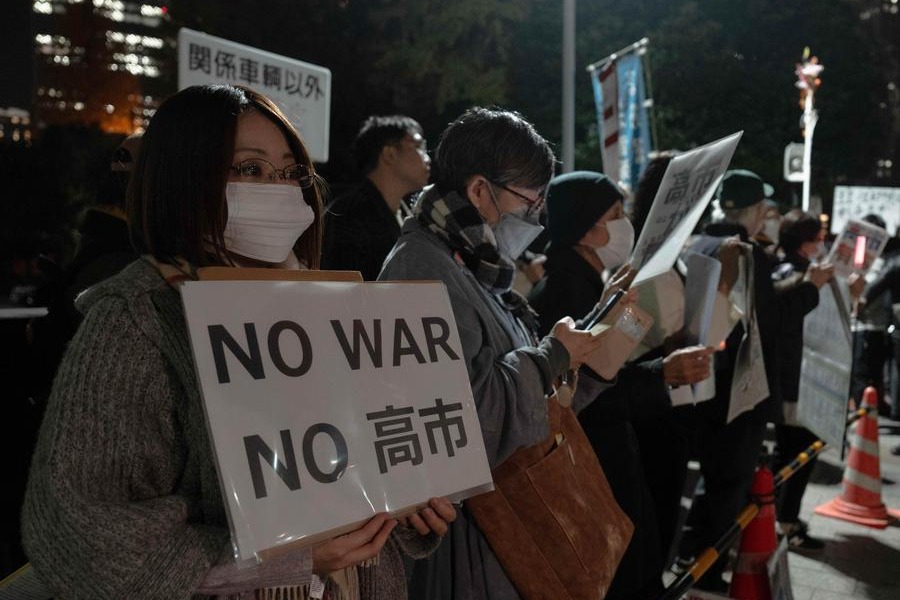
    North Korea has issued a stern condemnation of Japan’s reported considerations to revise its longstanding Three Non-Nuclear Principles, characterizing the move as indicative of alarming militaristic tendencies. Through an editorial published in state-run newspaper Rodong Sinmun on Thursday, the Democratic People’s Republic of Korea asserted that Prime Minister Sanae Takaichi’s administration has orchestrated substantial adjustments to Japan’s defense and security frameworks.

    The criticism highlights Japan’s escalated defense expenditures, enhanced preemptive strike capabilities, relaxed arms export regulations, and the contemplated revision of nuclear principles that have formed the cornerstone of Japan’s post-war pacifist stance. Rodong Sinmun declared that these developments mark a critical and perilous phase in Japan’s multi-decade remilitarization efforts following its World War II defeat.

    According to Kyodo News reports, the Japanese government anticipates revising its National Security Strategy and associated documents by late next year. Prime Minister Takaichi is reportedly evaluating modifications to the third principle—which currently prohibits nuclear weapons from entering Japanese territory—despite the strategy’s 2022 affirmation that ‘the basic policy of adhering to the Three Non-Nuclear Principles will remain unchanged.’

    Established in 1967 by then-Prime Minister Eisaku Sato, the three principles prohibit Japan from possessing, producing, or permitting the introduction of nuclear weapons within its borders. Analysts confirm that any amendment would represent a seismic shift in Japan’s security paradigm.

    The North Korean newspaper further warned that such revisions would dramatically expand the scope and depth of Japan’s remilitarization, constituting a blatant provocation against regional peace. Drawing parallels to Japan’s wartime imperial ambitions, the editorial evoked historical memories of nationwide indoctrination preceding aggressive wars and the pursuit of the ‘Greater East Asia Co-Prosperity Sphere.’

    In related developments, Prime Minister Takaichi’s coalition agreement with the Japan Innovation Party, signed October 20, included provisions regarding submarines featuring ‘next-generation propulsion systems’—potentially including nuclear technology. When questioned about nuclear submarine acquisition, Chief Cabinet Secretary Minoru Kihara stated the government wasn’t ‘ruling out any options’ regarding enhanced deterrence capabilities.

    Concurrently, China has repeatedly criticized Prime Minister Takaichi’s comments on Taiwan, with Foreign Minister Wang Yi cautioning against repeating historical mistakes where Japanese militarists justified wars under pretexts of ‘survival-threatening situations.’

    Diplomatic support for the one-China principle has intensified throughout November, with Myanmar, Cambodia, Laos, Jordan, Saudi Arabia, and the United Arab Emirates all reaffirming their adherence to the policy and opposing external interference in China’s internal affairs regarding Taiwan.