标签: Asia

亚洲

  • ‘Doctrine of domination’: Iran’s FM criticises Israel after nuclear talks with US

    ‘Doctrine of domination’: Iran’s FM criticises Israel after nuclear talks with US

    Iranian Foreign Minister Abbas Araghchi launched a sharp critique against Israel during his address at the Al Jazeera Forum in Qatar on Saturday, condemning what he characterized as a “doctrine of domination” in regional security affairs. Speaking just one day after nuclear discussions with American officials, Araghchi asserted that this doctrine enables unchecked Israeli military expansion while demanding neighboring nations disarm.

    The senior diplomat articulated that Israel’s strategic objectives necessitate the systematic weakening of adjacent countries across multiple domains—military, technological, economic, and social. “Under this project Israel is free to expand its military arsenal without limits… Yet other countries are demanded to disarm. Others are pressured to reduce defensive capacity. Others are punished for scientific progress,” Araghchi stated before the international audience.

    Notably absent from his remarks was any direct reference to Friday’s negotiations in Muscat, where Araghchi led Iran’s delegation in indirect talks with US Middle East envoy Steve Witkoff. Both sides subsequently characterized the discussions positively, with US President Donald Trump describing them as “very good” and confirming mutual agreement to continue diplomatic engagement.

    These talks occurred against a complex backdrop of regional tensions. Last June witnessed the collapse of previous negotiations when Israel initiated an unprecedented bombing campaign against Iranian targets, triggering a twelve-day conflict that included Israeli strikes on military officials, nuclear scientists, and civilian areas. Iran responded with drone and missile attacks against Israeli positions and the largest US military installation in the Middle East, located in Qatar.

    The renewed diplomatic engagement follows recent Washington threats and aircraft carrier deployments to the region after Iran’s suppression of anti-government protests last month. The United States continues advocating for expanded negotiations addressing Iran’s ballistic missile program and support for regional militant groups—issues Israel strongly supports including in discussions. Tehran maintains its consistent position rejecting any expansion beyond nuclear matters.

  • Sheikh Mohammed to crown winners of Dh1-million Hope Maker prize on February 15

    Sheikh Mohammed to crown winners of Dh1-million Hope Maker prize on February 15

    Dubai’s Ruler, Sheikh Mohammed bin Rashid Al Maktoum, will personally crown the recipients of the sixth Hope Makers award in a grand ceremony scheduled for February 15. The Vice President and Prime Minister of the UAE announced that this year’s edition has drawn an unprecedented participation of over 15,000 young men and women from across the Arab world, all vying for the prestigious Dh1-million prize.

    The Hope Makers initiative, launched under the Mohammed bin Rashid Al Maktoum Global Initiatives (MBRGI), serves to identify and celebrate unsung heroes who have dedicated their resources to humanitarian causes and community service. Beyond financial support, the program amplifies their work through media platforms and provides crucial backing to expand the reach of their impactful projects.

    Sheikh Mohammed articulated the philosophy behind the award, stating, ‘Life has taught me that hope is a source of strength, while despair represents a loss of trust. The spirit of optimism is contagious—among individuals, within institutions, and between nations. Planting seeds of hope ranks among the greatest deeds, as they blossom into gardens of youth who believe in miracles and devote themselves to serving their communities.’

    Mohammad Al Gergawi, Secretary General of MBRGI, emphasized that the initiative reflects Sheikh Mohammed’s vision to cultivate a culture of giving and optimism across the Arab region. Since its inception in 2017, the program has received more than 320,000 nominations, demonstrating the vast potential for positive change and the countless inspirational efforts deserving recognition. The initiative has significantly raised awareness about the transformative power of volunteering, both individually and institutionally, showcasing its capacity to improve lives and empower communities.

  • ‘Bodies were scattered’: Witnesses describe deadly blast at Islamabad mosque

    ‘Bodies were scattered’: Witnesses describe deadly blast at Islamabad mosque

    ISLAMABAD – The Islamic State (Daesh) has officially claimed responsibility for a catastrophic suicide bombing that tore through a Shiite mosque in Pakistan’s capital during Friday prayers, marking the deadliest attack in Islamabad in nearly two decades.

    According to the SITE Intelligence Group, which monitors jihadist communications, the terrorist organization admitted to orchestrating the assault that left 31 dead and 169 wounded. The attack represents the most severe violence to hit the Pakistani capital since the 2008 Marriott hotel bombing that claimed 60 lives.

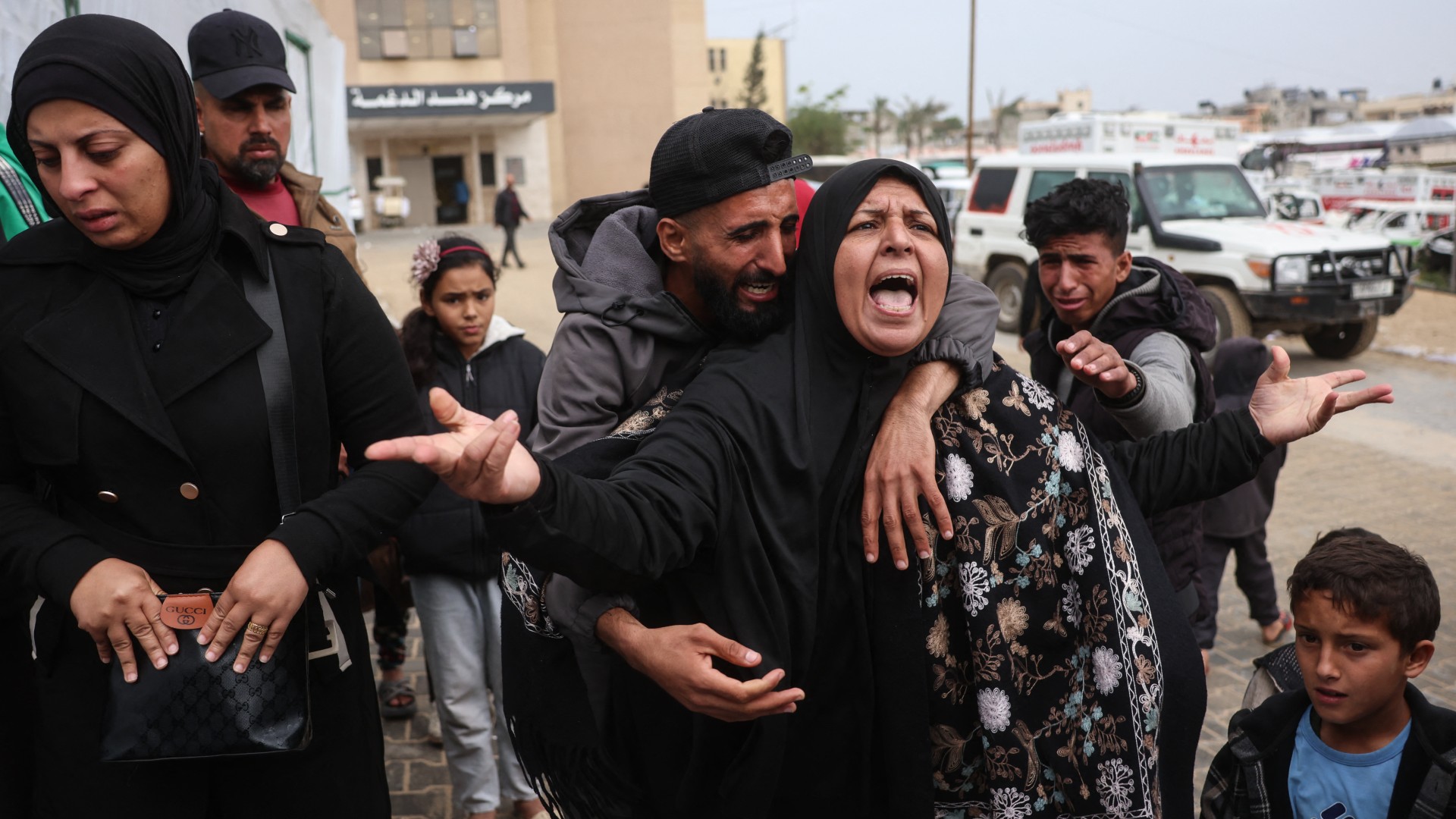
    Eyewitness accounts obtained by AFP reveal harrowing details of the assault at the Imam Bargah Qasr-e-Khadijatul Kubra mosque. Muhammad Kazim, 52, a regular worshipper from Gilgit-Baltistan who now resides in Islamabad, described the moment of detonation: “During the first bow of the Namaz, we heard gunfire. While we were still in the bowing position, an explosion occurred.”

    Kazim, who escaped physically unharmed but accompanied an injured friend to the Pakistan Institute of Medical Sciences, recounted the immediate aftermath: “The explosion was extremely powerful and caused numerous casualties. Debris fell from the roof, and windows were shattered. When I got outside, many bodies were scattered.”

    Another witness, Imran Mahmood, provided critical details about the attack sequence, describing a violent confrontation between the assailants and volunteer security personnel. “The suicide attacker was trying to move forward, but one of our injured volunteers fired at him from behind, hitting him in the thigh,” Mahmood stated. “He fell but got up again. Another man accompanying him opened fire on our volunteers before the attacker jumped onto the gate and detonated the explosives.”

    The tragedy has exposed significant security vulnerabilities at religious sites. Kazim noted that security had been consistently lax during his weeks attending Friday prayers at the mosque. “I have never seen proper security in place. Volunteers manage security on their own, but they lack the necessary equipment to do it effectively,” he revealed, adding that “Shiite mosques are always under threat, and the government should take this seriously.”

    The response effort faced challenges according to witnesses, with Kazim noting that unhurt worshippers initially provided assistance using personal vehicles before ambulances arrived approximately 20-25 minutes after the explosion. The area was subsequently sealed off from public access as emergency services worked to manage the crisis.

  • Global flavors meet festive cheer at Spring Festival fair in Shanghai

    Global flavors meet festive cheer at Spring Festival fair in Shanghai

    The Bund · City Hall Plaza in Shanghai’s Huangpu district transformed into a vibrant culinary crossroads from February 6-8, hosting the ‘Global Taste in Shanghai · Global Chinese New Year Fair.’ This three-day festival, jointly organized by the Shanghai Municipal Commission of Commerce and the Foreign Affairs Office of the Shanghai Municipal People’s Government, created a unique platform where international flavors converged with traditional Spring Festival celebrations.

    More than 50 businesses representing over 10 countries and regions participated in the gastronomic showcase, offering everything from Shanghai-themed gifts and premium food hampers to imported wines, specialty teas, artisanal crafts, and exotic delicacies. The event attracted diplomatic representatives from various consulates who personally promoted their nations’ culinary offerings.

    Teresa Bauer, Austria’s Acting Consul General in Shanghai, enthusiastically represented her country’s specialties at the fair. ‘Shanghai brings together so many different kinds of food and flavors,’ she remarked. ‘It’s kind of a hub of food culture in China.’ Bauer recommended organic chocolate from Zotter and traditional Viennese coffee from Julius Meinl, a company with roots dating back to 1862.

    Having resided in Shanghai for four years, Bauer expressed her appreciation for the cultural exchange: ‘I am very happy to have learned about all the important cultures, not only the Chinese New Year we are celebrating soon. I love the Chinese kitchen, the Chinese food, and it’s so different from the food we have in Austria.’

    The fair successfully created a multicultural celebration that extended beyond commerce, fostering cross-cultural understanding through shared culinary experiences during one of China’s most important traditional festivals.

  • UAE private schools to teach math, science subjects in English: Emarat Al Youm

    UAE private schools to teach math, science subjects in English: Emarat Al Youm

    In a significant educational reform, the United Arab Emirates has announced that private schools following the Ministry of Education’s curriculum will transition to teaching mathematics and science subjects exclusively in English. The policy change, reported by Emarat Al Youm, will commence in the 2026-2027 academic year and be implemented through a carefully structured four-phase rollout scheduled for completion by the 2029-2030 academic year.

    The initiative begins with Grade 9 Advanced Track students, who will receive instruction in mathematics, physics, chemistry, and biology in English during the inaugural year. Subsequent phases will expand English-medium instruction to Grade 10 (2027-2028), Grade 11 (2028-2029), and finally Grade 12 (2029-2030), ensuring a systematic and balanced transition across all secondary levels.

    According to an official circular distributed to private school administrations, the Ministry of Education emphasized that this strategic shift aims to create educational equity by standardizing the language of instruction between public and private institutions. The reform specifically targets enhanced student preparedness for higher education pathways, where these subjects are predominantly taught in English. Additionally, the policy seeks to boost academic competitiveness, facilitate smoother transitions between educational sectors, and better align graduate competencies with both labor market demands and national strategic objectives.

    School administrators have responded positively to the announcement, acknowledging that the previous discrepancy between secondary and university language mediums created significant challenges for students. Many institutions have already begun preparatory measures, including teacher training and curriculum development, to ensure a seamless implementation that maintains academic stability throughout the transition period.

    The Ministry has committed to providing all necessary educational resources and support to guarantee full operational readiness across the private school network, marking a transformative step in the UAE’s ongoing educational modernization efforts.

  • Exclusive: Ex-PCB chief recalls the day India-Pakistan cricket collapsed

    Exclusive: Ex-PCB chief recalls the day India-Pakistan cricket collapsed

    The high-stakes world of international cricket faces its most significant political crisis in years as Pakistan’s government-backed boycott of the February 15 T20 World Cup match against India exposes deep fractures within the sport’s governance. The decision, taken in solidarity with Bangladesh after their removal from the tournament, threatens to derail cricket’s most lucrative rivalry that generates approximately $400 million per match.

    Najam Sethi, former Pakistan Cricket Board chairman with three separate tenures, provided exclusive insight to Khaleej Times regarding the escalating confrontation between Pakistan and the International Cricket Council. According to Sethi, Pakistan’s protest stems from perceived inconsistent application of ICC regulations, particularly referencing the precedent set when India’s matches were relocated to Dubai during the 2025 Champions Trophy due to security concerns.

    The veteran administrator revealed startling behind-the-scenes details of cricket diplomacy, including a 2015 incident where Pakistani officials were allegedly humiliated during a trip to Mumbai. “They received us at the airport, brought us to the hotel, and asked us to wait,” Sethi recounted. “Three hours later, they told us the meeting had been cancelled and police were waiting outside to take us back to the airport.”

    The current standoff represents a dramatic escalation in cricket’s geopolitical tensions. Pakistan Prime Minister Shehbaz Sharif has publicly endorsed the boycott, characterizing it as a stance against unfair treatment. Sethi suggests informal backchannel negotiations are underway between ICC representatives and Pakistani officials, though he acknowledges the challenging dynamics given the Board of Control for Cricket in India’s considerable influence within international cricket.

    With the Olympics potentially welcoming cricket in 2028, Sethi warns that the sport’s governing body risks damaging its credibility through perceived political bias. “The Olympics will never tolerate a politicized ICC,” he emphasized, noting that the timing of this confrontation could jeopardize cricket’s Olympic aspirations.

    The situation remains fluid with February 15 looming as a critical deadline. Should Pakistan maintain their position and refuse to play India in potential knockout matches, the ICC faces unprecedented disciplinary decisions that could reshape international cricket’s power structure.

  • Explore ancient and iconic architecture with Beautiful Hebei

    Explore ancient and iconic architecture with Beautiful Hebei

    The tenth installment of the ‘Beautiful Hebei’ visual series offers a breathtaking journey through the province’s rich architectural heritage, showcasing ancient temples, historic towers, and magnificent grottoes through a curated collection of exceptional photography.

    Produced under the auspices of the Hebei Photographers Association, this ambitious project comprises eleven short films that collectively present 198 meticulously selected images. The visual content has been sourced from three primary channels: the association’s extensive archival library, specially commissioned submissions from professional photographers, and targeted collections from relevant cultural organizations.

    This multimedia initiative represents a significant cultural preservation effort, documenting Hebei’s most iconic structures and sacred spaces with unprecedented visual depth. The series not only highlights the architectural diversity spanning different dynasties but also demonstrates sophisticated photographic techniques in capturing the interplay of light, shadow, and form across these ancient edifices.

    Each episode serves as both an artistic presentation and historical documentation, offering viewers virtual access to sites that reflect Hebei’s position as a cradle of Chinese civilization. The project stands as a testament to the province’s enduring cultural significance and the continuing relevance of its architectural traditions in contemporary society.

  • ‘Sitting shuts my brain’: UAE doctors on why standing helps some people think, focus

    ‘Sitting shuts my brain’: UAE doctors on why standing helps some people think, focus

    Medical experts from Cleveland Clinic Abu Dhabi’s Neurological Institute have revealed compelling scientific evidence explaining why prolonged sitting adversely affects both cognitive performance and physical health. According to psychiatry and neurosurgical specialists, the human brain and body are fundamentally designed for movement, not sustained stillness.

    Dr. Muhammad Farhan, Staff Physician at the Psychiatry & Behavioural Health Department, explains that when the body remains stationary for extended periods, the brain receives diminished sensory input from muscles and joints. This reduction in neurological signaling triggers a shift toward a low-energy, drowsy state, significantly impairing mental alertness and focus.

    The physical consequences are equally significant. Dr. Nader Hebala, neurosurgical specialist at the same institute, details how sitting compresses the sciatic nerve—particularly problematic for individuals with existing back conditions or disc issues. The flexed hip position during sitting increases pressure on the nerve pathway, exacerbating pain, numbness, and tingling sensations in the lower extremities.

    For individuals with Attention-Deficit/Hyperactivity Disorder (ADHD), the challenges are particularly pronounced. Dr. Farhan notes that ADHD brains already operate with lower baseline levels of dopamine and norepinephrine—neurotransmitters critical for attention and focus. Prolonged sitting further depletes these chemicals, while movement naturally stimulates their production. This explains why many with ADHD report significantly improved concentration while standing or walking.

    The research carries important implications for workplace design, education systems, and transportation. Experts suggest implementing regular movement breaks every 30-45 minutes, advocating for sit-stand desks, and reconsidering how environments that mandate sitting—from conferences to long-haul flights—might accommodate neurological diversity.

    Crucially, doctors emphasize that the need for movement transcends mere preference, representing instead a biological requirement for optimal cognitive and physical functioning. They recommend balanced approaches that alternate between sitting and standing, combined with consistent postural changes and movement intervals throughout the day.

  • S Korean crypto firm accidentally pays out $40bn in bitcoin

    S Korean crypto firm accidentally pays out $40bn in bitcoin

    In a staggering administrative error, South Korean cryptocurrency exchange Bithumb inadvertently distributed over $40 billion worth of bitcoin to customers on Friday, temporarily transforming hundreds of account holders into instant millionaires. The platform had intended to issue modest cash rewards of 2,000 won (approximately $1.37) but instead credited 2,000 bitcoins to each recipient due to a critical system malfunction.

    The exchange detected the catastrophic error within 35 minutes, immediately implementing trading and withdrawal restrictions for the 695 affected accounts. According to Bithumb’s official statement, the company successfully recovered 99.7% of the erroneously distributed 620,000 bitcoins, emphasizing that the incident resulted from an internal processing error rather than external hacking or security vulnerabilities.

    South Korea’s Financial Supervisory Service (FSS) convened an emergency meeting Saturday to examine the unprecedented incident, warning that any indications of illegal activity would trigger formal investigations. Bithumb CEO Lee Jae-won pledged full cooperation with regulators, acknowledging the need to prioritize customer trust over external growth initiatives.

    As remediation measures, Bithumb announced compensation of 20,000 won ($13.66) for all platform users during the incident period, along with waived trading fees. The exchange committed to implementing enhanced verification systems and artificial intelligence detection mechanisms for abnormal transactions.

    This incident echoes similar high-value financial errors, including Citigroup’s April 2024 miscalculation that erroneously credited $81 trillion instead of $280 to a client account. The Bithumb case is expected to intensify regulatory scrutiny and debate surrounding operational safeguards within cryptocurrency exchanges and traditional financial institutions alike.

  • Delegates attending APEC Senior Officials’ Meeting, related sessions visit Guangzhou

    Delegates attending APEC Senior Officials’ Meeting, related sessions visit Guangzhou

    GUANGZHOU, China – International delegates participating in the APEC Senior Officials’ Meeting gained immersive cultural exposure during their visit to Guangzhou’s historic Chen Clan Ancestral Hall on February 6, 2026. The excursion provided diplomatic representatives with hands-on experience in traditional Chinese calligraphy amid the architectural splendor of one of Guangdong Province’s most significant cultural landmarks.

    This cultural diplomacy initiative forms part of China’s comprehensive hosting duties for the 33rd APEC Economic Leaders’ Meeting scheduled for November 2026. The current preliminary sessions, running from February 1-10, establish the foundational framework for the upcoming economic summit where Asia-Pacific leaders will address regional cooperation and global economic challenges.

    The Chen Clan Ancestral Hall, renowned for its exquisite traditional Cantonese architecture and status as a protected cultural heritage site, served as an ideal backdrop for cross-cultural exchange. Delegates engaged directly with China’s artistic traditions through calligraphy demonstrations, symbolizing the intersection of cultural preservation and international diplomacy.

    These preliminary meetings in Guangzhou represent critical preparatory work for establishing agenda priorities and policy directives ahead of the main November summit. The cultural component demonstrates China’s approach to diplomacy that blends substantive economic discussions with opportunities for cultural appreciation and mutual understanding among member economies.

    The selection of Guangzhou as host city highlights China’s strategic emphasis on showcasing developed metropolitan centers beyond its capital, presenting the dynamic economic and cultural landscape of southern China to international representatives.