标签: Asia

亚洲

  • Chang’e 6 samples contest moon theories

    Chang’e 6 samples contest moon theories

    Groundbreaking research stemming from China’s Chang’e-6 lunar mission has fundamentally challenged established theories about the Moon’s geological history and impact distribution. Analysis of the 1,935 grams of samples retrieved from the Moon’s far side has revealed that impact rates between the near and far sides are essentially identical, contradicting the long-standing hypothesis that the far side served as a protective shield for Earth.

    The research, published in Science Advances, has enabled Chinese scientists to develop a new lunar crater chronology model that provides unprecedented accuracy in dating unsampled lunar regions. Led by Professor Yue Zongyu from the Chinese Academy of Sciences’ Institute of Geology and Geophysics, the international team combined radiometric dating of the far side samples with high-resolution remote sensing data and historical information from Apollo, Luna, and previous Chang’e missions.

    The samples included norites dating back 4.25 billion years, corresponding to the age of the South Pole-Aitken basin—the Moon’s largest and oldest impact crater. This discovery is particularly significant as previous chronology models relied exclusively on near-side samples from surfaces less than 4 billion years old, creating limitations in understanding lunar evolutionary history.

    Perhaps most notably, the findings challenge the controversial ‘Late Heavy Bombardment’ hypothesis that proposed a massive lunar cataclysm approximately 3.9 billion years ago. The new model suggests Apollo samples clustering around that period may reflect local events rather than global phenomena, indicating instead a smooth decline in impact frequency over time.

    This research establishes a universal framework for lunar science that will enhance our understanding of impact processes throughout the solar system, with the Moon serving as a critical historical record of planetary evolution.

  • New approach to breast cancer treatment found

    New approach to breast cancer treatment found

    A groundbreaking study from Chinese medical researchers has revealed a previously unknown mechanism behind treatment resistance in aggressive breast cancer, potentially paving the way for rapid clinical application of existing migraine medication to improve outcomes.

    The research, conducted jointly by Fudan University Shanghai Cancer Center and the Institute for Translational Brain Research, identified sensory nerves within tumors as primary instigators of immunotherapy resistance in triple-negative breast cancer (TNBC) patients. Published in the prestigious journal Cell, the findings demonstrate how these nerves function as biological ‘commanders’ that actively suppress the body’s immune response against cancerous growths.

    Triple-negative breast cancer represents approximately 20% of all breast cancer diagnoses and is characterized by its aggressive nature and tendency to metastasize within five years. While immunotherapy has emerged as a promising treatment modality that harnesses the body’s natural defenses, many TNBC patients either fail to respond initially or rapidly develop resistance.

    The research team adopted an innovative approach by examining the tumor microenvironment rather than focusing exclusively on cancer cells themselves. Through comprehensive analysis of 360 clinical samples, they discovered that tumors with significant sensory nerve infiltration—the same nerves responsible for transmitting touch and pain sensations—correlated with the most unfavorable patient outcomes.

    According to Dr. Shao Zhimin, lead researcher and director of general surgery at the cancer center, these sensory nerves create an immunosuppressive barrier preventing immune cells from penetrating the tumor’s core regions. The study mechanism reveals that cancer cells communicate with these nerves, triggering nearby cells to produce dense collagen formations that physically block therapeutic agents from reaching their targets.

    In a compelling translational application, researchers administered rimegepant—an already approved migraine medication—to animal models. The results demonstrated that blocking nerve signals not only decelerated cancer progression but significantly enhanced immunotherapy effectiveness. Since rimegepant has established safety profiles and regulatory approval, researchers anticipate a relatively short timeline for clinical adaptation in cancer treatment protocols.

    Dr. Jiang Yizhou, co-lead researcher, emphasized that this discovery underscores the critical interconnection between the nervous and immune systems in oncology. The study advocates for integrated therapeutic approaches that address both biological systems simultaneously, potentially revolutionizing treatment strategies for resistant cancers beyond breast oncology.

  • Packages tempt tourists for skiing and a soak

    Packages tempt tourists for skiing and a soak

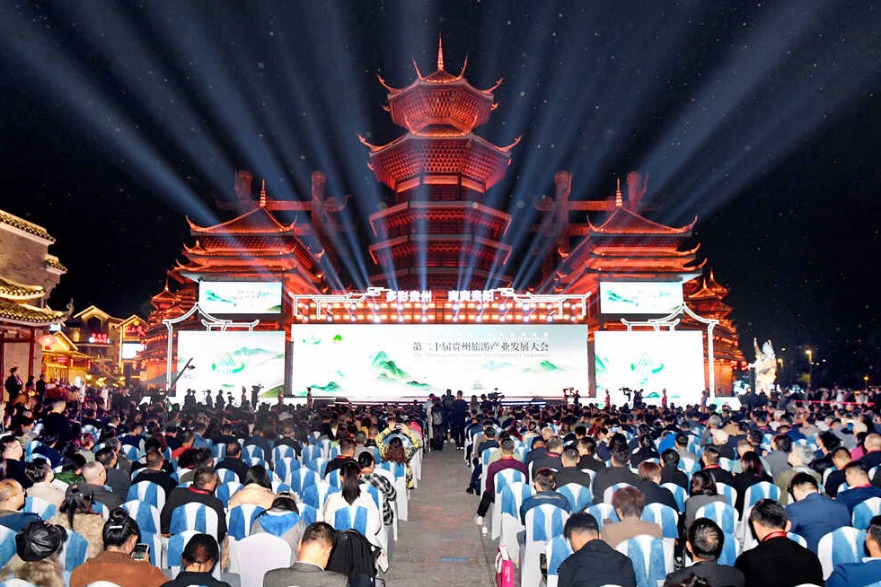
    Nestled within the forested highlands of Guizhou province, Liupanshui has emerged as an unexpected powerhouse in China’s winter tourism landscape, challenging the traditional dominance of northern regions with its innovative ‘ski-and-soap’ hospitality model. This mountain city has masterfully combined technical alpine skiing with luxurious geothermal spring experiences, creating a unique ‘two extremes in one day’ offering that is drawing visitors from across southern China.

    The Yushe Snow Mountain Ski Resort, operating at one of China’s lowest latitudes for alpine skiing, has evolved beyond basic winter recreation to cater to an increasingly sophisticated market. This season, the resort introduced Guizhou’s first dedicated snowboard park and expanded its advanced terrain to accommodate growing demand for skill progression. ‘Many visitors no longer find beginner runs sufficient,’ noted site manager Li Baogang, whose forest-encircled resort regularly hosts over 10,000 daily visitors.

    Accessibility proves to be a decisive advantage for these southern slopes. Travelers from Guangdong province can reach Liupanshui via high-speed rail in mere hours, avoiding the extreme cold of northern destinations while enjoying comparable winter sports facilities. ‘It is not as cold as the north, and transport is more convenient,’ confirmed Wang Yixue, a visitor from Guangzhou.

    Meanwhile, Meihuashan Ski Resort has positioned itself as a family-friendly winter theme park just five kilometers from the city center. With 98 wood cabins and a coaching staff of 130 professionals—including 40 imported from Northeast China—the resort has launched an ambitious youth engagement initiative, distributing 100,000 free student tickets to cultivate a new generation of southern skiers. Daily cultural performances and extended evening hours until 9 pm complement the winter sports experience.

    The complete Liupanshui experience culminates at Baichehe Hot Spring Resort, located approximately 50 kilometers from Yushe, where visitors can soak in outdoor pools maintained at approximately 50°C. The resort has developed distinctive bathing experiences including ‘raw spring’ and tea-infused pools that provide therapeutic warmth after a day on the slopes. ‘The contrast between skiing and a hot-spring soak is uniquely refreshing and helps relax the body,’ commented a visitor surnamed Luo from Guiyang.

    Capitalizing on this natural synergy, local resorts have launched integrated value packages that bundle skiing, hot spring access, and sightseeing minitrain rides. ‘Visitors can switch easily from daytime skiing to evening soaking,’ explained Wang Mei, deputy general manager of Baichehe Hot Spring Resort, highlighting the seamless transition between winter adventures and thermal relaxation that defines Liupanshui’s emerging tourism identity.

  • Enhanced water quality attracts avian visitors

    Enhanced water quality attracts avian visitors

    Chaohu Lake, China’s fifth-largest freshwater body, has undergone a remarkable ecological transformation, evolving from a polluted watershed into a thriving sanctuary for migratory birds. Recent documentation reveals an impressive 338 avian species now inhabiting the basin, including the rare Dalmatian pelican under first-class national protection.

    The turnaround follows decades of environmental degradation caused by rapid industrialization and urbanization. Designated as a key pollution control target in 1996, the lake has benefited from comprehensive conservation measures implemented through the Anhui Chaohu Lake Watershed Integrated Protection and Restoration Project launched in 2021.

    With a cumulative investment of 10.5 billion yuan ($1.5 billion) by end-2025, the initiative has completed ecological restoration across 950 square kilometers and wetland rehabilitation covering 417 hectares. Notable achievements include the Lujiang alum mine ecological restoration project, recognized as a national exemplary case by multiple ministries.

    Water quality metrics demonstrate substantial improvement, with inflow rivers consistently maintaining Class III standards or better since 2021. The entire lake has elevated from Class V in 2018 to stable Class IV levels, occasionally reaching the ‘good’ Class III threshold. Most significantly, outflow water entering the Yangtze River now consistently meets Class II standards, contributing nearly 4 billion cubic meters of high-quality water annually to China’s longest river.

    The ecological revival has positioned Chaohu Lake as a winter paradise for migratory birds, with spectacular sightings including whale-shaped bird formations soaring above the restored wetlands. As Ding Zhisong, Director of Hefei Ecology and Environment Bureau, noted: ‘The choice of birds is the most genuine barometer of ecology.’

  • APEC host China eyes more cooperation

    APEC host China eyes more cooperation

    China has positioned its hosting of the 33rd Asia-Pacific Economic Cooperation (APEC) Economic Leaders’ Meeting as a pivotal moment for reinforcing regional collaboration and countering global economic headwinds. Vice-Foreign Minister Ma Zhaoxu, speaking at the conclusion of the first APEC Senior Officials’ Meeting in Guangzhou, emphasized that China’s role extends beyond the Asia-Pacific, serving as a critical stabilizer for the international economic order.

    The 2026 summit, scheduled for November 18-19 in Shenzhen, will carry the theme “Building an Asia-Pacific Community to Prosper Together.” This marks the third time China has hosted the event, following Shanghai in 2001 and Beijing in 2014. Vice-Minister Ma outlined three core priorities for the APEC “China Year”: fostering openness, promoting innovation, and deepening cooperation. He explicitly denounced protectionism and unilateralism, advocating instead for trade liberalization and investment facilitation.

    Amid what he described as a landscape of ‘transformation and turbulence,’ Ma stressed the urgency of innovation-driven development. He highlighted the need to cultivate new productive forces and generate fresh growth drivers across member economies. Chen Xu, Chair of the APEC Senior Officials’ Meeting, provided logistical details, noting that approximately 300 events are planned throughout the year. These will include ministerial-level meetings covering trade, digital economy, energy, food security, and finance, among other sectors. Additional senior officials’ meetings are slated for Shanghai in May and Dalian in August.

  • BBC reports from outside court after Jimmy Lai sentencing

    BBC reports from outside court after Jimmy Lai sentencing

    Hong Kong’s High Court has delivered a landmark verdict, sentencing prominent pro-democracy media magnate Jimmy Lai to 20 years imprisonment following a highly scrutinized legal proceeding. The 76-year-old founder of the now-defunct Apple Daily newspaper faced charges under the territory’s national security legislation, marking one of the most significant applications of the controversial law since its implementation.

    The judicial proceedings unfolded against a backdrop of intensified geopolitical tensions, with international observers and human rights organizations closely monitoring the case. Lai, who had previously been a vocal critic of Beijing’s influence in Hong Kong, was convicted on charges that authorities described as ‘collusion with foreign forces’ and ‘endangering national security.’

    The sentencing represents a pivotal moment in Hong Kong’s political landscape, demonstrating the rigorous enforcement of national security measures that were introduced in 2020. The verdict sends unequivocal signals about the judicial approach to cases perceived as challenging China’s sovereignty over the semi-autonomous region.

    International response to the ruling has been immediate, with several Western governments expressing profound concern about the implications for freedom of speech and press independence in Hong Kong. The case is expected to have substantial repercussions on diplomatic relations between China and numerous Western nations that had advocated for Lai’s release.

    Legal experts suggest this ruling establishes a significant precedent for how national security cases will be adjudicated in Hong Kong’s judicial system moving forward, potentially influencing future cases involving activists and government critics.

  • Japanese stocks surge as Takaichi secures historic election victory

    Japanese stocks surge as Takaichi secures historic election victory

    Japanese financial markets erupted in optimism Monday morning as the Nikkei index surged beyond 5%, momentarily breaching the unprecedented 57,000-point threshold. This remarkable rally follows Prime Minister Sanae Takaichi’s Liberal Democratic Party (LDP) achieving a watershed electoral triumph that reshapes Japan’s political landscape.

    The LDP secured a commanding 316 seats in Sunday’s lower house election, marking the first time since 1947 that any single party has captured a two-thirds parliamentary majority. Combined with their coalition partner Japan Innovation Party’s 36 seats, the governing alliance now controls an overwhelming 352 seats in the 465-member chamber.

    This resounding mandate represents a calculated political gamble that has spectacularly paid off for Takaichi, who now faces the formidable challenge of revitalizing Japan’s stagnant economy while addressing mounting cost-of-living pressures. The decisive victory enables the prime minister to advance her pro-business agenda without extensive negotiations with opposition parties.

    In her post-election remarks, Takaichi committed to pursuing a ‘responsible yet aggressive’ fiscal approach while maintaining her current cabinet, formed just four months ago. Her decision to call snap elections shortly after assuming office in October has yielded stunning results, contrasting sharply with her predecessors who presided over the LDP’s loss of parliamentary majority amid corruption scandals and economic difficulties.

    Market analysts anticipate Takaichi’s policies could inject new vitality into the Japanese economy. Investment strategist Yuka Marosek noted that the election outcome, coupled with anticipated stimulus measures, tax adjustments, and deregulation initiatives, would provide ‘additional fuel for an existing bull trend.’

    The victory reflects Takaichi’s unique political appeal, having consolidated support among the LDP’s conservative base through traditional values and constitutional revision goals while simultaneously connecting with younger voters through unconventional cultural markers like her distinctive handbags and pink pens.

    International recognition came swiftly, with former US President Donald Trump congratulating Takaichi on his Truth Social platform, recalling his endorsement and characterizing the Japanese electorate’s enthusiasm as worthy of his ‘strong support.’ The prime minister is scheduled to visit Washington in March for her second meeting with Trump, building on their diplomatic rapport established during his October visit to Japan.

  • Israel’s president visits Sydney’s Bondi Beach massacre site and meets victims’ families

    Israel’s president visits Sydney’s Bondi Beach massacre site and meets victims’ families

    SYDNEY, Australia — Israeli President Isaac Herzog commenced a politically charged state visit to Australia on Monday, arriving at Bondi Beach to honor victims of December’s antisemitic massacre that claimed 15 lives. The ceremonial visit, occurring amid heightened security with police snipers visible on rooftops, served both as an act of condolence and a diplomatic effort to strengthen bilateral relations.

    Herzog met privately with families of those killed in the December 14 attack at a Jewish festival, where alleged gunman Naveed Akram perpetrated Australia’s deadliest mass shooting in nearly three decades. The president laid a wreath and two stones brought from Jerusalem at Bondi Pavilion, which had spontaneously transformed into a memorial site following the tragedy.

    ‘Our heart missed a beat, like all Israelis and all Jews,’ Herzog told reporters. ‘I’m here to express solidarity, friendship, and love.’ He emphasized that the stones would remain as permanent memorials, symbolizing global unity against terrorism.

    The visit occurs against a backdrop of significant political friction. While mainstream Jewish groups welcomed Herzog, the Jewish Council of Australia published full-page advertisements in major newspapers declaring ‘Herzog does not speak for us and is NOT WELCOME HERE.’ The council’s executive officer Sarah Schwartz accused Herzog’s rhetoric of contributing to ‘illegal annexation of the West Bank’ and inciting ‘genocide against Palestinians in Gaza.’

    Tensions between the Australian and Israeli governments have been escalating since Prime Minister Anthony Albanese announced plans six months ago to recognize Palestinian statehood. Herzog’s visit—initiated by Governor-General Sam Mostyn at Albanese’s request—represents an attempt to bridge diplomatic divides while addressing shared security concerns.

    The Israeli president praised Australia’s recent legislative responses to the attack, including rushed legislation lowering thresholds for banning hate groups and establishing a royal commission to investigate antisemitism. However, Herzog acknowledged shared frustrations regarding preventive measures: ‘These frustrations were shared by many, many of us, including myself.’

    Security measures intensified throughout Sydney, with police extending protest restrictions for additional two-week periods following the terrorist designation of the Bondi attack. Demonstrators risk arrest at planned protests organized by the Palestine Action Group, which Herzog characterized as attempts to ‘undermine and delegitimize Israel’s right to exist.’

    The president’s itinerary includes visits to Melbourne and Canberra before departing Thursday, with both cities housing approximately 85% of Australia’s Jewish population.

  • Thailand’s ruling Bhumjaithai party tops election that marks a conservative comeback

    Thailand’s ruling Bhumjaithai party tops election that marks a conservative comeback

    BANGKOK — Thailand’s political landscape has shifted decisively as the conservative Bhumjaithai Party, led by Prime Minister Anutin Charnvirakul, emerged victorious in the nation’s general election. According to unofficial results from approximately 94% of polling stations reported by the state Election Commission on Monday, the party secured approximately 193 seats in the 500-member House of Representatives.

    The election, characterized by a voter turnout of approximately 65%—significantly lower than the 2023 election—unfolded against a backdrop of sluggish economic growth and rising nationalist sentiments. This outcome marks the first clear conservative victory in Thai politics in recent years.

    The House of Representatives comprises 400 directly elected constituency lawmakers and 100 additional members selected through party-list proportional representation. With Bhumjaithai falling short of the 251-seat majority required to independently elect a prime minister, the party must now seek one or two coalition partners to form a government, potentially securing Anutin’s return as premier.

    The progressive People’s Party, previously anticipated to lead the polls, captured second place with 118 seats, demonstrating strong performance in Bangkok and surrounding provinces. Notably, the party outperformed Bhumjaithai in party-list voting by approximately 3.8 million votes.

    Pheu Thai, the populist vehicle for former Prime Minister Thaksin Shinawatra’s political machine, experienced a disappointing outcome with just 74 seats. Political analysts widely expect Pheu Thai to join a Bhumjaithai-led coalition government if invited.

    Anutin’s path to victory involved strategic repositioning following initial popularity declines due to flooding incidents and financial scandals. Recent border clashes with Cambodia enabled him to reframe his leadership during crisis, emphasizing national security and economic stimulus throughout his campaign.

    Napon Jatusripitak, director of the Center for Politics and Geopolitics at Bangkok-based think tank Thailand Future, noted that beyond nationalist sentiment, Bhumjaithai successfully leveraged traditional patronage networks outside urban centers, strategically positioning itself as the natural home for well-connected local politicians.

    Additionally, Sunday’s ballot included a constitutional referendum, with approximately 60% of voters endorsing the initiation of a formal drafting process to replace Thailand’s 2017 military-drafted constitution, though numerous procedural steps remain before implementation.

  • Japanese Prime Minister Takaichi looks to translate her election gains into a new conservative shift

    Japanese Prime Minister Takaichi looks to translate her election gains into a new conservative shift

    TOKYO — Prime Minister Sanae Takaichi has emerged from Japan’s parliamentary elections with an unprecedented mandate for conservative reform, securing a historic supermajority that positions her to reshape the nation’s security, economic, and immigration policies. Her Liberal Democratic Party (LDP) captured 316 seats in the 465-member lower house—the most powerful parliamentary chamber—marking the party’s strongest performance since its founding in 1955. Combined with the 36 seats won by coalition partner Japan Innovation Party, the ruling bloc now commands 352 seats, far exceeding the two-thirds majority required to advance constitutional amendments.

    The resounding victory represents a remarkable political turnaround for Takaichi, who called the election after just three months in office to capitalize on her personal popularity amid party scandals. At LDP headquarters, a beaming Takaichi ceremoniously placed red ribbons beside winners’ names as party executives applauded—a visual testament to her successful gamble.

    This electoral triumph provides Takaichi with substantial political capital to pursue her ambitious agenda, which includes bolstering Japan’s military capabilities, revising pacifist constitutional provisions, implementing stricter immigration controls, and addressing economic challenges through what she terms ‘crisis management investment and growth.’ The victory also strengthens her hand in managing relations with China while maintaining ties with the United States, which President Donald Trump acknowledged with congratulations for her ‘landslide victory.’

    Despite concerns from analysts about prioritizing political survival over substantive policy outcomes, Takaichi now enjoys an extended governing window without another election required until 2028. Her first legislative priorities include reappointing her cabinet, passing a delayed budget bill, and securing her formal reelection as prime minister next week.