标签: Asia

亚洲

  • North Korea fires about 10 missiles toward sea in show of force, Seoul says

    North Korea fires about 10 missiles toward sea in show of force, Seoul says

    In a significant military demonstration, North Korea launched approximately ten ballistic missiles toward the eastern sea on Saturday, according to South Korea’s Joint Chiefs of Staff. The projectiles were fired from the Sunan area, location of Pyongyang’s international airport, traveling roughly 350 kilometers before landing outside Japan’s exclusive economic zone. Japanese Defense Minister Shinjiro Koizumi confirmed no damage to aircraft or vessels resulted from the launch.

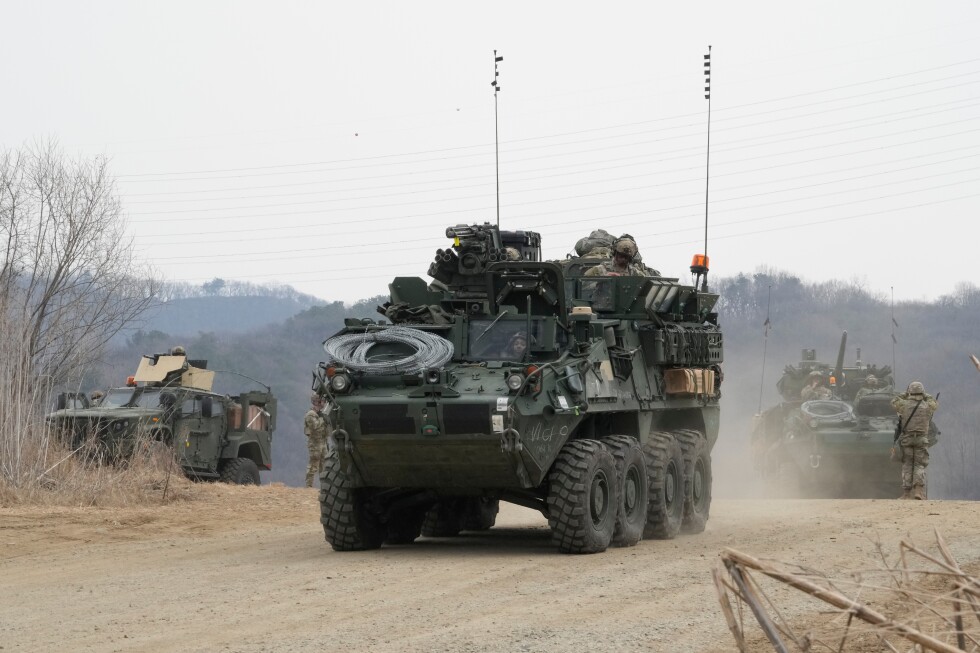
    This provocative act coincides with the ongoing Freedom Shield joint military exercises between United States and South Korean forces, an annual springtime drill involving thousands of personnel. The timing appears deliberately confrontational, as North Korea has historically condemned such allied drills as rehearsal for invasion.

    The geopolitical context extends beyond the Korean Peninsula, with analysts noting potential connections to Middle Eastern conflicts. Recent reports suggest the U.S. might be relocating certain missile defense assets, including THAAD systems from Seongju, to support operations against Iran. When questioned about potential redeployments, South Korean President Lee Jae Myung’s office declined to confirm operational details but maintained that any asset movements wouldn’t compromise the allies’ defensive capabilities against North Korea.

    Diplomatic prospects appear increasingly dim following the missile launches, which occurred mere hours after South Korean Prime Minister Kim Min-seok met with U.S. President Donald Trump in Washington. While South Korean officials had expressed hope that Trump’s anticipated visit to China might create diplomatic openings, North Korea’s latest demonstration signals continued defiance. Pyongyang has recently hardened its stance toward Seoul while demanding Washington abandon denuclearization prerequisites for negotiations.

    North Korea’s rhetoric has intensified concurrently with global tensions. Kim Yo Jong, influential sister of North Korean leader Kim Jong Un, recently criticized U.S.-South Korea drills as destabilizing during a period of global security deterioration. Separately, North Korea’s Foreign Ministry has issued statements supporting Iran’s new supreme leader while condemning U.S.-Israeli military actions.

    The 11-day Freedom Shield exercise, continuing through March 19, represents one of two major annual command post drills between the allies. These primarily computer-simulated exercises aim to enhance joint operational readiness against evolving security challenges, accompanied by field training under the Warrior Shield program.

    North Korea continues rejecting diplomatic overtures regarding its nuclear program, which stalled following the collapse of Kim Jong Un’s 2019 summit with Trump. Recent intelligence suggests Kim has prioritized relations with Russia, potentially providing military support for Moscow’s Ukraine campaign in exchange for aid and technological transfers.
  • ‘Suez moment’: US missteps in Iran echo across East Asia to the Gulf and Europe

    ‘Suez moment’: US missteps in Iran echo across East Asia to the Gulf and Europe

    The United States’ military engagement against Iran is generating profound consequences for global security frameworks, triggering what experts characterize as the most significant drain on American superpower capabilities since the Cold War era. According to multiple analyses, the conflict has compelled Washington to redeploy critical defense assets from East Asia and Europe to the Middle East, creating security vulnerabilities across multiple theaters.

    The ongoing campaign, now entering its third week, has demonstrated Iran’s vulnerability to aerial bombardment yet failed to achieve strategic objectives. Despite claims of striking 6,000 targets and eliminating Supreme Leader Ayatollah Ali Khamenei, the anticipated popular uprising against Tehran’s leadership has not materialized. Instead, Mojtaba Khamenei has assumed leadership while Iranian officials publicly demonstrate confidence amidst the attacks.

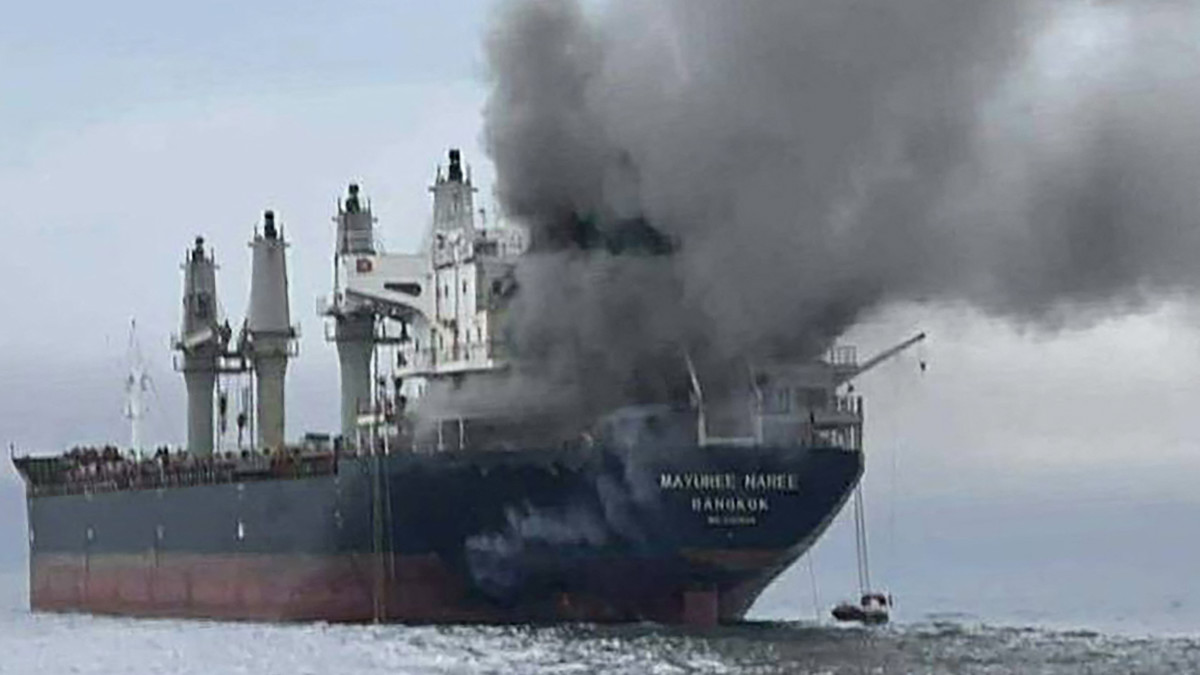
    Iran continues to project power through drone assaults on regional capitals and strategic maritime attacks, with at least six vessels targeted in the Strait of Hormuz this week alone. These operations persist despite relentless aerial bombardment and decades-long sanctions, highlighting the Islamic Republic’s resilience.

    Academic experts draw historical parallels to the 1956 Suez Crisis, noting similar patterns of imperial overreach. Professor Fawaz Gerges of the London School of Economics observes: ‘There is no superpower to replace the Americans, unlike how the French and British were sidelined.’ However, key differences emerge as Russia and China provide military support to Iran, though experts suggest they remain limited to regional spoiler roles.

    The security realignment extends beyond the Middle East. South Korea faces renewed tensions as the US relocates THAAD missile-defense systems to the Persian Gulf, raising questions about American commitment to Asian allies. Similarly, European NATO members contribute air defense systems to Middle East operations, creating new vulnerabilities amid Russia’s ongoing war in Ukraine.

    Gulf states previously reliant on US protection now pursue security diversification through agreements with Pakistan, Turkey, and China. Professor Peter Frankopan of Oxford University notes: ‘Across the Gulf, I hear threats to turn to China for security systems. The US is an enormous economy with innovative opportunities, but in football terms, this looks like an own goal.’

    The economic dimension compounds strategic concerns, with the Trump administration rolling back Russian oil sanctions to address energy price surges. European nations, heavily dependent on Gulf refineries after sanctioning Russia, face particular vulnerability to Hormuz closures. Notably, France and Italy have initiated direct negotiations with Iran to secure energy passage, while India pursues similar bilateral arrangements—developments that signal erosion of American maritime supremacy.

    As Ian Lesser of the German Marshall Fund notes: ‘The very fact that there is debate over whether ties with the US are an asset or liability is disturbing.’ This conflict appears to be accelerating the transition toward a more chaotic, multipolar world order.

  • US dispatched Marines to Mideast, feeding Iran invasion warnings

    US dispatched Marines to Mideast, feeding Iran invasion warnings

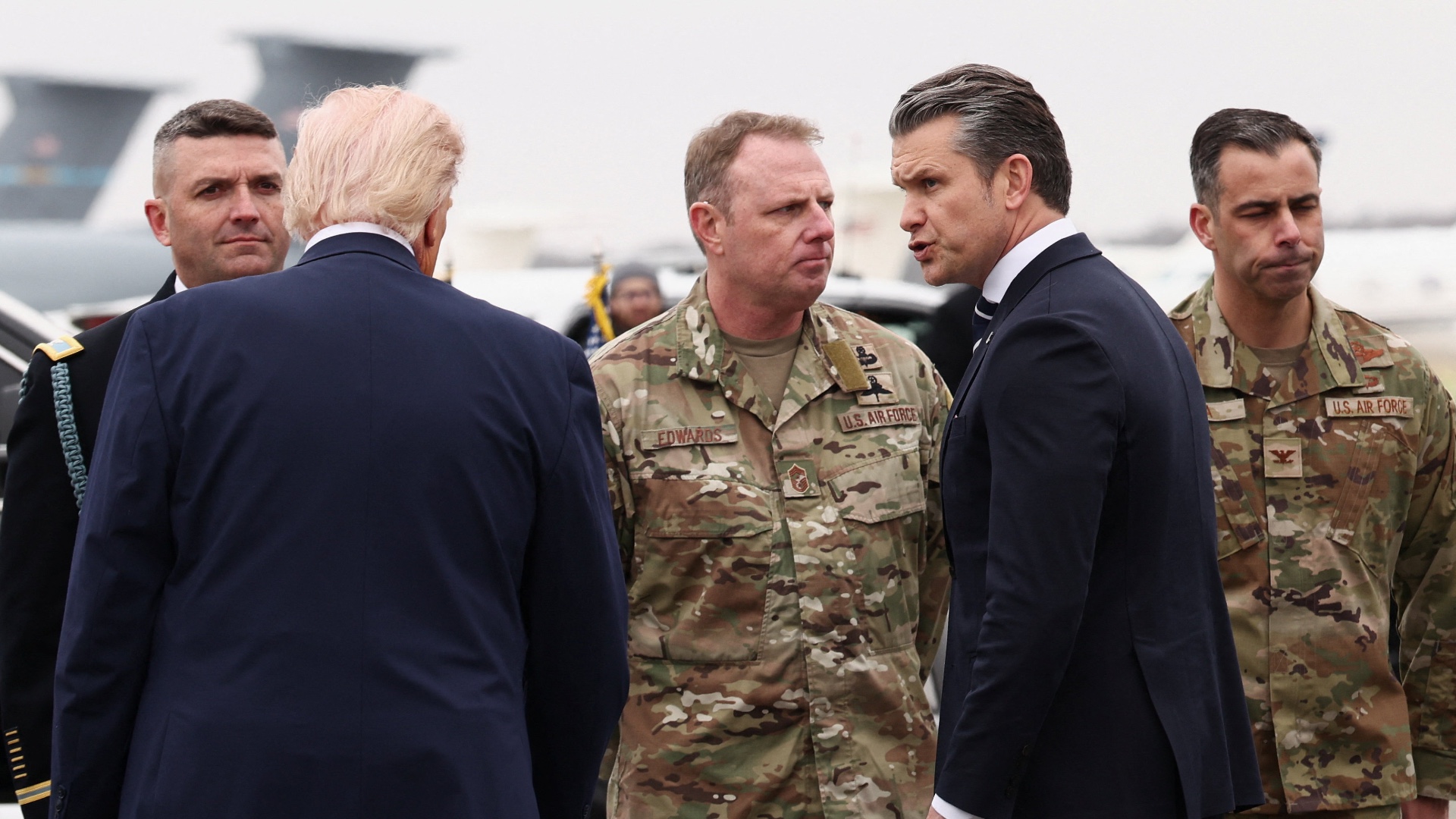
    The Trump administration has authorized a significant military deployment to the Middle East amid escalating tensions with Iran, marking what analysts describe as a potential major escalation in the ongoing conflict. Defense Secretary Pete Hegseth has approved a request from US Central Command to dispatch additional warships and approximately 2,500 Marines to the region following Iran’s aggressive actions in the Strait of Hormuz.

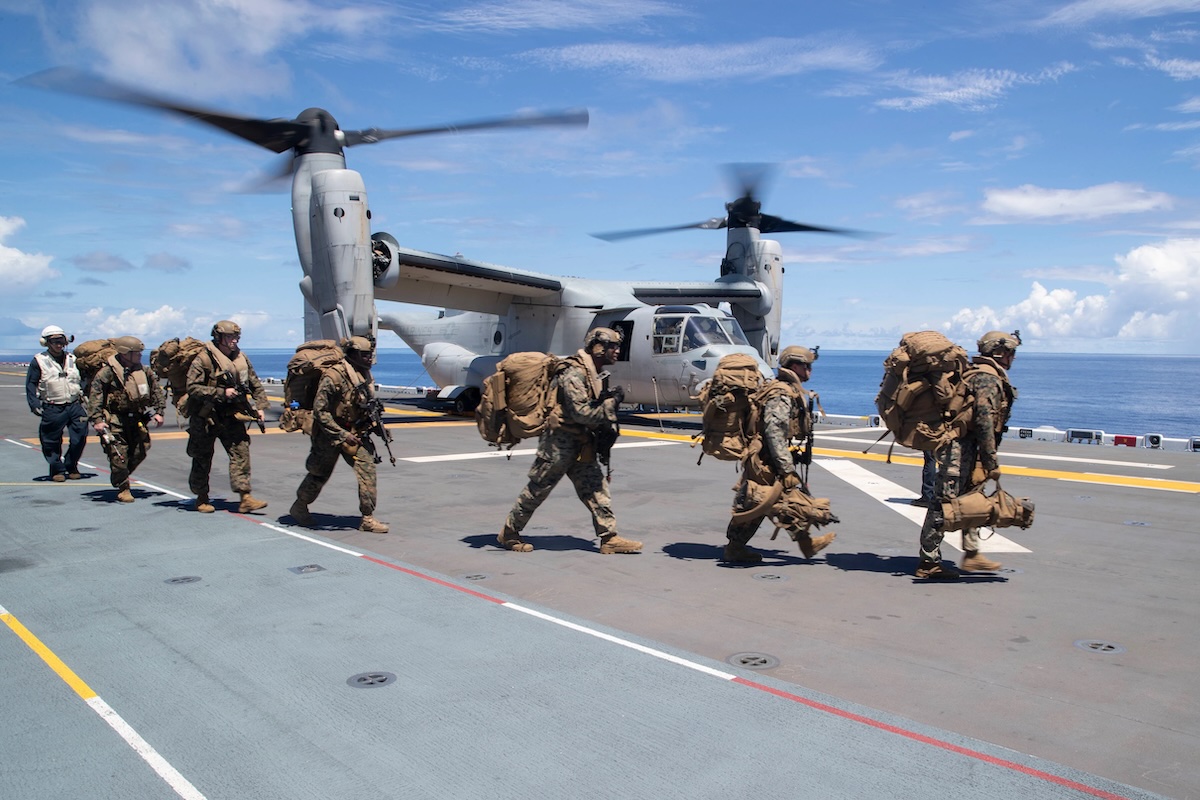
    According to Wall Street Journal reports citing three US officials, the deployment includes an amphibious ready group and attached Marine expeditionary unit, typically consisting of several warships and 5,000 personnel. The Japan-based USS Tripoli and its Marine contingent are already en route to the Middle East.

    The mobilization comes in response to Iran’s intensified campaign against commercial shipping, with at least six vessels attacked since Wednesday—including one Thai-flagged ship with three crew members currently missing. US intelligence sources have additionally accused Iran of mining the strategic waterway, through which approximately 20% of global oil shipments pass annually.

    The economic impact has been immediate and severe. Brent crude prices have surged from under $70 per barrel to over $100 within a month, while US gasoline prices have jumped from $2.94 to $3.63 per gallon on average. These increases persisted despite the International Energy Agency’s coordinated release of strategic oil reserves—the largest in history—aimed at mitigating what the agency termed “the largest supply disruption in the global oil market.”

    Iran’s new supreme leader, Mojtaba Khamenei, declared in his first address that “the lever of blocking the Strait of Hormuz must definitely be used” to increase economic pressure on the US. The Islamic Revolutionary Guard Corps has vowed that “not a liter of oil” shall pass through the strait and threatened attacks on any ship linked to the US or Israel.

    Military analysts suggest the Marine deployment could indicate preparation for ground operations. While President Trump publicly stated he was “nowhere near” sending troops into Iran, administration officials have privately discussed several options including commando raids on nuclear facilities, occupation of Kharg Island (which handles 90% of Iran’s oil exports), and clearing Iran’s coastline around the strait.

    Harrison Mann, former US Army major and Defense Intelligence Agency executive officer, warned that such operations risk high casualties and could lead to “a prelude to forever war.” The deployment occurs amid strong public disapproval, with 53% of registered voters opposing military action against Iran according to a recent Quinnipiac poll.

  • Up to 5,000 US marines and sailors dispatched to Middle East: Report

    Up to 5,000 US marines and sailors dispatched to Middle East: Report

    The United States is significantly escalating its military footprint in the Middle East with the deployment of an additional 5,000 marines and sailors, according to a Wall Street Journal report citing unnamed officials. This strategic reinforcement follows a formal request approved by US Secretary of War Pete Hegseth from US Central Command (Centcom).

    The deployment includes a complete amphibious ready group and an attached Marine expeditionary unit, comprising three warships and approximately 2,500 US Marines. The unit is equipped with advanced F-35B Lightning II stealth jets and MV-22B Osprey tiltrotor aircraft. The USS Tripoli, previously stationed in Japan, is now en route to the region—a journey typically requiring two weeks.

    This military expansion signals Washington’s commitment to prolonging its offensive against Iran, despite previous claims of operational successes including the elimination of Supreme Leader Ayatollah Ali Khamenei and the destruction of 60 Iranian naval vessels. The conflict has resulted in substantial casualties, with over 1,400 Iranian fatalities reported since February 28.

    President Donald Trump reaffirmed the administration’s hardline stance on social media, declaring, “We are totally destroying the terrorist regime of Iran, militarily, economically, and otherwise.”

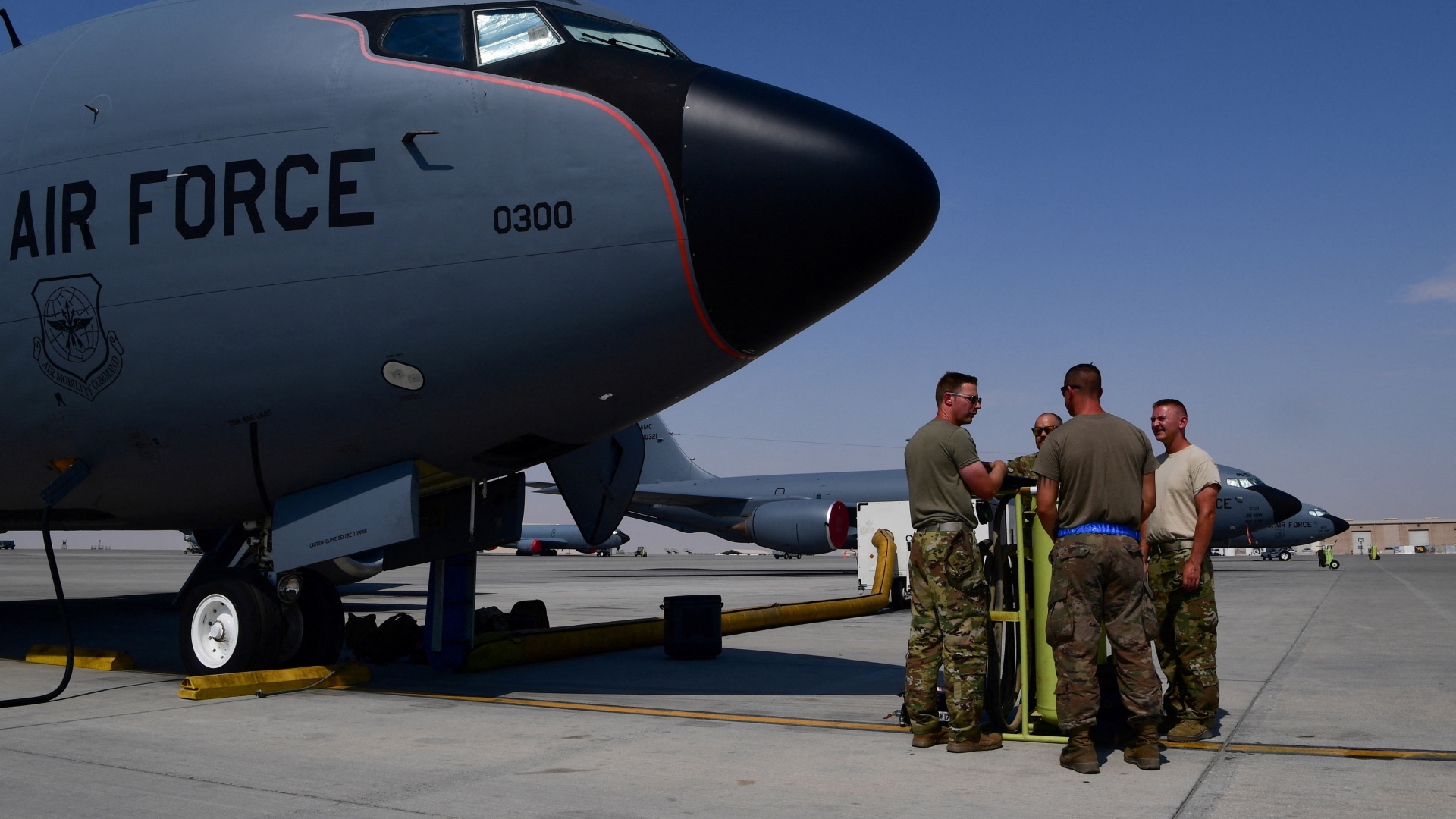
    The war has grown increasingly unpopular domestically, with public disapproval mounting well before US casualties reached double digits. Current reports indicate at least 150 American personnel wounded and 13 confirmed killed in action, including six service members who died in a KC-135 refueling aircraft crash in western Iraq on March 12. Centcom confirmed the incident occurred during Operation Epic Fury over friendly airspace, stating the crash was not caused by hostile or friendly fire while the investigation remains ongoing.

    At a Pentagon press briefing, Secretary Hegseth acknowledged the grim reality of combat, stating “War is hell, war is chaos.” When pressed for specific casualty figures and locations, officials provided conflicting information, with Chairman of the Joint Chiefs of Staff Dan Caine vaguely referencing casualties “in Kuwait, Jordan, down across the southern flank” without providing concrete numbers. The administration’s unclear messaging on casualties has further complicated public understanding of the conflict’s human cost.

  • Wells’ walk-off homer gives Dominicans 10-0 rout-rule win over South Korea, WBC semifinal berth

    Wells’ walk-off homer gives Dominicans 10-0 rout-rule win over South Korea, WBC semifinal berth

    MIAMI — The Dominican Republic baseball team delivered a stunning performance Friday night, securing their spot in the World Baseball Classic semifinals with a decisive 10-0 victory over South Korea that ended prematurely under the tournament’s mercy rule. The game concluded dramatically in the seventh inning when Austin Wells, a late-game defensive substitution, launched a walk-off three-run homer on the first pitch from South Korean pitcher Hyeong Jun So.

    The Dominicans demonstrated complete dominance throughout the tournament, maintaining a perfect 5-0 record while showcasing exceptional offensive power. The team has outscored opponents by a remarkable 51-10 margin, batting an impressive .312 collectively. Their 14 home runs in the tournament equaled the single-event record set by Mexico in 2009.

    Fernando Tatis Jr. continued his outstanding performance, driving in two runs during the game and bringing his tournament total to 11 RBIs. This places him tied for third in single-tournament RBI production, trailing only Japan’s Masataka Yoshida (13 in 2023) and the Netherlands’ Wladimir Balentien (12 in 2017).

    Starting pitcher Christopher Sánchez set the tone with a dominant performance, striking out eight batters over five innings while allowing just two hits. The Dominican offense provided ample support with three runs in the second inning and four in the third, effectively putting the game out of reach early.

    For South Korea, the loss marked another disappointing exit despite reaching the quarterfinals for the first time after three consecutive first-round eliminations. The team struggled offensively with just two hits in the game and finished the tournament with a .222 batting average and 5.91 ERA.

    The Dominican Republic will face the winner of the United States-Canada matchup in Sunday’s semifinal, with Luis Severino scheduled to start on the mound as they pursue their second WBC title and first since 2013.

  • Hegseth says Gulf states ‘going on offensive’ against Iran

    Hegseth says Gulf states ‘going on offensive’ against Iran

    Amid escalating tensions in the Persian Gulf, U.S. Secretary of War Pete Hegseth’s declaration that Washington’s campaign against Iran is progressing favorably has sparked diplomatic concerns. Speaking at a Friday press briefing, Hegseth asserted that Gulf Cooperation Council (GCC) nations were ‘going on the offensive’ while emphasizing America’s widening strategic advantage.

    These remarks have generated unease among Middle Eastern allies, particularly as GCC members have not formally announced participation in U.S. military operations against Iran. The situation intensified with Hegseth’s controversial statement regarding the Strait of Hormuz, claiming the vital waterway remained open despite Iranian attacks on commercial vessels.

    Regional dynamics reveal a complex landscape: Gulf states previously lobbied the Trump administration against military confrontation with Tehran, fearing retaliatory strikes. Such concerns have materialized with Iranian attacks already affecting Doha, Dubai, and Manama. The United Nations Security Council recently passed a GCC-sponsored resolution condemning Iran’s regional aggression, with UAE diplomatic adviser Anwar Gargash noting Tehran’s growing international isolation.

    According to Middle East Eye reports, Gulf nations express frustration toward both Iran for its attacks and the United States for disregarding their security considerations. Compounding these tensions, the U.S. has struggled to fulfill requests for replenishing air defense systems while its military bases—established primarily after the 1991 Gulf War—reportedly make host countries vulnerable to Iranian targeting.

    Iran’s unprecedented closure of the Strait of Hormuz has severely disrupted global energy markets, affecting approximately 20% of worldwide crude oil and natural gas shipments. Regional producers including Kuwait, Iraq, Bahrain, Qatar, the UAE, and Saudi Arabia have consequently slashed production and declared force majeure. Financial Times data from commodities analytics firm Kpler indicates approximately $15.1 billion in collective energy revenue losses for Gulf states since the conflict’s inception, with Qatar, Bahrain, the UAE, and Kuwait suffering particularly severe impacts.

    Analysts warn that Hegseth’s assertions could further endanger Gulf nations, as Iran has pledged forceful responses against any regional allies joining U.S.-Israeli operations. While Iranian strikes have predominantly targeted commercial infrastructure, Tehran has demonstrated sophisticated capabilities in attacking both military installations and energy facilities across the region.

  • Thailand’s ‘Death Fest’ invites visitors to embrace mortality

    Thailand’s ‘Death Fest’ invites visitors to embrace mortality

    NONTHABURI, Thailand — Thailand’s groundbreaking ‘Death Fest’ has emerged as a transformative cultural event that challenges societal taboos surrounding mortality while providing comprehensive end-of-life resources. Now in its second year, this innovative fair embraces Buddhism’s core teachings about life’s inevitable sufferings—birth, aging, sickness, and death—while offering practical solutions and spiritual guidance.

    The event attracted diverse participants including healthcare professionals, financial planners, palliative care specialists, funeral services providers, and memorial technology innovators. Unlike conventional approaches to death, the festival emphasizes both quality of life until final days and thoughtful preparation for the inevitable.

    Sangduan Ngamvinijaroon, who attended with her mother, shared how two decades of caring for ill family members transformed her perspective. ‘Having witnessed multiple deaths firsthand, including my stroke-afflicted husband and cancer-stricken relatives, I now find comfort in these conversations,’ she noted. ‘This festival isn’t just about dying well—it’s about embracing the present moment and properly caring for our lives while we’re still here.’

    Organizer Zcongklod Bangyikhan, editor-in-chief of The Cloud magazine, emphasized the communal aspect of mortality: ‘Death involves everybody. Rather than speculating about dying, we should focus on making things easier for those who remain after we’re gone.’

    Among the most engaging exhibits was the ‘Test Die’ experience, where visitors could lie in various coffins while observing themselves in overhead mirrors. Office worker Phinutda Seehad described the experience as unexpectedly calming: ‘I don’t think I’m scared of death. While I don’t want to die, when the time comes, I don’t believe it will be frightening.’

    The festival showcased ecological innovations including biodegradable mycelium coffins made from fungal root fibers that facilitate natural decomposition. Founder Jirawan Kumsao explained her company primarily produces pet coffins that resemble ‘spacecraft capsules for sending them to another world,’ providing comfort to owners seeking to care for their pets until the very end.

    Similarly, Noppasaward Panyajaray’s Sharesouls platform demonstrates the evolving nature of memorialization. Originally designed for human family members, the digital memorial service unexpectedly became popular for pet tributes. ‘Many people thanked us for providing space to preserve stories about their pets,’ she revealed. ‘Every pet holds meaning equivalent to family members for their owners.’

  • In photos: Tracing India’s history through its chairs

    In photos: Tracing India’s history through its chairs

    An extraordinary exhibition in Mumbai titled ‘A History of India through Chairs’ has unveiled the nation’s complex cultural narrative through an unexpected medium: seating furniture. Featuring over 200 meticulously restored chairs, the exhibition presents a chronological journey through India’s design evolution from pre-colonial times to contemporary eras.

    The collection, assembled over decades by restoration experts Anand Gandhi and Chiki Doshi of House of Mahendra Doshi, reveals how colonial invasions between the 16th and 19th centuries left enduring imprints on Indian craftsmanship. European powers including the Dutch, Portuguese, French and British not only imported their furniture traditions but commissioned local artisans to replicate European designs, creating a unique fusion of Eastern and Western aesthetics.

    Co-curator Vivek Gandhi explains: ‘Colonial administrators brought their furniture traditions and commissioned Indian artisans to create pieces blending European designs with local materials. This created India’s distinctive furniture heritage that combines international influences with indigenous craftsmanship.’

    The exhibition showcases remarkable restoration achievements, including an eight-month project to revive a ceramic bead-covered ‘moti chair’ from Gujarat. Among the highlights is a rare lounge chair by Swiss-French architect Le Corbusier, who contributed to Chandigarh’s design in the 1950s, and Anglo-Portuguese style chairs from former Portuguese colony Goa.

    Notable pieces include a 17th-century Carolean-style chair likely used by British officials, an imposing Anglo-Indian teakwood throne chair symbolizing colonial authority, and an 18th-century Indo-Portuguese bishop’s chair later repurposed for government use. The collection also celebrates India’s rich hardwoods—teak, rosewood, and ebony—and the enduring tradition of intricate handcrafting by local artisans.

    Through these restored artifacts, the exhibition demonstrates how everyday objects can serve as historical documents, revealing stories of cultural exchange, power dynamics, and artistic adaptation across centuries.

  • China, US set for new round of trade talks

    China, US set for new round of trade talks

    Senior economic officials from China and the United States are preparing for a critical round of trade discussions scheduled to take place in France this week. The sixth round of high-level economic and trade consultations will be led by Chinese Vice-Premier He Lifeng, who will meet with US counterparts from Saturday through Tuesday to address bilateral concerns.

    The negotiations occur against a backdrop of renewed trade tensions, following the United States’ recent initiation of Section 301 investigations targeting China and several other trading partners. Analysts interpret this move as an attempt by Washington to create negotiating leverage through unilateral trade tools, particularly after the US Supreme Court limited broader tariff authorities last month.

    Chinese officials have responded to the investigations with firm opposition, urging the US to ‘correct its wrongdoings and return to the right track of resolution through dialogue.’ Beijing has emphasized its readiness to implement necessary measures to protect its legitimate rights and interests should the investigations proceed.

    Despite the Supreme Court ruling that reduced some tariff levels, analysts note that US duties on Chinese goods remain historically elevated. The immediate US response to the court decision involved invoking Section 122 of the Trade Act of 1974, implementing a 10 percent import surcharge on all trading partners effective from February 24 through July 23.

    Key negotiation topics are expected to include extending the current tariff truce, easing export controls, and identifying areas of mutual economic interest. Particular focus will center on Washington’s desire for increased access to strategic rare earth materials and Beijing’s demands for reduced restrictions on high-technology exports. Experts emphasize that establishing clear boundaries in these sectors is crucial for preventing fragmentation within global technology ecosystems.

    Additional negotiation points may include expanding agricultural trade flows, improving conditions for financial and digital services, and addressing logistical challenges. Normalizing agricultural trade would leverage the natural economic complementarity between the two nations, creating stability in a historically volatile relationship.

    The outcome of these discussions carries significant implications for global economic stability, with international markets closely monitoring any indications of progress between the world’s two largest economies.

  • Six Americans killed after US refuelling jet crashes in Iraq

    Six Americans killed after US refuelling jet crashes in Iraq

    The United States Central Command (Centcom) confirmed on Friday the tragic loss of all six military personnel aboard a KC-135 Stratotanker that crashed in western Iraq on Thursday. The aircraft was operating under Operation Epic Fury in friendly airspace when the incident occurred, according to an official statement released via social media platform X.

    Centcom explicitly stated that preliminary assessments indicate the crash resulted from neither hostile enemy fire nor friendly fire, though a comprehensive investigation into the exact circumstances remains ongoing. The identities of the deceased service members are being withheld pending the mandatory 24-hour notification period for next of kin.

    This incident elevates the total number of U.S. fatalities to 13 since the commencement of joint U.S.-Israeli military engagements against Iranian interests on February 28. The disclosure emerged amidst a Pentagon press briefing where Secretary of War Pete Hegseth characterized the conflict with the somber admission that ‘war is hell, war is chaos.’ When questioned for specific casualty figures and locations, Secretary Hegseth deferred to Chairman of the Joint Chiefs of Staff Dan Caine, who provided ambiguous details citing engagements ‘in Kuwait, Jordan, down across the southern flank… most from one-way attack strikes,’ without offering concrete numbers.

    Further complicating transparency, Pentagon officials announced they would no longer publicly distinguish between personnel killed in action (KIA) and wounded in action (WIA), asserting that approximately 90% of casualties have returned to duty. This policy shift follows earlier revelations that at least 150 U.S. military personnel have been confirmed wounded, a figure that may exclude 19 individuals recently evacuated from Saudi Arabia to a military medical facility in Germany for combat injuries.

    The growing number of casualties has reportedly strained medical resources, with the largest Pentagon-run hospital in Germany temporarily suspending non-urgent care to prioritize combat injuries, fueling speculation that the actual number of serious wounds may be higher than officially acknowledged.

    Amid the crash investigation, strategic analysis from the Institute for the Study of War contends that Iranian-backed Iraqi militias, notably Kataib Hezbollah, almost certainly executed several attacks targeting U.S. and European forces in Iraq on March 11 and 12. This assessment aligns with a stark warning from Iran’s new supreme leader, Mojtaba Khamenei, who declared in his inaugural statement that Tehran is prepared to activate new, unconventional fronts against the U.S. and Israel should the conflict persist.