标签: Asia

亚洲

  • Flag carrier PIA to be run by new owners from April, says Pakistan official

    Flag carrier PIA to be run by new owners from April, says Pakistan official

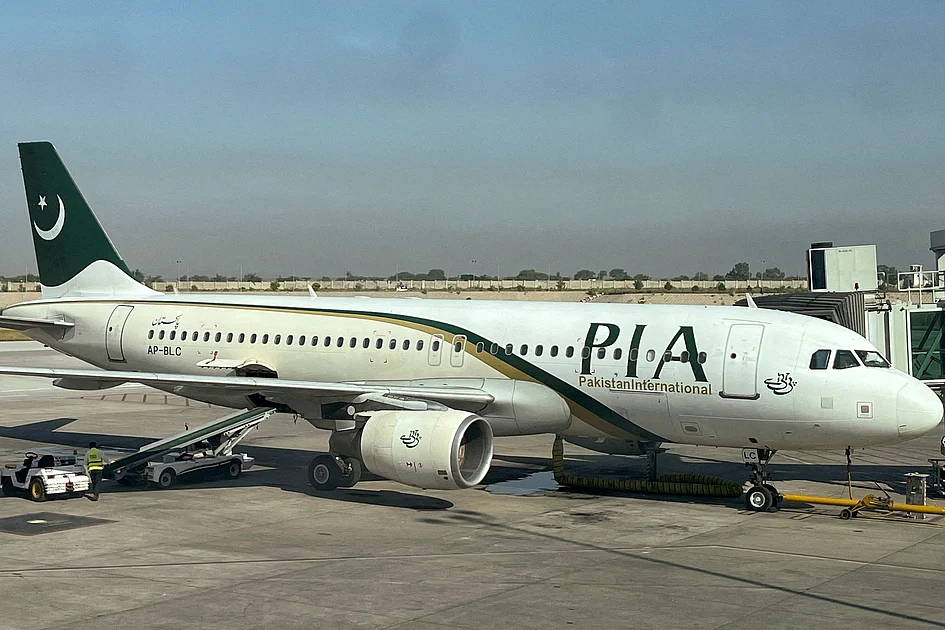
    Pakistan International Airlines (PIA), the nation’s flagship carrier, is poised to transition to new ownership by April 2025 following a successful privatization auction. A consortium led by Arif Habib Corporation emerged victorious with a winning bid of 135 billion rupees ($482.14 million), significantly exceeding the government’s reserve price of 100 billion rupees.

    The transaction structure represents a strategic approach to revitalizing the airline rather than a simple ownership transfer. The government will receive 10 billion rupees in immediate cash payment while retaining a 25% stake valued at approximately 45 billion rupees. Crucially, the arrangement mandates substantial fresh capital injection into the struggling carrier.

    Muhammad Ali, Privatization Adviser to the Prime Minister, emphasized the government’s commitment to sustainable transformation: “We intentionally structured this deal to prevent a scenario where the government collects payment only to see the company collapse afterward.”

    The privatization process now advances toward final approvals from the Privatization Commission board and federal cabinet, expected within days. Contract signing is anticipated within two weeks, with financial closure projected within 90 days to satisfy regulatory requirements.

    The winning consortium includes diverse Pakistani business interests: fertilizer manufacturer Fatima, private education network City Schools, and real estate developer Lake City Holdings Limited. The agreement permits the addition of up to two qualified partners, potentially including international aviation experts or additional financial partners.

    Labor protections form a key component of the transition, requiring the new owners to maintain all current employees with unchanged contracts for at least twelve months following the transaction completion.

    This privatization represents a critical milestone in Pakistan’s economic reform agenda, particularly watched by the International Monetary Fund which has consistently advocated for reducing losses from state-owned enterprises. Successful completion would demonstrate Pakistan’s commitment to structural reforms while alleviating pressure on public finances.

  • Gen Z, longer stays: Here’s what drives Dubai’s short-term rental demand into 2026

    Gen Z, longer stays: Here’s what drives Dubai’s short-term rental demand into 2026

    Dubai’s short-term rental sector is demonstrating remarkable resilience as it advances toward 2026, evolving into a more sophisticated market characterized by shifting traveler demographics and heightened quality expectations. Despite global economic uncertainties, industry data reveals stable occupancy rates and modest price appreciation, signaling market maturation.

    Market analytics from Property Finder indicate a 3% year-on-year supply increase while maintaining robust demand patterns. The sector continues to exhibit strong seasonal fluctuations, with winter demand exceeding summer volumes by approximately 2.5 to 3 times. Current pricing metrics show median daily rates at AED 780 (up from AED 670 year-on-year), with weekly rentals reaching AED 5,000 and monthly rates holding steady at AED 16,000.

    Demographic transformations are reshaping market dynamics. Frank Porter reports a substantial 25% year-on-year surge in Gen Z travelers, a cohort distinguished by their social media engagement and preference for visually distinctive properties with unique amenities. Concurrently, European visitors are extending their average stay duration to nearly 10 days, while demonstrating increased price sensitivity and value-conscious booking behaviors.

    The competitive landscape has intensified with new market entrants, yet this has paradoxically strengthened overall market discipline. Regulatory initiatives by Dubai’s Department of Economy and Tourism have effectively eliminated unlicensed operators, while major platforms have implemented quality-focused curation policies. This regulatory framework has professionalized the market, rewarding quality accommodations with superior occupancy and pricing performance.

    Geographic preferences are evolving beyond traditional hotspots like Dubai Marina and Business Bay. Emerging districts such as Meydan are gaining traction due to competitive pricing, enhanced infrastructure, and improved amenities. Industry experts note that while location remains relevant, property-specific factors—including interior design, views, and exclusive amenities—increasingly determine rental success.

    As global markets implement stricter short-term rental regulations, Dubai’s established licensing framework provides market stability. Industry leaders anticipate continued growth through 2026, driven by quality differentiation, value optimization, and enhanced guest experiences that maintain Dubai’s competitive position in the global hospitality landscape.

  • Sheikh Mohammed bin Sultan bin Khalifa Al Nahyan appointed Chairman of Aram Group

    Sheikh Mohammed bin Sultan bin Khalifa Al Nahyan appointed Chairman of Aram Group

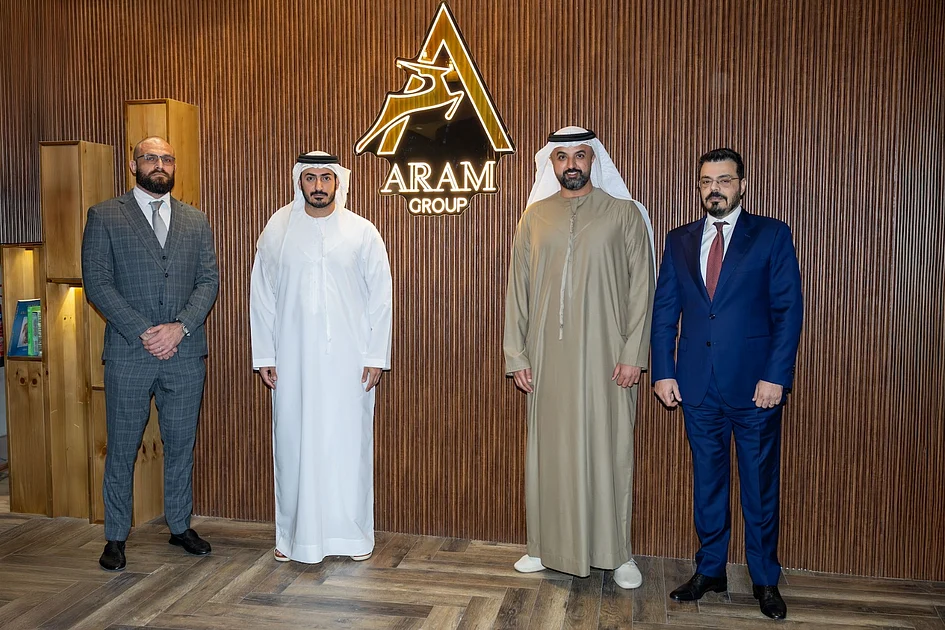
    In a significant corporate development, UAE-based investment conglomerate Aram Group has unveiled a comprehensive restructuring of its executive leadership. The company has appointed Sheikh Mohammed bin Sultan bin Khalifa Al Nahyan as Chairman of its newly formed Board of Directors, marking a pivotal moment in the organization’s strategic evolution.

    The leadership announcement follows an internal conclave at Aram Group’s UAE headquarters, where the newly constituted board convened to chart the company’s future course. The governance overhaul establishes Ali Musmar as Managing Director, while Jakub Bajak assumes the critical role of Board Spokesperson, creating a balanced leadership structure with distinct responsibilities.

    Sheikh Mohammed articulated the board’s forward-looking vision, emphasizing the critical intersection of technological advancement and disciplined governance. “We are navigating an era defined by accelerated technological transformation, particularly in artificial intelligence and digital infrastructure,” he stated. “Our mandate is to pursue these opportunities with rigorous governance frameworks, clear accountability mechanisms, and prudent capital deployment to convert innovation into sustainable shareholder value.”

    Managing Director Ali Musmar characterized the leadership transition as a fundamental milestone in Aram Group’s corporate journey. “This restructuring heralds a new strategic chapter focused on diversified growth across aviation, data processing, media, and healthcare sectors,” Musmar explained. “The board will prioritize investments in AI-driven enterprises while maintaining stringent evaluation processes to ensure sustainable expansion and shareholder protection.”

    Board Spokesperson Jakub Bajak highlighted the company’s commitment to transparency and stakeholder engagement. “We are actively exploring opportunities in medical technologies, aviation services, and data processing infrastructure, alongside potential ventures in sports media distribution,” Bajak revealed. “Our approach integrates advanced technological capabilities with strong commercial fundamentals and meaningful corporate social responsibility initiatives.”

    The leadership realignment positions Aram Group to accelerate its diversification strategy and strengthen its market position as a forward-thinking investment organization with a technology-centric approach to portfolio development.

  • Turkey questions series of air incidents after Libyan jet crash

    Turkey questions series of air incidents after Libyan jet crash

    A private Dassault Falcon 50 jet carrying Libya’s military chief of staff, General Mohammed Ali Ahmed al-Haddad, and seven others crashed near Ankara on Tuesday following an emergency landing request due to electrical failure. The aircraft, which had departed from Ankara Esenboga Airport, went down near Haymana district shortly after reporting technical malfunctions to aviation authorities.

    The tragic incident occurred during General al-Haddad’s official visit to Turkey, where he had just concluded meetings with his Turkish counterpart, General Selcuk Bayraktaroglu. The delegation’s demise has sent shockwaves through diplomatic circles, particularly given its timing one day after Turkey’s parliament approved a two-year extension of its military deployment mandate in Libya.

    This accident unfolds against a backdrop of escalating regional tensions. Turkey has maintained substantial military and political support for Libya’s internationally recognized government since 2020, including troop deployments and a controversial maritime demarcation accord opposed by Egypt and Greece. The crash marks the latest in a series of security incidents affecting Turkey, including last month’s military cargo plane crash in Georgia that killed 20 personnel, and multiple maritime attacks on Turkish commercial vessels in the Black Sea allegedly involving Russian ‘kamikaze’ drones.

    Turkish nationalist leader Devlet Bahceli characterized the timing as ‘thought-provoking,’ suggesting possible connections to deepening Turkey-Libya cooperation. While no evidence of sabotage has emerged, some analysts have speculated about potential foreign involvement, citing recent trilateral talks between Israel, Cyprus, and Greece that media outlets described as forming a ‘new front against Turkey.’

    Turkish media reports have attempted to draw connections to Greece through the aircraft’s flight attendant reportedly being a Greek citizen, and the plane’s alleged previous route between Athens and Tripoli. However, aviation experts emphasize that technical investigation remains crucial. Prominent analyst Ugur Cebeci noted that pilot communications before the crash suggest possible mechanical failure rather than sabotage, though comprehensive analysis of the aircraft’s black boxes in collaboration with French manufacturer Dassault Falcon will be necessary for definitive conclusions.

  • Ranveer Singh’s ‘Dhurandhar 2’ locked for Eid 2026 release

    Ranveer Singh’s ‘Dhurandhar 2’ locked for Eid 2026 release

    Following the monumental success of the 2025 spy thriller ‘Dhurandhar,’ producers have officially confirmed its sequel for a major theatrical debut on March 19, 2026. The release strategically coincides with the Eid al-Fitr festival period, alongside other regional celebrations including Gudi Padwa and Ugadi, aiming to maximize audience turnout.

    Starring Ranveer Singh in the lead role, ‘Dhurandhar 2’ is set for an unprecedented pan-India launch across five major languages: Hindi, Telugu, Tamil, Kannada, and Malayalam. This multi-lingual approach marks a significant expansion from the first installment and reflects the growing trend of catering to the diverse linguistic fabric of the Indian film market.

    The original film, directed by Aditya Dhar and released on December 5, 2025, emerged as one of the year’s highest-grossing Indian productions. Its performance shattered several box office records, propelled by positive critical reception and strong word-of-mouth. The ensemble cast, featuring Akshaye Khanna, Sanjay Dutt, and R. Madhavan alongside Singh, received widespread acclaim for their performances.

    Industry admiration has been substantial, with renowned filmmakers including Sandeep Reddy Vanga, Ram Gopal Varma, Karan Johar, and Siddharth Anand publicly praising the film’s narrative depth and high-octane action sequences. Building on this foundation, the producers are also planning a significantly wider international distribution strategy for the sequel to capture the global diaspora market.

  • E-invoicing coming to the UAE: What you should know

    E-invoicing coming to the UAE: What you should know

    The United Arab Emirates is embarking on a transformative digital taxation journey with the mandatory implementation of a nationwide e-invoicing system. With compliance deadlines set for July 2026 and March 2027 based on business turnover thresholds, organizations must urgently prepare for this fundamental shift in financial operations.

    Central to this transition are Authorized Service Providers (ASPs), commercial entities approved by the Ministry of Finance to facilitate electronic invoice transmission. These providers function as essential intermediaries, similar to telecommunications networks enabling communication between devices. ASPs ensure seamless data flow between businesses and the Federal Tax Authority’s Peppol-compliant network infrastructure.

    Three distinct categories of ASPs are emerging: accounting software developers with integrated e-invoicing capabilities, specialized technology firms offering advanced features and customization, and accounting/consulting practices providing tailored solutions aligned with specific business requirements. Each option presents unique advantages depending on organizational size, complexity, and existing technological infrastructure.

    The selection process demands careful evaluation of multiple factors including system compatibility, data volume handling, automation capabilities, industry-specific needs, and cost considerations. Businesses must assess integration levels ranging from manual data entry to fully automated systems, with significant implications for operational efficiency and processing time savings.

    With limited implementation windows, organizations must immediately commence strategic planning to ensure seamless compliance. The choice of ASP represents not merely a technical decision but a long-term strategic partnership that will shape financial operations and reporting capabilities for years to come.

  • Israeli forces detain Santa Clause in raid on Palestinian Christmas celebration

    Israeli forces detain Santa Clause in raid on Palestinian Christmas celebration

    Israeli law enforcement officers disrupted a Christmas celebration in Haifa’s Wadi Nisnas neighborhood this week, resulting in the arrest of a Palestinian man costumed as Santa Claus along with a DJ and street vendor. The incident occurred on Sunday when police forcibly dispersed festivities organized by Palestinian Christian citizens of Israel.

    According to the Mossawa Centre, an advocacy organization for Palestinian citizens of Israel, authorities employed excessive force during the detainments and conducted an unauthorized raid on a local music institute. Video evidence circulating online depicts officers physically removing the Santa Claus-clad individual from the scene and interrupting traditional dabke dance performances.

    All three detainees were released on Monday but face potential court summons. The arrestees reported physical assaults during their detention, with one requiring medical treatment for a shoulder injury sustained during the incident.

    Israeli police justified their actions as responding to ‘unusual noise and disturbance of public order,’ additionally alleging that the Santa Claus impersonator resisted arrest and assaulted an officer.

    This event occurs within a broader context of escalating restrictions and harassment targeting Palestinian Christians in Israel and occupied territories. Recent years have witnessed increased anti-Christian hate crimes by ultra-nationalist Israelis, including church trespassing, assaults on worshippers, and vandalism of religious sites.

    The Gaza Strip’s Christian minority has suffered particularly severe impacts since October 2023, with Israeli bombardments damaging three historic churches and resulting in at least 53 Christian fatalities alongside numerous injuries.

  • Dubai Police warn residents of rising fake ticket scams during concerts, travel

    Dubai Police warn residents of rising fake ticket scams during concerts, travel

    Dubai authorities have escalated warnings about an increasing wave of sophisticated fraudulent ticketing operations targeting high-demand concerts, entertainment events, and travel services. The Anti-Fraud Centre at Dubai Police’s General Department of Criminal Investigation has identified a pattern where scammers intensify operations ahead of major events, exploiting consumer urgency and fear of missing out through psychologically manipulative tactics.

    Cybercriminals are employing increasingly sophisticated methods, creating counterfeit websites and unverified social media pages that meticulously mimic legitimate ticketing platforms and event organizers. These fraudulent portals utilize cloned payment gateways and push users toward direct wallet transfers, often employing OTP consent manipulation where victims unknowingly authorize significantly larger transactions than anticipated.

    According to cybersecurity experts, many fraudulent operations originate outside UAE borders and operate in rapid cycles, with fake domains being frequently replaced once detected. Cosmin Ivan, CEO of regional ticketing platform Platinumlist, emphasized that payment processing irregularities serve as the most reliable indicator of fraudulent activity, noting that scammers frequently register lookalike domains shortly before ticket presales or major announcements.

    Dubai Police urge consumers to exclusively utilize official organizer websites and verified ticketing platforms, carefully scrutinizing website URLs and remaining skeptical of offers presenting discounts of 50-70% for events that are either not yet on sale or already sold out. Suspicious activity should be immediately reported through Dubai Police’s smart application, non-emergency hotline 901, or the dedicated eCrime platform to facilitate rapid enforcement and domain takedowns.

  • Hospitality as real estate: Why boutique hotels are becoming the next big asset class

    Hospitality as real estate: Why boutique hotels are becoming the next big asset class

    The United Arab Emirates’ hospitality sector is undergoing a fundamental revaluation as investors increasingly perceive boutique hotels not merely as operational ventures but as strategic real estate holdings. This paradigm shift reflects the market’s maturation beyond traditional performance metrics toward recognizing the inherent physical asset value of design-forward, smaller-scale properties.

    According to industry analysis, boutique establishments deliver dual-faceted value: they generate strong emotional connections through unique guest experiences while simultaneously producing differentiated economic returns for proprietors. Gaurang Jhunjhnuwala, Group CEO of Naumi Hotels, emphasizes that these properties typically achieve higher direct booking rates, cultivate niche loyalty segments, and benefit from organic marketing advantages through their distinctive character.

    The investment thesis gains strength from compelling market fundamentals. Knight Frank’s UAE Hospitality Market Review for Autumn 2025 reveals robust performance indicators across the Emirates, with revenue per available room (RevPAR) and average daily rates (ADR) climbing 11.9% year-on-year through August. Occupancy rates reached 78.5%, with Abu Dhabi leading the surge at 24% RevPAR growth and 20.2% ADR increase, followed by sustained expansion in Dubai and Ras Al Khaimah.

    Strategic advantages include prime urban positioning and mid-sized footprints that offer superior asset liquidity compared to large-scale resorts. These characteristics enable easier repurposing, trading, or rebranding flexibility—increasingly valuable attributes for capital seeking long-term appreciation rather than short-term yields.

    The market’s evolution is further evidenced by supply dynamics. UAE hotel room inventory is projected to grow moderately from approximately 213,928 existing rooms to 217,853 by end-2025, eventually reaching 235,674 rooms across 1,184 properties by 2030, with significant concentration in luxury segments.

    This transformed perspective informs contemporary investment strategies, with many operators prioritizing acquisition and conversion of existing buildings over ground-up development. This approach reduces construction risks, accelerates market entry, and preserves inherent architectural character through thoughtful redesign. Secondary markets including Abu Dhabi and Ras Al Khaimah are emerging as complementary investment hubs specializing in leisure-driven opportunities.

    Critical to long-term valuation is the integration of authentic design DNA with operational excellence. Properties that successfully articulate local narratives and deliver culturally resonant experiences demonstrate pricing power and guest loyalty that transcend market cycles. Operational sophistication—from energy-efficient systems to technology-enhanced revenue management—further bolsters margins without compromising experiential quality.

    As the market matures, the convergence of design clarity, operational discipline, and physical adaptability positions boutique hotels as cornerstone assets in value-driven hospitality investment portfolios, signaling a permanent transformation in how the industry evaluates property worth.

  • Kids riding e-scooter, bicycles in UAE: Why parents must be extra careful during winters

    Kids riding e-scooter, bicycles in UAE: Why parents must be extra careful during winters

    With the arrival of cooler winter temperatures and school holidays, UAE neighborhoods are witnessing a surge in children utilizing electric scooters and bicycles. However, this seasonal spike in outdoor activity is raising significant safety concerns among authorities and road safety experts, who are issuing urgent calls for increased parental supervision.

    Road safety specialist Mustafa Aldah emphasized the critical role parents play in assessing their children’s readiness for independent riding. “Parents possess an intimate understanding of their child’s maturity level and must exercise judgment in permitting such activities,” Aldah stated. He further stressed that parental responsibility extends to ensuring children are fully equipped with necessary safety gear before operating any motorized vehicle.

    The warnings follow several tragic incidents, including fatalities in Dubai and Sharjah involving young riders. Experts highlight a dangerous trend of reckless riding in street centers, often without adult oversight. Resident testimonies corroborate these concerns; Mariam A. from Sharjah reported a near-collision with a group of unsupervised children aged 8-9 years while driving at low speed.

    Legal repercussions are escalating alongside safety concerns. UAE police authorities have repeatedly cautioned against using these vehicles on public roads, with some jurisdictions taking legal action against parents for negligence. In a notable case, Dubai Public Prosecution referred parents of a 13-year-old girl injured while riding an e-scooter across a road.

    The situation reached a tragic peak earlier this month with the death of a 10-year-old boy in an e-scooter accident in Umm Al Quwain. These incidents underscore the urgent need for responsible supervision and adherence to safety protocols to prevent further tragedies during the winter holiday period.